Role of Biostatistics in Public Health
&
Research
Roll No.23, Dr. Hlaing Hlaing Htay
Roll No.25, Dr. Win Nilar Hla
Role of Biostatistics in Public Health
&
Research
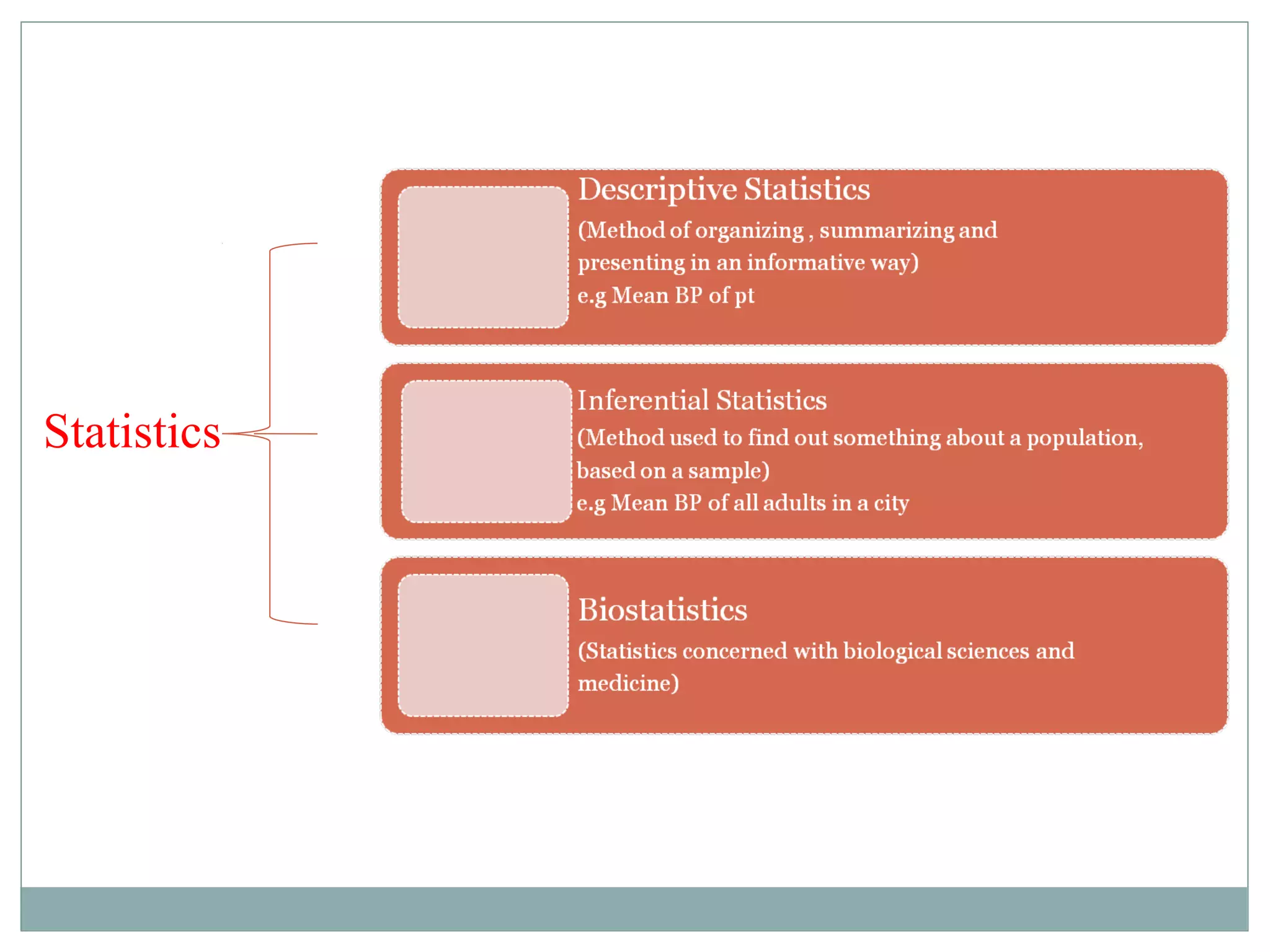
Statistics
is a field of study concerned with
(1)the collection , organization, summarization and analysis of
data and
(2)the drawing of inferences about a body of data when only a
part of data is observed
Statistics
Formulation of scientific question to answered
Designing an experiment which efficiency get
at these questions
Collection of data
Screening data for obvious blunders
Analysis, interpretation and presentation of
data.
Role of Biostatistics
I. Some basic concepts
2. Variable
Different value in different persons, place or things
e.g age, diastolic BP, Heart rate, age of patients
3. Population
4. Sample
A part of population
II. Measurement and Measurement Scales
Measurement
Assignment of numbers to objects or events according to a set of rules
1. Norminal Scale
lowest measurement scale
consists of naming observation or classifying them into various mutually
exclusive and collectively exhaustive categories
e.g male - female
well - sick
married - not married
2. Ordinal Scale
not only different from category to category but can be ranked according to
some criterion from lowest to highest
e.g Station hospital
Township hospital
District hospital
Region hospital
Specialist hospital
3. Interval Scale
 more sophisticated scale than norminal or ordinal scale
 not only to order the measurements but also the distance between any two
measurement is known.
e.g difference between 10 and 20 s
selected zero point is not necessarily a true zero
e.g Temperature zero
zero degree not indicate a lack of heat
4. Ratio Scale
 highest level of measurement
 equality of ratios as well as equality of intervals
 True zero point present.
e.g length, height, weight.
III. Sampling and statistical Inference
A. Probability sampling
i.Simple random sampling
ii.Systematic sampling
iii.Stratified sampling
B. Non-Probability sampling
i.Purposive sampling
ii.Convenient sampling
iii.Snow-Ball Method
(i) Simple random sampling
If a sample as size n is drawn form a population of size N is such a way that
every possible sample of size n has the same chances of being selected.
May be with replacement or without replacement
e.g lottery
(ii) Systematic sampling
arranged systematically in serial number.
(iii) Stratified random sampling
Population is first divided into two or more strata
The strata may be based on single criteria or combination of two or more criteria
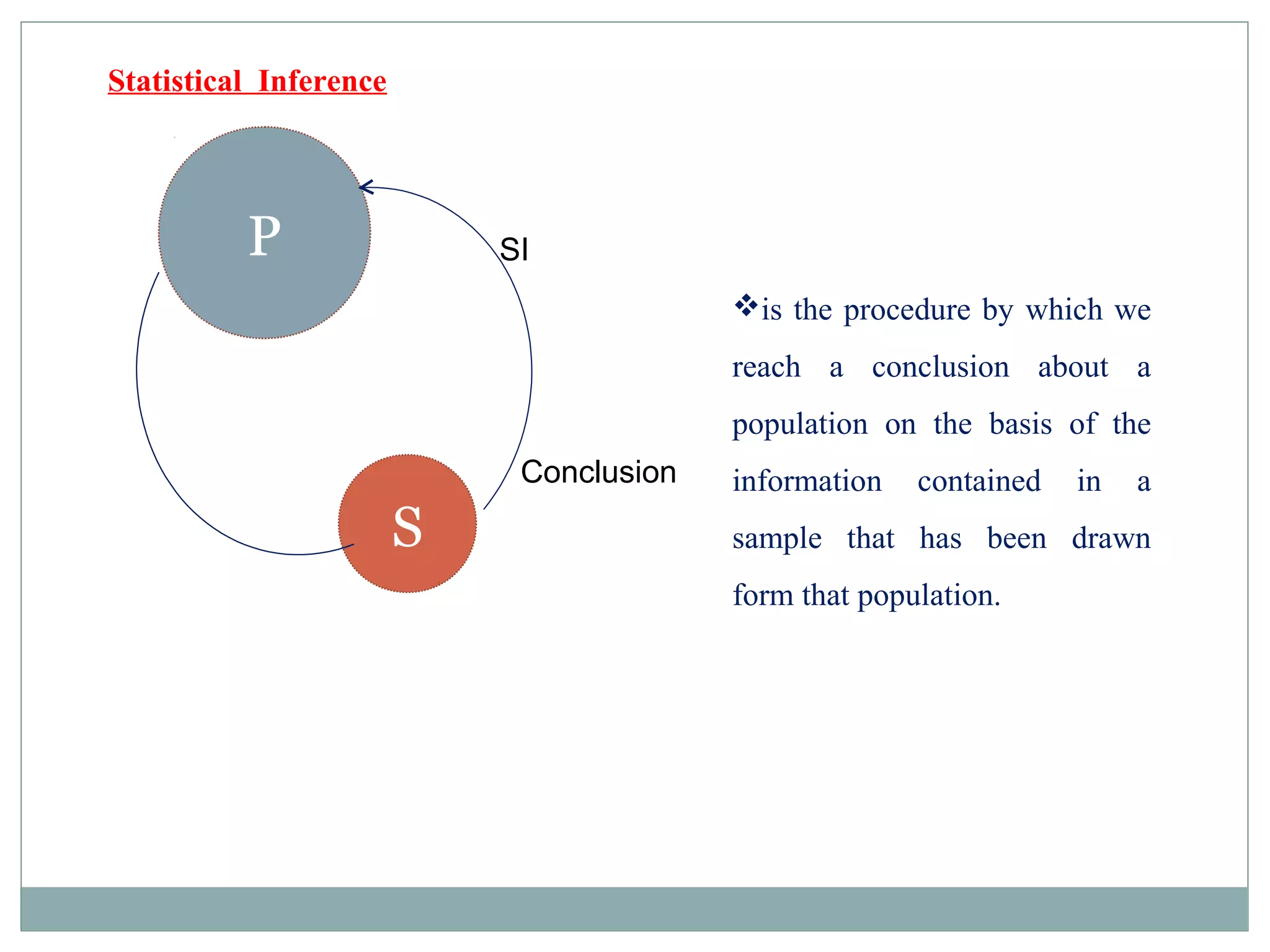
Statistical Inference
P
S
is the procedure by which we
reach a conclusion about a
population on the basis of the
information contained in a
sample that has been drawn
form that population.
SI
Conclusion
 Health Sciences Research/ Bio-statistical Analysis
 Computer and statistical software programmes-essential
 SPSS, MINITAB, SAS etc;
IV. Computer and Bio-statistical Analysis
Thank You

role of Biostatistics (new)

  • 1.
    Role of Biostatisticsin Public Health & Research Roll No.23, Dr. Hlaing Hlaing Htay Roll No.25, Dr. Win Nilar Hla
  • 2.
    Role of Biostatisticsin Public Health & Research Statistics is a field of study concerned with (1)the collection , organization, summarization and analysis of data and (2)the drawing of inferences about a body of data when only a part of data is observed
  • 3.
  • 4.
    Formulation of scientificquestion to answered Designing an experiment which efficiency get at these questions Collection of data Screening data for obvious blunders Analysis, interpretation and presentation of data. Role of Biostatistics
  • 5.
    I. Some basicconcepts
  • 6.
    2. Variable Different valuein different persons, place or things e.g age, diastolic BP, Heart rate, age of patients
  • 7.
    3. Population 4. Sample Apart of population
  • 8.
    II. Measurement andMeasurement Scales Measurement Assignment of numbers to objects or events according to a set of rules
  • 9.
    1. Norminal Scale lowestmeasurement scale consists of naming observation or classifying them into various mutually exclusive and collectively exhaustive categories e.g male - female well - sick married - not married 2. Ordinal Scale not only different from category to category but can be ranked according to some criterion from lowest to highest e.g Station hospital Township hospital District hospital Region hospital Specialist hospital
  • 10.
    3. Interval Scale more sophisticated scale than norminal or ordinal scale  not only to order the measurements but also the distance between any two measurement is known. e.g difference between 10 and 20 s selected zero point is not necessarily a true zero e.g Temperature zero zero degree not indicate a lack of heat 4. Ratio Scale  highest level of measurement  equality of ratios as well as equality of intervals  True zero point present. e.g length, height, weight.
  • 11.
    III. Sampling andstatistical Inference A. Probability sampling i.Simple random sampling ii.Systematic sampling iii.Stratified sampling B. Non-Probability sampling i.Purposive sampling ii.Convenient sampling iii.Snow-Ball Method
  • 12.
    (i) Simple randomsampling If a sample as size n is drawn form a population of size N is such a way that every possible sample of size n has the same chances of being selected. May be with replacement or without replacement e.g lottery (ii) Systematic sampling arranged systematically in serial number. (iii) Stratified random sampling Population is first divided into two or more strata The strata may be based on single criteria or combination of two or more criteria
  • 13.
    Statistical Inference P S is theprocedure by which we reach a conclusion about a population on the basis of the information contained in a sample that has been drawn form that population. SI Conclusion
  • 14.
     Health SciencesResearch/ Bio-statistical Analysis  Computer and statistical software programmes-essential  SPSS, MINITAB, SAS etc; IV. Computer and Bio-statistical Analysis
  • 15.