Downloaded 942 times
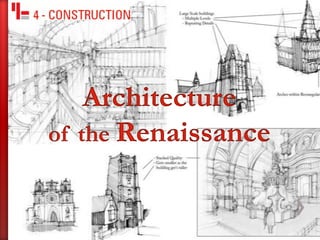
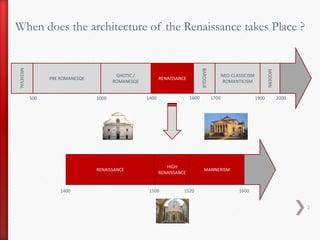
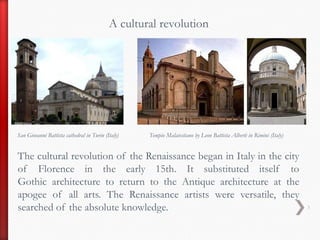
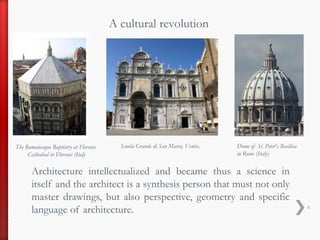
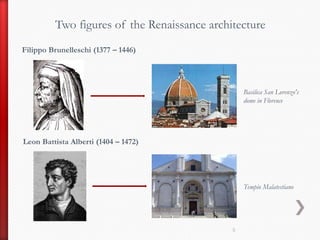



The Renaissance architecture began in Italy in the 15th century as a cultural revolution that substituted Gothic architecture and returned to designs of antiquity. Architects during the Renaissance became more intellectual and scientific in their designs, studying geometry, perspective, and architectural languages. Two influential Renaissance architects were Filippo Brunelleschi, who designed the dome of Florence Cathedral, and Leon Battista Alberti, who designed Tempio Malatestiano. Renaissance architecture then spread across Europe, influencing designs of castles, palaces, and cathedrals in other countries like France, Hungary, Belgium, and Germany.


