Road Design Standards
   Getting there


      Panel discussion between
 Praja, CiSTUP, BBMP, BDA
Roads


 Public infrastructure used by all citizens, without exception

  Safety, Ease of use, Quick mobility, Aesthetics, Optimal use of space
prime considerations.
                                                                 s2

  More than just putting asphalt – needs a multidisciplinary, well
researched approach, followed by execution taking care of all the details.

 Central implementation aspect of sustainable transportation
Slide 2

s2        Needs to be reworded
          suhas, 11/8/2009
Today’ session
 Roads are improving, but not meeting expectations.

 What exactly do we want – what is missing ?
    •As citizen engineers, went through standards and best practices in India and the developed
    world.
    •Present what we would like to see to the panel
 Panel to discuss and analyze what it takes to get there on a consistent basis.

 Audience can then chip in with their comments/analysis/views.

  To keep it within time, focus on 3 aspects. Each will run through the above flow.
Please raise your comments in the appropriate section only.

 The three focus areas for today are
    • Footpaths
    • Roads (lanes, traffic calming)
    • Integration of utilities, storm water drains and environmental aspects.
Section-1


Footpath
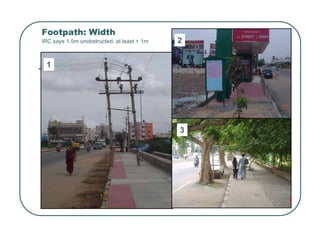
Footpath: Width
IRC says 1.5m unobstructed, at least > 1m   2


 1


                                            3
Footpath: Surface quality
Even, Firm, Well-drained, Non-slip, Flush joints


   1                                               2


                                                       3
Footpath : Access ramps
Should be smooth and wheel chair friendly


1                                           2


                                       3
Footpath : Identity maintained
Identity maintained across cross roads


  1                                      3


                   2
Pedestrian Crossing : Refuge Islands
More than 4 lanes, there must be a refuge island


  1                                                2
Footpath – key questions


    How is it being executed currently ?


    Do you agree that the above needs to be incorporated ?


    How is it to be done on a consistent and sustained basis ?
Section-2


Roads
Major roads should be lane based

1. Lanes : Consistency and clarity

        Consistent lane width should be maintained throughout
        the length of the road.
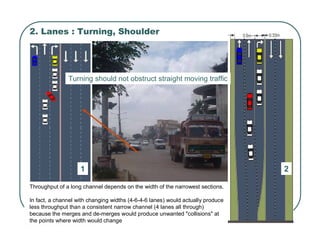
2. Lanes : Turning, Shoulder


               Turning should not obstruct straight moving traffic


                    1                                                            2

Throughput of a long channel depends on the width of the narrowest sections.

In fact, a channel with changing widths (4-6-4-6 lanes) would actually produce
less throughput than a consistent narrow channel (4 lanes all through)
because the merges and de-merges would produce unwanted "collisions" at
the points where width would change
3. Lanes : Merge, Demerge

        Entry and exit from lanes needs to be soft


    1                                                2
4. Lanes : Conflict minimization


1                             2
5. Lanes : Advantages


       > will make it safer for vehicles and pedestrians,

       > smoother/quicker flow of traffic

       > more pleasant drive
5. Traffic Calming: Speed Breakers

1                                        3


                                         4


     2

                                         5
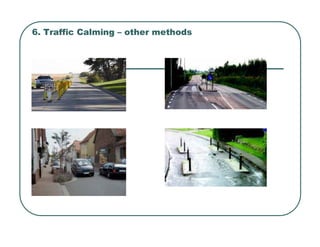
6. Traffic Calming – other methods
Roads – key questions


  Can we move to roads which are designed for lane based driving ?


  Research into efficacy and SAFETY of different methods of traffic
  calming, including speed breaker designs


  How can the above be incorporated on a consistent and sustained
  basis ?
Section-3


Integrating Utilities, Storm water
drains and environmental aspects
1. Utility and Trees Placement

 1               Adds to rather than subtracts from other functions of the
                 road.
                 1. Trees, Electric poles should not obstruct the road or
                 footpath
                 1. Man hole placement should not pose danger
                 2. Trees under electric lines … etc

 2                                                              3
2. Maintenance issues


    1. We often see good roads being dug up for installation of cables
    etc.


    2. The placement and installation be done in a modular manner,
    such that maintenance is non-disruptive.


    3. Co-ordination across multiple agencies is difficult. Also utilities
    will not have perspective of road users. Is it better that a single
    agency own all aspects of a road.
3. Storm Water Drain Issues


                    1
                                                              3

                         1. Collection – open, no filter, gets clogged
                         2. Frontages, no place for water to go
                         3. Open drains become garbage dump

                         Design improvement which is low
                         maintenance ?
                    2    Possibility of sinking at source ?
Utilities, SWD and summary – key questions


Would it be better if all utilities, tree cover and street furniture
installation and maintenance are handled by the same agency building
roads ?


Research into Storm water drain, effective and low maintenance
designs


Can we develop type designs for roads which are modular, additive.

Who is the nodal agency for Bangalore to ensure the standardization
and implementation ?
Back up slides
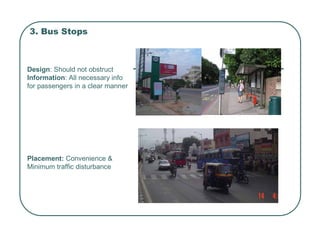
3. Bus Stops


Design: Should not obstruct
Information: All necessary info
for passengers in a clear manner


Placement: Convenience &
Minimum traffic disturbance

Road Design Session

  • 1.
    Road Design Standards Getting there Panel discussion between Praja, CiSTUP, BBMP, BDA
  • 2.
    Roads Public infrastructureused by all citizens, without exception Safety, Ease of use, Quick mobility, Aesthetics, Optimal use of space prime considerations. s2 More than just putting asphalt – needs a multidisciplinary, well researched approach, followed by execution taking care of all the details. Central implementation aspect of sustainable transportation
  • 3.
    Slide 2 s2 Needs to be reworded suhas, 11/8/2009
  • 4.
    Today’ session Roadsare improving, but not meeting expectations. What exactly do we want – what is missing ? •As citizen engineers, went through standards and best practices in India and the developed world. •Present what we would like to see to the panel Panel to discuss and analyze what it takes to get there on a consistent basis. Audience can then chip in with their comments/analysis/views. To keep it within time, focus on 3 aspects. Each will run through the above flow. Please raise your comments in the appropriate section only. The three focus areas for today are • Footpaths • Roads (lanes, traffic calming) • Integration of utilities, storm water drains and environmental aspects.
  • 5.
  • 6.
    Footpath: Width IRC says1.5m unobstructed, at least > 1m 2 1 3
  • 7.
    Footpath: Surface quality Even,Firm, Well-drained, Non-slip, Flush joints 1 2 3
  • 8.
    Footpath : Accessramps Should be smooth and wheel chair friendly 1 2 3
  • 9.
    Footpath : Identitymaintained Identity maintained across cross roads 1 3 2
  • 10.
    Pedestrian Crossing :Refuge Islands More than 4 lanes, there must be a refuge island 1 2
  • 11.
    Footpath – keyquestions How is it being executed currently ? Do you agree that the above needs to be incorporated ? How is it to be done on a consistent and sustained basis ?
  • 12.
  • 13.
    Major roads shouldbe lane based 1. Lanes : Consistency and clarity Consistent lane width should be maintained throughout the length of the road.
  • 14.
    2. Lanes :Turning, Shoulder Turning should not obstruct straight moving traffic 1 2 Throughput of a long channel depends on the width of the narrowest sections. In fact, a channel with changing widths (4-6-4-6 lanes) would actually produce less throughput than a consistent narrow channel (4 lanes all through) because the merges and de-merges would produce unwanted "collisions" at the points where width would change
  • 15.
    3. Lanes :Merge, Demerge Entry and exit from lanes needs to be soft 1 2
  • 16.
    4. Lanes :Conflict minimization 1 2
  • 17.
    5. Lanes :Advantages > will make it safer for vehicles and pedestrians, > smoother/quicker flow of traffic > more pleasant drive
  • 18.
    5. Traffic Calming:Speed Breakers 1 3 4 2 5
  • 19.
    6. Traffic Calming– other methods
  • 20.
    Roads – keyquestions Can we move to roads which are designed for lane based driving ? Research into efficacy and SAFETY of different methods of traffic calming, including speed breaker designs How can the above be incorporated on a consistent and sustained basis ?
  • 21.
    Section-3 Integrating Utilities, Stormwater drains and environmental aspects
  • 22.
    1. Utility andTrees Placement 1 Adds to rather than subtracts from other functions of the road. 1. Trees, Electric poles should not obstruct the road or footpath 1. Man hole placement should not pose danger 2. Trees under electric lines … etc 2 3
  • 23.
    2. Maintenance issues 1. We often see good roads being dug up for installation of cables etc. 2. The placement and installation be done in a modular manner, such that maintenance is non-disruptive. 3. Co-ordination across multiple agencies is difficult. Also utilities will not have perspective of road users. Is it better that a single agency own all aspects of a road.
  • 24.
    3. Storm WaterDrain Issues 1 3 1. Collection – open, no filter, gets clogged 2. Frontages, no place for water to go 3. Open drains become garbage dump Design improvement which is low maintenance ? 2 Possibility of sinking at source ?
  • 25.
    Utilities, SWD andsummary – key questions Would it be better if all utilities, tree cover and street furniture installation and maintenance are handled by the same agency building roads ? Research into Storm water drain, effective and low maintenance designs Can we develop type designs for roads which are modular, additive. Who is the nodal agency for Bangalore to ensure the standardization and implementation ?
  • 26.
  • 27.
    3. Bus Stops Design:Should not obstruct Information: All necessary info for passengers in a clear manner Placement: Convenience & Minimum traffic disturbance