CYBER SECURITY
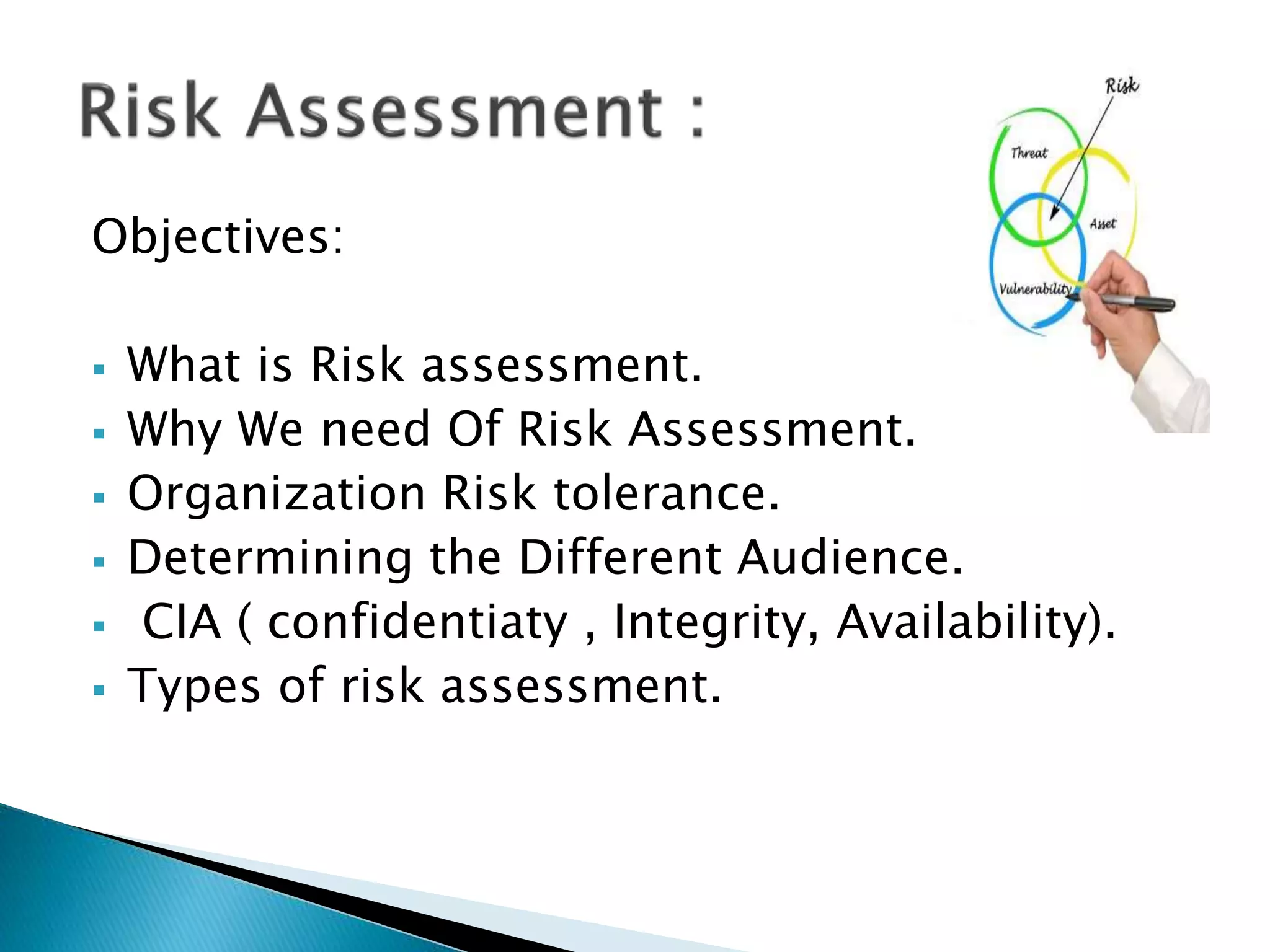
Objectives:
 What is Risk assessment.
 Why We need Of Risk Assessment.
 Organization Risk tolerance.
 Determining the Different Audience.
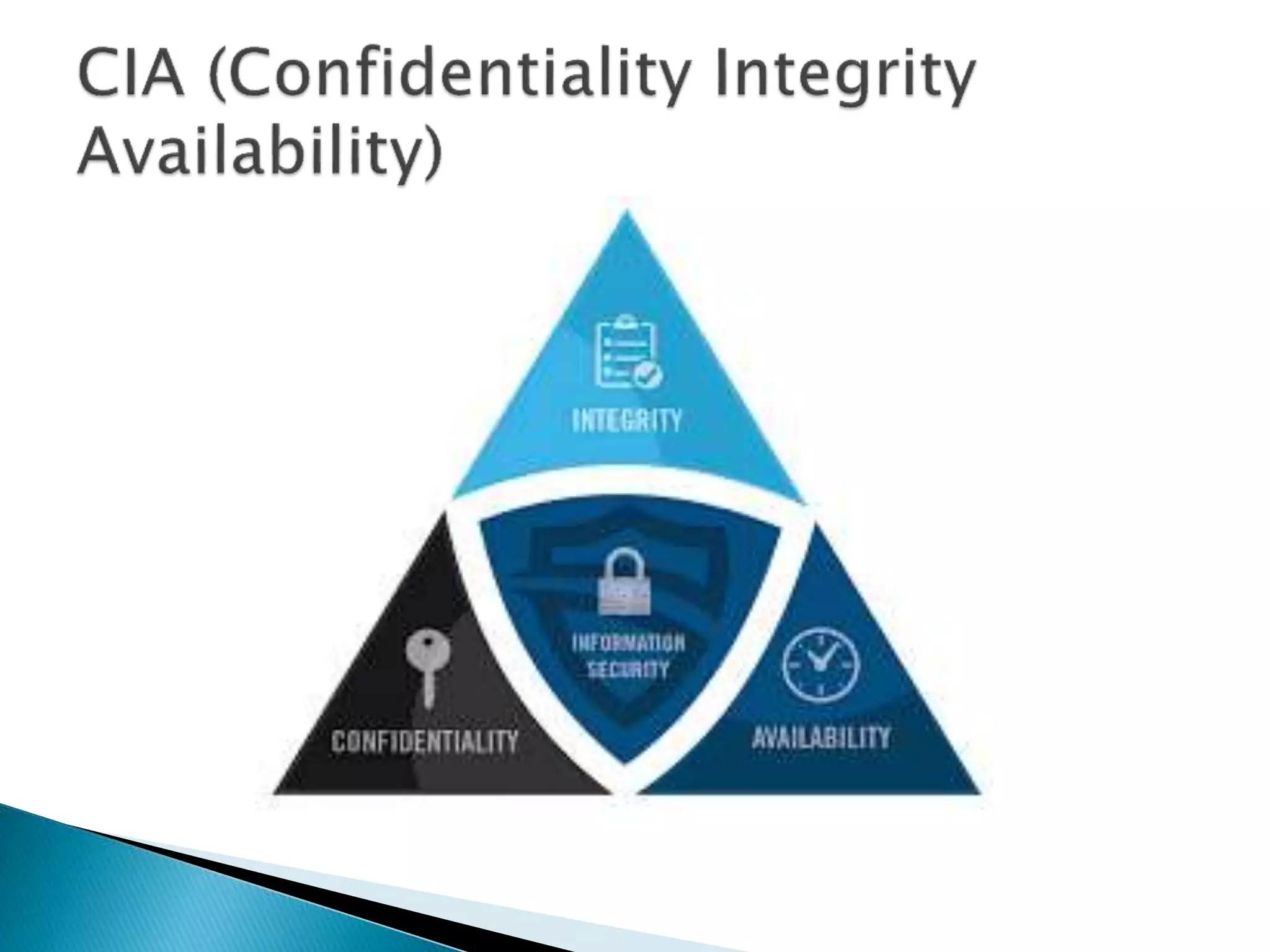
 CIA ( confidentiaty , Integrity, Availability).
 Types of risk assessment.
 Cyber risk is the likelihood of suffering negative disruption to
sensitive data, finances,or business operations online.
 Conducting a cyber-security risk assessment is a complex
process that requires.
 Cyber risk can be calculated as:
Cyber Risk = Threat X vulnerability x information value.
 Risk assessment is defined by the NIST as risk assessment are
used to identify, estimate and prioritize risk to organizational
operation, assists individual, other organizations.
 Provides a cyber security risk assessment
template for future assessments.
 Better organizational knowledge.
 Avoid data breaches
 Reduction of long-term costs.
 Avoid regulatory issues.
 Data loss.
 Risk tolerance depend upon person to
person Some may take more risk in order to
get Better return while for other the main aim
may be to protect their investment capital.
 Unsupported operating system can expose
your network to attack.
 Many executive struggle with cyber security expenditures
because it is difficult to see any return on investment. Having
an architecture document that define the existing security
architecture and risks that exist make it easier to justify and
communicate to those individuals what needs to be done and
why.
 Connecting business objectives with security in the
architecture and governance document also support
management in understanding the need for cyber security
measure in the CIA realm.
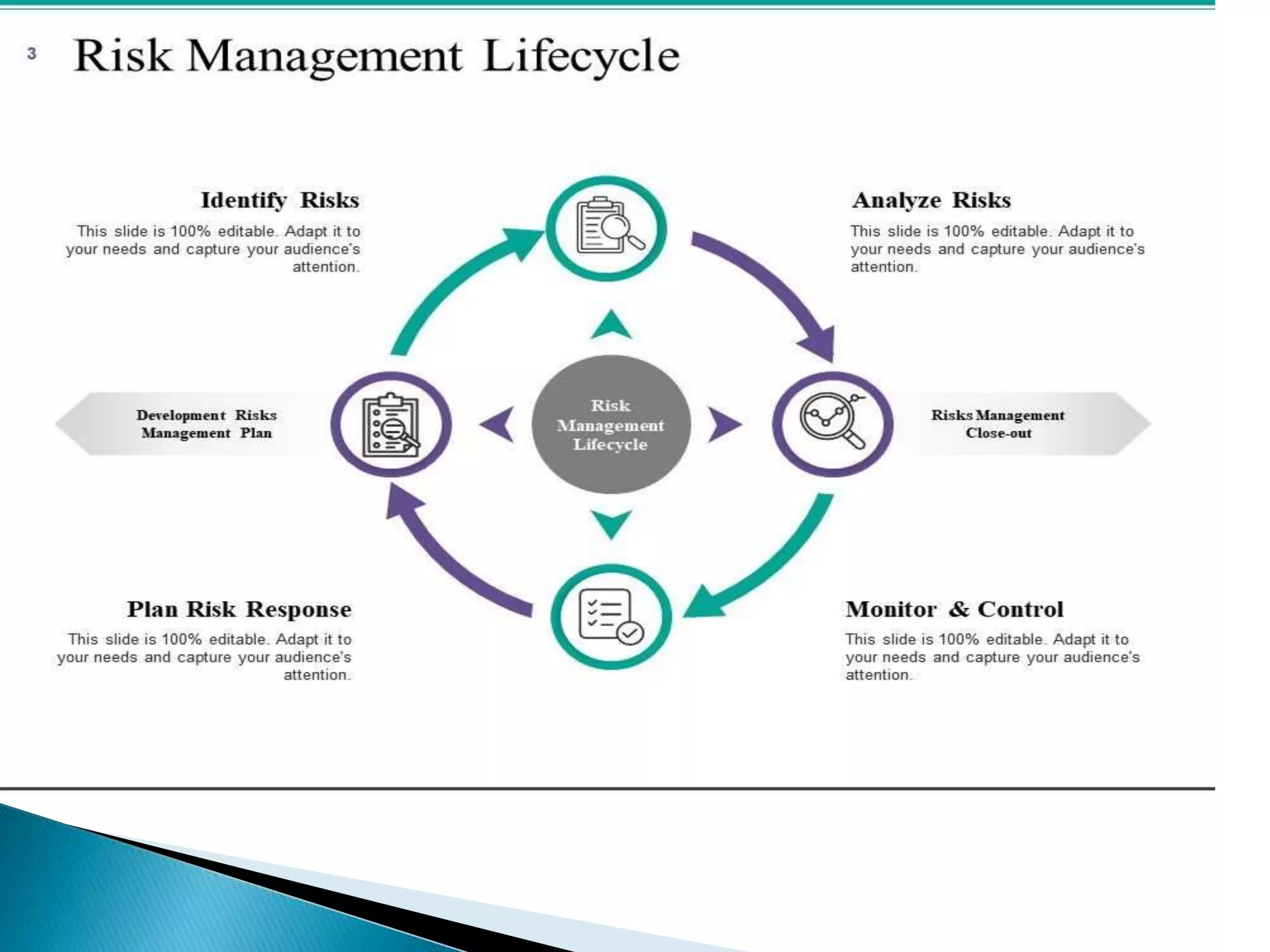
 Here we manage the risk using the risk management life
cycle.
 Cloud is good for data storage but there are
some issues one of the most significant
issues is security,.
 Security concern relate to risk areas such as
external data storage, depenancy on the
“public” internet, lack of control etc.
 Identifying the vulnerabilities is difficult task
in cloud.
 Confidentiality information is one of the most
valuable assets of any business.
 Confidentiality is frequently the best way of
protecting trade secrets.
 But the breach of confidentiality can directly
cause the loss of key business asset and
business disruption.

 Integrity ensures the accuracy of data used in
business processes and transactions.
 Companies must consider not only the integrity of
data in databases and applications, but also of data
that has been backed up for use in disaster
recovery.
 The National Cyber security Center of Excellence—a
partnership between industry and the National
Institute of Standards and Technology (NIST)—was
formed to address the most pressing cyber security
challenges to business.
 Data availability means that information is
accessible to authorized users. It provides an
assurance that your system and data can be
accessed by authenticated users whenever
they’re needed. Similar to confidentiality and
integrity.
 Availability is typically associated with reliability
and system uptime, which can be impacted by
non-malicious issues like hardware failures,
unscheduled software downtime, and human
error, or malicious issues like cyberattacks and
insider threats.
 A quantitative risk assessment of your IT
environment is a must for higher security
maturity models to be achieved.
 It is also a must if your organization wants to
take risk assessment of IT seriously.
 Qualitative Risk is studying an event , or
regulatory control in this case and
understanding the quality of its
implementation.
Qualitative Quantitative
 Qualitative focus on risk
identification for measuring
the possibility of the
occurrence of the risk event.
 It is complex because it does
not involve straightforward
math and hence one must
know how the rank the risk for
which expertise is required
 Time consuming to identify
each risk, record and rank
them.
 It deals with all risk and than
rank them.
 Quantitative is verified are
used to analyze the risk effect.
 Direct calculating methods and
tools are available making the
process simple
 Tools are used to speed up the
process.
 Deals with the risks marked for
further analysis by qualitative
risk analysis
Quantitative risk analysis is best for risk
analysis in business because its speed of
identifying the risk better than Qualitative.
Presented by :
Kajal kumari

Risk assessment

  • 1.
  • 2.
    Objectives:  What isRisk assessment.  Why We need Of Risk Assessment.  Organization Risk tolerance.  Determining the Different Audience.  CIA ( confidentiaty , Integrity, Availability).  Types of risk assessment.
  • 3.
     Cyber riskis the likelihood of suffering negative disruption to sensitive data, finances,or business operations online.  Conducting a cyber-security risk assessment is a complex process that requires.  Cyber risk can be calculated as: Cyber Risk = Threat X vulnerability x information value.  Risk assessment is defined by the NIST as risk assessment are used to identify, estimate and prioritize risk to organizational operation, assists individual, other organizations.
  • 4.
     Provides acyber security risk assessment template for future assessments.  Better organizational knowledge.  Avoid data breaches  Reduction of long-term costs.  Avoid regulatory issues.  Data loss.
  • 5.
     Risk tolerancedepend upon person to person Some may take more risk in order to get Better return while for other the main aim may be to protect their investment capital.  Unsupported operating system can expose your network to attack.
  • 6.
     Many executivestruggle with cyber security expenditures because it is difficult to see any return on investment. Having an architecture document that define the existing security architecture and risks that exist make it easier to justify and communicate to those individuals what needs to be done and why.  Connecting business objectives with security in the architecture and governance document also support management in understanding the need for cyber security measure in the CIA realm.  Here we manage the risk using the risk management life cycle.
  • 7.
     Cloud isgood for data storage but there are some issues one of the most significant issues is security,.  Security concern relate to risk areas such as external data storage, depenancy on the “public” internet, lack of control etc.  Identifying the vulnerabilities is difficult task in cloud.
  • 10.
     Confidentiality informationis one of the most valuable assets of any business.  Confidentiality is frequently the best way of protecting trade secrets.  But the breach of confidentiality can directly cause the loss of key business asset and business disruption. 
  • 11.
     Integrity ensuresthe accuracy of data used in business processes and transactions.  Companies must consider not only the integrity of data in databases and applications, but also of data that has been backed up for use in disaster recovery.  The National Cyber security Center of Excellence—a partnership between industry and the National Institute of Standards and Technology (NIST)—was formed to address the most pressing cyber security challenges to business.
  • 12.
     Data availabilitymeans that information is accessible to authorized users. It provides an assurance that your system and data can be accessed by authenticated users whenever they’re needed. Similar to confidentiality and integrity.  Availability is typically associated with reliability and system uptime, which can be impacted by non-malicious issues like hardware failures, unscheduled software downtime, and human error, or malicious issues like cyberattacks and insider threats.
  • 13.
     A quantitativerisk assessment of your IT environment is a must for higher security maturity models to be achieved.  It is also a must if your organization wants to take risk assessment of IT seriously.  Qualitative Risk is studying an event , or regulatory control in this case and understanding the quality of its implementation.
  • 14.
    Qualitative Quantitative  Qualitativefocus on risk identification for measuring the possibility of the occurrence of the risk event.  It is complex because it does not involve straightforward math and hence one must know how the rank the risk for which expertise is required  Time consuming to identify each risk, record and rank them.  It deals with all risk and than rank them.  Quantitative is verified are used to analyze the risk effect.  Direct calculating methods and tools are available making the process simple  Tools are used to speed up the process.  Deals with the risks marked for further analysis by qualitative risk analysis
  • 15.
    Quantitative risk analysisis best for risk analysis in business because its speed of identifying the risk better than Qualitative.
  • 16.