*
Definition:
Security management is the identification
of an organization's assets, followed by
the development, documentation, and
implementation of policies and procedures
for protecting assets.
*
*
Communicate to staff that protecting the system is
not only in the organization's interests, but also in the
best interest of users. Increase staff awareness of
security issues.
Provide for appropriate staff security training.
Monitor user activity to assess security
implementation.
*
Critical infrastructure security.
Application security.
Network security.
Cloud security.
Internet of Things (IoT) security.
*
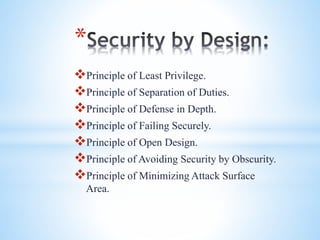
Principle of Least Privilege.
Principle of Separation of Duties.
Principle of Defense in Depth.
Principle of Failing Securely.
Principle of Open Design.
Principle of Avoiding Security by Obscurity.
Principle of Minimizing Attack Surface
Area.
*
In general, Information Security professionals
suggest that protecting sensitive data requires a
combination of people, processes, polices, and
technologies.
*
The goal of security management procedures is
to provide a foundation for an organization’s
cyber security strategy. The information and
procedures developed as part of security
management processes will be used for data
classification, risk management, and threat
detection and response.
*
These procedures enable an organization to
effectively identify potential threats to the
organization’s assets, classify and categorize assets
based on their importance to the organization, and
to rate vulnerabilities based on their probability of
exploitation and the potential impact to the
organization.
*
Security management can come in various different forms.
Three common types of security management strategies include….
 Information security management
 Network security management
cyber security management.
*
Information security management includes
implementing security best practices and standards
designed to mitigate threats to data like those found
in the ISO/IEC 27000 family of standards.
Information security management programs should
ensure the confidentiality, integrity, and availability
of data.
*
Healthcare organizations are governed by the
Health Insurance Portability and Accessibility Act
(HIPAA), and the Payment Card Industry Data
Security Standard (PCI DSS) protects payment
card information.
*
Network security management is a vital component of a network
management strategy. The network is the vector by which most
cyber attacks reach an organization’s systems and its first line of
defense against cyber threats.
Network security management includes deploying network
monitoring and defense solutions, implementing network
segmentation, and controlling access to the network and the
devices connected to it.
*
Cyber security management refers to a more general
approach to protecting an organization and its IT assets
against cyber threats.
This form of security management includes protecting
all aspects of an organization’s IT infrastructure,
including the network, cloud infrastructure, mobile
devices, Internet of Things (IoT) devices, and
applications and APIs.
*

Security management.pptx

  • 1.
  • 2.
    Definition: Security management isthe identification of an organization's assets, followed by the development, documentation, and implementation of policies and procedures for protecting assets. *
  • 3.
    * Communicate to staffthat protecting the system is not only in the organization's interests, but also in the best interest of users. Increase staff awareness of security issues. Provide for appropriate staff security training. Monitor user activity to assess security implementation.
  • 4.
    * Critical infrastructure security. Applicationsecurity. Network security. Cloud security. Internet of Things (IoT) security.
  • 5.
    * Principle of LeastPrivilege. Principle of Separation of Duties. Principle of Defense in Depth. Principle of Failing Securely. Principle of Open Design. Principle of Avoiding Security by Obscurity. Principle of Minimizing Attack Surface Area.
  • 6.
    * In general, InformationSecurity professionals suggest that protecting sensitive data requires a combination of people, processes, polices, and technologies.
  • 7.
    * The goal ofsecurity management procedures is to provide a foundation for an organization’s cyber security strategy. The information and procedures developed as part of security management processes will be used for data classification, risk management, and threat detection and response.
  • 8.
    * These procedures enablean organization to effectively identify potential threats to the organization’s assets, classify and categorize assets based on their importance to the organization, and to rate vulnerabilities based on their probability of exploitation and the potential impact to the organization.
  • 9.
    * Security management cancome in various different forms. Three common types of security management strategies include….  Information security management  Network security management cyber security management.
  • 10.
    * Information security managementincludes implementing security best practices and standards designed to mitigate threats to data like those found in the ISO/IEC 27000 family of standards. Information security management programs should ensure the confidentiality, integrity, and availability of data.
  • 11.
    * Healthcare organizations aregoverned by the Health Insurance Portability and Accessibility Act (HIPAA), and the Payment Card Industry Data Security Standard (PCI DSS) protects payment card information.
  • 12.
    * Network security managementis a vital component of a network management strategy. The network is the vector by which most cyber attacks reach an organization’s systems and its first line of defense against cyber threats. Network security management includes deploying network monitoring and defense solutions, implementing network segmentation, and controlling access to the network and the devices connected to it.
  • 13.
    * Cyber security managementrefers to a more general approach to protecting an organization and its IT assets against cyber threats. This form of security management includes protecting all aspects of an organization’s IT infrastructure, including the network, cloud infrastructure, mobile devices, Internet of Things (IoT) devices, and applications and APIs.
  • 14.