Ringworm
By James
General Information
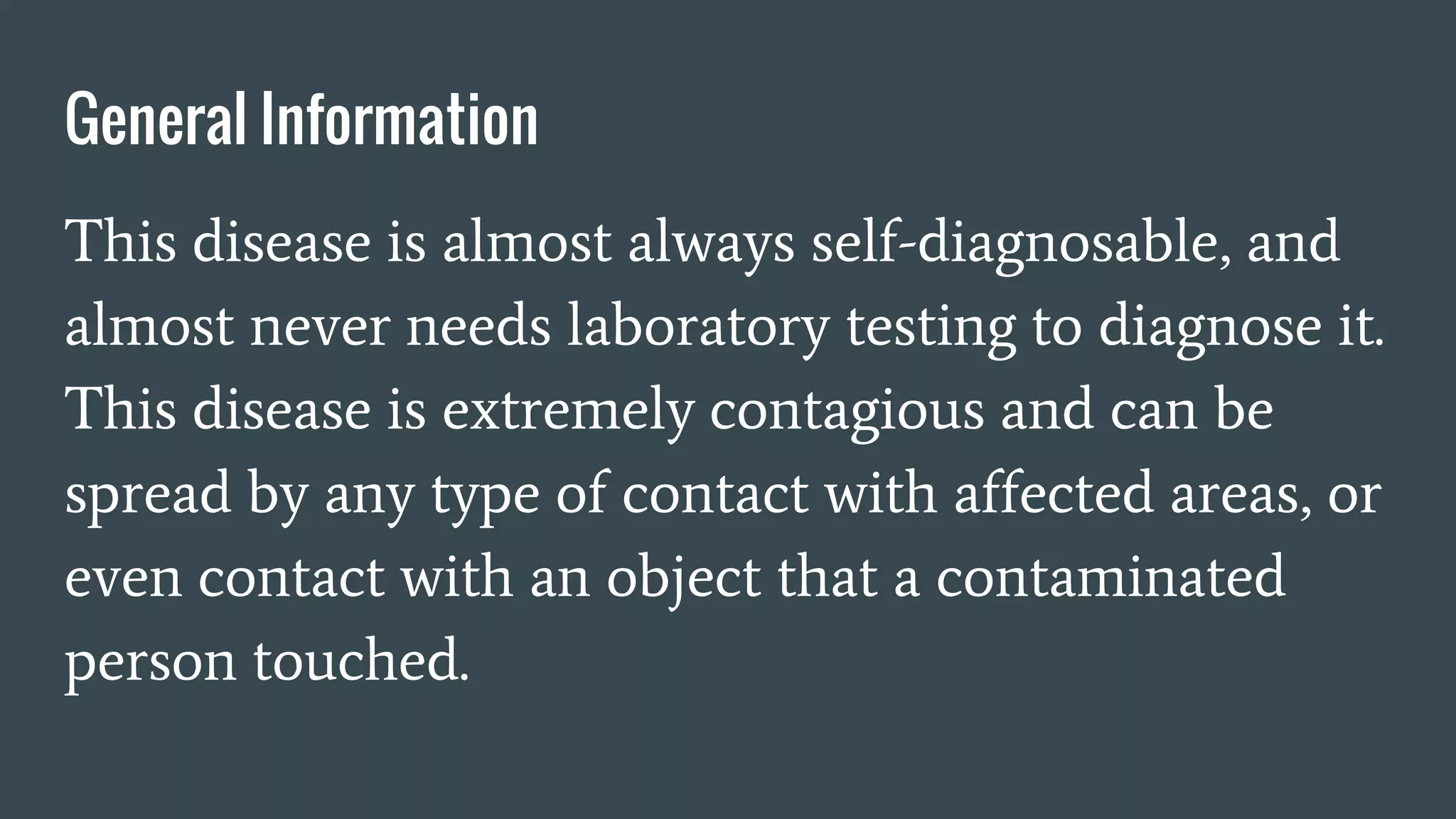
This disease is Ringworm, otherwise known as tinea capitis or tinea
corporis. This was originally discovered by David Gruby. This is a
common, extremely contagious disease, with more than 3 million
cases annually in the U.S. alone.
General Information
This disease is almost always self-diagnosable, and
almost never needs laboratory testing to diagnose it.
This disease is extremely contagious and can be
spread by any type of contact with affected areas, or
even contact with an object that a contaminated
person touched.
Major Outbreaks of Ringworm
In Yugoslavia, in the 1950’s, more than 50,000
people were treated for ringworm. Also in the
1950’s, Israel was forced to irradiate more than
20,000 cases of ringworm.
Body Parts Affected
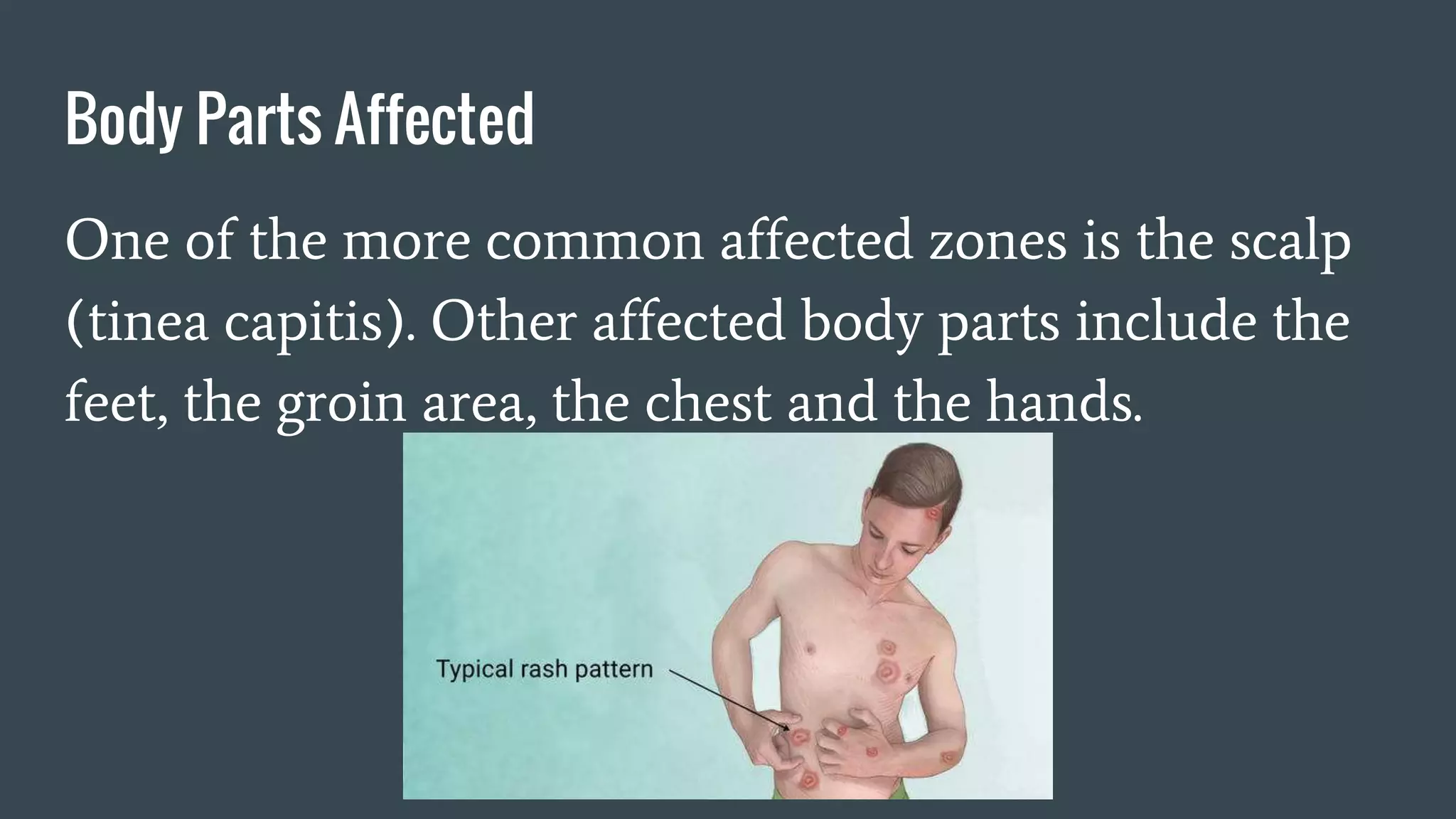
One of the more common affected zones is the scalp
(tinea capitis). Other affected body parts include the
feet, the groin area, the chest and the hands.
Symptoms
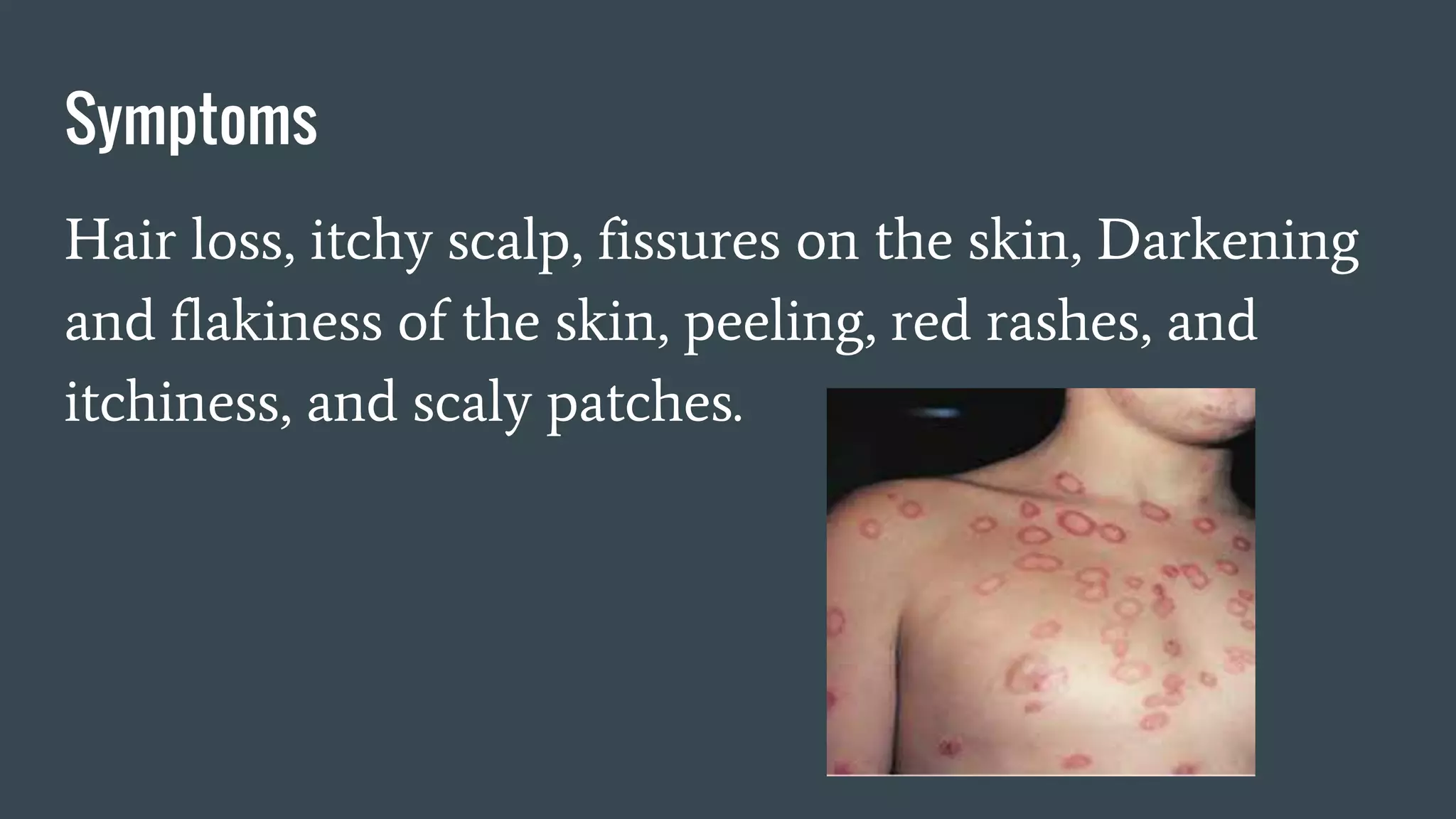
Hair loss, itchy scalp, fissures on the skin, Darkening
and flakiness of the skin, peeling, red rashes, and
itchiness, and scaly patches.
Treatments
Always an antifungal treatment. Itraconazole and
Terbinafine by mouth are the common antifungal
treatments. Cleanliness and hygiene are common
self treatments that may help rid the disease.
Naftifine, Terbinafine and Butenafine are all
applied directly to the affected area.
Type of Pathogen
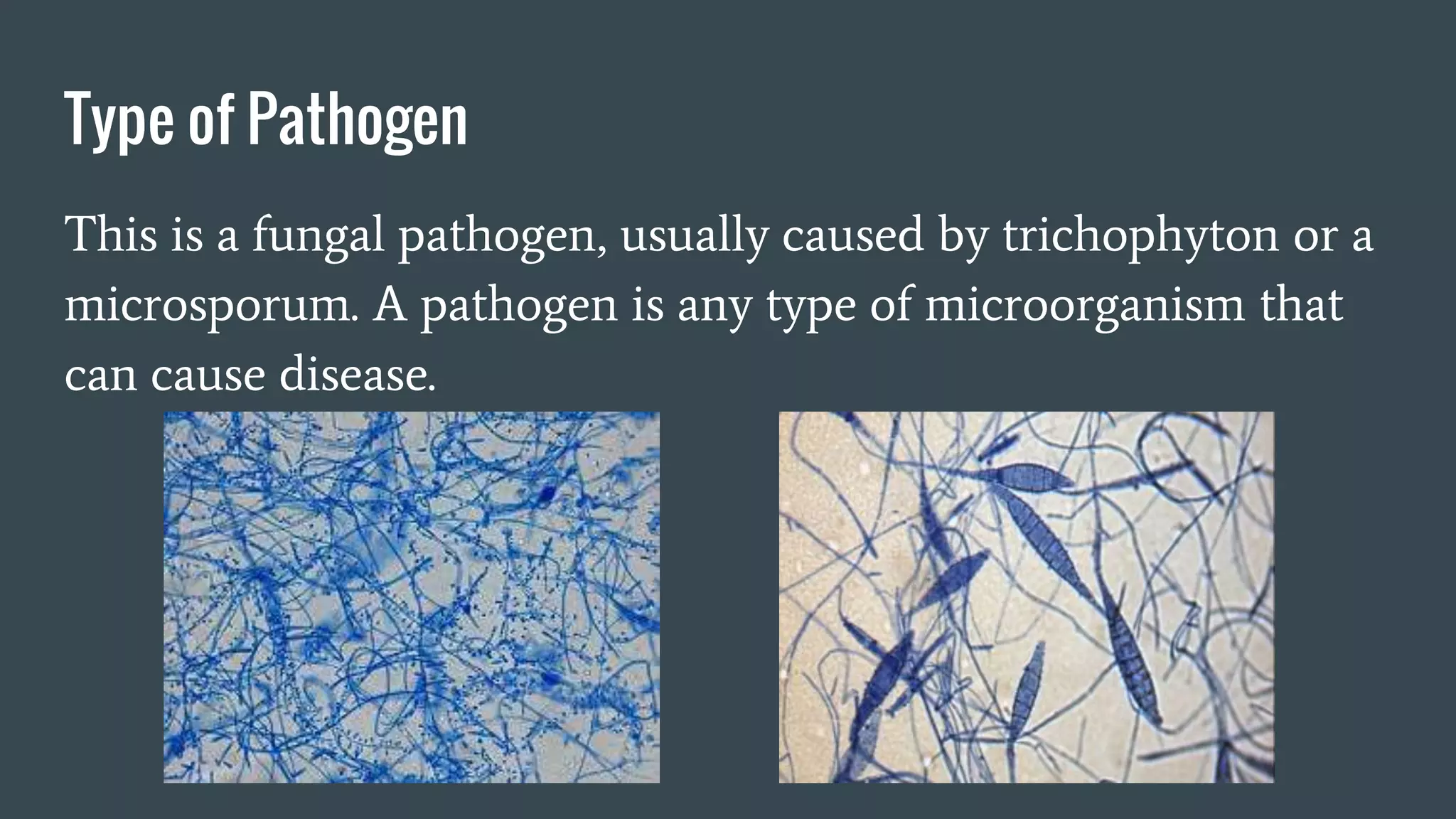
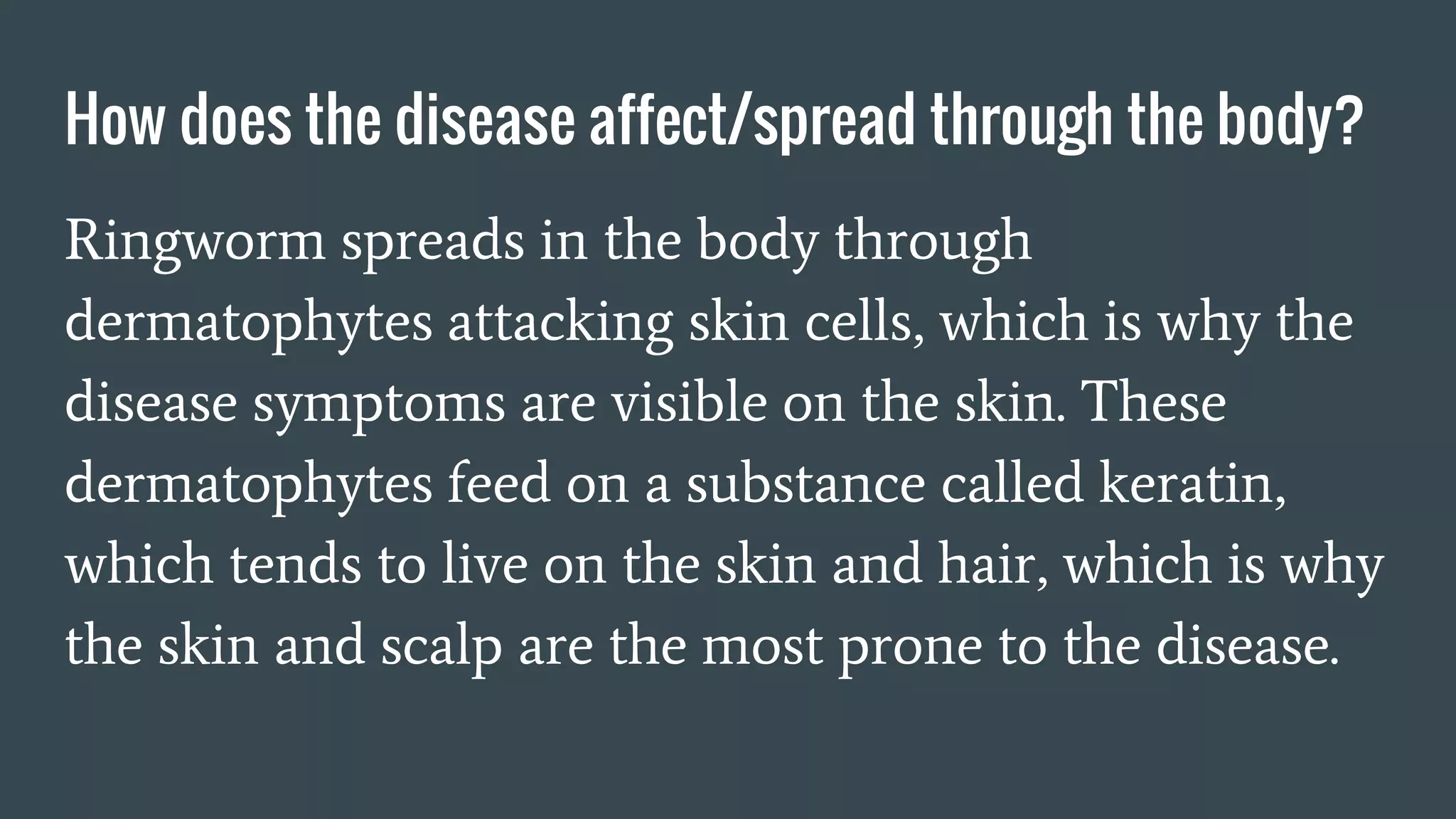
This is a fungal pathogen, usually caused by trichophyton or a
microsporum. A pathogen is any type of microorganism that
can cause disease.
How does the disease affect/spread through the body?
Ringworm spreads in the body through
dermatophytes attacking skin cells, which is why the
disease symptoms are visible on the skin. These
dermatophytes feed on a substance called keratin,
which tends to live on the skin and hair, which is why
the skin and scalp are the most prone to the disease.
How does the immune system kill it?
The immune system immediately builds up cell walls when
notified that the dermatophytes are in the body. The immune
system send out an antifungal substance which is secreted by
our mucous membranes whenever a fungal pathogen attacks.
In most cases our immune system with addition to antifungal
drugs can fight off Ringworm with ease. In some cases the
disease turns more severe usually due to the particular
person’s immune systems issues.
Where the disease is common
Ringworm is common is many warm, moist areas. A
combination of sweat or water, and an open wound
can be a mixture for ringworm. Cats are common
carriers of the disease.
Sources
1) "Ringworm: MedlinePlus Medical Encyclopedia." U.S National Library of Medicine. U.S. National Library of Medicine, n.d.
Web. 16 Dec. 2015.
2) "Ringworm (body)." Ringworm of the Body. N.p., n.d. Web. 16 Dec. 2015.
3) Hartsock, Angela. "What Is Ringworm? - Infections Caused by Trichophyton & Microsporum Fungi." Study.com. N.p., n.d.
Web. 16 Dec. 2015.
4) Wolpert, Peter. "Bildbank." Bildbank. N.p., n.d. Web. 17 Dec. 2015.
5) Berman, Kevin. "Ringworm: MedlinePlus Medical Encyclopedia." U.S National Library of Medicine. U.S. National Library
of Medicine, n.d. Web. 17 Dec. 2015.
6) Drummond, Rebecca. "Immune Responses to Fungal Pathogens." Bitesized Immunology. N.p., n.d. Web. 18 Dec. 2015.

Ringworm

  • 1.
  • 2.
    General Information This diseaseis Ringworm, otherwise known as tinea capitis or tinea corporis. This was originally discovered by David Gruby. This is a common, extremely contagious disease, with more than 3 million cases annually in the U.S. alone.
  • 3.
    General Information This diseaseis almost always self-diagnosable, and almost never needs laboratory testing to diagnose it. This disease is extremely contagious and can be spread by any type of contact with affected areas, or even contact with an object that a contaminated person touched.
  • 4.
    Major Outbreaks ofRingworm In Yugoslavia, in the 1950’s, more than 50,000 people were treated for ringworm. Also in the 1950’s, Israel was forced to irradiate more than 20,000 cases of ringworm.
  • 5.
    Body Parts Affected Oneof the more common affected zones is the scalp (tinea capitis). Other affected body parts include the feet, the groin area, the chest and the hands.
  • 6.
    Symptoms Hair loss, itchyscalp, fissures on the skin, Darkening and flakiness of the skin, peeling, red rashes, and itchiness, and scaly patches.
  • 7.
    Treatments Always an antifungaltreatment. Itraconazole and Terbinafine by mouth are the common antifungal treatments. Cleanliness and hygiene are common self treatments that may help rid the disease. Naftifine, Terbinafine and Butenafine are all applied directly to the affected area.
  • 8.
    Type of Pathogen Thisis a fungal pathogen, usually caused by trichophyton or a microsporum. A pathogen is any type of microorganism that can cause disease.
  • 9.
    How does thedisease affect/spread through the body? Ringworm spreads in the body through dermatophytes attacking skin cells, which is why the disease symptoms are visible on the skin. These dermatophytes feed on a substance called keratin, which tends to live on the skin and hair, which is why the skin and scalp are the most prone to the disease.
  • 10.
    How does theimmune system kill it? The immune system immediately builds up cell walls when notified that the dermatophytes are in the body. The immune system send out an antifungal substance which is secreted by our mucous membranes whenever a fungal pathogen attacks. In most cases our immune system with addition to antifungal drugs can fight off Ringworm with ease. In some cases the disease turns more severe usually due to the particular person’s immune systems issues.
  • 11.
    Where the diseaseis common Ringworm is common is many warm, moist areas. A combination of sweat or water, and an open wound can be a mixture for ringworm. Cats are common carriers of the disease.
  • 12.
    Sources 1) "Ringworm: MedlinePlusMedical Encyclopedia." U.S National Library of Medicine. U.S. National Library of Medicine, n.d. Web. 16 Dec. 2015. 2) "Ringworm (body)." Ringworm of the Body. N.p., n.d. Web. 16 Dec. 2015. 3) Hartsock, Angela. "What Is Ringworm? - Infections Caused by Trichophyton & Microsporum Fungi." Study.com. N.p., n.d. Web. 16 Dec. 2015. 4) Wolpert, Peter. "Bildbank." Bildbank. N.p., n.d. Web. 17 Dec. 2015. 5) Berman, Kevin. "Ringworm: MedlinePlus Medical Encyclopedia." U.S National Library of Medicine. U.S. National Library of Medicine, n.d. Web. 17 Dec. 2015. 6) Drummond, Rebecca. "Immune Responses to Fungal Pathogens." Bitesized Immunology. N.p., n.d. Web. 18 Dec. 2015.