
PYODERMAS
Dr Samson Ojedokun
MB;BS Ogbomoso Nigeria
1
Outline
• Introduction
• Prevalence
• Skin layers
• Risk factors
• Pathophysiology
• Descriptive Terms
• Classifications
• Management approach
• Conclusion
• References
2
Introduction
• The skin is not only the largest organ of the body, but it also
forms a living biological barrier with several functions.
• Pyodermas are any pyogenic skin disease (has pus). Skin
infections can be caused by bacteria (often Staphylococcal or
Streptococcal) either invading normal skin, or affecting a
compromised skin barrier
• Some bacterial skin infections resolve without serious morbidity.
However, skin infections can be severe and result in sepsis or
death, particularly in vulnerable patient groups.
3
Prevalence
• Infectious skin diseases are common in the tropics, but due to the
paucity of epidemiologic surveys, not much is known about the
prevalence and common types found in different sub-populations.
• Globally, all skin conditions combined were fourth leading cause of
non-fatal disease burden.
• In 2005, the World Health Organisation (WHO) reported a high
prevalence of skin disease in children from developing countries in
sub-Saharan Africa
• BSD accounts for a prevalence rate of 7.38-10.27% of the
DALYs, an upward trend between 1990 to 2019.
4
5
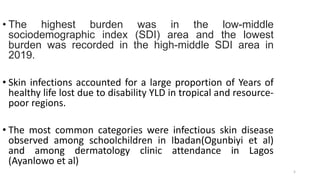
• The highest burden was in the low-middle
sociodemographic index (SDI) area and the lowest
burden was recorded in the high-middle SDI area in
2019.
• Skin infections accounted for a large proportion of Years of
healthy life lost due to disability YLD in tropical and resource-
poor regions.
• The most common categories were infectious skin disease
observed among schoolchildren in Ibadan(Ogunbiyi et al)
and among dermatology clinic attendance in Lagos
(Ayanlowo et al)
6
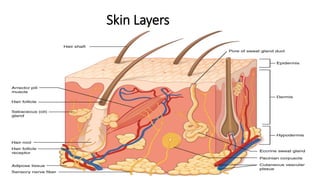
Skin Layers
Risk Factors
•Break in epidermal integrity
•Puncture or stab injury
•Immunosuppression
•Presence of systemic illnesses (DM, malignancy etc)
•Lesions; eczema, ulcers etc
•Low socioeconomic status
•Overcrowding
7
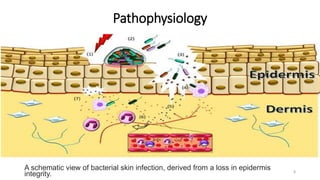
Pathophysiology
A schematic view of bacterial skin infection, derived from a loss in epidermis
integrity. 8
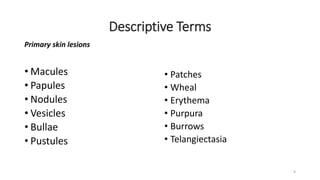
Descriptive Terms
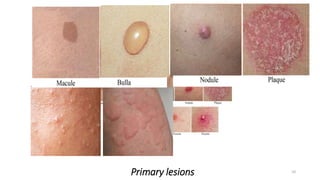
Primary skin lesions
• Macules
• Papules
• Nodules
• Vesicles
• Bullae
• Pustules
• Patches
• Wheal
• Erythema
• Purpura
• Burrows
• Telangiectasia
9
Primary lesions 10
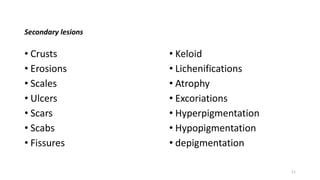
Secondary lesions
• Crusts
• Erosions
• Scales
• Ulcers
• Scars
• Scabs
• Fissures
• Keloid
• Lichenifications
• Atrophy
• Excoriations
• Hyperpigmentation
• Hypopigmentation
• depigmentation
11
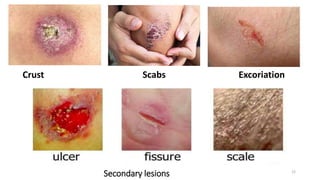
Secondary lesions
Crust Scabs Excoriation
12
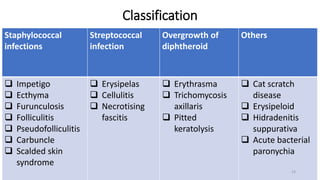
Classification
Staphylococcal
infections
Streptococcal
infection
Overgrowth of
diphtheroid
Others
 Impetigo
 Ecthyma
 Furunculosis
 Folliculitis
 Pseudofolliculitis
 Carbuncle
 Scalded skin
syndrome
 Erysipelas
 Cellulitis
 Necrotising
fascitis
 Erythrasma
 Trichomycosis
axillaris
 Pitted
keratolysis
 Cat scratch
disease
 Erysipeloid
 Hidradenitis
suppurativa
 Acute bacterial
paronychia
13
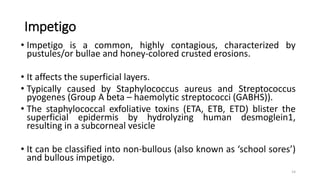
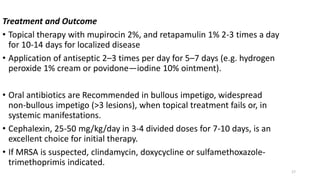
Impetigo
• Impetigo is a common, highly contagious, characterized by
pustules/or bullae and honey-colored crusted erosions.
• It affects the superficial layers.
• Typically caused by Staphylococcus aureus and Streptococcus
pyogenes (Group A beta – haemolytic streptococci (GABHS)).
• The staphylococcal exfoliative toxins (ETA, ETB, ETD) blister the
superficial epidermis by hydrolyzing human desmoglein1,
resulting in a subcorneal vesicle
• It can be classified into non-bullous (also known as ‘school sores’)
and bullous impetigo.
14
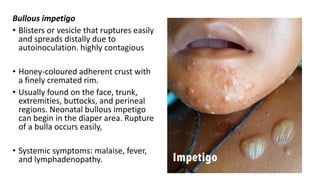
Bullous impetigo
• Blisters or vesicle that ruptures easily
and spreads distally due to
autoinoculation. highly contagious
• Honey-coloured adherent crust with
a finely cremated rim.
• Usually found on the face, trunk,
extremities, buttocks, and perineal
regions. Neonatal bullous impetigo
can begin in the diaper area. Rupture
of a bulla occurs easily,
• Systemic symptoms: malaise, fever,
and lymphadenopathy.
15
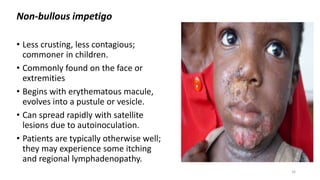
Non-bullous impetigo
• Less crusting, less contagious;
commoner in children.
• Commonly found on the face or
extremities
• Begins with erythematous macule,
evolves into a pustule or vesicle.
• Can spread rapidly with satellite
lesions due to autoinoculation.
• Patients are typically otherwise well;
they may experience some itching
and regional lymphadenopathy.
16
17
Treatment and Outcome
• Topical therapy with mupirocin 2%, and retapamulin 1% 2-3 times a day
for 10-14 days for localized disease
• Application of antiseptic 2–3 times per day for 5–7 days (e.g. hydrogen
peroxide 1% cream or povidone—iodine 10% ointment).
• Oral antibiotics are Recommended in bullous impetigo, widespread
non-bullous impetigo (>3 lesions), when topical treatment fails or, in
systemic manifestations.
• Cephalexin, 25-50 mg/kg/day in 3-4 divided doses for 7-10 days, is an
excellent choice for initial therapy.
• If MRSA is suspected, clindamycin, doxycycline or sulfamethoxazole-
trimethoprimis indicated.
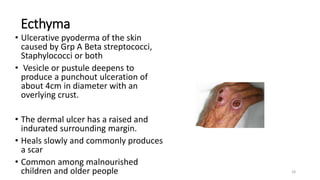
Ecthyma
• Ulcerative pyoderma of the skin
caused by Grp A Beta streptococci,
Staphylococci or both
• Vesicle or pustule deepens to
produce a punchout ulceration of
about 4cm in diameter with an
overlying crust.
• The dermal ulcer has a raised and
indurated surrounding margin.
• Heals slowly and commonly produces
a scar
• Common among malnourished
children and older people 18
19
Treatment
• Soak crusted areas with wet pads to remove crust.
• Topical antibiotics ointment such as fusidic acid or mupirocin are
used.
• Topical antiseptic such as povidone iodine, superoxidised solution, or
hydrogen peroxide cream may be used instead after removing crusts.
• Oral antibiotics are recommended if the infection is extensive or
failed topical treatment. The antibiotic of choice is a penicillin
(dicloxacillin or flucloxacillin)
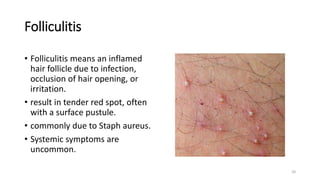
Folliculitis
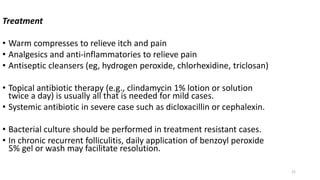
• Folliculitis means an inflamed
hair follicle due to infection,
occlusion of hair opening, or
irritation.
• result in tender red spot, often
with a surface pustule.
• commonly due to Staph aureus.
• Systemic symptoms are
uncommon.
20
21
Treatment
• Warm compresses to relieve itch and pain
• Analgesics and anti-inflammatories to relieve pain
• Antiseptic cleansers (eg, hydrogen peroxide, chlorhexidine, triclosan)
• Topical antibiotic therapy (e.g., clindamycin 1% lotion or solution
twice a day) is usually all that is needed for mild cases.
• Systemic antibiotic in severe case such as dicloxacillin or cephalexin.
• Bacterial culture should be performed in treatment resistant cases.
• In chronic recurrent folliculitis, daily application of benzoyl peroxide
5% gel or wash may facilitate resolution.
Furunculosis and Carbunculosis
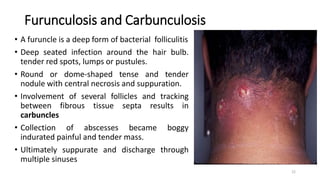
• A furuncle is a deep form of bacterial folliculitis
• Deep seated infection around the hair bulb.
tender red spots, lumps or pustules.
• Round or dome-shaped tense and tender
nodule with central necrosis and suppuration.
• Involvement of several follicles and tracking
between fibrous tissue septa results in
carbuncles
• Collection of abscesses became boggy
indurated painful and tender mass.
• Ultimately suppurate and discharge through
multiple sinuses
22
23
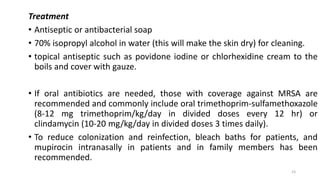
Treatment
• Antiseptic or antibacterial soap
• 70% isopropyl alcohol in water (this will make the skin dry) for cleaning.
• topical antiseptic such as povidone iodine or chlorhexidine cream to the
boils and cover with gauze.
• If oral antibiotics are needed, those with coverage against MRSA are
recommended and commonly include oral trimethoprim-sulfamethoxazole
(8-12 mg trimethoprim/kg/day in divided doses every 12 hr) or
clindamycin (10-20 mg/kg/day in divided doses 3 times daily).
• To reduce colonization and reinfection, bleach baths for patients, and
mupirocin intranasally in patients and in family members has been
recommended.
Cellulitis
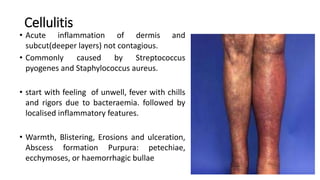
• Acute inflammation of dermis and
subcut(deeper layers) not contagious.
• Commonly caused by Streptococcus
pyogenes and Staphylococcus aureus.
• start with feeling of unwell, fever with chills
and rigors due to bacteraemia. followed by
localised inflammatory features.
• Warmth, Blistering, Erosions and ulceration,
Abscess formation Purpura: petechiae,
ecchymoses, or haemorrhagic bullae
24
25
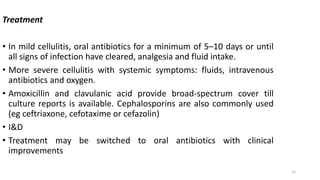
Treatment
• In mild cellulitis, oral antibiotics for a minimum of 5–10 days or until
all signs of infection have cleared, analgesia and fluid intake.
• More severe cellulitis with systemic symptoms: fluids, intravenous
antibiotics and oxygen.
• Amoxicillin and clavulanic acid provide broad-spectrum cover till
culture reports is available. Cephalosporins are also commonly used
(eg ceftriaxone, cefotaxime or cefazolin)
• I&D
• Treatment may be switched to oral antibiotics with clinical
improvements
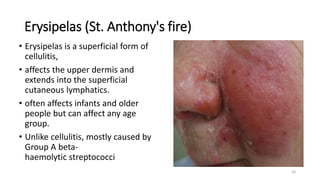
Erysipelas (St. Anthony's fire)
• Erysipelas is a superficial form of
cellulitis,
• affects the upper dermis and
extends into the superficial
cutaneous lymphatics.
• often affects infants and older
people but can affect any age
group.
• Unlike cellulitis, mostly caused by
Group A beta-
haemolytic streptococci
26
27
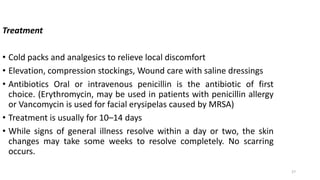
Treatment
• Cold packs and analgesics to relieve local discomfort
• Elevation, compression stockings, Wound care with saline dressings
• Antibiotics Oral or intravenous penicillin is the antibiotic of first
choice. (Erythromycin, may be used in patients with penicillin allergy
or Vancomycin is used for facial erysipelas caused by MRSA)
• Treatment is usually for 10–14 days
• While signs of general illness resolve within a day or two, the skin
changes may take some weeks to resolve completely. No scarring
occurs.
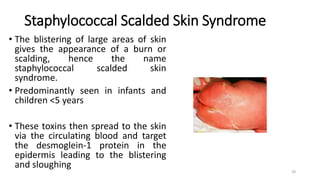
Staphylococcal Scalded Skin Syndrome
• The blistering of large areas of skin
gives the appearance of a burn or
scalding, hence the name
staphylococcal scalded skin
syndrome.
• Predominantly seen in infants and
children <5 years
• These toxins then spread to the skin
via the circulating blood and target
the desmoglein-1 protein in the
epidermis leading to the blistering
and sloughing
28
Treatment
• Systemic therapy, with a semisynthetic penicillinase-resistant
penicillin or vancomycin if MRSA is considered. Clindamycin is
added to inhibit bacterial protein (toxin) synthesis.
• The skin should be gently moistened and cleansed.
• Application of an emollient provides lubrication and decreases
discomfort.
• In neonates, or infants or children with severe infection,
hospitalization is mandatory, with attention to fluid and
electrolyte management, infection control measures, pain
management, and meticulous wound care with contact isolation.
29
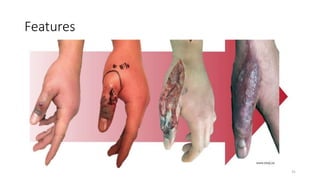
Necrotising fasciitis
• Potentially life-threatening medical emergencies encompass
devastating and rapidly spreading destruction of soft tissue with
associated systemic toxicity.
• The infection is usually polymicrobial. Implicated orgs include S.
aureus, streptococcal species, Klebsiella species, E. coli, and
anaerobic bacteria.
• The rest of the cases and the most fulminant infections, associated
with toxic shock syndrome and a high case fatality rate, are usually
caused by S. pyogenes (group A streptococcus)
• Streptococcal necrotizing fasciitis may occur in the absence of toxic
shock–like syndrome; potentially fatal and associated with
substantial morbidity. 30
Features
31
32
Treatment
• Early supportive care, surgical debridement, repeated within 24-36
hr to confirm that no necrotic tissue remains.
• Meticulous daily wound care is also paramount.
• Parenteral antibiotic therapy with broad-spectrum agents
• Initial empirical therapy should be instituted with vancomycin,
linezolid, daptomycin, or quinupristin to cover Gram-positive and
piperacillin tazobactam to cover Gram-negative organisms.
• An alternative is to add ceftriaxone with metronidazole to cover
mixed aerobic–anaerobic organisms.
• Penicillin with clindamycin is indicated for documented group A
streptococcal necrotizing fasciitis.
Management Approach
• General history/lesion history
• When?
• Where?
• How?
• Progression
• Aggravating/relieving factors (Heat, cold, sun)
• Other symptoms like pruritus
• Contact history
• Allergy
• General relevant medical history
• Care so far
• Examination
• Treatment
33
Complications
• Wider spread infection; cellulitis, lymphangitis, and bacteraemia.
• Streptococcal toxic shock syndrome
• Post inflammatory pigmentation.
• Scarring, particularly with ecthyma,
• Secondary infections
• Infection of other organs, eg osteomyelitis, meningitis,
Endocarditis etc
• Disability
• Death
34
Preventions
• Health education
• Improved general living conditions
• Early presentation
• Proactive treatment
• Prevention of complications
• Rehabilitation
35
Conclusions
• The skin is a complex and dynamic ecosystem that is inhabited
by microorganisms. Interactions between skin microbes and the
host can fall anywhere along the continuum between mutualism
and pathogenicity.
• Skin infections should be managed proactively to limit damage
or prevent further spread.
36
References
• Nelson textbook of pediatrics, twentieth edition
• Hutchison's Clinical Methods An Integrated Approach to Clinical Practice 24th
Edition - 2017
• Bacterial skin infections Nataki Duncan MPH, MHS, Meharry Medical College,
USA; Dr Libby Whittaker, DermNet Staff Writer, New Zealand (2023)
Previous contributors: Dr Amanda Oakley, Dermatologist (2002)
Reviewing dermatologist: Dr Ian Coulson
• Yi Xue, Wu Bao, Jie Zhou, Qing-Liang Zhao, Su-Zhuang Hong, Jun Ren, Bai-Cheng
Yang, Peng Wang, Bin Yin, Cheng-Chao Chu, Gang Liu and Chi-Yu JiaGlobal
Burden, Incidence and Disability-Adjusted Life-Years for Dermatitis: A Systematic
Analysis Combined With Socioeconomic Development Status, 1990–2019
• Ogunbiyi AO, Owoaje E, Ndahi A. Prevalence of skin disorders in school children in
Ibadan, Nigeria. Pediatr Dermatol. 2005;22(1):6-10. doi:10.1111/j.1525-
1470.2005.22101. 37
• Nigwekar SU, Kroshinsky D, Nazarian RM, Goverman J, Malhotra R,
Jackson VA, Calciphylaxis: Risk factors, diagnosis, and treatment, Am J
Kidney Dis 2015;66(1):133-46.
• Auriemma M, Carbone A, Liberato DL, Cupaiolo A, Caponio C, De
Simone C, et al, Treatment of cutaneous calciphylaxis with sodium
thiosulfate: two case reports and a review of the literature. Am J Clin
Dermatol. 2011;12(5):339-46
• Olusola Ayanlowo et al. Pattern of skin diseases amongst children
attending a dermatology clinic in Lagos, Nigeria. Pan African Medical
Journal. 2018;29:162. [doi: 10.11604/pamj.2018.29.162.14503]
38
Thank you
39

Pyodermas.pptx

  • 1.
  • 2.
    Outline • Introduction • Prevalence •Skin layers • Risk factors • Pathophysiology • Descriptive Terms • Classifications • Management approach • Conclusion • References 2
  • 3.
    Introduction • The skinis not only the largest organ of the body, but it also forms a living biological barrier with several functions. • Pyodermas are any pyogenic skin disease (has pus). Skin infections can be caused by bacteria (often Staphylococcal or Streptococcal) either invading normal skin, or affecting a compromised skin barrier • Some bacterial skin infections resolve without serious morbidity. However, skin infections can be severe and result in sepsis or death, particularly in vulnerable patient groups. 3
  • 4.
    Prevalence • Infectious skindiseases are common in the tropics, but due to the paucity of epidemiologic surveys, not much is known about the prevalence and common types found in different sub-populations. • Globally, all skin conditions combined were fourth leading cause of non-fatal disease burden. • In 2005, the World Health Organisation (WHO) reported a high prevalence of skin disease in children from developing countries in sub-Saharan Africa • BSD accounts for a prevalence rate of 7.38-10.27% of the DALYs, an upward trend between 1990 to 2019. 4
  • 5.
    5 • The highestburden was in the low-middle sociodemographic index (SDI) area and the lowest burden was recorded in the high-middle SDI area in 2019. • Skin infections accounted for a large proportion of Years of healthy life lost due to disability YLD in tropical and resource- poor regions. • The most common categories were infectious skin disease observed among schoolchildren in Ibadan(Ogunbiyi et al) and among dermatology clinic attendance in Lagos (Ayanlowo et al)
  • 6.
  • 7.
    Risk Factors •Break inepidermal integrity •Puncture or stab injury •Immunosuppression •Presence of systemic illnesses (DM, malignancy etc) •Lesions; eczema, ulcers etc •Low socioeconomic status •Overcrowding 7
  • 8.
    Pathophysiology A schematic viewof bacterial skin infection, derived from a loss in epidermis integrity. 8
  • 9.
    Descriptive Terms Primary skinlesions • Macules • Papules • Nodules • Vesicles • Bullae • Pustules • Patches • Wheal • Erythema • Purpura • Burrows • Telangiectasia 9
  • 10.
  • 11.
    Secondary lesions • Crusts •Erosions • Scales • Ulcers • Scars • Scabs • Fissures • Keloid • Lichenifications • Atrophy • Excoriations • Hyperpigmentation • Hypopigmentation • depigmentation 11
  • 12.
  • 13.
    Classification Staphylococcal infections Streptococcal infection Overgrowth of diphtheroid Others  Impetigo Ecthyma  Furunculosis  Folliculitis  Pseudofolliculitis  Carbuncle  Scalded skin syndrome  Erysipelas  Cellulitis  Necrotising fascitis  Erythrasma  Trichomycosis axillaris  Pitted keratolysis  Cat scratch disease  Erysipeloid  Hidradenitis suppurativa  Acute bacterial paronychia 13
  • 14.
    Impetigo • Impetigo isa common, highly contagious, characterized by pustules/or bullae and honey-colored crusted erosions. • It affects the superficial layers. • Typically caused by Staphylococcus aureus and Streptococcus pyogenes (Group A beta – haemolytic streptococci (GABHS)). • The staphylococcal exfoliative toxins (ETA, ETB, ETD) blister the superficial epidermis by hydrolyzing human desmoglein1, resulting in a subcorneal vesicle • It can be classified into non-bullous (also known as ‘school sores’) and bullous impetigo. 14
  • 15.
    Bullous impetigo • Blistersor vesicle that ruptures easily and spreads distally due to autoinoculation. highly contagious • Honey-coloured adherent crust with a finely cremated rim. • Usually found on the face, trunk, extremities, buttocks, and perineal regions. Neonatal bullous impetigo can begin in the diaper area. Rupture of a bulla occurs easily, • Systemic symptoms: malaise, fever, and lymphadenopathy. 15
  • 16.
    Non-bullous impetigo • Lesscrusting, less contagious; commoner in children. • Commonly found on the face or extremities • Begins with erythematous macule, evolves into a pustule or vesicle. • Can spread rapidly with satellite lesions due to autoinoculation. • Patients are typically otherwise well; they may experience some itching and regional lymphadenopathy. 16
  • 17.
    17 Treatment and Outcome •Topical therapy with mupirocin 2%, and retapamulin 1% 2-3 times a day for 10-14 days for localized disease • Application of antiseptic 2–3 times per day for 5–7 days (e.g. hydrogen peroxide 1% cream or povidone—iodine 10% ointment). • Oral antibiotics are Recommended in bullous impetigo, widespread non-bullous impetigo (>3 lesions), when topical treatment fails or, in systemic manifestations. • Cephalexin, 25-50 mg/kg/day in 3-4 divided doses for 7-10 days, is an excellent choice for initial therapy. • If MRSA is suspected, clindamycin, doxycycline or sulfamethoxazole- trimethoprimis indicated.
  • 18.
    Ecthyma • Ulcerative pyodermaof the skin caused by Grp A Beta streptococci, Staphylococci or both • Vesicle or pustule deepens to produce a punchout ulceration of about 4cm in diameter with an overlying crust. • The dermal ulcer has a raised and indurated surrounding margin. • Heals slowly and commonly produces a scar • Common among malnourished children and older people 18
  • 19.
    19 Treatment • Soak crustedareas with wet pads to remove crust. • Topical antibiotics ointment such as fusidic acid or mupirocin are used. • Topical antiseptic such as povidone iodine, superoxidised solution, or hydrogen peroxide cream may be used instead after removing crusts. • Oral antibiotics are recommended if the infection is extensive or failed topical treatment. The antibiotic of choice is a penicillin (dicloxacillin or flucloxacillin)
  • 20.
    Folliculitis • Folliculitis meansan inflamed hair follicle due to infection, occlusion of hair opening, or irritation. • result in tender red spot, often with a surface pustule. • commonly due to Staph aureus. • Systemic symptoms are uncommon. 20
  • 21.
    21 Treatment • Warm compressesto relieve itch and pain • Analgesics and anti-inflammatories to relieve pain • Antiseptic cleansers (eg, hydrogen peroxide, chlorhexidine, triclosan) • Topical antibiotic therapy (e.g., clindamycin 1% lotion or solution twice a day) is usually all that is needed for mild cases. • Systemic antibiotic in severe case such as dicloxacillin or cephalexin. • Bacterial culture should be performed in treatment resistant cases. • In chronic recurrent folliculitis, daily application of benzoyl peroxide 5% gel or wash may facilitate resolution.
  • 22.
    Furunculosis and Carbunculosis •A furuncle is a deep form of bacterial folliculitis • Deep seated infection around the hair bulb. tender red spots, lumps or pustules. • Round or dome-shaped tense and tender nodule with central necrosis and suppuration. • Involvement of several follicles and tracking between fibrous tissue septa results in carbuncles • Collection of abscesses became boggy indurated painful and tender mass. • Ultimately suppurate and discharge through multiple sinuses 22
  • 23.
    23 Treatment • Antiseptic orantibacterial soap • 70% isopropyl alcohol in water (this will make the skin dry) for cleaning. • topical antiseptic such as povidone iodine or chlorhexidine cream to the boils and cover with gauze. • If oral antibiotics are needed, those with coverage against MRSA are recommended and commonly include oral trimethoprim-sulfamethoxazole (8-12 mg trimethoprim/kg/day in divided doses every 12 hr) or clindamycin (10-20 mg/kg/day in divided doses 3 times daily). • To reduce colonization and reinfection, bleach baths for patients, and mupirocin intranasally in patients and in family members has been recommended.
  • 24.
    Cellulitis • Acute inflammationof dermis and subcut(deeper layers) not contagious. • Commonly caused by Streptococcus pyogenes and Staphylococcus aureus. • start with feeling of unwell, fever with chills and rigors due to bacteraemia. followed by localised inflammatory features. • Warmth, Blistering, Erosions and ulceration, Abscess formation Purpura: petechiae, ecchymoses, or haemorrhagic bullae 24
  • 25.
    25 Treatment • In mildcellulitis, oral antibiotics for a minimum of 5–10 days or until all signs of infection have cleared, analgesia and fluid intake. • More severe cellulitis with systemic symptoms: fluids, intravenous antibiotics and oxygen. • Amoxicillin and clavulanic acid provide broad-spectrum cover till culture reports is available. Cephalosporins are also commonly used (eg ceftriaxone, cefotaxime or cefazolin) • I&D • Treatment may be switched to oral antibiotics with clinical improvements
  • 26.
    Erysipelas (St. Anthony'sfire) • Erysipelas is a superficial form of cellulitis, • affects the upper dermis and extends into the superficial cutaneous lymphatics. • often affects infants and older people but can affect any age group. • Unlike cellulitis, mostly caused by Group A beta- haemolytic streptococci 26
  • 27.
    27 Treatment • Cold packsand analgesics to relieve local discomfort • Elevation, compression stockings, Wound care with saline dressings • Antibiotics Oral or intravenous penicillin is the antibiotic of first choice. (Erythromycin, may be used in patients with penicillin allergy or Vancomycin is used for facial erysipelas caused by MRSA) • Treatment is usually for 10–14 days • While signs of general illness resolve within a day or two, the skin changes may take some weeks to resolve completely. No scarring occurs.
  • 28.
    Staphylococcal Scalded SkinSyndrome • The blistering of large areas of skin gives the appearance of a burn or scalding, hence the name staphylococcal scalded skin syndrome. • Predominantly seen in infants and children <5 years • These toxins then spread to the skin via the circulating blood and target the desmoglein-1 protein in the epidermis leading to the blistering and sloughing 28
  • 29.
    Treatment • Systemic therapy,with a semisynthetic penicillinase-resistant penicillin or vancomycin if MRSA is considered. Clindamycin is added to inhibit bacterial protein (toxin) synthesis. • The skin should be gently moistened and cleansed. • Application of an emollient provides lubrication and decreases discomfort. • In neonates, or infants or children with severe infection, hospitalization is mandatory, with attention to fluid and electrolyte management, infection control measures, pain management, and meticulous wound care with contact isolation. 29
  • 30.
    Necrotising fasciitis • Potentiallylife-threatening medical emergencies encompass devastating and rapidly spreading destruction of soft tissue with associated systemic toxicity. • The infection is usually polymicrobial. Implicated orgs include S. aureus, streptococcal species, Klebsiella species, E. coli, and anaerobic bacteria. • The rest of the cases and the most fulminant infections, associated with toxic shock syndrome and a high case fatality rate, are usually caused by S. pyogenes (group A streptococcus) • Streptococcal necrotizing fasciitis may occur in the absence of toxic shock–like syndrome; potentially fatal and associated with substantial morbidity. 30
  • 31.
  • 32.
    32 Treatment • Early supportivecare, surgical debridement, repeated within 24-36 hr to confirm that no necrotic tissue remains. • Meticulous daily wound care is also paramount. • Parenteral antibiotic therapy with broad-spectrum agents • Initial empirical therapy should be instituted with vancomycin, linezolid, daptomycin, or quinupristin to cover Gram-positive and piperacillin tazobactam to cover Gram-negative organisms. • An alternative is to add ceftriaxone with metronidazole to cover mixed aerobic–anaerobic organisms. • Penicillin with clindamycin is indicated for documented group A streptococcal necrotizing fasciitis.
  • 33.
    Management Approach • Generalhistory/lesion history • When? • Where? • How? • Progression • Aggravating/relieving factors (Heat, cold, sun) • Other symptoms like pruritus • Contact history • Allergy • General relevant medical history • Care so far • Examination • Treatment 33
  • 34.
    Complications • Wider spreadinfection; cellulitis, lymphangitis, and bacteraemia. • Streptococcal toxic shock syndrome • Post inflammatory pigmentation. • Scarring, particularly with ecthyma, • Secondary infections • Infection of other organs, eg osteomyelitis, meningitis, Endocarditis etc • Disability • Death 34
  • 35.
    Preventions • Health education •Improved general living conditions • Early presentation • Proactive treatment • Prevention of complications • Rehabilitation 35
  • 36.
    Conclusions • The skinis a complex and dynamic ecosystem that is inhabited by microorganisms. Interactions between skin microbes and the host can fall anywhere along the continuum between mutualism and pathogenicity. • Skin infections should be managed proactively to limit damage or prevent further spread. 36
  • 37.
    References • Nelson textbookof pediatrics, twentieth edition • Hutchison's Clinical Methods An Integrated Approach to Clinical Practice 24th Edition - 2017 • Bacterial skin infections Nataki Duncan MPH, MHS, Meharry Medical College, USA; Dr Libby Whittaker, DermNet Staff Writer, New Zealand (2023) Previous contributors: Dr Amanda Oakley, Dermatologist (2002) Reviewing dermatologist: Dr Ian Coulson • Yi Xue, Wu Bao, Jie Zhou, Qing-Liang Zhao, Su-Zhuang Hong, Jun Ren, Bai-Cheng Yang, Peng Wang, Bin Yin, Cheng-Chao Chu, Gang Liu and Chi-Yu JiaGlobal Burden, Incidence and Disability-Adjusted Life-Years for Dermatitis: A Systematic Analysis Combined With Socioeconomic Development Status, 1990–2019 • Ogunbiyi AO, Owoaje E, Ndahi A. Prevalence of skin disorders in school children in Ibadan, Nigeria. Pediatr Dermatol. 2005;22(1):6-10. doi:10.1111/j.1525- 1470.2005.22101. 37
  • 38.
    • Nigwekar SU,Kroshinsky D, Nazarian RM, Goverman J, Malhotra R, Jackson VA, Calciphylaxis: Risk factors, diagnosis, and treatment, Am J Kidney Dis 2015;66(1):133-46. • Auriemma M, Carbone A, Liberato DL, Cupaiolo A, Caponio C, De Simone C, et al, Treatment of cutaneous calciphylaxis with sodium thiosulfate: two case reports and a review of the literature. Am J Clin Dermatol. 2011;12(5):339-46 • Olusola Ayanlowo et al. Pattern of skin diseases amongst children attending a dermatology clinic in Lagos, Nigeria. Pan African Medical Journal. 2018;29:162. [doi: 10.11604/pamj.2018.29.162.14503] 38
  • 39.

Editor's Notes

  • #4 The skin is the principal site of interaction with the surrounding world. It serves as a protective barrier preventing internal tissues from exposure to trauma, ultraviolet (UV) radiation, temperature extremes, toxins, and bacteria. Other important functions include sensory perception, immunologic surveillance, thermoregulation, and control of insensible fluid loss.
  • #5  The disability-adjusted life year DALY is a measure of overall disease burden, expressed as the number of years lost due to ill-health, disability or early death. Years of healthy life lost due to disability (YLD): One YLD represents the equivalent of one full year of healthy life lost due to disability or ill-health.
  • #7 Layers of Skin: The skin is composed of two main layers: the epidermis, made of closely packed epithelial cells, and the dermis, made of dense, irregular connective tissue that houses blood vessels, hair follicles, sweat glands, and other structures. Beneath the dermis lies the hypodermis, which is composed mainly of loose connective and fatty tissues.
  • #8 Low socioeconomic status Poor hygiene, poor drinking and bathing water, Overcrowding Malnutrition Large family size Poor housing or living conditions etc Certain comorbid conditions increase susceptibility to bacterial skin infections, such as diabetes, vascular insufficiency, and immunocompromised (eg, chemotherapy patients with neutropaenia).
  • #9 (1) An injury provokes a skin lesion that constitutes a gateway for microbial contamination. (2) Bacteria colonize the skin and produce a biofilm. (3) Bacteria secrete toxins that extend the tissue degradation, reaching dermis layer. (4) Resident immune cells recognize the bacteria and secrete immune mediators to neutralize the pathogens and recruit other immune cells. (5) Cell debris (damage-associated molecular patterns (DAMPS) and lipid mediators) activate immune cells and serve as chemoattractors. (6) Blood leukocytes are recruited to combat the pathogens. (7) Effector substances released by immune cells also promote tissue damage and amplify the inflammation. Bacteraemia could result, bacteria in the bloodstream. Systemic symptoms are soon followed by the development of a localised area of painful, red, swollen skin. Skin flora : mixture of staph, strept and diphtheroids. Superficial surface floral: Staphylococcus epidermidis, aerobic diphtheroids Deeper Layer floral: Anaerobic diptheroids (propioni bacteria)
  • #10 Primary lesions, which are associated with specific causes on previously unaltered skin, occur as initial reactions to invasions by pathogens.
  • #11 Macule: flat lesion with skin discolouration, nonpalpable <10mm. Vascular dilatation and inflammation produce erythema. Bulla: large fluid-filled sac/blister >0.5cm Nodule is solid palpable >0.5cm in diameter. A vascular papule or nodule is known as an haemangioma. Plague: palpable flat-topped discoid lesion >2cm Papules : A papule is a circumscribed, raised lesion, <0.5cm in diameter. Wheal: elevated lesion white red margin due to dermal edema Vesicles: raised lesions that contain fluid <0.5cm. A bulla is a vesicle >0.5 cm. Pustules: applied to blister containing purulent material or pus
  • #12 Secondary skin lesions result from changes over time caused by disease progression, manipulation (scratching, picking, rubbing), or treatment.
  • #13 Crust: dried exudate Scabs: protective crust on a healing wound Excoriation: partial or complete loss of epidermis as a result of scratching. Ulcer: loss of the whole thickness of the epidermis and upper dermis. Healing results in a scar. Fissure: slit through the whole thickness of the skin. Scale: loose outer layer of the epidermis in large, scale-like flakes. The skin appears dry and cracked. Scaling skin is also called: desquamation. dropping of scales. Erosion: An erosion is a superficial loss of epidermis that generally heals without scarring.
  • #14 Anatomical or Aetiological classification Skin flora : mixture of staph, strept and diphtheroids. Superficial surface floral: Staphylococcus epidermidis, aerobic diphtheroids Deeper Layer floral: Anaerobic diptheroids (propioni bacteria)
  • #16 Bullous impetigo is always caused by S. aureus strains that produce exfoliative toxins. Bullous impetigo is mainly an infection of infants and young children. Flaccid, transparent bullae develop most commonly on skin of the face, buttocks, trunk, perineum, and extremities. Neonatal bullous impetigo can begin in the diaper area. Rupture of a bulla occurs easily, leaving a narrow rim of scale at the edge of shallow, moist erosion. Surrounding erythema and regional adenopathy are generally absent. Unlike those of nonbullous impetigo, lesions of bullous impetigo are a manifestation of localized staphylococcal scalded skin syndrome and develop on intact skin.
  • #17 Nonbullous impetigo accounts for more than 70% of cases. begin on the skin of the face or on extremities Precede by insect bites, abrasions, lacerations, chickenpox, scabies pediculosis, and burns. A tiny vesicle or pustule forms initially and rapidly develops into a honey-colored crusted plaque that is generally <2 cm in diameter. The infection may be spread to other parts of the body by the fingers, clothing, and towels. Lesions are associated with little to no pain or surrounding erythema, and constitutional symptoms are generally absent. Pruritus occurs occasionally, regional adenopathy is found in up to 90% of cases, and leukocytosis is present in approximately 50%.
  • #18 Treatment and Outcome Impetigo is usually self-limiting and heals spontaneously in 2–3 weeks; or 10 days with treatment. Topical antibiotics recommended in non-bullous impetigo, (Fusidic acid is first-line) application of antiseptic 2–3 times per day for 5–7 days is recommended (e.g. hydrogen peroxide 1% cream or povidone—iodine 10% ointment). Mupirocin use is often reserved for possible MRSA infection. Oral antibiotics Recommended in bullous impetigo, widespread non-bullous impetigo (>3 lesions), when topical treatment fails, a person is at high risk of complications, or when a person is systemically unwell. Oral flucloxacillin is often the first line antibiotic of choice. Alternatives may include trimethoprim + sulfamethoxazole or erythromycin (eg, if penicillin allergic or for MRSA infection).
  • #19 It is a deep form of impetigo, as the same bacteria causing the infection are involved. Ecthyma causes deeper erosions of the skin into the dermis. Streptococcus pyogenes and Staphylococcus aureus are the bacteria responsible for ecthyma. People of all ages, sex and race can be affected, although children, older people and immunocompromised patients (eg, diabetes, neutropenia, immunosuppressive medication, malignancy, HIV) tend to have a higher chance of infection. Other factors that increase the risk of ecthyma include: Untreated impetigo, particularly in patients with poor hygiene Poor hygiene and crowded living conditions High temperature and humidity in tropical places Presence of minor injuries or other skin conditions such as scratches, insect bites or dermatitis The initial lesion is a vesicle or vesicular pustule with an erythematous base that erodes through the epidermis into the dermis to form an ulcer with elevated margins. The ulcer becomes obscured by a dry, heaped-up, tightly adherent crust that contributes to the persistence of the infection and scar formation.
  • #20 Treatment depends on the extent and severity of infection. Any underlying disease or skin infection such as scabies or dermatitis should also be treated. Improve hygiene Another critical factor to consider in the overall management of ecthyma is to improve hygiene. Measures to take include: Washing daily with antiseptic soap or cleanser Changing and laundering clothes and linen frequently Using separate towels and flannels to prevent spreading infection. Use nets and repellent sprays to prevent insect bites. Reduce scratching at insect bites, chickenpox blisters and scabies by applying calamine lotion, colloidal oatmeal or baking soda.
  • #21 Folliculitis, or superficial infection of the hair follicle, is most often caused by S. aureus (Bockhart impetigo). Bacterial folliculitis may be superficial or involve the whole hair follicle (a boil). It may arise on any body site but is most often diagnosed in the scalp, beard area, axilla, buttocks and extremities. Different types of bacterial folliculitis are described below. Swabs should be taken from the pustules for cytology and culture in the laboratory to determine if folliculitis is due to an infection.
  • #22 Other recommended treatment includes careful hygiene, antiseptic cleanser or cream, antibiotic ointment, or oral antibiotics
  • #23 Furunculosis or boils presents as one or more painful, hot, firm or fluctuant, red nodules or walled-off abscesses (collections of pus). A carbuncle is the name used when a focus of infection involves several follicles and has multiple draining sinuses. Recovery leaves a scar. Boils present as one or more tender red spots, lumps or pustules. Careful inspection reveals that the boil is centred on a hair follicle. A boil is a deep form of bacterial folliculitis; superficial folliculitis is sometimes present at the same time. Staphylococcus aureus can be cultured from the skin lesions. If there are multiple heads, the lesion is called a carbuncle. Large boils form abscesses, defined as an accumulation of pus within a cavity. Cellulitis may also occur, i.e, infection of the surrounding tissues, and this may cause fever and illness. This follicular lesion may originate from a preceding folliculitis or may arise initially as a deep-seated, tender, erythematous, perifollicular nodule. Although lesions are initially indurated, central necrosis and suppuration follow, leading to rupture and discharge of a central core of necrotic tissue and destruction of the follicle (Fig. 665-12). Healing occurs with scar formation. Sites of predilection are the hair-bearing areas on the face, neck, axillae, buttocks, and groin. Pain may be intense if the lesion is situated in an area where the skin is relatively fixed, such as in the external auditory canal or over the nasal cartilages. Patients with furuncles usually have no constitutional symptoms; bacteremia may occasionally ensue. Rarely, lesions on the upper lip or cheek may lead to cavernous sinus thrombosis. Infection of a group of contiguous follicles, with multiple drainage points, accompanied by inflammatory changes in surrounding connective tissue is a carbuncle. Carbuncles may be accompanied by fever, leukocytosis, and bacteremia
  • #24 Other members of the family with boils should also follow a skin cleansing regime Treatment for furuncle and carbuncle includes regular bathing with antimicrobial soaps (chlorhexidine) and wearing of loose-fitting clothing to minimize predisposing factors for furuncle formation. Frequent application of a hot, moist compress may facilitate drainage of lesions. Large lesions may be drained by a small incision. Carbuncles and large or numerous furuncles should be treated with systemic antibiotics chosen on the basis of culture and sensitivity testing results If oral antibiotics are needed, those with coverage against MRSA are recommended and commonly include oral trimethoprim-sulfamethoxazole (8-12 mg trimethoprim/kg/day in divided doses every 12 hr) or clindamycin (10-20 mg/kg/day in divided doses 3 times daily). To reduce colonization and hence reinfection, bleach baths for patients, and mupirocin intranasally in patients and in family members has been recommended.
  • #25 not contagious as it affects the deeper layers of the skin. Rare causes of cellulitis include:  Pseudomonas aeruginosa, usually in a puncture wound of foot or hand Haemophilus influenzae, in children with facial cellulitis Anaerobes, Eikenella, Streptococcus viridans, due to human bite Pasteurella multocida, due to cat or dog bite The diagnosis of cellulitis is primarily based on clinical features including a physical exam. Investigations may reveal: Leukocytosis (raised white cell count). Elevated C-reactive protein (CRP) The causative organism, on the culture of blood or of pustules, crusts, erosions or wound. Imaging may be performed. For example: Chest X-ray in case of heart failure or pneumonia Doppler ultrasound to look for blood clots (deep vein thrombosis) MRI in case of necrotising fasciitis. Cellulitis is potentially serious. The patient should rest and elevate the affected limb. The edge of the involved area of swelling should be marked to monitor progression/regression of the infection.
  • #26 Clindamycin, sulfamethoxazole/trimethoprim, doxycycline and vancomycin are used in patients with penicillin or cephalosporin allergy, or where infection with methicillin-resistant Staphylococcus aureus is suspected  
  • #27 Erythematous eruption and spreads with a well defined edge. irregular, follow lymphatic channels. It is also known as St Anthony's fire due to the intense rash associated with it. Symptoms and signs of erysipelas are usually abrupt in onset and often accompanied by fevers, chills and shivering. predominantly affects the skin of the lower limbs, but when it involves the face, it can have a characteristic butterfly distribution on the cheeks and across the bridge of the nose. It is bright red, firm and swollen. It may be finely dimpled (like an orange skin). It may be blistered, and in severe cases may become necrotic. Bleeding into the skin may cause purpura. Cellulitis does not usually exhibit such marked swelling but shares other features with erysipelas, such as pain and increased warmth of affected skin. In infants, it often occurs in the umbilicus or diaper/napkin region. Bullous erysipelas can be due to streptococcal infection or co-infection with Staphylococcus aureus (including MRSA). Unlike cellulitis, almost all erysipelas is caused by Group A beta-haemolytic streptococci (Streptococcus pyogenes). Staphylococcus aureus, including methicillin-resistant strains (MRSA), Streptococcus pneumoniae, Klebsiella pneumoniae, Yersinia enterocolitica, and Haemophilus influenzae have also been found rarely to cause erysipelas.
  • #28  Long term preventive treatment with penicillin is often required for recurrent attacks of erysipelas. Erysipelas recurs in up to one-third of patients due to the persistence of risk factors and also because erysipelas itself can cause lymphatic damage (hence impaired drainage of toxins) in involved skin which predisposes to further attacks. If patients have recurrent attacks, long term preventive treatment with penicillin may be considered.
  • #29 Includes a range of diseases from localized bullous lesions to generalized cutaneous involvement with systemic illness. Its a severe superficial blistering skin disorder characterized by the detachment of the epidermis triggered by exotoxin release from S. aureus  (exotoxins exfoliative toxins A and B) These toxins bind to a specific desmosome present in the epidermis known as desmoglein-1 Desmoglein-1 is responsible for maintaining cell-to-cell adherence within the epidermis and preserving skin integrity The desmoglein-1 protein is broken down leading to the skin cells becoming loose and “unstuck” Loss of the epidermal layer and associated blistering occurs. Blisters easily rupture leading to the top layer of the skin (epidermis) peeling off easily, often in large sheets. Exposure of the underlying, moist, reddish tissue leaves the skin with a burned-like appearance. Gentle rubbing of the skin causes exfoliation (Nikolsky sign is positive). Desmoglein-1 is absent from mucosal epithelium, which explains why mucosae are unaffected in SSSS.  As large sheets of epidermis peel away, moist, glistening, denuded areas become apparent, initially in the flexures and subsequently over much of the body surface. This development may lead to secondary cutaneous infection, sepsis, and fluid and electrolyte disturbances. The desquamative phase begins after 2-5 days of cutaneous erythema; healing occurs without scarring in 10-14 days.
  • #30 Systemic therapy, given either orally in cases of localized involvement or parenterally with a semisynthetic penicillinase-resistant penicillin or vancomycin if MRSA is considered, should be prescribed. Clindamycin should be added to inhibit bacterial protein (toxin) synthesis. The skin should be gently moistened and cleansed. Application of an emollient provides lubrication and decreases discomfort. Topical antibiotics are unnecessary. In neonates, or in infants or children with severe infection, hospitalization is mandatory, with attention to fluid and electrolyte management, infection control measures, pain management, and meticulous wound care with contact isolation. In particularly severe disease, care in an intensive care or burn unit is required. Recovery is usually rapid, but complications such as excessive fluid loss, electrolyte imbalance, faulty temperature regulation, pneumonia, septicemia, and cellulitis may cause increased morbidity. First-line: a penicillinase-resistant, anti-staphylococcal antibiotic such as IV flucloxacillin. Other options: ceftriaxone, clarithromycin (for penicillin-allergy), cefazolin, nafcillin, or oxacillin. Methicillin resistance (MRSA) infection: vancomycin. Paracetamol with addition of alternative analgesia such as ibuprofen or oral morphine if required whilst the skin heals
  • #31 The majority (55-75%) of cases of necrotizing fasciitis are polymicrobial in nature (synergistic necrotizing fasciitis), with an average of 4 different organisms isolated. NF is due to the effects of bacterial toxins and enzymes (eg, hyaluronidase) that enable horizontal extension through the fascial planes, leading to intravascular thromboses and ischemic necrosis with disturbance of the host’s humoral and cellular immune response. Inflammation and necrosis spread along the fascia and muscle, with vascular occlusion. Streptococci produce: M proteins, which initiate an inflammatory response with the release of numerous cytokines (IL-1, IL-6, TNFα) Exotoxins, which destroy neutrophils allowing bacterial growth and destroying tissues. Aerobic and anaerobic bacteria produce hydrogen, nitrogen, and hydrogen sulfide gases that destroy hyaluronic acid enabling the spread of infection. Type I (polymicrobial ie, more than one bacteria involved) Type II (due to haemolytic group A streptococcus, and/or staphylococci including methicillin-resistant strains/MRSA) Type III (gas gangrene eg, due to clostridium) Other: marine organisms (vibrio species, Aeromonas hydrophila, considered Type III in some reports) and fungal infections (candida and zygomycetes, type IV in some reports). Skin changes may appear over 24-48 hr as nutrient vessels are thrombosed and cutaneous ischemia develops. Early clinical findings include ill-defined cutaneous erythema and edema that extends beyond the area of erythema. Additional signs include formation of bullae filled initially with strawcolored and later bluish to hemorrhagic fluid, and darkening of affected tissues from red to purple to blue. Skin anesthesia and, finally, frank tissue gangrene and slough develop owing to the ischemia and necrosis. Vesiculation or bulla formation, ecchymoses, crepitus, anesthesia, and necrosis are ominous signs indicative of advanced disease. Skin changes may appear over 24-48 hr as nutrient vessels are thrombosed and cutaneous ischemia develops. Early clinical findings include ill-defined cutaneous erythema and edema that extends beyond the area of erythema. Additional signs include formation of bullae filled initially with strawcolored and later bluish to hemorrhagic fluid, and darkening of affected tissues from red to purple to blue. Skin anesthesia and, finally, frank tissue gangrene and slough develop owing to the ischemia and necrosis. Vesiculation or bulla formation, ecchymoses, crepitus, anesthesia, and necrosis are ominous signs indicative of advanced disease. In an extremity, a compartment syndrome may develop, manifesting as tight edema, pain on motion, and loss of distal sensation and pulses; this is a surgical emergency.
  • #32 The affected area starts to swell and may show a purplish rash Large dark marks form that turn into blisters filled with dark fluid The wound starts to die and area becomes blackened (necrosis) Oedema is common A fine crackling sensation under the skin (crepitus) is due to gas in the tissues Severe pain continues until necrosis/gangrene destroys peripheral nerves when the pain subsides The infection may not improve when antibiotics are given By about days 4–5, the patient is very ill with dangerously low blood pressure and high temperature. The infection has spread into the bloodstream and the body goes into toxic shock. The patient may have altered levels of consciousness.
  • #33 Early supportive care, surgical debridement, and parenteral antibiotic administration are mandatory for necrotizing fasciitis. All devitalized tissue should be removed to freely bleeding edges, and repeat exploration is generally indicated within 24-36 hr to confirm that no necrotic tissue remains. This procedure may need to be repeated on several occasions until devitalized tissue has ceased to form. Meticulous daily wound care is also paramount. Parenteral antibiotic therapy should be initiated as soon as possible with broad-spectrum agents against all potential pathogens. Initial empirical therapy should be instituted with vancomycin, linezolid, daptomycin, or quinupristin to cover Gram-positive and piperacillin tazobactam to cover Gram-negative organisms. An alternative is to add ceftriaxone with metronidazole to cover mixed aerobic–anaerobic organisms. Therapy should then be based on sensitivity of isolated organisms. Penicillin with clindamycin is indicated for documented group A streptococcal necrotizing fasciitis. Some centers employ hyperbaric oxygen therapy, although it should not delay resuscitation or surgical debridement. The combined case fatality rate among children and adults with necrotizing fasciitis and syndrome due to polymicrobial infection or S. pyogenes has been as high as 60%. Death is less common in children, however, and in cases not complicated by toxic shock–like syndrome.
  • #35 Local Systemic Short Long term Wider spread infection: cellulitis, lymphangitis, and bacteraemia. Post-streptococcal glomerulonephritis: a rare, acute renal condition following infection with Streptococcus pyogenes (group A streptococcus). This is due to a type III hypersensitivity reaction and presents 2–6 weeks post-skin infection. Streptococcal toxic shock syndrome: a rare complication causing diffuse erythematous rash, hypotension, and pyrexia. Post inflammatory pigmentation. Scarring, particularly with ecthyma Secondary infections such as sepsis, cellulitis, and pneumonia in SSS and Loss of bodily fluids and salts leading to dehydration and electrolyte imbalance Infection of other organs, eg osteomyelitis, meningitis Endocarditis (heart valve infection).
  • #36 Debriding superficial pyoderma and repeated cleansing the exposed lesions with topical antiseptics such as chlorhexidine removes the source of infection and minimizes its spread to adjacent skin sites or to other patients. Many secondary superficial skin infections, such as the web infections, will clear with simple twice-daily cleansing. For foot infections, the patient should wear open shoes or sandals, which permit air circulation. Aluminum chloride, a drying agent, inhibits overgrowth of opportunistic bacteria in foot, perineal, and axillary areas. Keratinolytic agents (e.g., topical salicylates) remove hyperkeratotic lesions that harbor pathogens, improving the exposure of the infected skin surface to other topical treatments.