Athlete's Feet
Definition
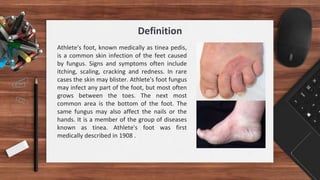
Athlete's foot, known medically as tinea pedis,
is a common skin infection of the feet caused
by fungus. Signs and symptoms often include
itching, scaling, cracking and redness. In rare
cases the skin may blister. Athlete's foot fungus
may infect any part of the foot, but most often
grows between the toes. The next most
common area is the bottom of the foot. The
same fungus may also affect the nails or the
hands. It is a member of the group of diseases
known as tinea. Athlete's foot was first
medically described in 1908 .
Globally, athlete's foot affects about 15% of the population. Males are
more often affected than females. It occurs most frequently in older
children or younger adults.
Athlete's foot is caused by a number of different fungi, including species of
Trichophyton, Epidermophyton, and Microsporum. The condition is
typically acquired by coming into contact with infected skin, or fungus in
the environment. Common places where the fungi can survive are around
swimming pools and in locker rooms. They may also be spread from other
animals. Usually diagnosis is made based on signs and symptoms;
however, it can be confirmed either by culture or seeing hyphae using a
microscope.
You are at higher risk of athlete's foot if you:
•Are a man
•Frequently wear damp socks or tight fitting shoes
•Share mats, rugs, bed linens, clothes or shoes with someone
who has a fungal infection
•Walk barefoot in public areas where the infection can spread,
such as locker rooms, saunas, swimming pools, communal
baths and showers
Risk factors
Causes
The majority of athlete’s foot cases are caused by a variety of fungi all
belonging to a group called dermatophytes, which also causes jock itch
and ringworm. The fungi thrive in closed, warm, moist environments and
feed on keratin, a protein found in hair, nails, and skin. Rarely, athlete’s
foot can be caused by non-dermatophytes, like yeast (candida).
Athlete's foot is mildly contagious. It can be spread through direct contact
with the infection and by skin particles left on towels, shoes, or floors.
Walking barefoot may increase your chance of contracting athlete's foot.
The risk of developing athlete's foot can also depend on your
susceptibility. For example, people who have impaired immune systems
or diabetes are at greater risk of infection if they have an open cut or sore
on their feet.
Symptoms
Athlete's foot usually causes a scaly red rash. The rash typically begins in
between the toes. Itching is often the worst right after you take off your
shoes and socks.
Some types of athlete's foot feature blisters or ulcers. The moccasin
variety of athlete's foot causes chronic dryness and scaling on the soles
that extends up the side of the foot. It can be mistaken for eczema or dry
skin.
The infection can affect one or both feet and can spread to your hand —
especially if you scratch or pick at the infected parts of your feet.
Your athlete's foot infection can spread to other parts of your body,
including:
• Your hand. People who scratch or pick at the infected parts of
their feet may develop a similar infection in one of their hands.
• Your nails. The fungi associated with athlete's foot can also infect
your toenails, a location that tends to be more resistant to
treatment.
• Your groin. Jock itch is often caused by the same fungus that
results in athlete's foot. It's common for the infection to spread
from the feet to the groin as the fungus can travel on your hands
or on a towel.
Complications
These tips can help you avoid athlete's foot or ease the symptoms if
infection occurs:
•Keep your feet dry, especially between your toes. Go barefoot to let your
feet air out as much as possible when you're home. Dry between your toes
after a bath or shower.
•Change socks regularly. If your feet get very sweaty, change your socks
twice a day.
•Wear light, well-ventilated shoes. Avoid shoes made of synthetic material,
such as vinyl or rubber.
•Alternate pairs of shoes. Don't wear the same pair every day so that you
give your shoes time to dry after each use.
•Protect your feet in public places. Wear waterproof sandals or shoes
around public pools, showers and lockers rooms.
•Treat your feet. Use powder, preferably antifungal, on your feet daily.
Prevention
If your athlete's foot is mild, your doctor may suggest using an over-the-
counter antifungal ointment, cream, powder or spray.
If your athlete's foot doesn't respond, you may need a prescription-strength
medication to apply to your feet. Severe infections may require antifungal
pills that you take by mouth.
Treatment
Athlete's feet

Athlete's feet

  • 1.
  • 2.
    Definition Athlete's foot, knownmedically as tinea pedis, is a common skin infection of the feet caused by fungus. Signs and symptoms often include itching, scaling, cracking and redness. In rare cases the skin may blister. Athlete's foot fungus may infect any part of the foot, but most often grows between the toes. The next most common area is the bottom of the foot. The same fungus may also affect the nails or the hands. It is a member of the group of diseases known as tinea. Athlete's foot was first medically described in 1908 .
  • 3.
    Globally, athlete's footaffects about 15% of the population. Males are more often affected than females. It occurs most frequently in older children or younger adults. Athlete's foot is caused by a number of different fungi, including species of Trichophyton, Epidermophyton, and Microsporum. The condition is typically acquired by coming into contact with infected skin, or fungus in the environment. Common places where the fungi can survive are around swimming pools and in locker rooms. They may also be spread from other animals. Usually diagnosis is made based on signs and symptoms; however, it can be confirmed either by culture or seeing hyphae using a microscope.
  • 4.
    You are athigher risk of athlete's foot if you: •Are a man •Frequently wear damp socks or tight fitting shoes •Share mats, rugs, bed linens, clothes or shoes with someone who has a fungal infection •Walk barefoot in public areas where the infection can spread, such as locker rooms, saunas, swimming pools, communal baths and showers Risk factors
  • 5.
    Causes The majority ofathlete’s foot cases are caused by a variety of fungi all belonging to a group called dermatophytes, which also causes jock itch and ringworm. The fungi thrive in closed, warm, moist environments and feed on keratin, a protein found in hair, nails, and skin. Rarely, athlete’s foot can be caused by non-dermatophytes, like yeast (candida). Athlete's foot is mildly contagious. It can be spread through direct contact with the infection and by skin particles left on towels, shoes, or floors. Walking barefoot may increase your chance of contracting athlete's foot. The risk of developing athlete's foot can also depend on your susceptibility. For example, people who have impaired immune systems or diabetes are at greater risk of infection if they have an open cut or sore on their feet.
  • 6.
    Symptoms Athlete's foot usuallycauses a scaly red rash. The rash typically begins in between the toes. Itching is often the worst right after you take off your shoes and socks. Some types of athlete's foot feature blisters or ulcers. The moccasin variety of athlete's foot causes chronic dryness and scaling on the soles that extends up the side of the foot. It can be mistaken for eczema or dry skin. The infection can affect one or both feet and can spread to your hand — especially if you scratch or pick at the infected parts of your feet.
  • 7.
    Your athlete's footinfection can spread to other parts of your body, including: • Your hand. People who scratch or pick at the infected parts of their feet may develop a similar infection in one of their hands. • Your nails. The fungi associated with athlete's foot can also infect your toenails, a location that tends to be more resistant to treatment. • Your groin. Jock itch is often caused by the same fungus that results in athlete's foot. It's common for the infection to spread from the feet to the groin as the fungus can travel on your hands or on a towel. Complications
  • 8.
    These tips canhelp you avoid athlete's foot or ease the symptoms if infection occurs: •Keep your feet dry, especially between your toes. Go barefoot to let your feet air out as much as possible when you're home. Dry between your toes after a bath or shower. •Change socks regularly. If your feet get very sweaty, change your socks twice a day. •Wear light, well-ventilated shoes. Avoid shoes made of synthetic material, such as vinyl or rubber. •Alternate pairs of shoes. Don't wear the same pair every day so that you give your shoes time to dry after each use. •Protect your feet in public places. Wear waterproof sandals or shoes around public pools, showers and lockers rooms. •Treat your feet. Use powder, preferably antifungal, on your feet daily. Prevention
  • 9.
    If your athlete'sfoot is mild, your doctor may suggest using an over-the- counter antifungal ointment, cream, powder or spray. If your athlete's foot doesn't respond, you may need a prescription-strength medication to apply to your feet. Severe infections may require antifungal pills that you take by mouth. Treatment