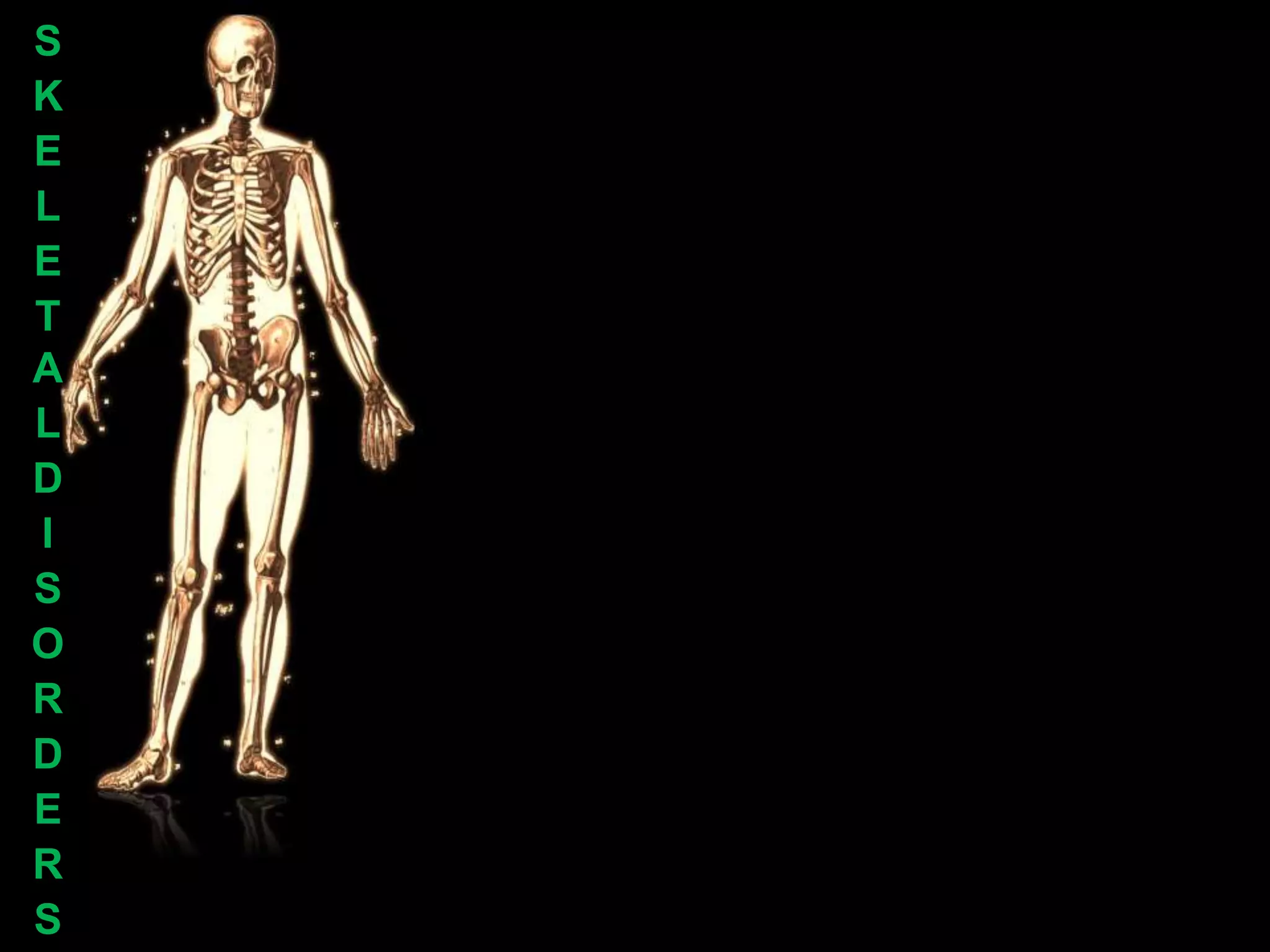
SKELETAL DISORDERS
S
K
E
L
E   Fractures - breakage of
T   a bone, this breakage
A
L   may be complete or
D   incomplete.
I
S
O
R
D
E
R
S
S           Types of Fractures
K
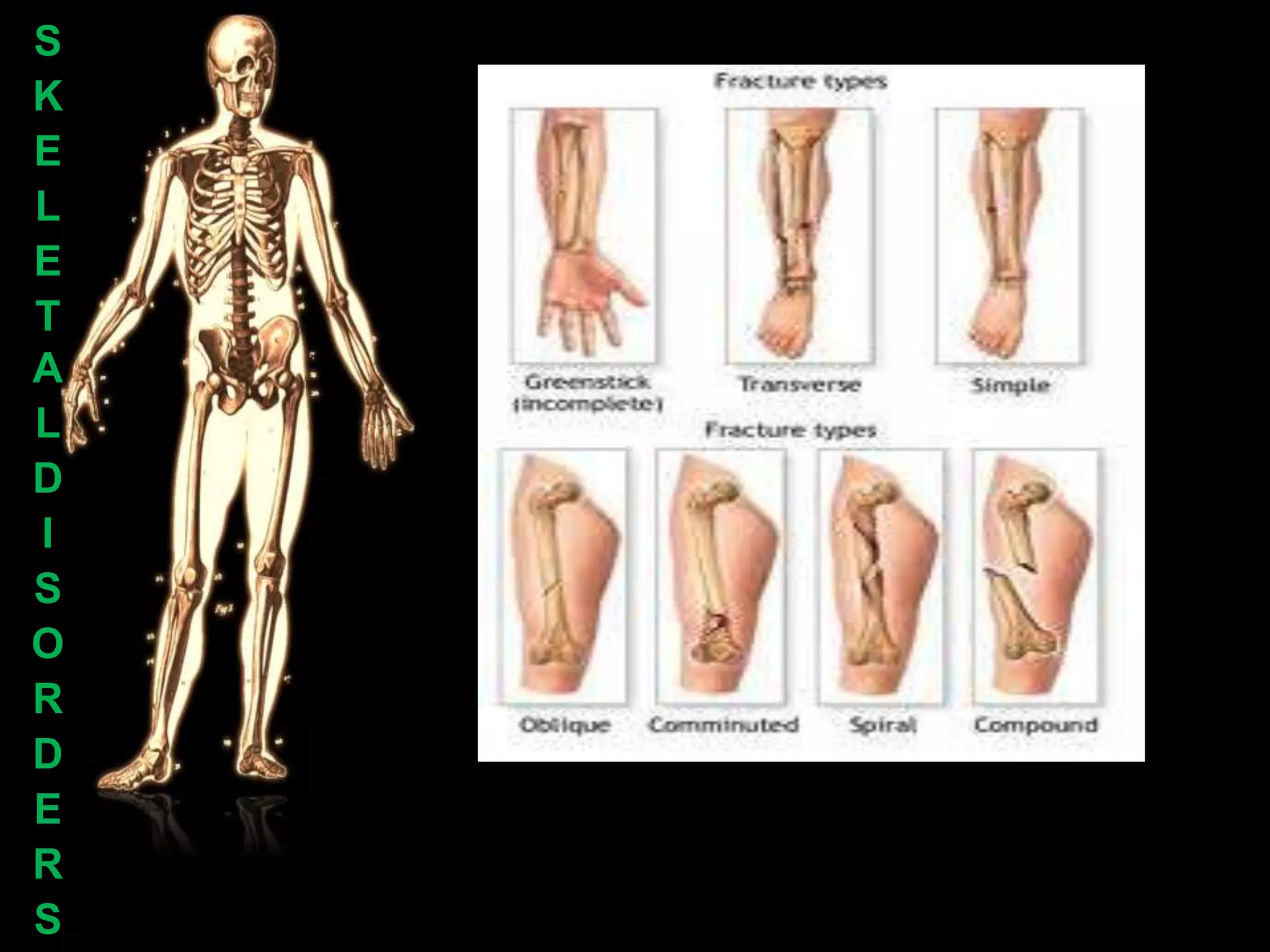
E   1.Simple A clean break of the bone
L     with little or no break in the
E     overlying skin.
T
A
    2.Greenstick An incomplete break
L
    of the bone in which part of the
D
I
    outer shell (cortex) remains intact.
S   This     occurs    particularly    in
O   children, who have more flexible
R   bones           than          adults.
D
E   3.Compound (also known as
R   "Open") A broken bone that pierces
S   the overlying skin.
S
K
    4.Cominuted A fracture in which the
E   bone is broken into more than two
L   pieces. A crushing force is usually
E   responsible and there is extensive injury
T   to surrounding soft tissues is common.
A
L   5.Impacted A fracture in which the
D   bones involved are driven into each
I   other.
S
O   6.Complicated A broken bone that also
    involves damage to other organs - in
R
    addition to broken Bone(s) and possibly
D
    also broken skin. An example is a
E   broken rib that punctures a lung.
R
S
S
K
E
L
E
T
A
L
D
I
S
O
R
D
E
R
S
S
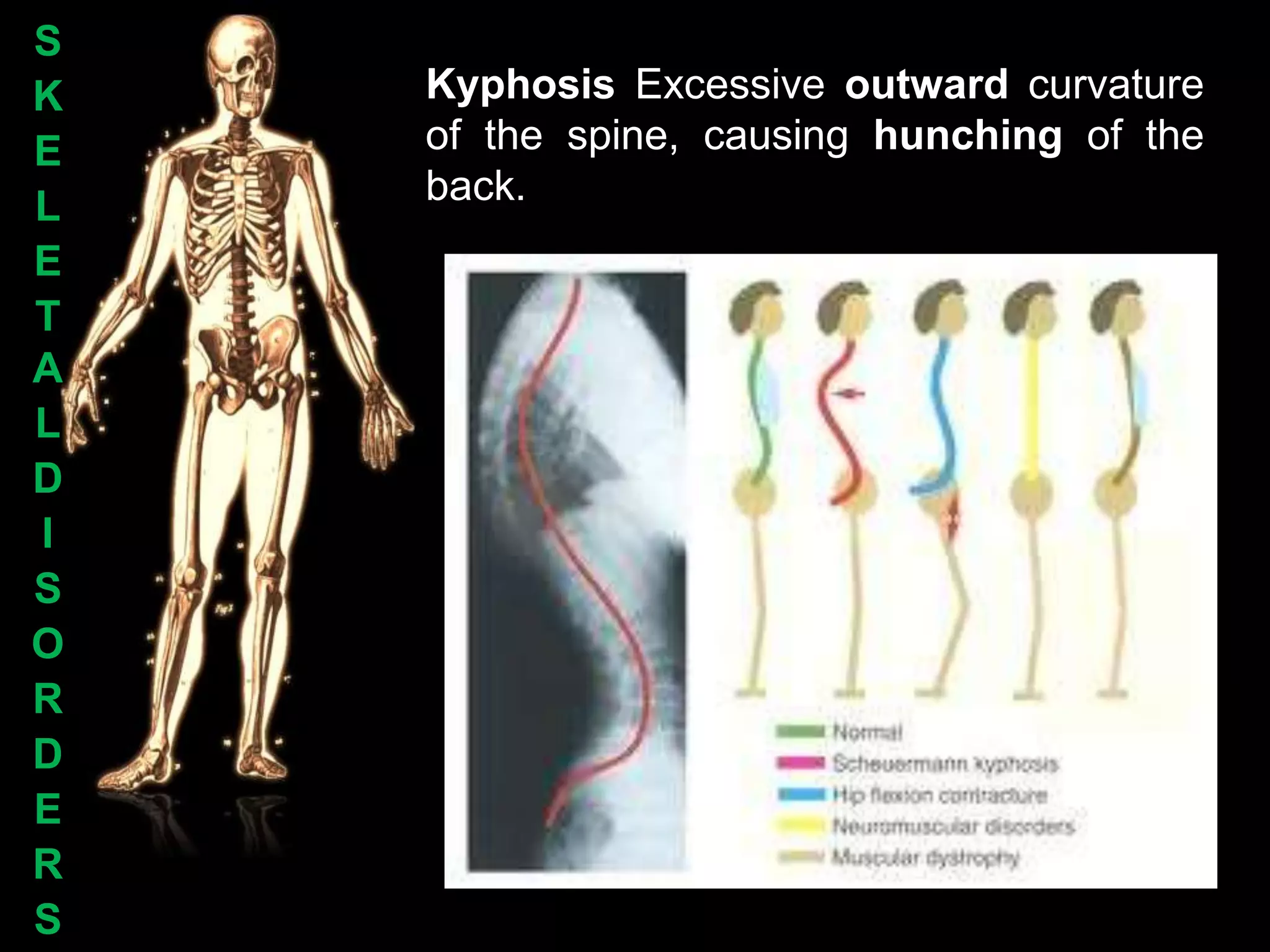
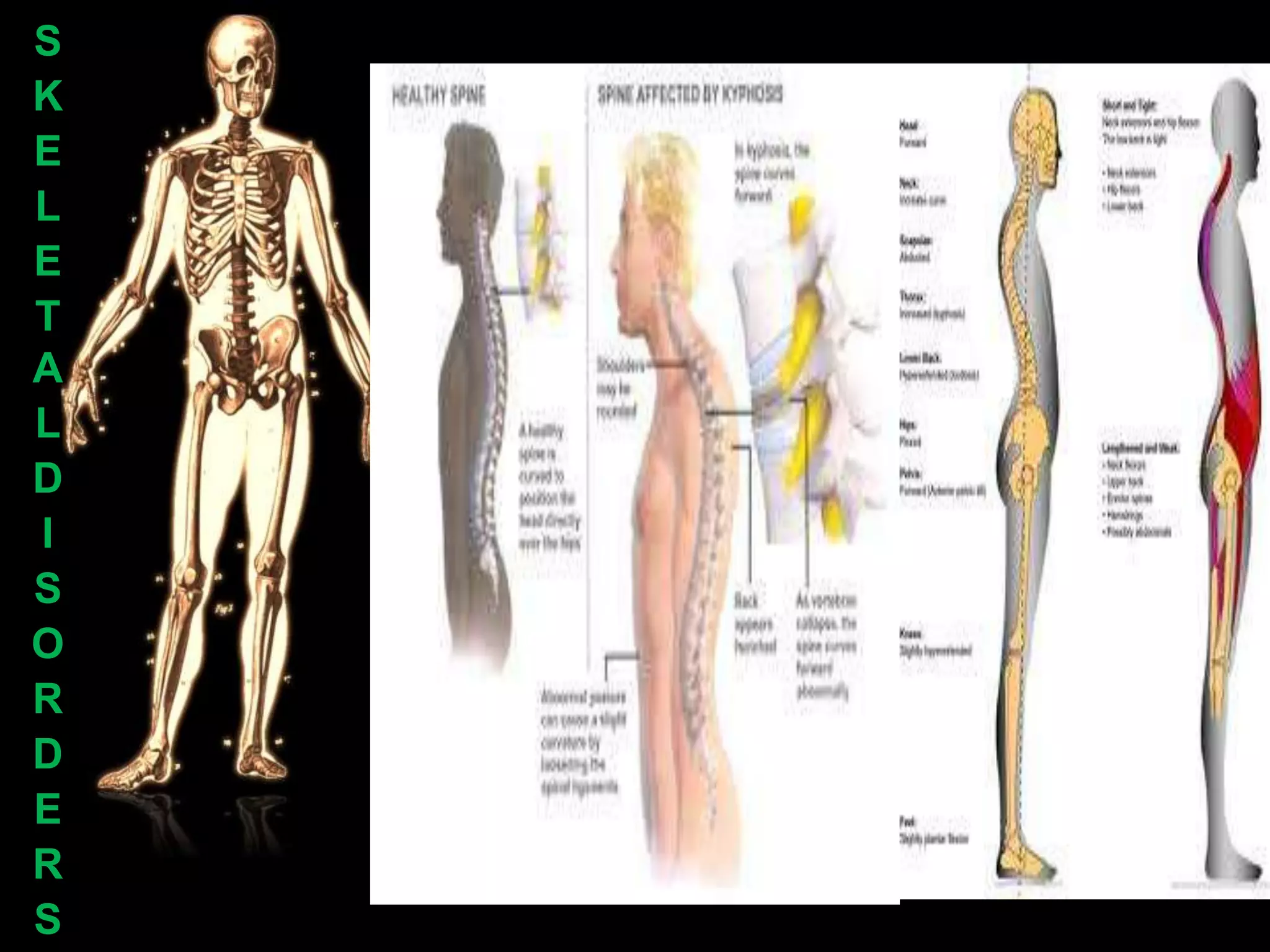
K   Kyphosis Excessive outward curvature
E   of the spine, causing hunching of the
L   back.
E
T
A
L
D
I
S
O
R
D
E
R
S
S
K
E
L
E
T
A
L
D
I
S
O
R
D
E
R
S
S
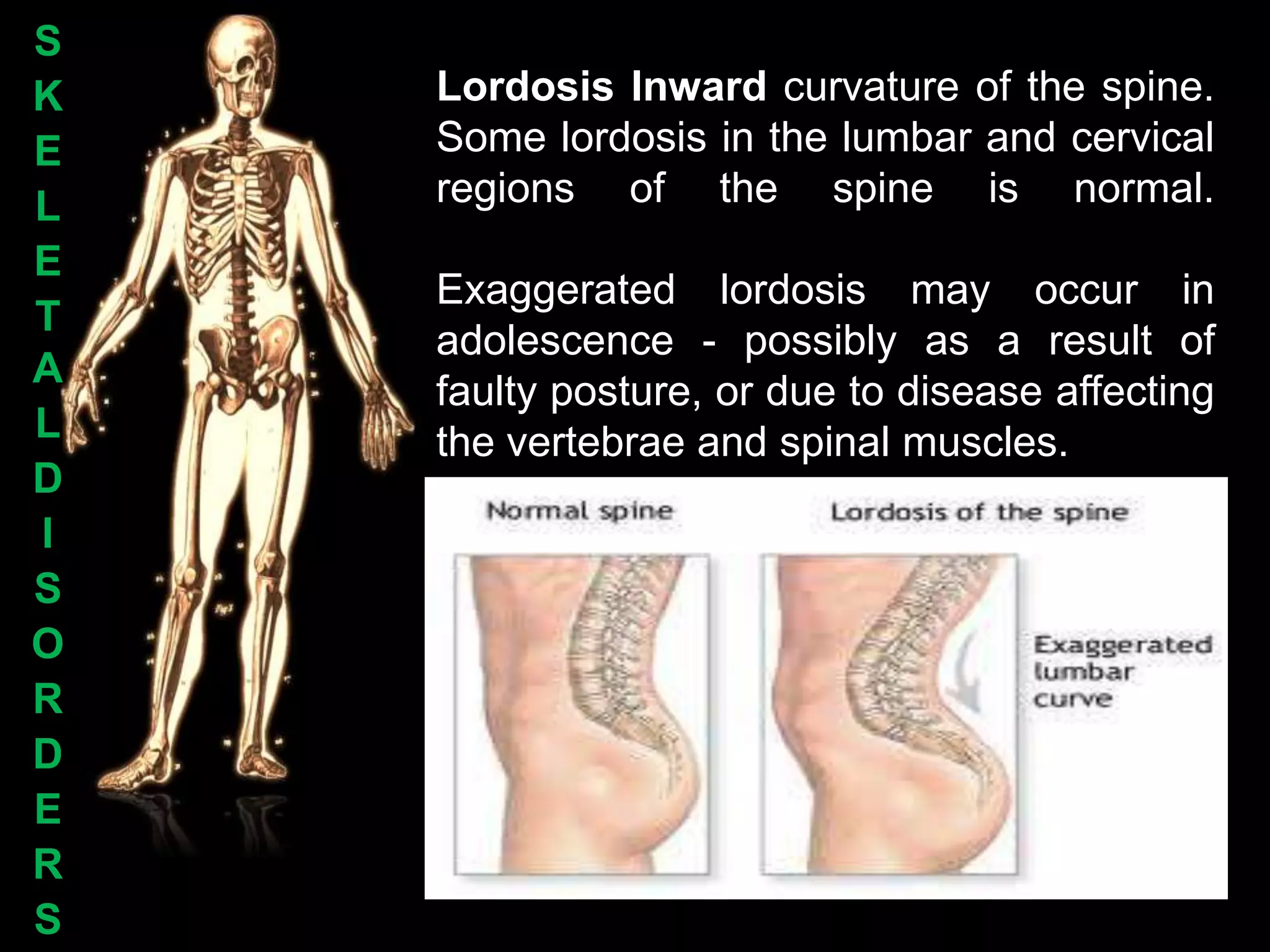
K   Lordosis Inward curvature of the spine.
E   Some lordosis in the lumbar and cervical
L   regions of the spine is normal.
E
    Exaggerated lordosis may occur in
T
    adolescence - possibly as a result of
A
    faulty posture, or due to disease affecting
L   the vertebrae and spinal muscles.
D
I
S
O
R
D
E
R
S
S
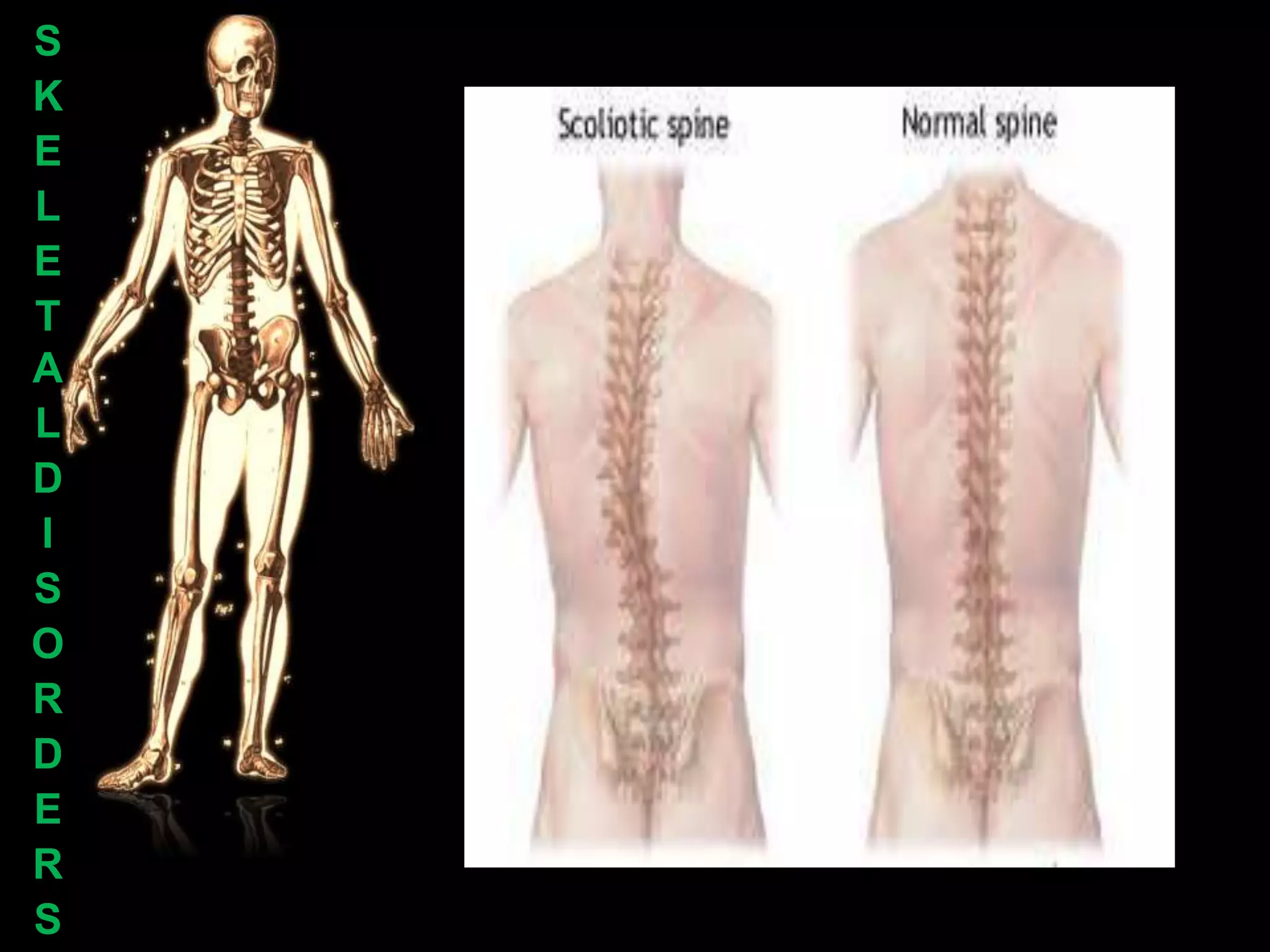
K   Scoliosis Lateral (sideways)
E
    deviation   of    the    spine.
L
    Scoliosis may be caused by
E
T
    congenital     or      acquired
A   abnormalities       of      the
L   vertebrae, muscles, and/or
D              nerves.
I
S   Treatment may involve the
O   use of spinal braces and, in
R   cases of severe deformity.
D   surgical correction by fusion or
E   osteotomy.
R
S
S
K
E
L
E
T
A
L
D
I
S
O
R
D
E
R
S
S
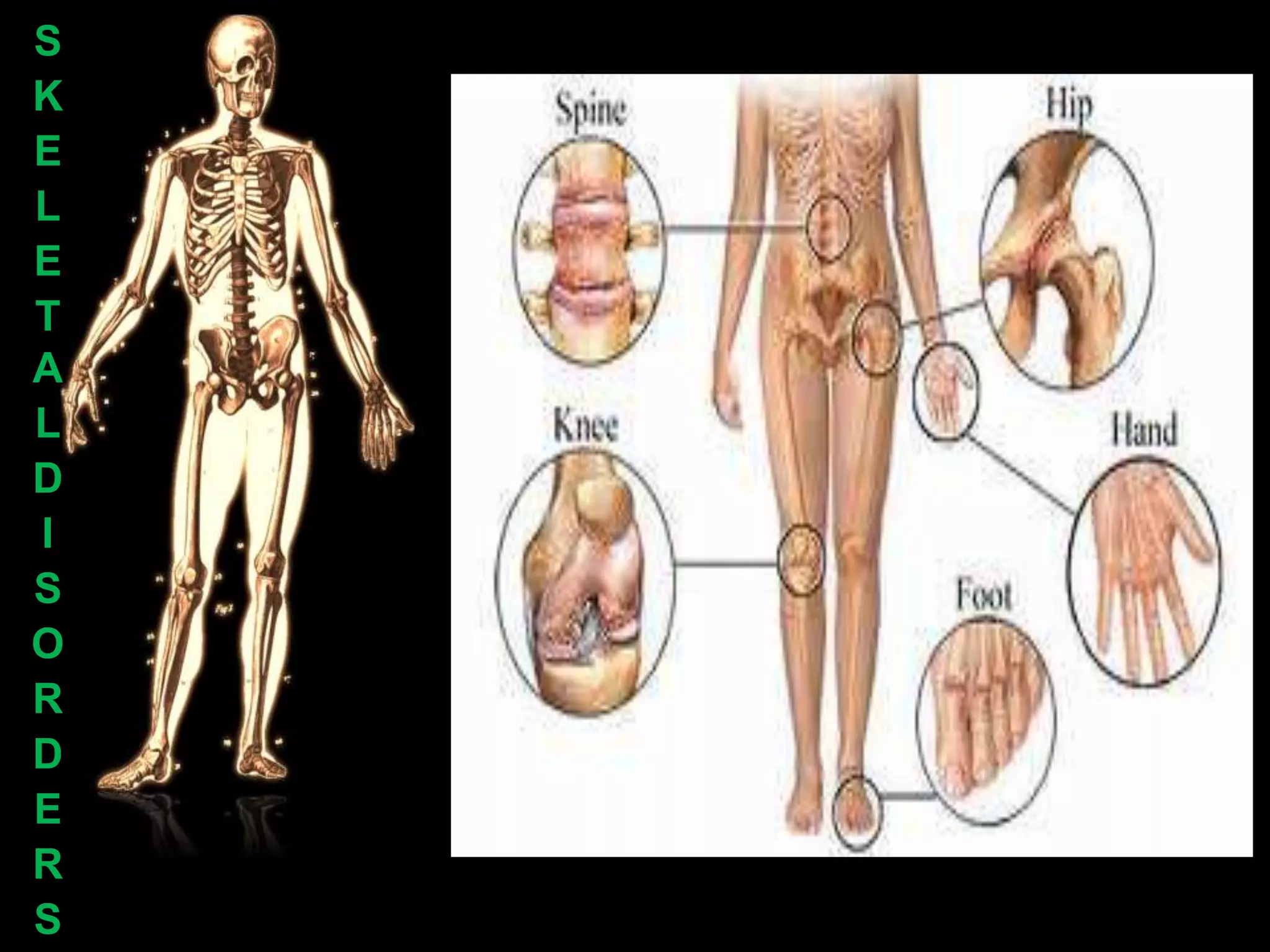
K   Arthritis
E
      Over 200 diseases may cause
L
    arthritis, including:
E
T
     Swelling, warmth, redness of the
A   overlying skin, pain, restriction of
L   motion.
D
I   Inflammation of one or more
S   joints.
O
R
D
E
R
S
S
K
E
L
E
T
A
L
D
I
S
O
R
D
E
R
S
S
K
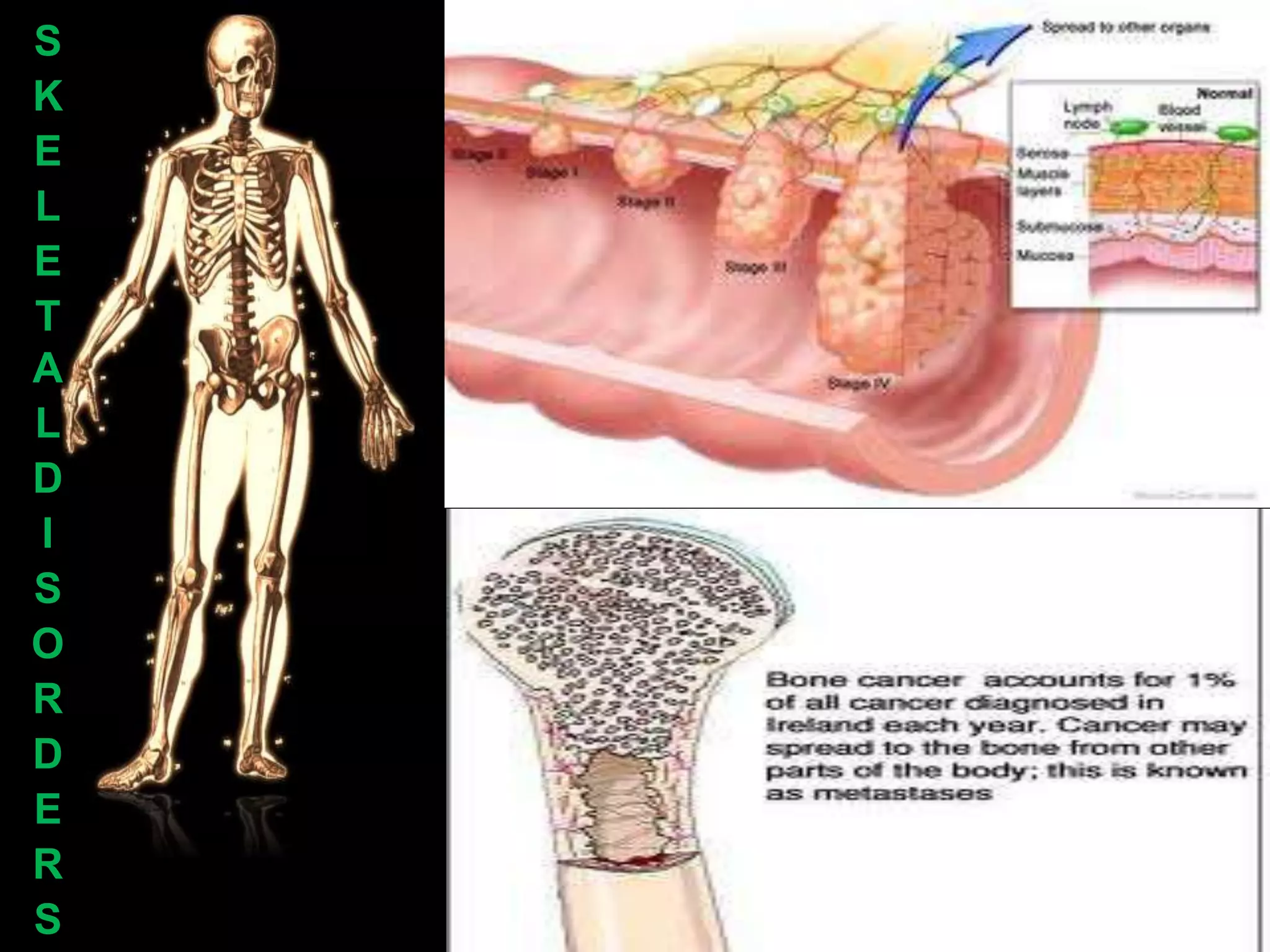
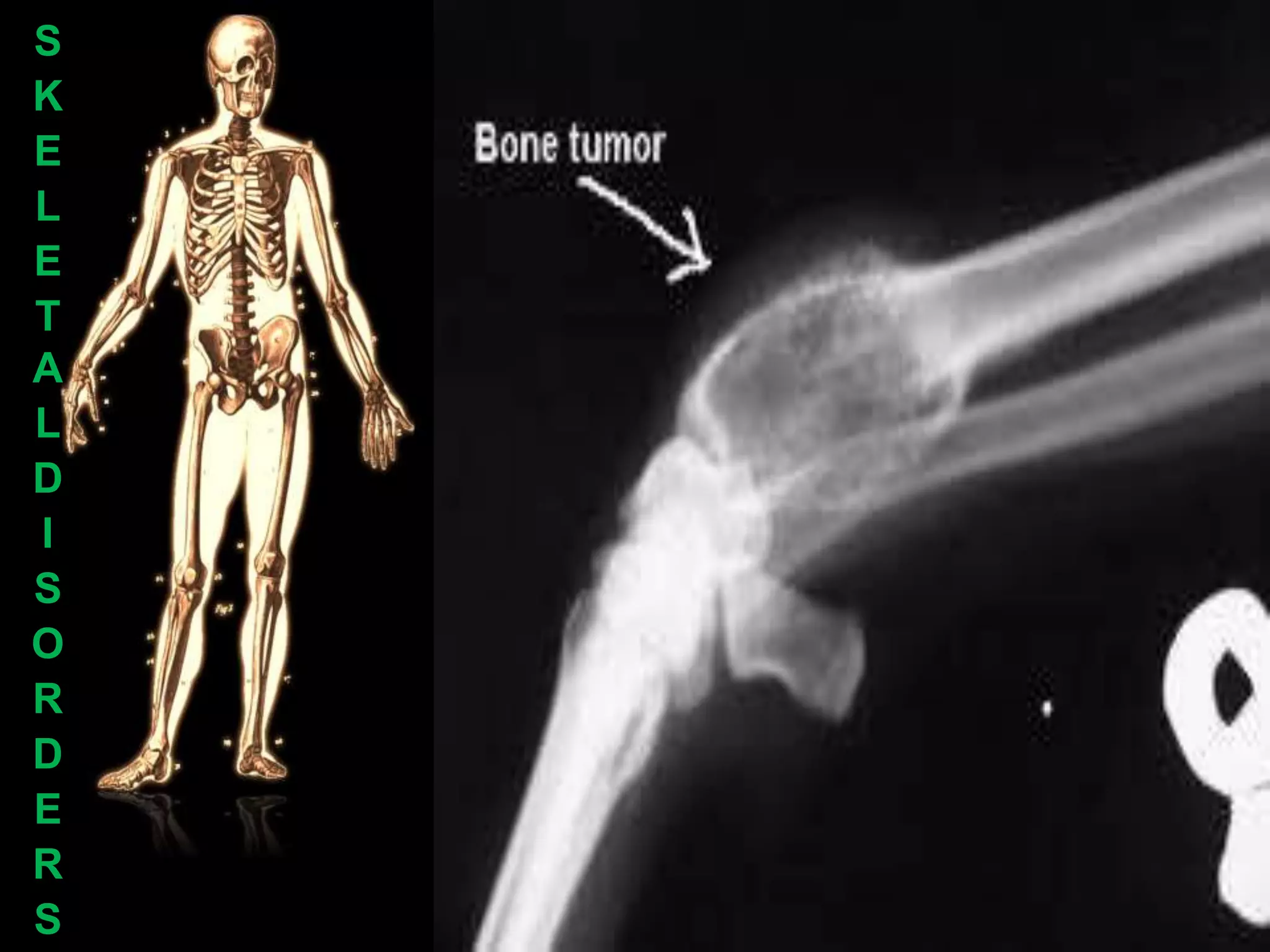
E   Bone Cancer
L
E     Bone cancer may occur
T
A
    as a secondary cancer
L   from,                 for
D   example, prostate cancer
I
S
O
R   Damage to stem cells
D   (the cause of leukaemia).
E
R
S
S
K
E
L
E
T
A
L
D
I
S
O
R
D
E
R
S
S
K
E
L
E
T
A
L
D
I
S
O
R
D
E
R
S
S
K
E   Gout
L
E
T
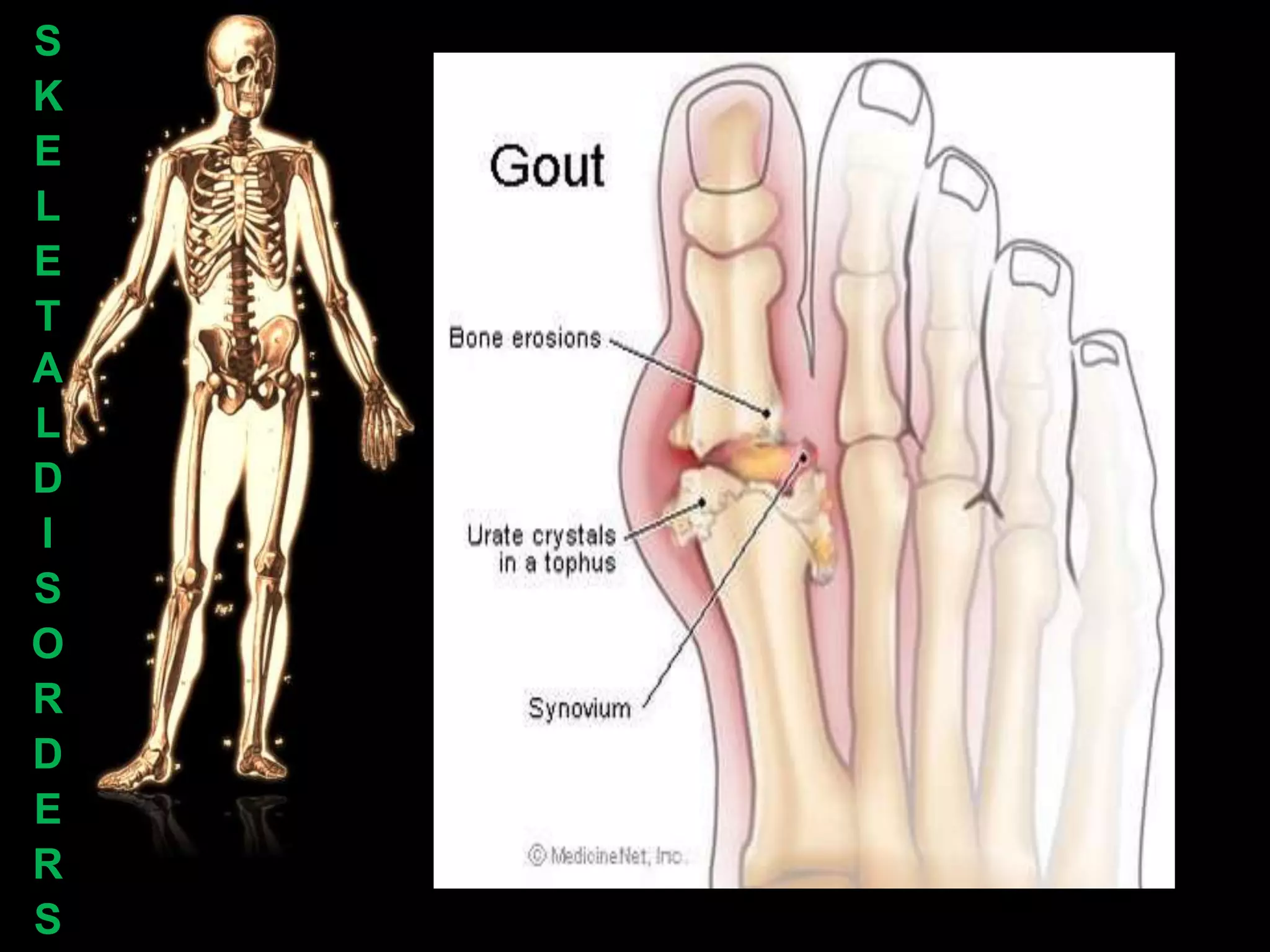
A      Gout is caused by a defect in
L   uric acid balance in the
D
    metabolism - resulting in an
I
S   excess of the acid and its salts
O   (urates) which then accumulate
R   in     the    bloodstream   and
D   joints, respectively.
E
R
S
S
K
E
L
E
T
A
L
D
I
S
O
R
D
E
R
S
S
K   Osteoporosis
E
L     Infection, injury and synovitis can
E   cause localized osteoporosis of
T
    adjacent                        bone.
A
L
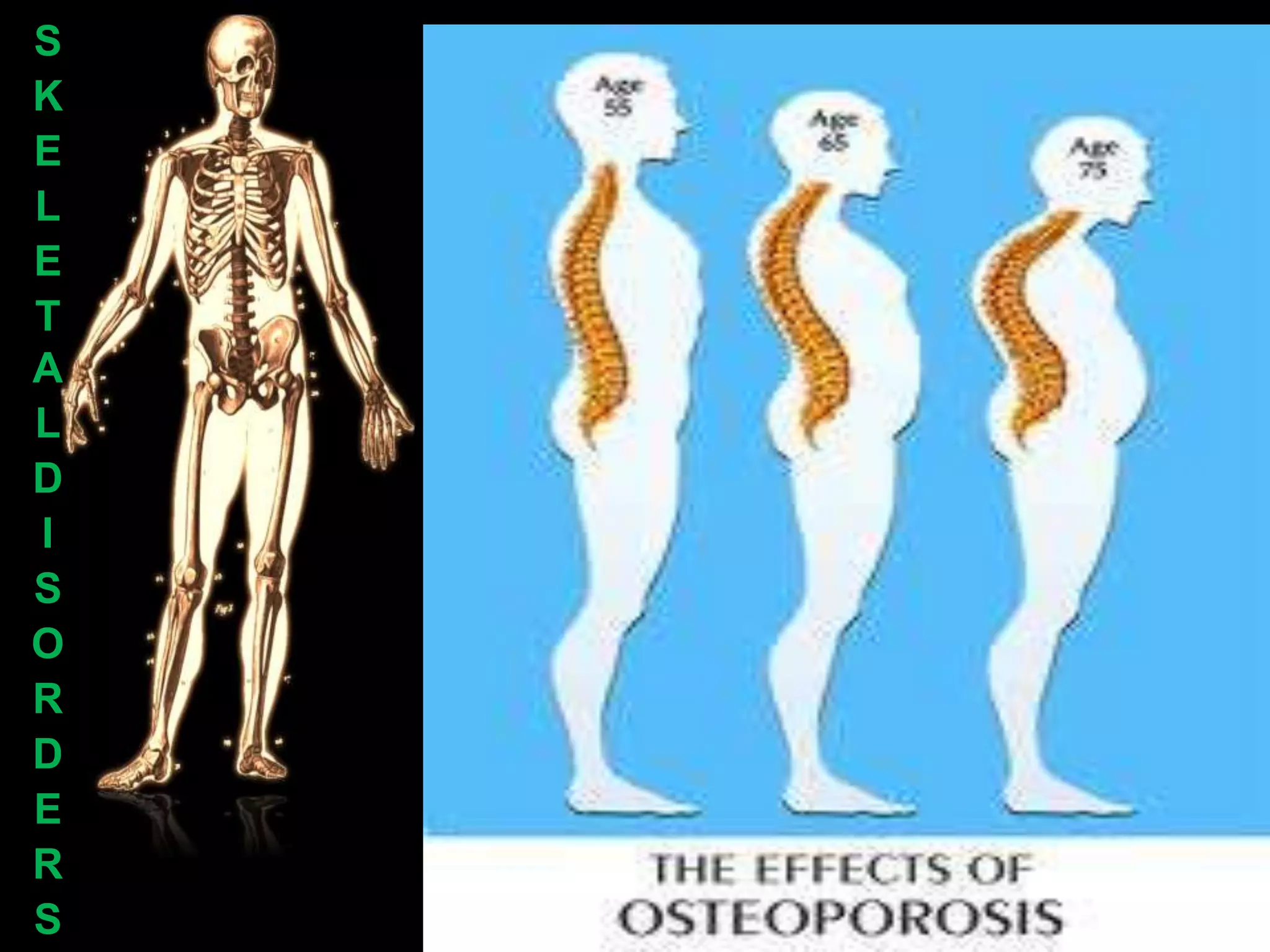
D   Generalised        osteoporosis   is
I   common in the elderly, and in
S   women        often     follows  the
O   menopause. It is also a feature of
R   Cushing's disease and prolonged
D   steroid therapy.
E
R
S
S
K
E
L
E
T
A
L
D
I
S
O
R
D
E
R
S
S
K   Rickets
E
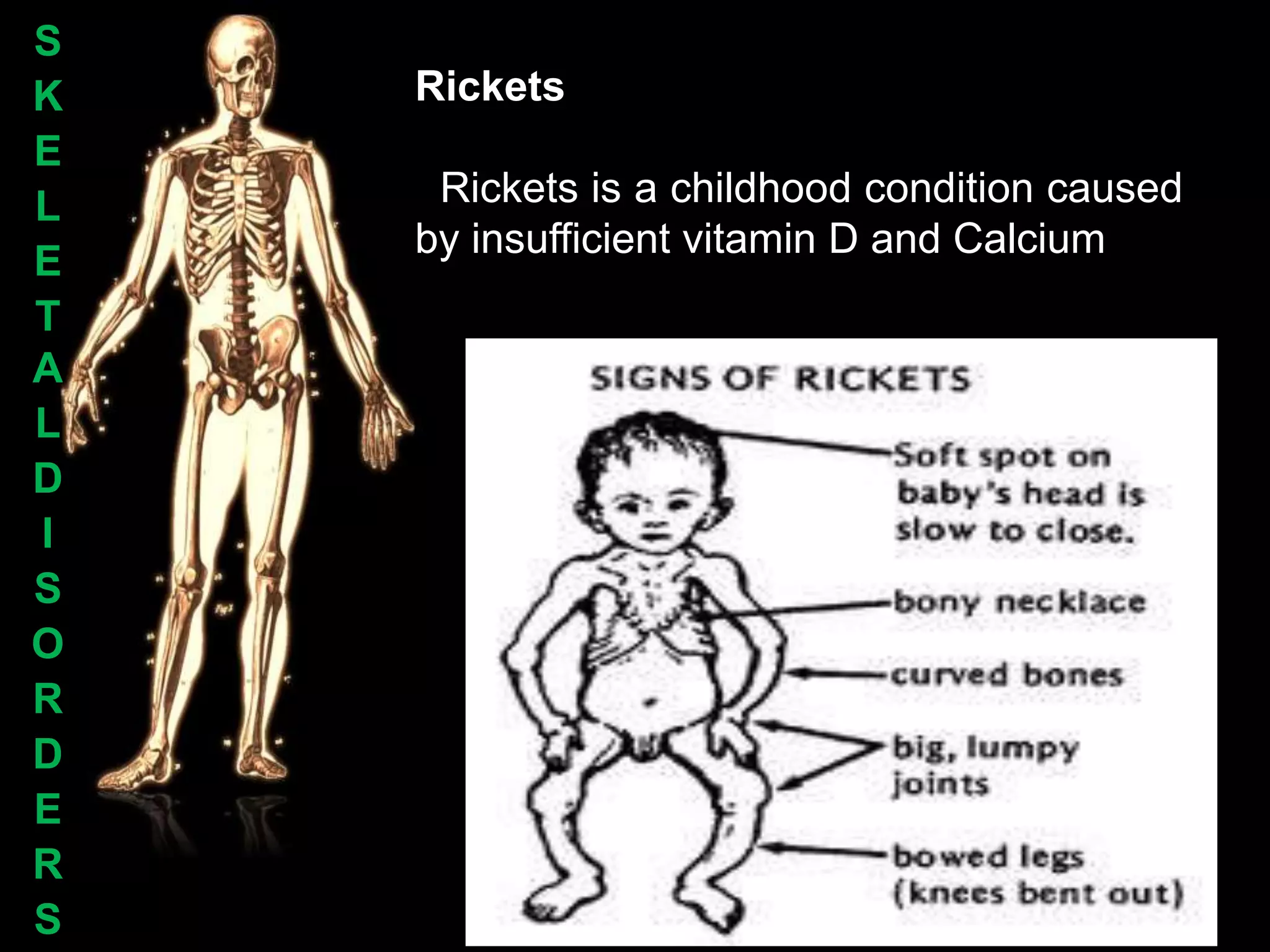
L    Rickets is a childhood condition caused
    by insufficient vitamin D and Calcium
E
T
A
L
D
I
S
O
R
D
E
R
S
S
K
E
L
E
T
A
L
D
I
S
O
R
D
E
R
S

Skeletal disorders

  • 1.
  • 2.
    S K E L E Fractures - breakage of T a bone, this breakage A L may be complete or D incomplete. I S O R D E R S
  • 3.
    S Types of Fractures K E 1.Simple A clean break of the bone L with little or no break in the E overlying skin. T A 2.Greenstick An incomplete break L of the bone in which part of the D I outer shell (cortex) remains intact. S This occurs particularly in O children, who have more flexible R bones than adults. D E 3.Compound (also known as R "Open") A broken bone that pierces S the overlying skin.
  • 4.
    S K 4.Cominuted A fracture in which the E bone is broken into more than two L pieces. A crushing force is usually E responsible and there is extensive injury T to surrounding soft tissues is common. A L 5.Impacted A fracture in which the D bones involved are driven into each I other. S O 6.Complicated A broken bone that also involves damage to other organs - in R addition to broken Bone(s) and possibly D also broken skin. An example is a E broken rib that punctures a lung. R S
  • 5.
  • 6.
    S K Kyphosis Excessive outward curvature E of the spine, causing hunching of the L back. E T A L D I S O R D E R S
  • 7.
  • 8.
    S K Lordosis Inward curvature of the spine. E Some lordosis in the lumbar and cervical L regions of the spine is normal. E Exaggerated lordosis may occur in T adolescence - possibly as a result of A faulty posture, or due to disease affecting L the vertebrae and spinal muscles. D I S O R D E R S
  • 9.
    S K Scoliosis Lateral (sideways) E deviation of the spine. L Scoliosis may be caused by E T congenital or acquired A abnormalities of the L vertebrae, muscles, and/or D nerves. I S Treatment may involve the O use of spinal braces and, in R cases of severe deformity. D surgical correction by fusion or E osteotomy. R S
  • 10.
  • 11.
    S K Arthritis E Over 200 diseases may cause L arthritis, including: E T Swelling, warmth, redness of the A overlying skin, pain, restriction of L motion. D I Inflammation of one or more S joints. O R D E R S
  • 12.
  • 13.
    S K E Bone Cancer L E Bone cancer may occur T A as a secondary cancer L from, for D example, prostate cancer I S O R Damage to stem cells D (the cause of leukaemia). E R S
  • 14.
  • 15.
  • 16.
    S K E Gout L E T A Gout is caused by a defect in L uric acid balance in the D metabolism - resulting in an I S excess of the acid and its salts O (urates) which then accumulate R in the bloodstream and D joints, respectively. E R S
  • 17.
  • 18.
    S K Osteoporosis E L Infection, injury and synovitis can E cause localized osteoporosis of T adjacent bone. A L D Generalised osteoporosis is I common in the elderly, and in S women often follows the O menopause. It is also a feature of R Cushing's disease and prolonged D steroid therapy. E R S
  • 19.
  • 20.
    S K Rickets E L Rickets is a childhood condition caused by insufficient vitamin D and Calcium E T A L D I S O R D E R S
  • 21.