By  Soumya Marium Mathew Rajagiri College of Social Sciences, Kalamassery
 
Education is a powerful tool by which economically and socially marginalized adults and children can lift themselves out of poverty and promoting individual freedom and empowering them through the full  participation of citizens.
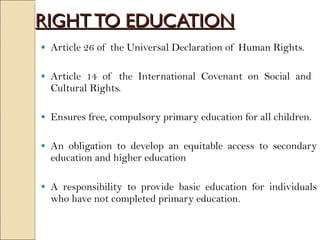
RIGHT TO EDUCATION Article 26 of the Universal Declaration of Human Rights. Article 14 of the International Covenant on Social and  Cultural Rights. Ensures free, compulsory primary education for all children. An obligation to develop an equitable access to secondary education and higher education A   responsibility to provide basic education for individuals who have not completed primary education.
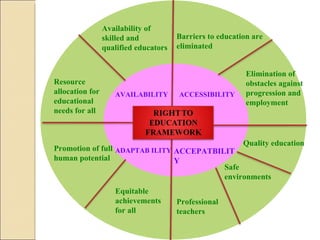
AVAILABILITY ACCESSIBILITY ADAPTAB ILITY ACCEPATBILITY Availability of skilled and qualified educators  Barriers to education are eliminated Elimination of obstacles against progression and employment Quality education Safe environments Professional teachers Equitable achievements for all Promotion of full human potential Resource allocation for educational needs for all
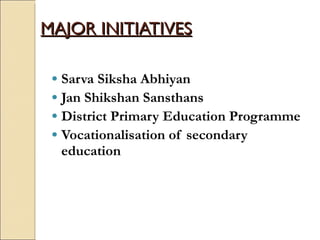
MAJOR INITIATIVES Sarva Siksha Abhiyan Jan Shikshan Sansthans District Primary Education Programme  Vocationalisation of secondary education
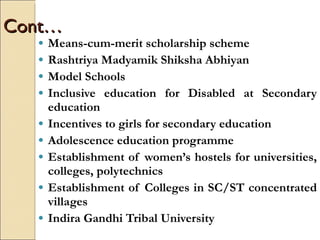
Cont… Means-cum-merit scholarship scheme Rashtriya Madyamik Shiksha Abhiyan Model Schools Inclusive education for Disabled at Secondary education Incentives to girls for secondary education Adolescence education programme Establishment of women’s hostels for universities, colleges, polytechnics Establishment of Colleges in SC/ST concentrated villages  Indira Gandhi Tribal University
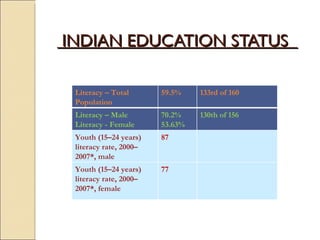
  INDIAN EDUCATION STATUS   Literacy – Total Population 59.5% 133rd of 160 Literacy – Male Literacy - Female 70.2% 53.63% 130th of 156 Youth (15–24 years) literacy rate, 2000–2007*, male 87 Youth (15–24 years) literacy rate, 2000–2007*, female 77
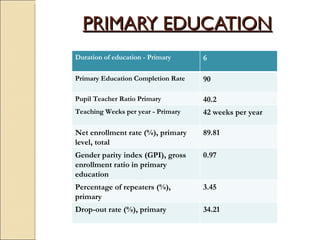
PRIMARY EDUCATION Duration of education - Primary 6 Primary Education Completion Rate 90 Pupil Teacher Ratio Primary 40.2 Teaching Weeks per year - Primary 42 weeks per year Net enrollment rate (%), primary level, total 89.81 Gender parity index (GPI), gross enrollment ratio in primary education 0.97 Percentage of repeaters (%), primary 3.45 Drop-out rate (%), primary 34.21
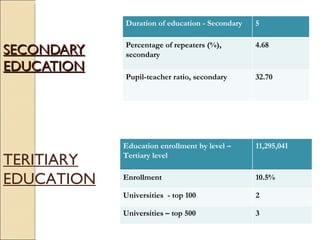
SECONDARY EDUCATION TERITIARY EDUCATION Duration of education - Secondary 5 Percentage of repeaters (%), secondary 4.68 Pupil-teacher ratio, secondary 32.70 Education enrollment by level – Tertiary level 11,295,041 Enrollment 10.5% Universities  - top 100 2 Universities – top 500 3
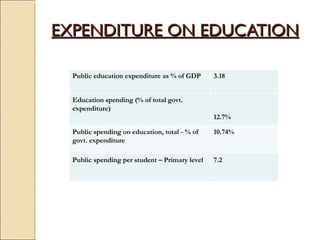
EXPENDITURE ON EDUCATION Public education expenditure as % of GDP 3.18 Education spending (% of total govt. expenditure)  12.7% Public spending on education, total - % of govt. expenditure 10.74% Public spending per student – Primary level 7.2
CHALLENGES Drop outs Illiteracy of adults  and women Academic degrees without vocational use Corrupted educational system Class base educational system with dualistic character Inadequate resources Non - reachability of Government programmes and policies Political interference in schools and colleges  Lack of educational opportunities for weaker sections Low quality of syllabus Education as a money spinning business
School drop outs still exist. Why?? Are adults and women underprivileged to be literate?? Why degrees without job orientation?? Who is responsible for the corrupted educational system?? Is still gender bias existing?? Should our children be taught in a unsafe condition??
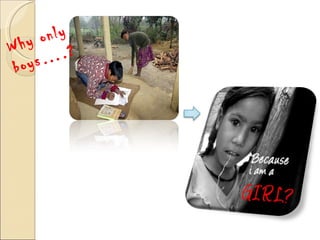
Why only boys….?
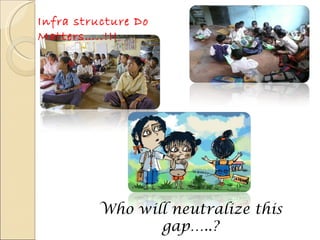
Who will neutralize this gap…..? Infra structure Do Matters…..!!!
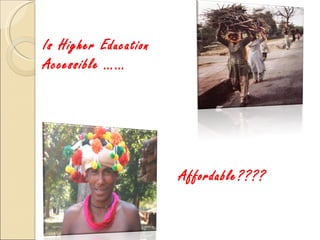
Is Higher Education Accessible …… Affordable????
 

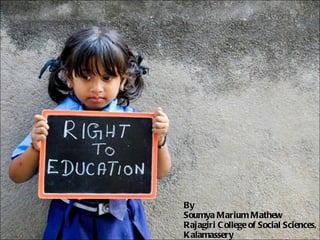
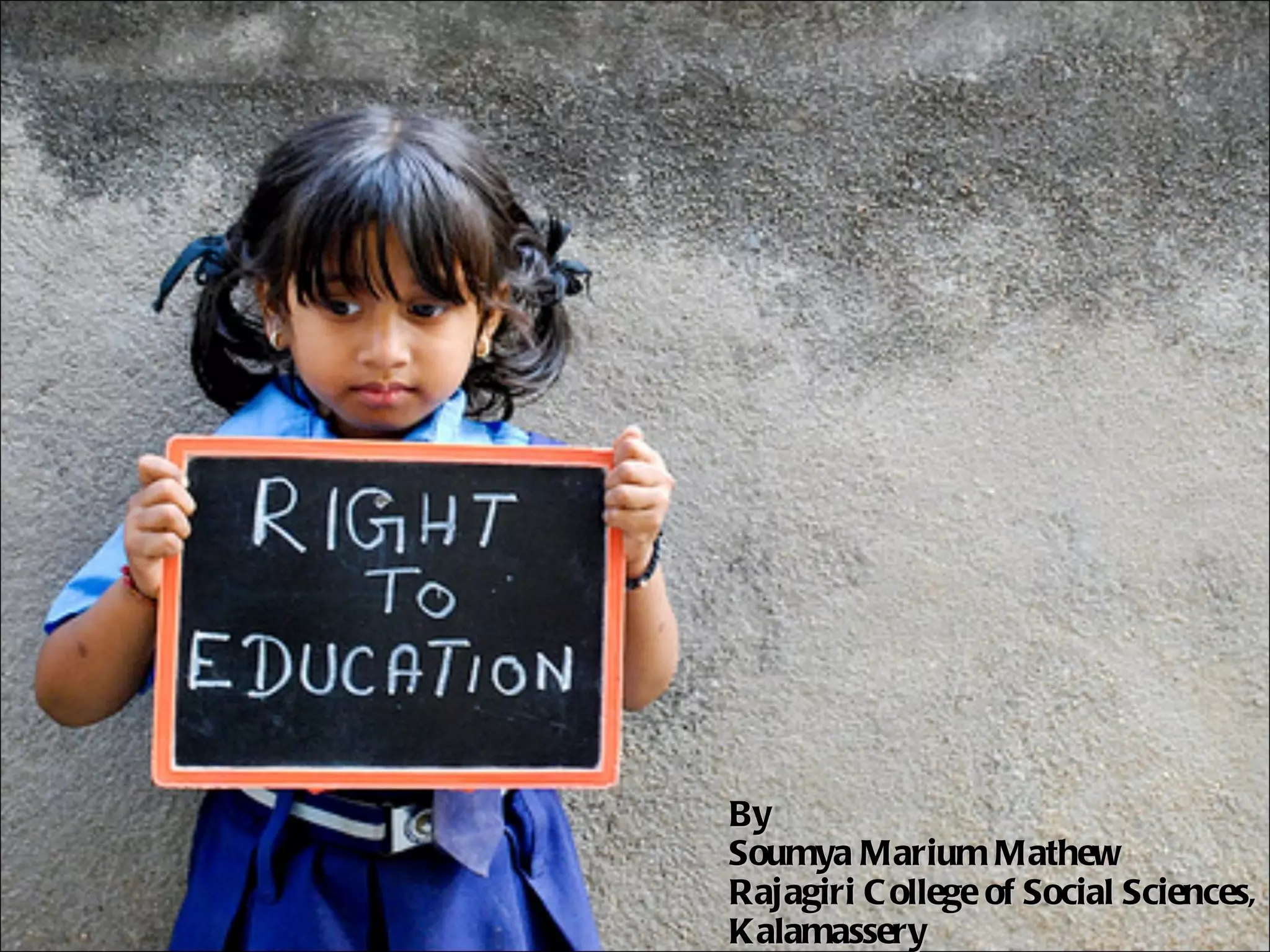
Right to Education

  • 1.
    By SoumyaMarium Mathew Rajagiri College of Social Sciences, Kalamassery
  • 2.
  • 3.
    Education is apowerful tool by which economically and socially marginalized adults and children can lift themselves out of poverty and promoting individual freedom and empowering them through the full participation of citizens.
  • 4.
    RIGHT TO EDUCATIONArticle 26 of the Universal Declaration of Human Rights. Article 14 of the International Covenant on Social and Cultural Rights. Ensures free, compulsory primary education for all children. An obligation to develop an equitable access to secondary education and higher education A responsibility to provide basic education for individuals who have not completed primary education.
  • 5.
    AVAILABILITY ACCESSIBILITY ADAPTABILITY ACCEPATBILITY Availability of skilled and qualified educators Barriers to education are eliminated Elimination of obstacles against progression and employment Quality education Safe environments Professional teachers Equitable achievements for all Promotion of full human potential Resource allocation for educational needs for all
  • 6.
    MAJOR INITIATIVES SarvaSiksha Abhiyan Jan Shikshan Sansthans District Primary Education Programme Vocationalisation of secondary education
  • 7.
    Cont… Means-cum-merit scholarshipscheme Rashtriya Madyamik Shiksha Abhiyan Model Schools Inclusive education for Disabled at Secondary education Incentives to girls for secondary education Adolescence education programme Establishment of women’s hostels for universities, colleges, polytechnics Establishment of Colleges in SC/ST concentrated villages Indira Gandhi Tribal University
  • 8.
    INDIANEDUCATION STATUS   Literacy – Total Population 59.5% 133rd of 160 Literacy – Male Literacy - Female 70.2% 53.63% 130th of 156 Youth (15–24 years) literacy rate, 2000–2007*, male 87 Youth (15–24 years) literacy rate, 2000–2007*, female 77
  • 9.
    PRIMARY EDUCATION Durationof education - Primary 6 Primary Education Completion Rate 90 Pupil Teacher Ratio Primary 40.2 Teaching Weeks per year - Primary 42 weeks per year Net enrollment rate (%), primary level, total 89.81 Gender parity index (GPI), gross enrollment ratio in primary education 0.97 Percentage of repeaters (%), primary 3.45 Drop-out rate (%), primary 34.21
  • 10.
    SECONDARY EDUCATION TERITIARYEDUCATION Duration of education - Secondary 5 Percentage of repeaters (%), secondary 4.68 Pupil-teacher ratio, secondary 32.70 Education enrollment by level – Tertiary level 11,295,041 Enrollment 10.5% Universities - top 100 2 Universities – top 500 3
  • 11.
    EXPENDITURE ON EDUCATIONPublic education expenditure as % of GDP 3.18 Education spending (% of total govt. expenditure) 12.7% Public spending on education, total - % of govt. expenditure 10.74% Public spending per student – Primary level 7.2
  • 12.
    CHALLENGES Drop outsIlliteracy of adults and women Academic degrees without vocational use Corrupted educational system Class base educational system with dualistic character Inadequate resources Non - reachability of Government programmes and policies Political interference in schools and colleges Lack of educational opportunities for weaker sections Low quality of syllabus Education as a money spinning business
  • 13.
    School drop outsstill exist. Why?? Are adults and women underprivileged to be literate?? Why degrees without job orientation?? Who is responsible for the corrupted educational system?? Is still gender bias existing?? Should our children be taught in a unsafe condition??
  • 14.
  • 15.
    Who will neutralizethis gap…..? Infra structure Do Matters…..!!!
  • 16.
    Is Higher EducationAccessible …… Affordable????
  • 17.