Maggie Noctor

                                       Rhyming Lesson Plan

Introduction

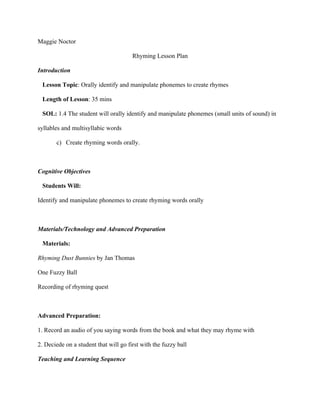
 Lesson Topic: Orally identify and manipulate phonemes to create rhymes

 Length of Lesson: 35 mins

 SOL: 1.4 The student will orally identify and manipulate phonemes (small units of sound) in

syllables and multisyllabic words

       c) Create rhyming words orally.


Cognitive Objectives

 Students Will:

Identify and manipulate phonemes to create rhyming words orally


Materials/Technology and Advanced Preparation

 Materials:

Rhyming Dust Bunnies by Jan Thomas

One Fuzzy Ball

Recording of rhyming quest


Advanced Preparation:

1. Record an audio of you saying words from the book and what they may rhyme with

2. Deciede on a student that will go first with the fuzzy ball

Teaching and Learning Sequence
Introduction/Anticipatory Set:

   •   Ask students to quietly walk to reading circle and sit

   •   Take Rhyming Dust Bunnies book from front desk with you.

   •   Read Rhyming Dust Bunnies by Jan Thomas

   •   Ask students what they thought Bob was doing the entire time throughout the story?

   •   Ask students about the different rhymes mentioned in the book “What were some of the

       rhymes used in the book?”

Lesson Development:

   •   Tell the students we are going to play a rhyming game today.

   •   Explain that they will try and be the rhyming dust bunnies and should answer the

       questions on the audio with the rhyming word.

   •   Explain that Bob will be the voice on the recording, and that the student with the fuzzy

       ball should be the only one answering at a time.

   •   Then the student should toss the ball to another student, who will rhyme with the

       previous word.

   •   If a student gets stuck or runs out of rhyming words they should toss the ball back to the

       teacher who will keep playing the audio.

   •   Play audio that asks for the rhyming words.

   •   If students are still able to rhyme keep going.

Closure:

   •   Have students go back to their tables.

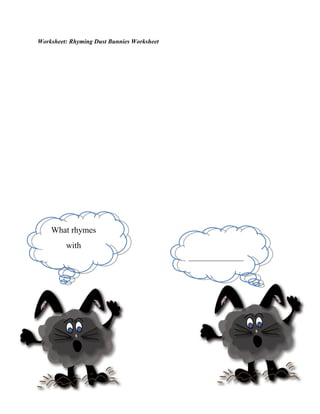
   •   Explain that they will now draw a picture of two words the dust bunnies may rhyme with.

   •   Hand out the rhyming dust bunny worksheets for the students to fill out.
•   Encourage them to draw and color pictures to go with their rhyming words

   •   After students have finsihed drawing their pictures, ask if any students would like to

       share their pictures.

   •   Have about three or four student volunteers stand up and show the class their pictures and

       their two rhyming words.

   •   When students share, ask class if there are other words that may rhyme with those words.

   •   Collect students worksheets


Homework: None


Assessment:

 Formative:

   •   Listen to answers given during the review of rhymes used in the book The Rhyming Dust

       Bunnies. Are the students naming actual rhymes from the book or can they not recall

       any?

   •   Watch while students create their Rhyming Dust Bunnies Worksheet; are they using

       rhyming words? Do they look confused or wait to choose their words after a classmate

       has helped?

 Summative:

   •   During the game listen to student responses, are they naming words that rhyme? Or do

       they seem confused each time it is their turn?

   •   Collect student Rhyming Dust Bunny Worksheets, do the words the students chose

       rhyme? Or did they just draw two random words?
Worksheet: Rhyming Dust Bunnies Worksheet


    What rhymes
         with
                                            _______________
     __________

Rhyming lesson plan

  • 1.
    Maggie Noctor Rhyming Lesson Plan Introduction Lesson Topic: Orally identify and manipulate phonemes to create rhymes Length of Lesson: 35 mins SOL: 1.4 The student will orally identify and manipulate phonemes (small units of sound) in syllables and multisyllabic words c) Create rhyming words orally. Cognitive Objectives Students Will: Identify and manipulate phonemes to create rhyming words orally Materials/Technology and Advanced Preparation Materials: Rhyming Dust Bunnies by Jan Thomas One Fuzzy Ball Recording of rhyming quest Advanced Preparation: 1. Record an audio of you saying words from the book and what they may rhyme with 2. Deciede on a student that will go first with the fuzzy ball Teaching and Learning Sequence
  • 2.
    Introduction/Anticipatory Set: • Ask students to quietly walk to reading circle and sit • Take Rhyming Dust Bunnies book from front desk with you. • Read Rhyming Dust Bunnies by Jan Thomas • Ask students what they thought Bob was doing the entire time throughout the story? • Ask students about the different rhymes mentioned in the book “What were some of the rhymes used in the book?” Lesson Development: • Tell the students we are going to play a rhyming game today. • Explain that they will try and be the rhyming dust bunnies and should answer the questions on the audio with the rhyming word. • Explain that Bob will be the voice on the recording, and that the student with the fuzzy ball should be the only one answering at a time. • Then the student should toss the ball to another student, who will rhyme with the previous word. • If a student gets stuck or runs out of rhyming words they should toss the ball back to the teacher who will keep playing the audio. • Play audio that asks for the rhyming words. • If students are still able to rhyme keep going. Closure: • Have students go back to their tables. • Explain that they will now draw a picture of two words the dust bunnies may rhyme with. • Hand out the rhyming dust bunny worksheets for the students to fill out.
  • 3.
    Encourage them to draw and color pictures to go with their rhyming words • After students have finsihed drawing their pictures, ask if any students would like to share their pictures. • Have about three or four student volunteers stand up and show the class their pictures and their two rhyming words. • When students share, ask class if there are other words that may rhyme with those words. • Collect students worksheets Homework: None Assessment: Formative: • Listen to answers given during the review of rhymes used in the book The Rhyming Dust Bunnies. Are the students naming actual rhymes from the book or can they not recall any? • Watch while students create their Rhyming Dust Bunnies Worksheet; are they using rhyming words? Do they look confused or wait to choose their words after a classmate has helped? Summative: • During the game listen to student responses, are they naming words that rhyme? Or do they seem confused each time it is their turn? • Collect student Rhyming Dust Bunny Worksheets, do the words the students chose rhyme? Or did they just draw two random words?
  • 4.
    Worksheet: Rhyming DustBunnies Worksheet What rhymes with _______________ __________