
 Most common in 5- to 15-year-old children
 Approximately 20 days after strep throat or scarlet fever
Causes
RF usually develop after infection with:
• Group A streptococcus infections of the throat
• Scarlet fever, less common
• Group A streptococcus infections of the skin or
other parts of the body rare
Scarlet fever
Bacterial infection that develops in some people who have
strep throat.
Clinical features
 Bright red rash covers most of the body,
 almost always accompanied by a sore throat and a high
fever.
Scarlet fever is most common in children 5 to 15 years of
age.
If left untreated, scarlet fever can result in more-serious
conditions that affect the heart, kidneys and other parts of
the body.
Risk factors
• Family history. Some people may carry a gene or
genes that make them more likely to develop
rheumatic fever.
• Type of strep bacteria. Certain strains of strep
bacteria
• Environmental factors :overcrowding, poverty
Clinical features
3- Sydenham chorea: 5-10%
A spasmodic non repetitive motion involving voluntary
muscles, occur when the patient is awake represent as a
Jerky, uncontrollable body movements, most often in
the hands, feet and face.
Unusual behavior, such as crying or inappropriate
laughing, that accompanies Sydenham chorea.
Diagnosis
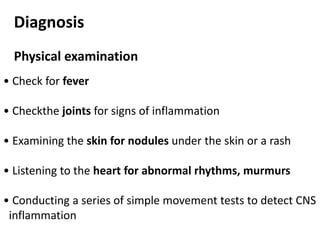
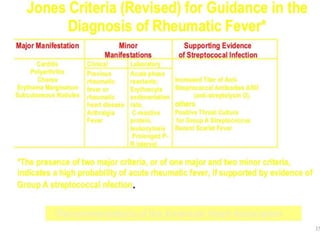
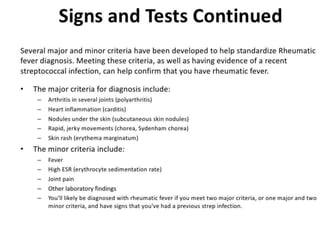
Physical examination
• Check for fever
• Checkthe joints for signs of inflammation
• Examining the skin for nodules under the skin or a rash
• Listening to the heart for abnormal rhythms, murmurs
• Conducting a series of simple movement tests to detect CNS
inflammation
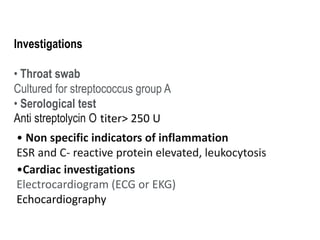
Investigations
• Throat swab
Cultured for streptococcus group A
• Serological test
Anti streptolycin O titer> 250 U
• Non specific indicators of inflammation
ESR and C- reactive protein elevated, leukocytosis
•Cardiac investigations
Electrocardiogram (ECG or EKG)
Echocardiography
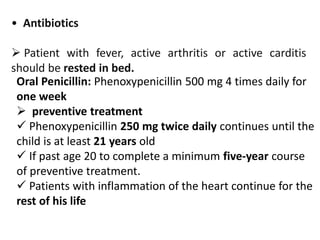
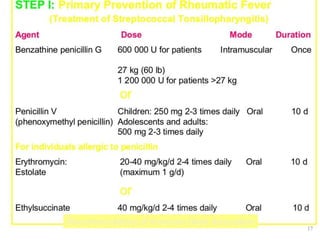
• Antibiotics
 Patient with fever, active arthritis or active carditis
should be rested in bed.
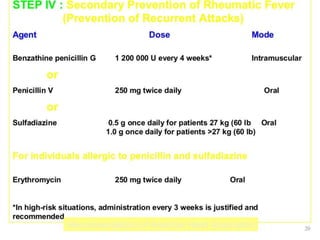
Oral Penicillin: Phenoxypenicillin 500 mg 4 times daily for
one week
 preventive treatment
 Phenoxypenicillin 250 mg twice daily continues until the
child is at least 21 years old
 If past age 20 to complete a minimum five-year course
of preventive treatment.
 Patients with inflammation of the heart continue for the
rest of his life
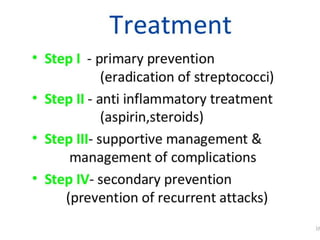
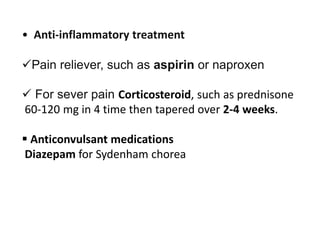
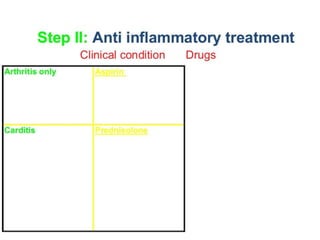
• Anti-inflammatory treatment
Pain reliever, such as aspirin or naproxen
 For sever pain Corticosteroid, such as prednisone
60-120 mg in 4 time then tapered over 2-4 weeks.
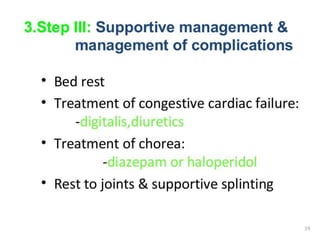
 Anticonvulsant medications
Diazepam for Sydenham chorea
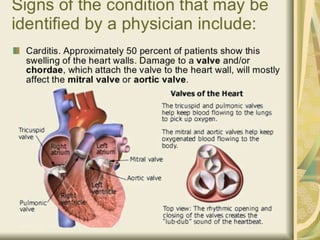
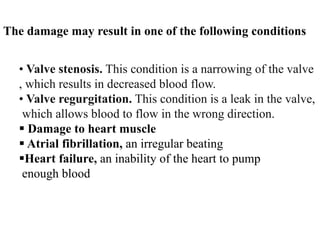
The damage may result in one of the following conditions
• Valve stenosis. This condition is a narrowing of the valve
, which results in decreased blood flow.
• Valve regurgitation. This condition is a leak in the valve,
which allows blood to flow in the wrong direction.
 Damage to heart muscle
 Atrial fibrillation, an irregular beating
Heart failure, an inability of the heart to pump
enough blood
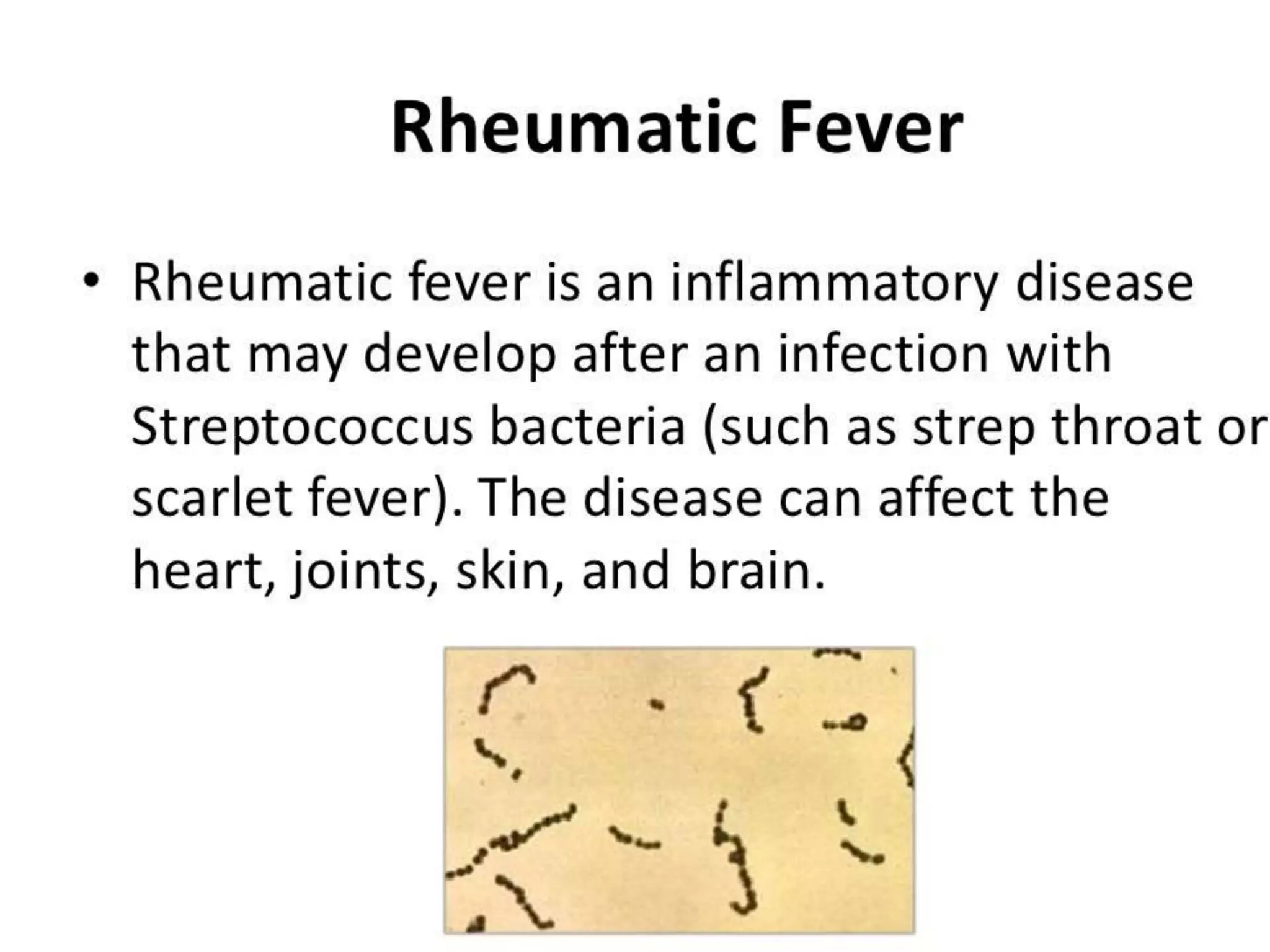
Rheumatic fever

Rheumatic fever

  • 2.
     Most commonin 5- to 15-year-old children  Approximately 20 days after strep throat or scarlet fever
  • 3.
    Causes RF usually developafter infection with: • Group A streptococcus infections of the throat • Scarlet fever, less common • Group A streptococcus infections of the skin or other parts of the body rare
  • 4.
    Scarlet fever Bacterial infectionthat develops in some people who have strep throat. Clinical features  Bright red rash covers most of the body,  almost always accompanied by a sore throat and a high fever. Scarlet fever is most common in children 5 to 15 years of age. If left untreated, scarlet fever can result in more-serious conditions that affect the heart, kidneys and other parts of the body.
  • 5.
    Risk factors • Familyhistory. Some people may carry a gene or genes that make them more likely to develop rheumatic fever. • Type of strep bacteria. Certain strains of strep bacteria • Environmental factors :overcrowding, poverty
  • 12.
    Clinical features 3- Sydenhamchorea: 5-10% A spasmodic non repetitive motion involving voluntary muscles, occur when the patient is awake represent as a Jerky, uncontrollable body movements, most often in the hands, feet and face. Unusual behavior, such as crying or inappropriate laughing, that accompanies Sydenham chorea.
  • 19.
    Diagnosis Physical examination • Checkfor fever • Checkthe joints for signs of inflammation • Examining the skin for nodules under the skin or a rash • Listening to the heart for abnormal rhythms, murmurs • Conducting a series of simple movement tests to detect CNS inflammation
  • 20.
    Investigations • Throat swab Culturedfor streptococcus group A • Serological test Anti streptolycin O titer> 250 U • Non specific indicators of inflammation ESR and C- reactive protein elevated, leukocytosis •Cardiac investigations Electrocardiogram (ECG or EKG) Echocardiography
  • 25.
    • Antibiotics  Patientwith fever, active arthritis or active carditis should be rested in bed. Oral Penicillin: Phenoxypenicillin 500 mg 4 times daily for one week  preventive treatment  Phenoxypenicillin 250 mg twice daily continues until the child is at least 21 years old  If past age 20 to complete a minimum five-year course of preventive treatment.  Patients with inflammation of the heart continue for the rest of his life
  • 26.
    • Anti-inflammatory treatment Painreliever, such as aspirin or naproxen  For sever pain Corticosteroid, such as prednisone 60-120 mg in 4 time then tapered over 2-4 weeks.  Anticonvulsant medications Diazepam for Sydenham chorea
  • 31.
    The damage mayresult in one of the following conditions • Valve stenosis. This condition is a narrowing of the valve , which results in decreased blood flow. • Valve regurgitation. This condition is a leak in the valve, which allows blood to flow in the wrong direction.  Damage to heart muscle  Atrial fibrillation, an irregular beating Heart failure, an inability of the heart to pump enough blood