
Revenue Models for e-Business onThe
Web
UpekhaVandebona
upe.vand@gmail.com
 Can sell at lower prices
 Build to customer order
 Receive payment earlier
 Speed up new product release cycles and
faster delivery of goods
 Use customer data to provide customized
value added service
 Proactive decision making
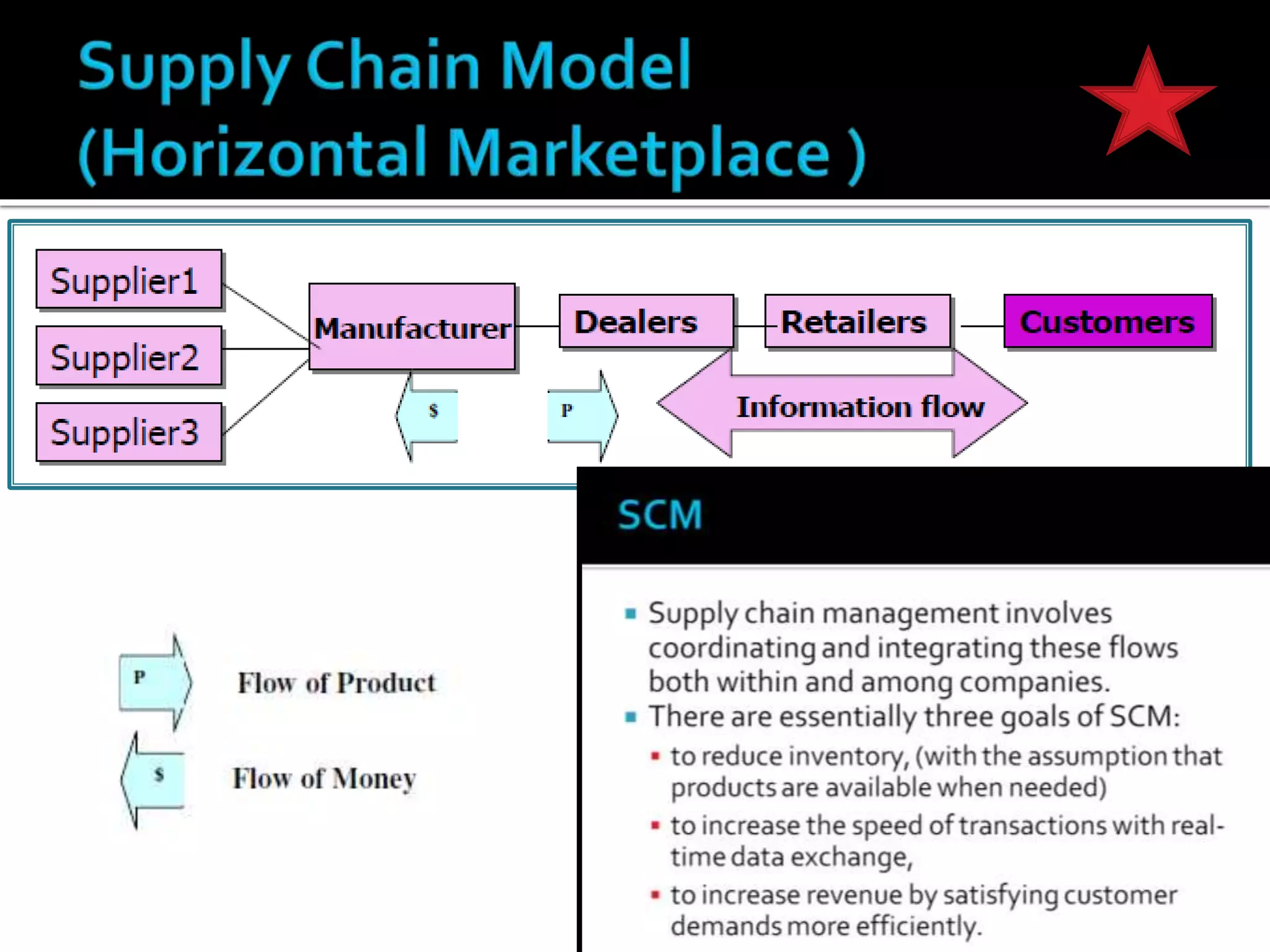
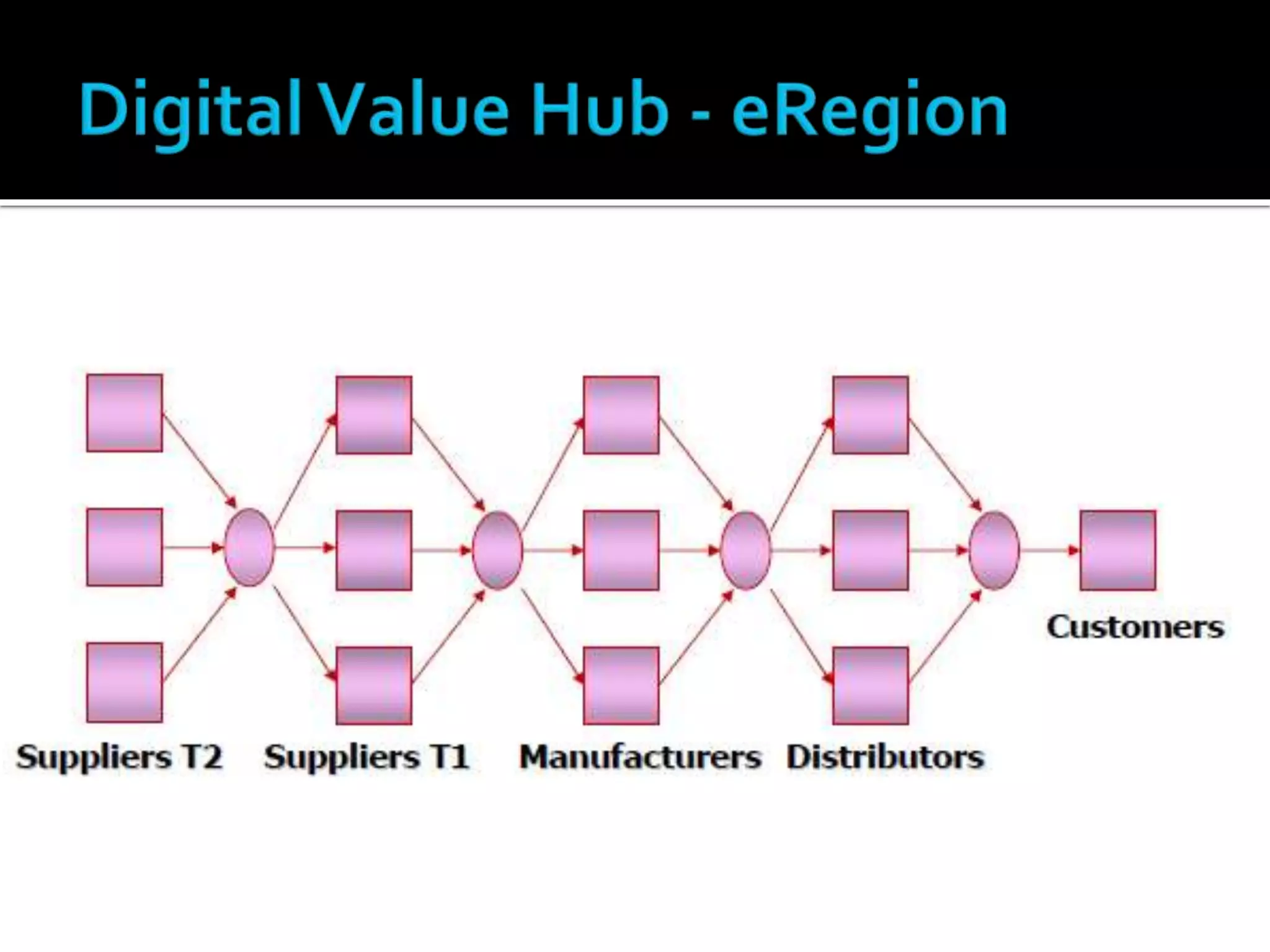
 Information flow across the supply chain
 All parties have a strong electronic bond and
backend systems
 Some companies do/don’t own any part of
the value chain
 They have access to information about all
from suppler/manufacturer to the customer
 This enables very effective order processing,
product tracking and fast resolution of SCM
issues.
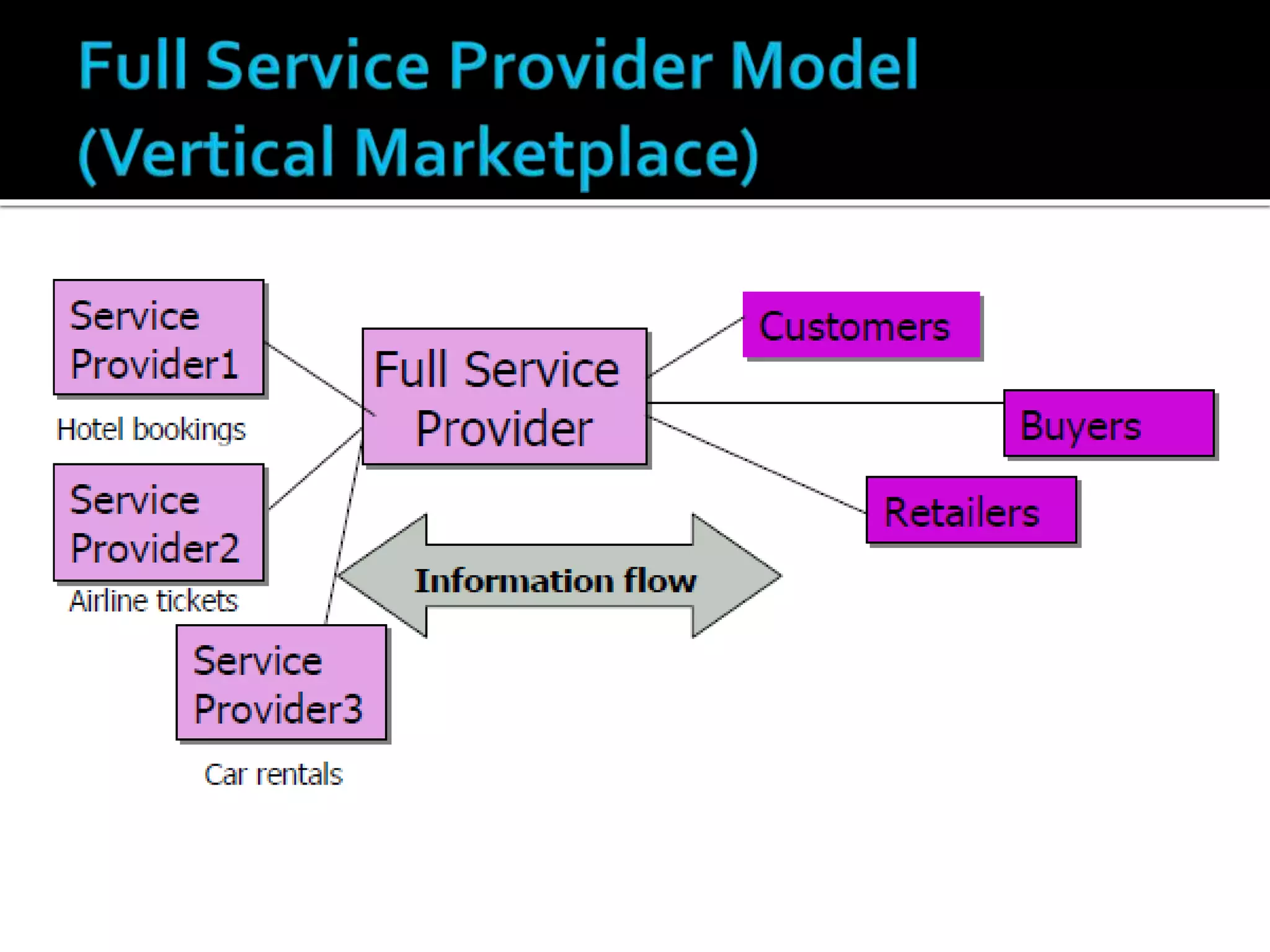
 Has to know a lot about the customer
 Provides own products or services bundled with
third party products or services.
 Commission from third party products
 Can charge customers a service fee
 Offers a wide range of products/services to the
customer at a reasonable or lower price
 Offers different channels
 Internet, face-to-face, phone, etc.
 This is a very effective strategy to achieve
economies of scale in delivery/distribution,
channel usage and promotion
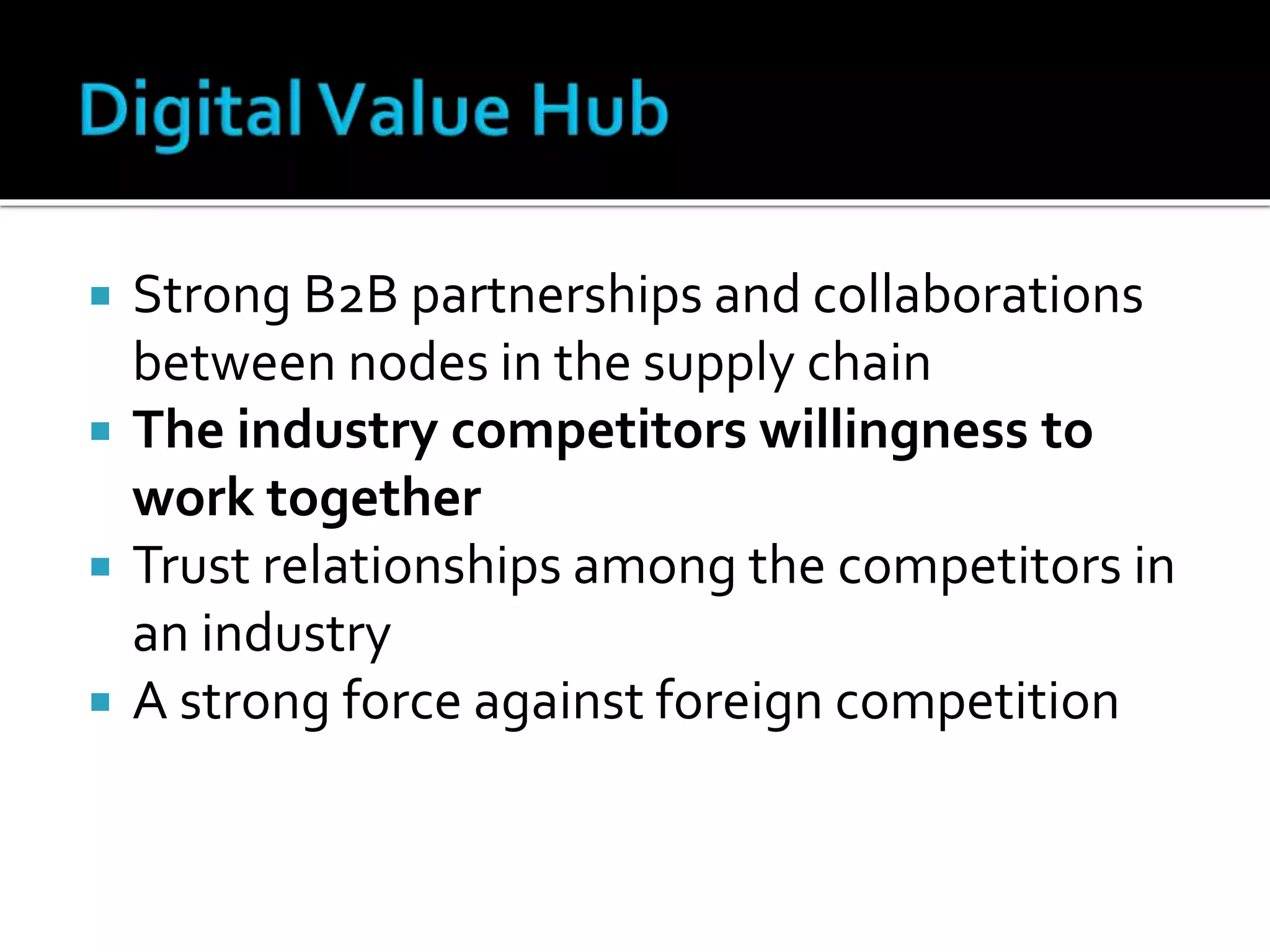
 Strong B2B partnerships and collaborations
between nodes in the supply chain
 The industry competitors willingness to
work together
 Trust relationships among the competitors in
an industry
 A strong force against foreign competition
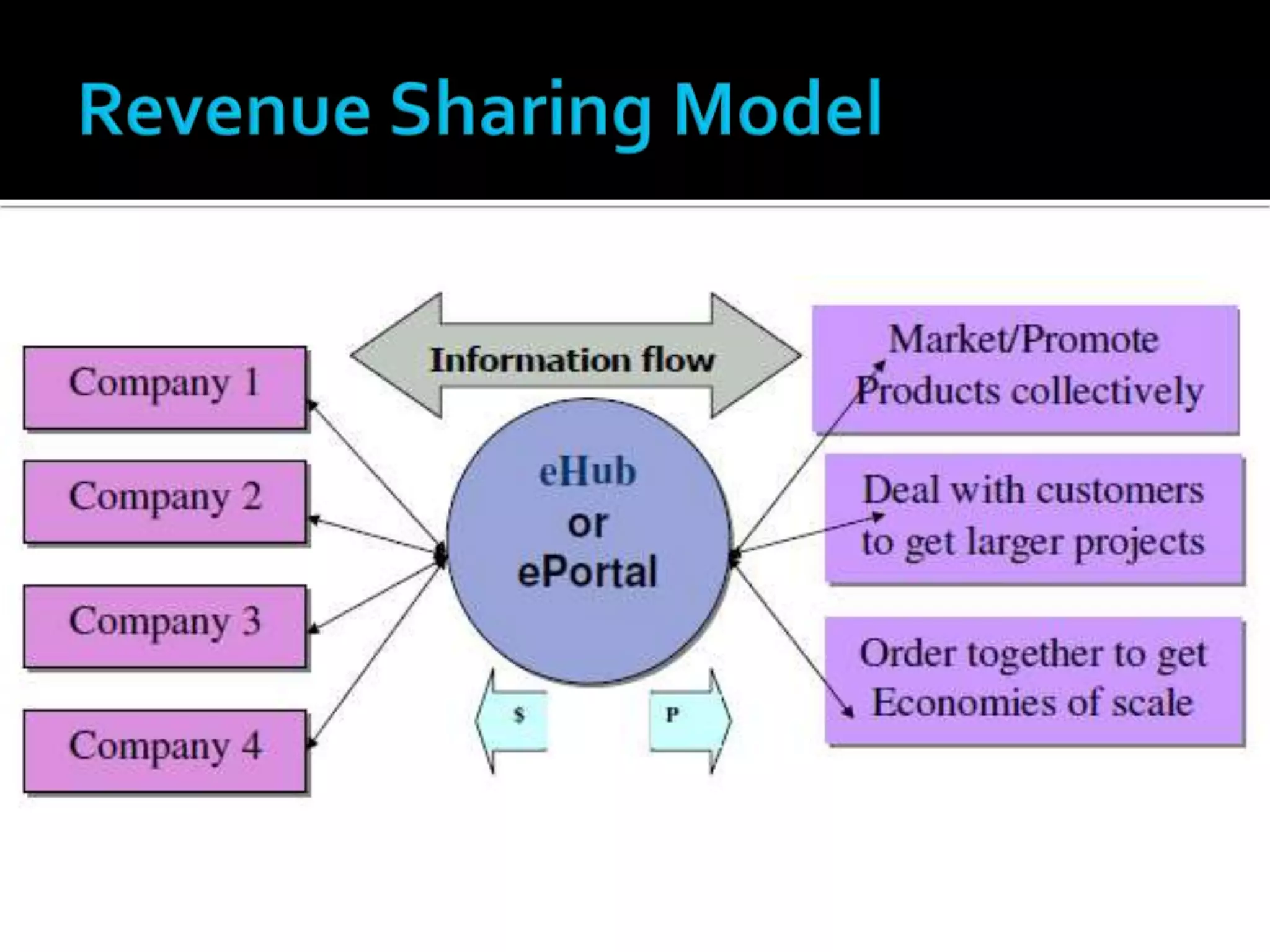
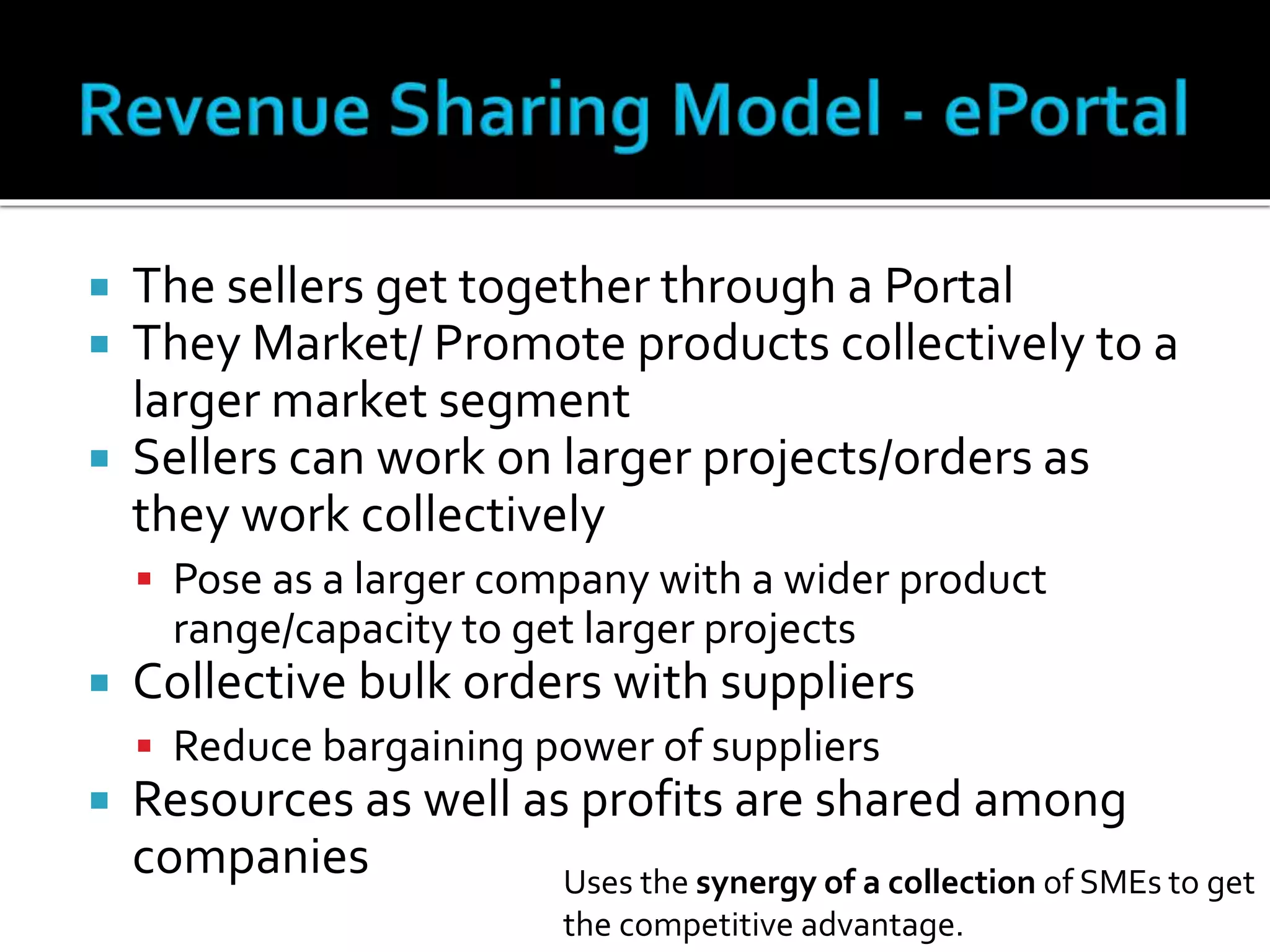
 The sellers get together through a Portal
 They Market/ Promote products collectively to a
larger market segment
 Sellers can work on larger projects/orders as
they work collectively
 Pose as a larger company with a wider product
range/capacity to get larger projects
 Collective bulk orders with suppliers
 Reduce bargaining power of suppliers
 Resources as well as profits are shared among
companies Uses the synergy of a collection of SMEs to get
the competitive advantage.
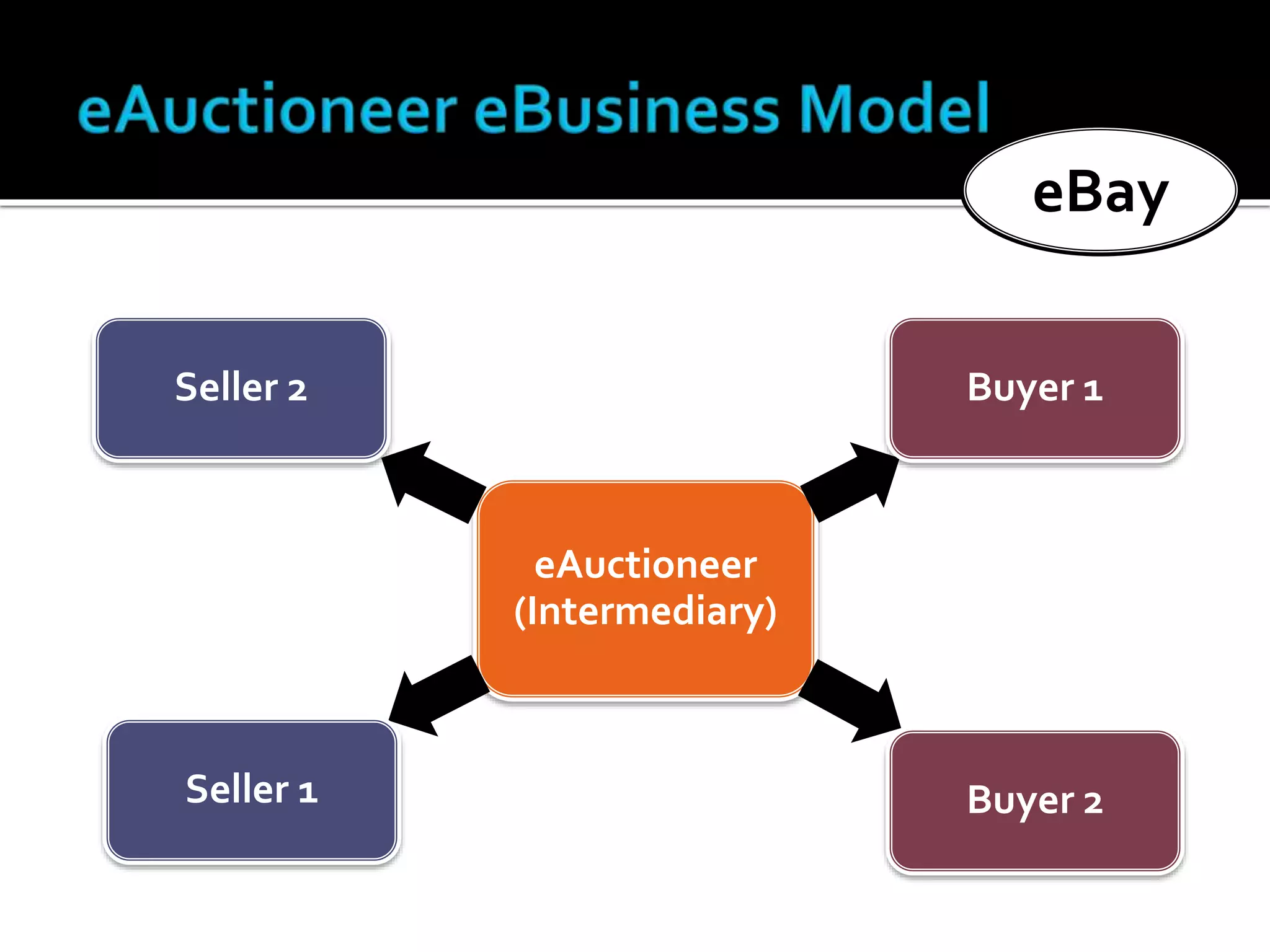
eAuctioneer
(Intermediary)
Seller 2 Buyer 1
Buyer 2Seller 1
eBay
 Intermediary does not take responsibility for
the sale or the payment and the eAuctioneer
owns the valuable customer relationship and
data but not the transaction.
2014, 2013, 2012, 2011 , 2009 –
(30 Marks)

Revenue Models for e-Business on The Web

  • 1.
    Revenue Models fore-Business onThe Web UpekhaVandebona upe.vand@gmail.com
  • 4.
     Can sellat lower prices  Build to customer order  Receive payment earlier  Speed up new product release cycles and faster delivery of goods  Use customer data to provide customized value added service  Proactive decision making
  • 6.
     Information flowacross the supply chain  All parties have a strong electronic bond and backend systems  Some companies do/don’t own any part of the value chain  They have access to information about all from suppler/manufacturer to the customer  This enables very effective order processing, product tracking and fast resolution of SCM issues.
  • 8.
     Has toknow a lot about the customer  Provides own products or services bundled with third party products or services.  Commission from third party products  Can charge customers a service fee  Offers a wide range of products/services to the customer at a reasonable or lower price  Offers different channels  Internet, face-to-face, phone, etc.  This is a very effective strategy to achieve economies of scale in delivery/distribution, channel usage and promotion
  • 10.
     Strong B2Bpartnerships and collaborations between nodes in the supply chain  The industry competitors willingness to work together  Trust relationships among the competitors in an industry  A strong force against foreign competition
  • 12.
     The sellersget together through a Portal  They Market/ Promote products collectively to a larger market segment  Sellers can work on larger projects/orders as they work collectively  Pose as a larger company with a wider product range/capacity to get larger projects  Collective bulk orders with suppliers  Reduce bargaining power of suppliers  Resources as well as profits are shared among companies Uses the synergy of a collection of SMEs to get the competitive advantage.
  • 13.
  • 14.
     Intermediary doesnot take responsibility for the sale or the payment and the eAuctioneer owns the valuable customer relationship and data but not the transaction.
  • 15.
    2014, 2013, 2012,2011 , 2009 – (30 Marks)

Editor's Notes

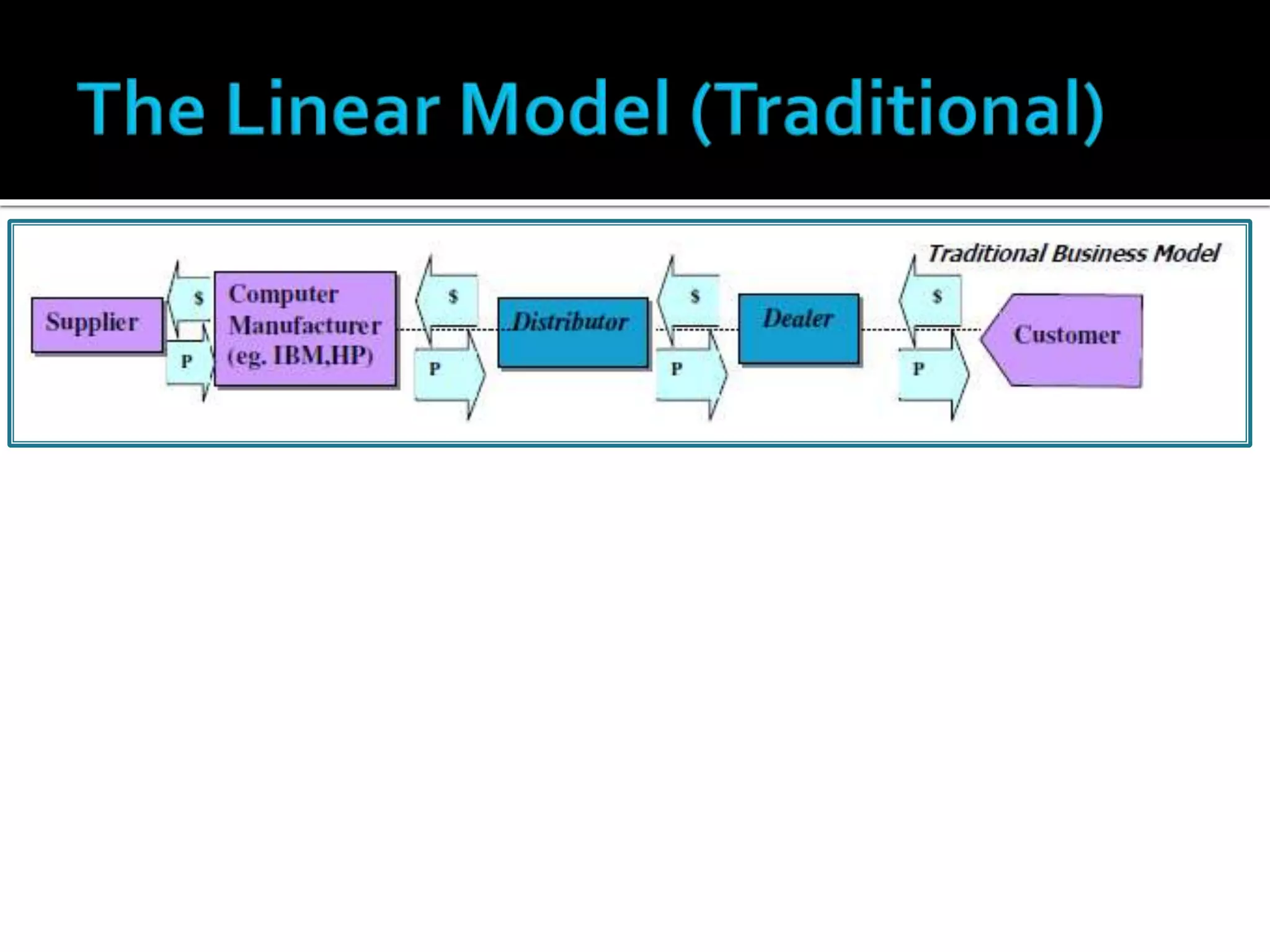
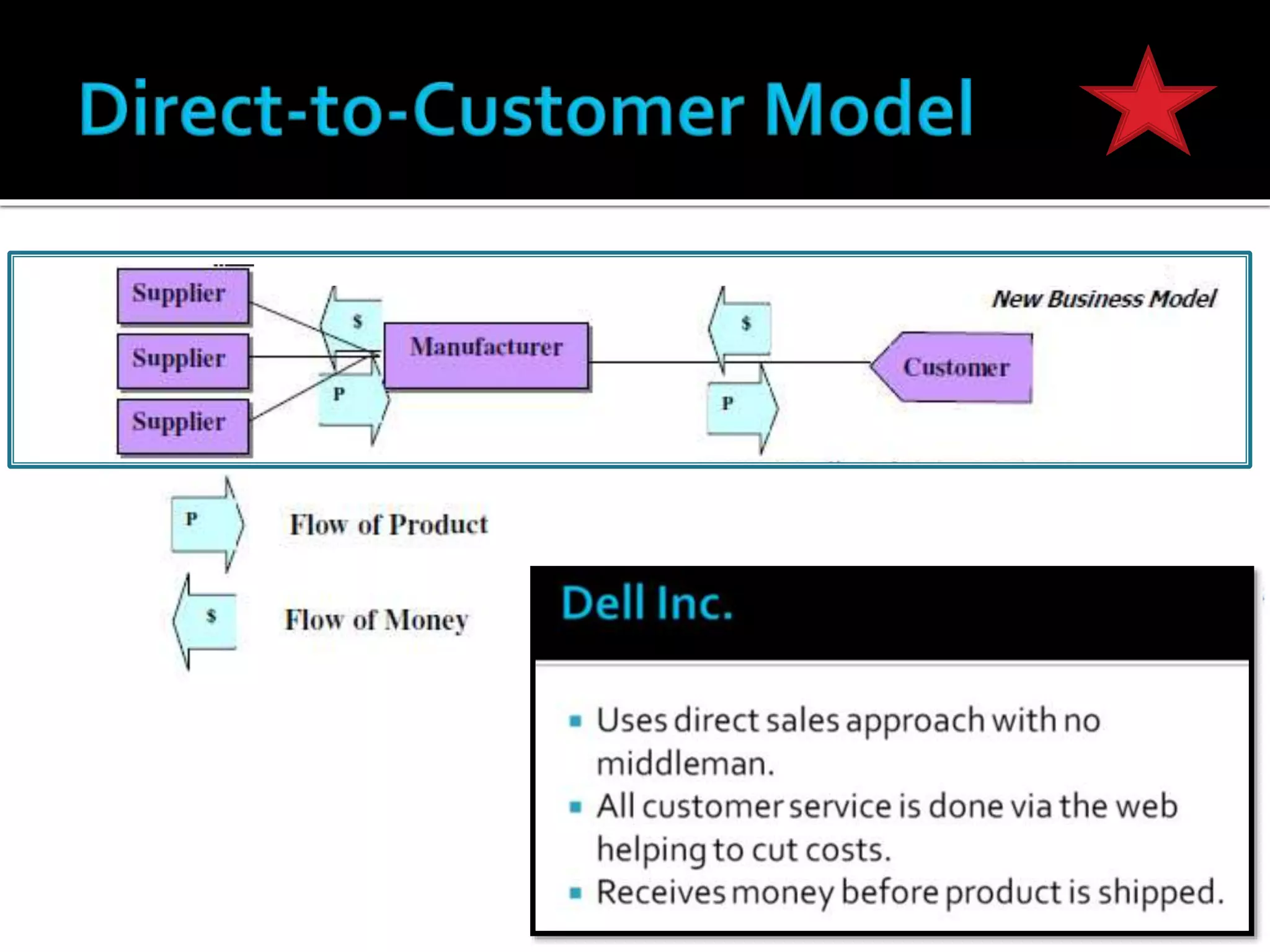
  • #4 This model which bypasses certain nodes in the supply chain
  • #5 Can sell at lower prices by reducing intermediaries
  • #7 This model creates a virtual value chain and an information flows across the supply chain.
  • #9 This is a very effective portal where the manufacturer sells their own products or services bundled with third party products or services.
  • #10 eRegion local
  • #13 The eHub or the ePortal is the front-end for a collection of SMEs in the same industry using the portal to either market/promote each other’s products collectively. the collective synergy is a much greater strength for the SMEs involved than trying to market or buy separately.