In humans the respiratory tract is
the part of the anatomy that has to
do with the process of respiration.
The respiratory tract is divided into
3 segments:
 Upper respiratory tract: nose and
nasal passages, paranasal
sinuses, and throat or pharynx
 Respiratory airways: voice box or
larynx, trachea, bronchi, and
bronchioles
 Lungs: respiratory bronchioles,
alveolar ducts, alveolar sacs, and
alveoli
Gas exchange
Most of the respiratory tract
exists merely as a piping
system for air to travel in the
lungs; alveoli are the only part
of the lung that exchanges
oxygen and carbon dioxide
with the blood.
Upper Respiratory Tract
Infections
Lower Respiratory Tract
Infections
The respiratory tract is a
common site for infections.
Upper respiratory tract
infections are probably the
most common infections in
the world.
Pharyngitis is an inflammation of the
throat or pharynx. In most cases it is
painful and the initial infection can
extend for a lengthy time period, and
is often referred to as a sore
throat.
Acute pharyngitis can result in very
large tonsils which cause trouble
swallowing and breathing. Some
cases are accompanied by a cough
or fever.
Most acute cases are caused by viral
Infections (40%–60%), with the
remainder caused by bacterial
infections, fungal infections, or
irritants such as pollutants or
chemical substances.
 Upper Respiratory
Infection: inflamed
mucous membranes of
the throat
◦ Caused by Group A -
hemolytic streptococci
(Streptococcus pyogenes)
◦ Virulence factors:
resistance to phagocytosis
 Streptokinases: lyse fibrin
clots
 Streptolysins: cytotoxic to
tissue cells, RBCs, and
protective leukocytes
 Transmission:
◦ person to person by direct
contact with saliva or nasal
discharge.
◦ Most people do not get group
A strep infections from
casual contact with others,
but a crowded environment
like a dormitory, school, or an
institutional setting can make
it easier for the bacteria to
spread.
◦ A person becomes sick
within 3 days after being
exposed to the germ.
◦ Once people become
infected, they can pass the
infection to others for up to 2
to 3 weeks even if they don't
have symptoms.
◦ After 24 hours of antibiotic
treatment, a person will no
longer spread the bacteria to
others.
 Throat may be red with white
patches
 trouble swallowing
 have tender swollen glands
(lymph nodes) on the sides of
your neck, toward the front
 Usually the tonsils are red and
enlarged
 may also have white craters or
specks of pus on your tonsils or
your tonsils may be covered with
a gray or white coating.
headache
 abdominal (lower stomach) pain
 fever
 general discomfort, uneasiness,
or ill feeling
 loss of appetite and nausea
 muscle pain
 joint stiffness
 rashes
 Diagnosis:
◦ Throat swab
◦ Rapid test*
 Indirect agglutination
diagnostic tests
 Use microscopic latex
particles coated with Abs
against group A streptococci.
 Negative tests are double
checked by culturing
organism.
*Rapid Antigen Tests (RATs)
detect either viable or
nonviable organisms directly
from a throat swab –providing
results within 5 minutes.
 Rx: 10 days of treatment with an
antibiotic such as penicillin.
◦ stay home for at least 48 hours,
until the antibiotics have had a
chance to work. It's typical to be
contagious for about 24 hours
after you start treatment. By the
third day you should be feeling
much better.
◦ If you stop taking your antibiotics
too soon, bacteria can remain in
your throat, your symptoms may
come back, and you could be
contagious for up to 21 days.
◦ No treatment or incomplete
treatment of strep throat also
increases your risk of
complications, such as rheumatic
fever (which can cause permanent
damage to your heart), scarlet
fever, blood infection, or kidney
disease.
acute epiglottis
acute rheumatic fever
acute glomerulonephritis
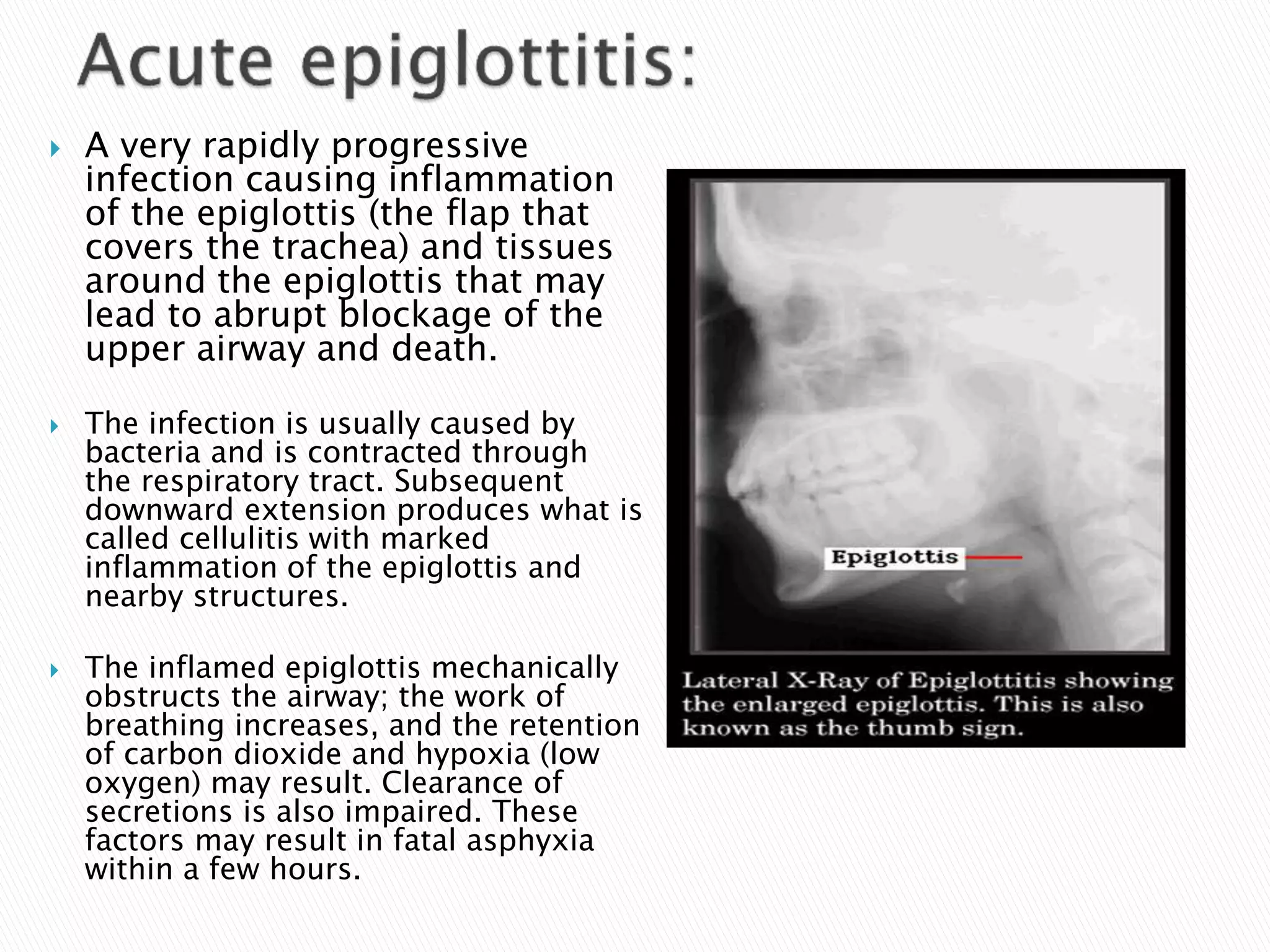
 A very rapidly progressive
infection causing inflammation
of the epiglottis (the flap that
covers the trachea) and tissues
around the epiglottis that may
lead to abrupt blockage of the
upper airway and death.
 The infection is usually caused by
bacteria and is contracted through
the respiratory tract. Subsequent
downward extension produces what is
called cellulitis with marked
inflammation of the epiglottis and
nearby structures.
 The inflamed epiglottis mechanically
obstructs the airway; the work of
breathing increases, and the retention
of carbon dioxide and hypoxia (low
oxygen) may result. Clearance of
secretions is also impaired. These
factors may result in fatal asphyxia
within a few hours.
 An inflammatory disease that may
develop two to three weeks after a
Group A Streptococcal infection
(such as strep throat or scarlet fever).
 It is believed to be caused by
antibody cross-reactivity and can
involve the heart, joints, skin, and
brain.
 Acute rheumatic fever commonly
appears in children between ages 5
and 15, with only 20% of first time
attacks occurring in adults.
 It gets its name for its similarity in
presentation to rheumatism.
 Some patients develop significant
carditis which manifests as
congestive heart failure.
 This requires the usual treatment for
heart failure: diuretics and digoxin.
 Unlike normal heart failure,
rheumatic heart failure responds well
to corticosteroids.
 Causes renal failure
 Occurs after infection with
Streptococcus pyogenes.
 It typically occurs 10–14 days after
a skin or pharyngeal infection with
this bacterium.
 Patients present with signs and
symptoms of glomerulonephritis.
 Diagnosis is made based on these
findings in an individual with a
history of recent streptococcal
infection.
 Streptococcal titers in the blood
(antistreptolysin O titers) may
support the diagnosis.
 Strep throat or other
infections of nose and
throat, can progress to
otitis media
 Most frequent in early
childhood
 Affects 85% of children
under the age of 3
years.
 An untreated infection can
travel from the middle ear to
the nearby parts of the head,
including the brain.
 Although the hearing loss
caused by otitis media is
usually temporary, untreated
otitis media may lead to
permanent hearing
impairment.
 Persistent fluid in the middle
ear and chronic otitis media
can reduce a child's hearing at
a time that is critical for speech
and language development.
 Children who have early
hearing impairment from
frequent ear infections are
likely to have speech and
language disabilities.
◦ unusual irritability
◦ difficulty sleeping
◦ tugging or pulling at one or both
ears
◦ fever
◦ fluid draining from the ear
◦ loss of balance
◦ unresponsiveness to quiet
sounds or other signs of
hearing difficulty such as sitting
too close to the television or
being inattentive
 Prevention:
◦ children who are cared for in
group settings, as well as
children who live with adults
who smoke cigarettes, have
more ear infections. Therefore,
a child who is prone to otitis
media should avoid contact
with sick playmates and
environmental tobacco smoke.
◦ Infants who nurse from a bottle
while lying down also appear to
develop otitis media more
frequently.
◦ Children who have been
breast-fed often have fewer
episodes of otitis media.
◦ Research has shown that cold
and allergy medications such
as antihistamines and
decongestants are not helpful
in preventing ear infections.
◦ Even though studies have shown
that up to 80% of acute ear
infections will clear up on their
own without medical treatment,
the standard therapy for acute
otitis media remains antibiotics.
◦ Even after effective antibiotic
treatment, 40% of children may
retain non-infected residual fluid
in the middle ear that can cause
some temporary hearing loss. This
may last for 3 to 6 weeks after the
initial antibiotic therapy
◦ The duration of acute otitis media
is variable. There may be
improvement within 48 hours even
without treatment. Treatment with
antibiotics for a week to 10 days is
usually effective.
 Diphtheria is an acute bacterial
disease that usually affects the
tonsils, throat, nose or skin. It is
extremely rare in the United
States.
 Diphtheria is most common where
people live in crowded conditions.
Unimmunized children under 15
years of age are likely to contract
diphtheria. The disease is often
found among adults whose
immunization was neglected, and
is most severe in unimmunized or
inadequately immunized
individuals.
Corynebacterium diphtheriae is
the pathogenic bacterium that causes
diphtheria. It is also known as the Klebs-
Löffler bacillus.
*is the ability of some micro-
organisms to alter their shape
or size in response to
environmental conditions
◦ Gram-positive
◦ Pleomorphic*
◦ Non endospore forming
◦ Non motile
◦ Used to say that it looked
like Chinese characters
 Causative Agent:
Cornybacterium diptheriae
 Transmission: Diphtheria is
transmitted to others through
close contact with discharge
from an infected person s
nose, throat, skin, eyes and
lesions
 There are two types of
diphtheria. One type involves
the nose and throat, and the
other involves the skin.
Characterized by:
◦ Fever
◦ Headaches
◦ Sore throat
◦ Tiredness
◦ Eventual formation of a
pseudomembrane that covers
throat and nasal passages
 RBCs
 WBCs
 Bacterium
 Epithelial cells – organism has
begun to destroy. Membrane
inbedded in tissue
◦ Symptoms usually appear two to
four days after infection, with a
range of one to ten days
◦ Symptoms include sore throat, low-
grade fever and enlarged lymph
nodes located in the neck. Skin
lesions may be painful, swollen and
reddened.
◦ People who are infected with the
diphtheria germ may be contagious
for up to two weeks, but seldom
more than four weeks. If the patient
is treated with appropriate
antibiotics, the contagious period
can be limited to less than four
days.
 The toxin, or poison, caused by
the bacteria can lead to a thick
coating in the nose, throat, or
airway (pseudomembrane).
 C. diphtheriae will only produce
the clinical Sx, if transformed by
a bacteriophage.
 This pseudomembrane is gray or
black and can cause breathing
problems and difficulty in
swallowing.
 In more advanced stages, the
patient may have difficulty
breathing or swallowing,
complain of double vision, have
slurred speech, or even show
signs of going into shock (pale,
cold skin; rapid heartbeat;
sweating; and an anxious
appearance).
◦ Preventing diphtheria depends
almost completely on immunizing
children with the combined
diptheria/tetanus/pertussis (DTP
or Dtap) vaccine and non-
immunized adults with the
diphtheria/tetanus vaccine (DT).
◦ Most cases of diphtheria occur in
people who haven't received the
vaccine at all or haven't received
the entire course.
◦ The immunization schedule calls
for DTP or DTaP vaccines at 2, 4,
and 6 months of age, with booster
doses given at 12 to 18 months
and then at 4 to 6 years.
◦ Booster shots should be given
every 10 years after that to
maintain protection.
◦ International studies have shown
that a significant percentage of
adults over 40 years of age are not
adequately protected against
diphtheria and tetanus.
 Incubation:
The incubation period for
diphtheria is 2 to 4 days, although
it can range from 1 to 6 days.
 Contagiousness:
Diphtheria is highly contagious. It
is easily passed from the infected
person to others through
sneezing, coughing, or even
laughing. It also can be spread to
others who pick up tissues or
drinking glasses that have been
used by the infected person.
 People who have been infected by
the diphtheria bacteria can infect
others for up to 4 weeks, even if
they don't have any symptoms.
 Tx:
◦ Treatment consists of immediate
administration of diphtheria
antitoxin and antibiotics.
◦ Antibiotic treatment usually renders
patients non-infectious within 24
hours.
 Vaccine:
◦ Diphtheria vaccine is usually
combined with tetanus vaccine and
acellular pertussis vaccine to form a
triple vaccine known as DTaP. This
vaccine should be given at two,
four, six and 15-18 months of age,
and between four and six years of
age. A combination of tetanus
vaccine and diphtheria vaccine (Td)
should be given every 10 years to
maintain immunity.
◦ Unless immunized, children and
adults may repeatedly be infected
with the disease.
Infections of the Lungs
Pneumonia
Whooping Cough
Tuberculosis
Inflamation of lung with accompanying
fluid build up
Much of pneumonia seen clinically is
caused by viruses.
Streptococcus pneumoniae causes
about 90% of all bacterial pneumonia
cases.
◦ Organism is Gram-positive
diplococci
◦ Heavily encapsulated (primary
virulence factor)
◦ Human host is resistant to S.
pneumoniae
◦ Organism is very fragile
 Alpha hemolytic – has green
zone around colony because it
only partially destroys RBC
Pneumococcal: caused by S.
pneumoniae
◦ Most common cause of
bacterial pneumonia
◦ Surrounded by capsule
◦ 83 serotypes distinguished
by capsules
 Symptoms:
◦ High fever
◦ Difficulty breathing
◦ Chest pain
◦ Lungs have reddish
appearance due to dilated
blood vessels
Alcoholics – alcohol will suppress
immune system
Immunosuppressed – AIDS
patients who are taking
immunosuppressants for cancer,
transplants etc…
Debilitated individuals
◦ Those who live a very
sedentary lifestyle (morbidly
obese, elderly)
 In response to the infection,
alveoli fill with some RBCs,
neutrophils, and fluid from
surrounding tissues
 Sputum is often rust-colored
from blood coughed up from
lungs
◦ Diagnosis:
 Culture of bacterium from
sputum and optochin
sensitive
◦ Tx: Penicillin
◦ Vaccine available, usually for
children and elderly patients
Smaller players in causing pneumonia
 Klebsiella pneumoniae
◦ Gram-negative enteric
◦ Destroys lungs
◦ Very degenerative
◦ Associated with alcoholics
 Haemophilus influenzae
◦ 5-6 years ago started giving kids
a vaccination
 Mycoplasma pneumoniae
◦ Causes milder type of pneumonia
(Atypical / walking pneumonia)
◦ No cell wall – no treatment with
PCN

◦ Legionnaires' disease, which is
also known as Legionellosis, is a
form of pneumonia.
◦ It is often called Legionnaires'
disease because the first known
outbreak occurred in the
Bellevue Stratford Hotel that was
hosting a convention of the
Pennsylvania Department of the
American Legion.
◦ In that outbreak, approximately
221 people contracted this
previously unknown type of
bacterial pneumonia, and 34
people died.
◦ The source of the bacterium was
found to be contaminated water
used to cool the air in the
hotel's air conditioning system.
◦ An estimated 8,000 to 18,000
people get Legionnaires' disease
in the United States each year.
◦ Transmission:
 Legionnaires' disease is most
often contracted by inhaling
mist from water sources such
as whirlpool baths, showers,
and cooling towers that are
contaminated with Legionella
bacteria.
 There is no evidence for
person-to-person spread of
the disease.
◦ Symptoms*:
 Fever
 chills
 cough that may or may not
produce sputum
 abdominal pain
 diarrhoea
 Confusion or mental illness.
*This list of symptoms,
however, does not readily
distinguish Legionnaires'
disease from other types of
pneumonia.
◦ Diagnosis:
 Legionnaires' disease is
confirmed by laboratory tests
that detect the presence of
the bacterium, Legionella
pnuemophila, or the presence
of other bacteria in the family
Legionellaceae.
◦ Tx:
 It is the most often treated
with the antibiotic drug
Erythromycin.
 Although Legionnaires'
disease has a mortality rate of
5 to 15 percent, many people
may be infected with the
bacterium that causes the
disease, yet not develop any
symptoms.
 It is likely that many cases of
Legionnaires' disease go
undiagnosed
◦ Causative agent:
Pneumocystis carinii
 Uncertainty whether organism
is protozoan or fungus
 Recent analysis of RNA
indicate yeast
 Found in healthy human lungs
but causes disease among
immunosuppressed patients
 Before AIDs epidemic,
uncommon disease
 By 1993, indicator of AIDS in
more than 20,000 cases
◦ #1 killer in people with HIV
◦ Most scientists believe PCP is
spread in the air, but they don't
know if it lives in the soil or
someplace else. The
PCP bacteria is common all over
the world.
◦ Prevention:
 If HIV +, regular blood test to
check how strong immune
system is.
 TMP-SMZ to prevent PCP if
CD4 cell count goes below
200.
 May also start taking TMP-
SMZ if you get certain
symptoms, such as a
temperature above 100°F that
lasts for 2 weeks or longer, or
a yeast infection in mouth or
throat (also called "thrush").
 Tx:
◦ People with severe PCP are treated
in a hospital with IV medicine
(medicine put into a vein through a
tube).
◦ As they get better--or if the illness
was mild to begin with--they can
take medicine in pill form. TMP-
SMZ is also a good treatment for
PCP.
◦ If you can't take TMP-SMZ, or if
you don't get better quickly with
TMP-SMZ, you can take other
medicines or combinations of
medicines.
◦ Although these days the treatments
for PCP are good, it's better to try
not to get PCP at all.
Trimethoprim-sulfamethoxazole (TMP-SMZ) is a combination of a sulfonamide antibiotic
and a methoprim. This combination is widely used for therapy of infections due to susceptible
bacteria as well as prevention of opportunistic infections with Pneumocystis jiroveci (formerly
carinii) in immune deficient individuals.
Pneumocystis jirovecii is a yeast-like fungus of the genus Pneumocystis
 Pertussis, commonly known as
"whooping cough," is an infection
of the respiratory tract caused by
Bordetella pertussis bacteria.
 A pertussis infection is very
contagious and can be quite
serious.
 Once inside the airways,
pertussis bacteria produce
chemical substances (toxins) that
interfere with the respiratory
tract's normal ability to eliminate
germs.
 B. pertussis destroys the ciliated
cells of the trachea and lungs
thus inhibiting the flushing
mechanism out of the lungs.
 Transmission:
◦ People become infected with
Bordetella pertussis bacteria by
inhaling contaminated droplets
from an infected person's
cough or sneeze.
◦ Once an unimmunized child
has been infected after
exposure to a person with
pertussis, it usually takes three
days to 21 days for symptoms
to begin.
 Symptoms:
◦ first symptoms of pertussis
may be similar to those of a
common cold, including nasal
congestion, runny nose,
sneezing, red and watery eyes,
mild fever, and a dry cough.
◦ After about 1 to 2 weeks, the
dry cough becomes a wet
cough that brings up thick,
stringy mucus.
◦ At the same time, coughing
begins to occur in long spells
that may last for over a
minute, sometimes causing a
child to turn red from effort or
blue from lack of oxygen.
◦ At the end of a coughing spell,
the child gasps for air with a
characteristic "whooping"
sound.
◦ Infants may not whoop at all
or as loudly as older children.
◦ Severe coughing spells can
lead to vomiting and may
make it hard for a child to eat
or drink.
◦ Severe coughing can also
cause petechiae (tiny, red
spots caused by ruptures in
blood vessels at the skin's
surface) in the skin of the
upper body, as well as small
areas of bleeding in the whites
of the eyes.
◦ Coughing spells can continue
for several weeks.
Tx:
◦ Pertussis is treated with
antibiotics, usually
erythromycin.
◦ Human pertussis serum
immunoglobulin is also used in
treatment.
◦ Antibiotics are also very
important in stopping the
spread of pertussis bacteria
from the infected child to other
people.
◦ To help decrease the chance of
vomiting, give frequent meals
with small portions.
◦ In some cases, a child with
pertussis may need treatment
in a hospital.
 Prevention:
◦ Pertussis can be prevented by the
pertussis vaccine, which is part of
the DTaP (diphtheria, tetanus,
acellular pertussis) or DTP
immunizations.
◦ These important immunizations are
routinely given in five doses before
a child's sixth birthday.
◦ The pertussis vaccine has
dramatically decreased the number
of cases of whooping cough that
occur each year and saved
countless lives.
◦ Prophylactic (preventive) oral
antibiotics should be given to
anyone who lives in the same
household as someone with
pertussis.
◦ Others who have had close contact
with the infected person, including
day-care staff and students, should
also receive prophylactic antibiotic
treatment.
Causative agent: Mycobacterium
tuberculosis
Chronic infection of lower respiratory
tract
Symptoms:
 Low grade fever
 Chronic cough
 Tiredness
 Night sweat
 Patients with active TB care
constantly shedding agent in
aerosols when they cough
Second largest infectious disease
killer in the world
◦ 300,000 new cases a year in the
U.S.
◦ U.S. has 10% mortality rate, in
most of the world it is 75%. We
have the meds and the $ so
ours is lower
◦ If you test positive for TB you
must get treatment
◦ Humans mount a significant and
effective immune response but
immune response seriously
damages the lungs.
Two stages of TB
 Inactive
 Active
Inactive
◦ Happens after the organism has
started to grow in the lungs but
hasn’t shown any symptoms.
◦ Body calcifies them – Gohn
tubercules can remain for yrs
◦ When Gohn tubercules begin to
grow infection is activated
◦ Everytime someone with TB
coughs they are releasing it into
the air via droplet nuclei. Even
when moisture dries up, TB is
still there as long as it is inside.
It doesn’t like sunlight.
The Gohn complex is an eponym which describes an inflammatory nodule
in the pulmonary parenchyma (Gohn focus) with an accompanying hilar
adenopathy in line with lymphatic drainage from that pulmonary segment.
The complex is often characteristic of tuberculosis, and is considered a
sequel to primary Tbc.
Primary infection with Mycobacterium Tuberculosis is typically a self-
limited disease in an immune-competent host. The disease has a
prediliction for the lower lobes, although any lobe can be involved.
Radiographically, primary TB typically presents as a consolidative process.
Pleural effusion is often present, but decreases in incidence with increasing
patient age, and can present any time after initial infection. The lesion is
eventually walled off by the body's host immune response, and regresses
to a calcified pulmonary mass known as a Gohn complex. Mediastinal (esp.
paratracheal) adenopathy is common, and involved nodes often calcify with
healing, leading to the Gohn (also called Ranke) complex (Gohn focus +
calcified nodes).
Active TB infection begins when the
mycobacteria reach the pulmonary
alveoli, where they invade and
replicate.
The primary site of infection in the
lungs is called the Gohn focus, and is
generally located in either the upper
part of the lower lobe, or the lower
part of the upper lobe.
Further spread is through the
bloodstream to other tissues and
organs where secondary TB lesions
can develop in other parts of the lung
(particularly the apex of the upper
lobes), peripheral lymph nodes,
kidneys, brain, and bone
 PPD – purified protein derivative
◦ Take pieces of cell and inoculate
under the skin
◦ If PPD is negative you are happy
◦ If PPD is positive you take a
chest x-ray in which they look
for infiltration (cloudy lungs)
 Negative chest x-ray means
you take 6 months of
antibiotics
 Positive means you take 2
years of anti TB drugs. If you
don’t take the meds you can
be arrested.

BCG (Bacillus Calmette-Guérin)
 We don’t give this vaccine in
the U.S b/c mortality rate is so
low.
 PPD test works and if you take
vaccine you will always tests
positive and then everyone will
have to get the chest xrays.
 If you tests PPD positive NEVER
take another test because you
might become anaphylactic
Treatment for TB uses antibiotics to kill the
bacteria. Effective TB treatment is difficult,
due to the unusual structure and chemical
composition of the mycobacterial cell wall,
which makes many antibiotics ineffective
and hinders the entry of drugs.
The two antibiotics most commonly used
are rifampicin and isoniazid. However,
instead of the short course of antibiotics
typically used to cure other bacterial
infections, TB requires much longer
periods of treatment (around 6 to 24
months) to entirely eliminate mycobacteria
from the body.
Drug-resistant TB is a public
health issue in many developing
countries, as treatment is longer
and requires more expensive
drugs.
Multi-drug-resistant tuberculosis
(MDR-TB) is defined as resistance
to the two most effective first-
line TB drugs: rifampicin and
isoniazid.
Extensively drug-resistant TB (XDR-
TB) is also resistant to three or more
of the six classes of second-line
drugs
 M. avium intracellular
complex
 M. gordonae
 M. Kanasii
 In the 1960s we had TB
almost gone but then we
stopped putting money into
programs and now it is
coming back.

Respiratory system diseases

  • 2.
    In humans therespiratory tract is the part of the anatomy that has to do with the process of respiration. The respiratory tract is divided into 3 segments:  Upper respiratory tract: nose and nasal passages, paranasal sinuses, and throat or pharynx  Respiratory airways: voice box or larynx, trachea, bronchi, and bronchioles  Lungs: respiratory bronchioles, alveolar ducts, alveolar sacs, and alveoli
  • 3.
    Gas exchange Most ofthe respiratory tract exists merely as a piping system for air to travel in the lungs; alveoli are the only part of the lung that exchanges oxygen and carbon dioxide with the blood.
  • 4.
    Upper Respiratory Tract Infections LowerRespiratory Tract Infections
  • 5.
    The respiratory tractis a common site for infections. Upper respiratory tract infections are probably the most common infections in the world.
  • 6.
    Pharyngitis is aninflammation of the throat or pharynx. In most cases it is painful and the initial infection can extend for a lengthy time period, and is often referred to as a sore throat. Acute pharyngitis can result in very large tonsils which cause trouble swallowing and breathing. Some cases are accompanied by a cough or fever. Most acute cases are caused by viral Infections (40%–60%), with the remainder caused by bacterial infections, fungal infections, or irritants such as pollutants or chemical substances.
  • 7.
     Upper Respiratory Infection:inflamed mucous membranes of the throat ◦ Caused by Group A - hemolytic streptococci (Streptococcus pyogenes) ◦ Virulence factors: resistance to phagocytosis  Streptokinases: lyse fibrin clots  Streptolysins: cytotoxic to tissue cells, RBCs, and protective leukocytes
  • 8.
     Transmission: ◦ personto person by direct contact with saliva or nasal discharge. ◦ Most people do not get group A strep infections from casual contact with others, but a crowded environment like a dormitory, school, or an institutional setting can make it easier for the bacteria to spread. ◦ A person becomes sick within 3 days after being exposed to the germ. ◦ Once people become infected, they can pass the infection to others for up to 2 to 3 weeks even if they don't have symptoms. ◦ After 24 hours of antibiotic treatment, a person will no longer spread the bacteria to others.
  • 9.
     Throat maybe red with white patches  trouble swallowing  have tender swollen glands (lymph nodes) on the sides of your neck, toward the front  Usually the tonsils are red and enlarged  may also have white craters or specks of pus on your tonsils or your tonsils may be covered with a gray or white coating. headache  abdominal (lower stomach) pain  fever  general discomfort, uneasiness, or ill feeling  loss of appetite and nausea  muscle pain  joint stiffness  rashes
  • 10.
     Diagnosis: ◦ Throatswab ◦ Rapid test*  Indirect agglutination diagnostic tests  Use microscopic latex particles coated with Abs against group A streptococci.  Negative tests are double checked by culturing organism. *Rapid Antigen Tests (RATs) detect either viable or nonviable organisms directly from a throat swab –providing results within 5 minutes.
  • 11.
     Rx: 10days of treatment with an antibiotic such as penicillin. ◦ stay home for at least 48 hours, until the antibiotics have had a chance to work. It's typical to be contagious for about 24 hours after you start treatment. By the third day you should be feeling much better. ◦ If you stop taking your antibiotics too soon, bacteria can remain in your throat, your symptoms may come back, and you could be contagious for up to 21 days. ◦ No treatment or incomplete treatment of strep throat also increases your risk of complications, such as rheumatic fever (which can cause permanent damage to your heart), scarlet fever, blood infection, or kidney disease.
  • 12.
    acute epiglottis acute rheumaticfever acute glomerulonephritis
  • 13.
     A veryrapidly progressive infection causing inflammation of the epiglottis (the flap that covers the trachea) and tissues around the epiglottis that may lead to abrupt blockage of the upper airway and death.  The infection is usually caused by bacteria and is contracted through the respiratory tract. Subsequent downward extension produces what is called cellulitis with marked inflammation of the epiglottis and nearby structures.  The inflamed epiglottis mechanically obstructs the airway; the work of breathing increases, and the retention of carbon dioxide and hypoxia (low oxygen) may result. Clearance of secretions is also impaired. These factors may result in fatal asphyxia within a few hours.
  • 14.
     An inflammatorydisease that may develop two to three weeks after a Group A Streptococcal infection (such as strep throat or scarlet fever).  It is believed to be caused by antibody cross-reactivity and can involve the heart, joints, skin, and brain.  Acute rheumatic fever commonly appears in children between ages 5 and 15, with only 20% of first time attacks occurring in adults.  It gets its name for its similarity in presentation to rheumatism.  Some patients develop significant carditis which manifests as congestive heart failure.  This requires the usual treatment for heart failure: diuretics and digoxin.  Unlike normal heart failure, rheumatic heart failure responds well to corticosteroids.
  • 15.
     Causes renalfailure  Occurs after infection with Streptococcus pyogenes.  It typically occurs 10–14 days after a skin or pharyngeal infection with this bacterium.  Patients present with signs and symptoms of glomerulonephritis.  Diagnosis is made based on these findings in an individual with a history of recent streptococcal infection.  Streptococcal titers in the blood (antistreptolysin O titers) may support the diagnosis.
  • 16.
     Strep throator other infections of nose and throat, can progress to otitis media  Most frequent in early childhood  Affects 85% of children under the age of 3 years.
  • 17.
     An untreatedinfection can travel from the middle ear to the nearby parts of the head, including the brain.  Although the hearing loss caused by otitis media is usually temporary, untreated otitis media may lead to permanent hearing impairment.  Persistent fluid in the middle ear and chronic otitis media can reduce a child's hearing at a time that is critical for speech and language development.  Children who have early hearing impairment from frequent ear infections are likely to have speech and language disabilities.
  • 18.
    ◦ unusual irritability ◦difficulty sleeping ◦ tugging or pulling at one or both ears ◦ fever ◦ fluid draining from the ear ◦ loss of balance ◦ unresponsiveness to quiet sounds or other signs of hearing difficulty such as sitting too close to the television or being inattentive
  • 19.
     Prevention: ◦ childrenwho are cared for in group settings, as well as children who live with adults who smoke cigarettes, have more ear infections. Therefore, a child who is prone to otitis media should avoid contact with sick playmates and environmental tobacco smoke. ◦ Infants who nurse from a bottle while lying down also appear to develop otitis media more frequently. ◦ Children who have been breast-fed often have fewer episodes of otitis media. ◦ Research has shown that cold and allergy medications such as antihistamines and decongestants are not helpful in preventing ear infections.
  • 20.
    ◦ Even thoughstudies have shown that up to 80% of acute ear infections will clear up on their own without medical treatment, the standard therapy for acute otitis media remains antibiotics. ◦ Even after effective antibiotic treatment, 40% of children may retain non-infected residual fluid in the middle ear that can cause some temporary hearing loss. This may last for 3 to 6 weeks after the initial antibiotic therapy ◦ The duration of acute otitis media is variable. There may be improvement within 48 hours even without treatment. Treatment with antibiotics for a week to 10 days is usually effective.
  • 21.
     Diphtheria isan acute bacterial disease that usually affects the tonsils, throat, nose or skin. It is extremely rare in the United States.  Diphtheria is most common where people live in crowded conditions. Unimmunized children under 15 years of age are likely to contract diphtheria. The disease is often found among adults whose immunization was neglected, and is most severe in unimmunized or inadequately immunized individuals. Corynebacterium diphtheriae is the pathogenic bacterium that causes diphtheria. It is also known as the Klebs- Löffler bacillus.
  • 22.
    *is the abilityof some micro- organisms to alter their shape or size in response to environmental conditions ◦ Gram-positive ◦ Pleomorphic* ◦ Non endospore forming ◦ Non motile ◦ Used to say that it looked like Chinese characters
  • 23.
     Causative Agent: Cornybacteriumdiptheriae  Transmission: Diphtheria is transmitted to others through close contact with discharge from an infected person s nose, throat, skin, eyes and lesions  There are two types of diphtheria. One type involves the nose and throat, and the other involves the skin.
  • 24.
    Characterized by: ◦ Fever ◦Headaches ◦ Sore throat ◦ Tiredness ◦ Eventual formation of a pseudomembrane that covers throat and nasal passages  RBCs  WBCs  Bacterium  Epithelial cells – organism has begun to destroy. Membrane inbedded in tissue
  • 25.
    ◦ Symptoms usuallyappear two to four days after infection, with a range of one to ten days ◦ Symptoms include sore throat, low- grade fever and enlarged lymph nodes located in the neck. Skin lesions may be painful, swollen and reddened. ◦ People who are infected with the diphtheria germ may be contagious for up to two weeks, but seldom more than four weeks. If the patient is treated with appropriate antibiotics, the contagious period can be limited to less than four days.
  • 26.
     The toxin,or poison, caused by the bacteria can lead to a thick coating in the nose, throat, or airway (pseudomembrane).  C. diphtheriae will only produce the clinical Sx, if transformed by a bacteriophage.  This pseudomembrane is gray or black and can cause breathing problems and difficulty in swallowing.  In more advanced stages, the patient may have difficulty breathing or swallowing, complain of double vision, have slurred speech, or even show signs of going into shock (pale, cold skin; rapid heartbeat; sweating; and an anxious appearance).
  • 27.
    ◦ Preventing diphtheriadepends almost completely on immunizing children with the combined diptheria/tetanus/pertussis (DTP or Dtap) vaccine and non- immunized adults with the diphtheria/tetanus vaccine (DT). ◦ Most cases of diphtheria occur in people who haven't received the vaccine at all or haven't received the entire course. ◦ The immunization schedule calls for DTP or DTaP vaccines at 2, 4, and 6 months of age, with booster doses given at 12 to 18 months and then at 4 to 6 years. ◦ Booster shots should be given every 10 years after that to maintain protection. ◦ International studies have shown that a significant percentage of adults over 40 years of age are not adequately protected against diphtheria and tetanus.
  • 28.
     Incubation: The incubationperiod for diphtheria is 2 to 4 days, although it can range from 1 to 6 days.  Contagiousness: Diphtheria is highly contagious. It is easily passed from the infected person to others through sneezing, coughing, or even laughing. It also can be spread to others who pick up tissues or drinking glasses that have been used by the infected person.  People who have been infected by the diphtheria bacteria can infect others for up to 4 weeks, even if they don't have any symptoms.
  • 29.
     Tx: ◦ Treatmentconsists of immediate administration of diphtheria antitoxin and antibiotics. ◦ Antibiotic treatment usually renders patients non-infectious within 24 hours.  Vaccine: ◦ Diphtheria vaccine is usually combined with tetanus vaccine and acellular pertussis vaccine to form a triple vaccine known as DTaP. This vaccine should be given at two, four, six and 15-18 months of age, and between four and six years of age. A combination of tetanus vaccine and diphtheria vaccine (Td) should be given every 10 years to maintain immunity. ◦ Unless immunized, children and adults may repeatedly be infected with the disease.
  • 30.
    Infections of theLungs Pneumonia Whooping Cough Tuberculosis
  • 31.
    Inflamation of lungwith accompanying fluid build up Much of pneumonia seen clinically is caused by viruses. Streptococcus pneumoniae causes about 90% of all bacterial pneumonia cases. ◦ Organism is Gram-positive diplococci ◦ Heavily encapsulated (primary virulence factor) ◦ Human host is resistant to S. pneumoniae ◦ Organism is very fragile  Alpha hemolytic – has green zone around colony because it only partially destroys RBC
  • 32.
    Pneumococcal: caused byS. pneumoniae ◦ Most common cause of bacterial pneumonia ◦ Surrounded by capsule ◦ 83 serotypes distinguished by capsules  Symptoms: ◦ High fever ◦ Difficulty breathing ◦ Chest pain ◦ Lungs have reddish appearance due to dilated blood vessels
  • 33.
    Alcoholics – alcoholwill suppress immune system Immunosuppressed – AIDS patients who are taking immunosuppressants for cancer, transplants etc… Debilitated individuals ◦ Those who live a very sedentary lifestyle (morbidly obese, elderly)
  • 34.
     In responseto the infection, alveoli fill with some RBCs, neutrophils, and fluid from surrounding tissues  Sputum is often rust-colored from blood coughed up from lungs ◦ Diagnosis:  Culture of bacterium from sputum and optochin sensitive ◦ Tx: Penicillin ◦ Vaccine available, usually for children and elderly patients
  • 35.
    Smaller players incausing pneumonia  Klebsiella pneumoniae ◦ Gram-negative enteric ◦ Destroys lungs ◦ Very degenerative ◦ Associated with alcoholics  Haemophilus influenzae ◦ 5-6 years ago started giving kids a vaccination  Mycoplasma pneumoniae ◦ Causes milder type of pneumonia (Atypical / walking pneumonia) ◦ No cell wall – no treatment with PCN 
  • 36.
    ◦ Legionnaires' disease,which is also known as Legionellosis, is a form of pneumonia. ◦ It is often called Legionnaires' disease because the first known outbreak occurred in the Bellevue Stratford Hotel that was hosting a convention of the Pennsylvania Department of the American Legion. ◦ In that outbreak, approximately 221 people contracted this previously unknown type of bacterial pneumonia, and 34 people died. ◦ The source of the bacterium was found to be contaminated water used to cool the air in the hotel's air conditioning system. ◦ An estimated 8,000 to 18,000 people get Legionnaires' disease in the United States each year.
  • 37.
    ◦ Transmission:  Legionnaires'disease is most often contracted by inhaling mist from water sources such as whirlpool baths, showers, and cooling towers that are contaminated with Legionella bacteria.  There is no evidence for person-to-person spread of the disease. ◦ Symptoms*:  Fever  chills  cough that may or may not produce sputum  abdominal pain  diarrhoea  Confusion or mental illness. *This list of symptoms, however, does not readily distinguish Legionnaires' disease from other types of pneumonia.
  • 38.
    ◦ Diagnosis:  Legionnaires'disease is confirmed by laboratory tests that detect the presence of the bacterium, Legionella pnuemophila, or the presence of other bacteria in the family Legionellaceae. ◦ Tx:  It is the most often treated with the antibiotic drug Erythromycin.  Although Legionnaires' disease has a mortality rate of 5 to 15 percent, many people may be infected with the bacterium that causes the disease, yet not develop any symptoms.  It is likely that many cases of Legionnaires' disease go undiagnosed
  • 39.
    ◦ Causative agent: Pneumocystiscarinii  Uncertainty whether organism is protozoan or fungus  Recent analysis of RNA indicate yeast  Found in healthy human lungs but causes disease among immunosuppressed patients  Before AIDs epidemic, uncommon disease  By 1993, indicator of AIDS in more than 20,000 cases
  • 40.
    ◦ #1 killerin people with HIV ◦ Most scientists believe PCP is spread in the air, but they don't know if it lives in the soil or someplace else. The PCP bacteria is common all over the world. ◦ Prevention:  If HIV +, regular blood test to check how strong immune system is.  TMP-SMZ to prevent PCP if CD4 cell count goes below 200.  May also start taking TMP- SMZ if you get certain symptoms, such as a temperature above 100°F that lasts for 2 weeks or longer, or a yeast infection in mouth or throat (also called "thrush").
  • 41.
     Tx: ◦ Peoplewith severe PCP are treated in a hospital with IV medicine (medicine put into a vein through a tube). ◦ As they get better--or if the illness was mild to begin with--they can take medicine in pill form. TMP- SMZ is also a good treatment for PCP. ◦ If you can't take TMP-SMZ, or if you don't get better quickly with TMP-SMZ, you can take other medicines or combinations of medicines. ◦ Although these days the treatments for PCP are good, it's better to try not to get PCP at all. Trimethoprim-sulfamethoxazole (TMP-SMZ) is a combination of a sulfonamide antibiotic and a methoprim. This combination is widely used for therapy of infections due to susceptible bacteria as well as prevention of opportunistic infections with Pneumocystis jiroveci (formerly carinii) in immune deficient individuals. Pneumocystis jirovecii is a yeast-like fungus of the genus Pneumocystis
  • 42.
     Pertussis, commonlyknown as "whooping cough," is an infection of the respiratory tract caused by Bordetella pertussis bacteria.  A pertussis infection is very contagious and can be quite serious.  Once inside the airways, pertussis bacteria produce chemical substances (toxins) that interfere with the respiratory tract's normal ability to eliminate germs.  B. pertussis destroys the ciliated cells of the trachea and lungs thus inhibiting the flushing mechanism out of the lungs.
  • 43.
     Transmission: ◦ Peoplebecome infected with Bordetella pertussis bacteria by inhaling contaminated droplets from an infected person's cough or sneeze. ◦ Once an unimmunized child has been infected after exposure to a person with pertussis, it usually takes three days to 21 days for symptoms to begin.
  • 44.
     Symptoms: ◦ firstsymptoms of pertussis may be similar to those of a common cold, including nasal congestion, runny nose, sneezing, red and watery eyes, mild fever, and a dry cough. ◦ After about 1 to 2 weeks, the dry cough becomes a wet cough that brings up thick, stringy mucus. ◦ At the same time, coughing begins to occur in long spells that may last for over a minute, sometimes causing a child to turn red from effort or blue from lack of oxygen.
  • 45.
    ◦ At theend of a coughing spell, the child gasps for air with a characteristic "whooping" sound. ◦ Infants may not whoop at all or as loudly as older children. ◦ Severe coughing spells can lead to vomiting and may make it hard for a child to eat or drink. ◦ Severe coughing can also cause petechiae (tiny, red spots caused by ruptures in blood vessels at the skin's surface) in the skin of the upper body, as well as small areas of bleeding in the whites of the eyes. ◦ Coughing spells can continue for several weeks.
  • 46.
    Tx: ◦ Pertussis istreated with antibiotics, usually erythromycin. ◦ Human pertussis serum immunoglobulin is also used in treatment. ◦ Antibiotics are also very important in stopping the spread of pertussis bacteria from the infected child to other people. ◦ To help decrease the chance of vomiting, give frequent meals with small portions. ◦ In some cases, a child with pertussis may need treatment in a hospital.
  • 47.
     Prevention: ◦ Pertussiscan be prevented by the pertussis vaccine, which is part of the DTaP (diphtheria, tetanus, acellular pertussis) or DTP immunizations. ◦ These important immunizations are routinely given in five doses before a child's sixth birthday. ◦ The pertussis vaccine has dramatically decreased the number of cases of whooping cough that occur each year and saved countless lives. ◦ Prophylactic (preventive) oral antibiotics should be given to anyone who lives in the same household as someone with pertussis. ◦ Others who have had close contact with the infected person, including day-care staff and students, should also receive prophylactic antibiotic treatment.
  • 48.
    Causative agent: Mycobacterium tuberculosis Chronicinfection of lower respiratory tract Symptoms:  Low grade fever  Chronic cough  Tiredness  Night sweat  Patients with active TB care constantly shedding agent in aerosols when they cough
  • 49.
    Second largest infectiousdisease killer in the world ◦ 300,000 new cases a year in the U.S. ◦ U.S. has 10% mortality rate, in most of the world it is 75%. We have the meds and the $ so ours is lower ◦ If you test positive for TB you must get treatment ◦ Humans mount a significant and effective immune response but immune response seriously damages the lungs.
  • 50.
    Two stages ofTB  Inactive  Active
  • 51.
    Inactive ◦ Happens afterthe organism has started to grow in the lungs but hasn’t shown any symptoms. ◦ Body calcifies them – Gohn tubercules can remain for yrs ◦ When Gohn tubercules begin to grow infection is activated ◦ Everytime someone with TB coughs they are releasing it into the air via droplet nuclei. Even when moisture dries up, TB is still there as long as it is inside. It doesn’t like sunlight.
  • 52.
    The Gohn complexis an eponym which describes an inflammatory nodule in the pulmonary parenchyma (Gohn focus) with an accompanying hilar adenopathy in line with lymphatic drainage from that pulmonary segment. The complex is often characteristic of tuberculosis, and is considered a sequel to primary Tbc. Primary infection with Mycobacterium Tuberculosis is typically a self- limited disease in an immune-competent host. The disease has a prediliction for the lower lobes, although any lobe can be involved. Radiographically, primary TB typically presents as a consolidative process. Pleural effusion is often present, but decreases in incidence with increasing patient age, and can present any time after initial infection. The lesion is eventually walled off by the body's host immune response, and regresses to a calcified pulmonary mass known as a Gohn complex. Mediastinal (esp. paratracheal) adenopathy is common, and involved nodes often calcify with healing, leading to the Gohn (also called Ranke) complex (Gohn focus + calcified nodes).
  • 53.
    Active TB infectionbegins when the mycobacteria reach the pulmonary alveoli, where they invade and replicate. The primary site of infection in the lungs is called the Gohn focus, and is generally located in either the upper part of the lower lobe, or the lower part of the upper lobe. Further spread is through the bloodstream to other tissues and organs where secondary TB lesions can develop in other parts of the lung (particularly the apex of the upper lobes), peripheral lymph nodes, kidneys, brain, and bone
  • 54.
     PPD –purified protein derivative ◦ Take pieces of cell and inoculate under the skin ◦ If PPD is negative you are happy ◦ If PPD is positive you take a chest x-ray in which they look for infiltration (cloudy lungs)  Negative chest x-ray means you take 6 months of antibiotics  Positive means you take 2 years of anti TB drugs. If you don’t take the meds you can be arrested. 
  • 55.
    BCG (Bacillus Calmette-Guérin) We don’t give this vaccine in the U.S b/c mortality rate is so low.  PPD test works and if you take vaccine you will always tests positive and then everyone will have to get the chest xrays.  If you tests PPD positive NEVER take another test because you might become anaphylactic
  • 57.
    Treatment for TBuses antibiotics to kill the bacteria. Effective TB treatment is difficult, due to the unusual structure and chemical composition of the mycobacterial cell wall, which makes many antibiotics ineffective and hinders the entry of drugs. The two antibiotics most commonly used are rifampicin and isoniazid. However, instead of the short course of antibiotics typically used to cure other bacterial infections, TB requires much longer periods of treatment (around 6 to 24 months) to entirely eliminate mycobacteria from the body.
  • 58.
    Drug-resistant TB isa public health issue in many developing countries, as treatment is longer and requires more expensive drugs. Multi-drug-resistant tuberculosis (MDR-TB) is defined as resistance to the two most effective first- line TB drugs: rifampicin and isoniazid. Extensively drug-resistant TB (XDR- TB) is also resistant to three or more of the six classes of second-line drugs
  • 59.
     M. aviumintracellular complex  M. gordonae  M. Kanasii  In the 1960s we had TB almost gone but then we stopped putting money into programs and now it is coming back.