Dr. Asra Hameed
Pharm.D (JUW)
asra_hameed1@hotmail.com
• Ischemia usually happens because of a shortage of
blood and oxygen to the heart muscle.
• It is usually due to narrowing or blockage of one or more
of the coronary arteries (which supply blood to the heart
muscle).
• In many cases ischemia is a temporary problem.
• A deficiency of oxygen reaching the tissues of the body
• There are four types:
 hypoxemic, from low blood oxygen content
 anemic, from low blood oxygen-carrying capacity
 distributive, from low blood flow
 histotoxic, from poisoning
• If not reversed quickly, hypoxia can lead to necrosis
(tissue death), as in heart attack.
Ischemia
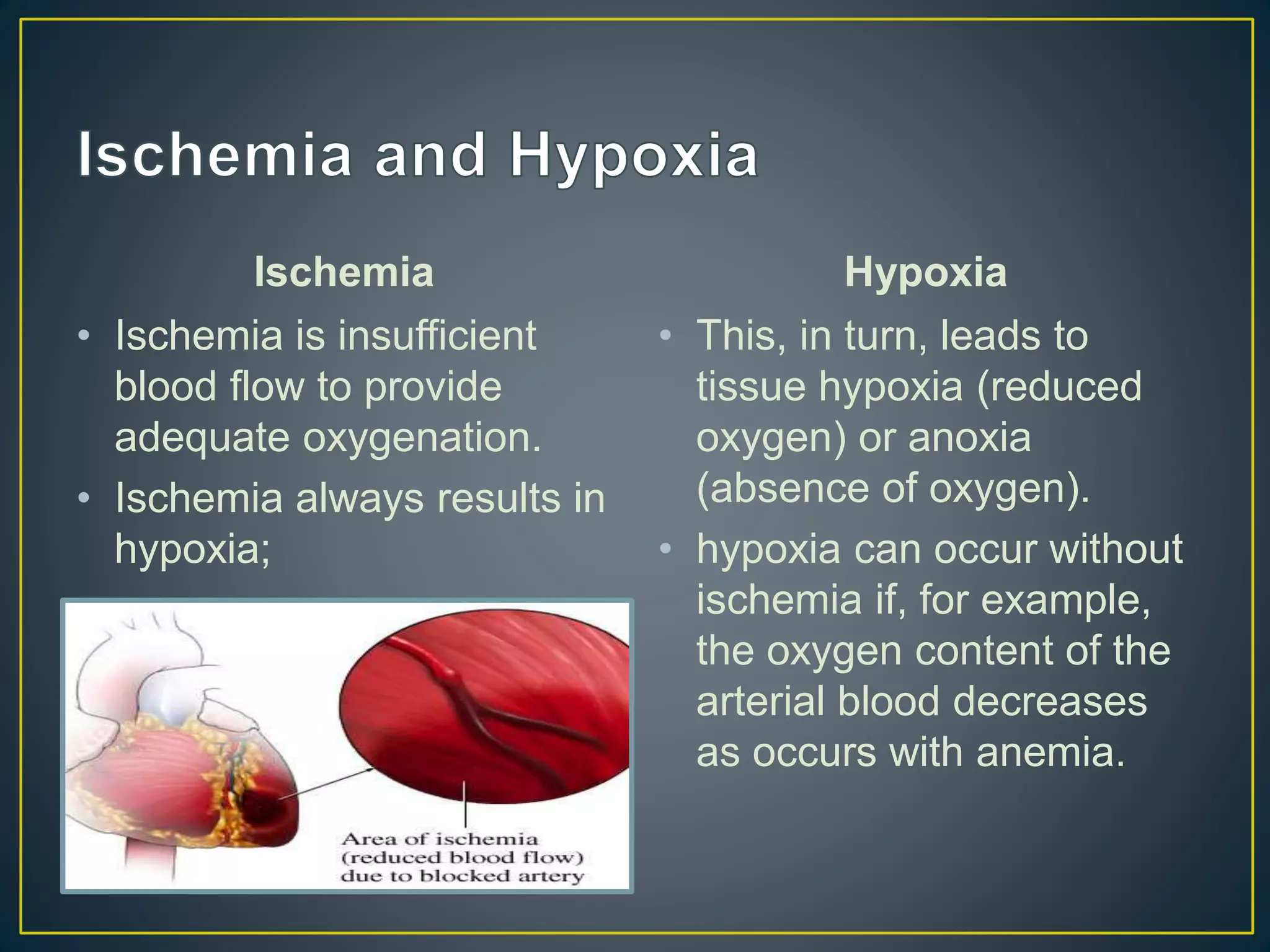
• Ischemia is insufficient
blood flow to provide
adequate oxygenation.
• Ischemia always results in
hypoxia;
Hypoxia
• This, in turn, leads to
tissue hypoxia (reduced
oxygen) or anoxia
(absence of oxygen).
• hypoxia can occur without
ischemia if, for example,
the oxygen content of the
arterial blood decreases
as occurs with anemia.
• Necrosis is the premature death of cells and living tissue.
• Necrosis is caused by factors external to the cell or
tissue, such as infection, toxins, or trauma.
• Obsolete term for fracture; especially one without
displacement.
• The term "myocardial infarction" focuses on the
myocardium (the heart muscle) and the changes that
occur in it due to the sudden deprivation of circulating
blood.
• The main change is necrosis (death) of myocardial tissue.
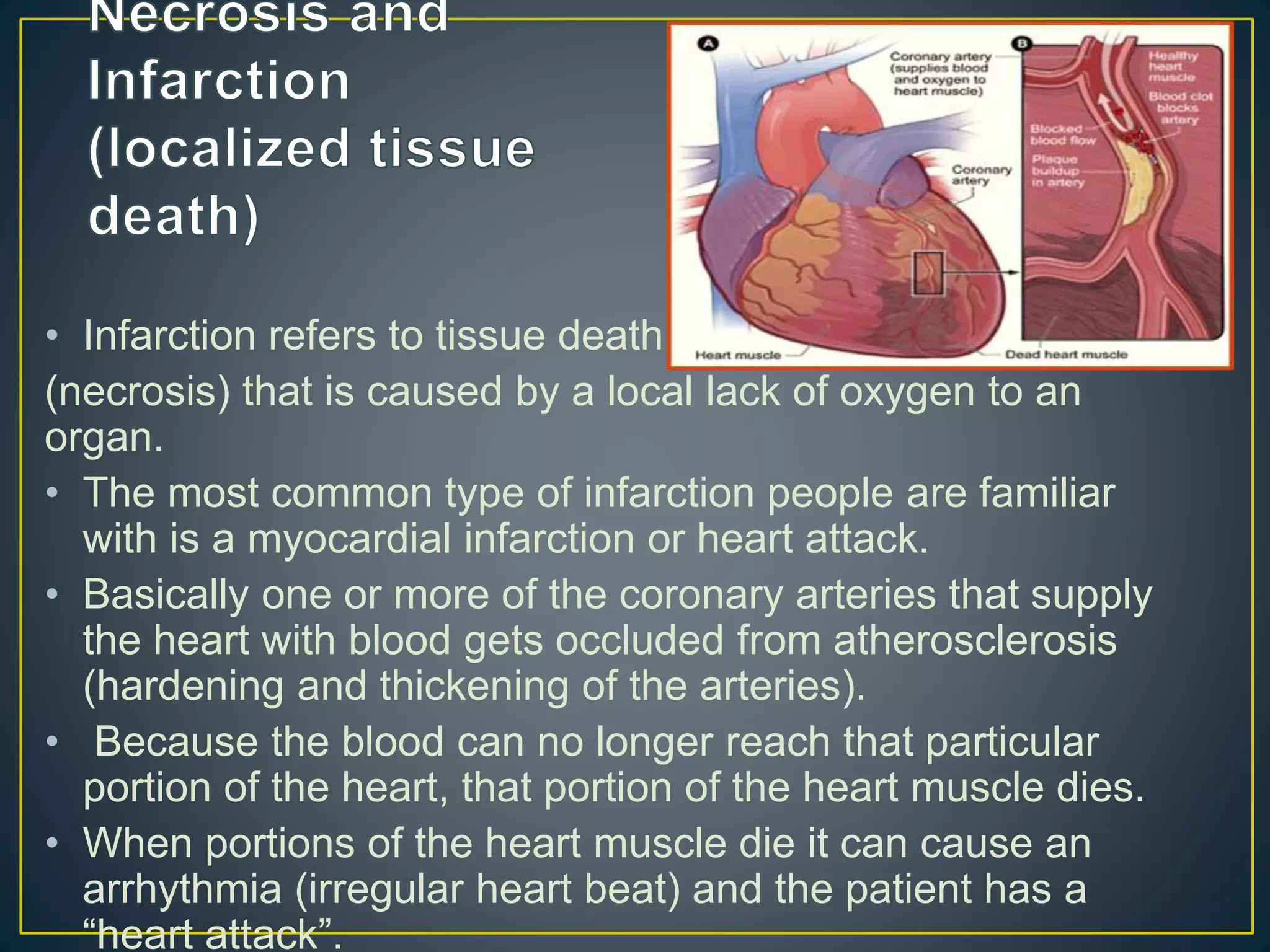
• Infarction refers to tissue death
(necrosis) that is caused by a local lack of oxygen to an
organ.
• The most common type of infarction people are familiar
with is a myocardial infarction or heart attack.
• Basically one or more of the coronary arteries that supply
the heart with blood gets occluded from atherosclerosis
(hardening and thickening of the arteries).
• Because the blood can no longer reach that particular
portion of the heart, that portion of the heart muscle dies.
• When portions of the heart muscle die it can cause an
arrhythmia (irregular heart beat) and the patient has a
“heart attack”.
• Atrophy, decrease in size of a body part, cell, organ, or
tissue.
• In atrophy of an organ or body part, there may be a
reduction in the number or in the size of the component
cells, or in both.
• One example of atrophy is the progressive loss of bone
that occurs in osteoporosis
• Abnormal enlargement of a part or organ; excessive
growth. OR
• Excessive growth or accumulation of any kind.
• Cardiac hypertrophy is a thickening of the heart muscle
(myocardium) which results in a decrease in size of the
chamber of the heart, including the left and right
ventricles.
• A common cause of cardiac hypertrophy is high blood
pressure (hypertension) and heart valve stenosis.
Hypertrophy
• In hypertrophy, the rate of
synthesis is much higher
than the rate of degradation
of muscle contractile
proteins, leading to an
increase in the size or
volume of an organ due to
enlargement of existing
cells.
• This defect may occur as a
result of lack of nutrition,
loss of nerve supply, micro-
gravity, ageing, systemic
disease, prolonged
immobilization or disuse.
Atrophy
• When a muscle remains in
disuse for a long period, the
rate of degradation of
contractile proteins becomes
greater than the rate of
replacement, resulting in
muscle atrophy.
• This defect may occur as a
result of lack of nutrition,
loss of nerve supply, micro-
gravity, ageing, systemic
disease, prolonged
immobilization or disuse.
• This disease is associated with the increase in number of
cells.
• As a result of this disease, an organ can get enlarged.
• The cells look like normal cells but they are more in
number if we compare them with normal human body.
• Transformation of one tissue into another
• Abnormal replacement of cells of one type by cells of
another
Hyperplasia
• Hyperplasia is increased
cell numbers in response
to hormones and other
growth factors; occurs in
tissues whose cells are
able to divide or contain
abundant tissue stem
cells, whereas
Metaplasia
• Metaplasia is change in
phenotype of differentiated
cells, often in response to
chronic irritation, that makes
cells better able to withstand
the stress; usually induced
by altered differentiation
pathway of tissue stem cells;
may result in reduced
functions or increased
propensity for malignant
transformation.
• Aplasia is defined as incomplete or faulty development of
an organ or body part.
• Thumb hypoplasia, also commonly called hypoplastic
thumb, means that your child’s thumb is unusually small or
underdeveloped. Thumb aplasia means that your child’s
thumb is missing altogether.
• It is the change in the structure of cells and their
orientation to each other.
• (ana- means excessive, -plasia means formation)
• This abnormal cell development is characteristic of tumor
formation in cancers.
Aplasia
• Aplasia is when an entire
organ or a part of an
organ is missing, means
incomplete tissue
formation
Anaplasia
• Anaplasia is abnormal
tissue formation.
• When differentiation of
cells gets back to the
original cells this situation
is called as Anaplasia.
The End 

Pathology Important Terms and Definitions

  • 1.
    Dr. Asra Hameed Pharm.D(JUW) asra_hameed1@hotmail.com
  • 2.
    • Ischemia usuallyhappens because of a shortage of blood and oxygen to the heart muscle. • It is usually due to narrowing or blockage of one or more of the coronary arteries (which supply blood to the heart muscle). • In many cases ischemia is a temporary problem.
  • 3.
    • A deficiencyof oxygen reaching the tissues of the body • There are four types:  hypoxemic, from low blood oxygen content  anemic, from low blood oxygen-carrying capacity  distributive, from low blood flow  histotoxic, from poisoning • If not reversed quickly, hypoxia can lead to necrosis (tissue death), as in heart attack.
  • 4.
    Ischemia • Ischemia isinsufficient blood flow to provide adequate oxygenation. • Ischemia always results in hypoxia; Hypoxia • This, in turn, leads to tissue hypoxia (reduced oxygen) or anoxia (absence of oxygen). • hypoxia can occur without ischemia if, for example, the oxygen content of the arterial blood decreases as occurs with anemia.
  • 5.
    • Necrosis isthe premature death of cells and living tissue. • Necrosis is caused by factors external to the cell or tissue, such as infection, toxins, or trauma.
  • 6.
    • Obsolete termfor fracture; especially one without displacement. • The term "myocardial infarction" focuses on the myocardium (the heart muscle) and the changes that occur in it due to the sudden deprivation of circulating blood. • The main change is necrosis (death) of myocardial tissue.
  • 7.
    • Infarction refersto tissue death (necrosis) that is caused by a local lack of oxygen to an organ. • The most common type of infarction people are familiar with is a myocardial infarction or heart attack. • Basically one or more of the coronary arteries that supply the heart with blood gets occluded from atherosclerosis (hardening and thickening of the arteries). • Because the blood can no longer reach that particular portion of the heart, that portion of the heart muscle dies. • When portions of the heart muscle die it can cause an arrhythmia (irregular heart beat) and the patient has a “heart attack”.
  • 8.
    • Atrophy, decreasein size of a body part, cell, organ, or tissue. • In atrophy of an organ or body part, there may be a reduction in the number or in the size of the component cells, or in both. • One example of atrophy is the progressive loss of bone that occurs in osteoporosis
  • 9.
    • Abnormal enlargementof a part or organ; excessive growth. OR • Excessive growth or accumulation of any kind. • Cardiac hypertrophy is a thickening of the heart muscle (myocardium) which results in a decrease in size of the chamber of the heart, including the left and right ventricles. • A common cause of cardiac hypertrophy is high blood pressure (hypertension) and heart valve stenosis.
  • 10.
    Hypertrophy • In hypertrophy,the rate of synthesis is much higher than the rate of degradation of muscle contractile proteins, leading to an increase in the size or volume of an organ due to enlargement of existing cells. • This defect may occur as a result of lack of nutrition, loss of nerve supply, micro- gravity, ageing, systemic disease, prolonged immobilization or disuse. Atrophy • When a muscle remains in disuse for a long period, the rate of degradation of contractile proteins becomes greater than the rate of replacement, resulting in muscle atrophy. • This defect may occur as a result of lack of nutrition, loss of nerve supply, micro- gravity, ageing, systemic disease, prolonged immobilization or disuse.
  • 11.
    • This diseaseis associated with the increase in number of cells. • As a result of this disease, an organ can get enlarged. • The cells look like normal cells but they are more in number if we compare them with normal human body.
  • 12.
    • Transformation ofone tissue into another • Abnormal replacement of cells of one type by cells of another
  • 13.
    Hyperplasia • Hyperplasia isincreased cell numbers in response to hormones and other growth factors; occurs in tissues whose cells are able to divide or contain abundant tissue stem cells, whereas Metaplasia • Metaplasia is change in phenotype of differentiated cells, often in response to chronic irritation, that makes cells better able to withstand the stress; usually induced by altered differentiation pathway of tissue stem cells; may result in reduced functions or increased propensity for malignant transformation.
  • 14.
    • Aplasia isdefined as incomplete or faulty development of an organ or body part. • Thumb hypoplasia, also commonly called hypoplastic thumb, means that your child’s thumb is unusually small or underdeveloped. Thumb aplasia means that your child’s thumb is missing altogether.
  • 15.
    • It isthe change in the structure of cells and their orientation to each other. • (ana- means excessive, -plasia means formation) • This abnormal cell development is characteristic of tumor formation in cancers.
  • 16.
    Aplasia • Aplasia iswhen an entire organ or a part of an organ is missing, means incomplete tissue formation Anaplasia • Anaplasia is abnormal tissue formation. • When differentiation of cells gets back to the original cells this situation is called as Anaplasia.
  • 17.