MECHANISM OF RESPIRATION
• Definition of pulmonary ventilation
• Describe the physiological anatomy of the
pleura and lung
• Define intrapleural ,intrapulmonary and airway
pressures
• Describe the stages of respiration and muscle
control
• Illustratye the changes in the IPP
• Describe the surfactant composition ,action
Pulmonary Ventilation
- The goals of respiration are to provide oxygen to the
tissues and to remove carbon dioxide.
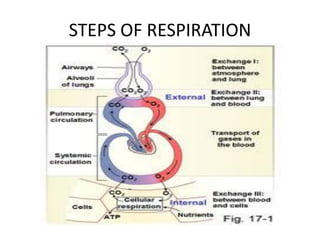
- (1) pulmonary ventilation, which means the inflow and
outflow of air between the atmosphere and the lung
alveoli;
- (2) diffusion of oxygen and carbon dioxide between the
alveoli and the blood;
- (3) transport of oxygen and carbon dioxide in the blood
and body fluids to and from the body’s tissue cells; and
- (4) regulation of ventilation and other aspects of
respiration.
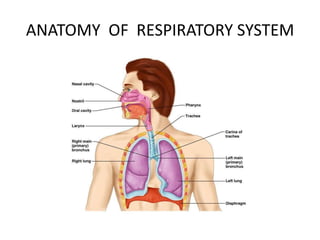
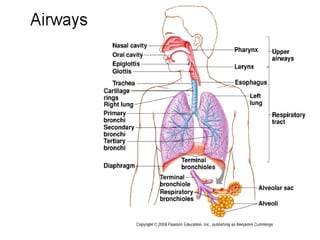
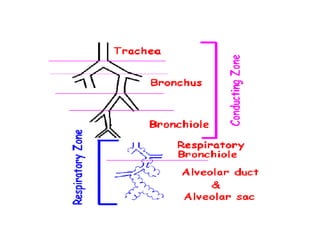
ANATOMY OF RESPIRATORY SYSTEM
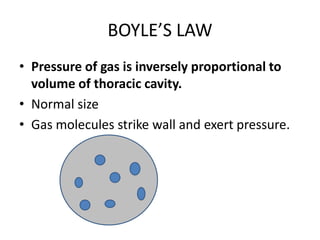
BOYLE’S LAW
• Pressure of gas is inversely proportional to
volume of thoracic cavity.
• Normal size
• Gas molecules strike wall and exert pressure.
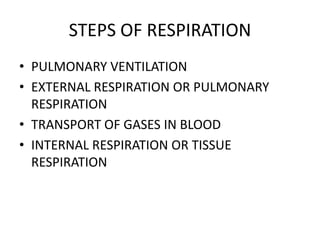
STEPS OF RESPIRATION
• PULMONARY VENTILATION
• EXTERNAL RESPIRATION OR PULMONARY
RESPIRATION
• TRANSPORT OF GASES IN BLOOD
• INTERNAL RESPIRATION OR TISSUE
RESPIRATION
STEPS OF RESPIRATION
MECHANICS OF BREATHING
• 2 PROCESSES-
• Inspiration-Inlow of atmospheric air into lungs.
• Expiration-Outflow of air from lungs into
atmosphere.
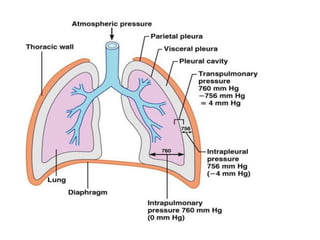
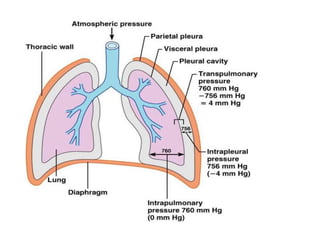
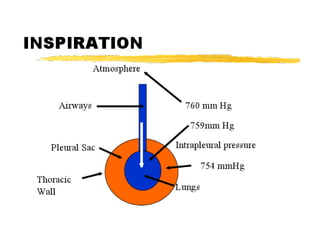
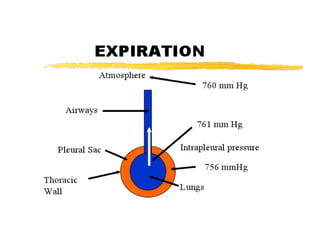
Important Pressures
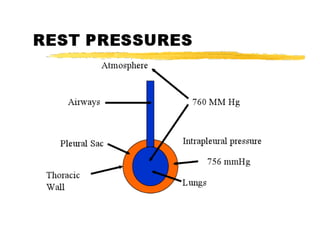
• Atmospheric Pressure –Pressure exerted by the air
surrounding the body i.e 0cm water pressure
• Intrapulmonary Pressure /intraalveolar pressure–pressure
exerted by the air within the lungs
• Intrapleural Pressure /intrathoracic pressure-pressure within
the pleural cavity exerted by pleural fluid.
• Transpulmonary Pressure/recoil pressure
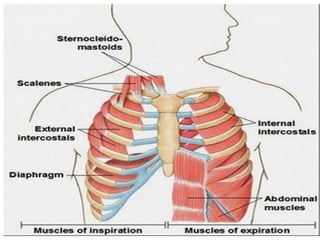
MUSCLE OF INSPIRATION
• Muscle of normal tidal inspiration-
• Diaphragm
• External intercostal
• Accessory Muscle of inspiration-
i. Sternocleidomastoid
ii. Scalene
iii. Serratus Anterior
iv. Pectoralis major and minor
• Laryngeal muscle
MUSCLE OF EXPIRATION
• Internal intercostal
• Abdominal muscles include-
i. Abdominal Rectii
ii. Transversus Abdominis
iii. Internal oblique
.
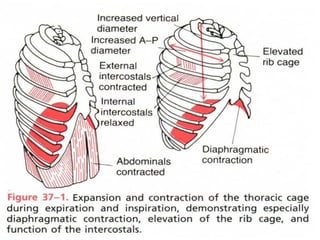
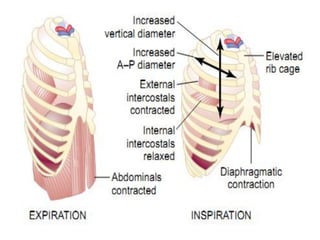
Mechanics of pulmonary ventilation
The lung can be expanded and contracted in two
ways:
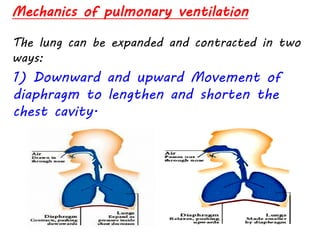
1) Downward and upward Movement of
diaphragm to lengthen and shorten the
chest cavity.
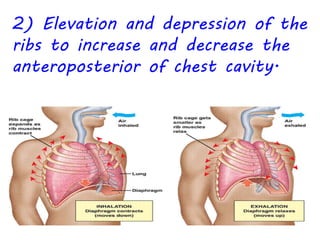
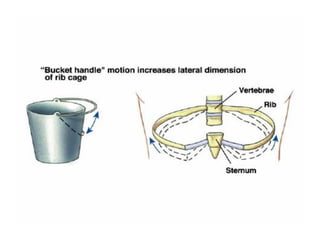
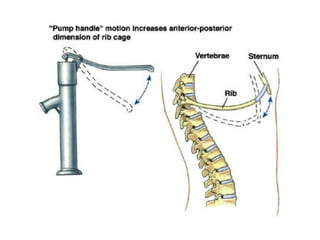
2) Elevation and depression of the
ribs to increase and decrease the
anteroposterior of chest cavity.
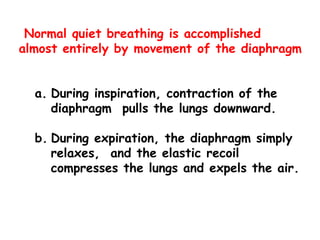
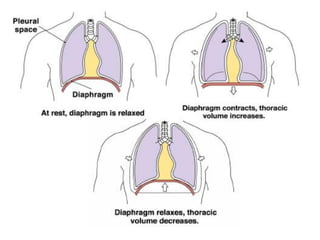
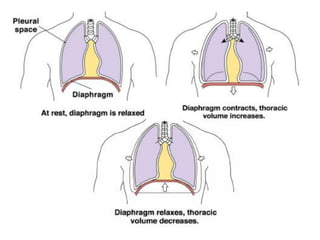
Normal quiet breathing is accomplished
almost entirely by movement of the diaphragm
a. During inspiration, contraction of the
diaphragm pulls the lungs downward.
b. During expiration, the diaphragm simply
relaxes, and the elastic recoil
compresses the lungs and expels the air.
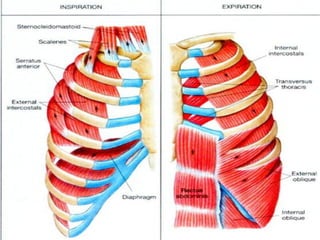
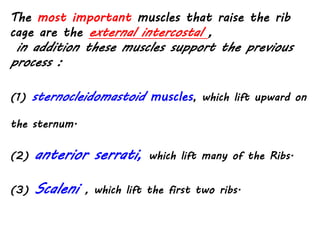
(1) sternocleidomastoid muscles, which lift upward on
the sternum.
(2) anterior serrati, which lift many of the Ribs.
(3) Scaleni , which lift the first two ribs.
The most important muscles that raise the rib
cage are the external intercostal ,
in addition these muscles support the previous
process :
The muscles that pull the rib cage
downward during expiration are:
(1) abdominal muscles : compress the
abdominal cavity upward against the
diaphragm up , and push air out of lungs.
(2) internal intercostal muscles: pull the
ribs downward and inward.
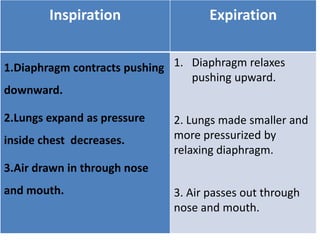
Inspiration Expiration
1.Diaphragm contracts pushing
downward.
2.Lungs expand as pressure
inside chest decreases.
3.Air drawn in through nose
and mouth.
1. Diaphragm relaxes
pushing upward.
2. Lungs made smaller and
more pressurized by
relaxing diaphragm.
3. Air passes out through
nose and mouth.
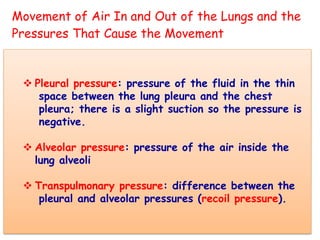
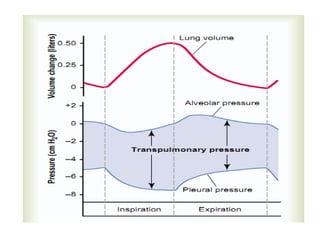
 Pleural pressure: pressure of the fluid in the thin
space between the lung pleura and the chest
pleura; there is a slight suction so the pressure is
negative.
 Alveolar pressure: pressure of the air inside the
lung alveoli
 Transpulmonary pressure: difference between the
pleural and alveolar pressures (recoil pressure).
Movement of Air In and Out of the Lungs and the
Pressures That Cause the Movement
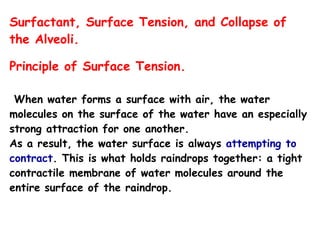
Surfactant, Surface Tension, and Collapse of
the Alveoli.
Principle of Surface Tension.
When water forms a surface with air, the water
molecules on the surface of the water have an especially
strong attraction for one another.
As a result, the water surface is always attempting to
contract. This is what holds raindrops together: a tight
contractile membrane of water molecules around the
entire surface of the raindrop.
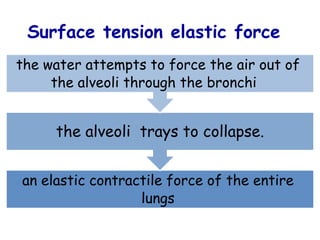
an elastic contractile force of the entire
lungs
the alveoli trays to collapse.
the water attempts to force the air out of
the alveoli through the bronchi
Surface tension elastic force
SURFACE TENSION
• Increase tendency of alveoli to collapse.
• Increase work of breathing.
• Causes pulmonary oedema.
• Alveolar instability.
TO OVERCOME SURFACE TENSION
• Surfactant secreted from type II cells.
• Important components-
• Di-palmitoyl-phosphatidyl-choline
• Surfactant apoproteins
• Calcium ions
Secreted by special surfactant-secreting epithelial
cells called type II alveolar epithelial cells.
Surfactant: is surface active agent in water,
which reduces the surface tension of water.
Surfactant and Its Effect on Surface Tension
Surfactant is a complex mixture of several
phospholipids, proteins, and ions. The most important
components are the phospholipid
Type II alveolar epithelial cells
These cells are granular, containing lipid inclusions
that are secreted in the surfactant into the alveoli.
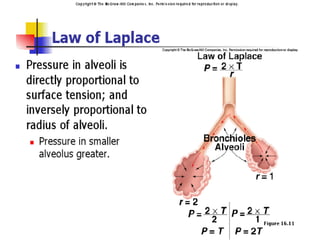
If the air passages leading from the alveoli of the
lungs are blocked, the surface tension in the
alveoli tends to collapse the alveoli. This creates
positive pressure in the alveoli, attempting to push
the air out.
Pressure in Occluded Alveoli Caused by
Surface Tension.
WORK OF BREATHING
• INCREASE IN –
• Exercise
• Obstructive lung diseases
• Restrictive lung diseases
Thank You

Respiration mechanics ms for dentist

  • 1.
  • 2.
    • Definition ofpulmonary ventilation • Describe the physiological anatomy of the pleura and lung • Define intrapleural ,intrapulmonary and airway pressures • Describe the stages of respiration and muscle control • Illustratye the changes in the IPP • Describe the surfactant composition ,action
  • 3.
    Pulmonary Ventilation - Thegoals of respiration are to provide oxygen to the tissues and to remove carbon dioxide. - (1) pulmonary ventilation, which means the inflow and outflow of air between the atmosphere and the lung alveoli; - (2) diffusion of oxygen and carbon dioxide between the alveoli and the blood; - (3) transport of oxygen and carbon dioxide in the blood and body fluids to and from the body’s tissue cells; and - (4) regulation of ventilation and other aspects of respiration.
  • 4.
  • 7.
    BOYLE’S LAW • Pressureof gas is inversely proportional to volume of thoracic cavity. • Normal size • Gas molecules strike wall and exert pressure.
  • 10.
    STEPS OF RESPIRATION •PULMONARY VENTILATION • EXTERNAL RESPIRATION OR PULMONARY RESPIRATION • TRANSPORT OF GASES IN BLOOD • INTERNAL RESPIRATION OR TISSUE RESPIRATION
  • 11.
  • 12.
    MECHANICS OF BREATHING •2 PROCESSES- • Inspiration-Inlow of atmospheric air into lungs. • Expiration-Outflow of air from lungs into atmosphere.
  • 13.
    Important Pressures • AtmosphericPressure –Pressure exerted by the air surrounding the body i.e 0cm water pressure • Intrapulmonary Pressure /intraalveolar pressure–pressure exerted by the air within the lungs • Intrapleural Pressure /intrathoracic pressure-pressure within the pleural cavity exerted by pleural fluid. • Transpulmonary Pressure/recoil pressure
  • 14.
    MUSCLE OF INSPIRATION •Muscle of normal tidal inspiration- • Diaphragm • External intercostal • Accessory Muscle of inspiration- i. Sternocleidomastoid ii. Scalene iii. Serratus Anterior iv. Pectoralis major and minor • Laryngeal muscle
  • 15.
    MUSCLE OF EXPIRATION •Internal intercostal • Abdominal muscles include- i. Abdominal Rectii ii. Transversus Abdominis iii. Internal oblique
  • 16.
    . Mechanics of pulmonaryventilation The lung can be expanded and contracted in two ways: 1) Downward and upward Movement of diaphragm to lengthen and shorten the chest cavity.
  • 17.
    2) Elevation anddepression of the ribs to increase and decrease the anteroposterior of chest cavity.
  • 19.
    Normal quiet breathingis accomplished almost entirely by movement of the diaphragm a. During inspiration, contraction of the diaphragm pulls the lungs downward. b. During expiration, the diaphragm simply relaxes, and the elastic recoil compresses the lungs and expels the air.
  • 23.
    (1) sternocleidomastoid muscles,which lift upward on the sternum. (2) anterior serrati, which lift many of the Ribs. (3) Scaleni , which lift the first two ribs. The most important muscles that raise the rib cage are the external intercostal , in addition these muscles support the previous process :
  • 27.
    The muscles thatpull the rib cage downward during expiration are: (1) abdominal muscles : compress the abdominal cavity upward against the diaphragm up , and push air out of lungs. (2) internal intercostal muscles: pull the ribs downward and inward.
  • 29.
    Inspiration Expiration 1.Diaphragm contractspushing downward. 2.Lungs expand as pressure inside chest decreases. 3.Air drawn in through nose and mouth. 1. Diaphragm relaxes pushing upward. 2. Lungs made smaller and more pressurized by relaxing diaphragm. 3. Air passes out through nose and mouth.
  • 34.
     Pleural pressure:pressure of the fluid in the thin space between the lung pleura and the chest pleura; there is a slight suction so the pressure is negative.  Alveolar pressure: pressure of the air inside the lung alveoli  Transpulmonary pressure: difference between the pleural and alveolar pressures (recoil pressure). Movement of Air In and Out of the Lungs and the Pressures That Cause the Movement
  • 36.
    Surfactant, Surface Tension,and Collapse of the Alveoli. Principle of Surface Tension. When water forms a surface with air, the water molecules on the surface of the water have an especially strong attraction for one another. As a result, the water surface is always attempting to contract. This is what holds raindrops together: a tight contractile membrane of water molecules around the entire surface of the raindrop.
  • 37.
    an elastic contractileforce of the entire lungs the alveoli trays to collapse. the water attempts to force the air out of the alveoli through the bronchi Surface tension elastic force
  • 39.
    SURFACE TENSION • Increasetendency of alveoli to collapse. • Increase work of breathing. • Causes pulmonary oedema. • Alveolar instability.
  • 40.
    TO OVERCOME SURFACETENSION • Surfactant secreted from type II cells. • Important components- • Di-palmitoyl-phosphatidyl-choline • Surfactant apoproteins • Calcium ions
  • 41.
    Secreted by specialsurfactant-secreting epithelial cells called type II alveolar epithelial cells. Surfactant: is surface active agent in water, which reduces the surface tension of water. Surfactant and Its Effect on Surface Tension
  • 42.
    Surfactant is acomplex mixture of several phospholipids, proteins, and ions. The most important components are the phospholipid Type II alveolar epithelial cells These cells are granular, containing lipid inclusions that are secreted in the surfactant into the alveoli.
  • 43.
    If the airpassages leading from the alveoli of the lungs are blocked, the surface tension in the alveoli tends to collapse the alveoli. This creates positive pressure in the alveoli, attempting to push the air out. Pressure in Occluded Alveoli Caused by Surface Tension.
  • 44.
    WORK OF BREATHING •INCREASE IN – • Exercise • Obstructive lung diseases • Restrictive lung diseases
  • 45.