Downloaded 752 times
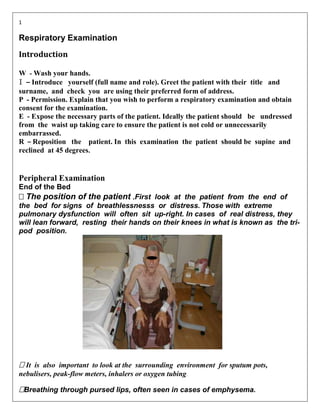



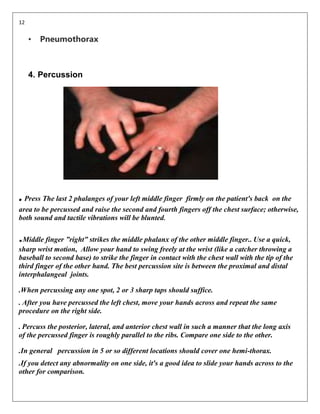

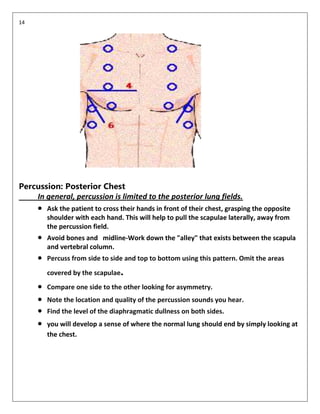



This document provides guidance on performing a respiratory examination. It begins with introducing yourself to the patient and obtaining consent for the examination. It then describes examining the patient from the end of the bed and looking at their hands, face, and neck. The document reviews lung anatomy and describes inspecting the chest, palpating the chest, assessing tactile vocal fremitus, and performing percussion. It provides details on examining specific areas like the trachea, apex beat, and chest expansion. The goal is to identify any abnormalities, reduced respiratory movements, or asymmetries that may indicate underlying respiratory conditions.


![chapter 4 Physical diagnosis [Autosaved].pptx](https://cdn.slidesharecdn.com/ss_thumbnails/physicaldiagnosisautosaved-250416123318-d2df54aa-thumbnail.jpg?width=640&height=640&fit=bounds)


![Respiratory System PE-1 [Autosaved].ppttiteciex](https://cdn.slidesharecdn.com/ss_thumbnails/respiratorysystempe-1autosaved-250113170401-72d39633-thumbnail.jpg?width=640&height=640&fit=bounds)


![Respiratory and Cardiovascular Exams.pptx [Autosaved].pptx](https://cdn.slidesharecdn.com/ss_thumbnails/respiratoryandcardiovascularexams-230308035939-d7e720d1-thumbnail.jpg?width=640&height=640&fit=bounds)


