Downloaded 131 times
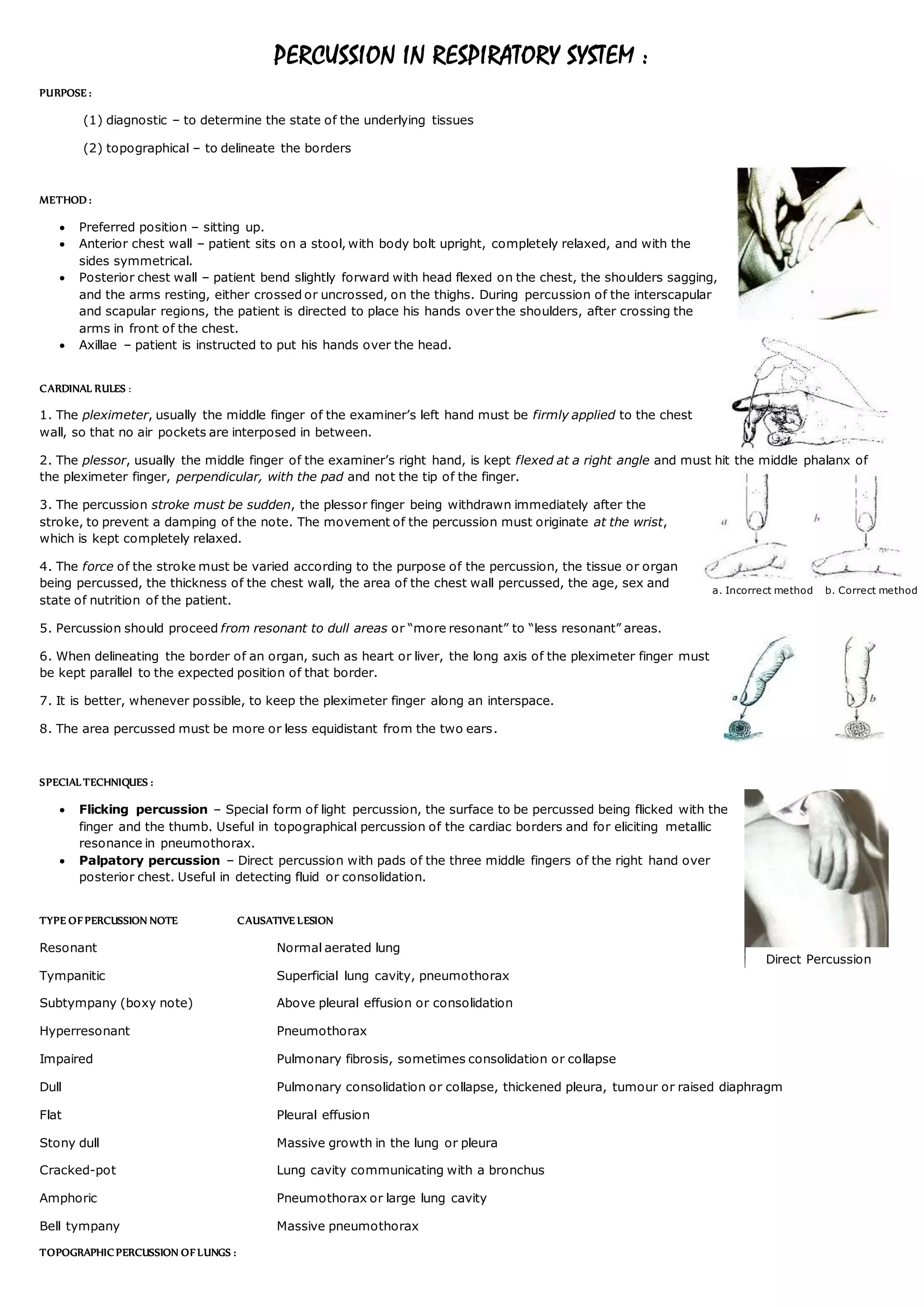
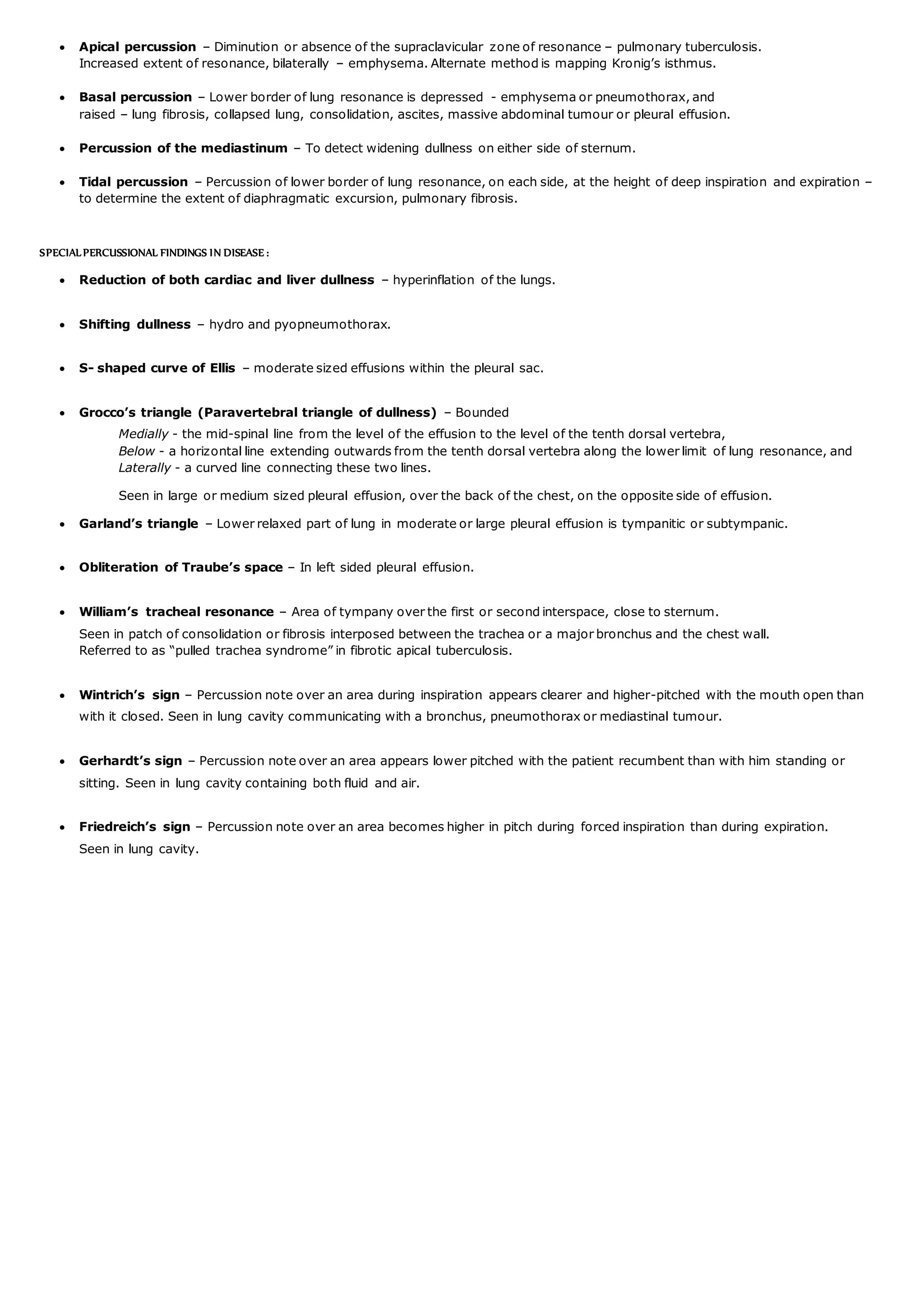

Percussion of the respiratory system is used diagnostically to determine the state of underlying tissues and topographically to delineate organ borders. The examiner uses one finger (pleximeter) to percuss the chest wall and another (plessor) to strike it, varying the force based on factors like thickness and location. Different notes indicate conditions like consolidation, effusion, or pneumothorax. Special techniques include flicking and palpatory percussion. Topographic percussion maps areas like the lung borders and detects findings associated with diseases.


![14828percussion_and_auscultation_of_the_chest[1].pdf](https://cdn.slidesharecdn.com/ss_thumbnails/14828percussionandauscultationofthechest1-240104143149-36c8e4ad-thumbnail.jpg?width=640&height=640&fit=bounds)


![Respiratory System PE-1 [Autosaved].ppttiteciex](https://cdn.slidesharecdn.com/ss_thumbnails/respiratorysystempe-1autosaved-250113170401-72d39633-thumbnail.jpg?width=640&height=640&fit=bounds)


