RESEARCH -4
OPERATIONAL DEFINITION
RESEARCH OBJECTIVES
ASSUMPTIONS
OPERATIONAL DEFINITION
IS DEFINED AS A VARIABLE IN
TERMS OF THE OPERATION A
RESEARCHER USED TO MEASURE
OR MANIPULATES.
SIGNIFICANCE OF OPERATIONAL
DEFINITION
 FUNDEMENTAL ATTRIBUTES OF ACONCEPTS/
VARIABLES UNDER STUDY
 MEASUREMENT OF THE CONCEPTS AND ITS
CHARACTERISTICS IN WHOLE.
 TOOL TO ENERGIZE THE RESEARCHER TO
FOCUS ON OBSERVATION OR MEASUREMENT
OF VARIABLE OF INTEREST
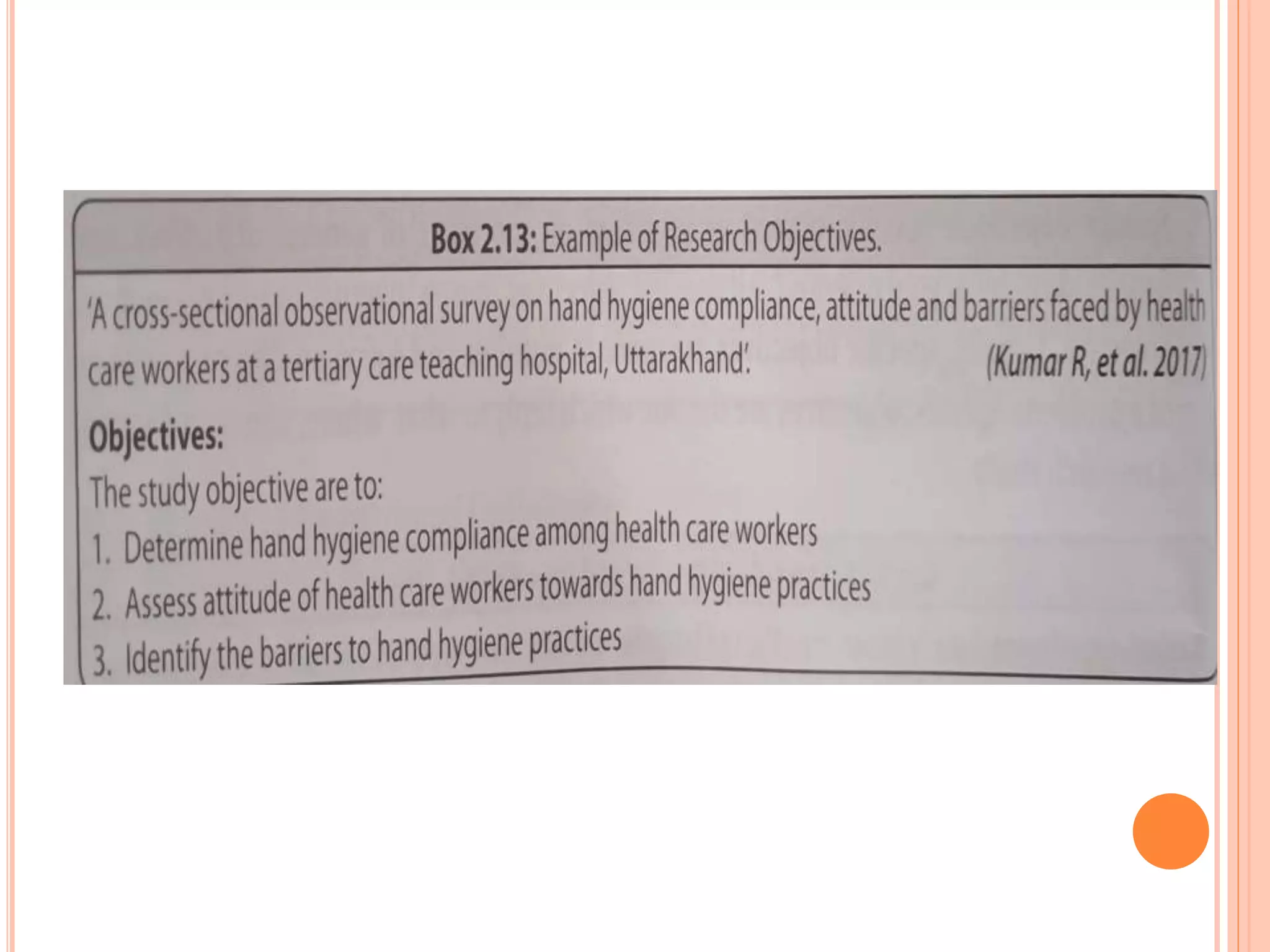
RESEARCH OBJECTIVES
 IS AN ACTIVE STATEMENT WHICH DESCRIBES
WHAT IS TO BE ACHIVED BY THE STUDY AND
HOW THE STUDY IS GOING TO ANSWER THE
SPECIFIC RESEARCH QUESTION.
CHARACTERISTICS OF RESEARCH
OBJECTIVES
 SMART
 S- specific
 M-measurable
 A-attainable
 R-relevant
 T-time bound
CONT:
 It is a concrete statement describing what the
research trying to achieve
 It should be feasible, logical , observable, and
measurable.
 Obtaining answer to research question or testing
the hypothesis.
TYPES OF RESEARCH OBJECTIVES
 General objectives: main objectives of the research
study. Focused on broad outcomes a researcher
has to achieve at the end of the study.
 Specific objectives: its prepared on the basis of
general objectives and is usually short term goal
oriented.
 Specific objectives merge together to make a
general objectives.
WRITING RESEARCH OBJECTIVES
 Should be clear, concise and written in declarative
format.
 Should be written in present tense.
 Use appropriative action verb makes the objectives
realistic and achievable.
CONT:
 Well written objective should be specific to a
variable.
 Should be omit the words that are repetitively used
in objective statement. ie,of ,an,is among etc
 Written in measurable format.
ASSUMPTIONS
 Are those principles which are accepted to be true
but without empirical evidence or proof.
 Defined as the statement that are taken granted or
are considered true without any empirical
evidences or any scientific testing.
TYPES OF ASSUMPTIONS
 Universal assumption: There are belief that
assumed to be true by a large part of society or
universe.
 Assumptions based on theories: Based on some
theory finding we have assume that it is true.
 Methodological assumption: methodological
assumption to conduct thestudy.
 Eg : self structured knowlwdge questionnaire can
assess the knowlwdge regarding universal precautions
among staff nurses.
o Warranted assumption: it states along with the
proof or evidences to support.
o Eg : exercise can reduce the weight.
 Unwarranted assumptions: do not have
supportive evidences or proof
TYPE I ERROR AND TYPE II ERROR
 Type I error:
 The rejection of a null hypothesis that is actually true,
i.e, saying an intervention is effective when it is
acutually not.
 Type II error
 The acceptance of null hypothesis that is actually false,
i.e, saying an intervention is ineffective when it actually
is.
LEVEL OF SIGNIFICANCE( )
Is usually a set by researcher in view of the serious
consequences that might arise on account of
making a mistake in accepting a false research
hypothesis.
p
It is set at .05 or .01 , it means that researcher is
willing to risk being wrong to the extend of 5% or
1%
Researcher tells that there is 5 chances in 100 or 1
chance in 100 of making a mistake in accepting
research hypothesis when it is actually false.

Reserach 4

  • 1.
  • 2.
    OPERATIONAL DEFINITION IS DEFINEDAS A VARIABLE IN TERMS OF THE OPERATION A RESEARCHER USED TO MEASURE OR MANIPULATES.
  • 4.
    SIGNIFICANCE OF OPERATIONAL DEFINITION FUNDEMENTAL ATTRIBUTES OF ACONCEPTS/ VARIABLES UNDER STUDY  MEASUREMENT OF THE CONCEPTS AND ITS CHARACTERISTICS IN WHOLE.
  • 5.
     TOOL TOENERGIZE THE RESEARCHER TO FOCUS ON OBSERVATION OR MEASUREMENT OF VARIABLE OF INTEREST
  • 6.
    RESEARCH OBJECTIVES  ISAN ACTIVE STATEMENT WHICH DESCRIBES WHAT IS TO BE ACHIVED BY THE STUDY AND HOW THE STUDY IS GOING TO ANSWER THE SPECIFIC RESEARCH QUESTION.
  • 7.
    CHARACTERISTICS OF RESEARCH OBJECTIVES SMART  S- specific  M-measurable  A-attainable  R-relevant  T-time bound
  • 8.
    CONT:  It isa concrete statement describing what the research trying to achieve  It should be feasible, logical , observable, and measurable.  Obtaining answer to research question or testing the hypothesis.
  • 9.
    TYPES OF RESEARCHOBJECTIVES  General objectives: main objectives of the research study. Focused on broad outcomes a researcher has to achieve at the end of the study.
  • 10.
     Specific objectives:its prepared on the basis of general objectives and is usually short term goal oriented.  Specific objectives merge together to make a general objectives.
  • 12.
    WRITING RESEARCH OBJECTIVES Should be clear, concise and written in declarative format.  Should be written in present tense.  Use appropriative action verb makes the objectives realistic and achievable.
  • 13.
    CONT:  Well writtenobjective should be specific to a variable.  Should be omit the words that are repetitively used in objective statement. ie,of ,an,is among etc  Written in measurable format.
  • 15.
    ASSUMPTIONS  Are thoseprinciples which are accepted to be true but without empirical evidence or proof.  Defined as the statement that are taken granted or are considered true without any empirical evidences or any scientific testing.
  • 16.
    TYPES OF ASSUMPTIONS Universal assumption: There are belief that assumed to be true by a large part of society or universe.  Assumptions based on theories: Based on some theory finding we have assume that it is true.
  • 17.
     Methodological assumption:methodological assumption to conduct thestudy.  Eg : self structured knowlwdge questionnaire can assess the knowlwdge regarding universal precautions among staff nurses. o Warranted assumption: it states along with the proof or evidences to support. o Eg : exercise can reduce the weight.
  • 18.
     Unwarranted assumptions:do not have supportive evidences or proof
  • 19.
    TYPE I ERRORAND TYPE II ERROR  Type I error:  The rejection of a null hypothesis that is actually true, i.e, saying an intervention is effective when it is acutually not.
  • 20.
     Type IIerror  The acceptance of null hypothesis that is actually false, i.e, saying an intervention is ineffective when it actually is.
  • 21.
    LEVEL OF SIGNIFICANCE() Is usually a set by researcher in view of the serious consequences that might arise on account of making a mistake in accepting a false research hypothesis. p
  • 22.
    It is setat .05 or .01 , it means that researcher is willing to risk being wrong to the extend of 5% or 1% Researcher tells that there is 5 chances in 100 or 1 chance in 100 of making a mistake in accepting research hypothesis when it is actually false.