REPORTED SPEECH
EL ESTILO INDIRECTO
REPORTED SPEECH
ESTILO INDIRECTO
•El estilo indirecto se usa para contar lo que
alguien ha dicho sin citar expresamente sus
palabras.
•Para utilizar el estilo indirecto debemos
aprender una serie de cambios
•Además debemos utilizar un verbo
introductorio. Los más habituales son say,
tell o ask
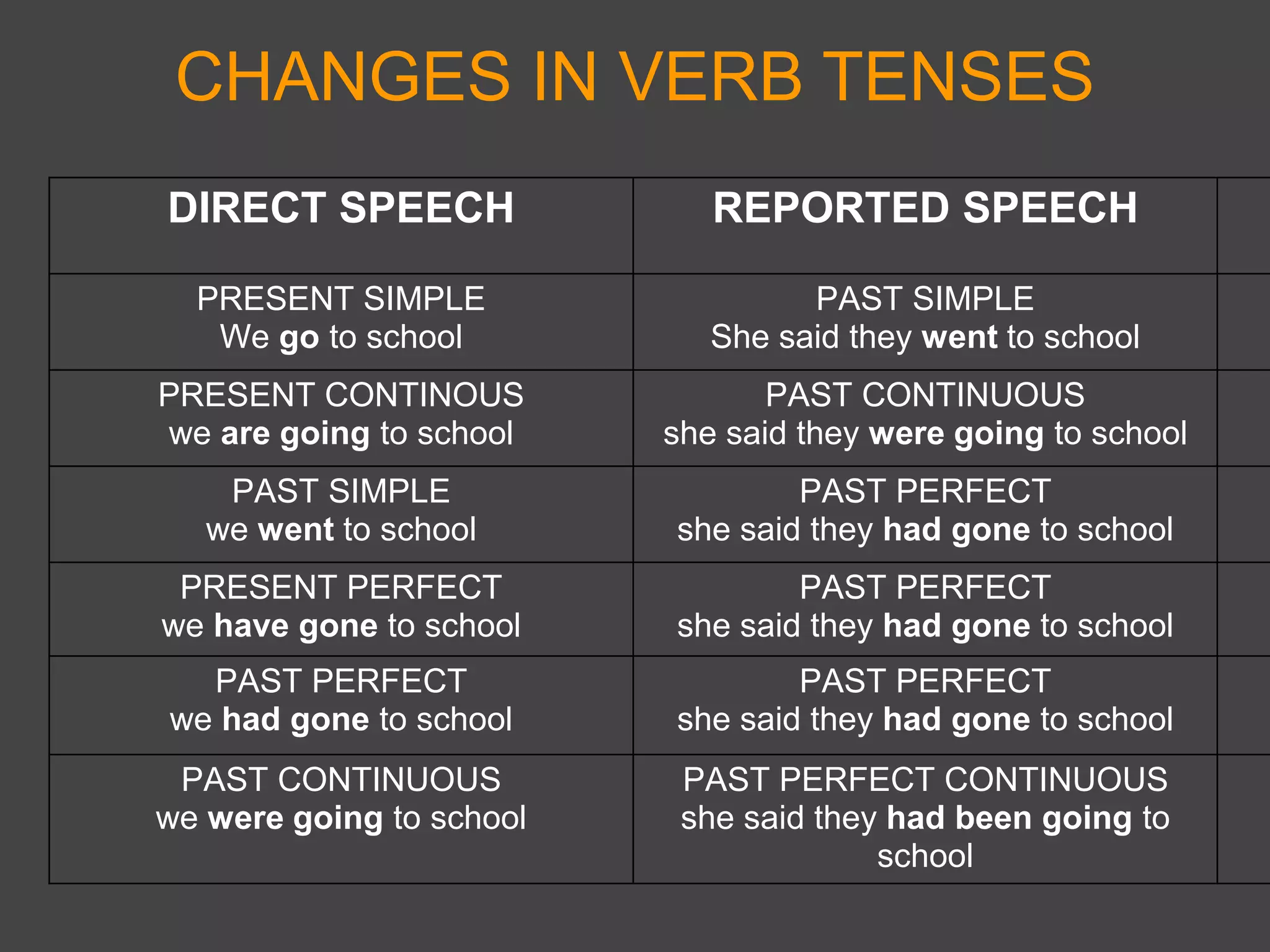
CHANGES IN VERB TENSES
DIRECT SPEECH REPORTED SPEECH
PRESENT SIMPLE
We go to school
PAST SIMPLE
She said they went to school
PRESENT CONTINOUS
we are going to school
PAST CONTINUOUS
she said they were going to school
PAST SIMPLE
we went to school
PAST PERFECT
she said they had gone to school
PRESENT PERFECT
we have gone to school
PAST PERFECT
she said they had gone to school
PAST PERFECT
we had gone to school
PAST PERFECT
she said they had gone to school
PAST CONTINUOUS
we were going to school
PAST PERFECT CONTINUOUS
she said they had been going to
school
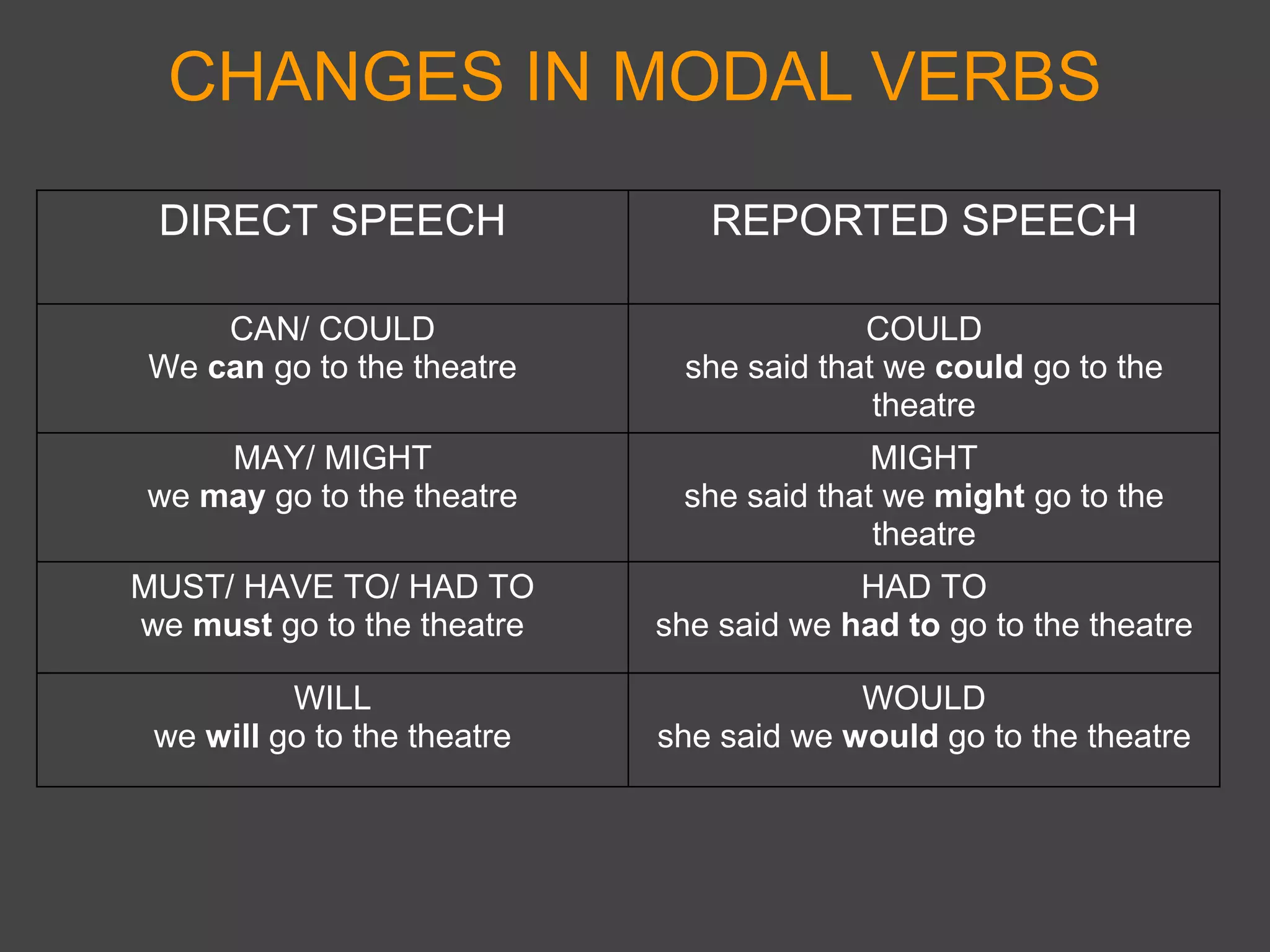
CHANGES IN MODAL VERBS
DIRECT SPEECH REPORTED SPEECH
CAN/ COULD
We can go to the theatre
COULD
she said that we could go to the
theatre
MAY/ MIGHT
we may go to the theatre
MIGHT
she said that we might go to the
theatre
MUST/ HAVE TO/ HAD TO
we must go to the theatre
HAD TO
she said we had to go to the theatre
WILL
we will go to the theatre
WOULD
she said we would go to the theatre
CHANGES IN TIME EXPRESSIONS
DIRECT SPEECH REPORTED SPEECH
NOW THEN
AT THAT MOMENT
TODAY THAT DAY
TONIGHT THAT NIGHT
YESTERDAY THE PREVIOUS DAY
THE DAY BEFORE
LAST WEEK THE PREVIOUS WEEK
THE WEEK BEFORE
A MONTH AGO THE PREVIOUS MONTH
THE MONTH BEFORE
NEXT WEEK THE FOLLOWING WEEK
THE WEEK AFTER
TOMORROW THE FOLLOWING DAY
THE DAY AFTER
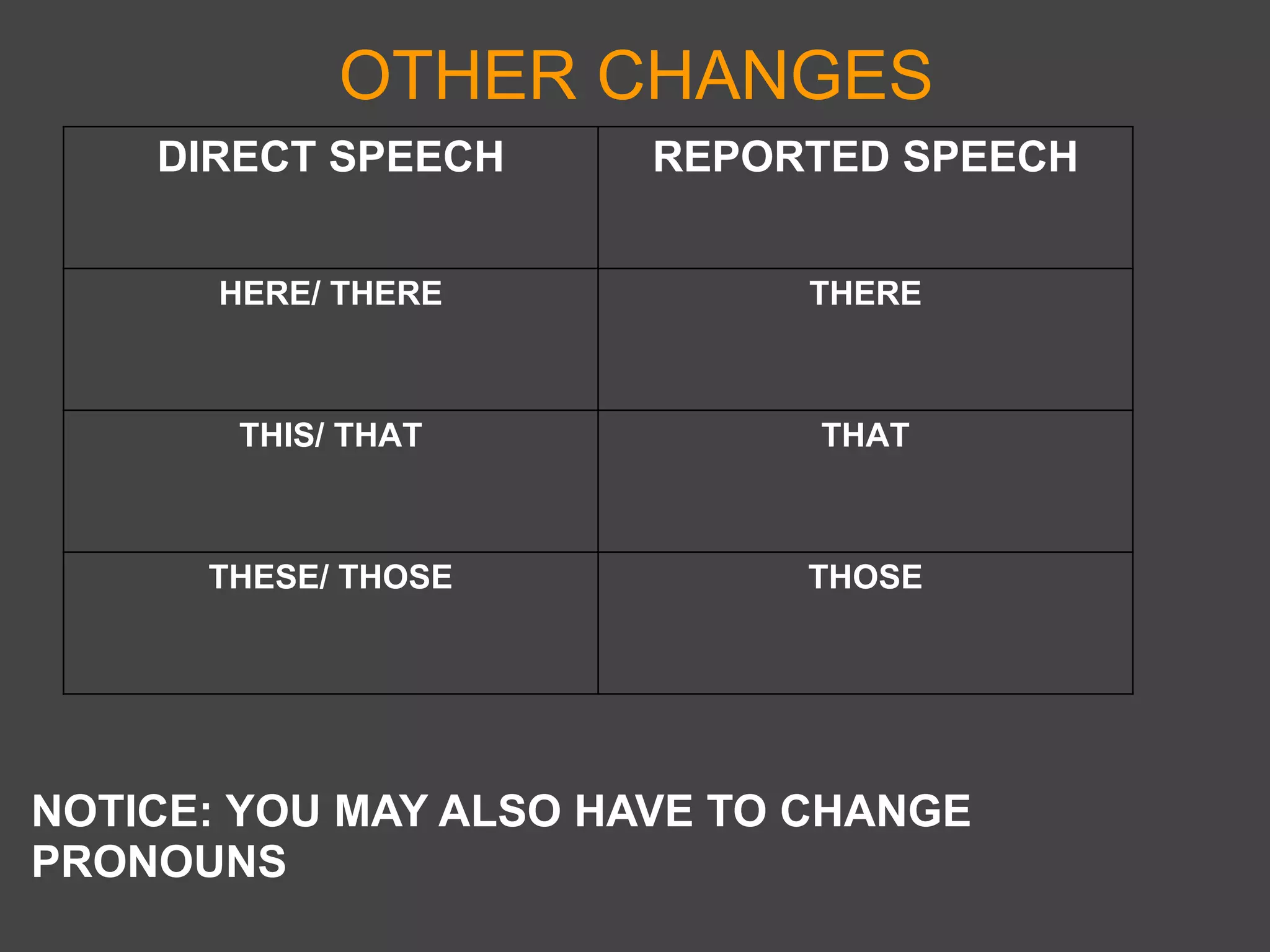
OTHER CHANGES
NOTICE: YOU MAY ALSO HAVE TO CHANGE
PRONOUNS
DIRECT SPEECH REPORTED SPEECH
HERE/ THERE THERE
THIS/ THAT THAT
THESE/ THOSE THOSE
THE VERBS "SAY" AND "TELL"
•SAY:
oHe said that it was a beautiful day (El verbo say no
lleva complemento indirecto)
oHe said to me that it was a beautiful day (Si lleva
complemento indirecto hay que introducir la preposición
"to")
•TELL
oHe told me that it was a beautiful day (El verbo tell
siempre lleva complemento indirecto)
REPORTED STATEMENTS
(AFFIRMATIVE AND NEGATIVE SENTENCES)
"I left my books here yesterday", Peter said (direct speech)
Peter said that he had left his books there the day before
(reported speech)
"I don't want to do my homework now", Lisa said (direct
speech)
Lisa said that she didn't want to do her homework then
Now it's your turn
• Click here
• Click here
• Click here
• Click here
REPORTED QUESTIONS
•YES/ NO QUESTIONS
o"Do you study English?", I asked Peter (direct speech)
oI asked Peter IF he studied English (reported speech)
o "Have you ever been in England?", I asked Lisa
oI asked Lisa IF she had ever been in England
•WH- QUESTIONS
o"What are you doing next Saturday?", I asked Peter
oI asked Peter WHAT he was doing the following
Saturday
o"Where did you spend your last holidays?", Lisa asked
me
oLisa asked me WHERE I had spend my last holidays
EXERCISES ON REPORTED
QUESTIONS
•Click here
•Click here
•Click here
•Click here
•Click here
REPORTED COMMANDS
(IMPERATIVOS)
"Go out of the class right now", the teacher told the student
The teacher told the student TO go out of the class right then
"Don't chew gum in class". the teacher told the student
The teacher told the student NOT TO chew gum in class
•Time to do exercises
oClick here
oClick here
oClick here
REPORTED INVITATIONS/
SUGGESTIONS
•Let’s go to the cinema, David suggested
•What/ how about going to the cinema?
•Why don’t we go to the cinema?
David suggested that we go to the cinema
David suggested going to the cinema
OTHER REPORTING VERBS
•For statements: admit, announce, answer,
apologise, claim, complain, declare, explain,
inform, insist, mention, offer, remind, reply
•For questions: enquire, request, want to know,
wonder
•For commands: demand, order, shout, warn
•For suggestions or invitations: advise, invite,
recommend, suggest

Reported speech

  • 1.
  • 2.
    REPORTED SPEECH ESTILO INDIRECTO •Elestilo indirecto se usa para contar lo que alguien ha dicho sin citar expresamente sus palabras. •Para utilizar el estilo indirecto debemos aprender una serie de cambios •Además debemos utilizar un verbo introductorio. Los más habituales son say, tell o ask
  • 3.
    CHANGES IN VERBTENSES DIRECT SPEECH REPORTED SPEECH PRESENT SIMPLE We go to school PAST SIMPLE She said they went to school PRESENT CONTINOUS we are going to school PAST CONTINUOUS she said they were going to school PAST SIMPLE we went to school PAST PERFECT she said they had gone to school PRESENT PERFECT we have gone to school PAST PERFECT she said they had gone to school PAST PERFECT we had gone to school PAST PERFECT she said they had gone to school PAST CONTINUOUS we were going to school PAST PERFECT CONTINUOUS she said they had been going to school
  • 4.
    CHANGES IN MODALVERBS DIRECT SPEECH REPORTED SPEECH CAN/ COULD We can go to the theatre COULD she said that we could go to the theatre MAY/ MIGHT we may go to the theatre MIGHT she said that we might go to the theatre MUST/ HAVE TO/ HAD TO we must go to the theatre HAD TO she said we had to go to the theatre WILL we will go to the theatre WOULD she said we would go to the theatre
  • 5.
    CHANGES IN TIMEEXPRESSIONS DIRECT SPEECH REPORTED SPEECH NOW THEN AT THAT MOMENT TODAY THAT DAY TONIGHT THAT NIGHT YESTERDAY THE PREVIOUS DAY THE DAY BEFORE LAST WEEK THE PREVIOUS WEEK THE WEEK BEFORE A MONTH AGO THE PREVIOUS MONTH THE MONTH BEFORE NEXT WEEK THE FOLLOWING WEEK THE WEEK AFTER TOMORROW THE FOLLOWING DAY THE DAY AFTER
  • 6.
    OTHER CHANGES NOTICE: YOUMAY ALSO HAVE TO CHANGE PRONOUNS DIRECT SPEECH REPORTED SPEECH HERE/ THERE THERE THIS/ THAT THAT THESE/ THOSE THOSE
  • 7.
    THE VERBS "SAY"AND "TELL" •SAY: oHe said that it was a beautiful day (El verbo say no lleva complemento indirecto) oHe said to me that it was a beautiful day (Si lleva complemento indirecto hay que introducir la preposición "to") •TELL oHe told me that it was a beautiful day (El verbo tell siempre lleva complemento indirecto)
  • 8.
    REPORTED STATEMENTS (AFFIRMATIVE ANDNEGATIVE SENTENCES) "I left my books here yesterday", Peter said (direct speech) Peter said that he had left his books there the day before (reported speech) "I don't want to do my homework now", Lisa said (direct speech) Lisa said that she didn't want to do her homework then Now it's your turn • Click here • Click here • Click here • Click here
  • 9.
    REPORTED QUESTIONS •YES/ NOQUESTIONS o"Do you study English?", I asked Peter (direct speech) oI asked Peter IF he studied English (reported speech) o "Have you ever been in England?", I asked Lisa oI asked Lisa IF she had ever been in England •WH- QUESTIONS o"What are you doing next Saturday?", I asked Peter oI asked Peter WHAT he was doing the following Saturday o"Where did you spend your last holidays?", Lisa asked me oLisa asked me WHERE I had spend my last holidays
  • 10.
    EXERCISES ON REPORTED QUESTIONS •Clickhere •Click here •Click here •Click here •Click here
  • 11.
    REPORTED COMMANDS (IMPERATIVOS) "Go outof the class right now", the teacher told the student The teacher told the student TO go out of the class right then "Don't chew gum in class". the teacher told the student The teacher told the student NOT TO chew gum in class •Time to do exercises oClick here oClick here oClick here
  • 12.
    REPORTED INVITATIONS/ SUGGESTIONS •Let’s goto the cinema, David suggested •What/ how about going to the cinema? •Why don’t we go to the cinema? David suggested that we go to the cinema David suggested going to the cinema
  • 13.
    OTHER REPORTING VERBS •Forstatements: admit, announce, answer, apologise, claim, complain, declare, explain, inform, insist, mention, offer, remind, reply •For questions: enquire, request, want to know, wonder •For commands: demand, order, shout, warn •For suggestions or invitations: advise, invite, recommend, suggest