SIMPLE PAST
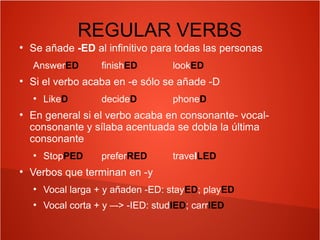
REGULAR VERBS
●
Se añade -ED al infinitivo para todas las personas
AnswerED finishED lookED
●
Si el verbo acaba en -e sólo se añade -D
●
LikeD decideD phoneD
●
En general si el verbo acaba en consonante- vocal-
consonante y sílaba acentuada se dobla la última
consonante
●
StopPED preferRED travelLED
●
Verbos que terminan en -y
●
Vocal larga + y añaden -ED: stayED; playED
●
Vocal corta + y –-> -IED: studIED; carrIED
REGULAR VERBS:
PRONUNCIATION
●
Hay tres formas de pronunciar los pasados
regulares: /t/ /d/ /id/
●
Y aquí tenéis un vídeo explicativo
●
Click here for some exercises
●
One more
IRREGULAR VERBS
●
No hay reglas para su formación. Hay que
aprenderlos de memoria y con práctica.
●
Game 1
●
Game 2
●
Game 3
●
Game 4
●
Game 5
PAST SIMPLE: AFFIRMATIVE
●
Sujeto + verbo en pasado + complementos
●
I went to the cinema last Saturday
●
We wrote an e-mail yesterday
●
He answered the question correctly
PAST SIMPLE: NEGATIVE
●
Sujeto + DIDN'T + verbo en infinitivo +
compl.
●
You didn't come to class yesterday
●
We didn't play football last week
●
They didn't run in the park
●
I didn't study for the exam
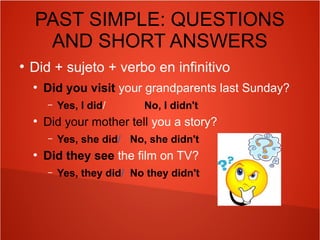
PAST SIMPLE: QUESTIONS
AND SHORT ANSWERS
●
Did + sujeto + verbo en infinitivo
●
Did you visit your grandparents last Sunday?
– Yes, I did/ No, I didn't
●
Did your mother tell you a story?
– Yes, she did/ No, she didn't
●
Did they see the film on TV?
– Yes, they did/ No they didn't
USE AND TIME EXPRESSIONS
●
El pasado simple se usa para hablar de
acciones ya terminadas.
●
Typical time expressions
●
Yesterday (morning/ afternoon/ evening)
●
Last week/ month/ year
●
2 days/ three weeks ago
●
When I was a baby/ I was 10 years old
MORE PRACTICE
●
Click here
●
Click here
●
Click here
●
Click here
●
Click here
●
Click here
MORE PRACTICE
●
Click here
●
Click here
●
Click here
●
Click here
●
Click here
●
Click here

Past simple3eso

  • 1.
  • 2.
    REGULAR VERBS ● Se añade-ED al infinitivo para todas las personas AnswerED finishED lookED ● Si el verbo acaba en -e sólo se añade -D ● LikeD decideD phoneD ● En general si el verbo acaba en consonante- vocal- consonante y sílaba acentuada se dobla la última consonante ● StopPED preferRED travelLED ● Verbos que terminan en -y ● Vocal larga + y añaden -ED: stayED; playED ● Vocal corta + y –-> -IED: studIED; carrIED
  • 3.
    REGULAR VERBS: PRONUNCIATION ● Hay tresformas de pronunciar los pasados regulares: /t/ /d/ /id/ ● Y aquí tenéis un vídeo explicativo ● Click here for some exercises ● One more
  • 4.
    IRREGULAR VERBS ● No hayreglas para su formación. Hay que aprenderlos de memoria y con práctica. ● Game 1 ● Game 2 ● Game 3 ● Game 4 ● Game 5
  • 5.
    PAST SIMPLE: AFFIRMATIVE ● Sujeto+ verbo en pasado + complementos ● I went to the cinema last Saturday ● We wrote an e-mail yesterday ● He answered the question correctly
  • 6.
    PAST SIMPLE: NEGATIVE ● Sujeto+ DIDN'T + verbo en infinitivo + compl. ● You didn't come to class yesterday ● We didn't play football last week ● They didn't run in the park ● I didn't study for the exam
  • 7.
    PAST SIMPLE: QUESTIONS ANDSHORT ANSWERS ● Did + sujeto + verbo en infinitivo ● Did you visit your grandparents last Sunday? – Yes, I did/ No, I didn't ● Did your mother tell you a story? – Yes, she did/ No, she didn't ● Did they see the film on TV? – Yes, they did/ No they didn't
  • 8.
    USE AND TIMEEXPRESSIONS ● El pasado simple se usa para hablar de acciones ya terminadas. ● Typical time expressions ● Yesterday (morning/ afternoon/ evening) ● Last week/ month/ year ● 2 days/ three weeks ago ● When I was a baby/ I was 10 years old
  • 9.
    MORE PRACTICE ● Click here ● Clickhere ● Click here ● Click here ● Click here ● Click here
  • 10.
    MORE PRACTICE ● Click here ● Clickhere ● Click here ● Click here ● Click here ● Click here