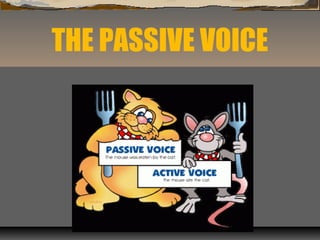
THE PASSIVE VOICE
INTRODUCTION
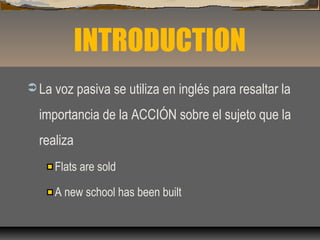
 La voz pasiva se utiliza en inglés para resaltar la
importancia de la ACCIÓN sobre el sujeto que la
realiza
Flats are sold
A new school has been built
FORM
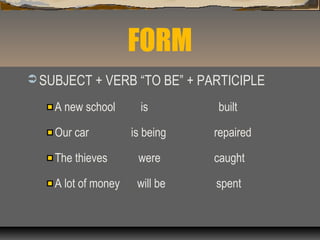
 SUBJECT + VERB “TO BE” + PARTICIPLE
A new school is built
Our car is being repaired
The thieves were caught
A lot of money will be spent
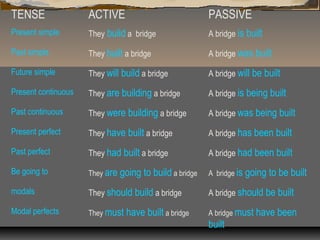
TENSE ACTIVE PASSIVE
Present simple They build a bridge A bridge is built
Past simple They built a bridge A bridge was built
Future simple They will build a bridge A bridge will be built
Present continuous They are building a bridge A bridge is being built
Past continuous They were building a bridge A bridge was being built
Present perfect They have built a bridge A bridge has been built
Past perfect They had built a bridge A bridge had been built
Be going to They are going to build a bridge A bridge is going to be built
modals They should build a bridge A bridge should be built
Modal perfects They must have built a bridge A bridge must have been
built
REWRITING A SENTENCE IN
THE PASSIVE
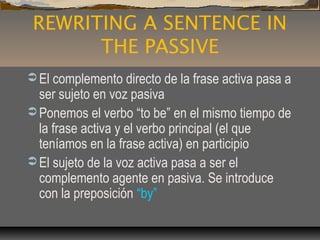
 El complemento directo de la frase activa pasa a
ser sujeto en voz pasiva
 Ponemos el verbo “to be” en el mismo tiempo de
la frase activa y el verbo principal (el que
teníamos en la frase activa) en participio
 El sujeto de la voz activa pasa a ser el
complemento agente en pasiva. Se introduce
con la preposición “by”
REWRITING A SENTENCE IN
THE PASSIVE
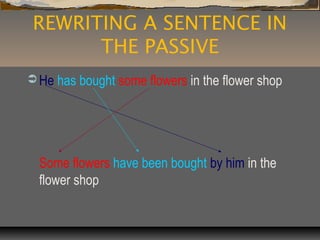
 He has bought some flowers in the flower shop
Some flowers have been bought by him in the
flower shop
REWRITING A SENTENCE IN
THE PASSIVE
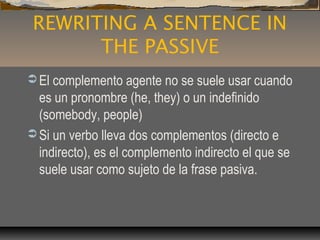
 El complemento agente no se suele usar cuando
es un pronombre (he, they) o un indefinido
(somebody, people)
 Si un verbo lleva dos complementos (directo e
indirecto), es el complemento indirecto el que se
suele usar como sujeto de la frase pasiva.
REWRITING A SENTENCE IN
THE PASSIVE
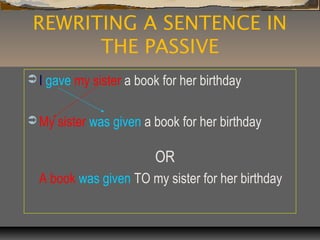
 I gave my sister a book for her birthday
 My sister was given a book for her birthday
OR
A book was given TO my sister for her birthday
NOTICE
 La voz pasiva es más frecuente en inglés que
en español, y en muchos casos se traduce en
forma impersonal.
Se pelan las patatas (potatoes are peeled)
Se han quemado 100 hectáreas de bosque (100
hectares of forest have been burnt)
En Brasil se habla portugués (Portuguese is spoken
in Brazil)
EXERCISES
 Click here
 Click here
 Click here
 Click here
 Click here

The passive voice

  • 1.
  • 2.
    INTRODUCTION  La vozpasiva se utiliza en inglés para resaltar la importancia de la ACCIÓN sobre el sujeto que la realiza Flats are sold A new school has been built
  • 3.
    FORM  SUBJECT +VERB “TO BE” + PARTICIPLE A new school is built Our car is being repaired The thieves were caught A lot of money will be spent
  • 4.
    TENSE ACTIVE PASSIVE Presentsimple They build a bridge A bridge is built Past simple They built a bridge A bridge was built Future simple They will build a bridge A bridge will be built Present continuous They are building a bridge A bridge is being built Past continuous They were building a bridge A bridge was being built Present perfect They have built a bridge A bridge has been built Past perfect They had built a bridge A bridge had been built Be going to They are going to build a bridge A bridge is going to be built modals They should build a bridge A bridge should be built Modal perfects They must have built a bridge A bridge must have been built
  • 5.
    REWRITING A SENTENCEIN THE PASSIVE  El complemento directo de la frase activa pasa a ser sujeto en voz pasiva  Ponemos el verbo “to be” en el mismo tiempo de la frase activa y el verbo principal (el que teníamos en la frase activa) en participio  El sujeto de la voz activa pasa a ser el complemento agente en pasiva. Se introduce con la preposición “by”
  • 6.
    REWRITING A SENTENCEIN THE PASSIVE  He has bought some flowers in the flower shop Some flowers have been bought by him in the flower shop
  • 7.
    REWRITING A SENTENCEIN THE PASSIVE  El complemento agente no se suele usar cuando es un pronombre (he, they) o un indefinido (somebody, people)  Si un verbo lleva dos complementos (directo e indirecto), es el complemento indirecto el que se suele usar como sujeto de la frase pasiva.
  • 8.
    REWRITING A SENTENCEIN THE PASSIVE  I gave my sister a book for her birthday  My sister was given a book for her birthday OR A book was given TO my sister for her birthday
  • 9.
    NOTICE  La vozpasiva es más frecuente en inglés que en español, y en muchos casos se traduce en forma impersonal. Se pelan las patatas (potatoes are peeled) Se han quemado 100 hectáreas de bosque (100 hectares of forest have been burnt) En Brasil se habla portugués (Portuguese is spoken in Brazil)
  • 10.
    EXERCISES  Click here Click here  Click here  Click here  Click here