FORMS OF ENERGY. RENEWABLE AND NON-
RENEWABLE ENERGY SOURCES.
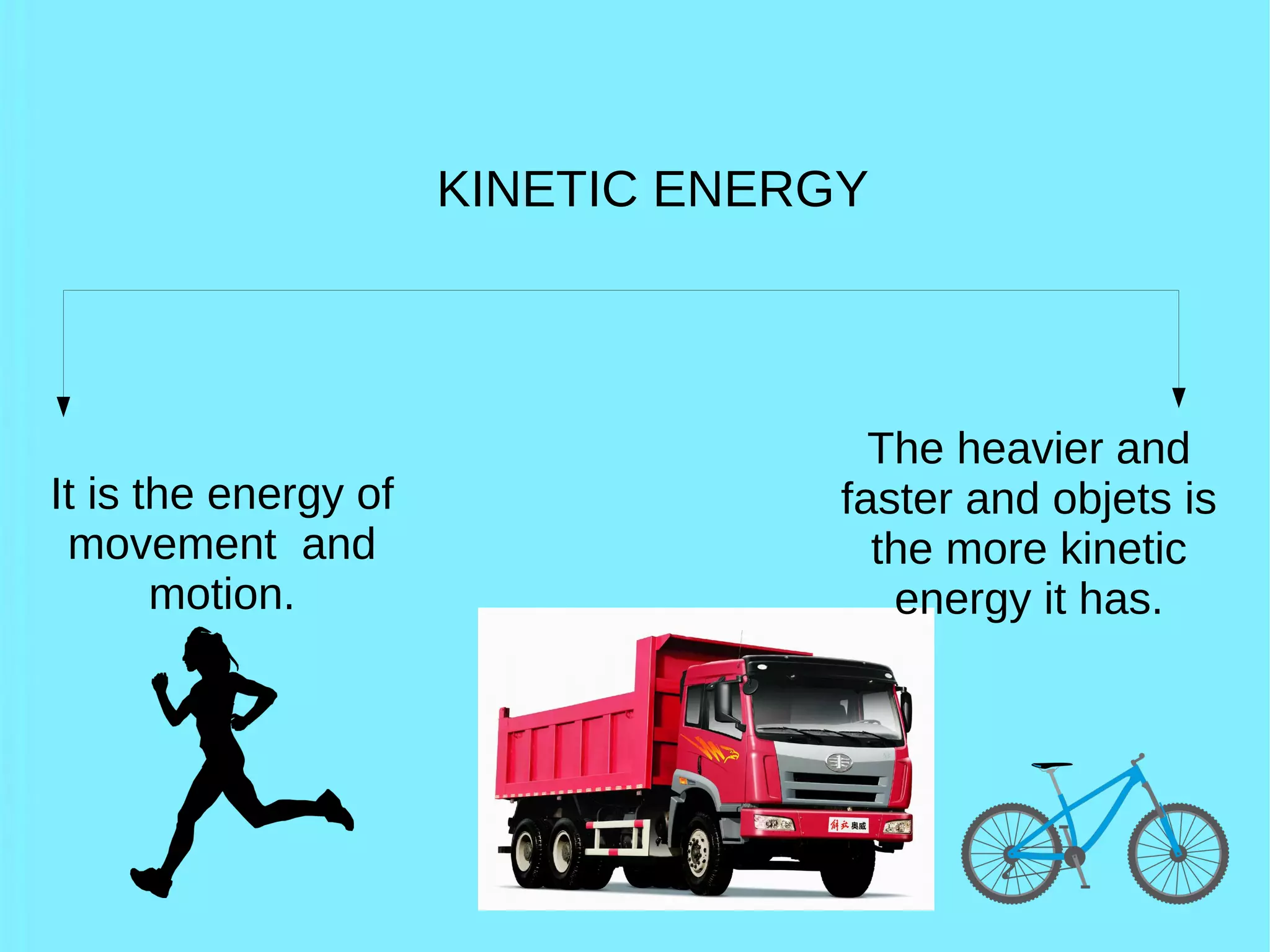
KINETIC ENERGY
It is the energy of
movement and
motion.
The heavier and
faster and objets is
the more kinetic
energy it has.
POTENTIAL ENERGY
It is the energy
that is stored.
When it is
released, it
changes into
other form of
energy.
The coal changes
into light and heat.
Wood changes
into light and heat.
Stored water
changes into
electricity.
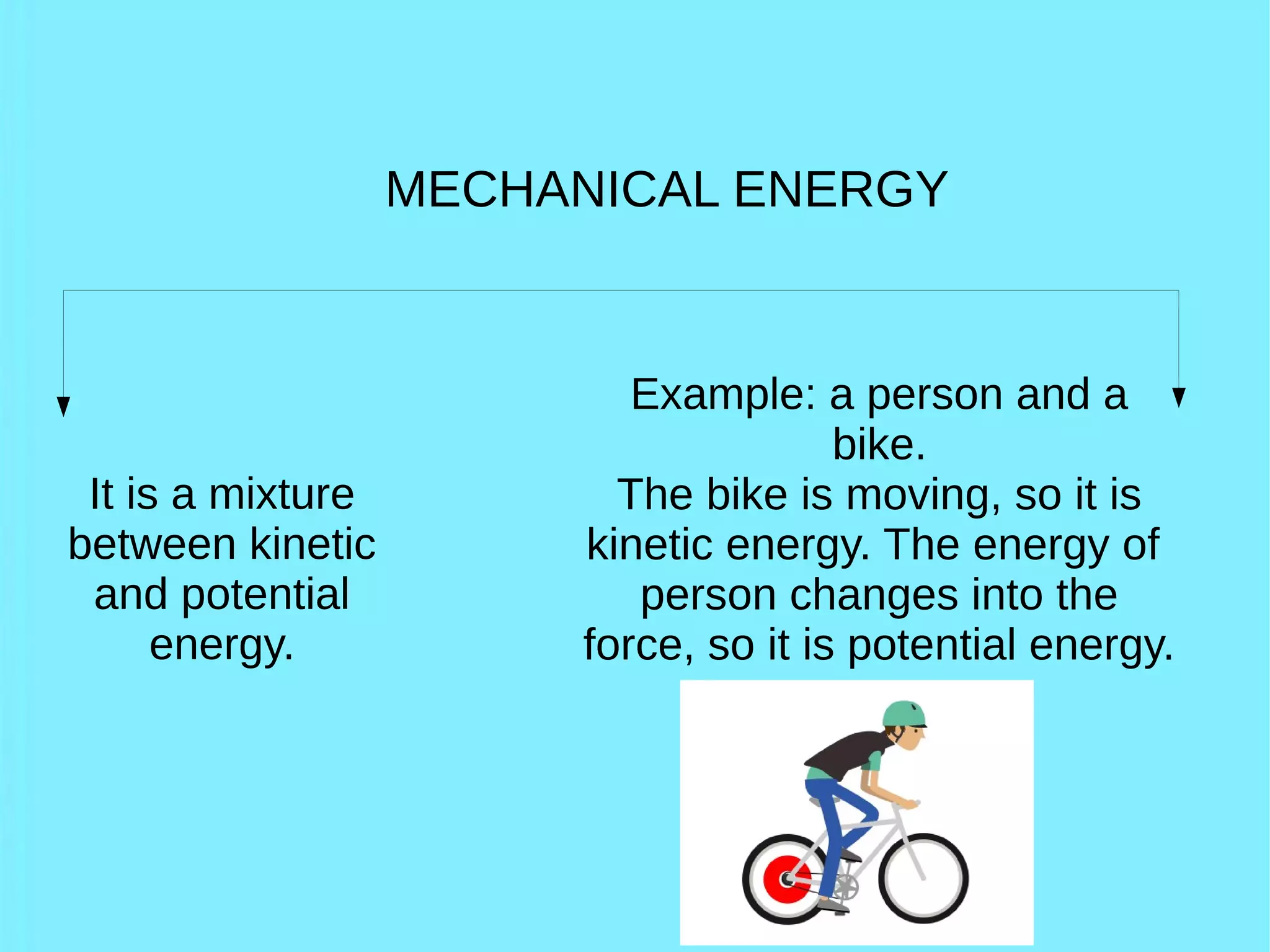
MECHANICAL ENERGY
It is a mixture
between kinetic
and potential
energy.
Example: a person and a
bike.
The bike is moving, so it is
kinetic energy. The energy of
person changes into the
force, so it is potential energy.
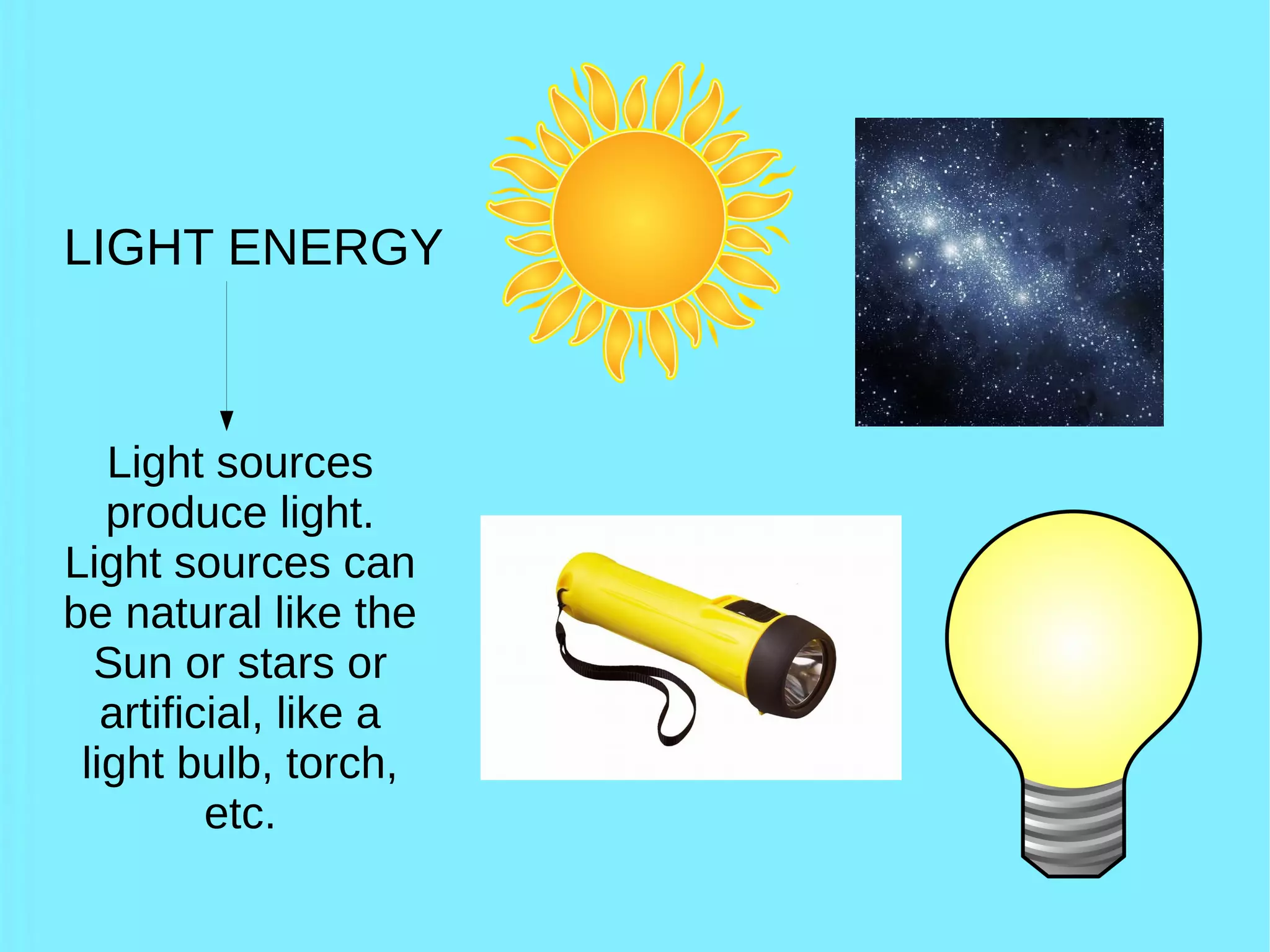
LIGHT ENERGY
Light sources
produce light.
Light sources can
be natural like the
Sun or stars or
artificial, like a
light bulb, torch,
etc.
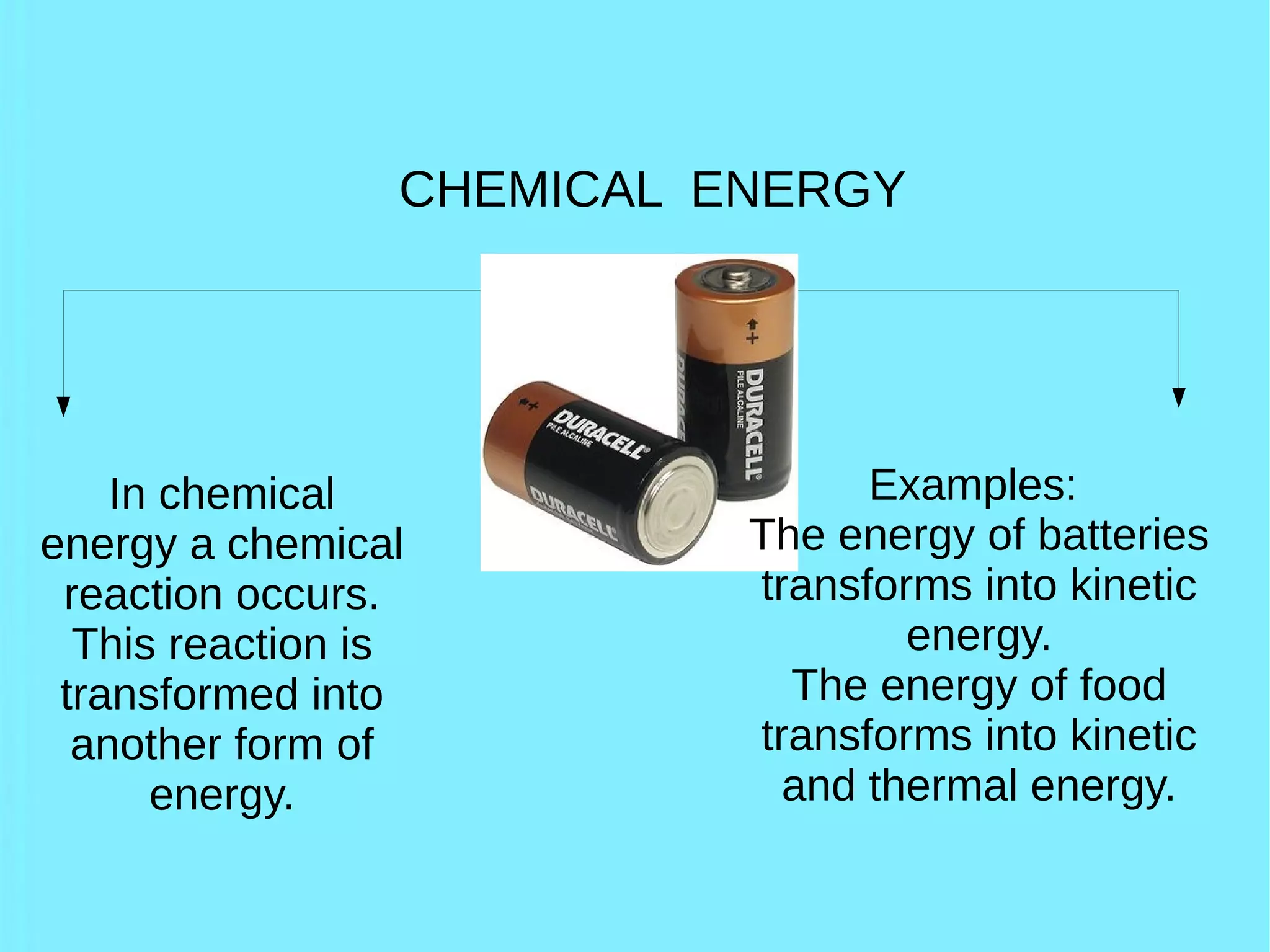
CHEMICAL ENERGY
In chemical
energy a chemical
reaction occurs.
This reaction is
transformed into
another form of
energy.
Examples:
The energy of batteries
transforms into kinetic
energy.
The energy of food
transforms into kinetic
and thermal energy.
THERMAL ENERGY
It is the energy
that hot objects
produce.
The heat flows
from hot products
to cold products.
ELECTRICAL ENERGY
How can it transform into? Where does it come from?
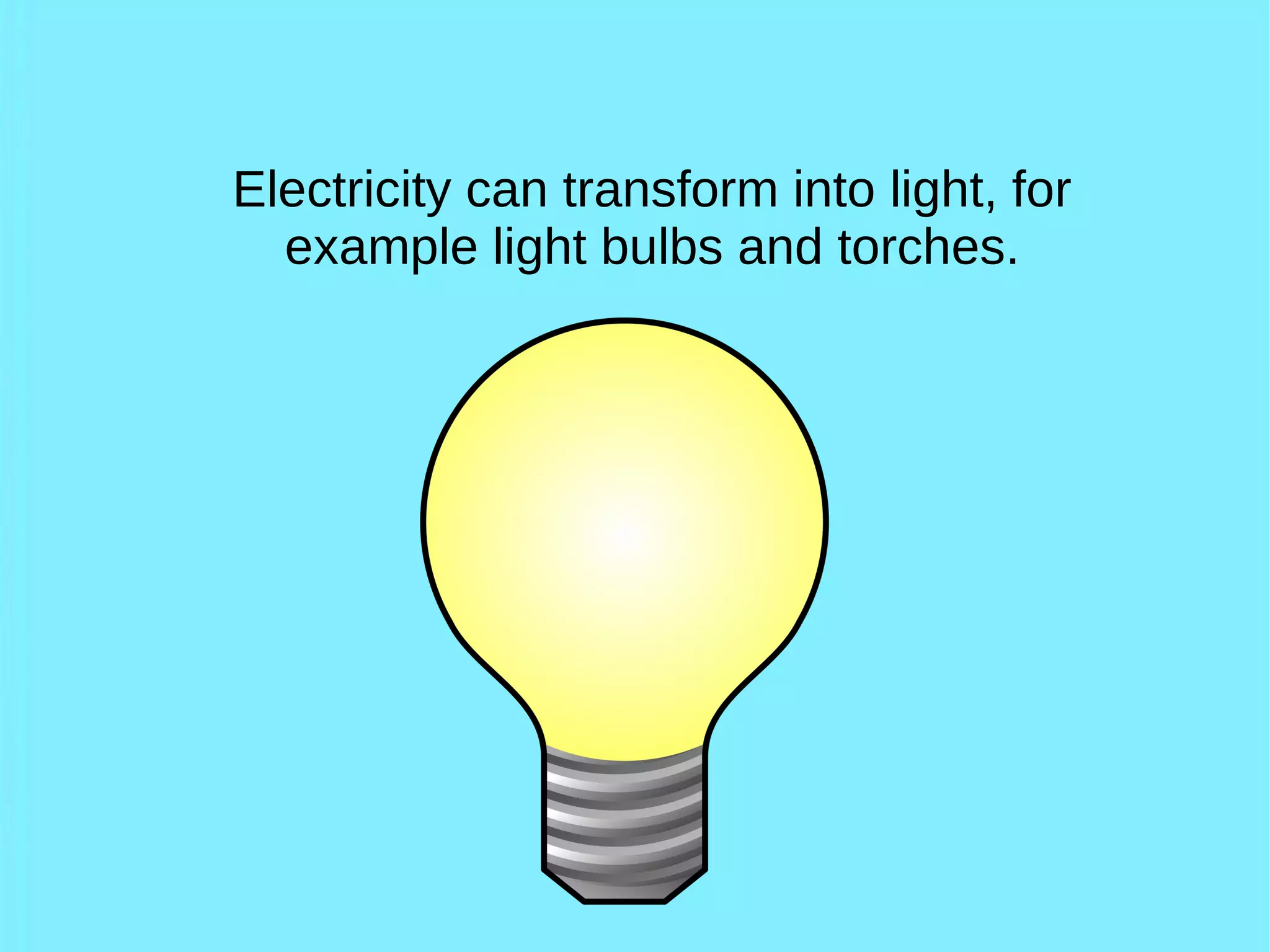
Electricity can transform into light, for
example light bulbs and torches.
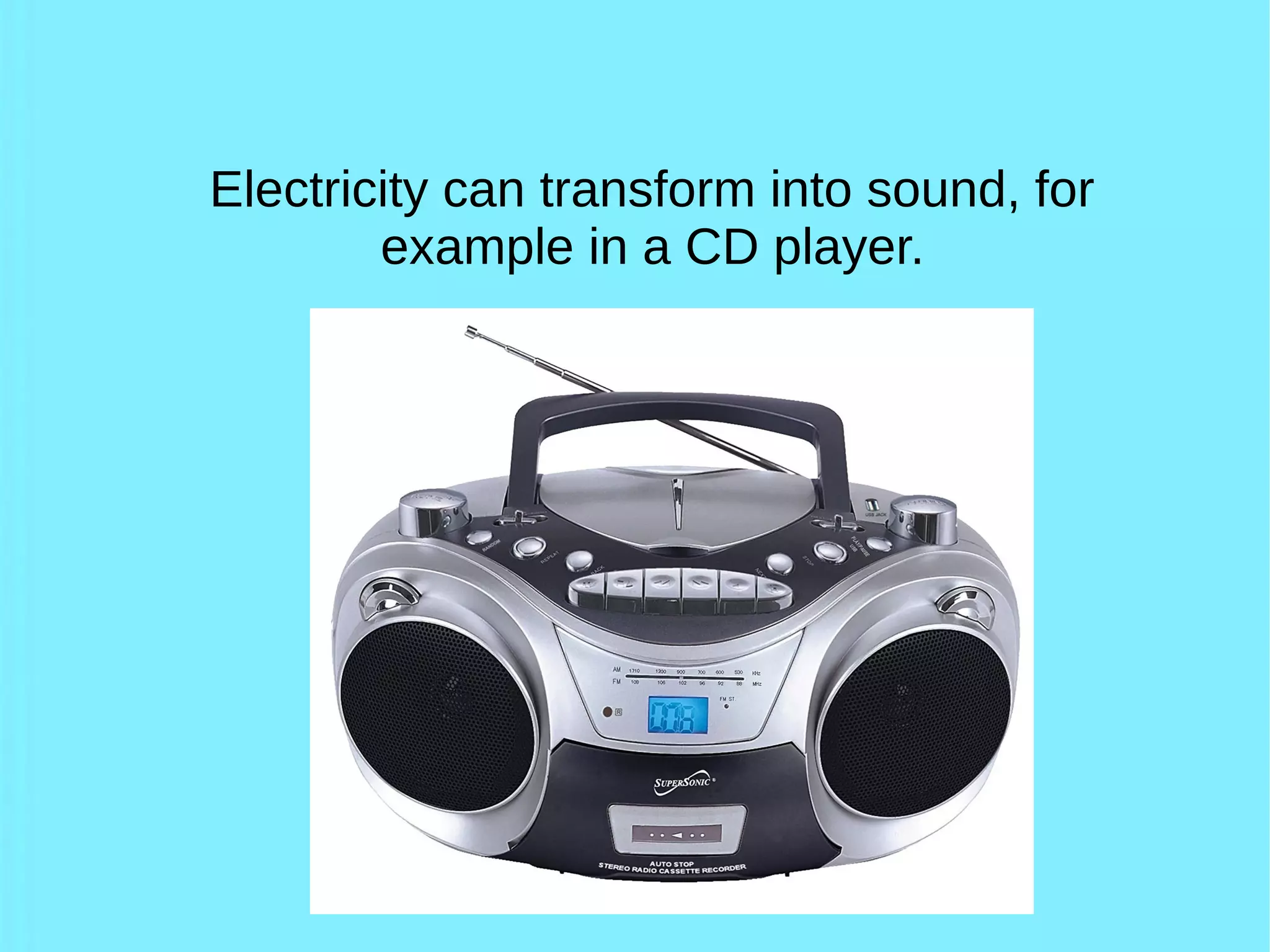
Electricity can transform into sound, for
example in a CD player.
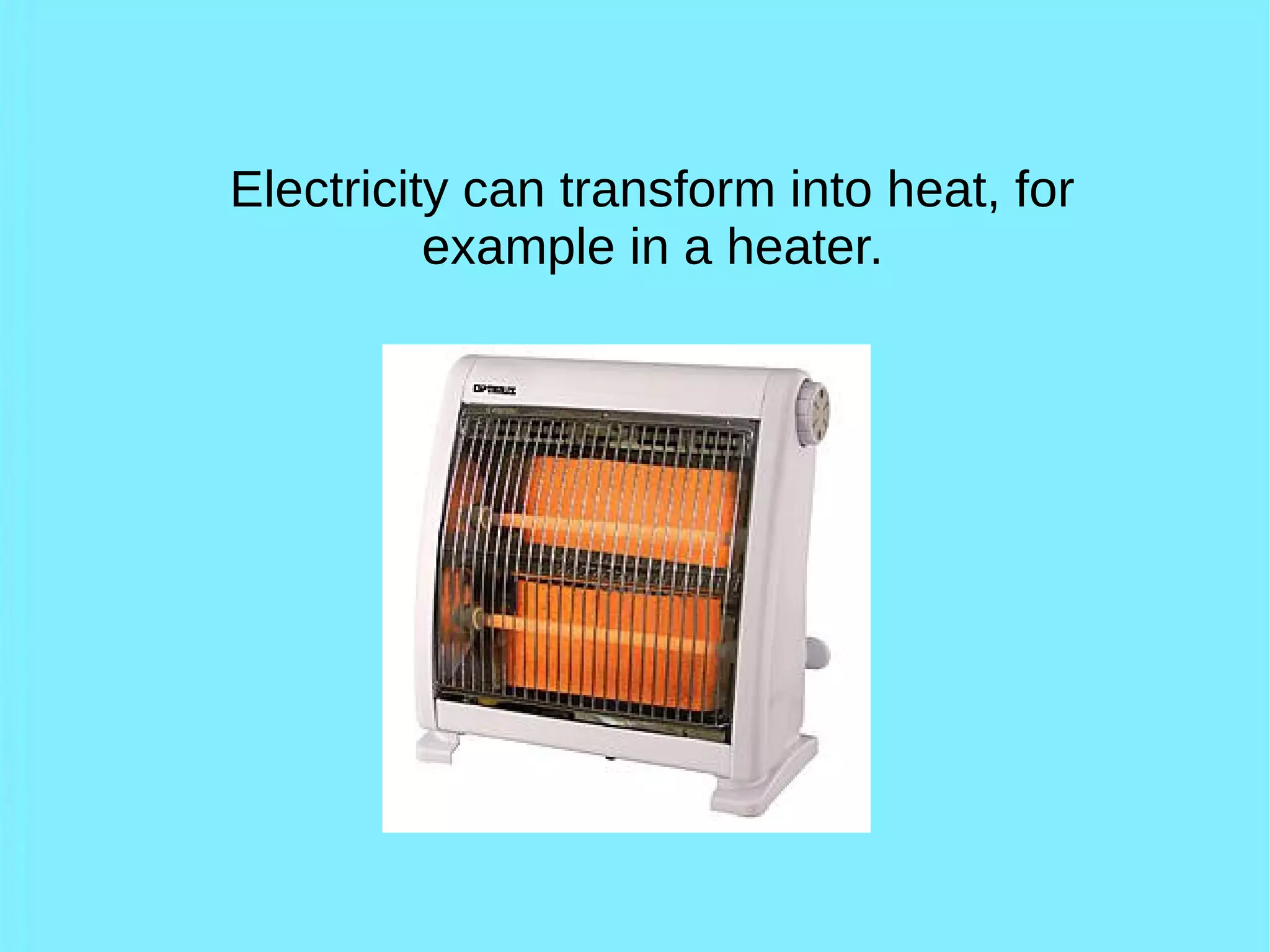
Electricity can transform into heat, for
example in a heater.
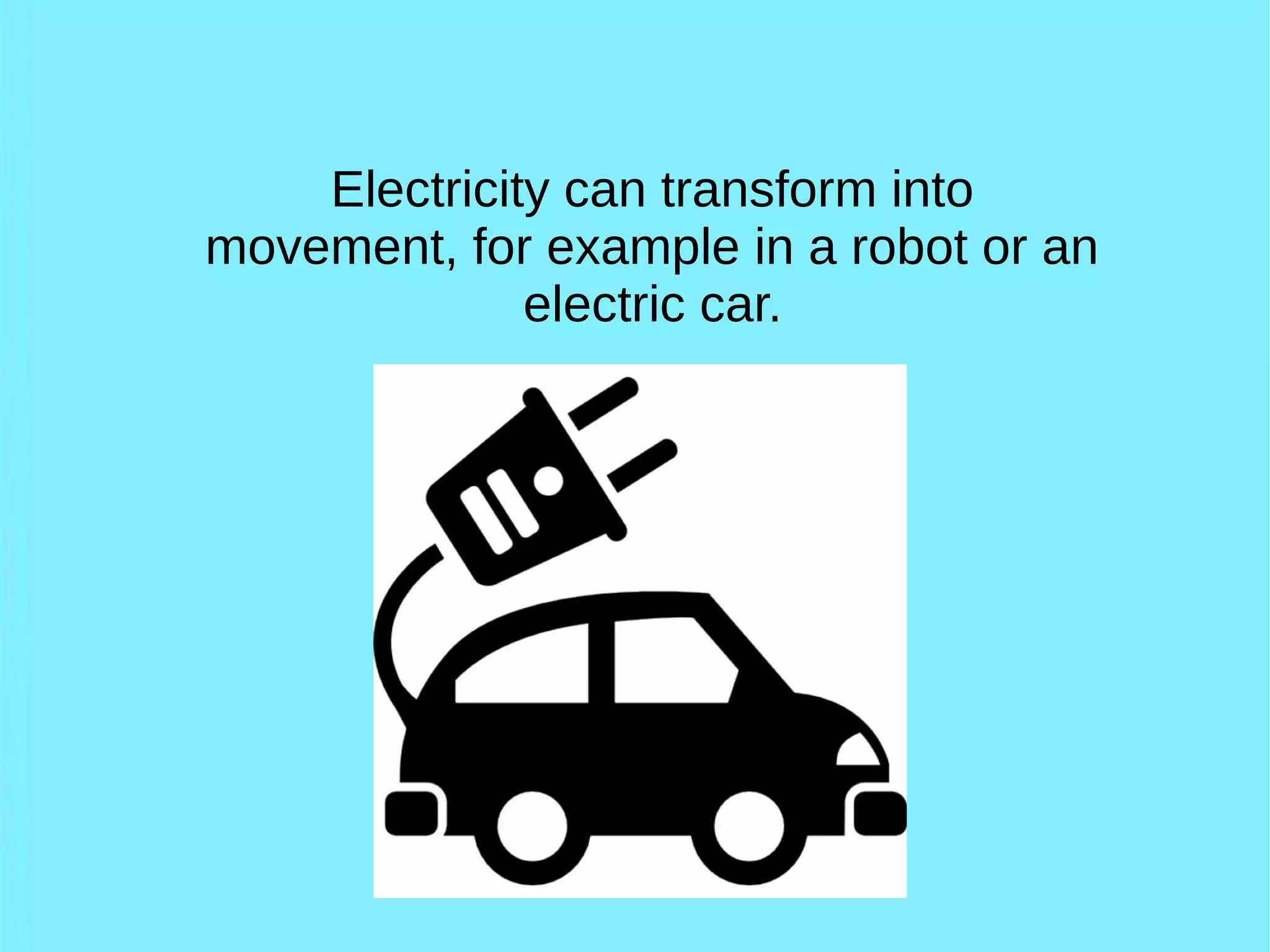
Electricity can transform into
movement, for example in a robot or an
electric car.
WHERE DOES IT COME FROM?
It can come from water, like stored
water.
It can come from sunlight, like solar
panels.
It can come from nuclear power
stations.
It can come from wind, like the energy
produced by windmills (wind turbines).
It can come from biomass.
RENEWABLE AND NON-
RENEWABLE ENERGY SOURCES.
Renewable
sources will never
run out.
Non- renewable
energy sources will
run out sooner or
later.
SOLAR ENERGY
POSITIVE THINGS NEGATIVE THINGS
It is renewable and
does not pollute.
It only works in
sunny places.
WIND ENERGY
POSITIVE THINGS NEGATIVE THINGS
It is clean and
renewable.
Wind turbines
only work in
windy places.
Wind turbines
can kill birds.
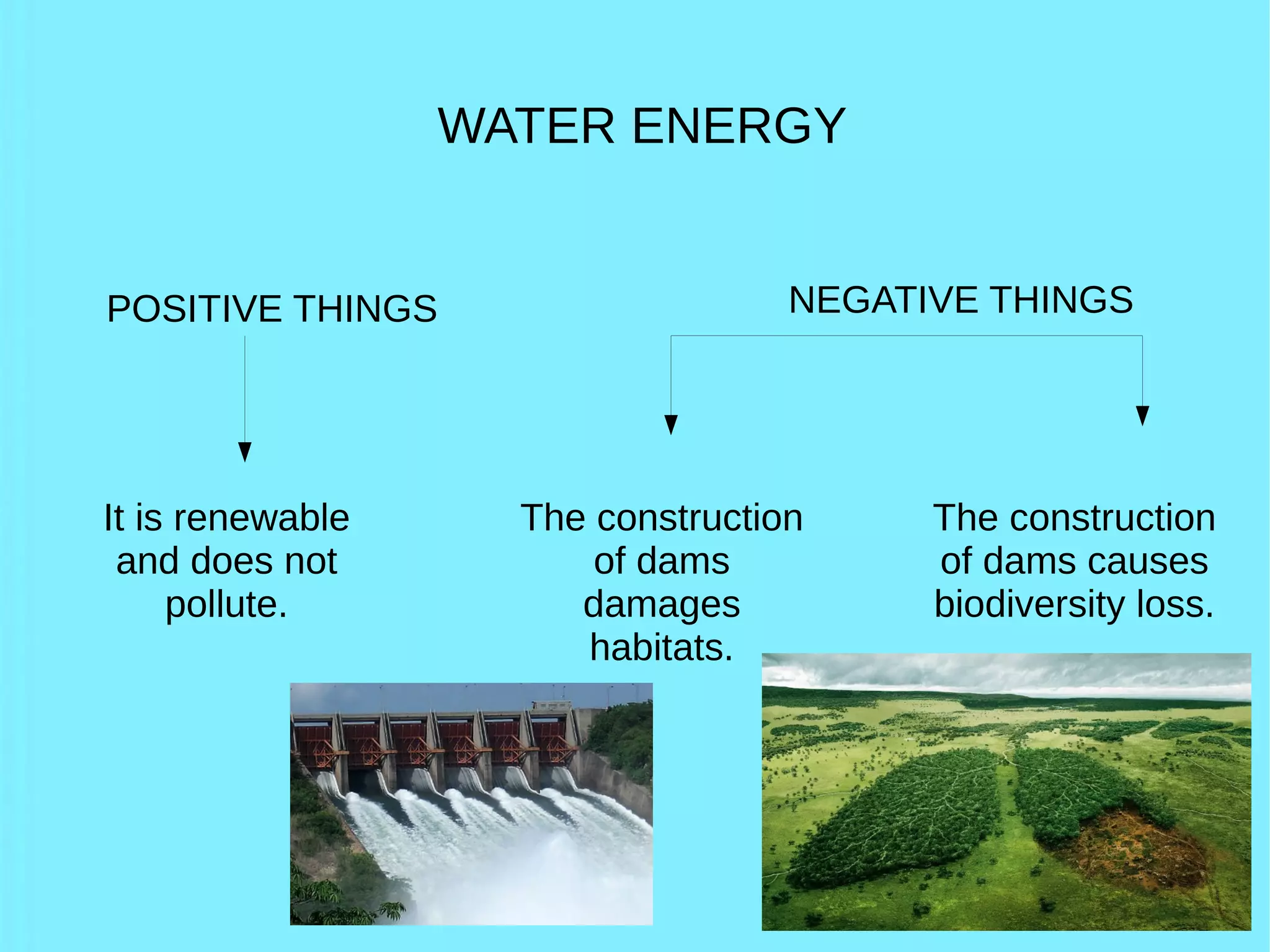
It is renewable
and does not
pollute.
The construction
of dams
damages
habitats.
The construction
of dams causes
biodiversity loss.
WATER ENERGY
POSITIVE THINGS NEGATIVE THINGS
BIOMASS
First, biomass is burned.
Then, the fire heats the water.
Next, the water boils and produces water
vapor or steam.
Soon, the steam moves the
wind turbine.
Finally, the movement
produces electricity.
GEOTHERMAL ENERGY
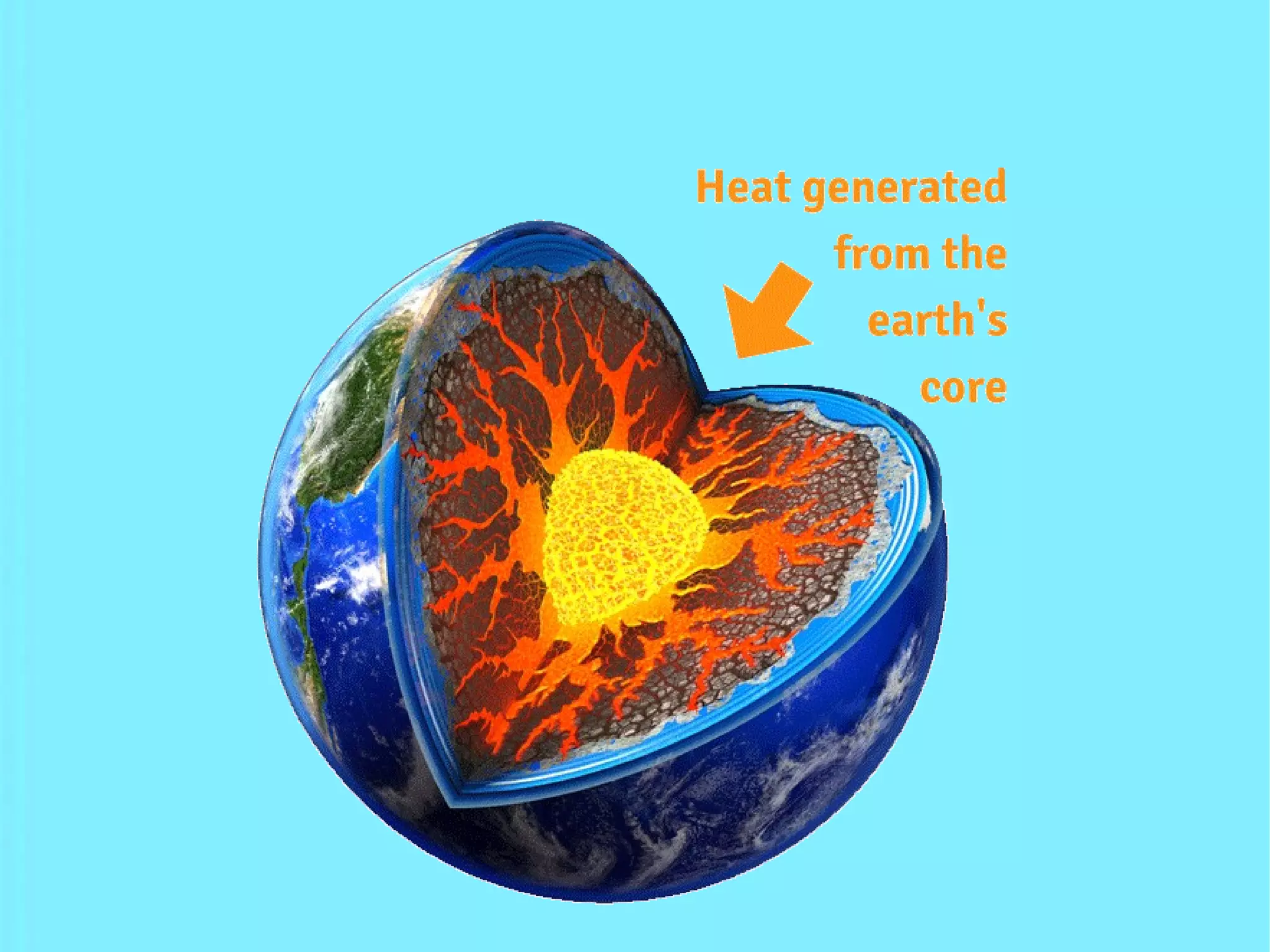
It is the energy which is produced inside the Earth.
Sometimes it reaches the surface as volcanoes
POSITIVE THINGS
It is
renewable.
It does not
pollute.
It is limited to
certain
geographical
areas.
NEGATIVE THINGS
FOSSIL FUELS
Fossil fuels are coal and oil. They are
made of remains of animals and plants
that have been underground for
millions of years.
It is non-
renewable
It pollutes
a lot
It produces
global
warming
POSITIVE THINGS
COAL
It produces large
quantities of
energy.
NEGATIVE THINGS
It is non-
renewable.
It causes
ecological
disasters.
It is easy to
transport
and store.
OIL
POSITIVE THINGS NEGATIVE THINGS
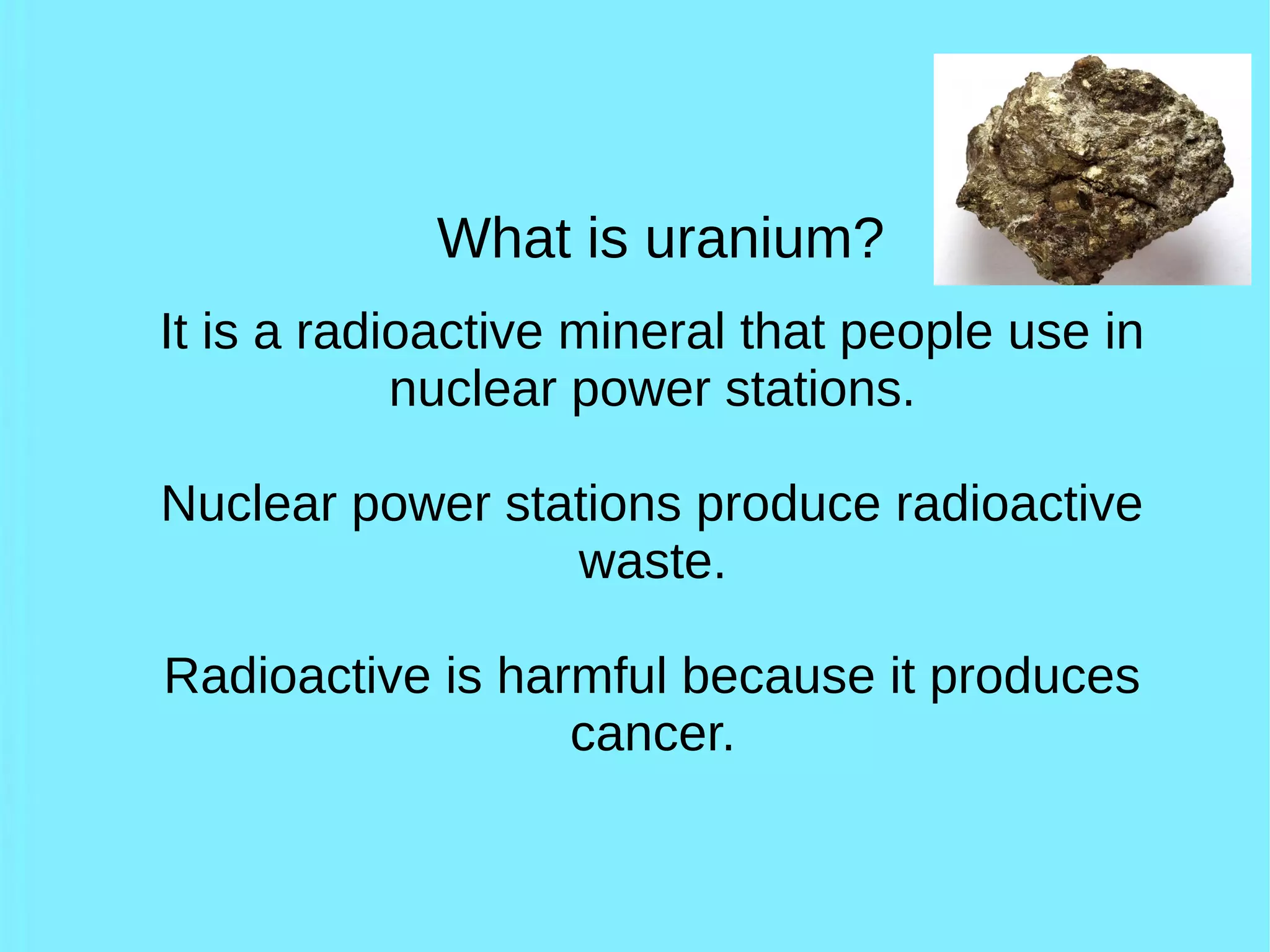
What is uranium?
It is a radioactive mineral that people use in
nuclear power stations.
Nuclear power stations produce radioactive
waste.
Radioactive is harmful because it produces
cancer.
PHOTOVOLTAIC CELLS AND
SOLAR PANELS
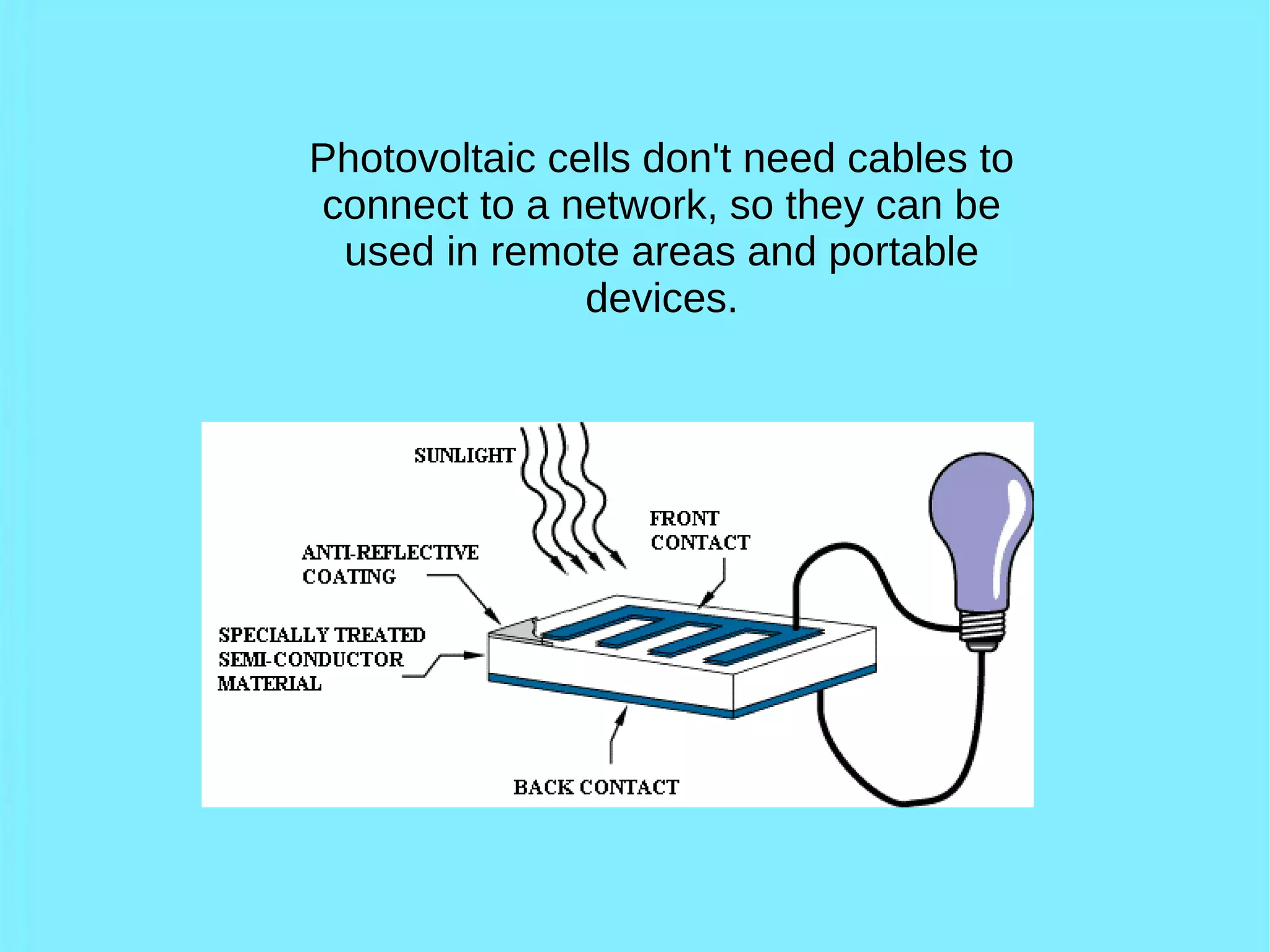
This is a photovoltaic cell. It
transforms solar energy into
electricity.
Photovoltaic cells don't need cables to
connect to a network, so they can be
used in remote areas and portable
devices.
Solar panels are made of several
photovoltaic cells.
HUBBLE
SPACE
TELESCOPE
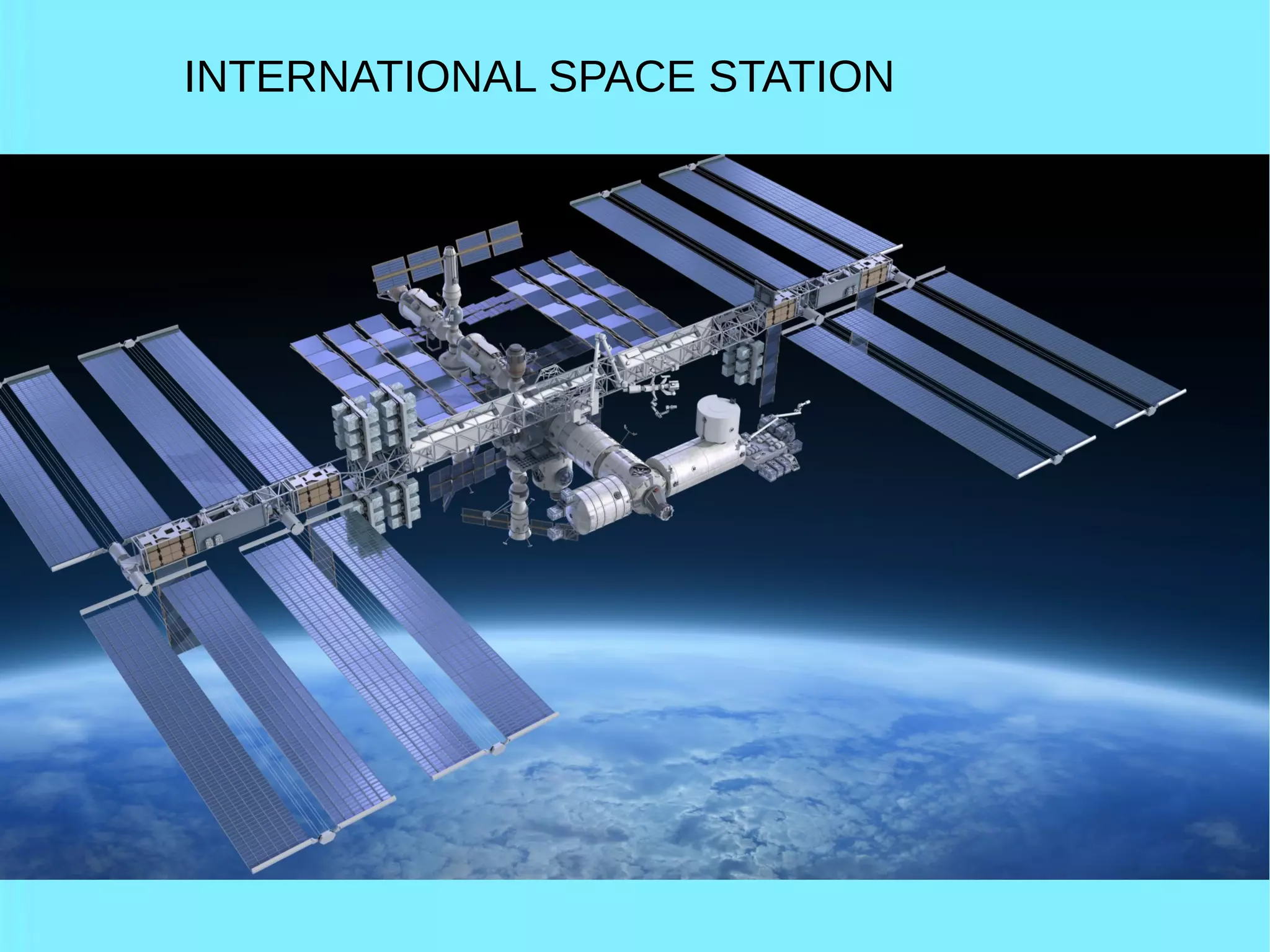
INTERNATIONAL SPACE STATION

Renewable non renewable

  • 1.
    FORMS OF ENERGY.RENEWABLE AND NON- RENEWABLE ENERGY SOURCES.
  • 2.
    KINETIC ENERGY It isthe energy of movement and motion. The heavier and faster and objets is the more kinetic energy it has.
  • 3.
    POTENTIAL ENERGY It isthe energy that is stored. When it is released, it changes into other form of energy. The coal changes into light and heat. Wood changes into light and heat. Stored water changes into electricity.
  • 4.
    MECHANICAL ENERGY It isa mixture between kinetic and potential energy. Example: a person and a bike. The bike is moving, so it is kinetic energy. The energy of person changes into the force, so it is potential energy.
  • 5.
    LIGHT ENERGY Light sources producelight. Light sources can be natural like the Sun or stars or artificial, like a light bulb, torch, etc.
  • 6.
    CHEMICAL ENERGY In chemical energya chemical reaction occurs. This reaction is transformed into another form of energy. Examples: The energy of batteries transforms into kinetic energy. The energy of food transforms into kinetic and thermal energy.
  • 7.
    THERMAL ENERGY It isthe energy that hot objects produce. The heat flows from hot products to cold products.
  • 8.
    ELECTRICAL ENERGY How canit transform into? Where does it come from?
  • 9.
    Electricity can transforminto light, for example light bulbs and torches.
  • 10.
    Electricity can transforminto sound, for example in a CD player.
  • 11.
    Electricity can transforminto heat, for example in a heater.
  • 12.
    Electricity can transforminto movement, for example in a robot or an electric car.
  • 13.
    WHERE DOES ITCOME FROM?
  • 14.
    It can comefrom water, like stored water.
  • 15.
    It can comefrom sunlight, like solar panels.
  • 16.
    It can comefrom nuclear power stations.
  • 17.
    It can comefrom wind, like the energy produced by windmills (wind turbines).
  • 18.
    It can comefrom biomass.
  • 19.
    RENEWABLE AND NON- RENEWABLEENERGY SOURCES. Renewable sources will never run out. Non- renewable energy sources will run out sooner or later.
  • 20.
    SOLAR ENERGY POSITIVE THINGSNEGATIVE THINGS It is renewable and does not pollute. It only works in sunny places.
  • 21.
    WIND ENERGY POSITIVE THINGSNEGATIVE THINGS It is clean and renewable. Wind turbines only work in windy places. Wind turbines can kill birds.
  • 22.
    It is renewable anddoes not pollute. The construction of dams damages habitats. The construction of dams causes biodiversity loss. WATER ENERGY POSITIVE THINGS NEGATIVE THINGS
  • 23.
    BIOMASS First, biomass isburned. Then, the fire heats the water. Next, the water boils and produces water vapor or steam. Soon, the steam moves the wind turbine. Finally, the movement produces electricity.
  • 25.
    GEOTHERMAL ENERGY It isthe energy which is produced inside the Earth. Sometimes it reaches the surface as volcanoes POSITIVE THINGS It is renewable. It does not pollute. It is limited to certain geographical areas. NEGATIVE THINGS
  • 27.
    FOSSIL FUELS Fossil fuelsare coal and oil. They are made of remains of animals and plants that have been underground for millions of years.
  • 28.
    It is non- renewable Itpollutes a lot It produces global warming POSITIVE THINGS COAL It produces large quantities of energy. NEGATIVE THINGS
  • 29.
    It is non- renewable. Itcauses ecological disasters. It is easy to transport and store. OIL POSITIVE THINGS NEGATIVE THINGS
  • 30.
    What is uranium? Itis a radioactive mineral that people use in nuclear power stations. Nuclear power stations produce radioactive waste. Radioactive is harmful because it produces cancer.
  • 31.
  • 32.
    This is aphotovoltaic cell. It transforms solar energy into electricity.
  • 33.
    Photovoltaic cells don'tneed cables to connect to a network, so they can be used in remote areas and portable devices.
  • 34.
    Solar panels aremade of several photovoltaic cells.
  • 36.
  • 37.