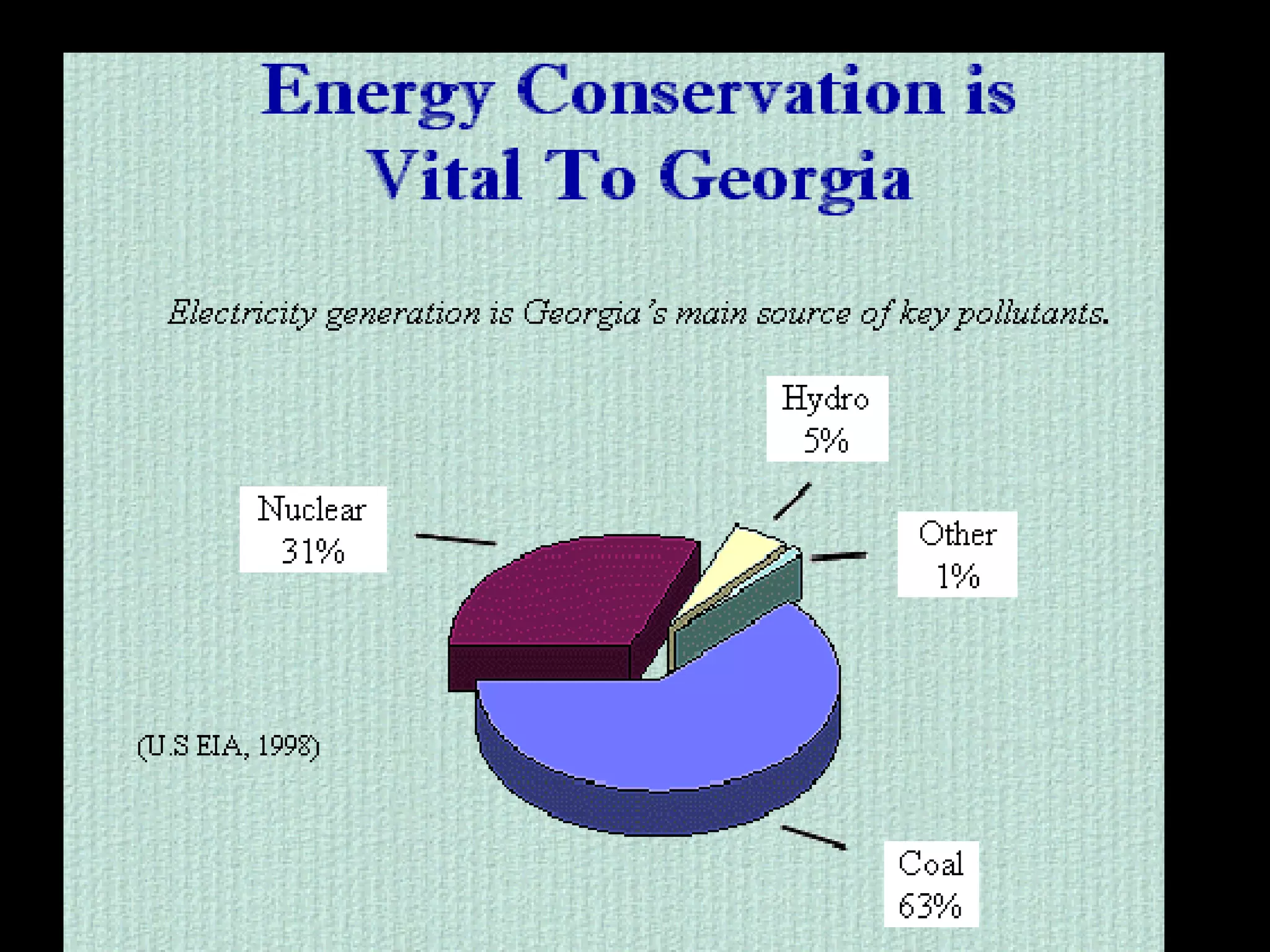
Energy  resources
Natural Resources A  natural resource   is a feature of Earth that benefits people. Earth’s natural  material  resources are things like air, fresh water, and soil.
16.2 Electricity from fossil fuels A  nonrenewable resource   is not replaced as it is used.  Because it takes so long for these resources to form, someday we will not have enough fossil fuels to produce the electricity we need. The three major fossil fuels are coal, oil, and natural gas. Video clip on fossil fuels
Electricity from renewable resources (often called  alternative  energy sources) A  renewable resource   can be replaced naturally in a relatively short period of time.  The Sun and wind are renewable resources that can be used as energy sources.
Electricity from renewable resources It is also possible to use: moving water (hydroelectric) hot spots near Earth’s surface (geothermal) tides to produce electricity. Let’s look at some of these!
Hydroelectric - Using water to  make power.
 
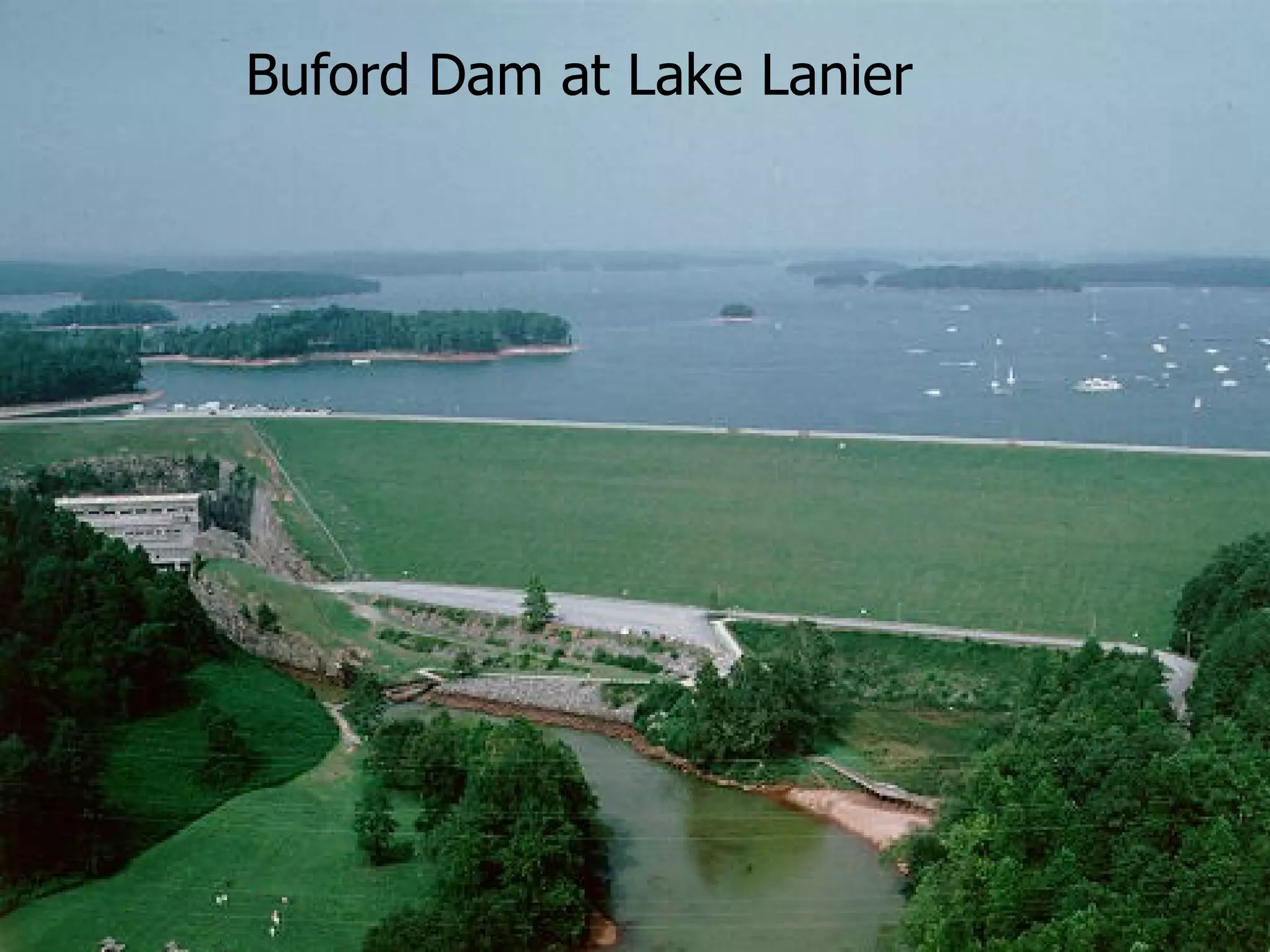
Buford Dam at Lake Lanier
 
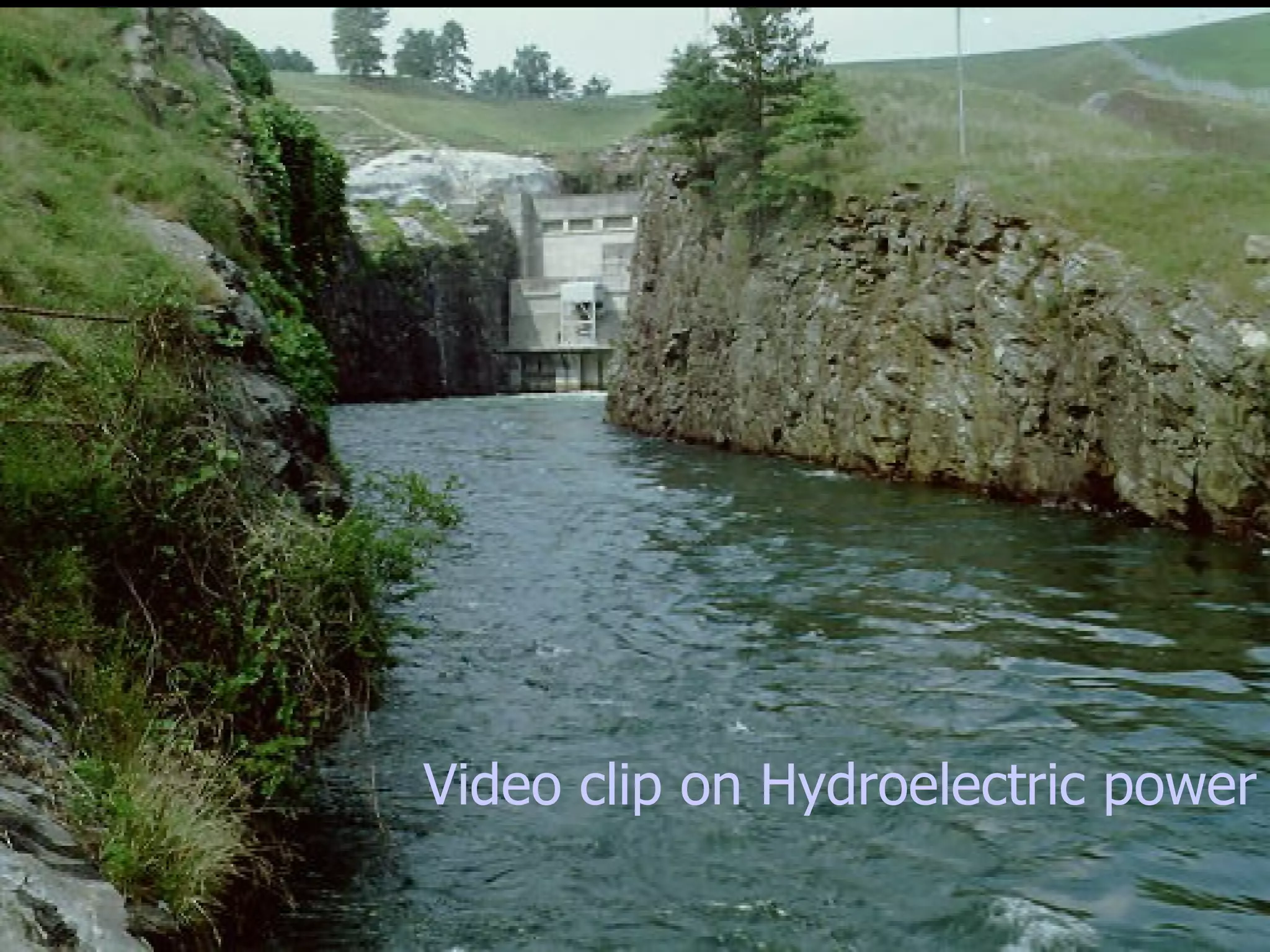
Video clip on Hydroelectric power
Once the dam is built, the energy is  virtually free.  No waste or pollution produced. Much more reliable than wind, solar or   wave power.  Water can be stored above the dam ready   to cope with peaks in demand. Hydro-electric power stations can increase  to full power very quickly, unlike other  power stations. Electricity can be generated constantly.   Advantages
Disadvantages The dams are very expensive to build. However, many dams are also used for flood control  or irrigation, so building costs can be shared.  Building a large dam will flood  a very large area upstream, causing problems  for animals that used to live there.   Finding a suitable site can be difficult –  the impact on residents and the  environment may be unacceptable.  Water quality and quantity downstream can be affected, which can have an  impact on plant life.
Wind power Windmills are built together in a “wind farm.”
 
 
Video clip about Wind power
Wind power                                                                       
Wind is free, wind farms need no fuel.  Produces no waste or greenhouse gases.  The land beneath can usually still be used for farming. Wind farms can be tourist attractions.  A good method of supplying energy to remote areas.   Advantages
The wind is not always predictable –  some days have no wind.  Suitable areas for wind farms are often near  the coast, where land is expensive. *Some people feel that covering the landscape  with these towers is unsightly.  Can kill birds - migrating flocks tend to  like strong winds. Splat!  Can affect television reception if you live nearby.  Noisy. A wind generator makes a constant,  low, "swooshing" noise day and night,  which can drive you nuts. An entire wind farm makes quite a racket!   Disadvantages
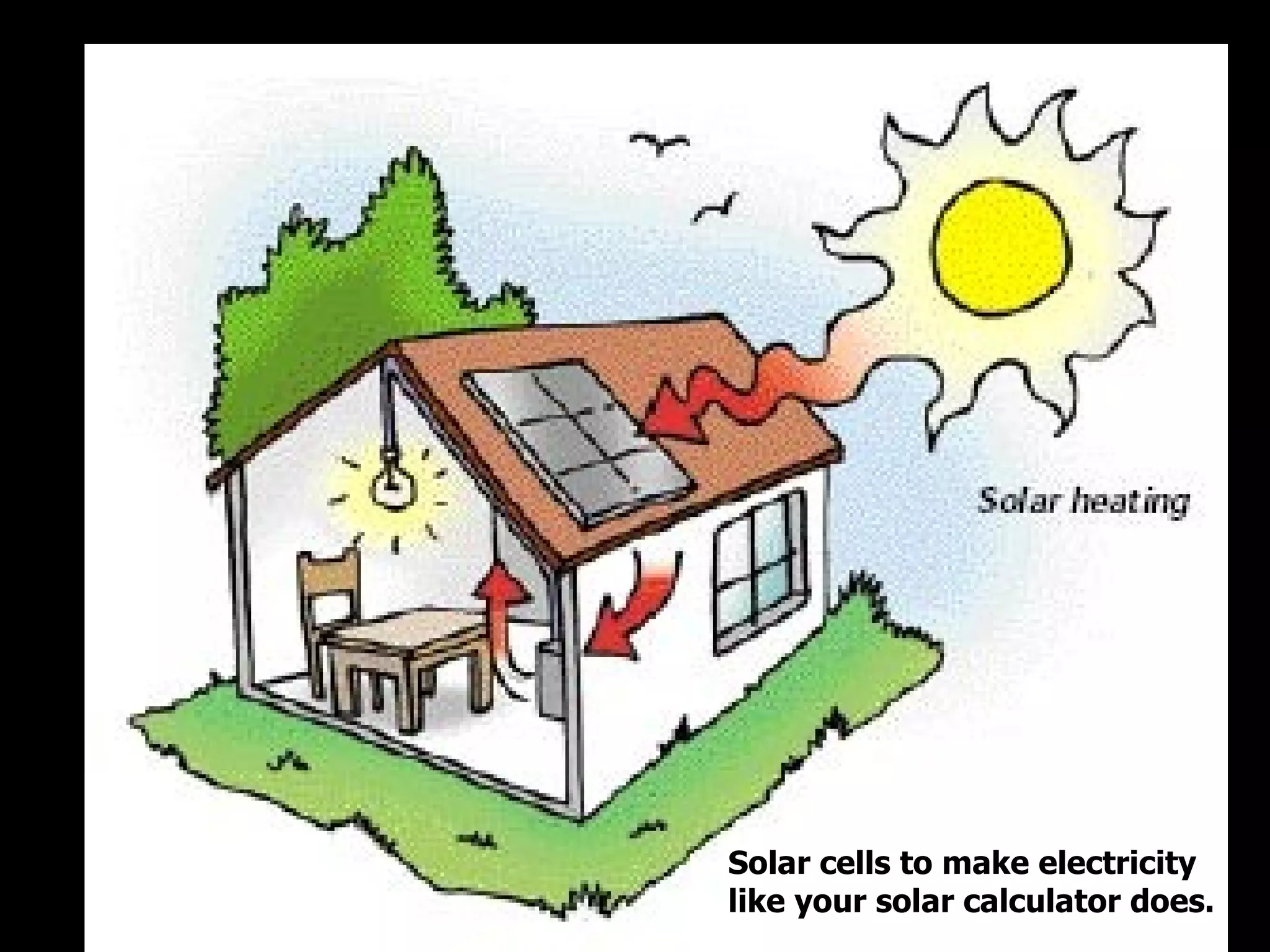
Solar power Several ways to use the sun for power!
Solar cells to make electricity like your solar calculator does.
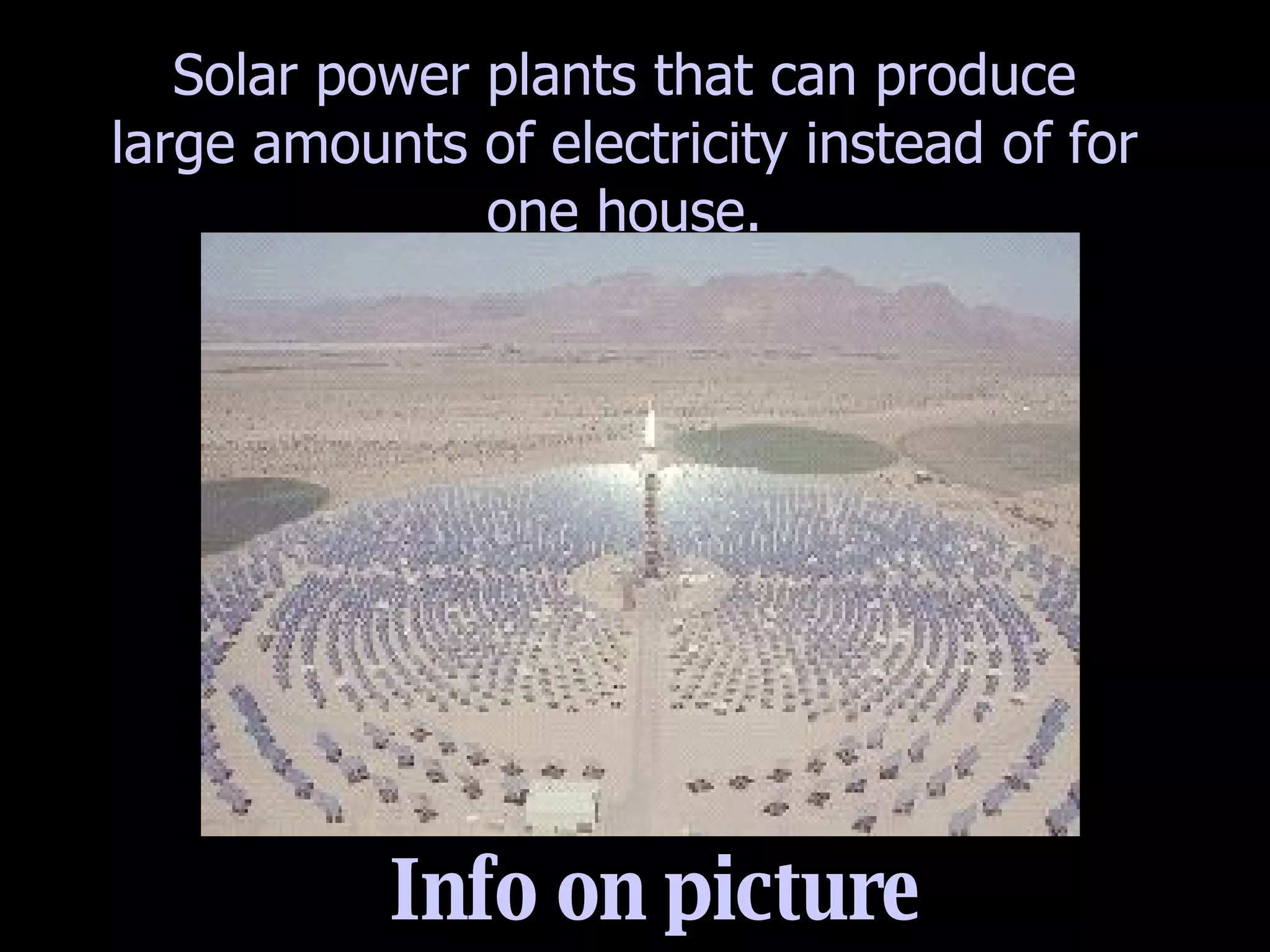
Info on picture Solar power plants that can produce large amounts of electricity instead of for one house.
Places where solar power plants would work!
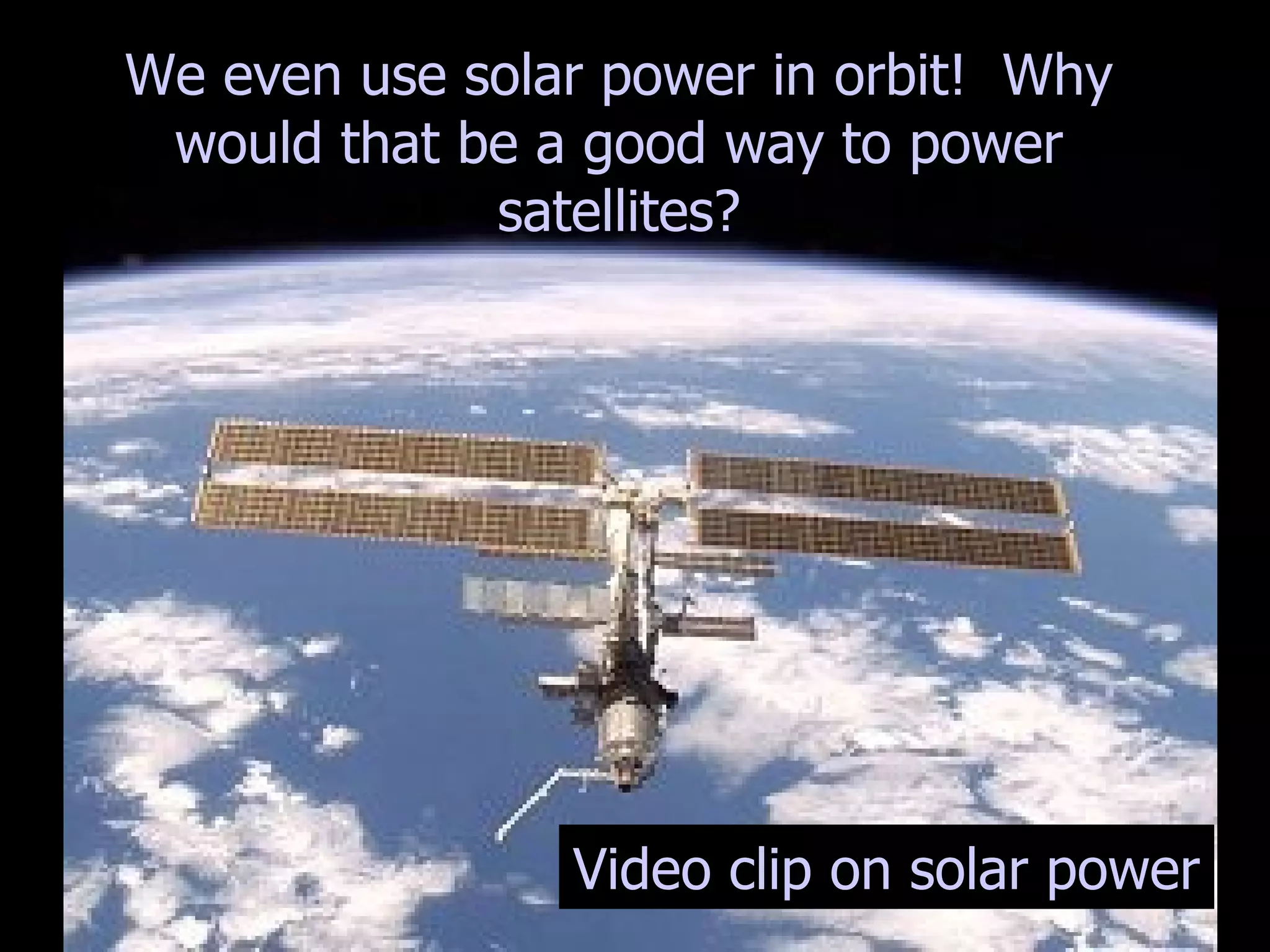
We even use solar power in orbit!  Why would that be a good way to power satellites? Video clip on solar power
Solar energy is free - it needs no fuel and produces no waste or pollution. In sunny countries, solar power  can be used  where there is no easy way to get electricity to a remote place.  Advantages
*Doesn't work at night.  * Very expensive to build solar  power stations. Solar cells cost a great deal  compared to the amount  of electricity they'll produce  in their lifetime. *Can be unreliable unless you're  in a very sunny climate. Disadvantages
Tidal power
Video clip on tidal power Turbines are placed underwater like with a dam.  Tidal turbines have to spin 180 degrees because the tide switches directions 4 times a day!
Advantages Once you've built the dam, tidal power is free.  It produces no greenhouse gases or other waste.  It needs no fuel.  It produces electricity reliably.  Not expensive to maintain.   Tides are totally predictable.  Advantages
Very expensive to build.  Affects a very wide area - the environment is changed for many miles upstream and downstream.  *Many birds rely on the tide uncovering the mud flats so that they can feed.  * Only provides power for around 10 hours each day, when the tide is actually moving in or out. *There are very few suitable sites for tidal power stations.   Disadvantages
Nuclear Power
 
This is steam, not polluted air!
Video clip on nuclear power
Nuclear power costs about the same as coal,  so it's not expensive to make.   Does not produce smoke or carbon dioxide,  so it does not contribute to the greenhouse effect. Produces huge amounts of energy from small amounts of fuel. Produces small amounts of waste. Nuclear power is reliable.  Advantages
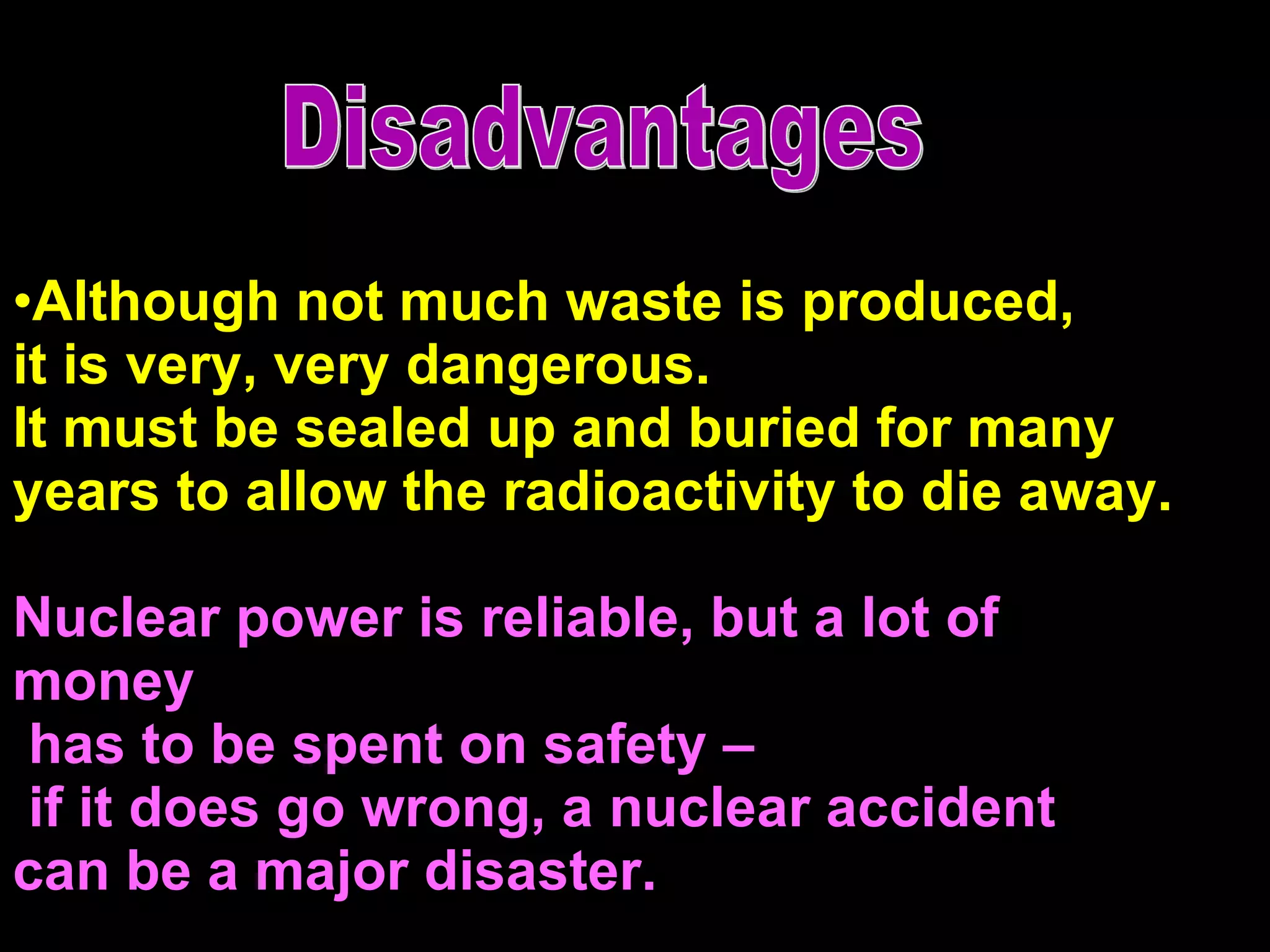
Although not much waste is produced,  it is very, very dangerous.  It must be sealed up and buried for many  years to allow the radioactivity to die away.  Nuclear power is reliable, but a lot of money has to be spent on safety – if it does go wrong, a nuclear accident  can be a major disaster.  Disadvantages
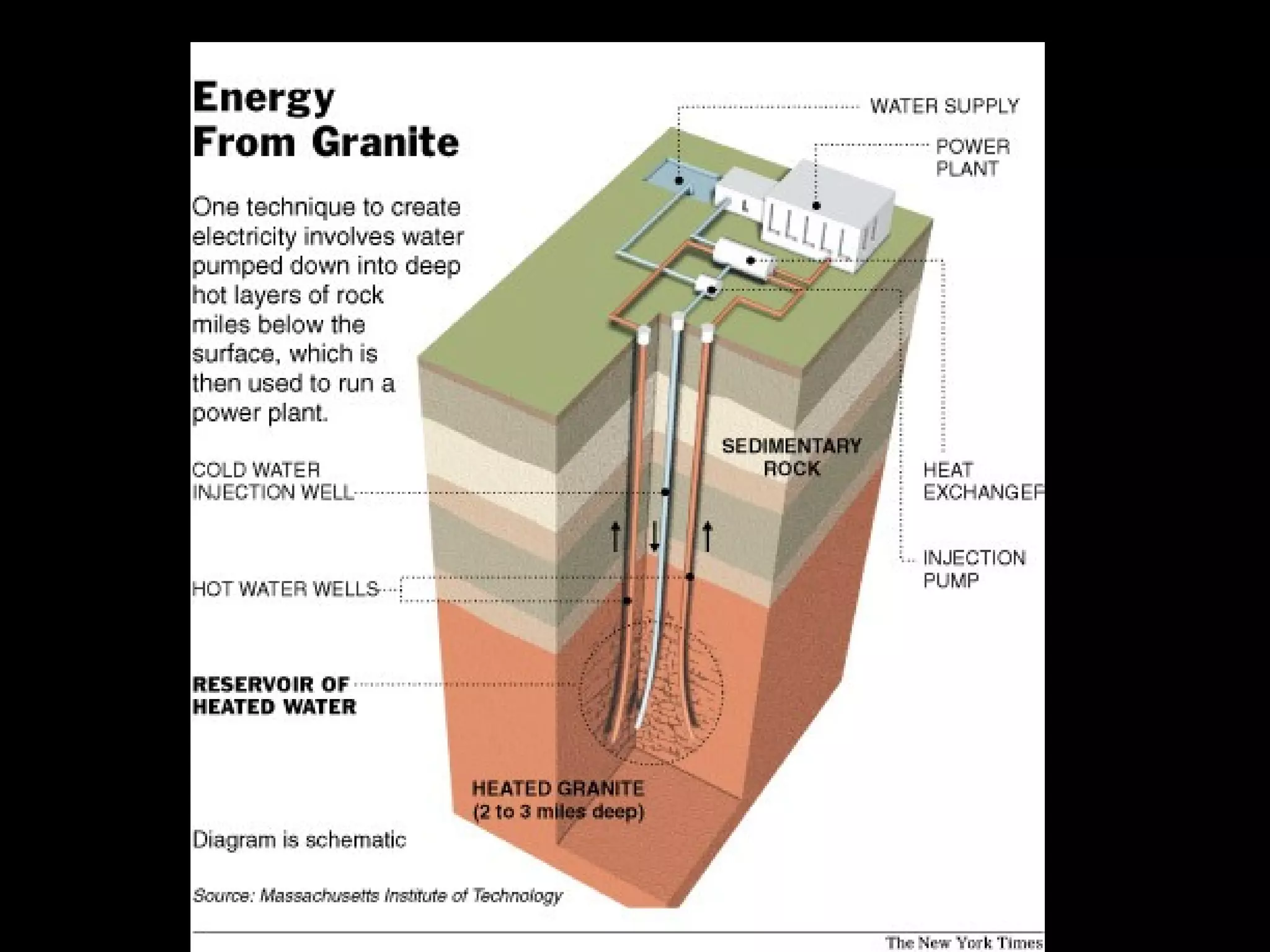
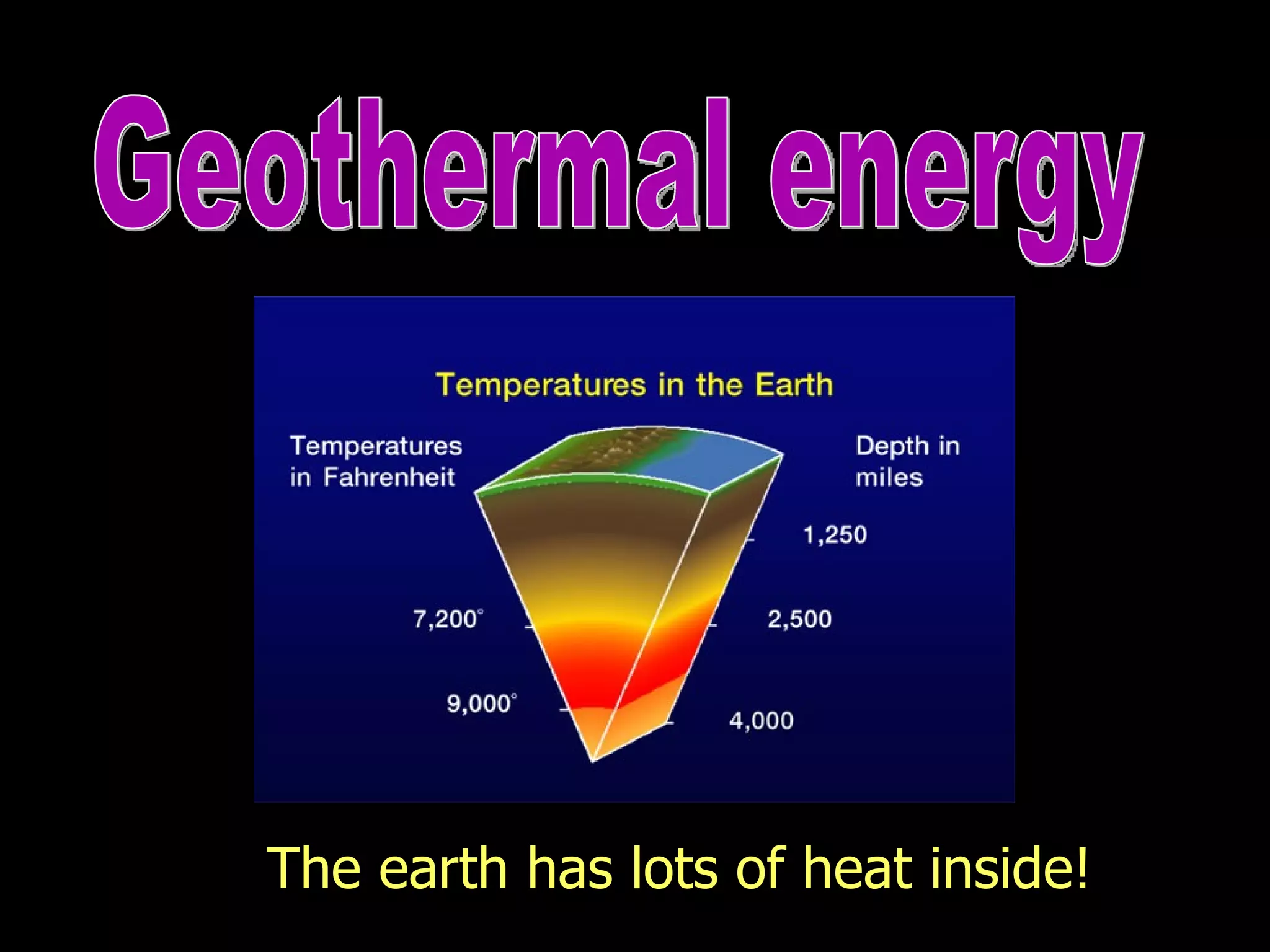
Geothermal energy The earth has lots of heat inside!
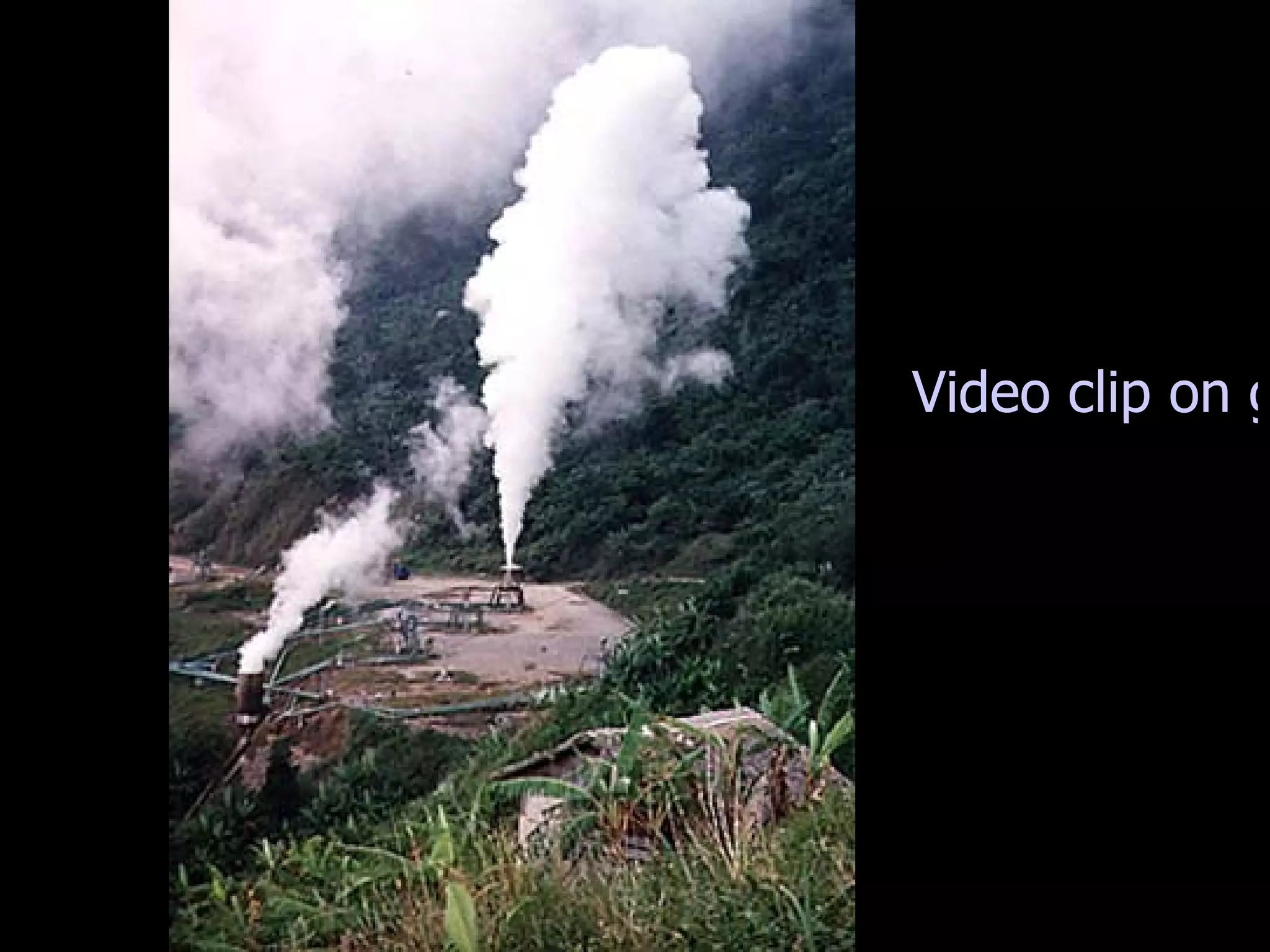
Sometimes it is very close to the surface.
 
Video clip on geothermal energy
What do you think would be the advantages and disadvantages of geothermal energy?
 

Energy Sources

  • 1.
  • 2.
    Natural Resources A natural resource is a feature of Earth that benefits people. Earth’s natural material resources are things like air, fresh water, and soil.
  • 3.
    16.2 Electricity fromfossil fuels A nonrenewable resource is not replaced as it is used. Because it takes so long for these resources to form, someday we will not have enough fossil fuels to produce the electricity we need. The three major fossil fuels are coal, oil, and natural gas. Video clip on fossil fuels
  • 4.
    Electricity from renewableresources (often called alternative energy sources) A renewable resource can be replaced naturally in a relatively short period of time. The Sun and wind are renewable resources that can be used as energy sources.
  • 5.
    Electricity from renewableresources It is also possible to use: moving water (hydroelectric) hot spots near Earth’s surface (geothermal) tides to produce electricity. Let’s look at some of these!
  • 6.
    Hydroelectric - Usingwater to make power.
  • 7.
  • 8.
    Buford Dam atLake Lanier
  • 9.
    Buford Dam atLake Lanier
  • 10.
  • 11.
    Video clip onHydroelectric power
  • 12.
    Once the damis built, the energy is virtually free. No waste or pollution produced. Much more reliable than wind, solar or wave power. Water can be stored above the dam ready to cope with peaks in demand. Hydro-electric power stations can increase to full power very quickly, unlike other power stations. Electricity can be generated constantly. Advantages
  • 13.
    Disadvantages The damsare very expensive to build. However, many dams are also used for flood control or irrigation, so building costs can be shared. Building a large dam will flood a very large area upstream, causing problems for animals that used to live there. Finding a suitable site can be difficult – the impact on residents and the environment may be unacceptable. Water quality and quantity downstream can be affected, which can have an impact on plant life.
  • 14.
    Wind power Windmillsare built together in a “wind farm.”
  • 15.
  • 16.
  • 17.
    Video clip aboutWind power
  • 18.
    Wind power                                                                      
  • 19.
    Wind is free,wind farms need no fuel. Produces no waste or greenhouse gases. The land beneath can usually still be used for farming. Wind farms can be tourist attractions. A good method of supplying energy to remote areas. Advantages
  • 20.
    The wind isnot always predictable – some days have no wind. Suitable areas for wind farms are often near the coast, where land is expensive. *Some people feel that covering the landscape with these towers is unsightly. Can kill birds - migrating flocks tend to like strong winds. Splat! Can affect television reception if you live nearby. Noisy. A wind generator makes a constant, low, "swooshing" noise day and night, which can drive you nuts. An entire wind farm makes quite a racket! Disadvantages
  • 21.
    Solar power Severalways to use the sun for power!
  • 22.
    Solar cells tomake electricity like your solar calculator does.
  • 23.
    Info on pictureSolar power plants that can produce large amounts of electricity instead of for one house.
  • 24.
    Places where solarpower plants would work!
  • 25.
    We even usesolar power in orbit! Why would that be a good way to power satellites? Video clip on solar power
  • 26.
    Solar energy isfree - it needs no fuel and produces no waste or pollution. In sunny countries, solar power can be used where there is no easy way to get electricity to a remote place. Advantages
  • 27.
    *Doesn't work atnight. * Very expensive to build solar power stations. Solar cells cost a great deal compared to the amount of electricity they'll produce in their lifetime. *Can be unreliable unless you're in a very sunny climate. Disadvantages
  • 28.
  • 29.
    Video clip ontidal power Turbines are placed underwater like with a dam. Tidal turbines have to spin 180 degrees because the tide switches directions 4 times a day!
  • 30.
    Advantages Once you'vebuilt the dam, tidal power is free. It produces no greenhouse gases or other waste. It needs no fuel. It produces electricity reliably. Not expensive to maintain. Tides are totally predictable. Advantages
  • 31.
    Very expensive tobuild. Affects a very wide area - the environment is changed for many miles upstream and downstream. *Many birds rely on the tide uncovering the mud flats so that they can feed. * Only provides power for around 10 hours each day, when the tide is actually moving in or out. *There are very few suitable sites for tidal power stations. Disadvantages
  • 32.
  • 33.
  • 34.
    This is steam,not polluted air!
  • 35.
    Video clip onnuclear power
  • 36.
    Nuclear power costsabout the same as coal, so it's not expensive to make. Does not produce smoke or carbon dioxide, so it does not contribute to the greenhouse effect. Produces huge amounts of energy from small amounts of fuel. Produces small amounts of waste. Nuclear power is reliable. Advantages
  • 37.
    Although not muchwaste is produced, it is very, very dangerous. It must be sealed up and buried for many years to allow the radioactivity to die away. Nuclear power is reliable, but a lot of money has to be spent on safety – if it does go wrong, a nuclear accident can be a major disaster. Disadvantages
  • 38.
    Geothermal energy Theearth has lots of heat inside!
  • 39.
    Sometimes it isvery close to the surface.
  • 40.
  • 41.
    Video clip ongeothermal energy
  • 42.
    What do youthink would be the advantages and disadvantages of geothermal energy?
  • 43.