Hydropower Plants
Sources of energy
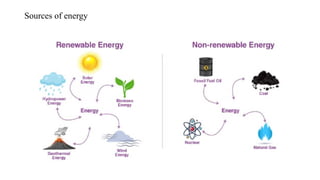
Energy sources are categorized as renewable or non-renewable.
• Renewable energy. A source of energy is considered renewable if it comes
from natural sources or processes that are constantly replenished.
• Examples are solar (from the sun), wind, water, geothermal (from the earth)
and biomass (from organic materials).
• Non-renewable energy sources don’t replenish.
• They were formed when prehistoric plants and animals died and were
gradually buried by layers of soil rock.
• The kind of fuel that was created varies depending on whether it came from
plants or animals, how long it was buried, at what temperature and under
what pressure.
• Types of non-renewable energy are natural gas, coal and oil.
Sources of energy
Renewable energy
Solar Energy: Solar energy is that energy is derived from the sun.
• The sunlight is allowed to fall on solar panels and then stored in solar
cells. Solar energy is harnessed in the form of light and heat.
• The solar energy falling on the solar panels is transformed to thermal
energy and then this thermal energy is used for various heating
purposes.
Wind Energy: Wind energy is obtained from the force of the wind.
• A large number of windmills are set up to harness the power of wind
and then generate electricity.
Renewable energy
• Tidal Energy: Tidal wave energy comes from the movement of the
sea waves when tides change from high to low.
• Hydraulic Energy: This type of energy is produced by the water we
store in reservoirs or artificial lakes.
• Geothermal Energy: This energy is generated from the heat stored in
the earth. This type of energy is used for heating a house or generating
electricity.
• Biomass Energy: The plants fix solar energy through the process of
photosynthesis to produce biomass.
• This biomass passes through various cycles producing different forms
of energy sources.
• For example, fodder for animals that in turn produce dung, agricultural
waste for cooking, etc.
Non-Renewable energy
Nuclear energy – stored inside tiny atoms that are invisible, but make
up the elements of the entire universe.
• Nuclear energy is released when atoms join together (fusion) or split
(fission).
• The fusion reaction in the sun provides warmth and light, while the
fission reaction at a nuclear power plant creates enough energy to
power large cities.
Types of energy
• Gravitational energy – associated with a gravitational field, like the one
that surrounds the Earth. E.g. Gravitational energy is the reason why
riding your bike downhill is faster than riding your bike uphill.
• Kinetic energy – anything that moves is using this kind of energy.
Examples include running, cycling, climbing – even swiping your finger
across your smart phone!
• Wind turbines capture the kinetic energy in wind and transform it into
mechanical energy.
• Mechanical energy – stored in objects by tension. When the tension is
released, motion occurs.
• A compressed spring contains mechanical energy as does a stretched
rubber band.
Types of energy
• Chemical energy – stored within bonds between molecules. Sources
include natural gas, gasoline, coal and batteries.
• Electrical energy – comes from tiny charged particles called electrons.
The electricity in our homes is made by humans.
• Solar (radiant) energy – energy that comes from the movement of
light.
• Sound energy – produced when an object is made to vibrate
producing a sound. Your voice and musical instruments use sound
energy.
• Thermal (heat) energy – created from moving molecules. The energy
that comes from a fire is thermal energy.
Types of power plants
• Nuclear power plants
• Hydroelectric power plants
• Coal-fired power plants
• Diesel-fired power plants
• Geothermal power plants
• Gas-fired power plants
• Solar power plants
• Wind power plants

Hydropower plants.pptx hydropower plants

  • 1.
  • 2.
    Sources of energy Energysources are categorized as renewable or non-renewable. • Renewable energy. A source of energy is considered renewable if it comes from natural sources or processes that are constantly replenished. • Examples are solar (from the sun), wind, water, geothermal (from the earth) and biomass (from organic materials). • Non-renewable energy sources don’t replenish. • They were formed when prehistoric plants and animals died and were gradually buried by layers of soil rock. • The kind of fuel that was created varies depending on whether it came from plants or animals, how long it was buried, at what temperature and under what pressure. • Types of non-renewable energy are natural gas, coal and oil.
  • 3.
  • 4.
    Renewable energy Solar Energy:Solar energy is that energy is derived from the sun. • The sunlight is allowed to fall on solar panels and then stored in solar cells. Solar energy is harnessed in the form of light and heat. • The solar energy falling on the solar panels is transformed to thermal energy and then this thermal energy is used for various heating purposes. Wind Energy: Wind energy is obtained from the force of the wind. • A large number of windmills are set up to harness the power of wind and then generate electricity.
  • 5.
    Renewable energy • TidalEnergy: Tidal wave energy comes from the movement of the sea waves when tides change from high to low. • Hydraulic Energy: This type of energy is produced by the water we store in reservoirs or artificial lakes. • Geothermal Energy: This energy is generated from the heat stored in the earth. This type of energy is used for heating a house or generating electricity. • Biomass Energy: The plants fix solar energy through the process of photosynthesis to produce biomass. • This biomass passes through various cycles producing different forms of energy sources. • For example, fodder for animals that in turn produce dung, agricultural waste for cooking, etc.
  • 6.
    Non-Renewable energy Nuclear energy– stored inside tiny atoms that are invisible, but make up the elements of the entire universe. • Nuclear energy is released when atoms join together (fusion) or split (fission). • The fusion reaction in the sun provides warmth and light, while the fission reaction at a nuclear power plant creates enough energy to power large cities.
  • 7.
    Types of energy •Gravitational energy – associated with a gravitational field, like the one that surrounds the Earth. E.g. Gravitational energy is the reason why riding your bike downhill is faster than riding your bike uphill. • Kinetic energy – anything that moves is using this kind of energy. Examples include running, cycling, climbing – even swiping your finger across your smart phone! • Wind turbines capture the kinetic energy in wind and transform it into mechanical energy. • Mechanical energy – stored in objects by tension. When the tension is released, motion occurs. • A compressed spring contains mechanical energy as does a stretched rubber band.
  • 8.
    Types of energy •Chemical energy – stored within bonds between molecules. Sources include natural gas, gasoline, coal and batteries. • Electrical energy – comes from tiny charged particles called electrons. The electricity in our homes is made by humans. • Solar (radiant) energy – energy that comes from the movement of light. • Sound energy – produced when an object is made to vibrate producing a sound. Your voice and musical instruments use sound energy. • Thermal (heat) energy – created from moving molecules. The energy that comes from a fire is thermal energy.
  • 9.
    Types of powerplants • Nuclear power plants • Hydroelectric power plants • Coal-fired power plants • Diesel-fired power plants • Geothermal power plants • Gas-fired power plants • Solar power plants • Wind power plants