Downloaded 38 times
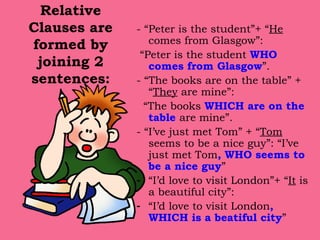
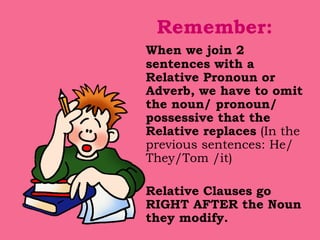
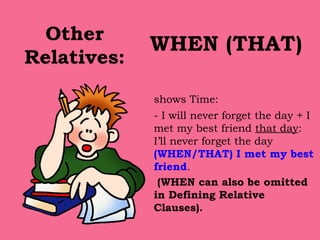

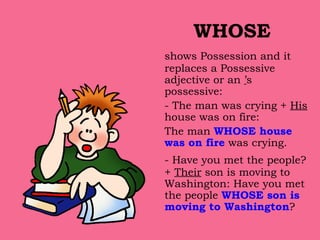
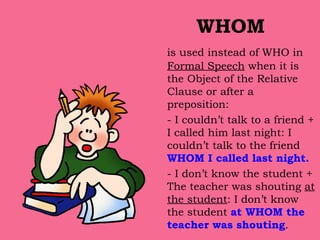
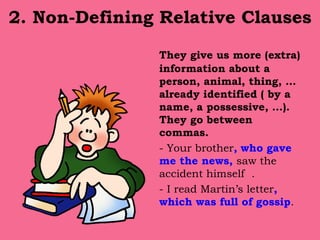
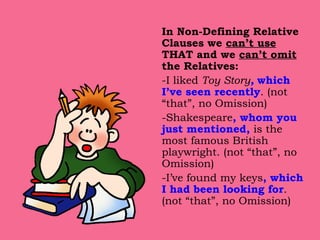
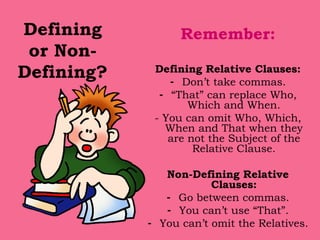


Relative clauses are formed by joining two sentences with a relative pronoun like who, which, that, when, or whose. There are two types of relative clauses: 1. Defining relative clauses provide essential information about the noun they modify and are not set off by commas. Who/which/that can be omitted if they are not the subject of the clause. 2. Non-defining relative clauses provide extra information about a noun and are set off by commas. That cannot be used and the relative pronoun cannot be omitted.


