Download as ODP, PPTX
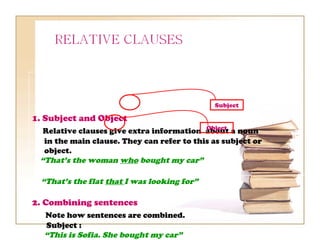
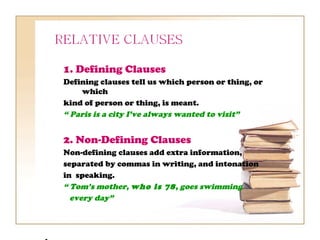
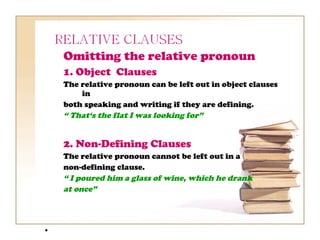
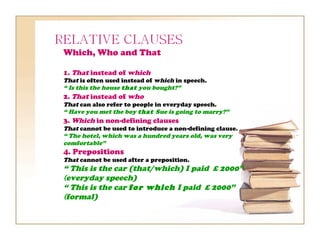
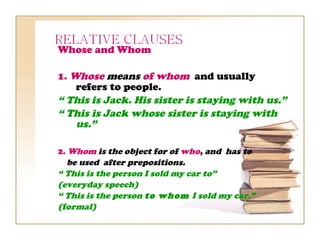
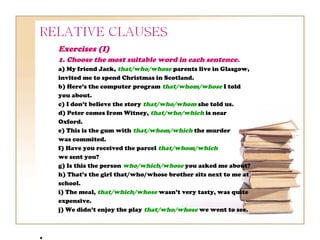
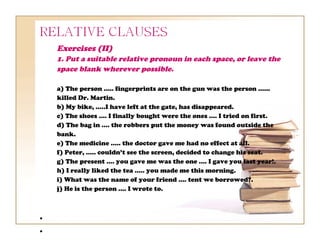

1. Relative clauses add extra information about a noun in the main clause by referring back to that noun as either the subject or object of the relative clause. 2. Relative clauses can be either defining or non-defining. Defining clauses provide essential information about the noun, while non-defining clauses add extra, non-essential information separated by commas. 3. Relative pronouns like who, which, that, whose, and whom are used in relative clauses depending on whether the clause is defining or non-defining, and whether the pronoun refers to a person or thing.


