REPORTED SPEECH
   Miguel Ángel Rodríguez López
DEFINITION
Reported speech (also known as indirect
speech) refers to a sentence reporting what
someone has said. When we use reported
speech, we are usually talking about the past
(because obviously the person who spoke
originally spoke in the past). The verbs
therefore usually have to be in the past too.
   "I'm going to the cinema".
   He said he was going to the cinema.
RULES
In all sentences, the quotation marks
and the comma immediately before the
first quotation mark are removed. Next,
the word "that" is usually inserted after
the reporting verb. Then, there are
certain changes to be considered.
    She said, “I work very hard."
    She said she worked very hard.
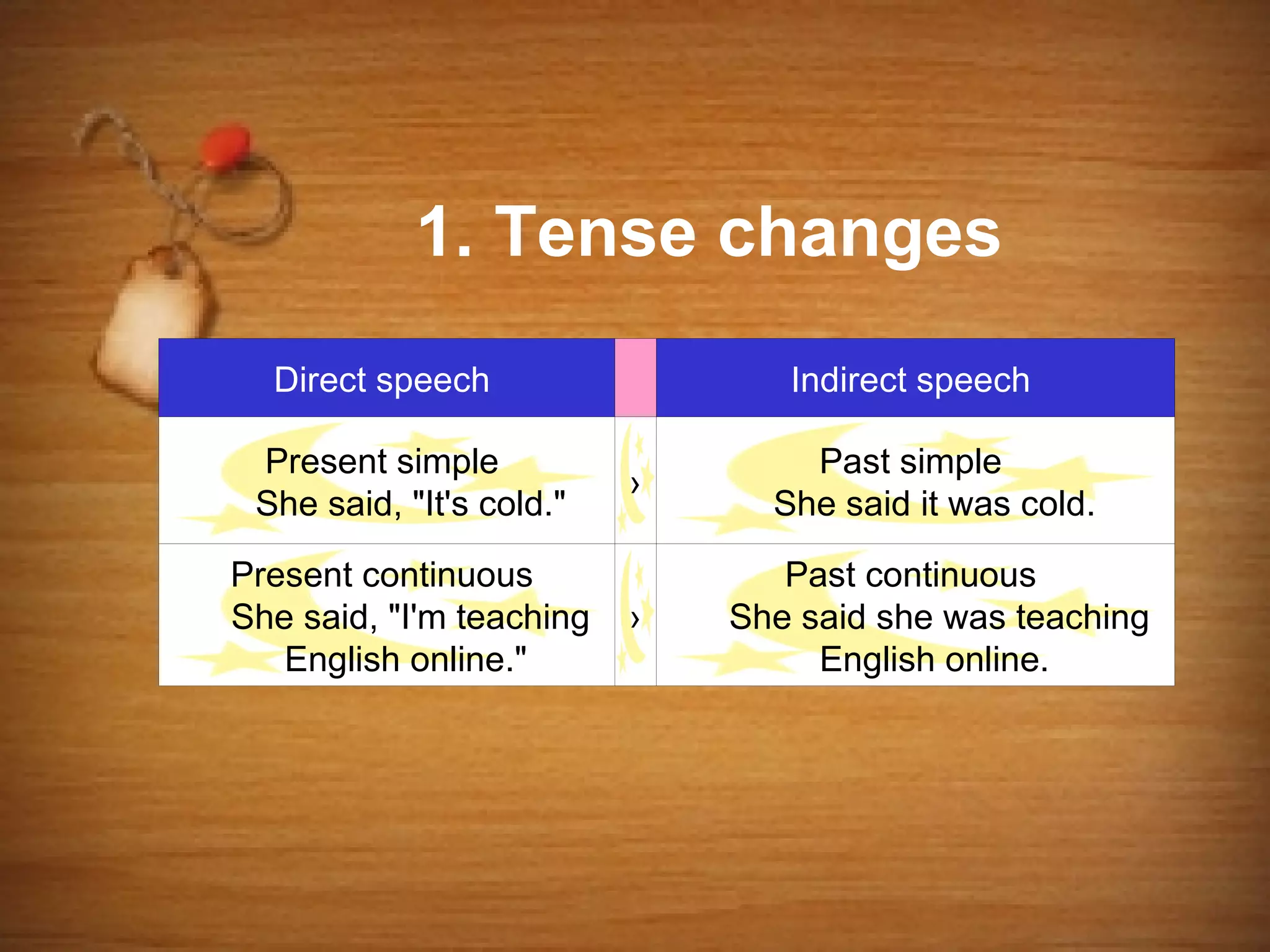
1. Tense changes
  Direct speech                  Indirect speech

 Present simple                   Past simple
                          ›
 She said, "It's cold."         She said it was cold.

Present continuous               Past continuous
She said, "I'm teaching   ›   She said she was teaching
   English online."                English online.
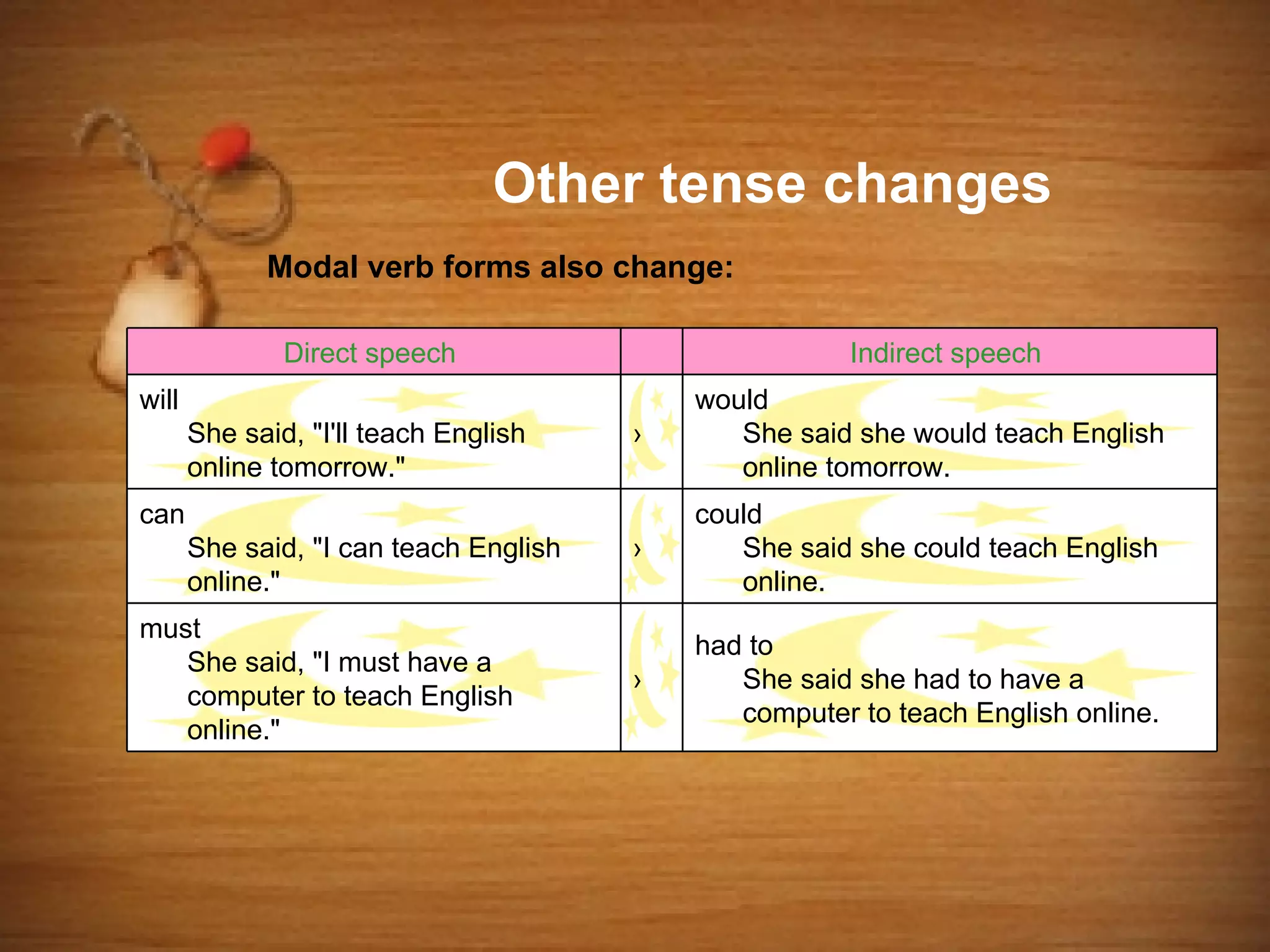
Other tense changes
             Modal verb forms also change:

               Direct speech                            Indirect speech
will                                        would
       She said, "I'll teach English    ›      She said she would teach English
       online tomorrow."                       online tomorrow.
can                                         could
       She said, "I can teach English   ›      She said she could teach English
       online."                                online.
must
                                            had to
   She said, "I must have a
                                        ›      She said she had to have a
   computer to teach English
                                               computer to teach English online.
   online."
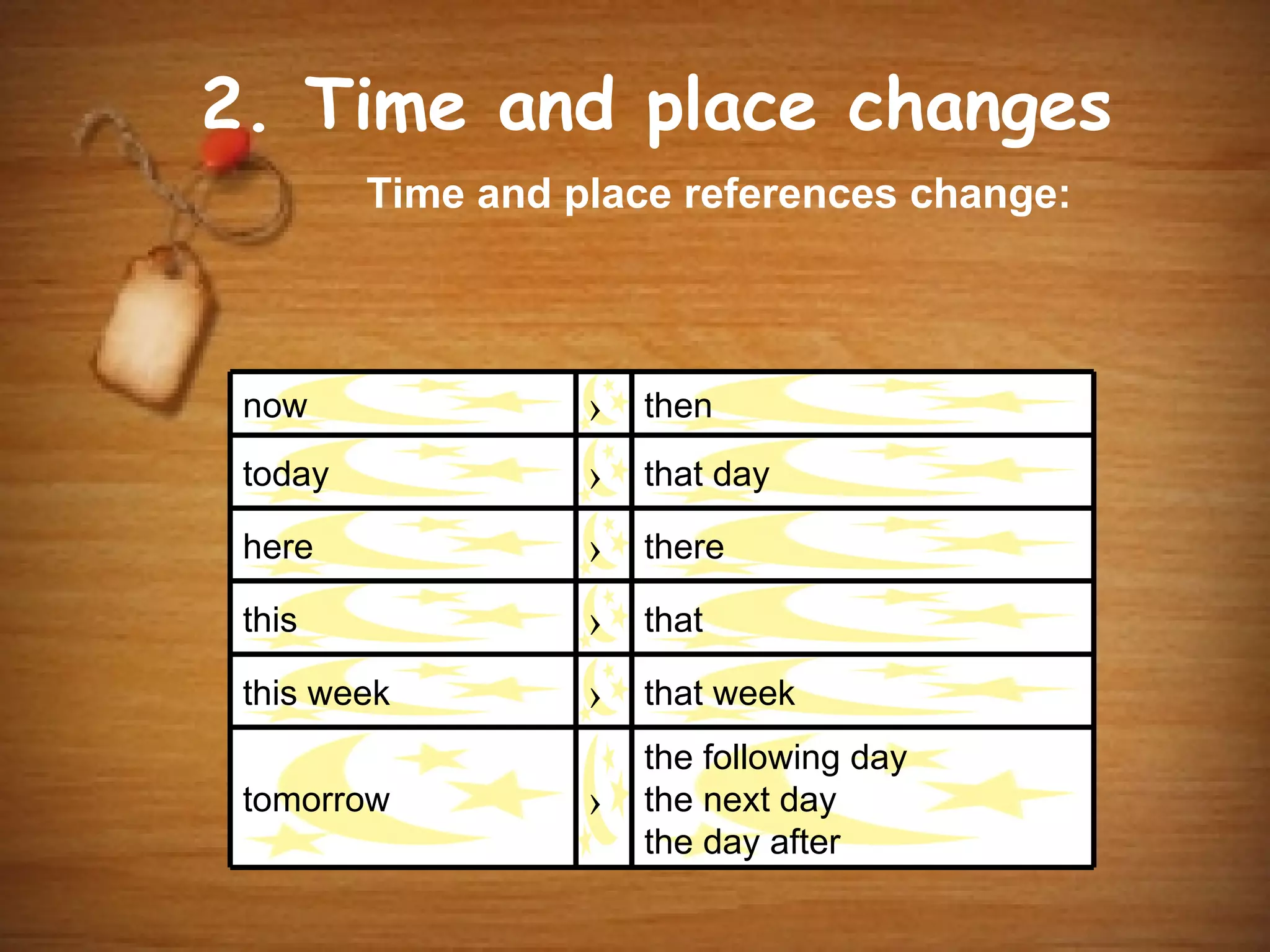
2. Time and place changes
         Time and place references change:


 now               › then
 today             › that day
 here              › there
 this              › that
 this week         › that week
                       the following day
 tomorrow          ›   the next day
                       the day after
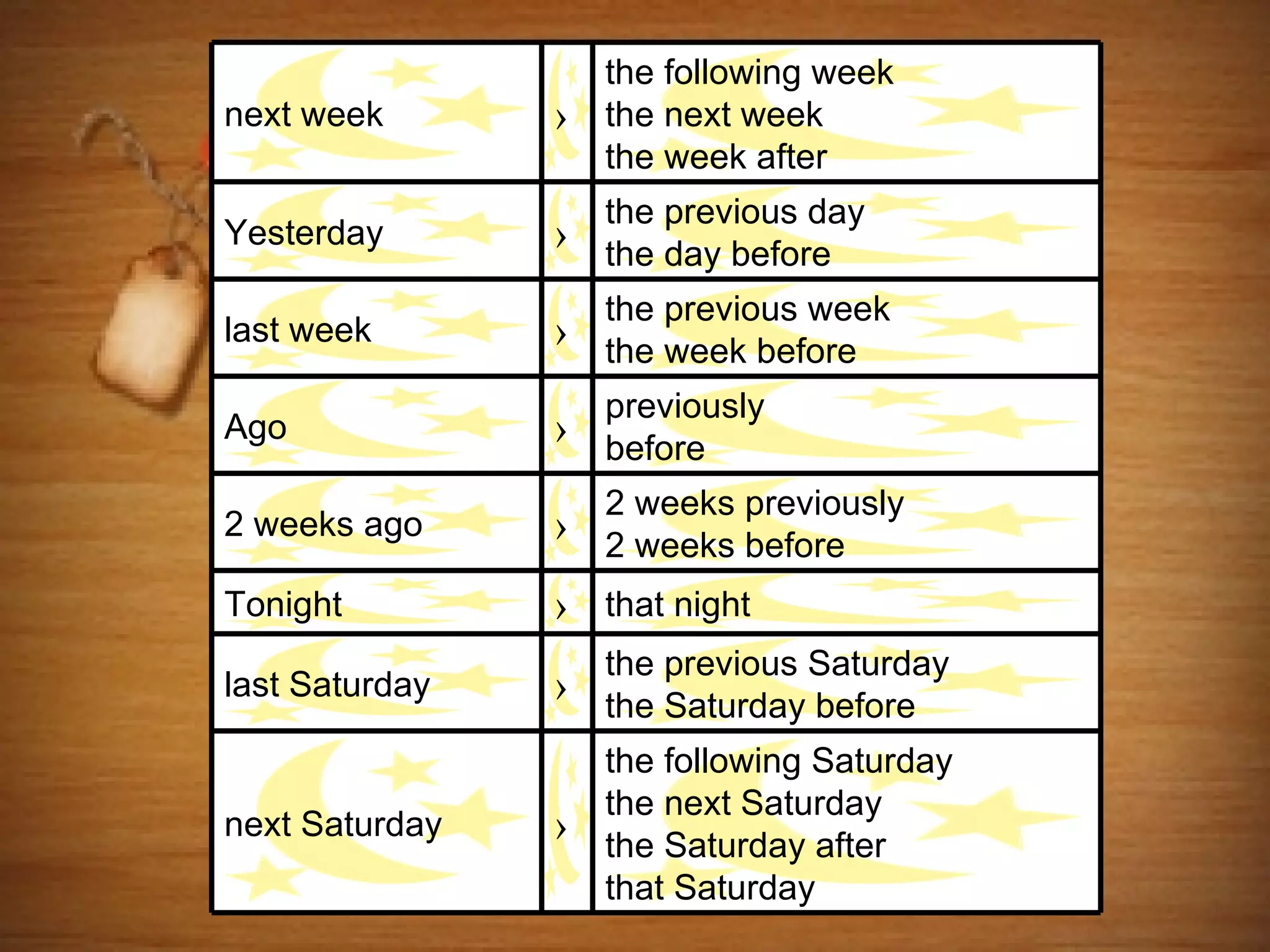
the following week
next week       ›   the next week
                    the week after
                    the previous day
Yesterday       ›   the day before
                    the previous week
last week       › the week before
                    previously
Ago             › before
                    2 weeks previously
2 weeks ago     › 2 weeks before
Tonight         › that night
                    the previous Saturday
last Saturday   ›   the Saturday before
                    the following Saturday
                    the next Saturday
next Saturday   ›   the Saturday after
                    that Saturday
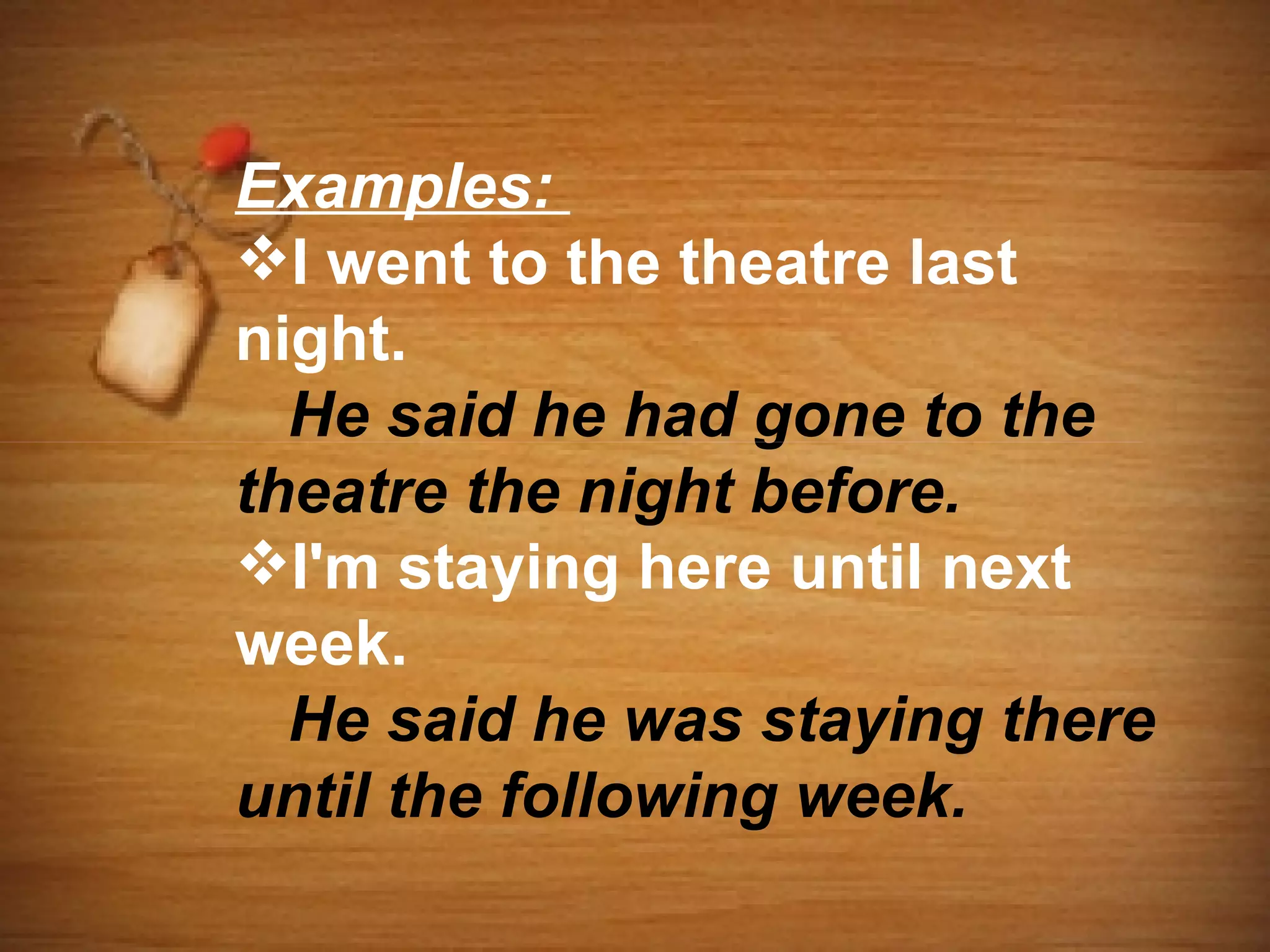
Examples:
I went to the theatre last
night.
  He said he had gone to the
theatre the night before.
I'm staying here until next
week.
  He said he was staying there
until the following week.
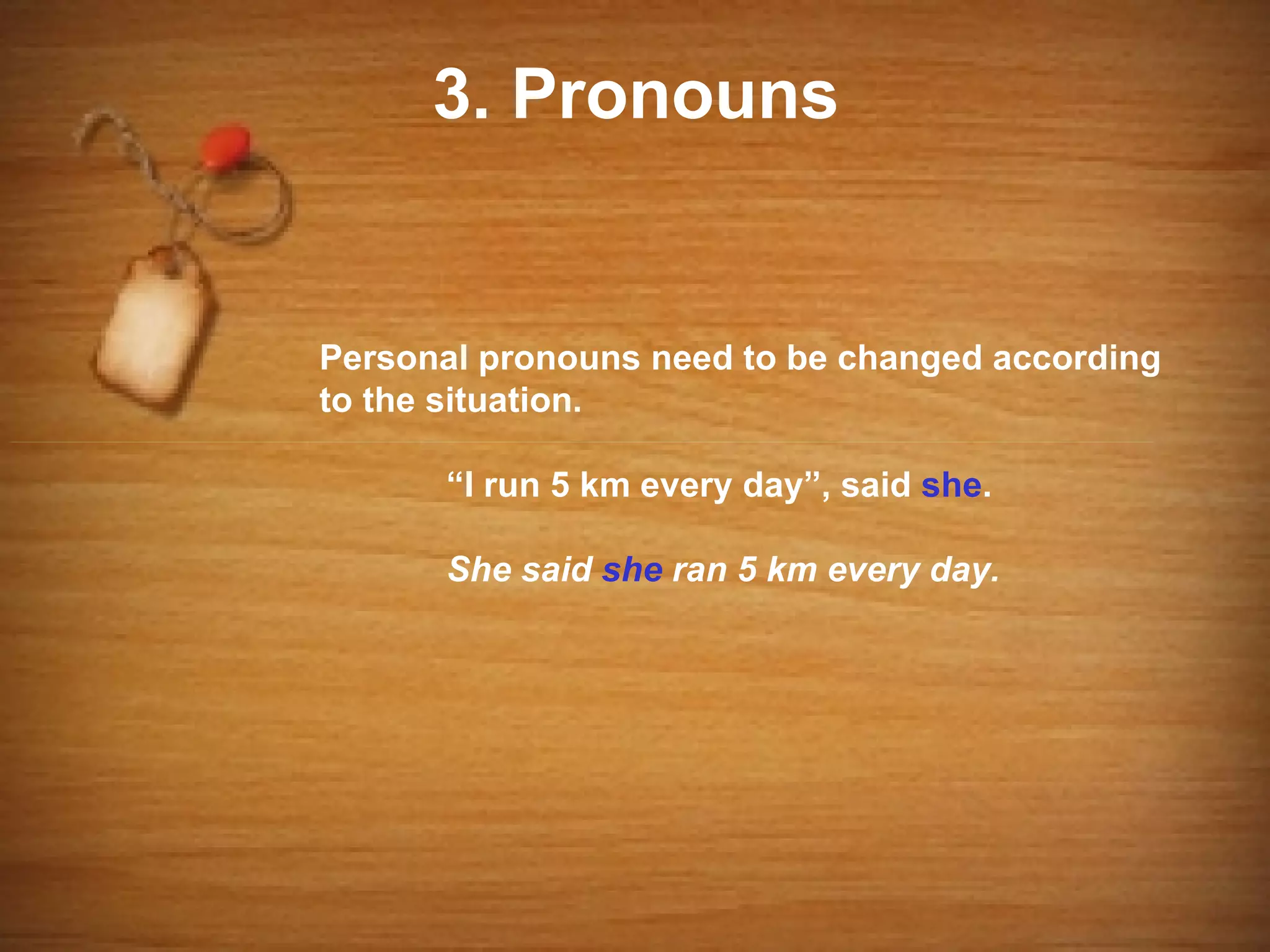
3. Pronouns


Personal pronouns need to be changed according
to the situation.

      “I run 5 km every day”, said she.

      She said she ran 5 km every day.
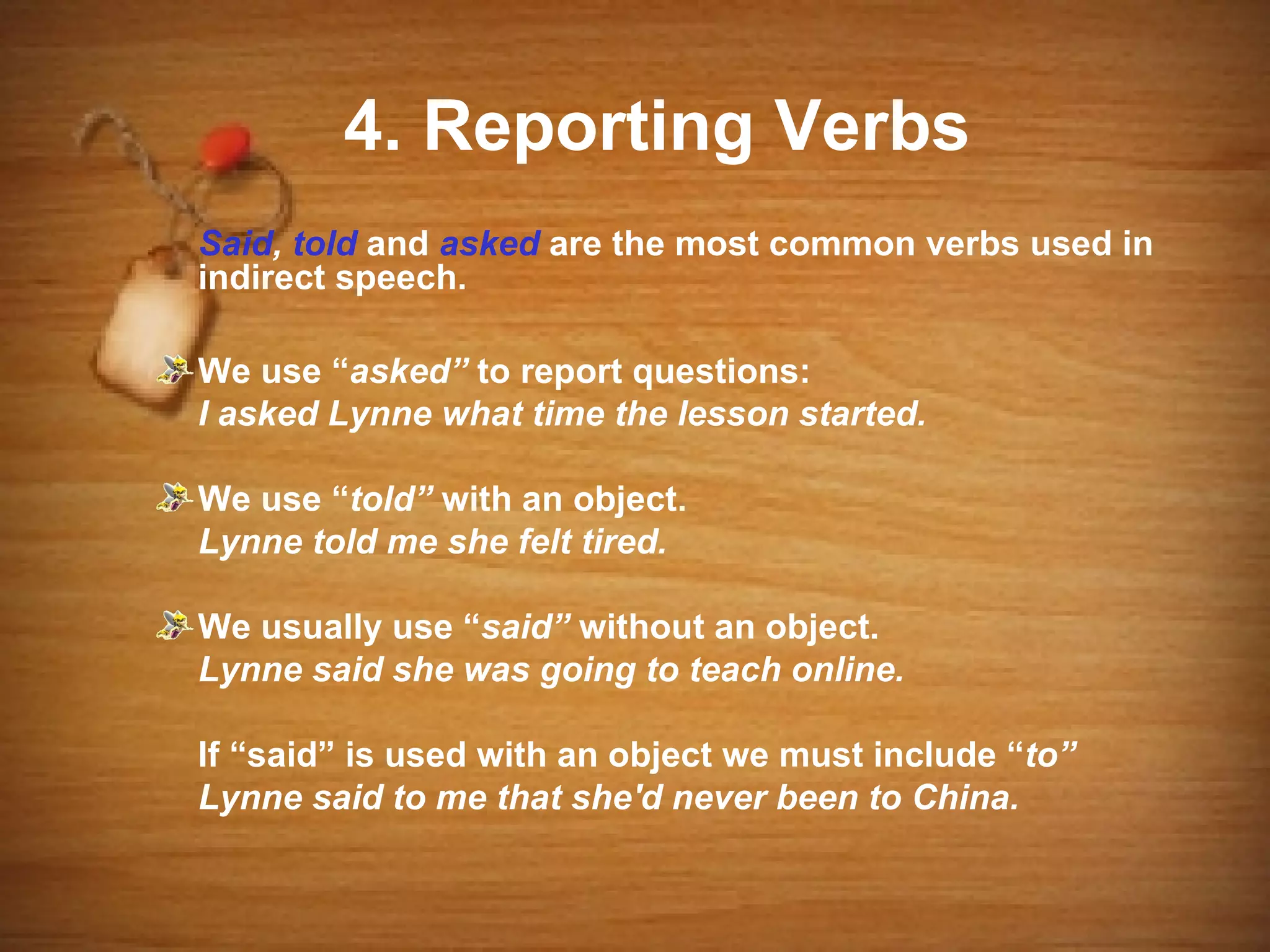
4. Reporting Verbs
Said, told and asked are the most common verbs used in
indirect speech.

We use “asked” to report questions:
I asked Lynne what time the lesson started.

We use “told” with an object.
Lynne told me she felt tired.

We usually use “said” without an object.
Lynne said she was going to teach online.

If “said” is used with an object we must include “to”
Lynne said to me that she'd never been to China.
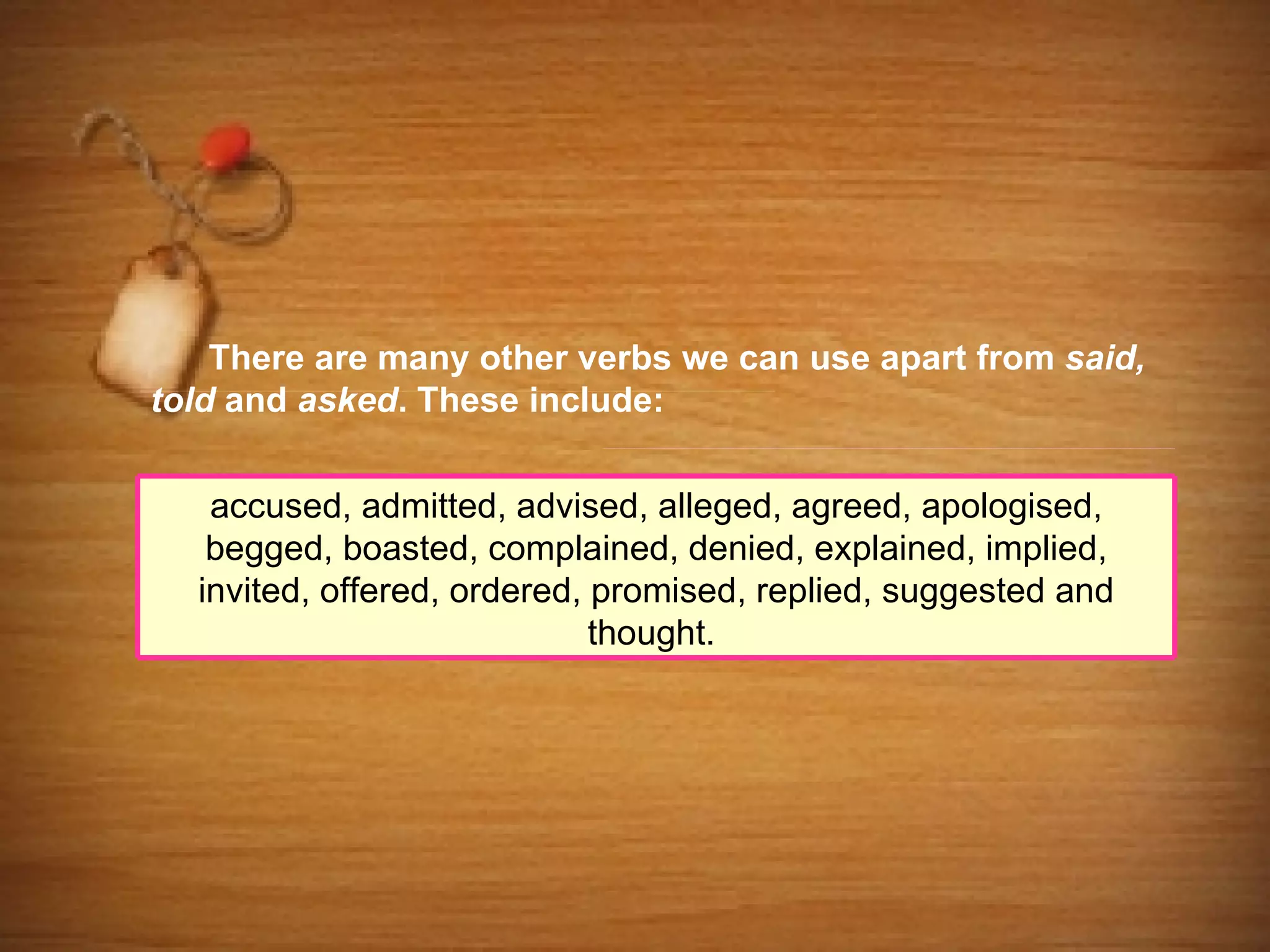
There are many other verbs we can use apart from said,
told and asked. These include:


   accused, admitted, advised, alleged, agreed, apologised,
   begged, boasted, complained, denied, explained, implied,
  invited, offered, ordered, promised, replied, suggested and
                             thought.
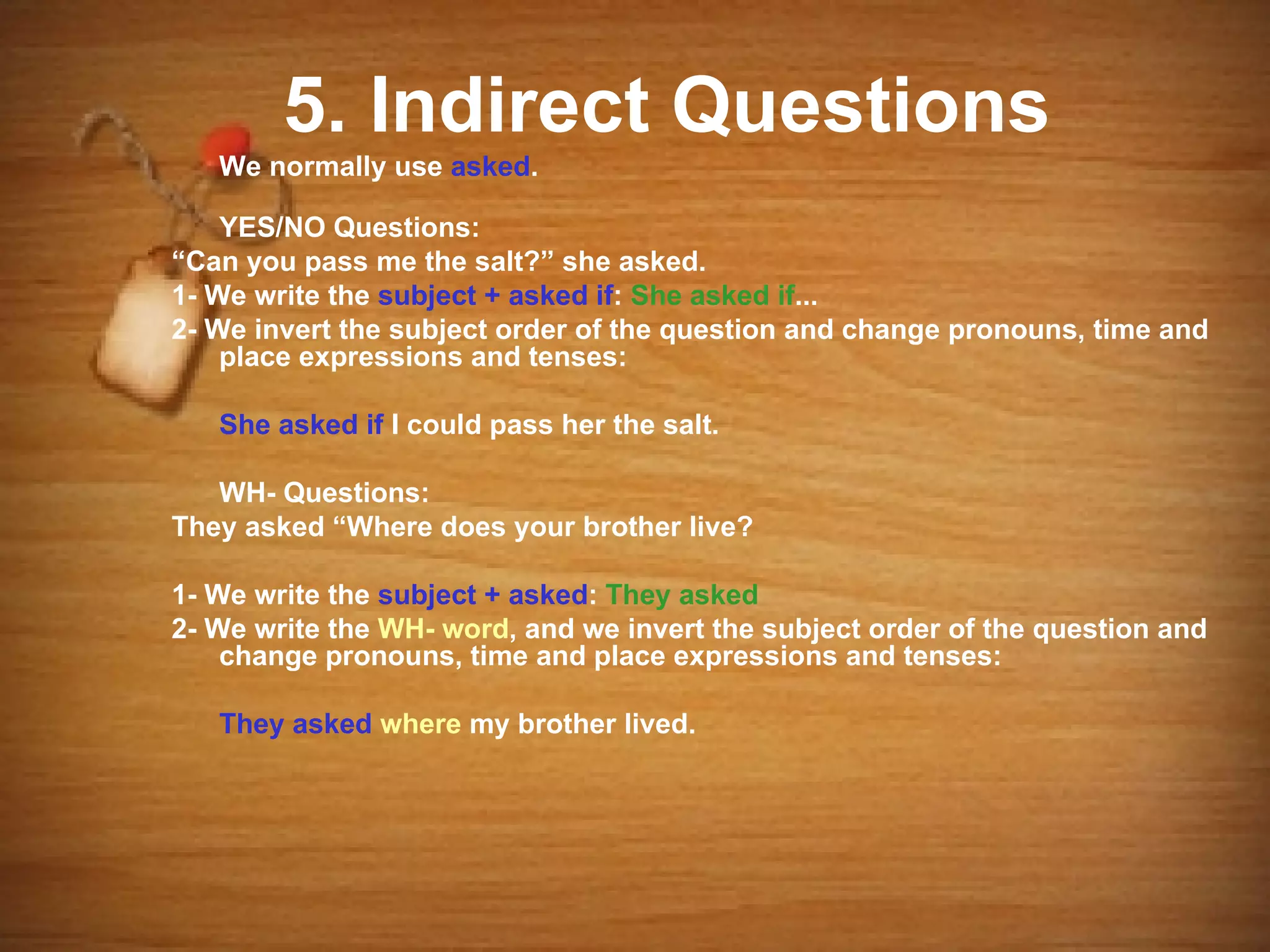
5. Indirect Questions
   We normally use asked.

    YES/NO Questions:
“Can you pass me the salt?” she asked.
1- We write the subject + asked if: She asked if...
2- We invert the subject order of the question and change pronouns, time and
    place expressions and tenses:

   She asked if I could pass her the salt.

   WH- Questions:
They asked “Where does your brother live?

1- We write the subject + asked: They asked
2- We write the WH- word, and we invert the subject order of the question and
    change pronouns, time and place expressions and tenses:

   They asked where my brother lived.

Reported Speech 4 ESO

  • 1.
    REPORTED SPEECH Miguel Ángel Rodríguez López
  • 2.
    DEFINITION Reported speech (alsoknown as indirect speech) refers to a sentence reporting what someone has said. When we use reported speech, we are usually talking about the past (because obviously the person who spoke originally spoke in the past). The verbs therefore usually have to be in the past too. "I'm going to the cinema". He said he was going to the cinema.
  • 3.
    RULES In all sentences,the quotation marks and the comma immediately before the first quotation mark are removed. Next, the word "that" is usually inserted after the reporting verb. Then, there are certain changes to be considered. She said, “I work very hard." She said she worked very hard.
  • 4.
    1. Tense changes Direct speech Indirect speech Present simple Past simple › She said, "It's cold." She said it was cold. Present continuous Past continuous She said, "I'm teaching › She said she was teaching English online." English online.
  • 5.
    Other tense changes Modal verb forms also change: Direct speech Indirect speech will would She said, "I'll teach English › She said she would teach English online tomorrow." online tomorrow. can could She said, "I can teach English › She said she could teach English online." online. must had to She said, "I must have a › She said she had to have a computer to teach English computer to teach English online. online."
  • 6.
    2. Time andplace changes Time and place references change: now › then today › that day here › there this › that this week › that week the following day tomorrow › the next day the day after
  • 7.
    the following week nextweek › the next week the week after the previous day Yesterday › the day before the previous week last week › the week before previously Ago › before 2 weeks previously 2 weeks ago › 2 weeks before Tonight › that night the previous Saturday last Saturday › the Saturday before the following Saturday the next Saturday next Saturday › the Saturday after that Saturday
  • 8.
    Examples: I went tothe theatre last night. He said he had gone to the theatre the night before. I'm staying here until next week. He said he was staying there until the following week.
  • 9.
    3. Pronouns Personal pronounsneed to be changed according to the situation. “I run 5 km every day”, said she. She said she ran 5 km every day.
  • 10.
    4. Reporting Verbs Said,told and asked are the most common verbs used in indirect speech. We use “asked” to report questions: I asked Lynne what time the lesson started. We use “told” with an object. Lynne told me she felt tired. We usually use “said” without an object. Lynne said she was going to teach online. If “said” is used with an object we must include “to” Lynne said to me that she'd never been to China.
  • 11.
    There are manyother verbs we can use apart from said, told and asked. These include: accused, admitted, advised, alleged, agreed, apologised, begged, boasted, complained, denied, explained, implied, invited, offered, ordered, promised, replied, suggested and thought.
  • 12.
    5. Indirect Questions We normally use asked. YES/NO Questions: “Can you pass me the salt?” she asked. 1- We write the subject + asked if: She asked if... 2- We invert the subject order of the question and change pronouns, time and place expressions and tenses: She asked if I could pass her the salt. WH- Questions: They asked “Where does your brother live? 1- We write the subject + asked: They asked 2- We write the WH- word, and we invert the subject order of the question and change pronouns, time and place expressions and tenses: They asked where my brother lived.