
Relapse Prevention


By: Ahmed Albehairy, M.D
Consultant Psychiatry
Relapse Prevention
-Maintenance   stage of the change process.
-Recovery .
-Relapse & lapse.

-Relapse precipitants.

-Relapse prevention process.
Recovery:

Recovery =
 Abstinence
   +


 Change of Intra & Interpersonal fields
   +

Time.
Recovery:
Recovery is affected by:
- Damage of the substance.

- Co-morbid psychiatric disorders.

- Individual perceptions.

- Motivation.

- Support system.

- Culture background.
Recovery:
Types :

-   Full recovery.


-   Partial recovery .
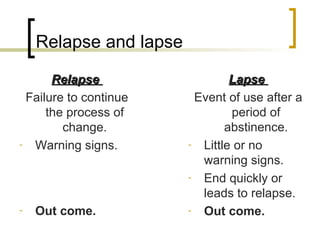
Relapse and lapse

      Relapse                   Lapse
 Failure to continue     Event of use after a
     the process of             period of
        change.                abstinence.
- Warning signs.        - Little or no
                          warning signs.
                        - End quickly or
                          leads to relapse.
-   Out come.           - Out come.
Relapse Precipitants

I- intrapersonal determinants.

II- interpersonal determinants.

III- other important aspects.
Relapse Precipitants
I- intrapersonal determinants.

-   Negative emotional state .
-   Physical state.
-   Positive emotional state.
-   Testing of personal control.
-   Usage and temptation.
Relapse Precipitants
II- interpersonal determinants.

-   Relational conflicts.
-   Social pressure to use substance.
-   Positive emotional state associated
    with others.
-   Lack of social or family stability.
-   Lack of production in work or leisure
    time.
Relapse Precipitants
III- other important aspects.

-   Degree of improvement caused by
    drug use.
-   Psychiatric impairments.
-   Length and modality of treatment.
-   Involvement in a crime.
-   Family and peer support.
-   Skills deficit, coping skills, social skills,
    impulsivity.
Relapse Precipitants
III- other important aspects( cont.)

- Cognitive variables( attitude towards
  recovery, self perception of ability to cope
  with high risk situations, level of cognitive
  functions).
- Craving and withdrawal sx.
- Spiritual variables ( shame ,sense of guilt,
  sense of emptiness)
- Negative attitude of the care giver.
- Inadequate after care.
Relapse Prevention Management:

1- help the patient to identify his high risk relapse
   function and develop to deal with team.

2- help the patient to understand the relapse as a
   process and as an events.

3- help the patient to understand and deal with alc.
   or drug ‘s cues as well as craving.
Relapse Prevention Management

4- help the patient to understand and deal with
  social pressure to use.
5- help the patient to develop and enhance a
   supportive network.
6- help the patient in dealing with precipitant
   factors.
7- role of medical treatment.????
Community Based Treatment:


- Definitions and conceptualizations.
   Community action programmes
   ( 1ry,2ry,3ry prevention, NGOs,
   Government).
Community Based Treatment:
Community Care:
- Process, Pathways.????
- Family.
- Stake holders.
- Patients, high risk populations.
- Ex- addict.
- Cooperation with authority ( police, court,
  legislations).
- Medications.
‫شكرا علي حسن‬

Relapse prevention

  • 1.
    Relapse Prevention By: AhmedAlbehairy, M.D Consultant Psychiatry
  • 2.
    Relapse Prevention -Maintenance stage of the change process. -Recovery . -Relapse & lapse. -Relapse precipitants. -Relapse prevention process.
  • 3.
    Recovery: Recovery = Abstinence + Change of Intra & Interpersonal fields + Time.
  • 4.
    Recovery: Recovery is affectedby: - Damage of the substance. - Co-morbid psychiatric disorders. - Individual perceptions. - Motivation. - Support system. - Culture background.
  • 5.
    Recovery: Types : - Full recovery. - Partial recovery .
  • 6.
    Relapse and lapse Relapse Lapse Failure to continue Event of use after a the process of period of change. abstinence. - Warning signs. - Little or no warning signs. - End quickly or leads to relapse. - Out come. - Out come.
  • 7.
    Relapse Precipitants I- intrapersonaldeterminants. II- interpersonal determinants. III- other important aspects.
  • 8.
    Relapse Precipitants I- intrapersonaldeterminants. - Negative emotional state . - Physical state. - Positive emotional state. - Testing of personal control. - Usage and temptation.
  • 9.
    Relapse Precipitants II- interpersonaldeterminants. - Relational conflicts. - Social pressure to use substance. - Positive emotional state associated with others. - Lack of social or family stability. - Lack of production in work or leisure time.
  • 10.
    Relapse Precipitants III- otherimportant aspects. - Degree of improvement caused by drug use. - Psychiatric impairments. - Length and modality of treatment. - Involvement in a crime. - Family and peer support. - Skills deficit, coping skills, social skills, impulsivity.
  • 11.
    Relapse Precipitants III- otherimportant aspects( cont.) - Cognitive variables( attitude towards recovery, self perception of ability to cope with high risk situations, level of cognitive functions). - Craving and withdrawal sx. - Spiritual variables ( shame ,sense of guilt, sense of emptiness) - Negative attitude of the care giver. - Inadequate after care.
  • 12.
    Relapse Prevention Management: 1-help the patient to identify his high risk relapse function and develop to deal with team. 2- help the patient to understand the relapse as a process and as an events. 3- help the patient to understand and deal with alc. or drug ‘s cues as well as craving.
  • 13.
    Relapse Prevention Management 4-help the patient to understand and deal with social pressure to use. 5- help the patient to develop and enhance a supportive network. 6- help the patient in dealing with precipitant factors. 7- role of medical treatment.????
  • 14.
    Community Based Treatment: -Definitions and conceptualizations. Community action programmes ( 1ry,2ry,3ry prevention, NGOs, Government).
  • 15.
    Community Based Treatment: CommunityCare: - Process, Pathways.???? - Family. - Stake holders. - Patients, high risk populations. - Ex- addict. - Cooperation with authority ( police, court, legislations). - Medications.
  • 16.