PRESENTED BY
AMIR NAZIR PARAY
MOHIT SHARMA
MADHUR MANGAL
REINFORCED EARTH WALLS
Objective:
Our objective is to do a brief study on
reinforced earth walls and its components and
we are studying about the replacement of soil as
a backfill by fly Ash and steel reinforcement by
Geogrids
To explain in brief about the construction
methodology of Reinforced Earth Wall.
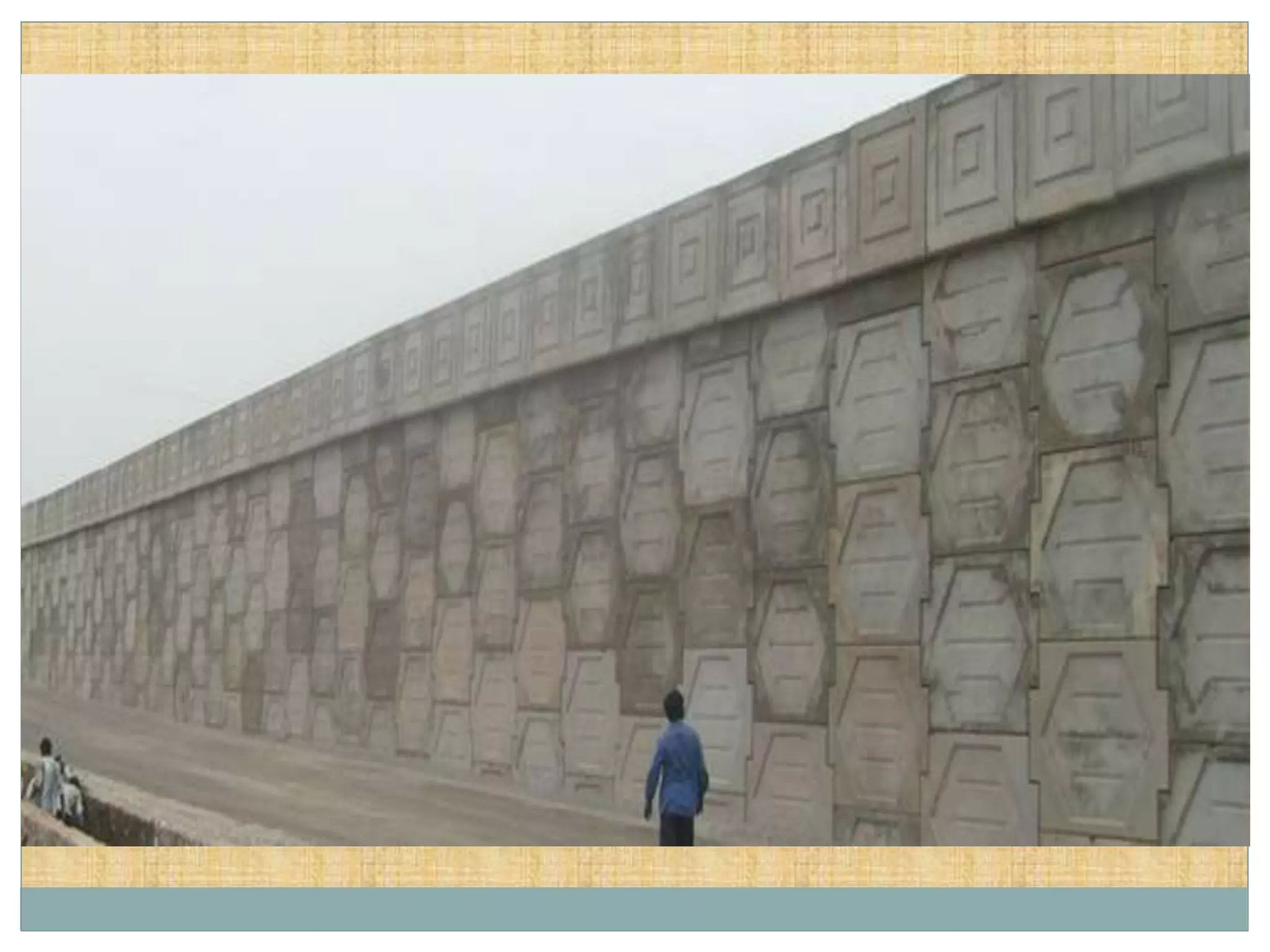
Reinforced earth wall is a combination of earth and linear
reinforcing strips that are capable of bearing large tensile
stresses.
Soil :- strong in compression.
Reinforcement:-strong in tension.
Ancient reinforcement:-tree branches , roots of vegetation , tree
trunks , straw , bamboo etc.,
Modern reinforcement:-Steel ,Geosynthetics, Concrete , Glass
fibre , Wood , Rubber , Aluminium.
What is a reinforced earth wall?
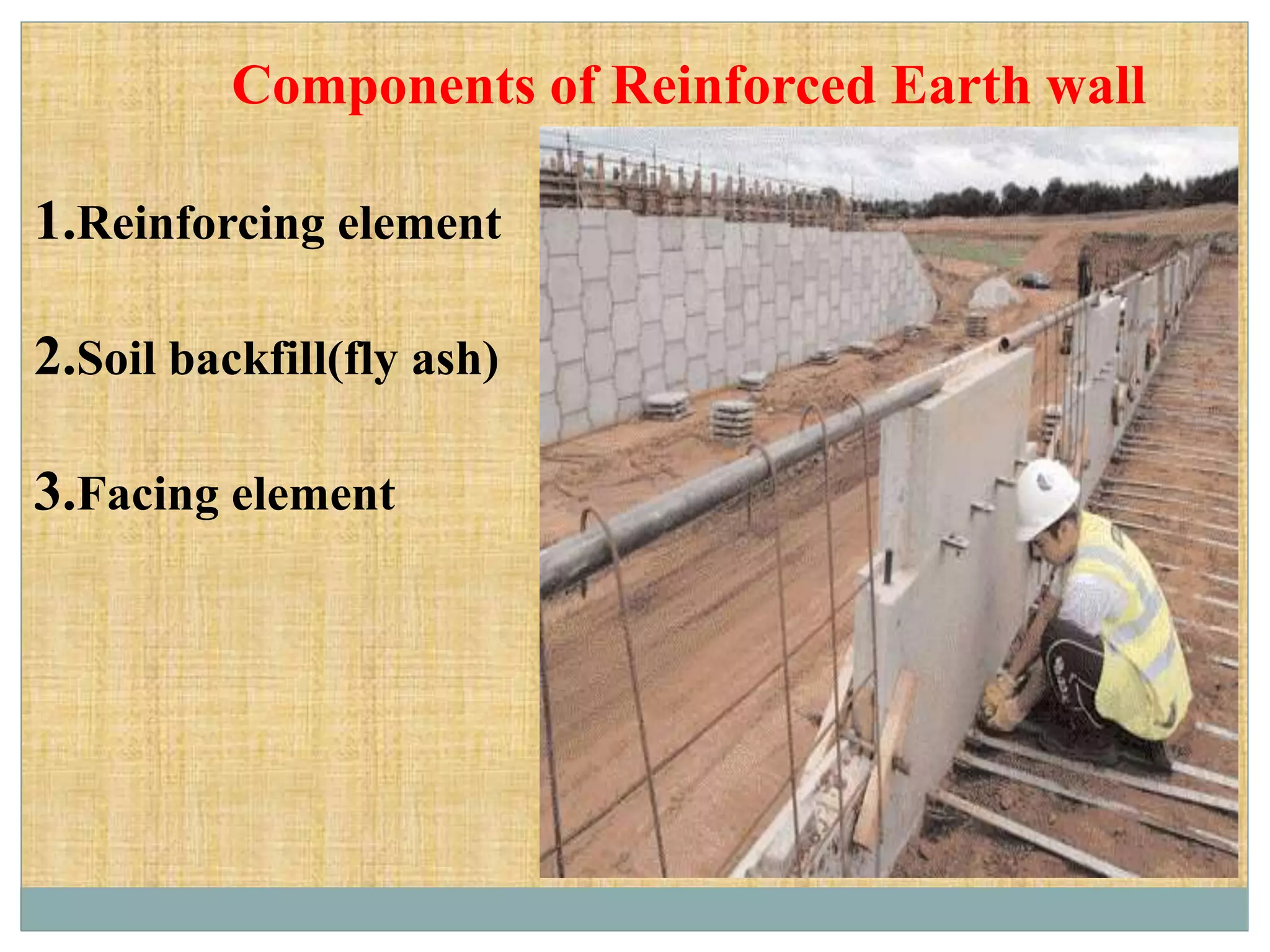
Components of Reinforced Earth wall
1.Reinforcing element
2.Soil backfill(fly ash)
3.Facing element
REINFORCEMENT:
 A Variety of materials can be used as reinforcing material.
Those that have been used successfully include steel,
concrete, glass fibre, wood, rubber, aluminium &
Geosynthetics.
 Reinforcement may take the form of strips, grids, anchors
and steel material, chain planks, ropes, vegetation and
combinations of these or other materials forms.
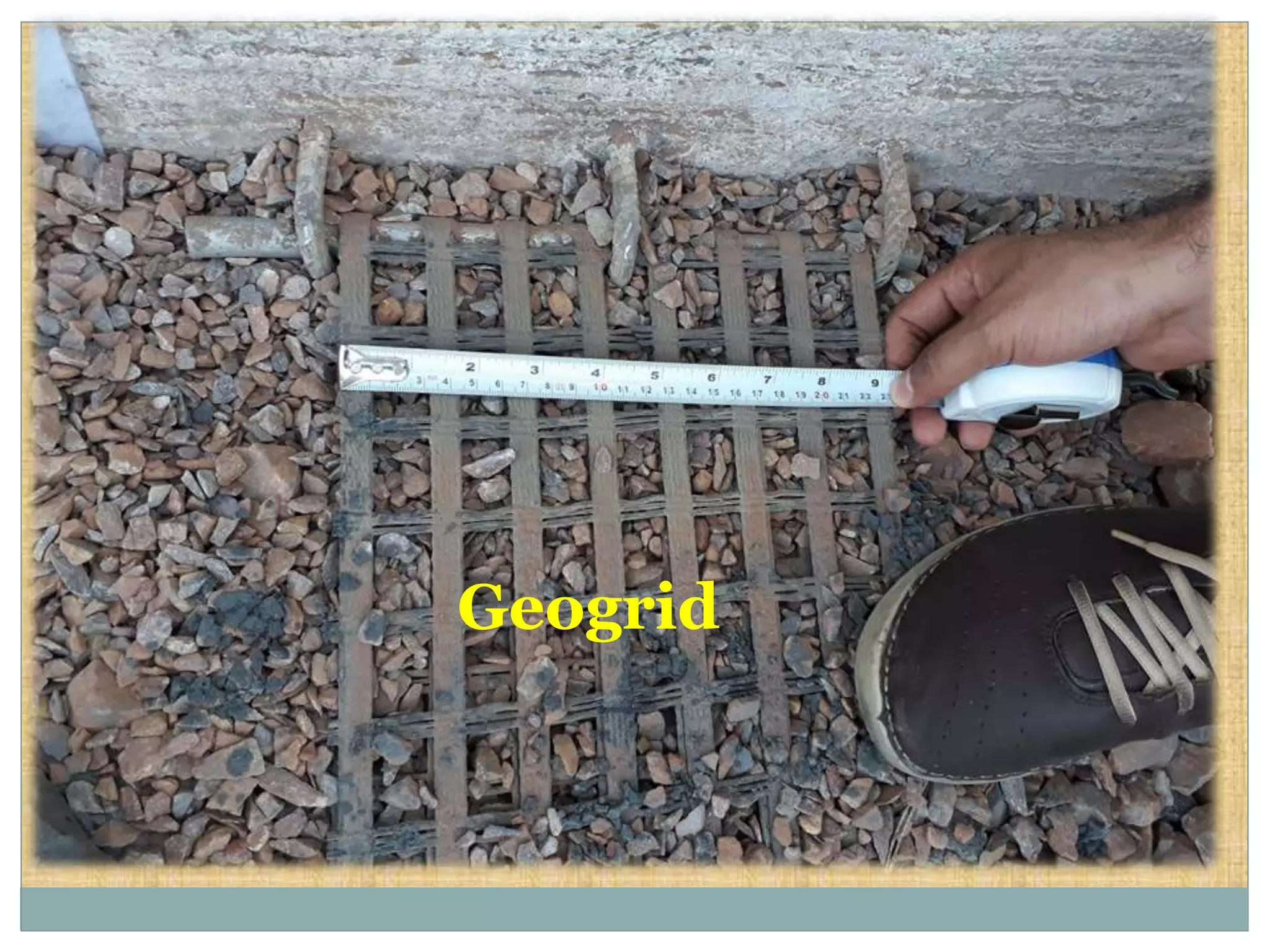
 We are using geogrids as reinforcement . These geogrids
should be flexible having high modulus of elasticity not
susceptible to creep
Geogrid
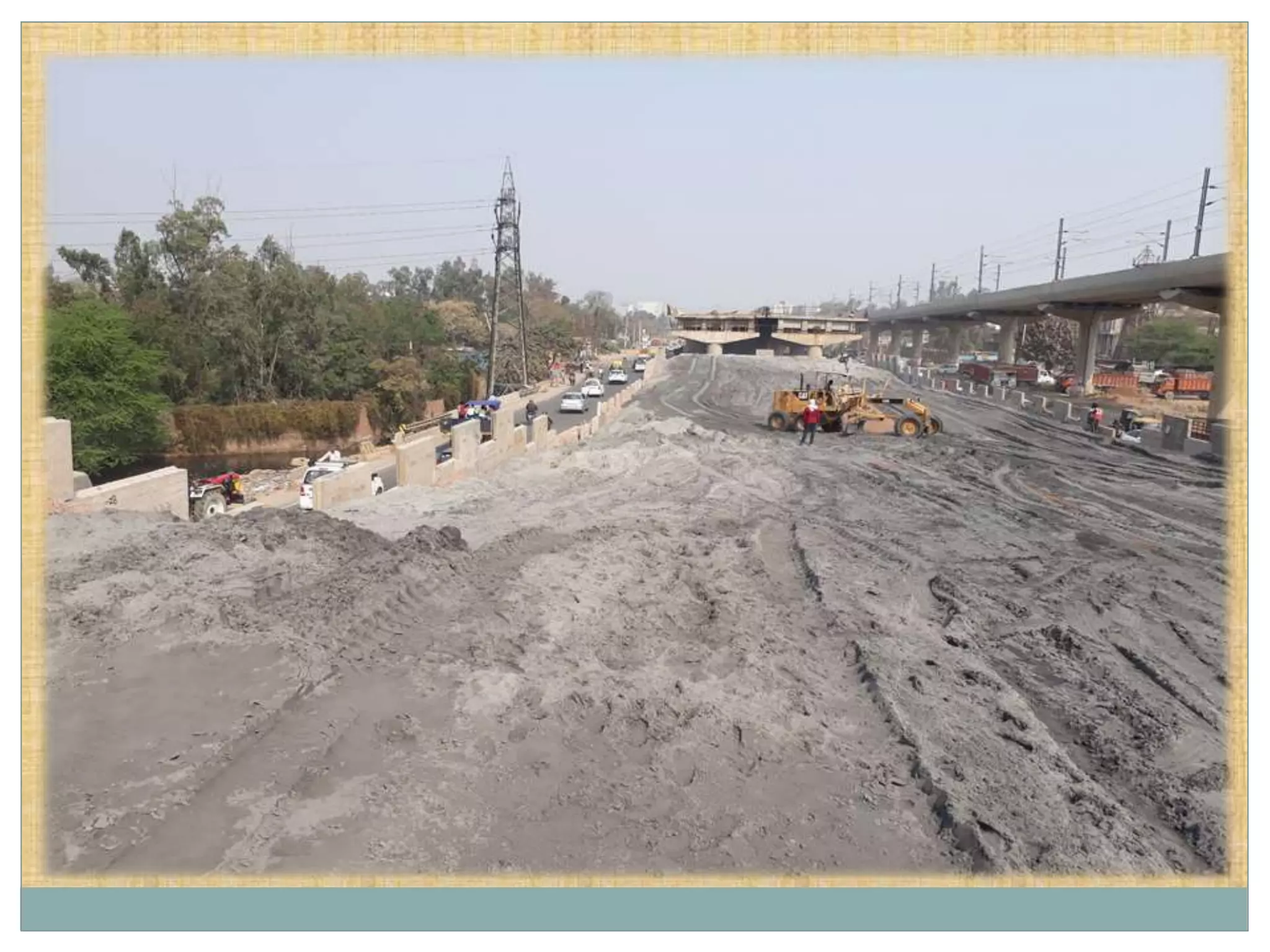
BACKFILL:
 The fill material for reinforced earth structures shall be
preferably cohesionless and it should have an angle of on
interface friction between the compacted fill and the
reinforcing element of not less then 30◦ measured in
accordance with IS 13326 part 1
 The soil should have properties such that the salts in the
soil should not react chemically and electrically with the
reinforcing strips
 Fly ash confirming to IRC:SP-58 Can be used as reinforced
as well as retained fill
 The quality of fly ash should be controlled through
periodical checks to ensure consistency and compliance to
specifications
FACING ELEMENTS:
Facings are selected to retain filled material,
prevent local slumping and corrosion of steeply
sloping faces , and to suit environmental
requirements
The facing is usually of ;
Reinforced concrete slabs
Plain cement concrete forum fill hollow block
(precast)
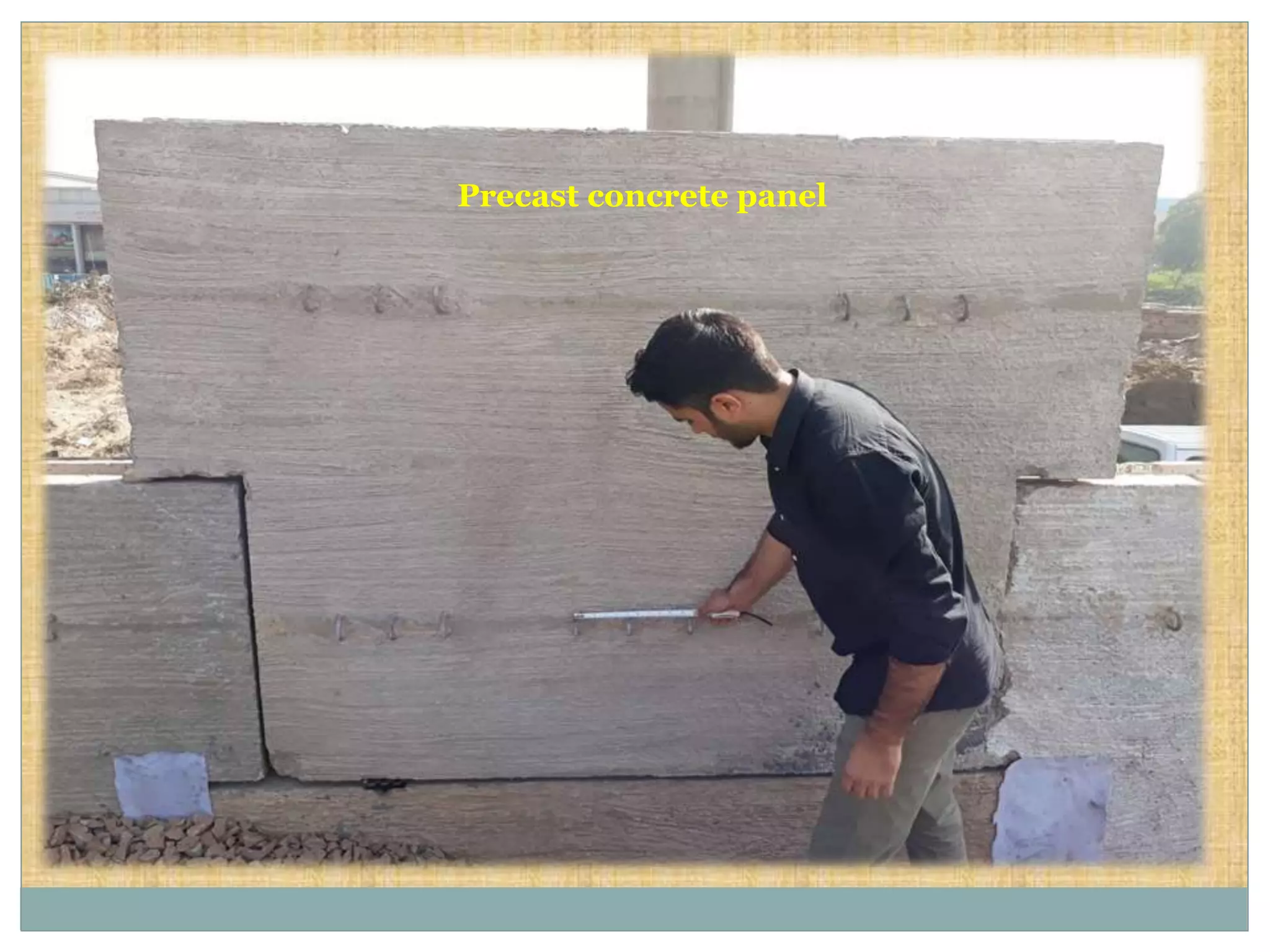
Precast concrete panel
DRAINAGE:
 If the embankment becomes waterlogged and pore water
pressures increases, the magnitude of the tensile forces
included in the grid reinforcement also increases pore water
pressures can be controlled by providing the drainage layers
at the back of the reinforced zones
 A drainage bay of 600mm min width is usually provided at
back of the facing is commonly used
DRINAGE BAY
JOINT MATERIALS :
Rubber or wooden bearing pads are used
for horizontal joints so that there is no
concrete to concrete contact between the
panels and to avoid the chipping of
concrete .
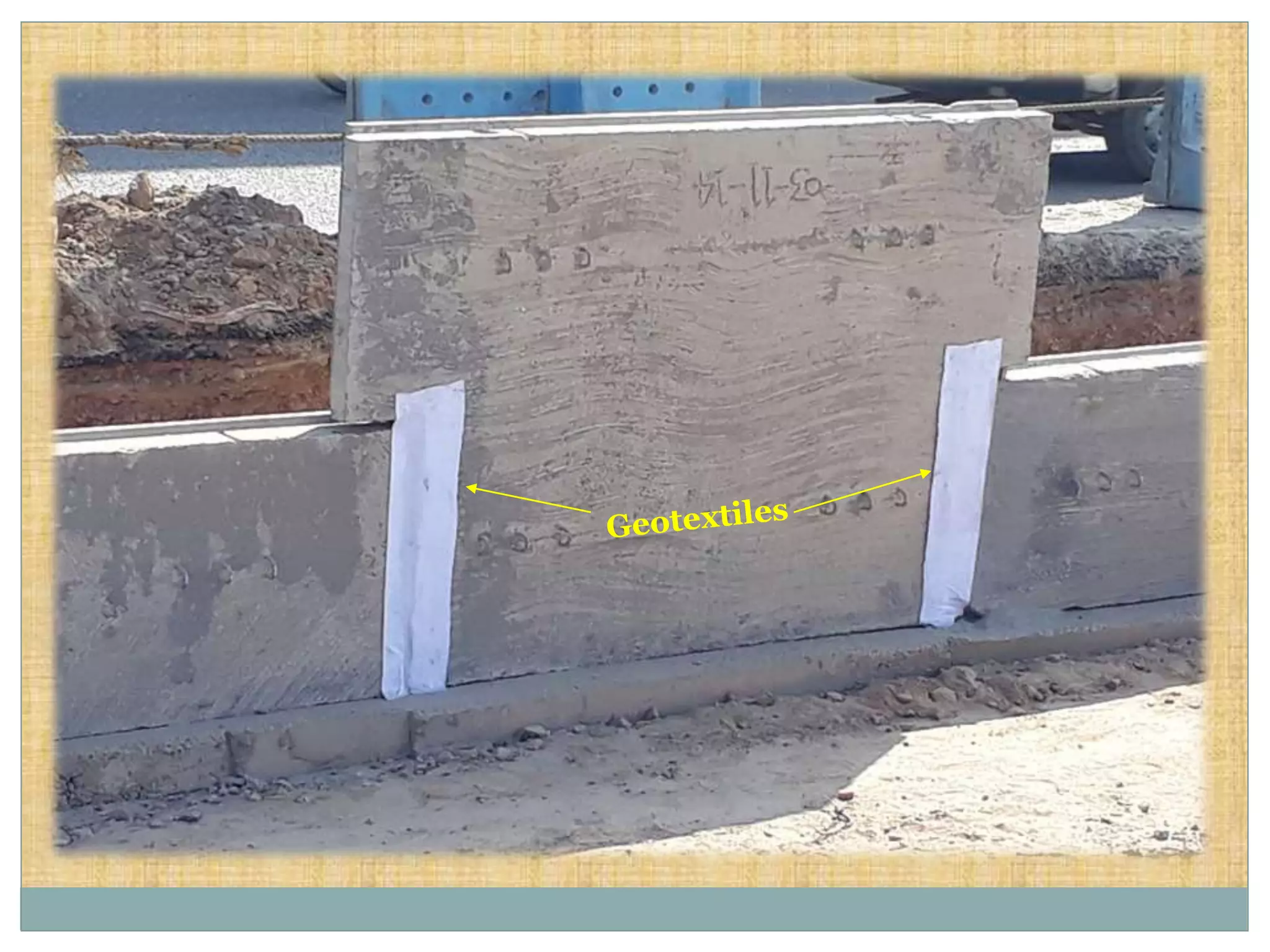
Filter cloth of geotextiles are used for
horizontal and vertical joints in the interior
side of the panels such that the interior fill
may not come out of the joints .
Rubber pad
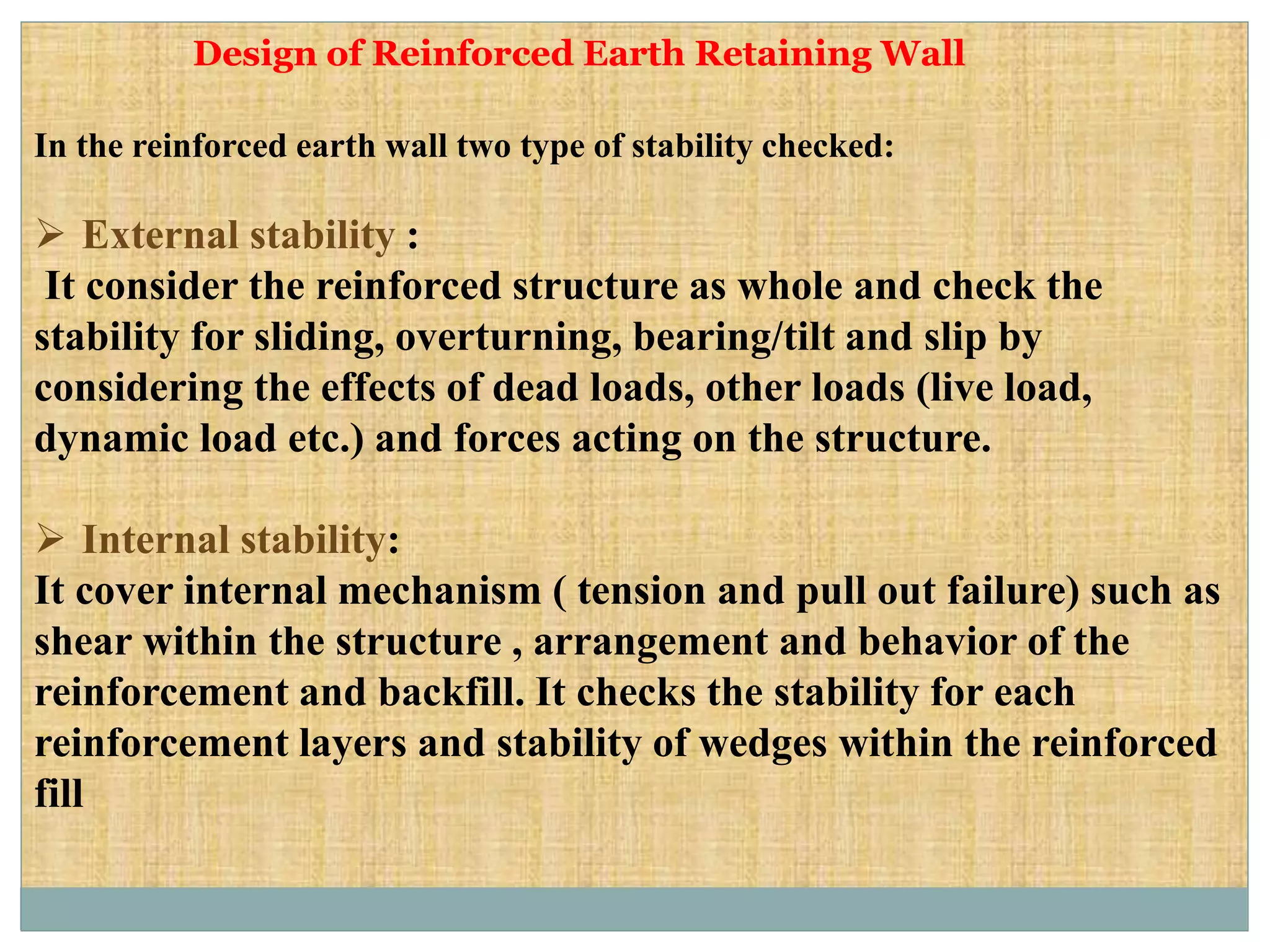
In the reinforced earth wall two type of stability checked:
 External stability :
It consider the reinforced structure as whole and check the
stability for sliding, overturning, bearing/tilt and slip by
considering the effects of dead loads, other loads (live load,
dynamic load etc.) and forces acting on the structure.
 Internal stability:
It cover internal mechanism ( tension and pull out failure) such as
shear within the structure , arrangement and behavior of the
reinforcement and backfill. It checks the stability for each
reinforcement layers and stability of wedges within the reinforced
fill
Design of Reinforced Earth Retaining Wall
WORK CARRIED OUT SO FAR:
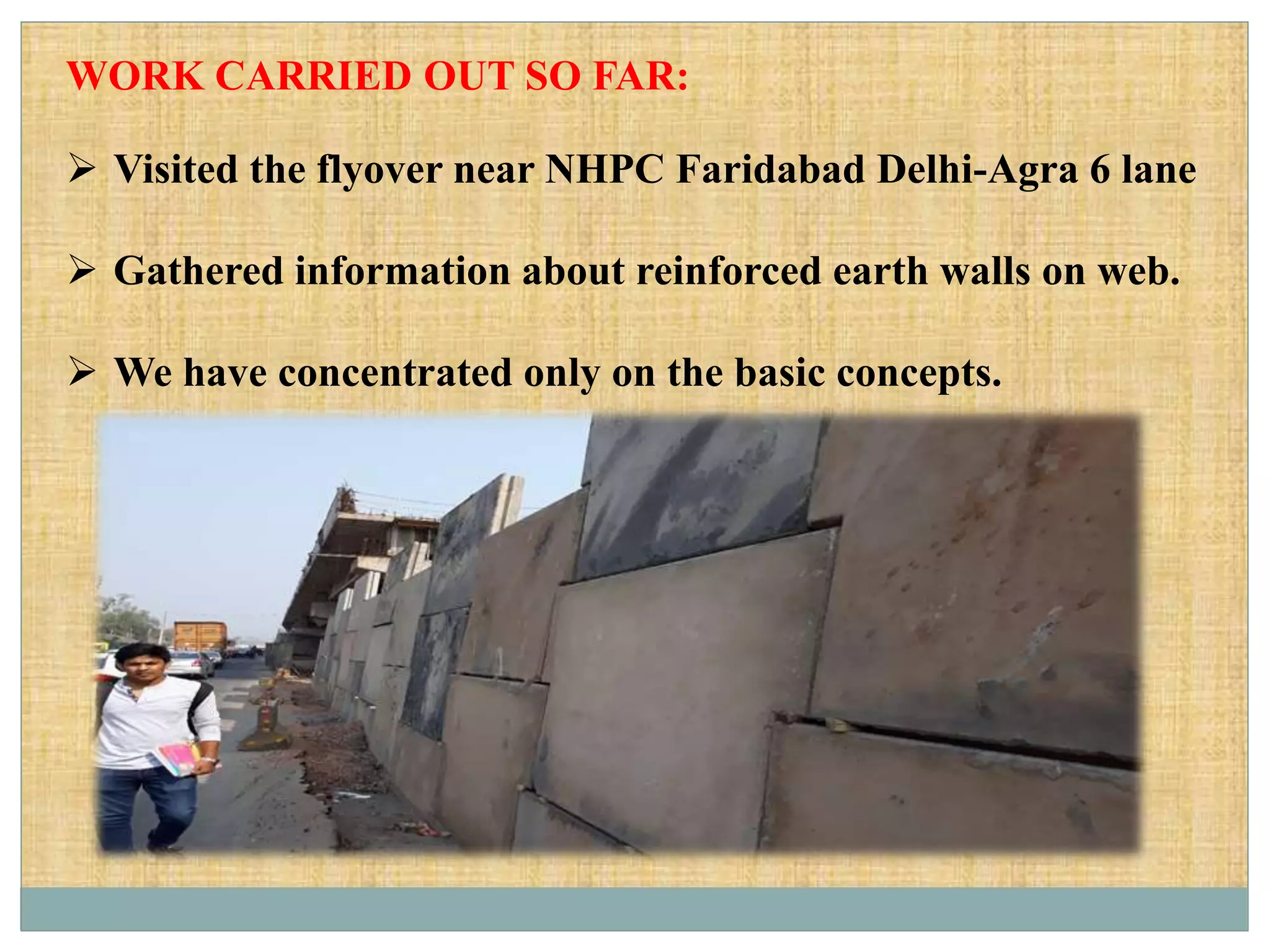
 Visited the flyover near NHPC Faridabad Delhi-Agra 6 lane
 Gathered information about reinforced earth walls on web.
 We have concentrated only on the basic concepts.
RESULTS:-
 Reinforced earth walls have evolved as viable technique and contributed to
infrastructure in
 Terms of speed , ease of construction , economy , aesthetics etc.
 It is a technology that needs to be understood well in terms of its response,
construction features etc.
 Do not require experienced craftsmen with special skills for construction.
 Require little site preparation.
 Need little space in front of the structure for construction operations.
 Do not need rigid, unyielding foundation support, because reinforced or
mu1tianchored structures are tolerant to deformations.
THANKYOU!

Reinforced Earth Wall RE wall

  • 1.
    PRESENTED BY AMIR NAZIRPARAY MOHIT SHARMA MADHUR MANGAL REINFORCED EARTH WALLS
  • 2.
    Objective: Our objective isto do a brief study on reinforced earth walls and its components and we are studying about the replacement of soil as a backfill by fly Ash and steel reinforcement by Geogrids To explain in brief about the construction methodology of Reinforced Earth Wall.
  • 3.
    Reinforced earth wallis a combination of earth and linear reinforcing strips that are capable of bearing large tensile stresses. Soil :- strong in compression. Reinforcement:-strong in tension. Ancient reinforcement:-tree branches , roots of vegetation , tree trunks , straw , bamboo etc., Modern reinforcement:-Steel ,Geosynthetics, Concrete , Glass fibre , Wood , Rubber , Aluminium. What is a reinforced earth wall?
  • 6.
    Components of ReinforcedEarth wall 1.Reinforcing element 2.Soil backfill(fly ash) 3.Facing element
  • 7.
    REINFORCEMENT:  A Varietyof materials can be used as reinforcing material. Those that have been used successfully include steel, concrete, glass fibre, wood, rubber, aluminium & Geosynthetics.  Reinforcement may take the form of strips, grids, anchors and steel material, chain planks, ropes, vegetation and combinations of these or other materials forms.  We are using geogrids as reinforcement . These geogrids should be flexible having high modulus of elasticity not susceptible to creep
  • 8.
  • 9.
    BACKFILL:  The fillmaterial for reinforced earth structures shall be preferably cohesionless and it should have an angle of on interface friction between the compacted fill and the reinforcing element of not less then 30◦ measured in accordance with IS 13326 part 1  The soil should have properties such that the salts in the soil should not react chemically and electrically with the reinforcing strips  Fly ash confirming to IRC:SP-58 Can be used as reinforced as well as retained fill  The quality of fly ash should be controlled through periodical checks to ensure consistency and compliance to specifications
  • 11.
    FACING ELEMENTS: Facings areselected to retain filled material, prevent local slumping and corrosion of steeply sloping faces , and to suit environmental requirements The facing is usually of ; Reinforced concrete slabs Plain cement concrete forum fill hollow block (precast)
  • 12.
  • 13.
    DRAINAGE:  If theembankment becomes waterlogged and pore water pressures increases, the magnitude of the tensile forces included in the grid reinforcement also increases pore water pressures can be controlled by providing the drainage layers at the back of the reinforced zones  A drainage bay of 600mm min width is usually provided at back of the facing is commonly used
  • 14.
  • 15.
    JOINT MATERIALS : Rubberor wooden bearing pads are used for horizontal joints so that there is no concrete to concrete contact between the panels and to avoid the chipping of concrete . Filter cloth of geotextiles are used for horizontal and vertical joints in the interior side of the panels such that the interior fill may not come out of the joints .
  • 16.
  • 18.
    In the reinforcedearth wall two type of stability checked:  External stability : It consider the reinforced structure as whole and check the stability for sliding, overturning, bearing/tilt and slip by considering the effects of dead loads, other loads (live load, dynamic load etc.) and forces acting on the structure.  Internal stability: It cover internal mechanism ( tension and pull out failure) such as shear within the structure , arrangement and behavior of the reinforcement and backfill. It checks the stability for each reinforcement layers and stability of wedges within the reinforced fill Design of Reinforced Earth Retaining Wall
  • 19.
    WORK CARRIED OUTSO FAR:  Visited the flyover near NHPC Faridabad Delhi-Agra 6 lane  Gathered information about reinforced earth walls on web.  We have concentrated only on the basic concepts.
  • 20.
    RESULTS:-  Reinforced earthwalls have evolved as viable technique and contributed to infrastructure in  Terms of speed , ease of construction , economy , aesthetics etc.  It is a technology that needs to be understood well in terms of its response, construction features etc.  Do not require experienced craftsmen with special skills for construction.  Require little site preparation.  Need little space in front of the structure for construction operations.  Do not need rigid, unyielding foundation support, because reinforced or mu1tianchored structures are tolerant to deformations.
  • 21.