REFORMATIREFORMATI
ONON
Reformation
• A religious movement of the 1500’s that led to
Protestantism
• The movement began in 1517 when Martin Luther, a
German monk, protested against certain practices of
the Roman Catholic Church
• About 40 years later, Protestantism was established
in Europe
CAUSES of
REFORMATIONoReligious causes
-Corrupt financial practices by the popes and higher clergy
-The sacraments were often celebrated meaninglessly
oCultural causes
-The study of Hebrew and Greek enabled scholars to read the
Holy Scriptures in the languages in which the original had
been written
oPolitical causes
-The kings were increasing their power over their own people and
against the pope and the emperor
-When the Reformation began, some monarchs broke completely
away from the pope
oEconomic causes
-As the cities grew wealthy and independent, they threw off the
control of local lords and prince-bishops
DEVELOPMENT of the
REFORMATION
• The Reformation began within the Catholic Church itself.The Reformation began within the Catholic Church itself.
• On October 31, 1517, Martin Luther, a monk and professor of theology,On October 31, 1517, Martin Luther, a monk and professor of theology,
posted his 95 theses on the door of Castle Church in Wittenburg, Germany.posted his 95 theses on the door of Castle Church in Wittenburg, Germany.
• These theses were a series of statements that attacked the sale ofThese theses were a series of statements that attacked the sale of
indulgences.indulgences.
• Luther later criticizes what he considered other abuses in the church.Luther later criticizes what he considered other abuses in the church.
• Pope Leo X excommunicated Luther and declared himPope Leo X excommunicated Luther and declared him heretic.heretic.
• In May 1521, the emperor signed the Edict of Worms, a document that
declared Luther to be an outlaw.
• Protestant
-The one who protests
-The quarrel between Huldreich and Luther led to the first major split of
Protestantism
• John Calvin
-A French protestant, helped establish Protestantism in Geneva,
Switzerland
- Removed images and ornaments from churches
-His plan of church is called Presbyterian (a presbytery is a council of
ministries and laymen)
• Philipp Melanchthon
-A German humanist and scholar
-“Teacher of Germany”
-His survey became the basis of the Saxony Plan.
-Establishment of the secondary schools in every town under
the support and control of the state.
AIMS of EDUCATIONAIMS of EDUCATION
• Religious MoralismReligious Moralism
-To live a worthy life on earth will guarantee a glorious here after-To live a worthy life on earth will guarantee a glorious here after
• Protestant EthicProtestant Ethic
-Thrifty living and careful management of material things-Thrifty living and careful management of material things
• Literacy PromotionLiteracy Promotion
-Education must provide adequate training in the duties of the home,-Education must provide adequate training in the duties of the home,
occupation, church and state.occupation, church and state.
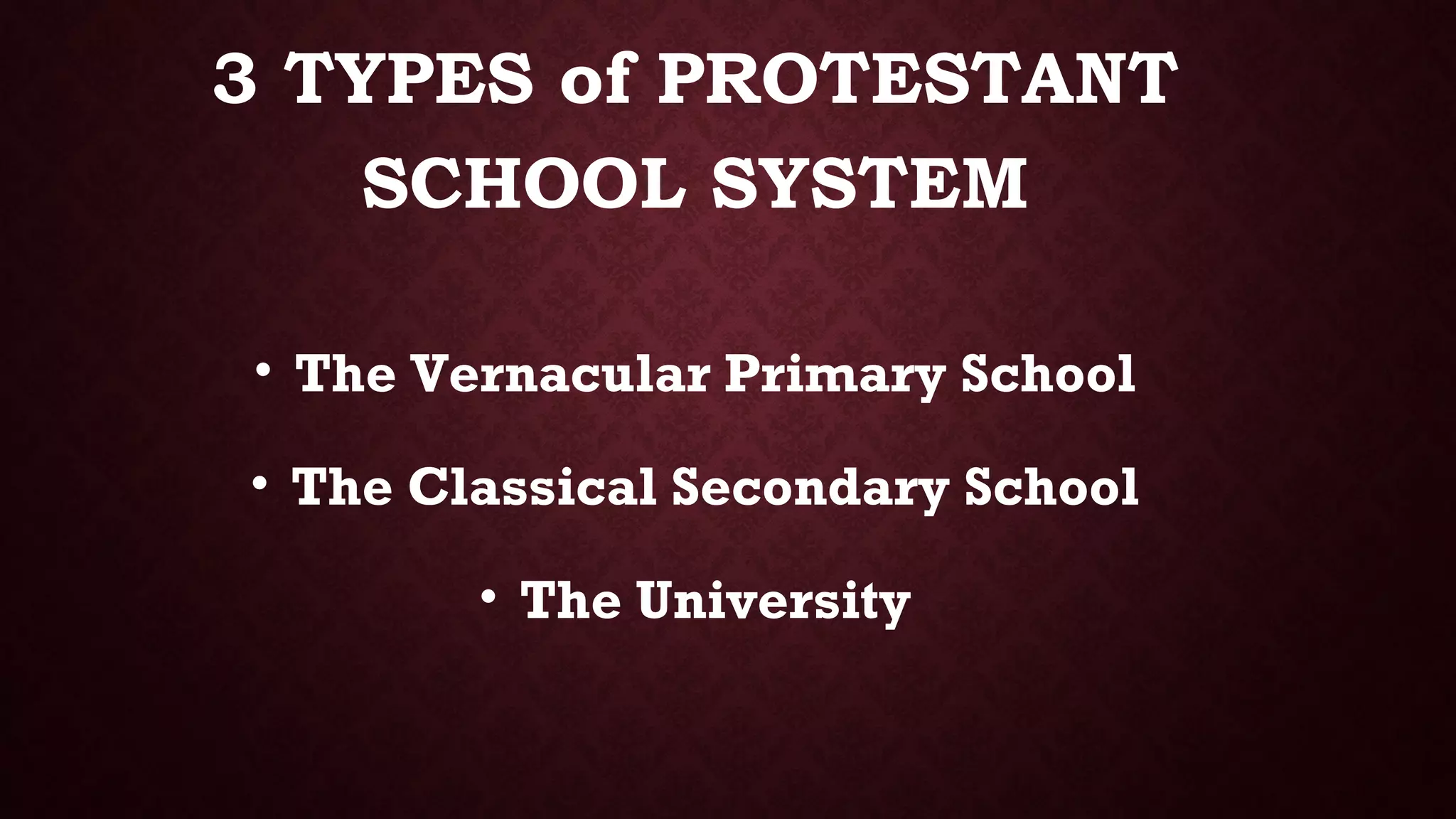
3 TYPES of PROTESTANT
SCHOOL SYSTEM
• The Vernacular Primary School
• The Classical Secondary School
• The University
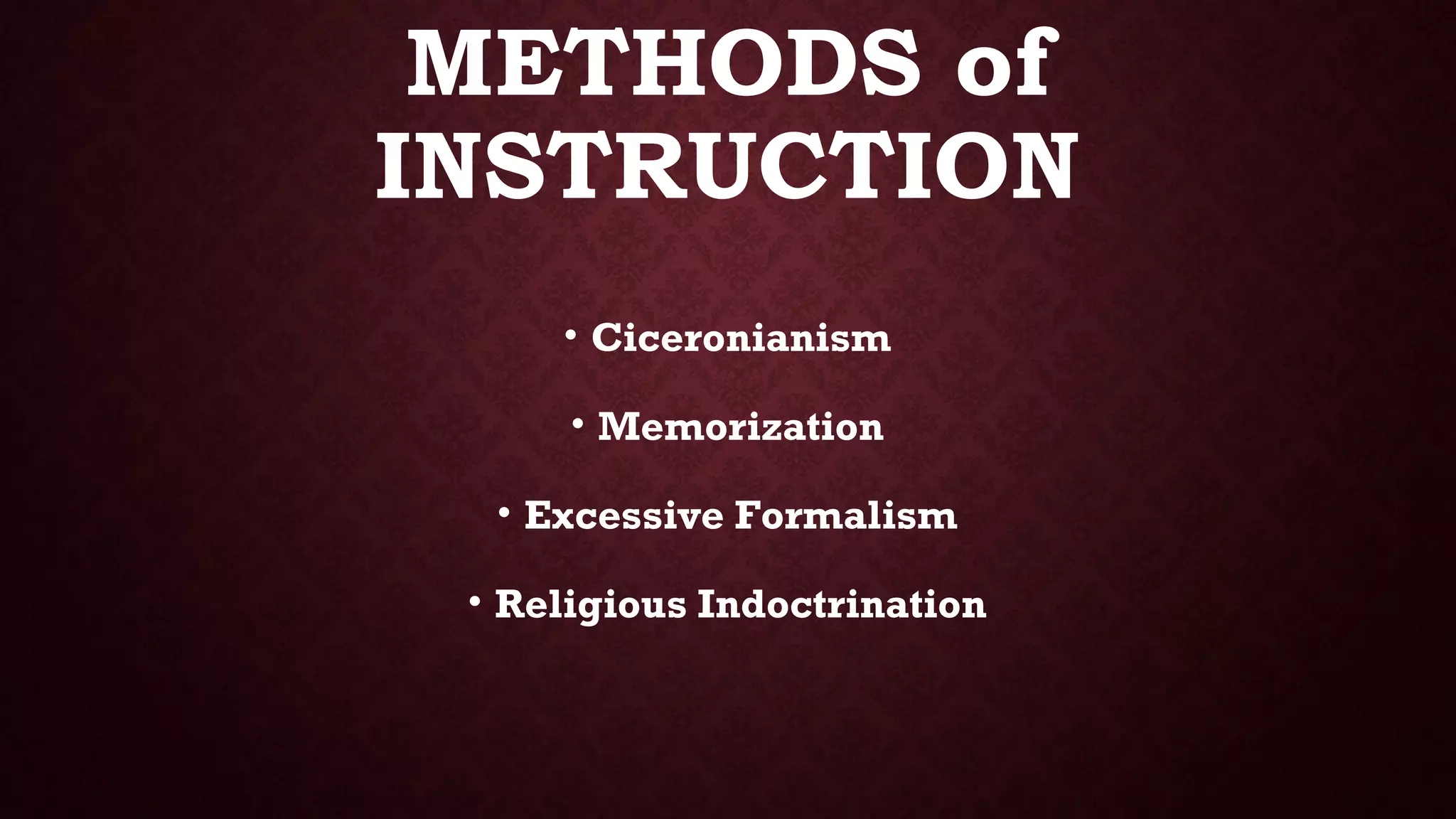
METHODS of
INSTRUCTION
• Ciceronianism
• Memorization
• Excessive Formalism
• Religious Indoctrination
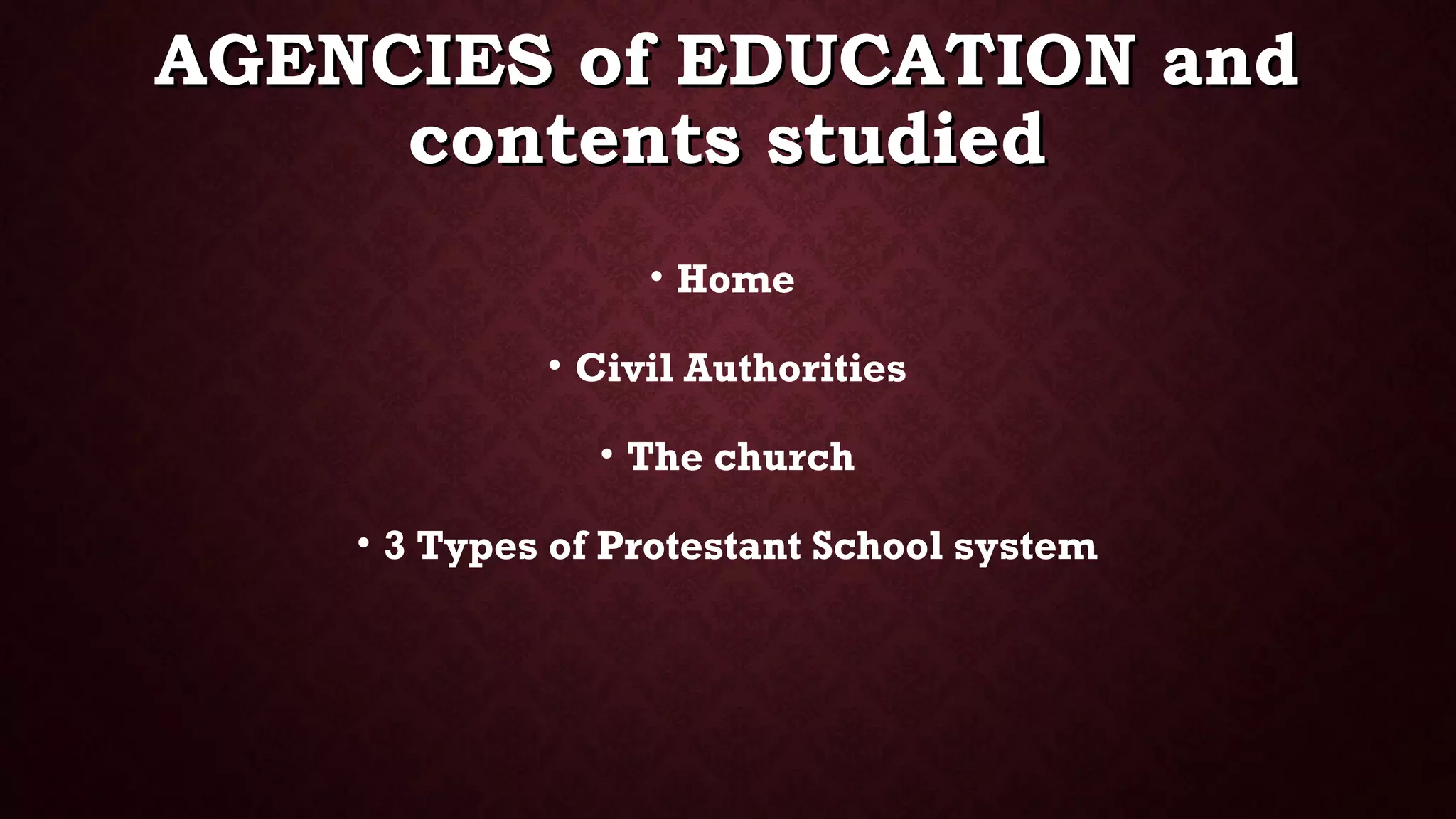
AGENCIES of EDUCATION andAGENCIES of EDUCATION and
contents studiedcontents studied
• Home
• Civil Authorities
• The church
• 3 Types of Protestant School system
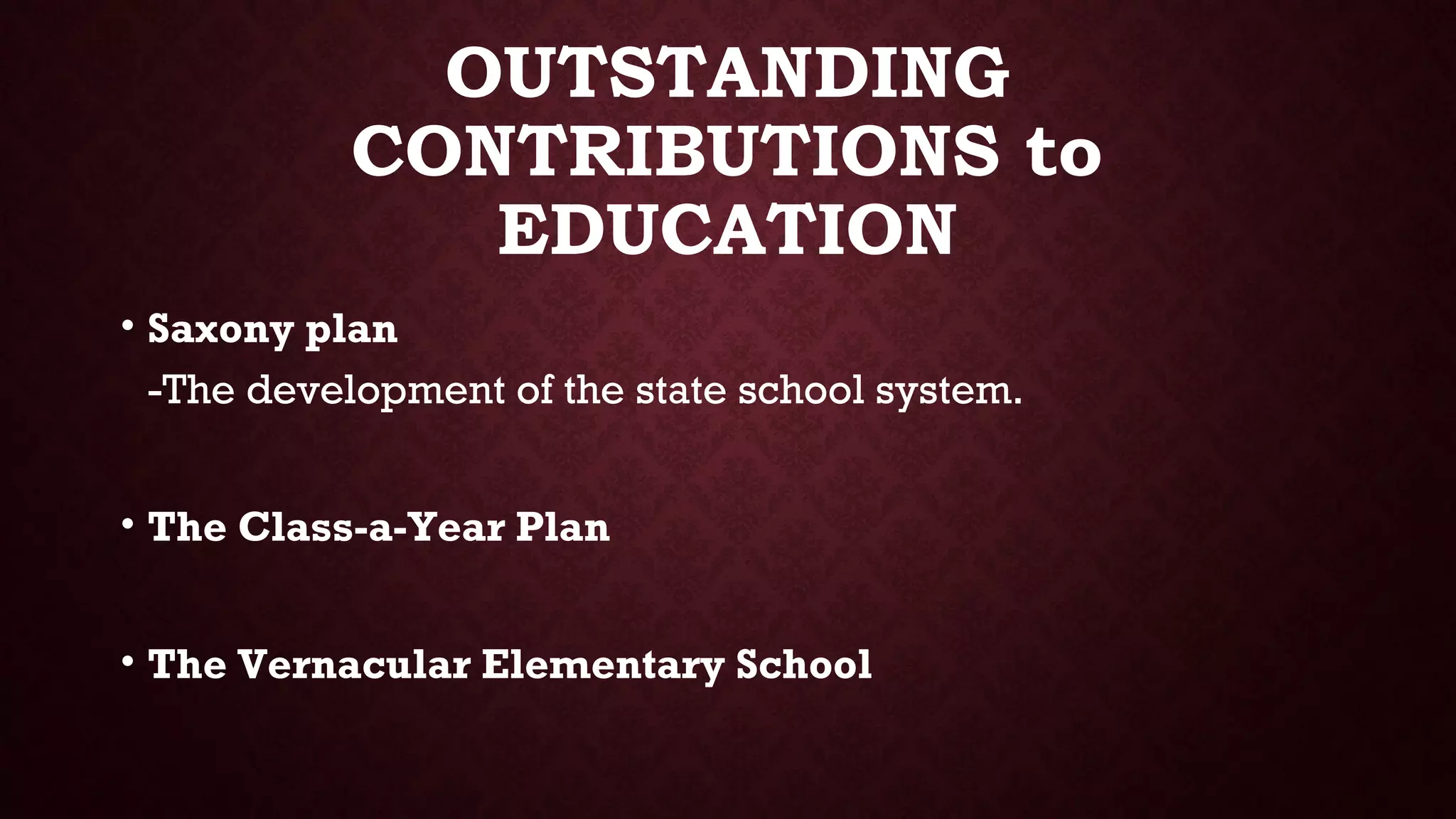
OUTSTANDING
CONTRIBUTIONS to
EDUCATION
• Saxony plan
-The development of the state school system.
• The Class-a-Year Plan
• The Vernacular Elementary School

Reformation by Martin Luther

  • 1.
  • 2.
    Reformation • A religiousmovement of the 1500’s that led to Protestantism • The movement began in 1517 when Martin Luther, a German monk, protested against certain practices of the Roman Catholic Church • About 40 years later, Protestantism was established in Europe
  • 3.
    CAUSES of REFORMATIONoReligious causes -Corruptfinancial practices by the popes and higher clergy -The sacraments were often celebrated meaninglessly oCultural causes -The study of Hebrew and Greek enabled scholars to read the Holy Scriptures in the languages in which the original had been written
  • 4.
    oPolitical causes -The kingswere increasing their power over their own people and against the pope and the emperor -When the Reformation began, some monarchs broke completely away from the pope oEconomic causes -As the cities grew wealthy and independent, they threw off the control of local lords and prince-bishops
  • 5.
    DEVELOPMENT of the REFORMATION •The Reformation began within the Catholic Church itself.The Reformation began within the Catholic Church itself. • On October 31, 1517, Martin Luther, a monk and professor of theology,On October 31, 1517, Martin Luther, a monk and professor of theology, posted his 95 theses on the door of Castle Church in Wittenburg, Germany.posted his 95 theses on the door of Castle Church in Wittenburg, Germany. • These theses were a series of statements that attacked the sale ofThese theses were a series of statements that attacked the sale of indulgences.indulgences. • Luther later criticizes what he considered other abuses in the church.Luther later criticizes what he considered other abuses in the church. • Pope Leo X excommunicated Luther and declared himPope Leo X excommunicated Luther and declared him heretic.heretic. • In May 1521, the emperor signed the Edict of Worms, a document that declared Luther to be an outlaw.
  • 6.
    • Protestant -The onewho protests -The quarrel between Huldreich and Luther led to the first major split of Protestantism • John Calvin -A French protestant, helped establish Protestantism in Geneva, Switzerland - Removed images and ornaments from churches -His plan of church is called Presbyterian (a presbytery is a council of ministries and laymen)
  • 7.
    • Philipp Melanchthon -AGerman humanist and scholar -“Teacher of Germany” -His survey became the basis of the Saxony Plan. -Establishment of the secondary schools in every town under the support and control of the state.
  • 8.
    AIMS of EDUCATIONAIMSof EDUCATION • Religious MoralismReligious Moralism -To live a worthy life on earth will guarantee a glorious here after-To live a worthy life on earth will guarantee a glorious here after • Protestant EthicProtestant Ethic -Thrifty living and careful management of material things-Thrifty living and careful management of material things • Literacy PromotionLiteracy Promotion -Education must provide adequate training in the duties of the home,-Education must provide adequate training in the duties of the home, occupation, church and state.occupation, church and state.
  • 9.
    3 TYPES ofPROTESTANT SCHOOL SYSTEM • The Vernacular Primary School • The Classical Secondary School • The University
  • 10.
    METHODS of INSTRUCTION • Ciceronianism •Memorization • Excessive Formalism • Religious Indoctrination
  • 11.
    AGENCIES of EDUCATIONandAGENCIES of EDUCATION and contents studiedcontents studied • Home • Civil Authorities • The church • 3 Types of Protestant School system
  • 12.
    OUTSTANDING CONTRIBUTIONS to EDUCATION • Saxonyplan -The development of the state school system. • The Class-a-Year Plan • The Vernacular Elementary School