RECOMBINANT DNA TECHNOLOGY
AND DNA SEQUENCING
ANIQA ATTA
MPIL (2ND SEMESTER)
MBG
What is DNA?
• DNA is a heriditary material and is madeup of nucleotides
which are capable of hydrogen bonding to each other forming
base pairs.
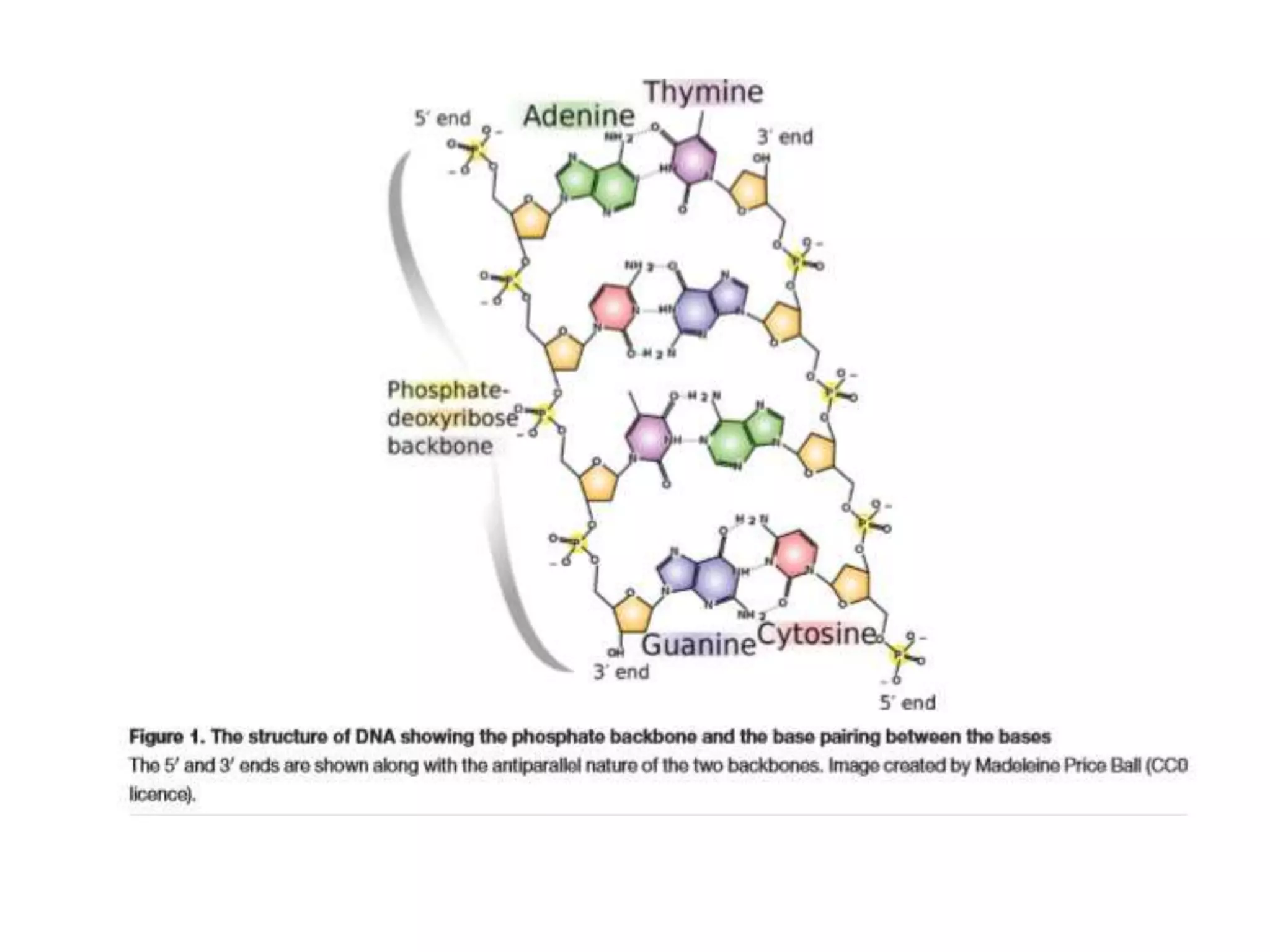
• The nucleotides link to each other via phosphate group which
link between carbons 5 and 3 on the sugar part of the DNA.
• DNA is made of up two such chains which run in the opposite direction
(anti-parallel) to each other. And these chains have a large number of
phosphate groups which are negatively charged, giving DNA a large
negative charge.
• The bases sit within the centre of this and pair with each other forming
that typical double helical structure of DNA.
• Information is stored within DNA in the order of the bases and that
information is used in the cell during the process of transcription. Because
of the base pairing, each DNA strand is the opposite of its complement
DNA ISOLATION
• DNA can be isolated from cells through several simple steps:
1. Mechanical method
2. Enzymatic method
3. Through centrifugation
4. Chemical method
DNA AMPLIFICATION THROUGH
POLYMERASE CHAIN REACTION
• It is an artificial way to copy and amplify DNA, and it has many
similarities to natural DNA amplification
• Polymerase Chain Reaction was first developed in 1980s by
Kary Mullis working with Saikia and Erlich
• Mullis was awarded a Nobel Prize in 1993 for his work in
developing PCR
TO PERFORM PCR
We need:
• Template DNA of your interest
• Two primers (F & R)
• Free nucleotide tri-phosphates (NTPs)
• Thermo stable DNA polymerase (taq polymerase)
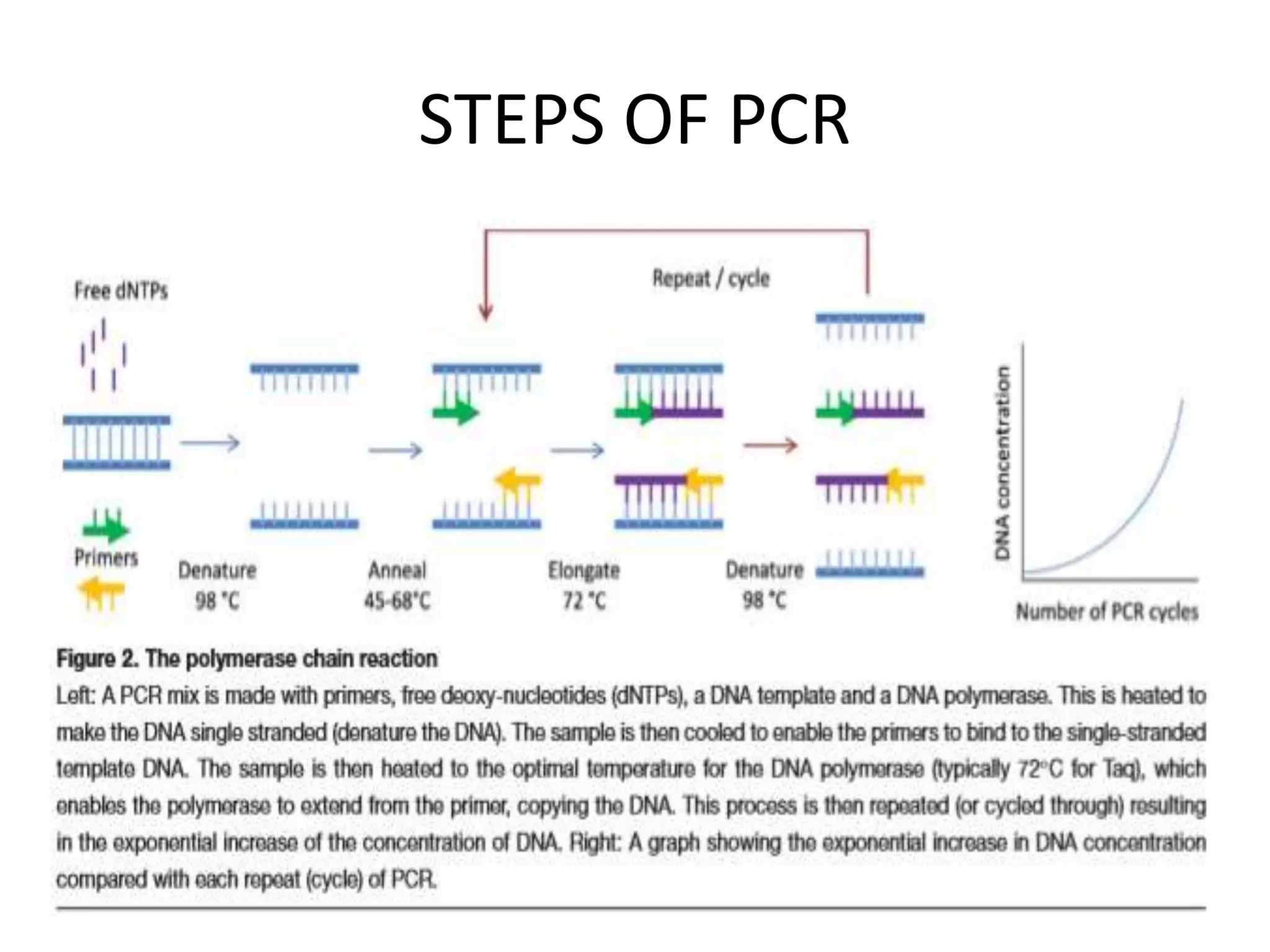
STEPS OF PCR
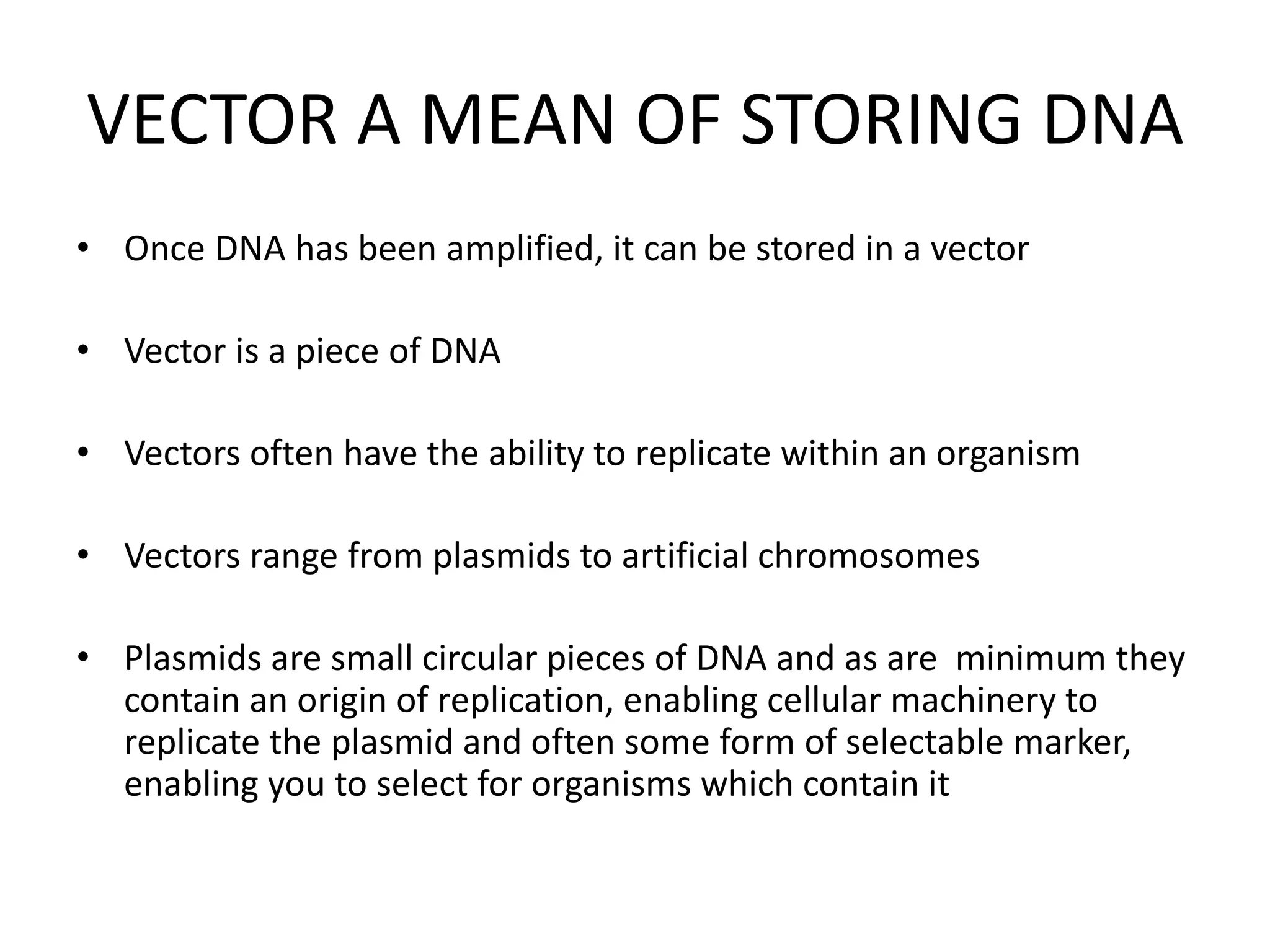
DETECTING DNA
DNA is invisible to the naked eye and so we need to visualize DNA This
can be done using several methods:
• One method is to make use of the fact that DNA absorbs UV light at
260nm ,we can thus measure the absorption of this to measure
DNA (EB)
• 2nd method is to make agarose gel typically (0.8% to 2%) is used
• Some stains are used to visualize DNA (syber green or syber safe)
• DNA to be separated is added to wells in the gel, voltage applied
across the gel by connecting the tank to power source.
CONT
• These polymerases are used where the sequence of the DNA
is important for the downstream study or where you want to
produce protein from the DNA.
• As a technique, PCR enables us to produce large amount of
DNA for manipulation.
• This can be useful, in that it enables us to detect and work
with small quantities of sample.
VECTOR A MEAN OF STORING DNA
• Once DNA has been amplified, it can be stored in a vector
• Vector is a piece of DNA
• Vectors often have the ability to replicate within an organism
• Vectors range from plasmids to artificial chromosomes
• Plasmids are small circular pieces of DNA and as are minimum they
contain an origin of replication, enabling cellular machinery to
replicate the plasmid and often some form of selectable marker,
enabling you to select for organisms which contain it
DNA MANIPULATION JOINING DNA
TOGETHER
• DNA can be placed into vectors using a variety of methods
• The first method we will discuss is by using restriction endonucleases.
• These are enzymes, isolated from bacteria, which bacteria use to protect
themselves from viral attack.
• These enzymes recognise and cut DNA at a specific DNA sequence.
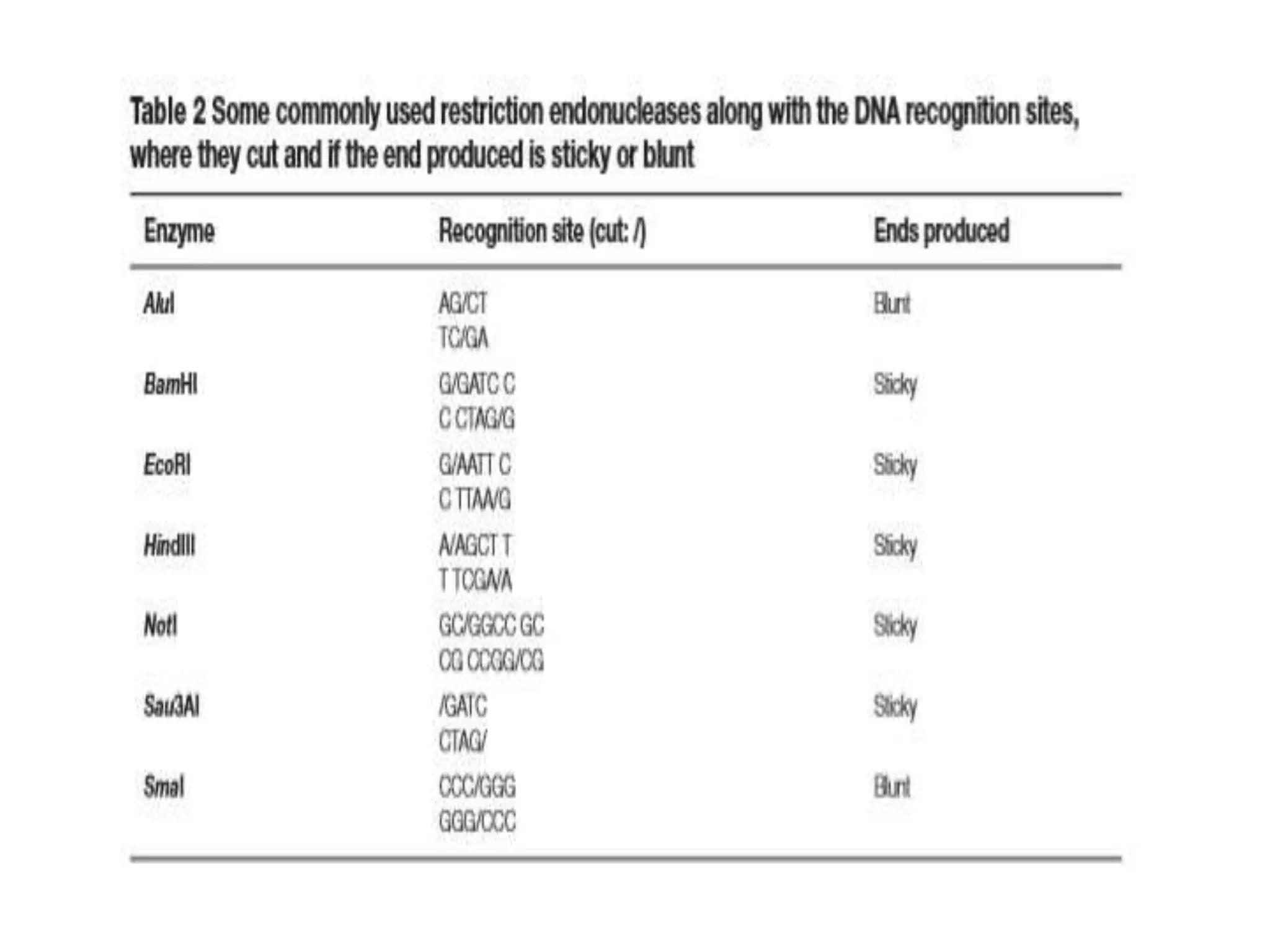
• Depending on how they cut, some cut the DNA flat, cutting both strands
at the same point, termed blunt ends, while others cut the backbone at
different points resulting in small sections of single-strand DNA, termed
sticky ends (Table2).
• Once cut with a restriction enzymes, two pieces
of DNA can be joined together by mixing them
and adding the enzyme DNA ligase.
• DNA with complementary sticky ends produced
by restriction enzymes join together easily with
the base pairing of the sticky ends helping speed
the process.
• Ligation of DNA with blunt ends is also
possible but this occurs with a lower efficiency
• Combinations of restriction endonucleases
can be used in order to ensure that DNA
pieces are joined together in a defined way.
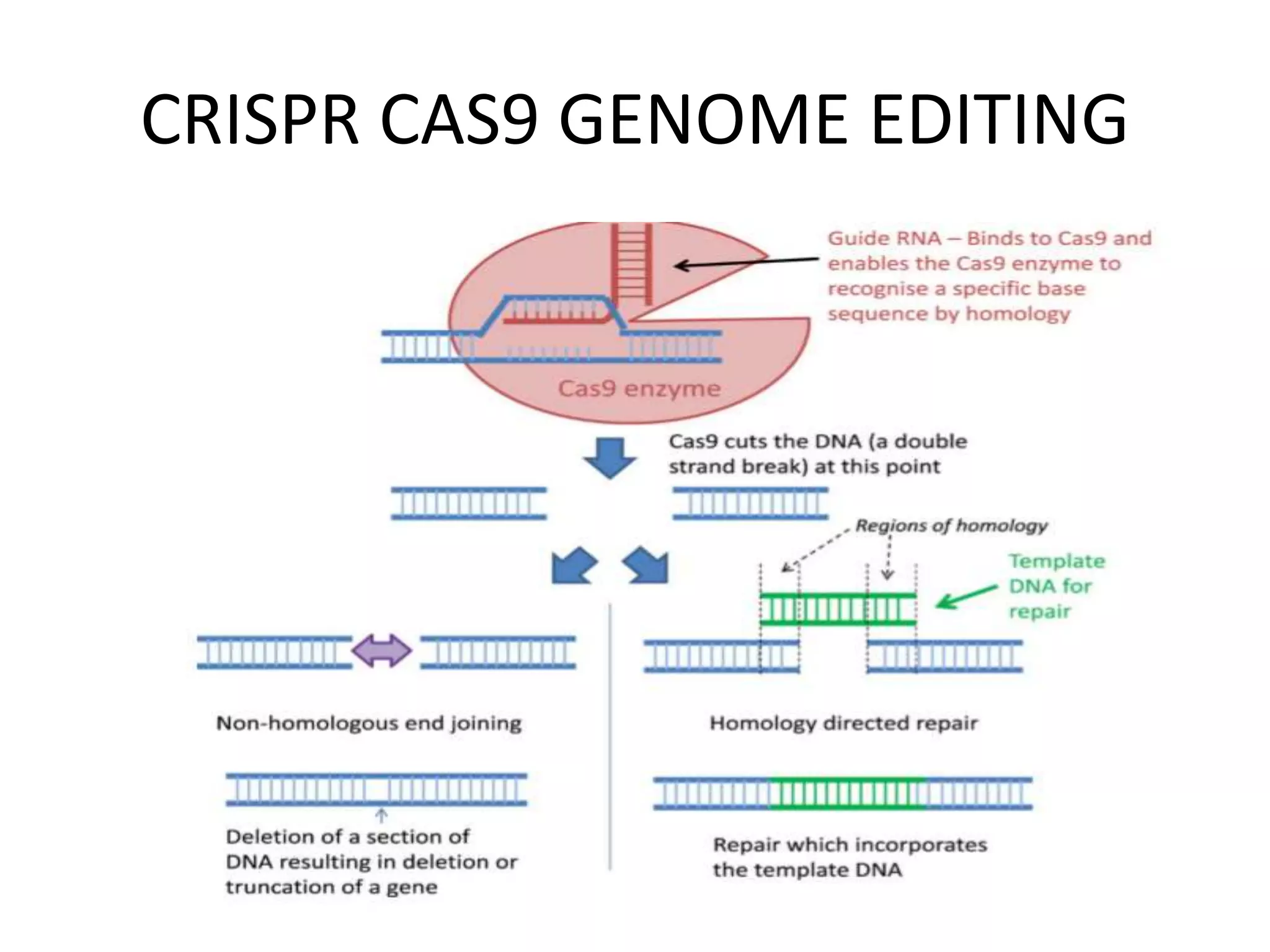
CRISPR CAS9 GENOME EDITING
ANY QUESTION?
THANK YOU

Recombinant dna technology and DNA sequencing

  • 1.
    RECOMBINANT DNA TECHNOLOGY ANDDNA SEQUENCING ANIQA ATTA MPIL (2ND SEMESTER) MBG
  • 2.
    What is DNA? •DNA is a heriditary material and is madeup of nucleotides which are capable of hydrogen bonding to each other forming base pairs. • The nucleotides link to each other via phosphate group which link between carbons 5 and 3 on the sugar part of the DNA.
  • 3.
    • DNA ismade of up two such chains which run in the opposite direction (anti-parallel) to each other. And these chains have a large number of phosphate groups which are negatively charged, giving DNA a large negative charge. • The bases sit within the centre of this and pair with each other forming that typical double helical structure of DNA. • Information is stored within DNA in the order of the bases and that information is used in the cell during the process of transcription. Because of the base pairing, each DNA strand is the opposite of its complement
  • 5.
    DNA ISOLATION • DNAcan be isolated from cells through several simple steps: 1. Mechanical method 2. Enzymatic method 3. Through centrifugation 4. Chemical method
  • 6.
    DNA AMPLIFICATION THROUGH POLYMERASECHAIN REACTION • It is an artificial way to copy and amplify DNA, and it has many similarities to natural DNA amplification • Polymerase Chain Reaction was first developed in 1980s by Kary Mullis working with Saikia and Erlich • Mullis was awarded a Nobel Prize in 1993 for his work in developing PCR
  • 7.
    TO PERFORM PCR Weneed: • Template DNA of your interest • Two primers (F & R) • Free nucleotide tri-phosphates (NTPs) • Thermo stable DNA polymerase (taq polymerase)
  • 8.
  • 9.
    DETECTING DNA DNA isinvisible to the naked eye and so we need to visualize DNA This can be done using several methods: • One method is to make use of the fact that DNA absorbs UV light at 260nm ,we can thus measure the absorption of this to measure DNA (EB) • 2nd method is to make agarose gel typically (0.8% to 2%) is used • Some stains are used to visualize DNA (syber green or syber safe) • DNA to be separated is added to wells in the gel, voltage applied across the gel by connecting the tank to power source.
  • 11.
    CONT • These polymerasesare used where the sequence of the DNA is important for the downstream study or where you want to produce protein from the DNA. • As a technique, PCR enables us to produce large amount of DNA for manipulation. • This can be useful, in that it enables us to detect and work with small quantities of sample.
  • 12.
    VECTOR A MEANOF STORING DNA • Once DNA has been amplified, it can be stored in a vector • Vector is a piece of DNA • Vectors often have the ability to replicate within an organism • Vectors range from plasmids to artificial chromosomes • Plasmids are small circular pieces of DNA and as are minimum they contain an origin of replication, enabling cellular machinery to replicate the plasmid and often some form of selectable marker, enabling you to select for organisms which contain it
  • 13.
    DNA MANIPULATION JOININGDNA TOGETHER • DNA can be placed into vectors using a variety of methods • The first method we will discuss is by using restriction endonucleases. • These are enzymes, isolated from bacteria, which bacteria use to protect themselves from viral attack. • These enzymes recognise and cut DNA at a specific DNA sequence. • Depending on how they cut, some cut the DNA flat, cutting both strands at the same point, termed blunt ends, while others cut the backbone at different points resulting in small sections of single-strand DNA, termed sticky ends (Table2).
  • 14.
    • Once cutwith a restriction enzymes, two pieces of DNA can be joined together by mixing them and adding the enzyme DNA ligase. • DNA with complementary sticky ends produced by restriction enzymes join together easily with the base pairing of the sticky ends helping speed the process.
  • 16.
    • Ligation ofDNA with blunt ends is also possible but this occurs with a lower efficiency • Combinations of restriction endonucleases can be used in order to ensure that DNA pieces are joined together in a defined way.
  • 17.
  • 19.
  • 20.