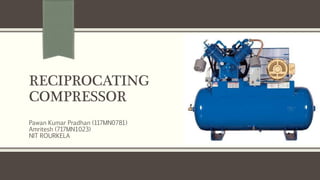
RECIPROCATING
COMPRESSOR
Pawan Kumar Pradhan (117MN0781)
Amritesh (717MN1023)
NIT ROURKELA
CONTENT
 What is air compressor?
 Reciprocating Compressor
 Types
 Indicator diagram
 Starting
 Operation
 Carbon and explosion
 Compressor efficiency
 Specifications
 References
What is an air compressor?
 A compressor is a device which is used to increase the pressure of air from low
pressure to high pressure by using some external energy.
 An air compressor is a device that converts power (using an electric motor, diesel or
gasoline engine, etc.) into potential energy stored in compressed air.
 Compressed air is used as power mainly to operate drills and other machinery in
mines, both surface and underground.
 In u/g coal mines it is preferred for drifting in stone due to better performance than
electric drills.
 They can be of two types:
1. Reciprocating Compressor
2. Rotary Compressor
Reciprocating Compressor
 A reciprocating compressor consist of a
piston working to and fro in a cylinder, and
then discharge at the required pressure into a
receiver.
 During the return stroke, air at atmospheric
pressure is drawn into the cylinder through
the inlet valves in readiness for compression.
 During delivery, the pressure of air
compressed in the cylinder has to be slightly
more than the receiver pressure for the
delivery valve to open.
 During suction, the pressure of air in the
cylinder must be lower than the atmospheric
air so that pressure difference across the
inlet valve forces it off its seat.
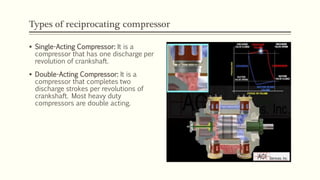
Types of reciprocating compressor
 Single-Acting Compressor: It is a
compressor that has one discharge per
revolution of crankshaft.
 Double-Acting Compressor: It is a
compressor that completes two
discharge strokes per revolutions of
crankshaft. Most heavy duty
compressors are double acting.
Indicator Diagram
 C – Piston travel starts, compression
starts.
 D – Delivery valve opens.
 A – Delivery of compressed air ends.
 B – Suction valve opens, atmospheric air
suction starts.
Starting the reciprocating compressor
Before starting a reciprocating compressor:
Routine check up should be made of oil level in engine and compressor.
Fuel and water in the radiator.
Check for loose nuts and bolts.
The receiver drain cock should be opened and the clutch disengaged.
Operating the reciprocating compressor
After starting a Reciprocating compressor:
After starting, the engine is run for several minutes to warm up, and then clutch is
engaged.
After the compressor is turned on without choking, the drain cock is closed.
If it threatens to stall, the clutch should be disengaged or the compressor unloaded
by hand control and further time allowed to warm up.
Carbon and explosion
 The heat generated during working of a compressor causes vaporisation of the
lubricating oil. So, the non-volatile residue in combination with dirt present in the air
is liable to build up hard or gummy deposits that will interfere with valve operation
and sometimes chokes the passage.
 If exhaust valve leaks some of the hot compressed air which has just been forced
out od the cylinder will come back in the cylinder and be recompressed resulting in
very high pressure locally and excessive temperature will boil off and vaporise the
lubricant. Under these conditions if enough oil vapour is present in air it can cause
explosion.
Compressor Efficiency
 Volumetric Efficiency =
𝑄𝑢𝑎𝑛𝑡𝑖𝑡𝑦 𝑜𝑓 𝑎𝑖𝑟 𝑑𝑒𝑙𝑖𝑣𝑒𝑟𝑒𝑑 𝑖𝑛 𝑎 𝑔𝑖𝑣𝑒𝑛 𝑡𝑖𝑚𝑒
𝑃𝑖𝑠𝑡𝑜𝑛 𝑑𝑖𝑠𝑝𝑙𝑎𝑐𝑒𝑚𝑒𝑛𝑡 𝑖𝑛 𝑡ℎ𝑒 𝑠𝑎𝑚𝑒 𝑝𝑒𝑟𝑖𝑜𝑑
 Mechanical Efficiency=
𝐴𝑐𝑡𝑢𝑎𝑙 𝑎𝑖𝑟 𝑖𝑛𝑑𝑖𝑐𝑎𝑡𝑒𝑑 𝑝𝑜𝑤𝑒𝑟
𝐵𝑟𝑎𝑘𝑒 𝑝𝑜𝑤𝑒𝑟 𝑜𝑓 𝑝𝑟𝑖𝑚𝑒 𝑚𝑜𝑣𝑒𝑟
 Overall Efficiency =
𝐶𝑎𝑙𝑐𝑢𝑙𝑎𝑡𝑒𝑑 𝑖𝑠𝑜𝑡ℎ𝑒𝑟𝑚𝑎𝑙 𝑝𝑜𝑤𝑒𝑟 𝑡𝑜 𝑐𝑜𝑚𝑝𝑟𝑒𝑠𝑠𝑜𝑟 𝑎𝑛𝑑 𝑑𝑒𝑙𝑖𝑣𝑒𝑟 𝑡ℎ𝑒 𝑎𝑖𝑟
𝑀𝑒𝑎𝑠𝑢𝑟𝑒𝑑 𝑒𝑙𝑒𝑐𝑡𝑟𝑖𝑐𝑎𝑙 𝑝𝑜𝑤𝑒𝑟 𝑖𝑛𝑝𝑢𝑡
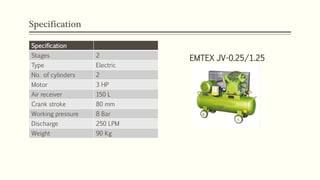
Specification
Specification
Stages 2
Type Electric
No. of cylinders 2
Motor 3 HP
Air receiver 150 L
Crank stroke 80 mm
Working pressure 8 Bar
Discharge 250 LPM
Weight 90 Kg
EMTEX JV-0.25/1.25
References
 Deshmukh D.J. (2014), Elements of Mining Technology Vol. III , Denett Publications,
Nagpur, pp. 176-177
 Sarkar S., Lecture on Compressor, Dept. of Mechanical Engineering, IIT(ISM)
Dhanbad, pp. 2,8
 https://www.industrybuying.com/air-tank-compressor-emtex-
PNE.AIR.19812916/?q=reciprocating+air+compressor&cat=
 https://makeagif.com/gif/ldght-ltrddy-reciprocating-compressor-rwe7du
THANK YOU✌

Reciprocating Compressor

  • 1.
    RECIPROCATING COMPRESSOR Pawan Kumar Pradhan(117MN0781) Amritesh (717MN1023) NIT ROURKELA
  • 2.
    CONTENT  What isair compressor?  Reciprocating Compressor  Types  Indicator diagram  Starting  Operation  Carbon and explosion  Compressor efficiency  Specifications  References
  • 3.
    What is anair compressor?  A compressor is a device which is used to increase the pressure of air from low pressure to high pressure by using some external energy.  An air compressor is a device that converts power (using an electric motor, diesel or gasoline engine, etc.) into potential energy stored in compressed air.  Compressed air is used as power mainly to operate drills and other machinery in mines, both surface and underground.  In u/g coal mines it is preferred for drifting in stone due to better performance than electric drills.  They can be of two types: 1. Reciprocating Compressor 2. Rotary Compressor
  • 4.
    Reciprocating Compressor  Areciprocating compressor consist of a piston working to and fro in a cylinder, and then discharge at the required pressure into a receiver.  During the return stroke, air at atmospheric pressure is drawn into the cylinder through the inlet valves in readiness for compression.  During delivery, the pressure of air compressed in the cylinder has to be slightly more than the receiver pressure for the delivery valve to open.  During suction, the pressure of air in the cylinder must be lower than the atmospheric air so that pressure difference across the inlet valve forces it off its seat.
  • 6.
    Types of reciprocatingcompressor  Single-Acting Compressor: It is a compressor that has one discharge per revolution of crankshaft.  Double-Acting Compressor: It is a compressor that completes two discharge strokes per revolutions of crankshaft. Most heavy duty compressors are double acting.
  • 7.
    Indicator Diagram  C– Piston travel starts, compression starts.  D – Delivery valve opens.  A – Delivery of compressed air ends.  B – Suction valve opens, atmospheric air suction starts.
  • 8.
    Starting the reciprocatingcompressor Before starting a reciprocating compressor: Routine check up should be made of oil level in engine and compressor. Fuel and water in the radiator. Check for loose nuts and bolts. The receiver drain cock should be opened and the clutch disengaged.
  • 9.
    Operating the reciprocatingcompressor After starting a Reciprocating compressor: After starting, the engine is run for several minutes to warm up, and then clutch is engaged. After the compressor is turned on without choking, the drain cock is closed. If it threatens to stall, the clutch should be disengaged or the compressor unloaded by hand control and further time allowed to warm up.
  • 10.
    Carbon and explosion The heat generated during working of a compressor causes vaporisation of the lubricating oil. So, the non-volatile residue in combination with dirt present in the air is liable to build up hard or gummy deposits that will interfere with valve operation and sometimes chokes the passage.  If exhaust valve leaks some of the hot compressed air which has just been forced out od the cylinder will come back in the cylinder and be recompressed resulting in very high pressure locally and excessive temperature will boil off and vaporise the lubricant. Under these conditions if enough oil vapour is present in air it can cause explosion.
  • 11.
    Compressor Efficiency  VolumetricEfficiency = 𝑄𝑢𝑎𝑛𝑡𝑖𝑡𝑦 𝑜𝑓 𝑎𝑖𝑟 𝑑𝑒𝑙𝑖𝑣𝑒𝑟𝑒𝑑 𝑖𝑛 𝑎 𝑔𝑖𝑣𝑒𝑛 𝑡𝑖𝑚𝑒 𝑃𝑖𝑠𝑡𝑜𝑛 𝑑𝑖𝑠𝑝𝑙𝑎𝑐𝑒𝑚𝑒𝑛𝑡 𝑖𝑛 𝑡ℎ𝑒 𝑠𝑎𝑚𝑒 𝑝𝑒𝑟𝑖𝑜𝑑  Mechanical Efficiency= 𝐴𝑐𝑡𝑢𝑎𝑙 𝑎𝑖𝑟 𝑖𝑛𝑑𝑖𝑐𝑎𝑡𝑒𝑑 𝑝𝑜𝑤𝑒𝑟 𝐵𝑟𝑎𝑘𝑒 𝑝𝑜𝑤𝑒𝑟 𝑜𝑓 𝑝𝑟𝑖𝑚𝑒 𝑚𝑜𝑣𝑒𝑟  Overall Efficiency = 𝐶𝑎𝑙𝑐𝑢𝑙𝑎𝑡𝑒𝑑 𝑖𝑠𝑜𝑡ℎ𝑒𝑟𝑚𝑎𝑙 𝑝𝑜𝑤𝑒𝑟 𝑡𝑜 𝑐𝑜𝑚𝑝𝑟𝑒𝑠𝑠𝑜𝑟 𝑎𝑛𝑑 𝑑𝑒𝑙𝑖𝑣𝑒𝑟 𝑡ℎ𝑒 𝑎𝑖𝑟 𝑀𝑒𝑎𝑠𝑢𝑟𝑒𝑑 𝑒𝑙𝑒𝑐𝑡𝑟𝑖𝑐𝑎𝑙 𝑝𝑜𝑤𝑒𝑟 𝑖𝑛𝑝𝑢𝑡
  • 12.
    Specification Specification Stages 2 Type Electric No.of cylinders 2 Motor 3 HP Air receiver 150 L Crank stroke 80 mm Working pressure 8 Bar Discharge 250 LPM Weight 90 Kg EMTEX JV-0.25/1.25
  • 13.
    References  Deshmukh D.J.(2014), Elements of Mining Technology Vol. III , Denett Publications, Nagpur, pp. 176-177  Sarkar S., Lecture on Compressor, Dept. of Mechanical Engineering, IIT(ISM) Dhanbad, pp. 2,8  https://www.industrybuying.com/air-tank-compressor-emtex- PNE.AIR.19812916/?q=reciprocating+air+compressor&cat=  https://makeagif.com/gif/ldght-ltrddy-reciprocating-compressor-rwe7du
  • 14.

Editor's Notes

  • #2 NOTE: To change the image on this slide, select the picture and delete it. Then click the Pictures icon in the placeholder to insert your own image.