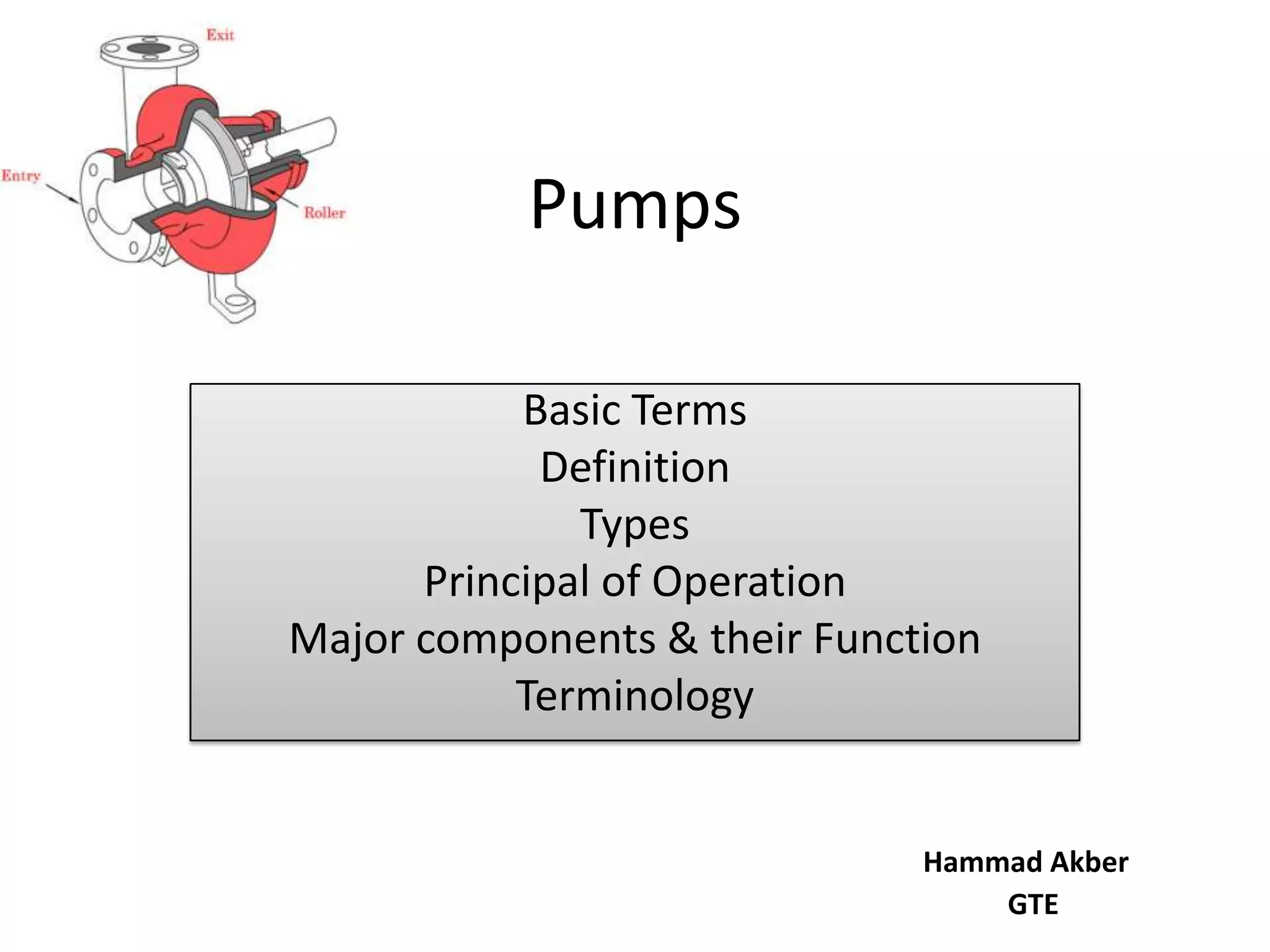
Pumps
Basic Terms
Definition
Types
Principal of Operation
Major components & their Function
Terminology
Hammad Akber
GTE
Basic Terms
• Volumetric Flow rate: Flow rate /Capacity of a pump is the amount of
liquid delivered by the pump per unit of time (m3/hr).
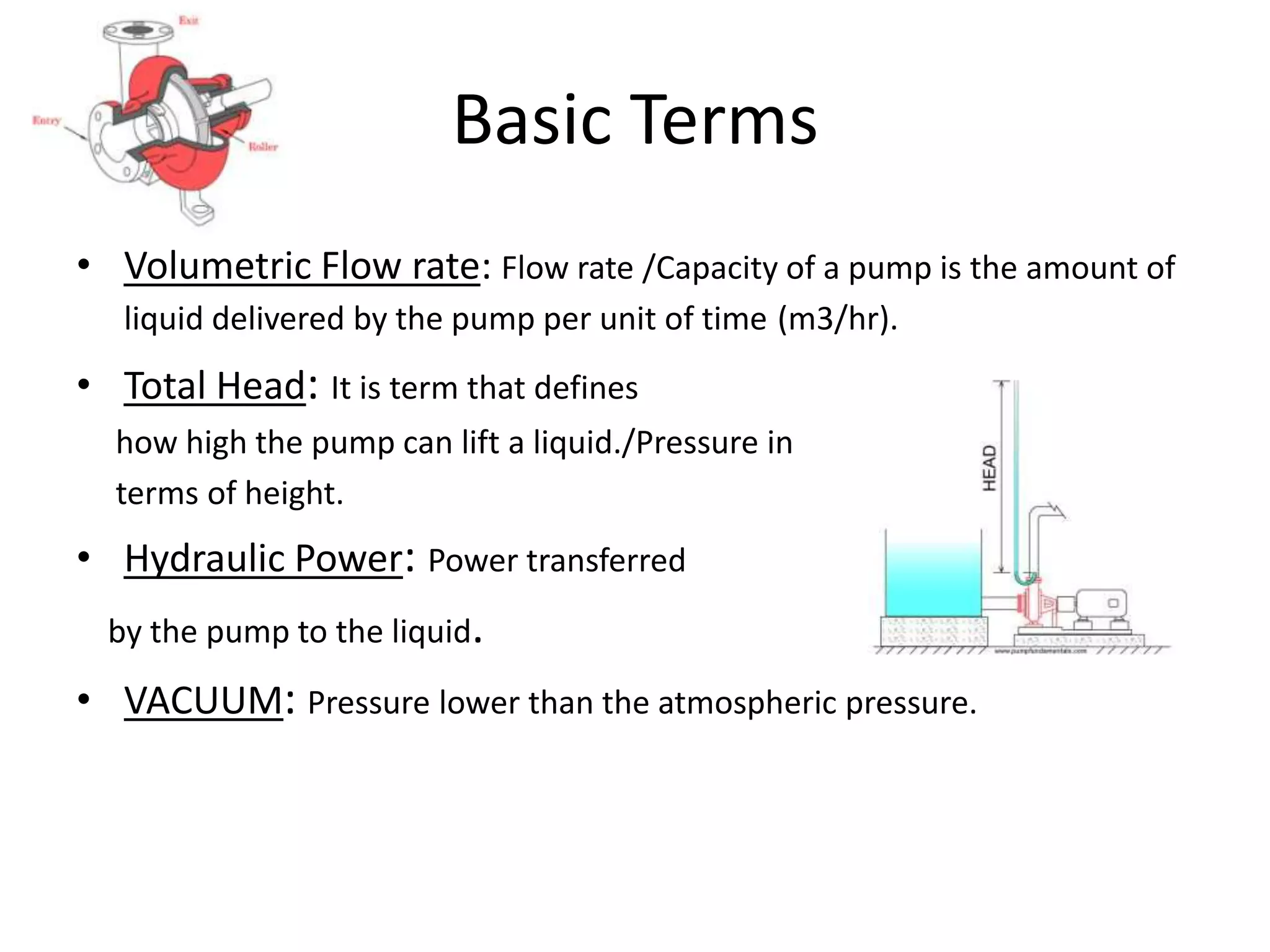
• Total Head: It is term that defines
how high the pump can lift a liquid./Pressure in
terms of height.
• Hydraulic Power: Power transferred
by the pump to the liquid.
• VACUUM: Pressure lower than the atmospheric pressure.
Definition
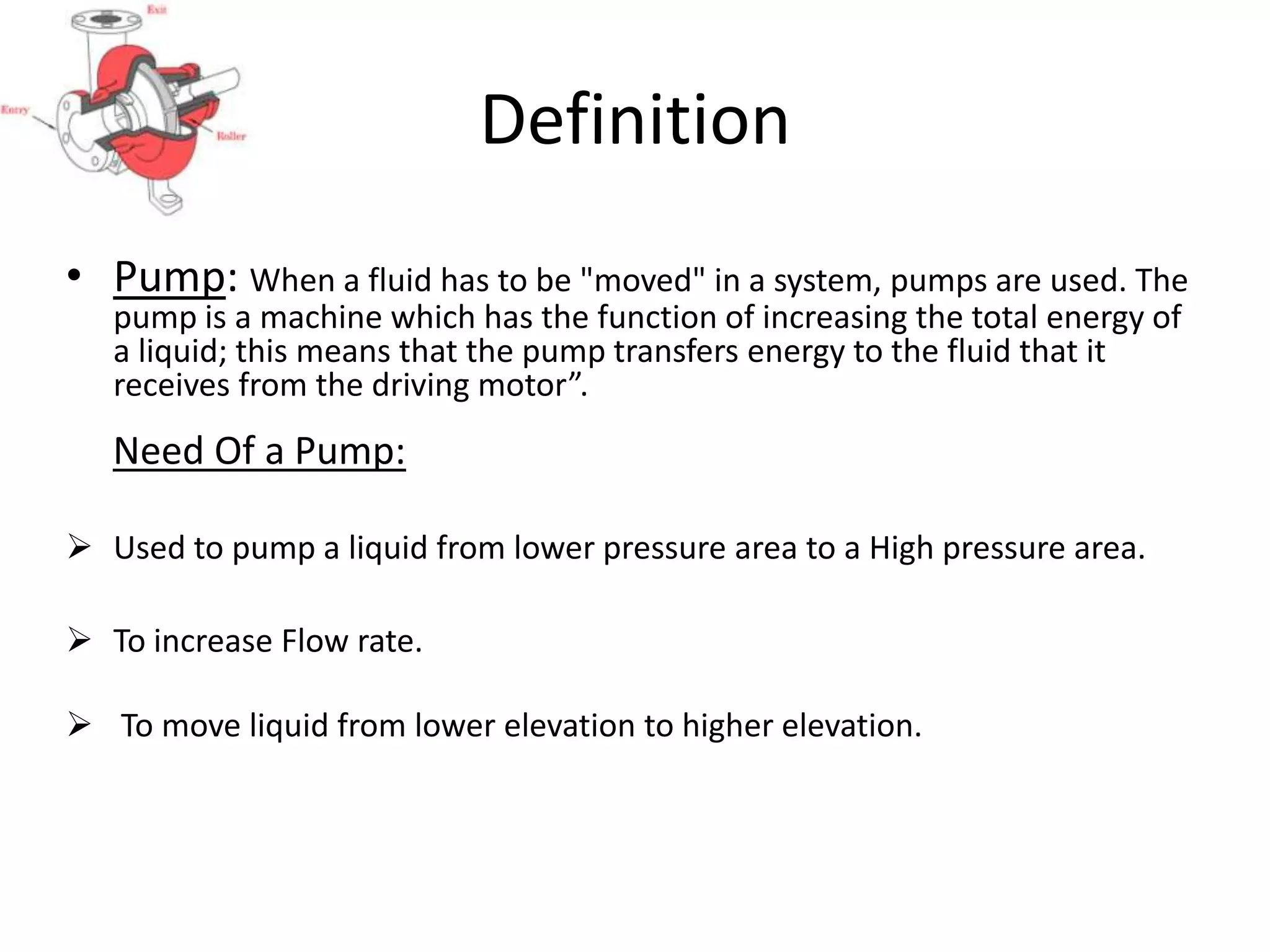
• Pump: When a fluid has to be "moved" in a system, pumps are used. The
pump is a machine which has the function of increasing the total energy of
a liquid; this means that the pump transfers energy to the fluid that it
receives from the driving motor”.
Need Of a Pump:
 Used to pump a liquid from lower pressure area to a High pressure area.
 To increase Flow rate.
 To move liquid from lower elevation to higher elevation.
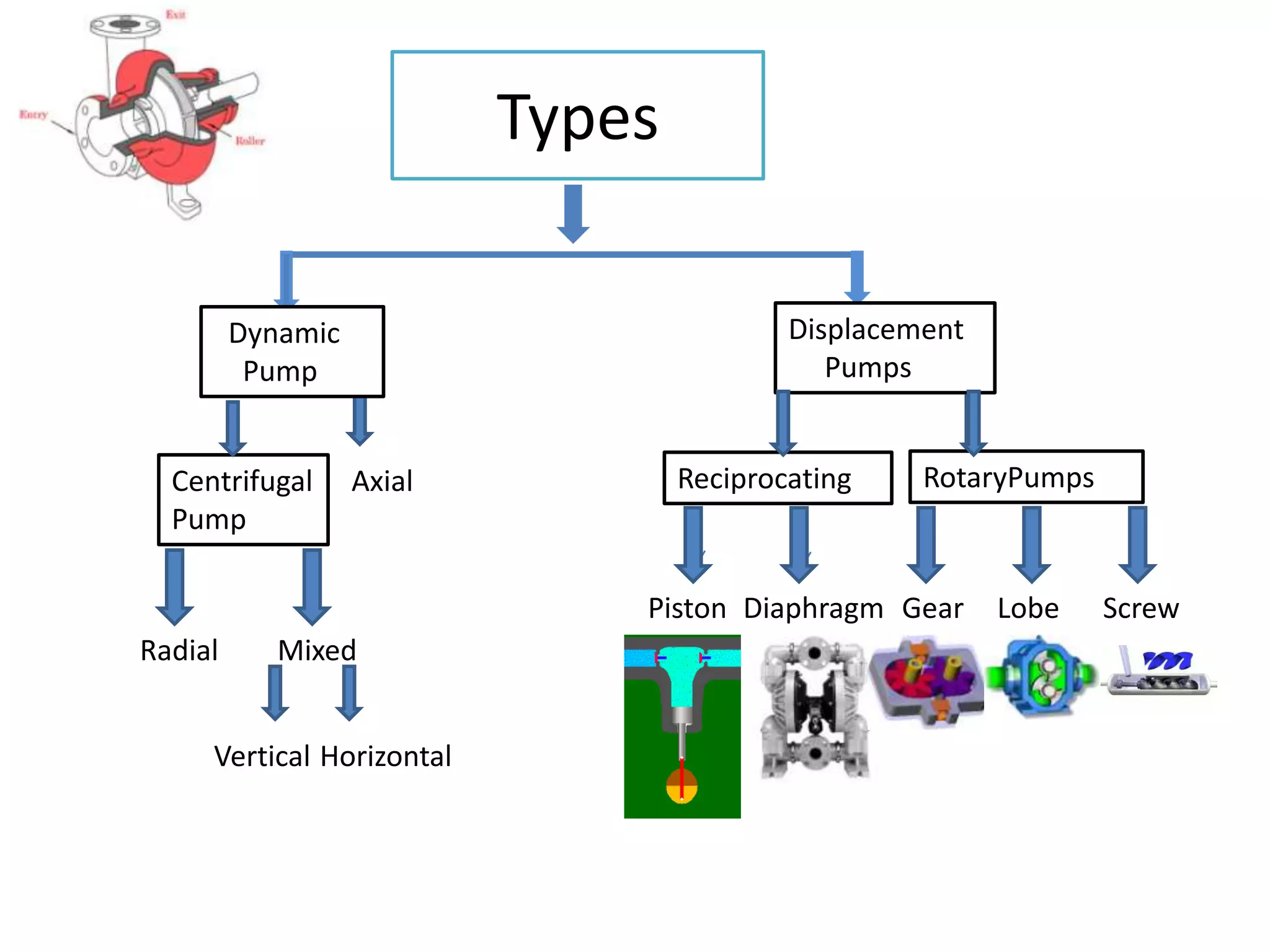
Types
Displacement
Pumps
Centrifugal
Pump
Reciprocating RotaryPumps
Dynamic
Pump
Radial Mixed
Gear ScrewPiston Diaphragm Lobe
Axial
Vertical Horizontal
Principle of Operation
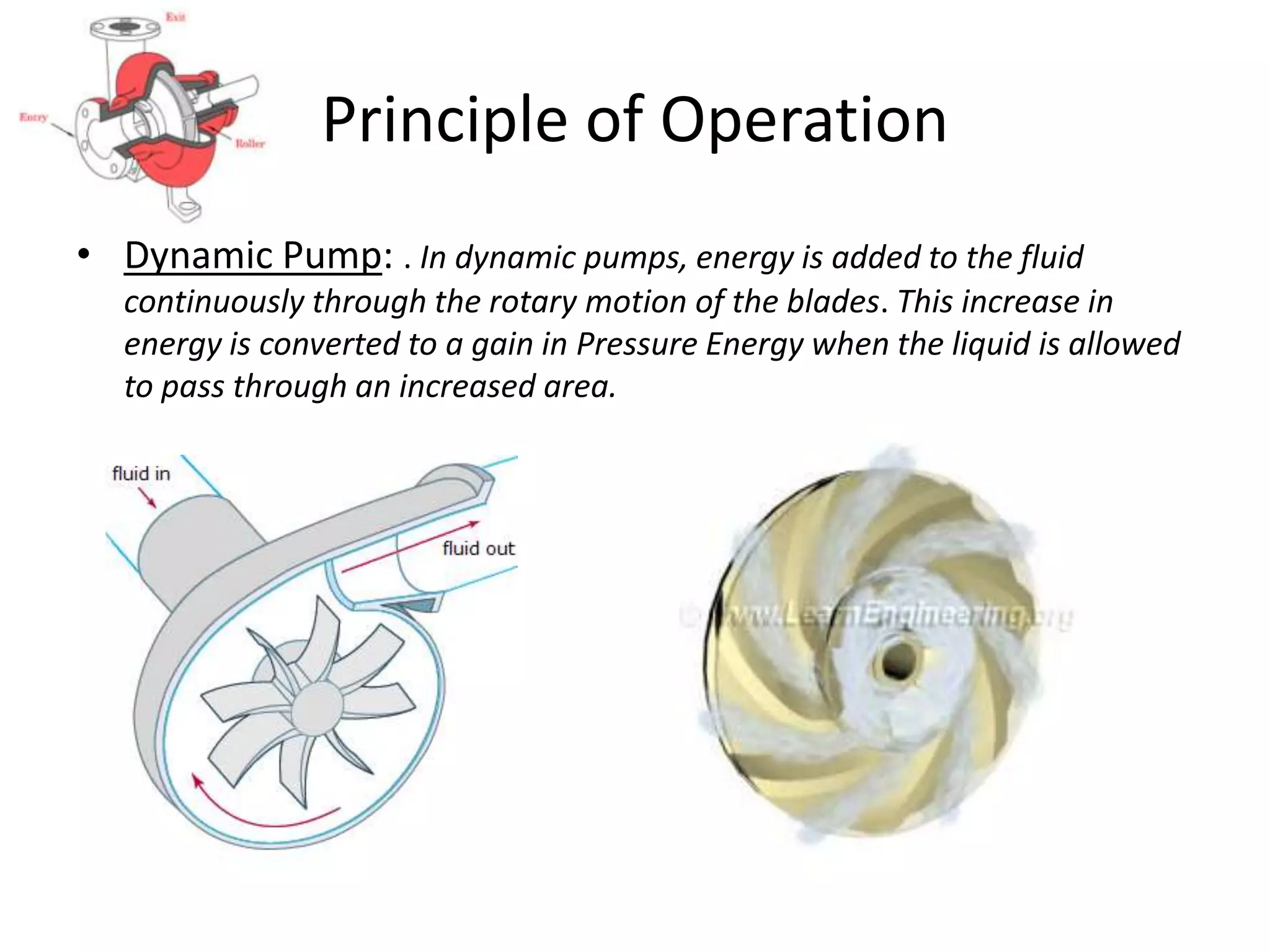
• Dynamic Pump: . In dynamic pumps, energy is added to the fluid
continuously through the rotary motion of the blades. This increase in
energy is converted to a gain in Pressure Energy when the liquid is allowed
to pass through an increased area.
Centrifugal Pump
• Working Principle:
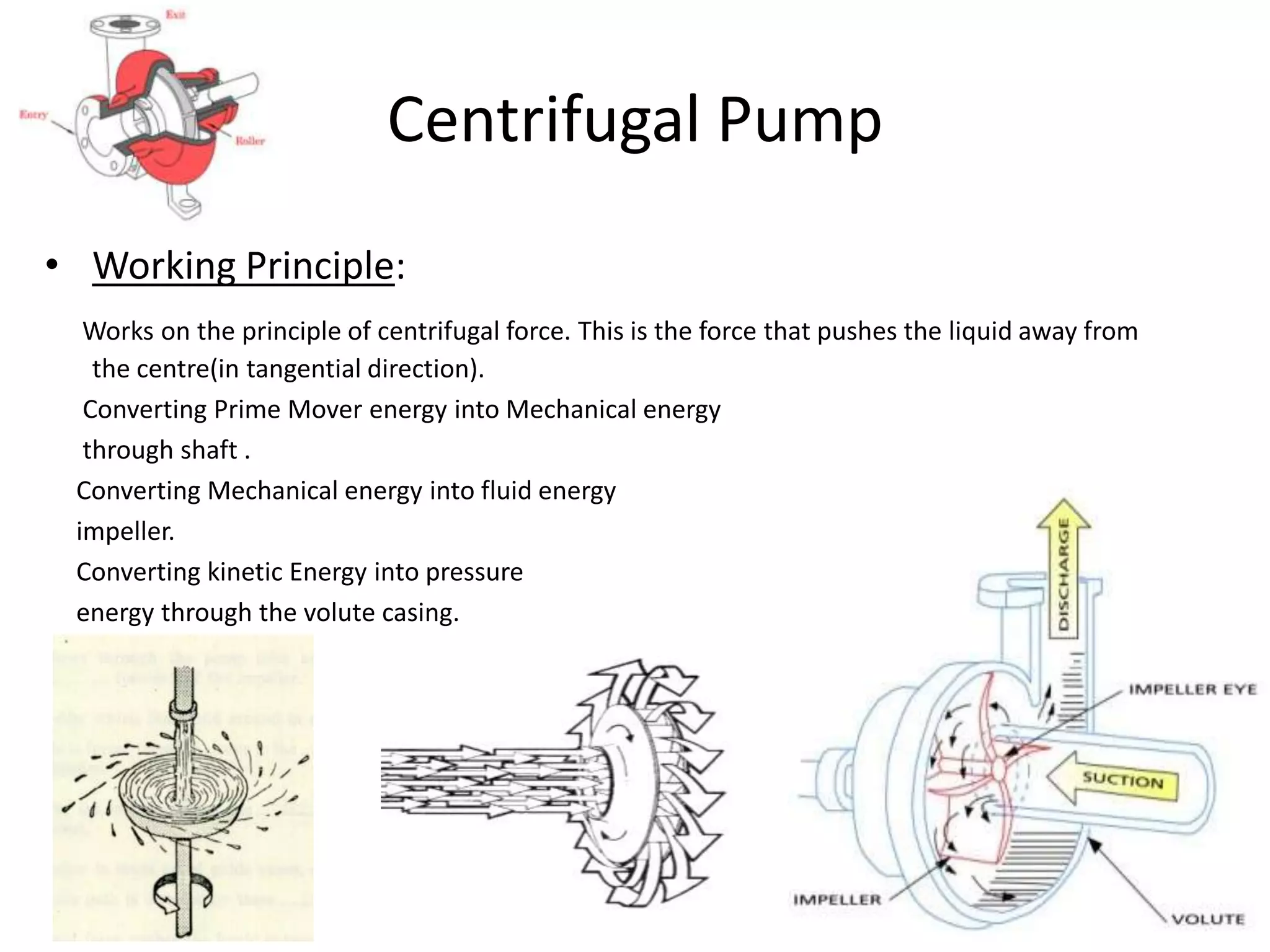
Works on the principle of centrifugal force. This is the force that pushes the liquid away from
the centre(in tangential direction).
Converting Prime Mover energy into Mechanical energy
through shaft .
Converting Mechanical energy into fluid energy
impeller.
Converting kinetic Energy into pressure
energy through the volute casing.
Centrifugal Pump
• Major Parts:
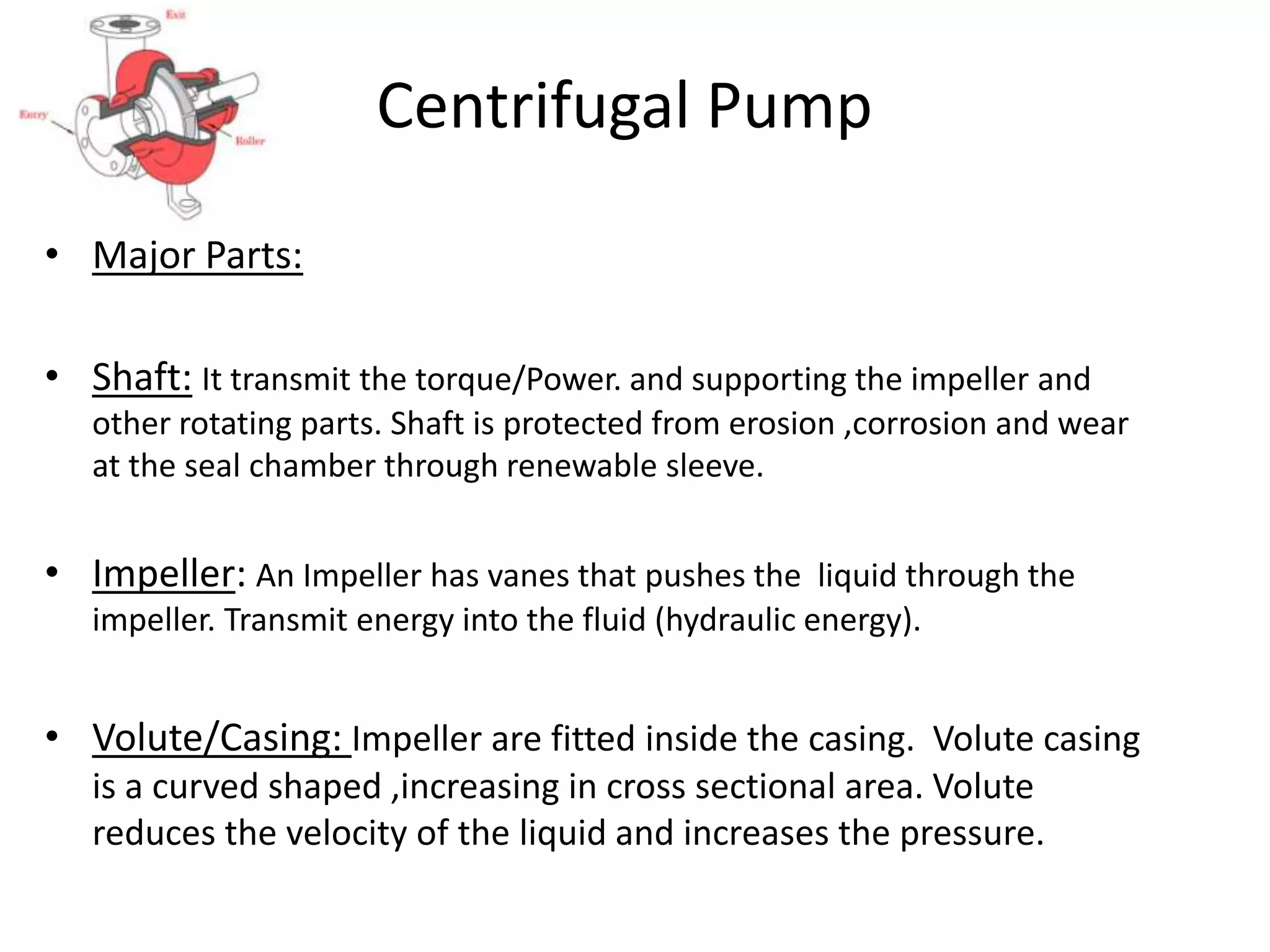
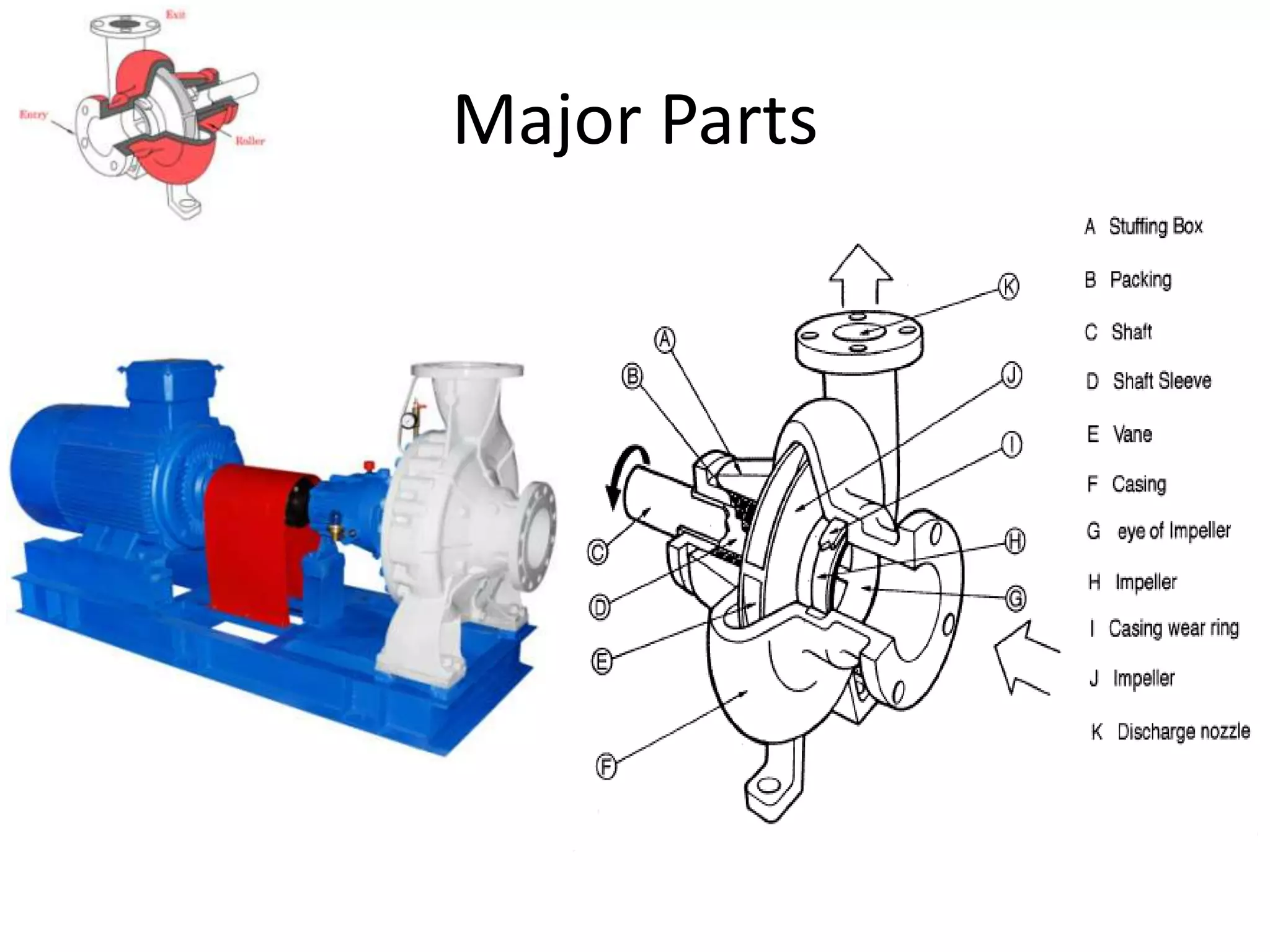
• Shaft: It transmit the torque/Power. and supporting the impeller and
other rotating parts. Shaft is protected from erosion ,corrosion and wear
at the seal chamber through renewable sleeve.
• Impeller: An Impeller has vanes that pushes the liquid through the
impeller. Transmit energy into the fluid (hydraulic energy).
• Volute/Casing: Impeller are fitted inside the casing. Volute casing
is a curved shaped ,increasing in cross sectional area. Volute
reduces the velocity of the liquid and increases the pressure.
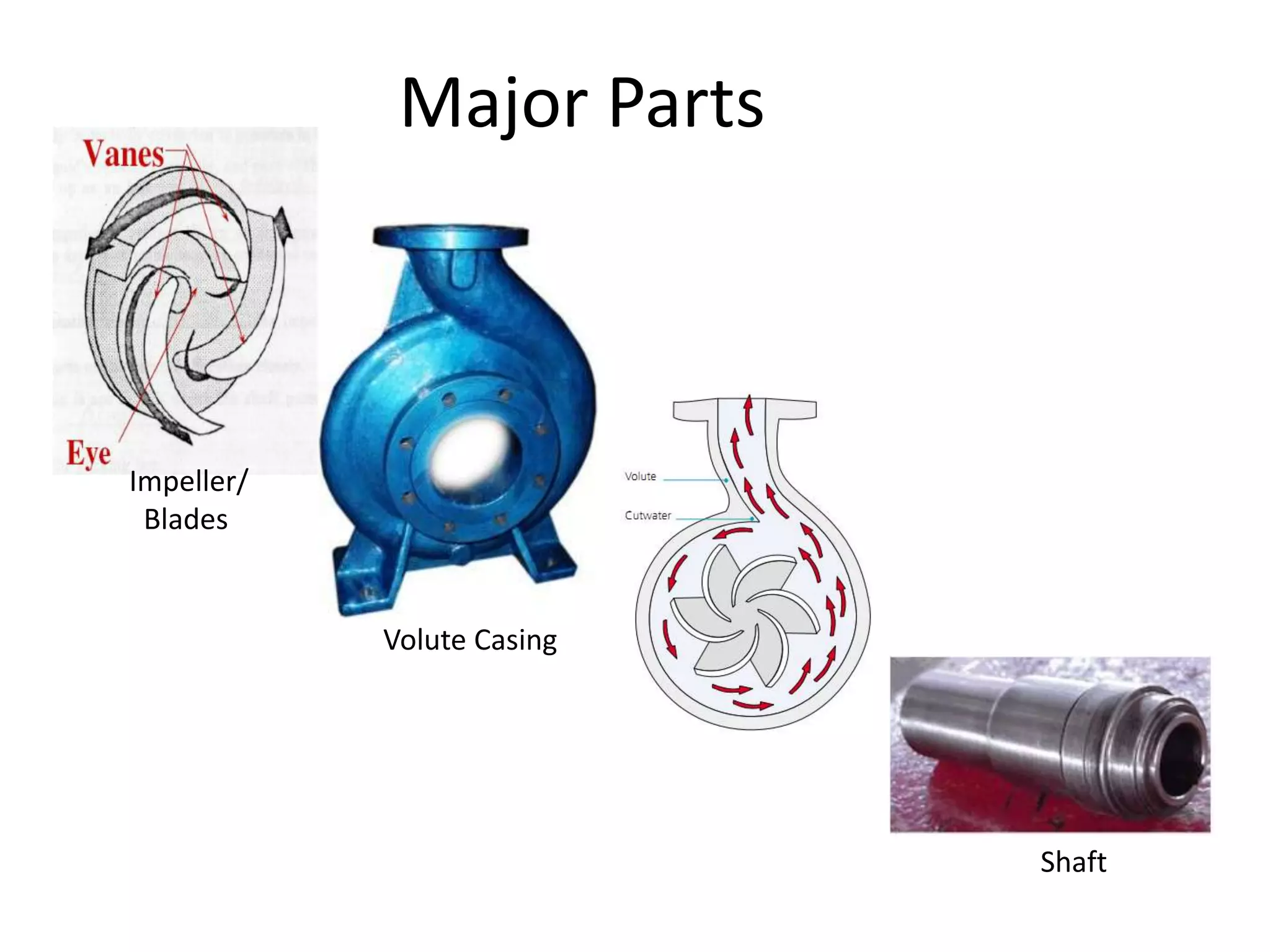
Major Parts
Volute Casing
Impeller/
Blades
Shaft
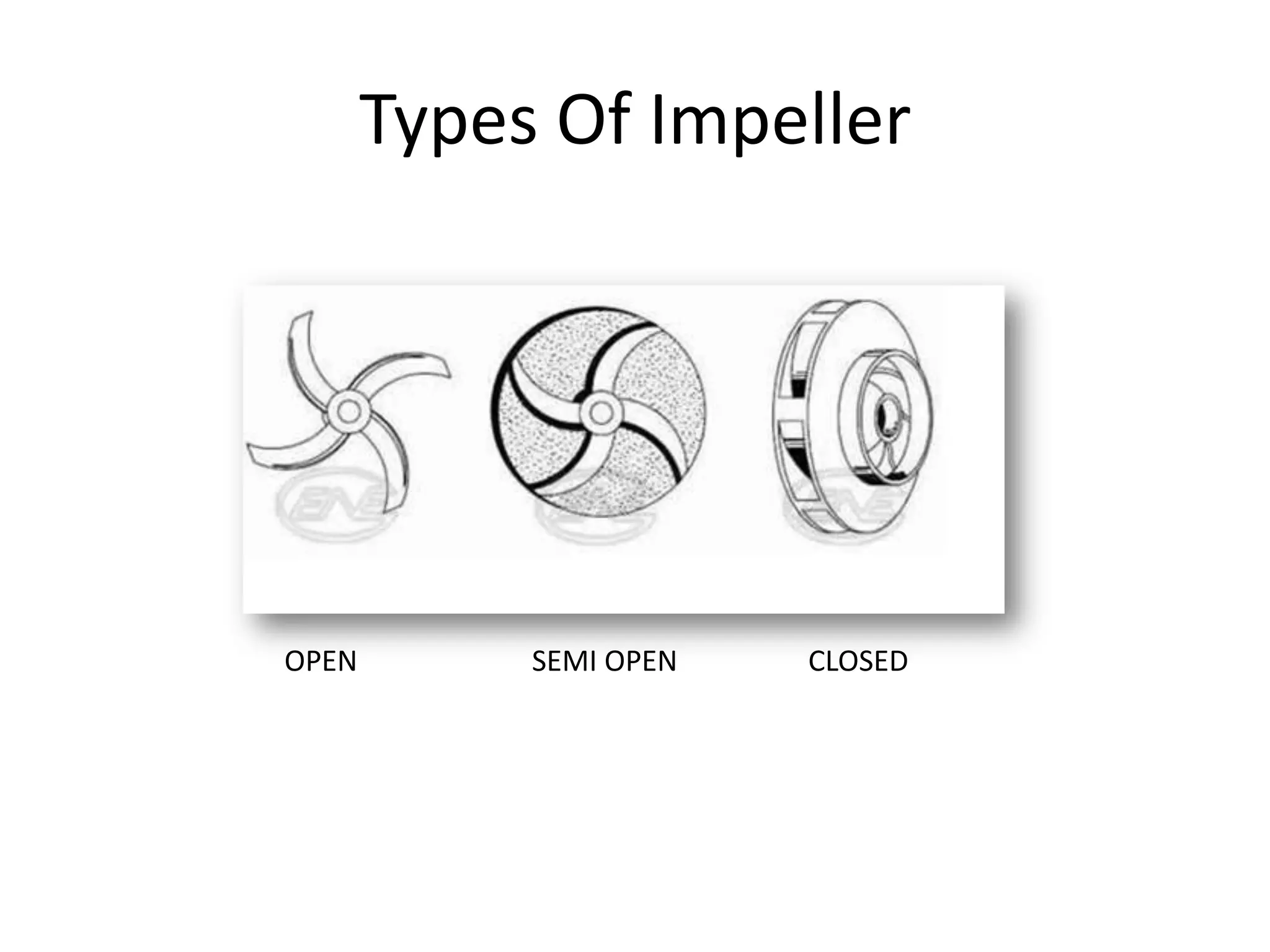
Types Of Impeller
OPEN SEMI OPEN CLOSED
Major Parts
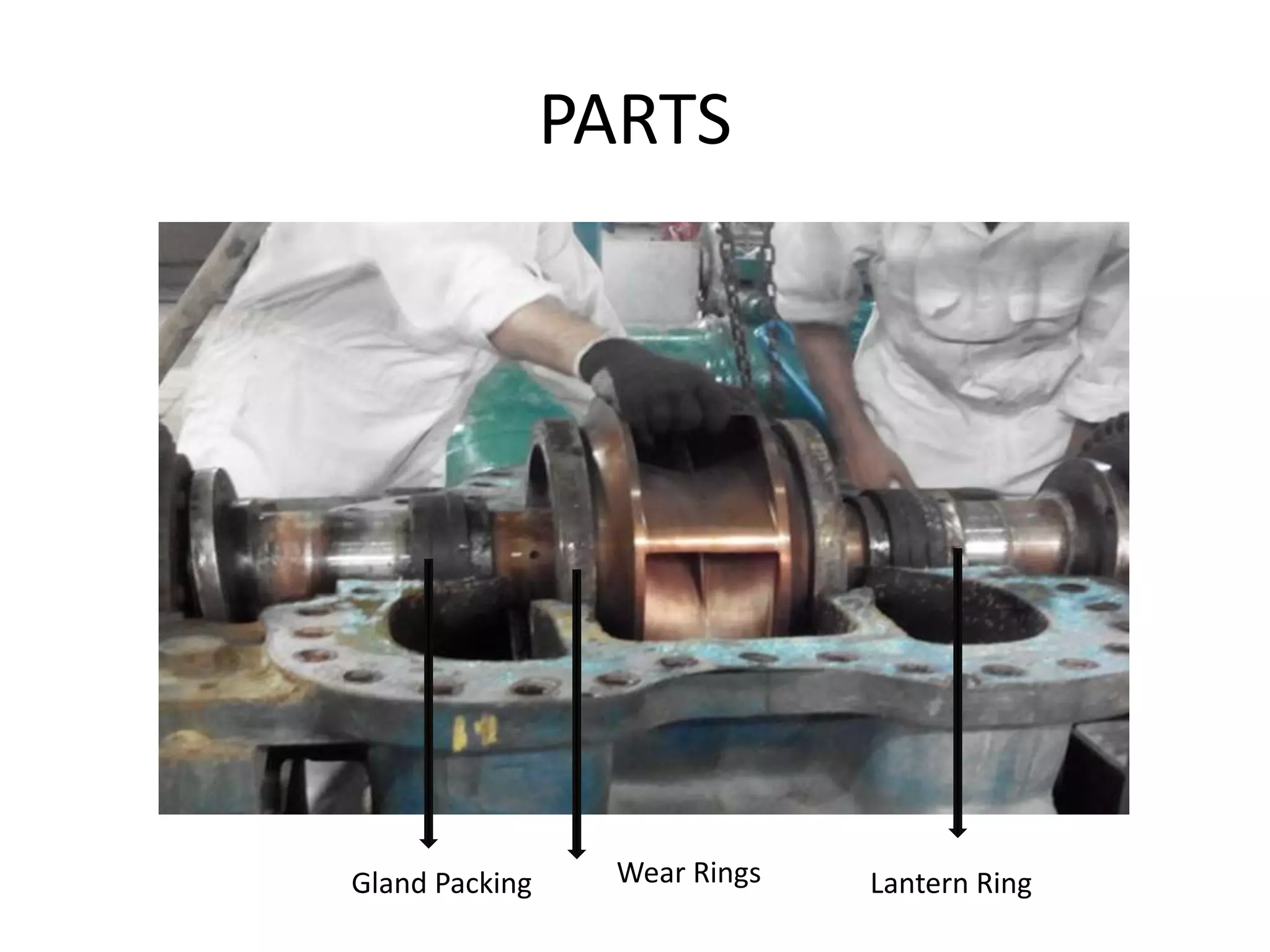
PARTS
Wear RingsGland Packing Lantern Ring
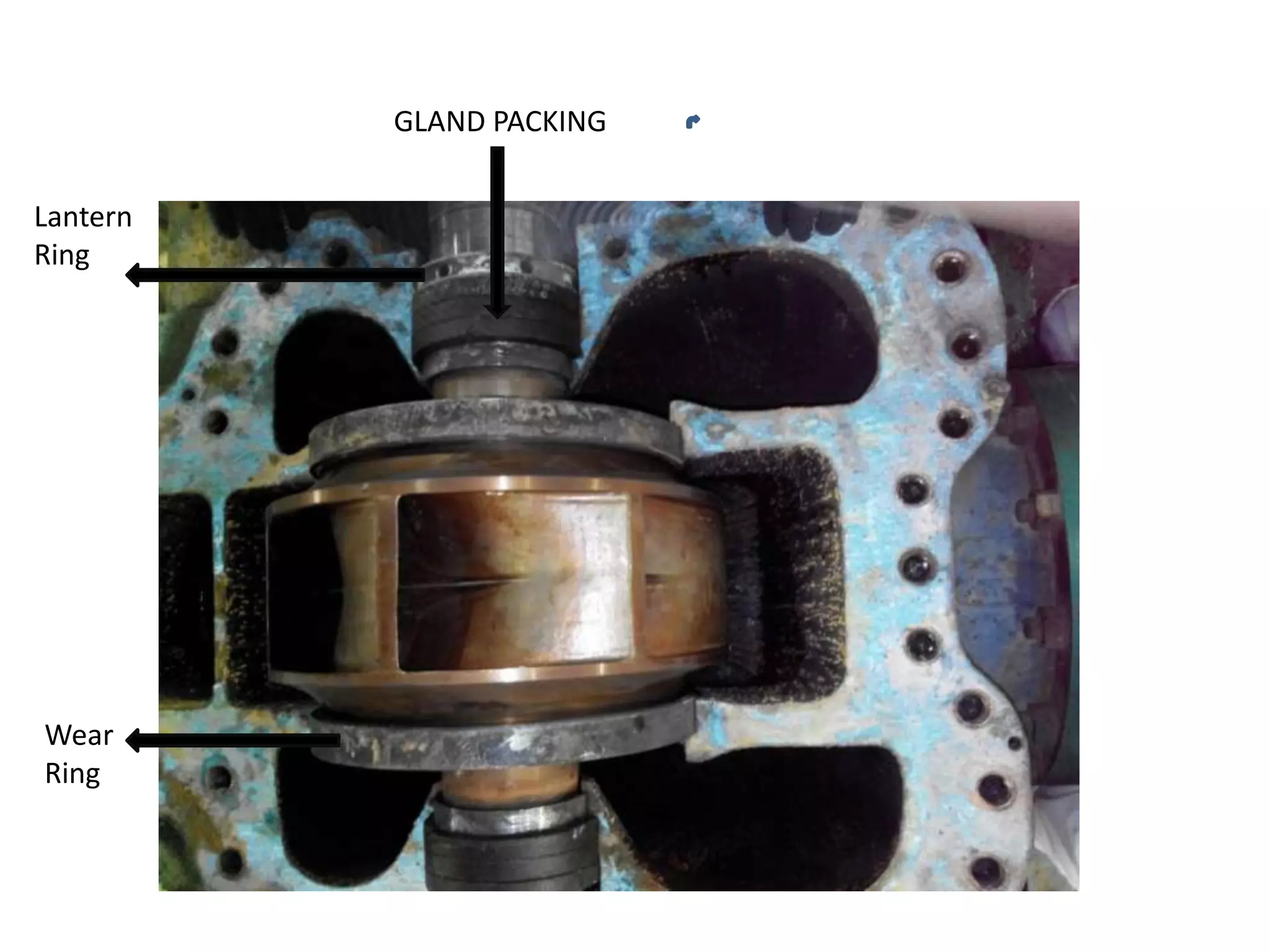
GLAND PACKING
Lantern
Ring
Wear
Ring
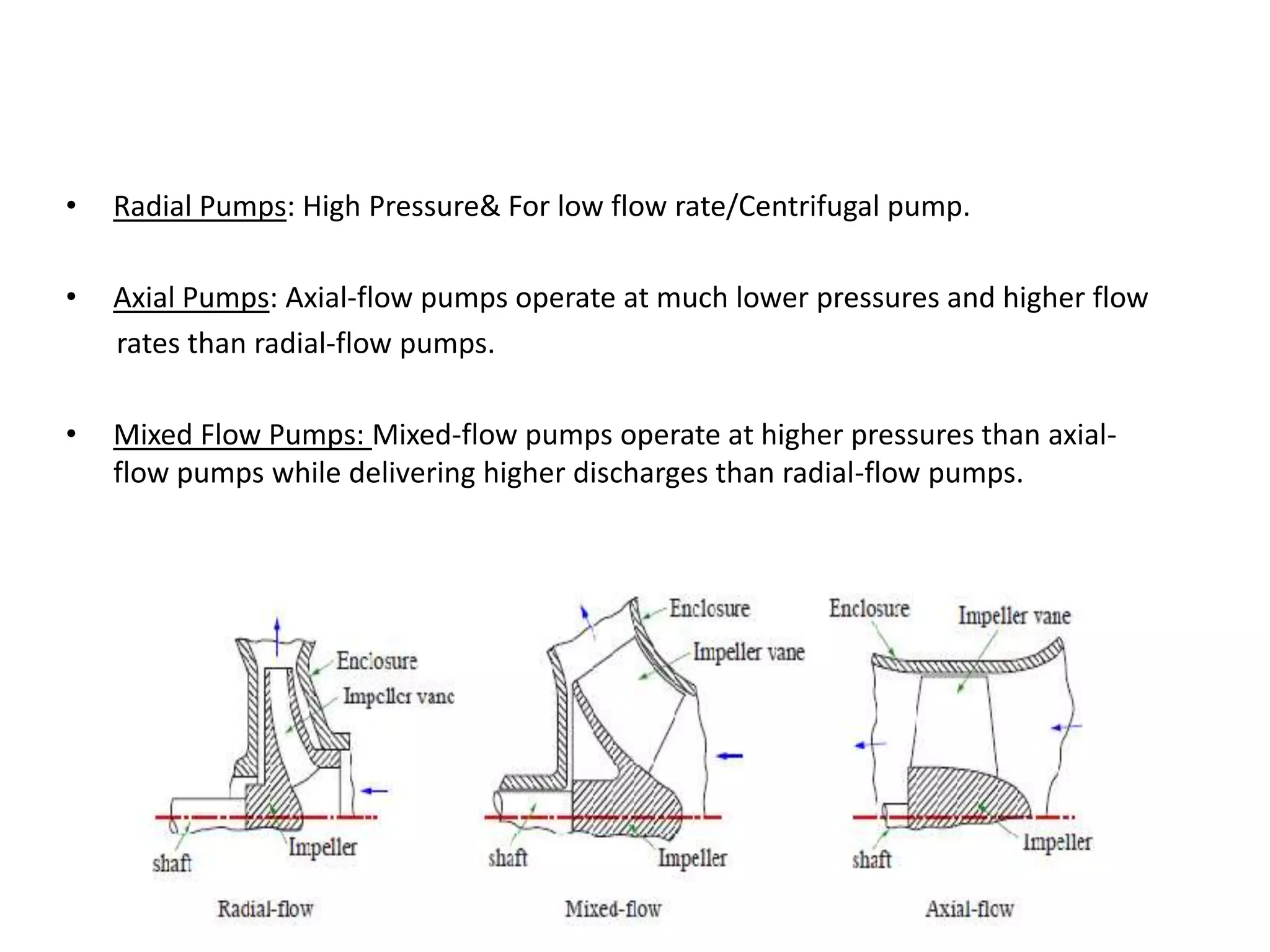
• Radial Pumps: High Pressure& For low flow rate/Centrifugal pump.
• Axial Pumps: Axial-flow pumps operate at much lower pressures and higher flow
rates than radial-flow pumps.
• Mixed Flow Pumps: Mixed-flow pumps operate at higher pressures than axial-
flow pumps while delivering higher discharges than radial-flow pumps.
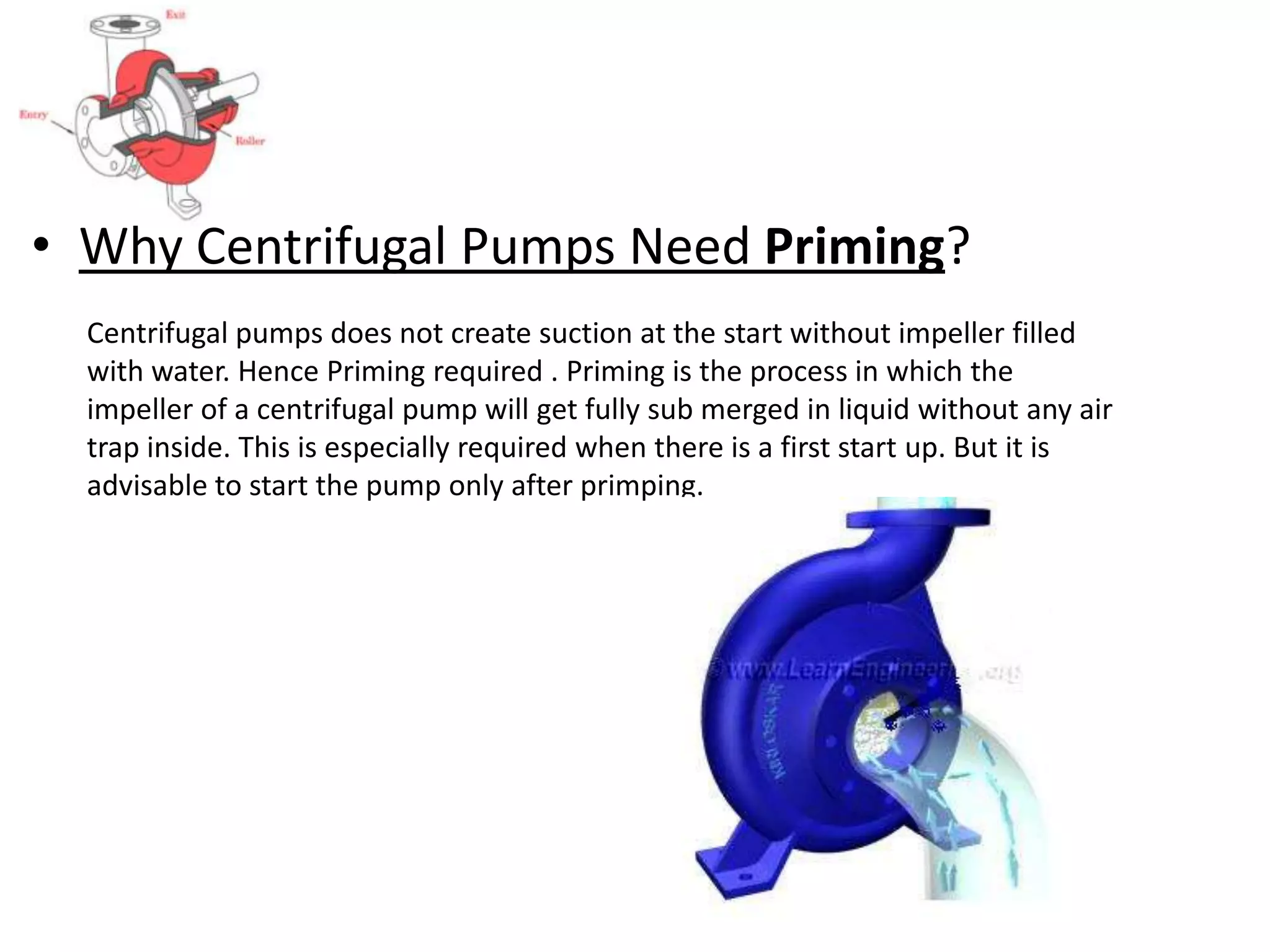
• Why Centrifugal Pumps Need Priming?
Centrifugal pumps does not create suction at the start without impeller filled
with water. Hence Priming required . Priming is the process in which the
impeller of a centrifugal pump will get fully sub merged in liquid without any air
trap inside. This is especially required when there is a first start up. But it is
advisable to start the pump only after primping.
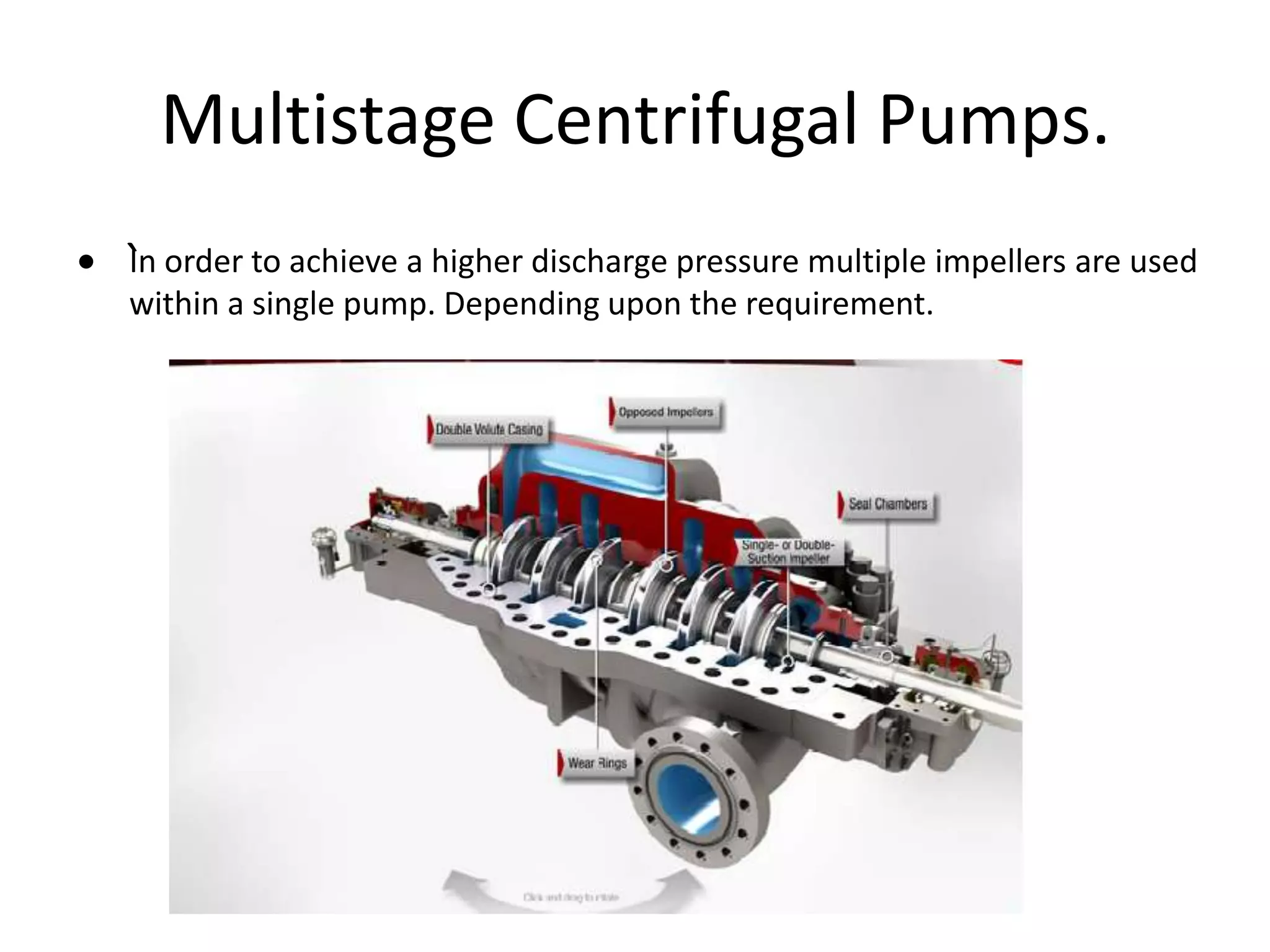
Multistage Centrifugal Pumps.
In order to achieve a higher discharge pressure multiple impellers are used
within a single pump. Depending upon the requirement.
• `
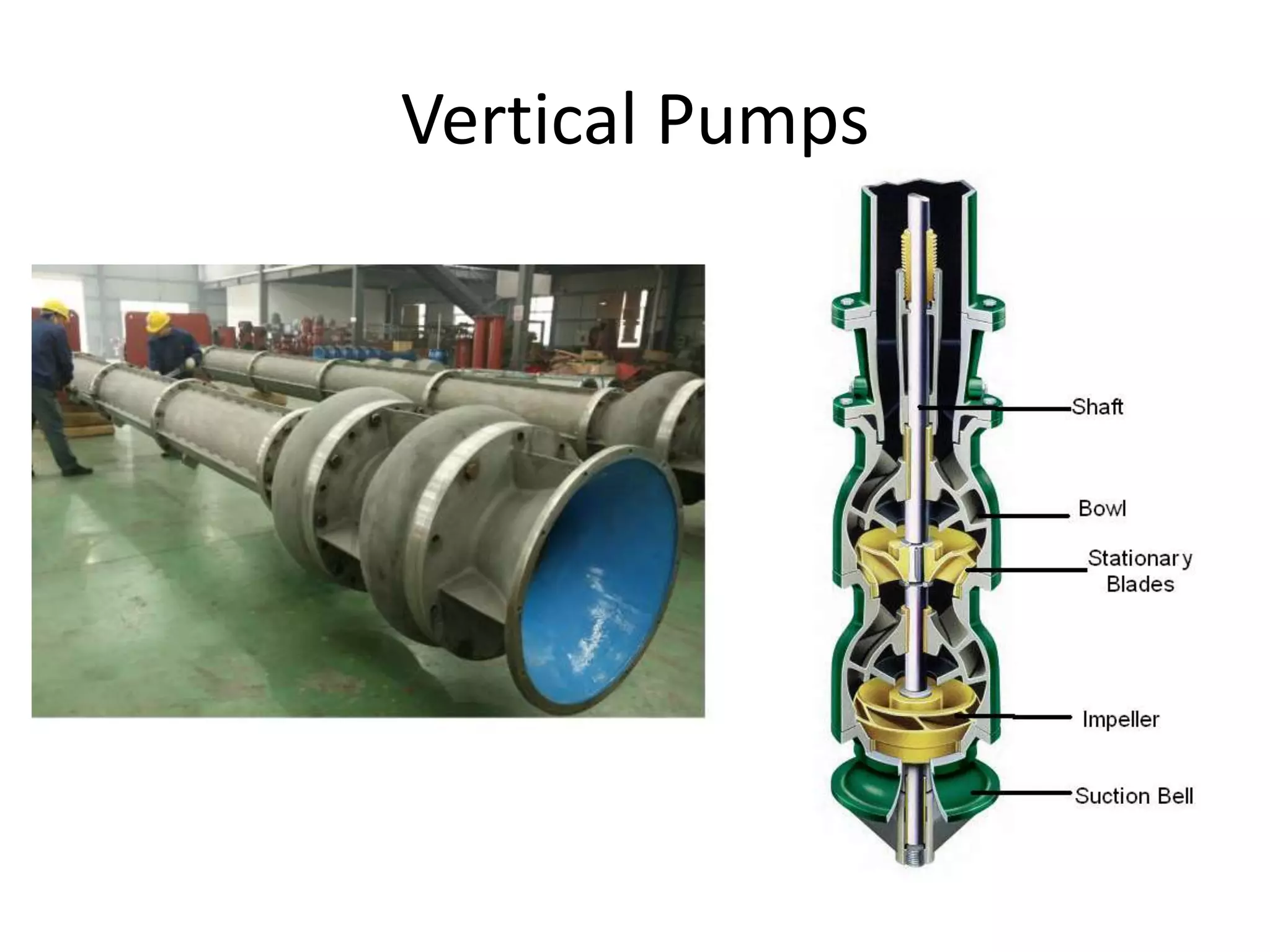
Vertical Pumps
Positive Displacement Pumps
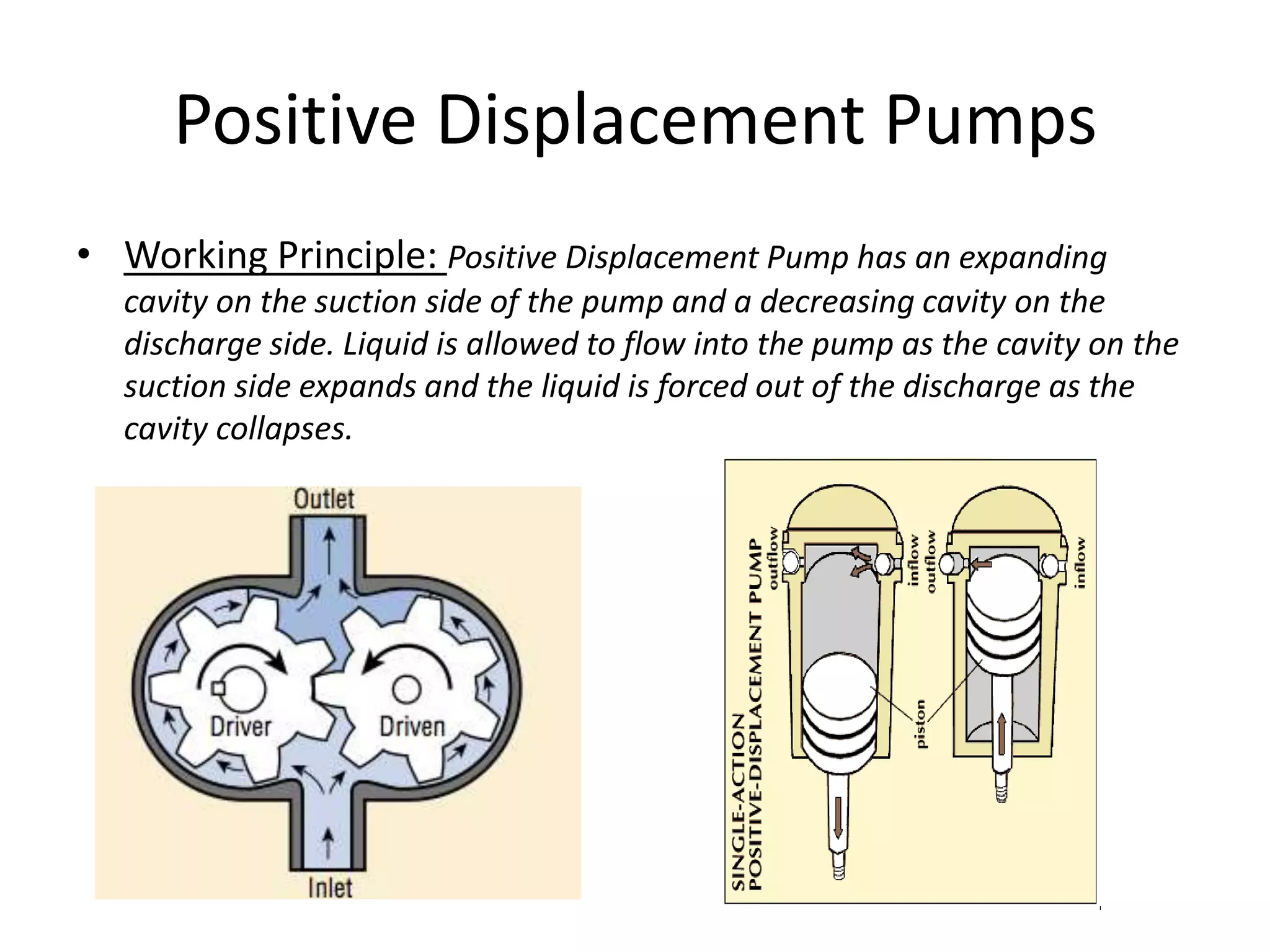
• Working Principle: Positive Displacement Pump has an expanding
cavity on the suction side of the pump and a decreasing cavity on the
discharge side. Liquid is allowed to flow into the pump as the cavity on the
suction side expands and the liquid is forced out of the discharge as the
cavity collapses.
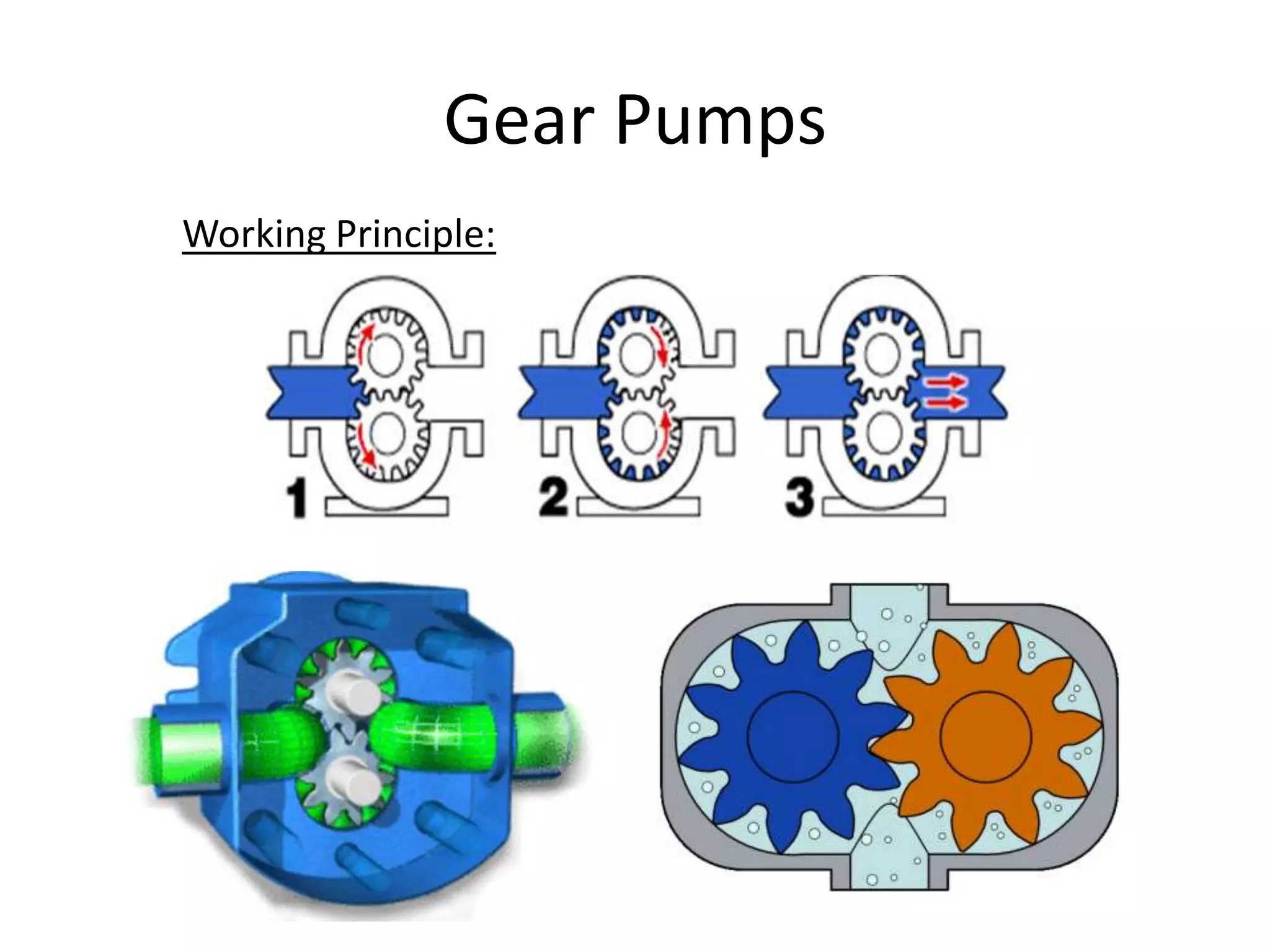
Gear Pumps
Working Principle:
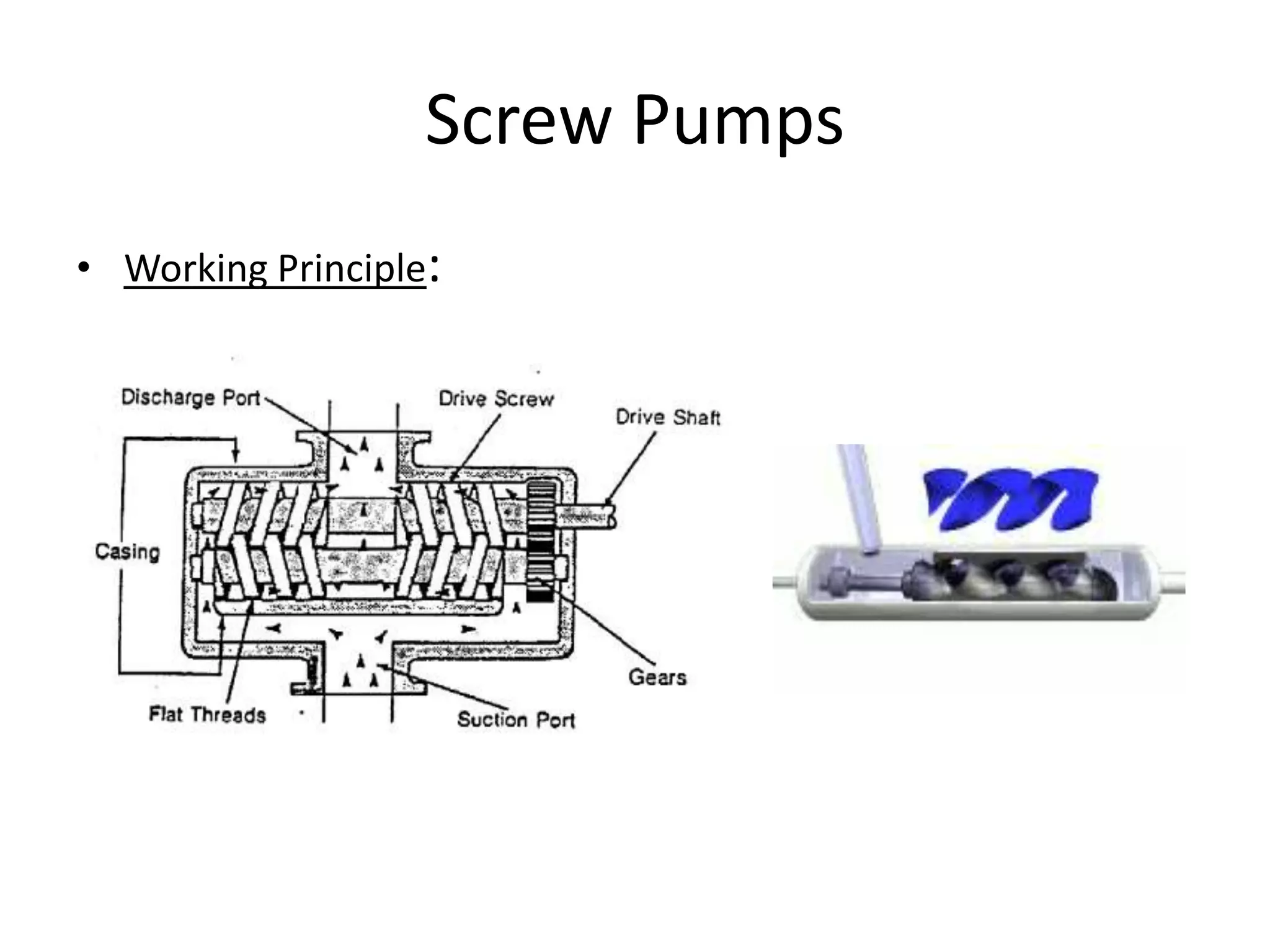
Screw Pumps
• Working Principle:
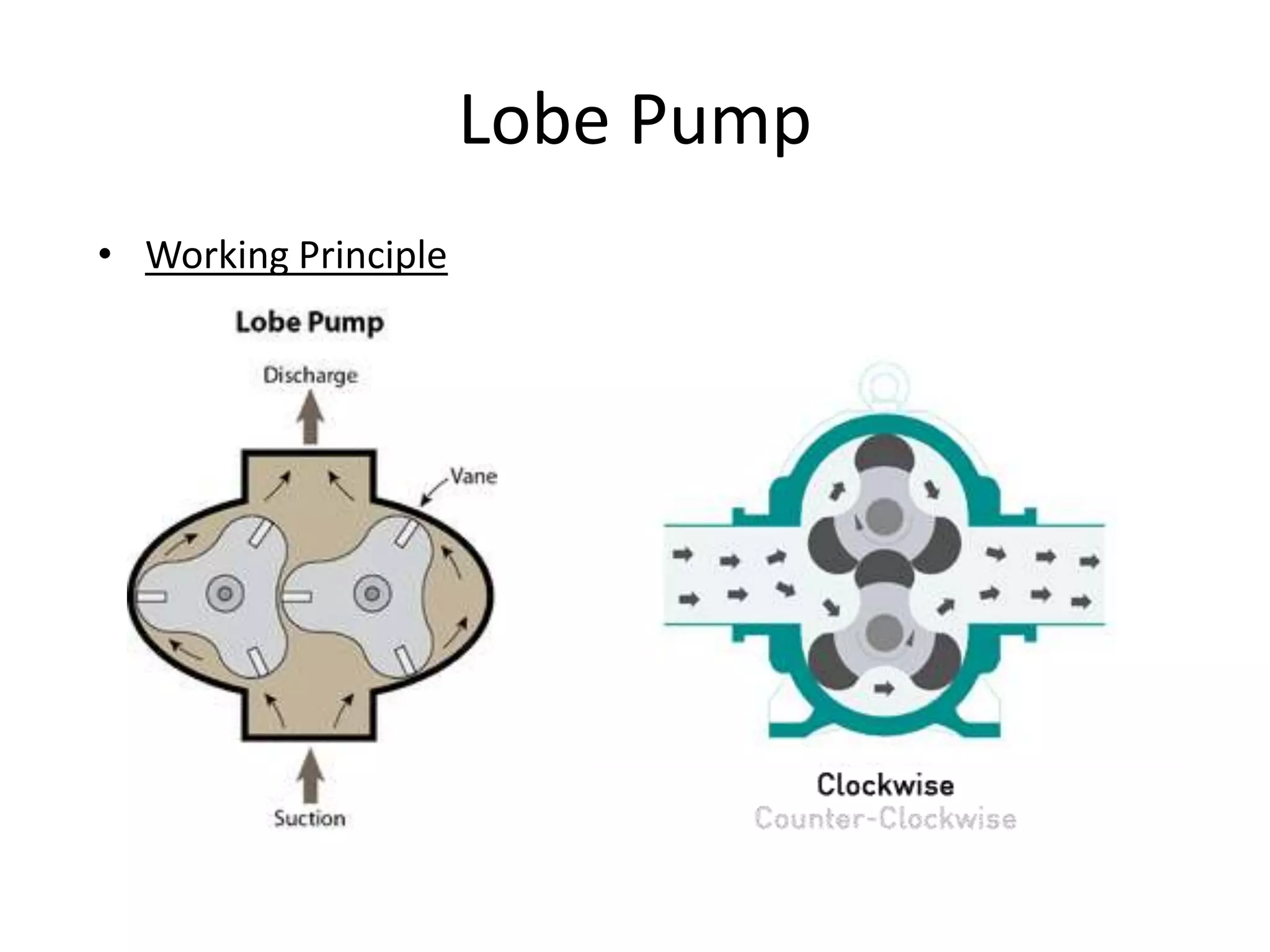
Lobe Pump
• Working Principle
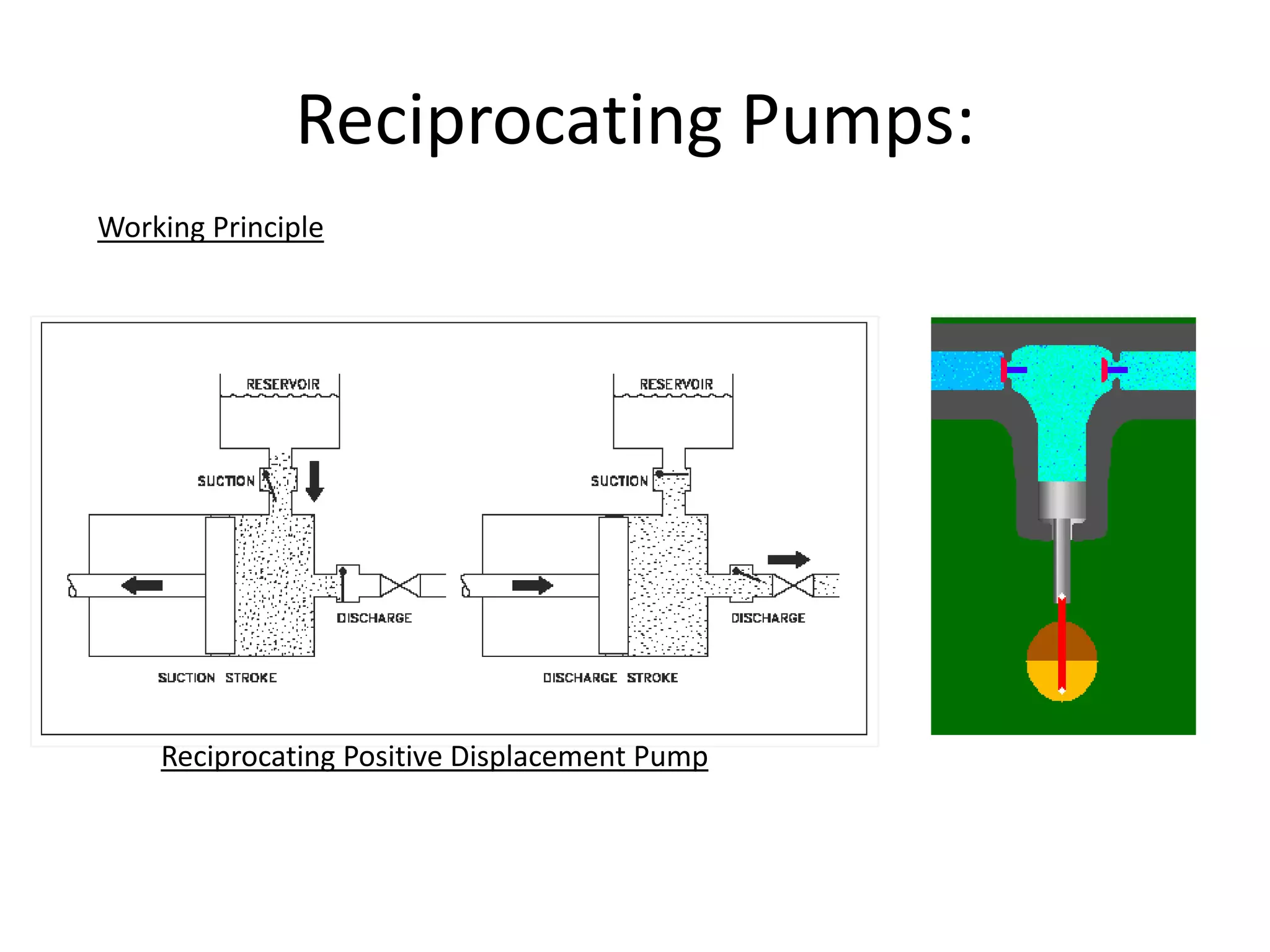
Reciprocating Pumps:
Working Principle
Reciprocating Positive Displacement Pump
Displacement Vs Centrifugal
• Centrifugal pumps are suitable for low head and high flow rate.
• PD pumps produce high head and low flow rate.
• PD are suitable for High Viscosity application.
• Centrifugal Pumps are not recommended for high viscosity application
because as viscosity increases its flow deceases.
• Usually a relieve valve is attached with the displacement pumps.
Related Terminologies
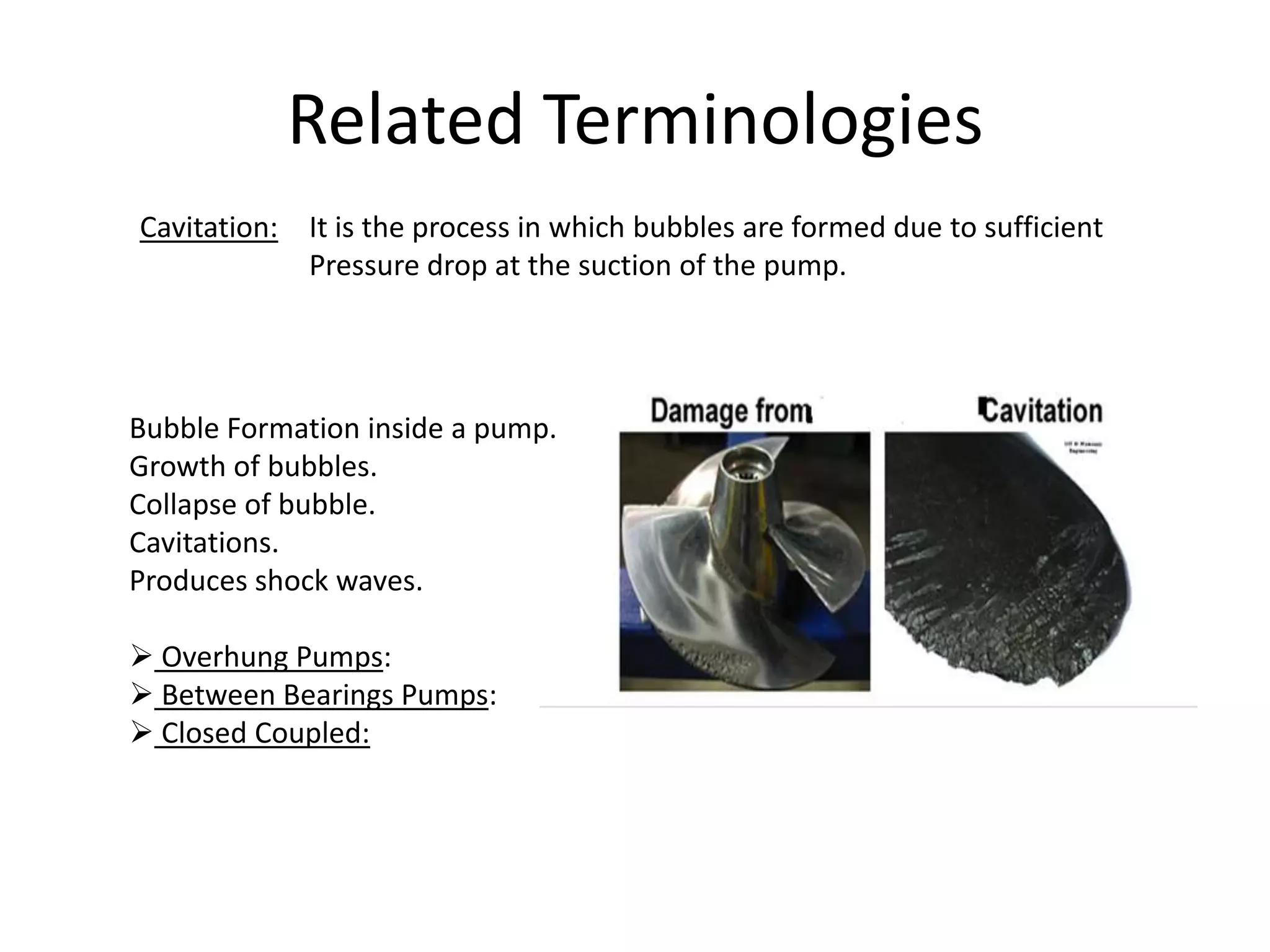
Cavitation: It is the process in which bubbles are formed due to sufficient
Pressure drop at the suction of the pump.
Bubble Formation inside a pump.
Growth of bubbles.
Collapse of bubble.
Cavitations.
Produces shock waves.
 Overhung Pumps:
 Between Bearings Pumps:
 Closed Coupled:
QUESTIONS?

Basics of pump

  • 1.
    Pumps Basic Terms Definition Types Principal ofOperation Major components & their Function Terminology Hammad Akber GTE
  • 2.
    Basic Terms • VolumetricFlow rate: Flow rate /Capacity of a pump is the amount of liquid delivered by the pump per unit of time (m3/hr). • Total Head: It is term that defines how high the pump can lift a liquid./Pressure in terms of height. • Hydraulic Power: Power transferred by the pump to the liquid. • VACUUM: Pressure lower than the atmospheric pressure.
  • 3.
    Definition • Pump: Whena fluid has to be "moved" in a system, pumps are used. The pump is a machine which has the function of increasing the total energy of a liquid; this means that the pump transfers energy to the fluid that it receives from the driving motor”. Need Of a Pump:  Used to pump a liquid from lower pressure area to a High pressure area.  To increase Flow rate.  To move liquid from lower elevation to higher elevation.
  • 4.
  • 5.
    Principle of Operation •Dynamic Pump: . In dynamic pumps, energy is added to the fluid continuously through the rotary motion of the blades. This increase in energy is converted to a gain in Pressure Energy when the liquid is allowed to pass through an increased area.
  • 6.
    Centrifugal Pump • WorkingPrinciple: Works on the principle of centrifugal force. This is the force that pushes the liquid away from the centre(in tangential direction). Converting Prime Mover energy into Mechanical energy through shaft . Converting Mechanical energy into fluid energy impeller. Converting kinetic Energy into pressure energy through the volute casing.
  • 7.
    Centrifugal Pump • MajorParts: • Shaft: It transmit the torque/Power. and supporting the impeller and other rotating parts. Shaft is protected from erosion ,corrosion and wear at the seal chamber through renewable sleeve. • Impeller: An Impeller has vanes that pushes the liquid through the impeller. Transmit energy into the fluid (hydraulic energy). • Volute/Casing: Impeller are fitted inside the casing. Volute casing is a curved shaped ,increasing in cross sectional area. Volute reduces the velocity of the liquid and increases the pressure.
  • 8.
  • 9.
    Types Of Impeller OPENSEMI OPEN CLOSED
  • 10.
  • 11.
  • 12.
  • 13.
    • Radial Pumps:High Pressure& For low flow rate/Centrifugal pump. • Axial Pumps: Axial-flow pumps operate at much lower pressures and higher flow rates than radial-flow pumps. • Mixed Flow Pumps: Mixed-flow pumps operate at higher pressures than axial- flow pumps while delivering higher discharges than radial-flow pumps.
  • 14.
    • Why CentrifugalPumps Need Priming? Centrifugal pumps does not create suction at the start without impeller filled with water. Hence Priming required . Priming is the process in which the impeller of a centrifugal pump will get fully sub merged in liquid without any air trap inside. This is especially required when there is a first start up. But it is advisable to start the pump only after primping.
  • 15.
    Multistage Centrifugal Pumps. Inorder to achieve a higher discharge pressure multiple impellers are used within a single pump. Depending upon the requirement. • `
  • 16.
  • 17.
    Positive Displacement Pumps •Working Principle: Positive Displacement Pump has an expanding cavity on the suction side of the pump and a decreasing cavity on the discharge side. Liquid is allowed to flow into the pump as the cavity on the suction side expands and the liquid is forced out of the discharge as the cavity collapses.
  • 18.
  • 19.
  • 20.
  • 21.
  • 22.
    Displacement Vs Centrifugal •Centrifugal pumps are suitable for low head and high flow rate. • PD pumps produce high head and low flow rate. • PD are suitable for High Viscosity application. • Centrifugal Pumps are not recommended for high viscosity application because as viscosity increases its flow deceases. • Usually a relieve valve is attached with the displacement pumps.
  • 23.
    Related Terminologies Cavitation: Itis the process in which bubbles are formed due to sufficient Pressure drop at the suction of the pump. Bubble Formation inside a pump. Growth of bubbles. Collapse of bubble. Cavitations. Produces shock waves.  Overhung Pumps:  Between Bearings Pumps:  Closed Coupled:
  • 25.