Reading and Studying
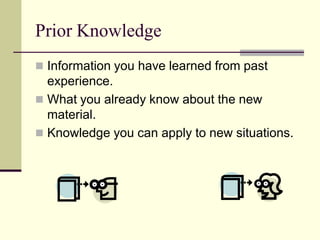
Prior Knowledge
 Information you have learned from past
  experience.
 What you already know about the new
  material.
 Knowledge you can apply to new situations.
Take an Active Approach to Textbook
Reading
 Approach the text with an open mind.
 Know that some texts require extra time and
  concentration.
 Ask for help for anything you do not
  understand.
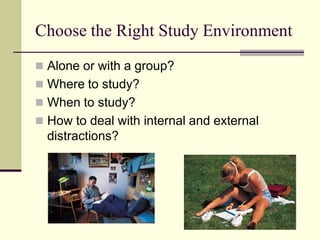
Choose the Right Study Environment
 Alone or with a group?
 Where to study?
 When to study?
 How to deal with internal and external
  distractions?
Know your Purpose for Reading
 Read for understanding.
 Read to critically evaluate.
 Read for practical application.
 Read for pleasure.
SQ3R Reading/Study System

 Survey: Look over text information BEFORE
 you read the material.
     Check information at beginning of chapter.
     Look at all titles, bold print, italics, charts, tables.
     Look at the chapter’s end summary.
 Change headings into questions to guide
  your reading and predict what is included in
  the information.
     Example question:
What does “questioning” mean in SQ3R?
 Read the text with active involvement.
   Focus on your Q-stage questions.
   Look for important concepts to mark in the text
    or to note on your paper.
   Mark or annotate your textbook.
Mark/Annotate Your Text
 Mark the text only after you read the
  material once through.
 Mark at the end of a paragraph or passage.
 Mark only main ideas, major details, terms
  and definitions.
 Mark passages you don’t understand with “?”
Annotation
 Make notes or write questions in the margin.
 Note connections to previous text
  information.
 Develop your own system of notations.
 Use different colored highlighters.
 Use highlighters sparingly.
 Recite: Go back and answer the questions
 you identified in the Q-stage.
     Write the answers in notes from memory.
     Say the answers aloud by telling yourself or
      teaching someone else.
 Review: Do something to help you
  remember both soon after reading and then
  on a regular basis throughout the semester.
     Skim/reread notes.
     Answer test questions.
     Quiz yourself.
     Make a chapter outline.
   Re-survey/skim the material.
   Recite (out loud) key concepts/ideas.
   Make flash cards.
   Review marked/highlighted material.
   Think critically.
   Discuss material with classmate or study
    group.
   Connect new information to prior knowledge.
Critical Reading/Thinking Involves
Looking for:
 Similarities.
 Differences.
 Cause and Effect Relationships.
 Examples to Ideas Development.
 Ideas to Examples Development.
 Evaluations.
Group Study Benefits
 Shared knowledge.
 Solidified knowledge.
 Increased motivation.
 Increased teamwork ability.


 Groups have both leaders and participants.
Effective Group Participants
 Get involved.
 Are organized.
 Are willing to discuss issues.
 Keep their word.
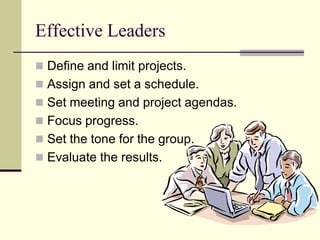
Effective Leaders
 Define and limit projects.
 Assign and set a schedule.
 Set meeting and project agendas.
 Focus progress.
 Set the tone for the group.
 Evaluate the results.
Strategies for Group Success
   Choose a leader.
   Set long-term and short-term goals.
   Learn to adjust to different personalities.
   Share the workload.
   Set a regular meeting schedule.
   Create study materials for each other.
   Help each other learn.
   Pool note-taking resources.

Reading and studying

  • 1.
  • 2.
    Prior Knowledge  Informationyou have learned from past experience.  What you already know about the new material.  Knowledge you can apply to new situations.
  • 3.
    Take an ActiveApproach to Textbook Reading  Approach the text with an open mind.  Know that some texts require extra time and concentration.  Ask for help for anything you do not understand.
  • 4.
    Choose the RightStudy Environment  Alone or with a group?  Where to study?  When to study?  How to deal with internal and external distractions?
  • 5.
    Know your Purposefor Reading  Read for understanding.  Read to critically evaluate.  Read for practical application.  Read for pleasure.
  • 6.
    SQ3R Reading/Study System Survey: Look over text information BEFORE you read the material.  Check information at beginning of chapter.  Look at all titles, bold print, italics, charts, tables.  Look at the chapter’s end summary.
  • 7.
     Change headingsinto questions to guide your reading and predict what is included in the information.  Example question: What does “questioning” mean in SQ3R?
  • 8.
     Read thetext with active involvement.  Focus on your Q-stage questions.  Look for important concepts to mark in the text or to note on your paper.  Mark or annotate your textbook.
  • 9.
    Mark/Annotate Your Text Mark the text only after you read the material once through.  Mark at the end of a paragraph or passage.  Mark only main ideas, major details, terms and definitions.  Mark passages you don’t understand with “?”
  • 10.
    Annotation  Make notesor write questions in the margin.  Note connections to previous text information.  Develop your own system of notations.  Use different colored highlighters.  Use highlighters sparingly.
  • 11.
     Recite: Goback and answer the questions you identified in the Q-stage.  Write the answers in notes from memory.  Say the answers aloud by telling yourself or teaching someone else.
  • 12.
     Review: Dosomething to help you remember both soon after reading and then on a regular basis throughout the semester.  Skim/reread notes.  Answer test questions.  Quiz yourself.  Make a chapter outline.
  • 13.
    Re-survey/skim the material.  Recite (out loud) key concepts/ideas.  Make flash cards.  Review marked/highlighted material.  Think critically.  Discuss material with classmate or study group.  Connect new information to prior knowledge.
  • 14.
    Critical Reading/Thinking Involves Lookingfor:  Similarities.  Differences.  Cause and Effect Relationships.  Examples to Ideas Development.  Ideas to Examples Development.  Evaluations.
  • 15.
    Group Study Benefits Shared knowledge.  Solidified knowledge.  Increased motivation.  Increased teamwork ability.  Groups have both leaders and participants.
  • 16.
    Effective Group Participants Get involved.  Are organized.  Are willing to discuss issues.  Keep their word.
  • 17.
    Effective Leaders  Defineand limit projects.  Assign and set a schedule.  Set meeting and project agendas.  Focus progress.  Set the tone for the group.  Evaluate the results.
  • 18.
    Strategies for GroupSuccess  Choose a leader.  Set long-term and short-term goals.  Learn to adjust to different personalities.  Share the workload.  Set a regular meeting schedule.  Create study materials for each other.  Help each other learn.  Pool note-taking resources.