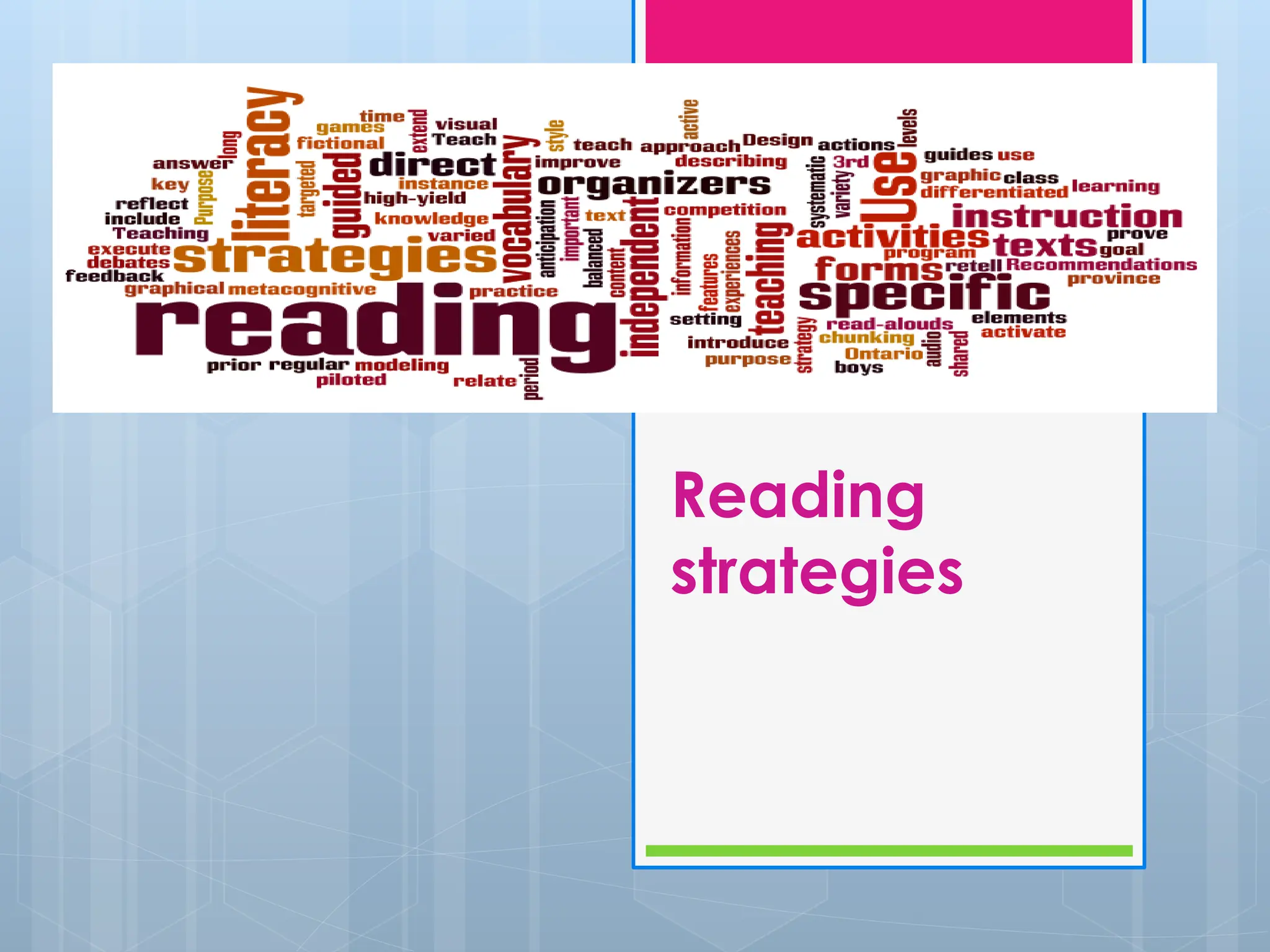
Reading
strategies
Objectives of this session
 To give a clear picture of different reading
techniques( skimming, scanning, SQ3R, etc)
 To examine an article or others work critically
 To comprehend text and solve writing problems
Reading strategies
Scanning (for a specific focus)
Skimming (for gist of the text)
SQ3R
Marking the text
Critical reading
Scanning (for a specific focus)
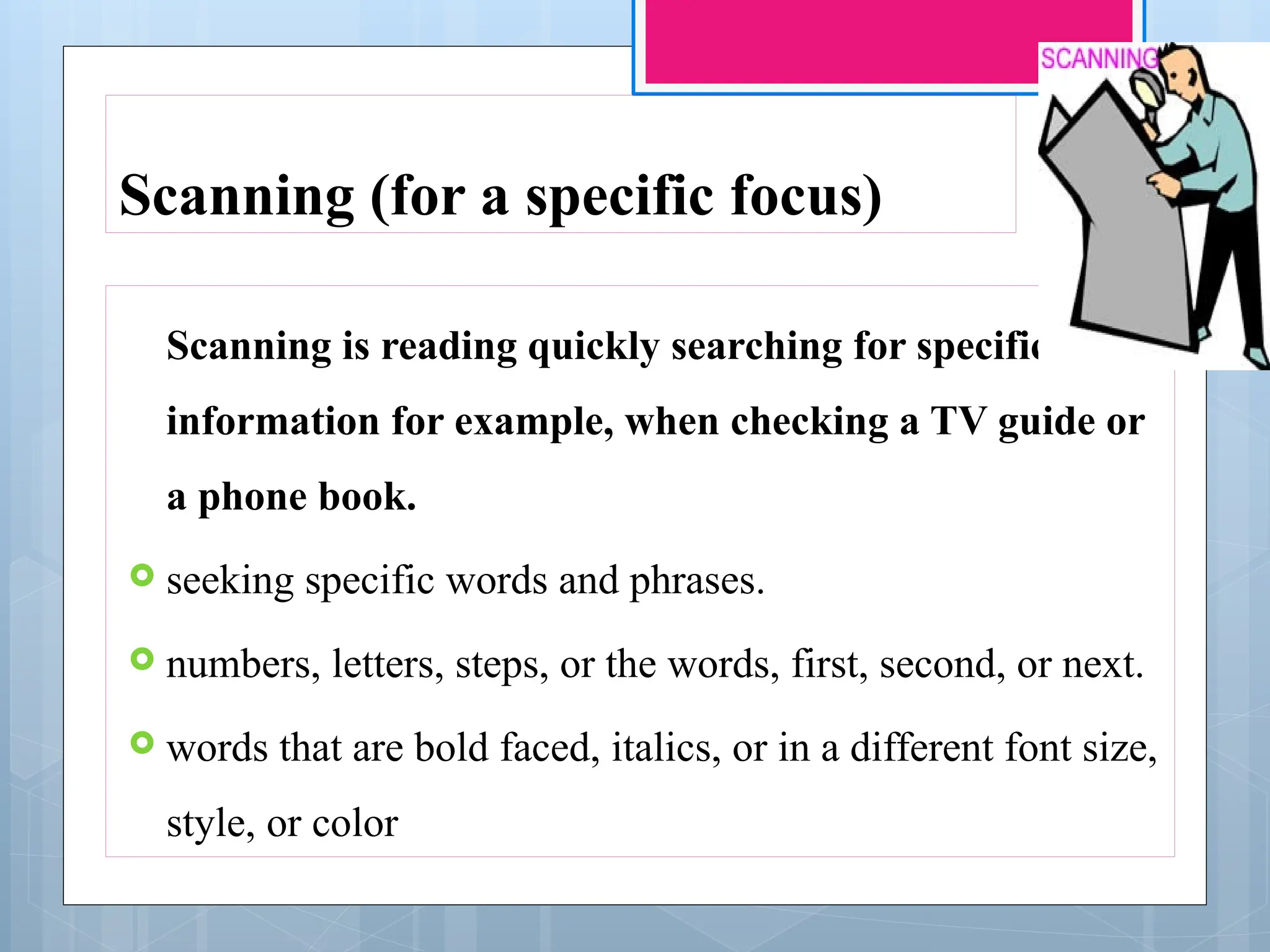
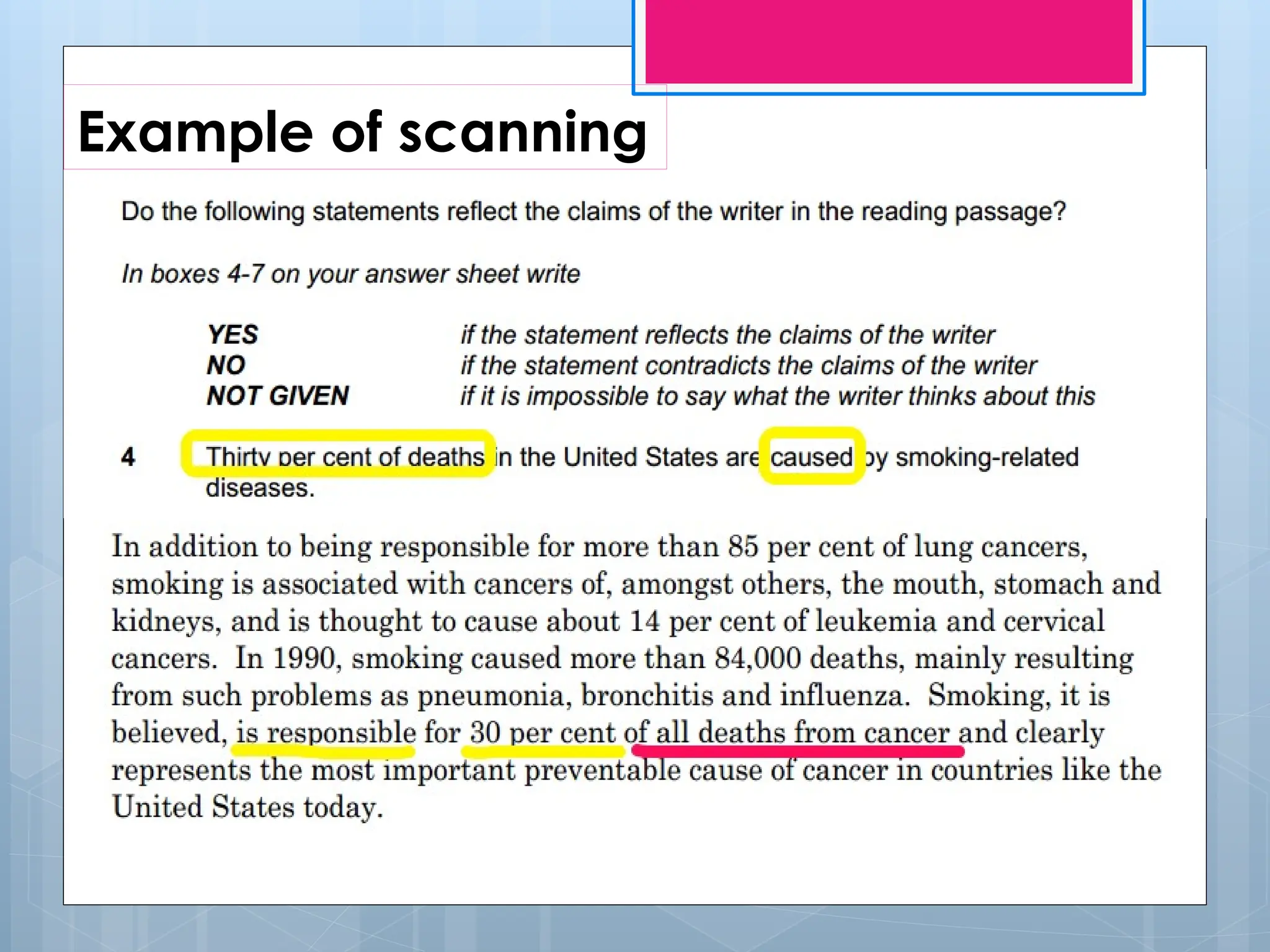
Scanning is reading quickly searching for specific
information for example, when checking a TV guide or
a phone book.
 seeking specific words and phrases.
 numbers, letters, steps, or the words, first, second, or next.
 words that are bold faced, italics, or in a different font size,
style, or color
Example of scanning
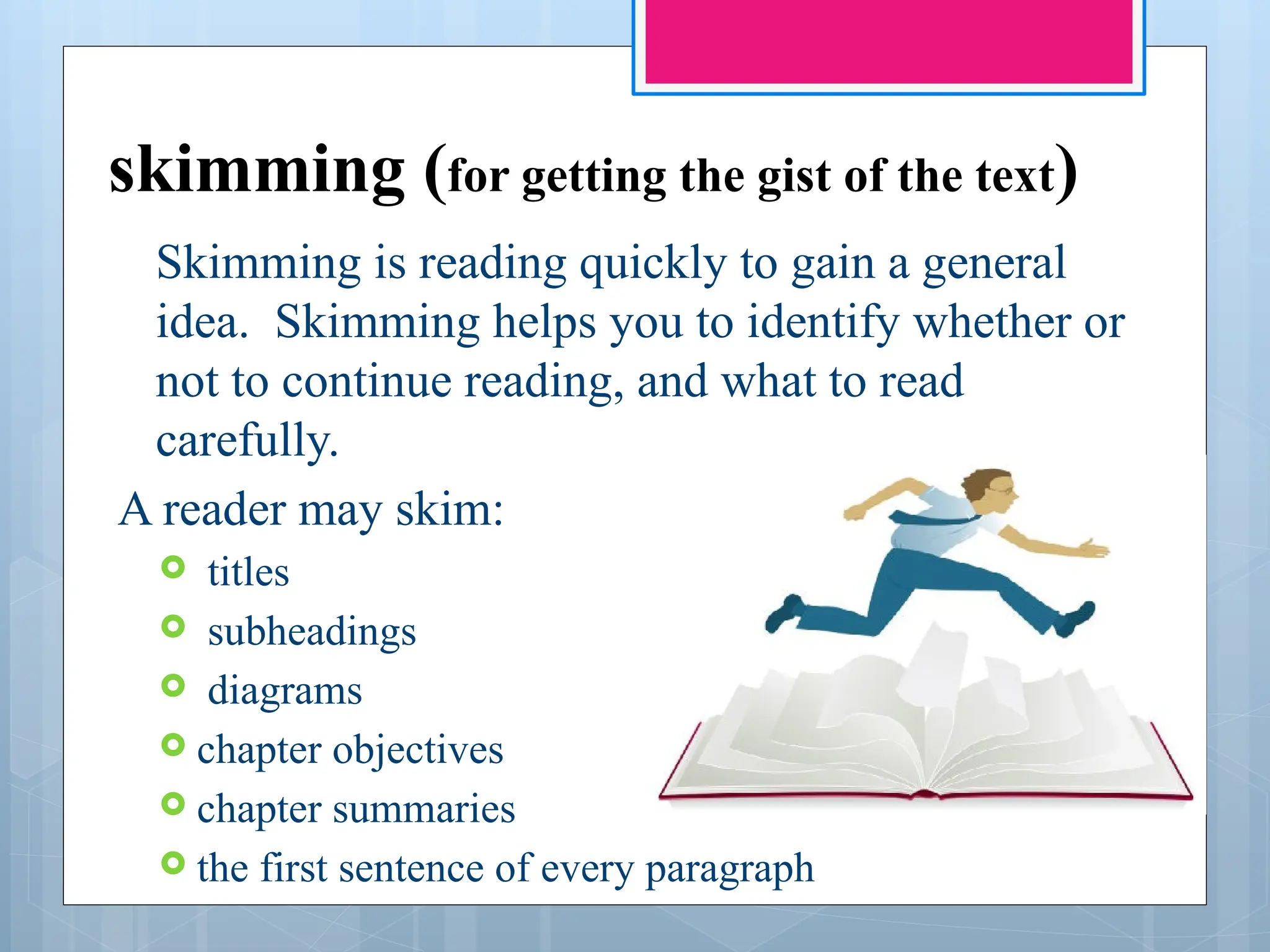
skimming (for getting the gist of the text)
Skimming is reading quickly to gain a general
idea. Skimming helps you to identify whether or
not to continue reading, and what to read
carefully.
A reader may skim:
 titles
 subheadings
 diagrams
 chapter objectives
 chapter summaries
 the first sentence of every paragraph
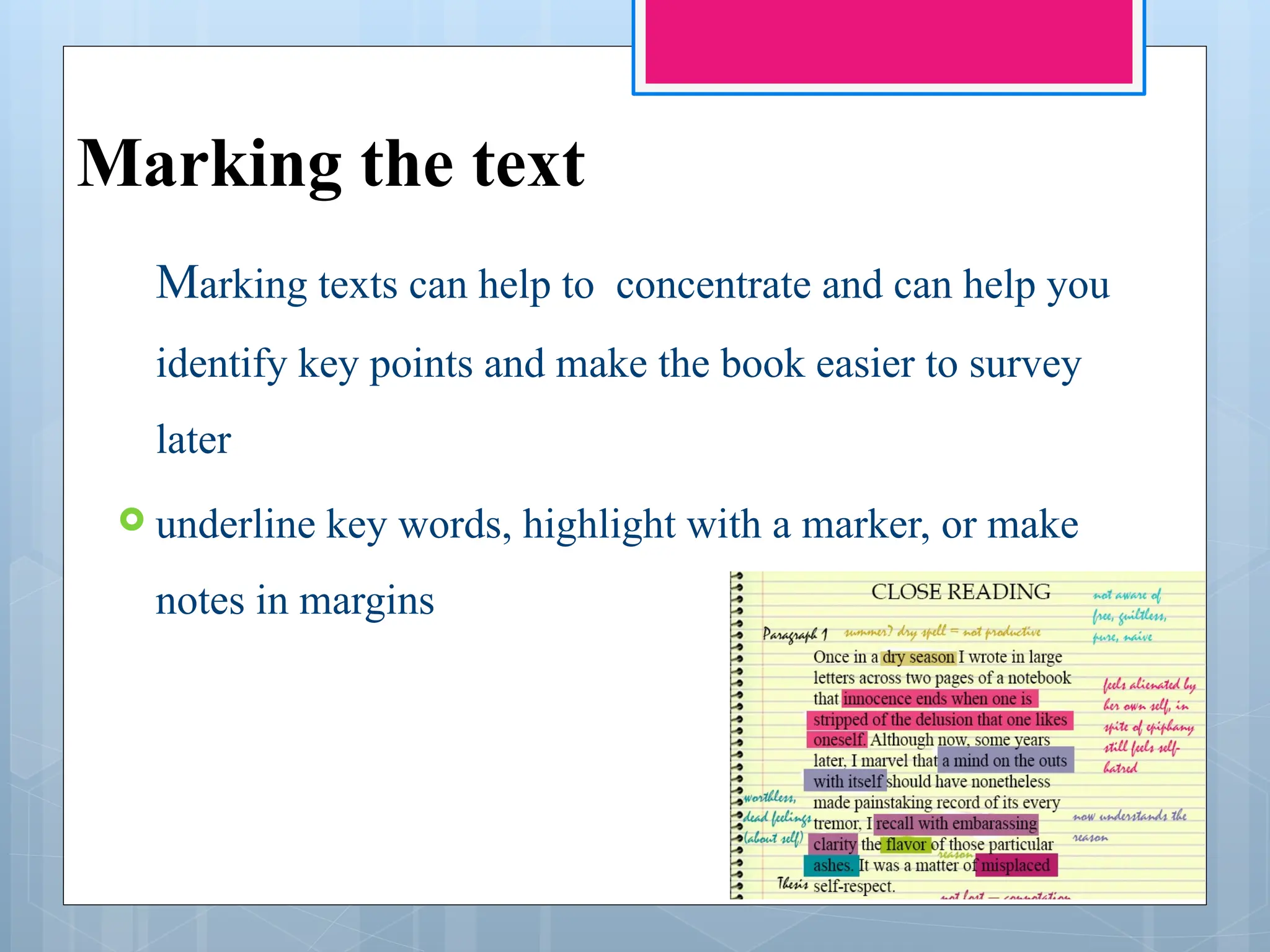
Marking the text
Marking texts can help to concentrate and can help you
identify key points and make the book easier to survey
later
 underline key words, highlight with a marker, or make
notes in margins
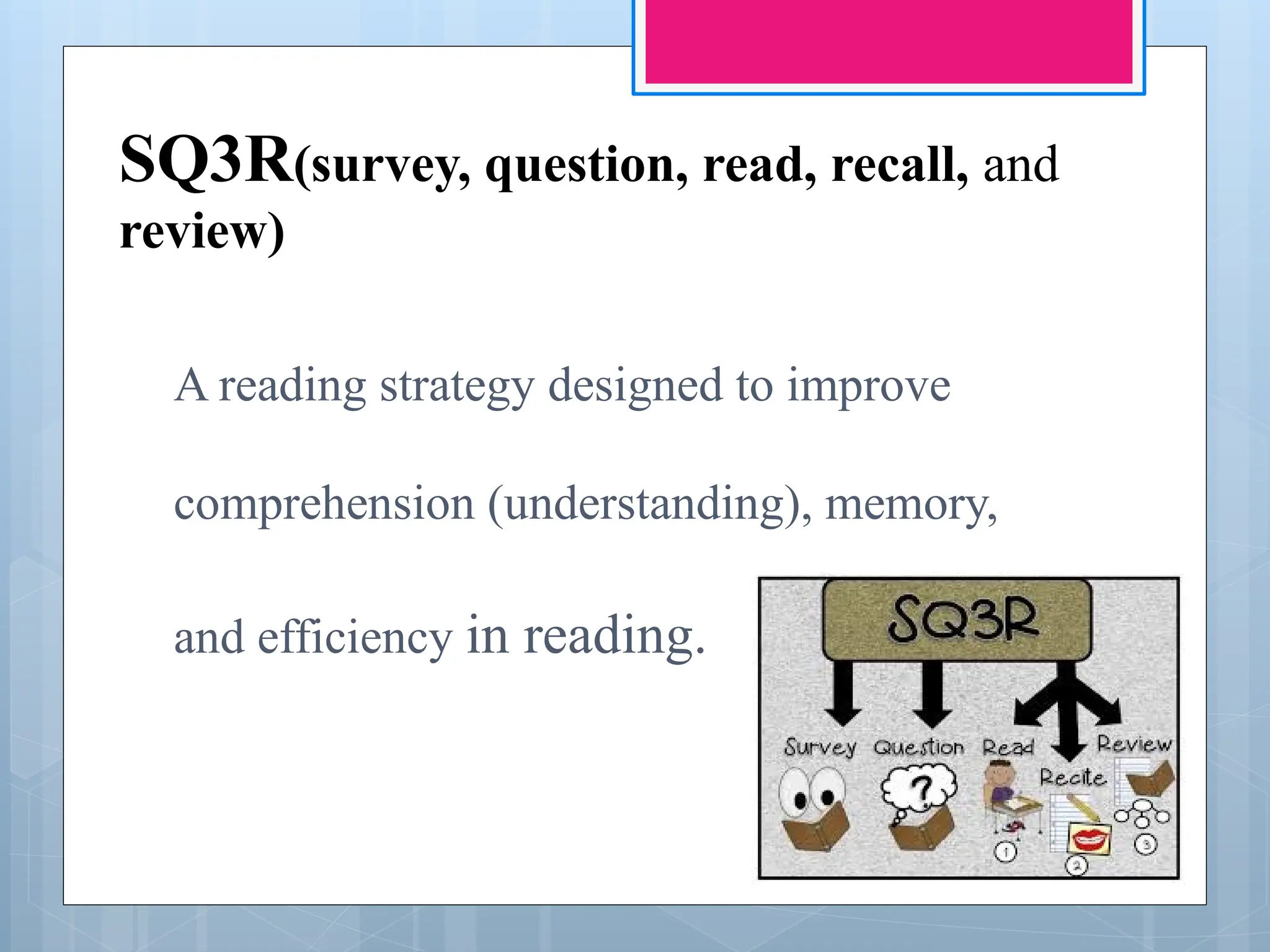
SQ3R(survey, question, read, recall, and
review)
A reading strategy designed to improve
comprehension (understanding), memory,
and efficiency in reading.
Survey
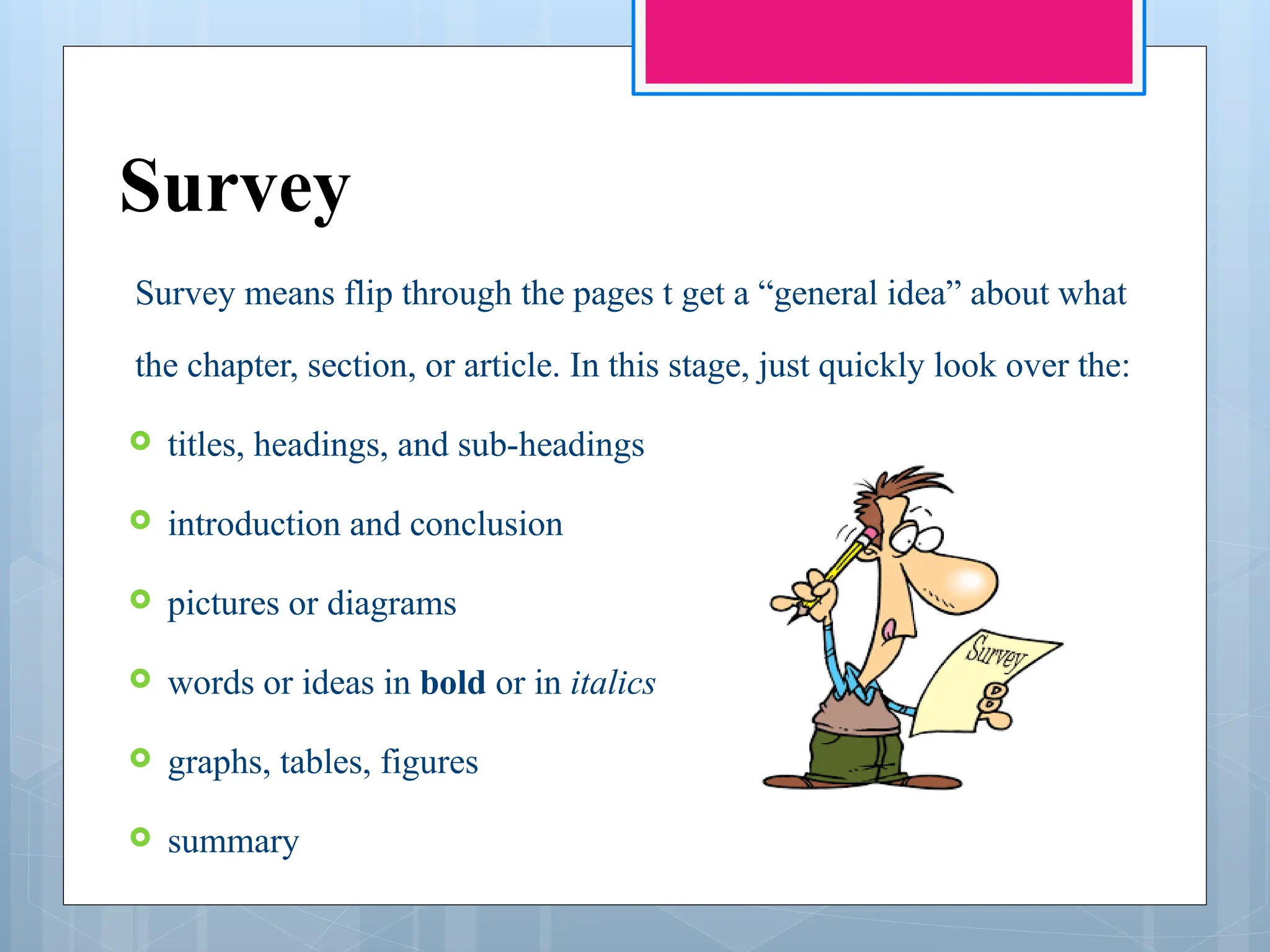
Survey means flip through the pages t get a “general idea” about what
the chapter, section, or article. In this stage, just quickly look over the:
 titles, headings, and sub-headings
 introduction and conclusion
 pictures or diagrams
 words or ideas in bold or in italics
 graphs, tables, figures
 summary
Question
Using the information at the survey stage, prepare some questions about
what you want to/need to learn in the reading task. You can do this by:
 turning a heading into a question
 using the chapter’s questions
 using the course objectives to make questions
 making your own questions based on your own interest in the topic
Example questions include:
 “Why is this concept or idea important?”
 “How is this idea related to what we talked about in class?”
 “I learned about this idea before. How is this information different?”
Read
 underlining or highlighting key ideas
 jot down notes, questions, comments, or symbols
in the margins
 try to answer your questions
 notice and note down information that is directly
related to what you talked about in lecture
 make a list of questions to ask your professor
during class or office hours
Recite
 After reading, close your text and put away your notes for a
moment. In your own words, either aloud or on paper, can you:
 summarize purpose of the reading?
 the main ideas?
 the key terms?
 the answers to your initial questions?
 If you have great difficulty reciting, you may not be reading
actively, Do not wait to seek some extra help if you need it.
Review
Reviewing is not reading over the notes you made
from the textbook again and again. Reviewing
means that you do something different with the
information, for example:
make a map, table, or diagram of the information
make flash cards
write out the key ideas in your own words
do the practice questions at the end of the chapter
make a timeline
Critical Reading Skills
 Critical reading means applying critical thinking
to a written text, by analyzing and evaluating
what you read. An important foundation for
critically evaluating a text is trying to
understand the writer’s ideas and arguments.
Reading the text
As you read, develop the habit of asking and answering
questions about following aspects
 The author’s purpose to write this text
 the nature of the content
 The structure of the text
 The style and format used to represent the text
Developing your own view
Your own knowledge and experience can help you to analyze a text.
Ideas presented in lectures and from other course readings will also help to develop
your thinking.
Comparing authors with different points of view on the same topic can also help to
identify their assumptions. Why and how are these writers interpreting the same
events, data, or evidence differently?

If you are having difficulty identifying the argument and/or finding things, try
discussing the text with friends, with classmates. Discussion can generate ideas and
help to clarify thinking.

slides reading.pptx reading strategies skimming scanning

  • 1.
  • 2.
    Objectives of thissession  To give a clear picture of different reading techniques( skimming, scanning, SQ3R, etc)  To examine an article or others work critically  To comprehend text and solve writing problems
  • 3.
    Reading strategies Scanning (fora specific focus) Skimming (for gist of the text) SQ3R Marking the text Critical reading
  • 4.
    Scanning (for aspecific focus) Scanning is reading quickly searching for specific information for example, when checking a TV guide or a phone book.  seeking specific words and phrases.  numbers, letters, steps, or the words, first, second, or next.  words that are bold faced, italics, or in a different font size, style, or color
  • 5.
  • 6.
    skimming (for gettingthe gist of the text) Skimming is reading quickly to gain a general idea. Skimming helps you to identify whether or not to continue reading, and what to read carefully. A reader may skim:  titles  subheadings  diagrams  chapter objectives  chapter summaries  the first sentence of every paragraph
  • 7.
    Marking the text Markingtexts can help to concentrate and can help you identify key points and make the book easier to survey later  underline key words, highlight with a marker, or make notes in margins
  • 8.
    SQ3R(survey, question, read,recall, and review) A reading strategy designed to improve comprehension (understanding), memory, and efficiency in reading.
  • 9.
    Survey Survey means flipthrough the pages t get a “general idea” about what the chapter, section, or article. In this stage, just quickly look over the:  titles, headings, and sub-headings  introduction and conclusion  pictures or diagrams  words or ideas in bold or in italics  graphs, tables, figures  summary
  • 10.
    Question Using the informationat the survey stage, prepare some questions about what you want to/need to learn in the reading task. You can do this by:  turning a heading into a question  using the chapter’s questions  using the course objectives to make questions  making your own questions based on your own interest in the topic Example questions include:  “Why is this concept or idea important?”  “How is this idea related to what we talked about in class?”  “I learned about this idea before. How is this information different?”
  • 11.
    Read  underlining orhighlighting key ideas  jot down notes, questions, comments, or symbols in the margins  try to answer your questions  notice and note down information that is directly related to what you talked about in lecture  make a list of questions to ask your professor during class or office hours
  • 12.
    Recite  After reading,close your text and put away your notes for a moment. In your own words, either aloud or on paper, can you:  summarize purpose of the reading?  the main ideas?  the key terms?  the answers to your initial questions?  If you have great difficulty reciting, you may not be reading actively, Do not wait to seek some extra help if you need it.
  • 13.
    Review Reviewing is notreading over the notes you made from the textbook again and again. Reviewing means that you do something different with the information, for example: make a map, table, or diagram of the information make flash cards write out the key ideas in your own words do the practice questions at the end of the chapter make a timeline
  • 14.
    Critical Reading Skills Critical reading means applying critical thinking to a written text, by analyzing and evaluating what you read. An important foundation for critically evaluating a text is trying to understand the writer’s ideas and arguments.
  • 15.
    Reading the text Asyou read, develop the habit of asking and answering questions about following aspects  The author’s purpose to write this text  the nature of the content  The structure of the text  The style and format used to represent the text
  • 16.
    Developing your ownview Your own knowledge and experience can help you to analyze a text. Ideas presented in lectures and from other course readings will also help to develop your thinking. Comparing authors with different points of view on the same topic can also help to identify their assumptions. Why and how are these writers interpreting the same events, data, or evidence differently?  If you are having difficulty identifying the argument and/or finding things, try discussing the text with friends, with classmates. Discussion can generate ideas and help to clarify thinking.