Welcome to College!
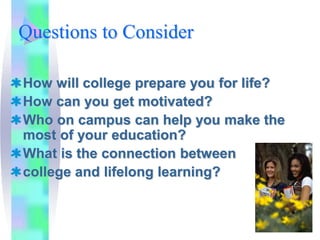
Questions to Consider

How will college prepare you for life?
How can you get motivated?
Who on campus can help you make the
most of your education?
What is the connection between
college and lifelong learning?
Education
 Prepares you for career success.
 Improves your chances for
 employment.
 Increases earning potential.
 Broadens your world
 view.
 Helps you develop
 flexibility.
 Helps you build team-
 work skills.
Changing Student Demographics

 Increasing minority enrollment.
 Increasing number of returning adults.
    Older student population
    Financial independence
    Supporting families
    More single parents
 Increasing number of working students.
 Increasing number of part-time students.
 Increasing enrollment at Community Colleges.
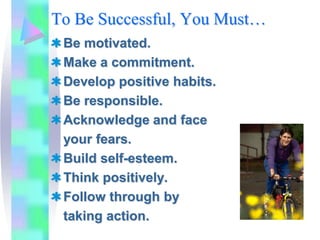
To Be Successful, You Must…
 Be motivated.
 Make a commitment.
 Develop positive habits.
 Be responsible.
 Acknowledge and face
 your fears.
 Build self-esteem.
 Think positively.
 Follow through by
 taking action.
Lifelong Learning Principles
Learned in College
• Learn from your failures.
   Evaluate what happened.
   Make changes for the future.


• Celebrate your successes.
   Evaluate what happened.
   Use the same strategies in the future.
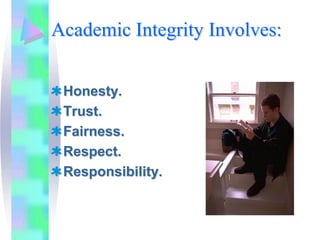
Academic Integrity Involves:


 Honesty.
 Trust.
 Fairness.
 Respect.
 Responsibility.
Habits of the Mind Leading to
Academic Success
 Persistence.
 Managing impulsivity.
 Using empathy and understanding with
 others.
 Flexibility.
 Metacognition.
 Striving for accuracy and precision.
 Questioning.
More Habits of the Mind (1)
 Recognizing and applying past
 knowledge to new situations.
 Thinking and communicating with
 clarity and precision.
 Using all your senses to gather data.
 Using creativity, imagination, and
 innovation.
 Responding with wonderment and
 awe.
More Habits of the Mind (2)

 Taking responsible risks.
 Finding humor.
 Thinking interdependently.
 Becoming lifelong
 learners.
People Who Consistently Use
Habits of the Mind:
Tend to use behavior patterns
that work.
Recognize and value behaviors that
work over those which don’t.
Have the basic skills and ability to carry
out the working behaviors.
Make an ongoing effort to evaluate and
improve performance.

Welcometo college

  • 1.
  • 2.
    Questions to Consider Howwill college prepare you for life? How can you get motivated? Who on campus can help you make the most of your education? What is the connection between college and lifelong learning?
  • 3.
    Education Prepares youfor career success. Improves your chances for employment. Increases earning potential. Broadens your world view. Helps you develop flexibility. Helps you build team- work skills.
  • 4.
    Changing Student Demographics Increasing minority enrollment. Increasing number of returning adults. Older student population Financial independence Supporting families More single parents Increasing number of working students. Increasing number of part-time students. Increasing enrollment at Community Colleges.
  • 5.
    To Be Successful,You Must… Be motivated. Make a commitment. Develop positive habits. Be responsible. Acknowledge and face your fears. Build self-esteem. Think positively. Follow through by taking action.
  • 6.
    Lifelong Learning Principles Learnedin College • Learn from your failures. Evaluate what happened. Make changes for the future. • Celebrate your successes. Evaluate what happened. Use the same strategies in the future.
  • 7.
    Academic Integrity Involves: Honesty. Trust. Fairness. Respect. Responsibility.
  • 8.
    Habits of theMind Leading to Academic Success Persistence. Managing impulsivity. Using empathy and understanding with others. Flexibility. Metacognition. Striving for accuracy and precision. Questioning.
  • 9.
    More Habits ofthe Mind (1) Recognizing and applying past knowledge to new situations. Thinking and communicating with clarity and precision. Using all your senses to gather data. Using creativity, imagination, and innovation. Responding with wonderment and awe.
  • 10.
    More Habits ofthe Mind (2) Taking responsible risks. Finding humor. Thinking interdependently. Becoming lifelong learners.
  • 11.
    People Who ConsistentlyUse Habits of the Mind: Tend to use behavior patterns that work. Recognize and value behaviors that work over those which don’t. Have the basic skills and ability to carry out the working behaviors. Make an ongoing effort to evaluate and improve performance.