Reading Across the Curriculum How to Promote and Improve  Reading Proficiency in the CTE Classroom   Jessie Hayden, Georgia State University  and Dr. Janet Burns, Georgia State University
Objective Given:  Your own CTE program What:   apply new reading and writing strategies  How well:   that prop up  your students’ reading and writing proficiency and vocabulary acquisition.  (Set a goal for your program!)
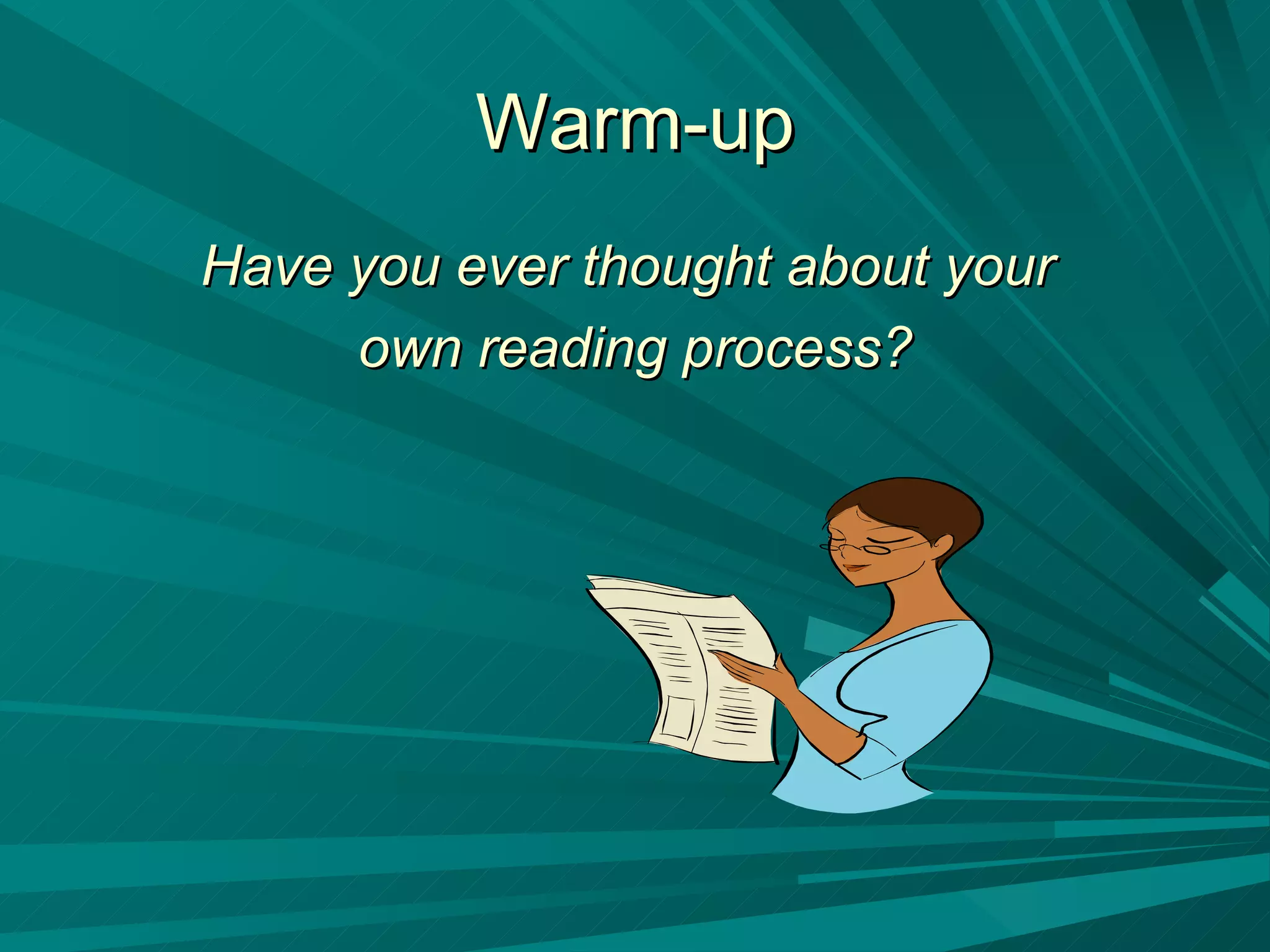
Warm-up Have you ever thought about your  own reading process?
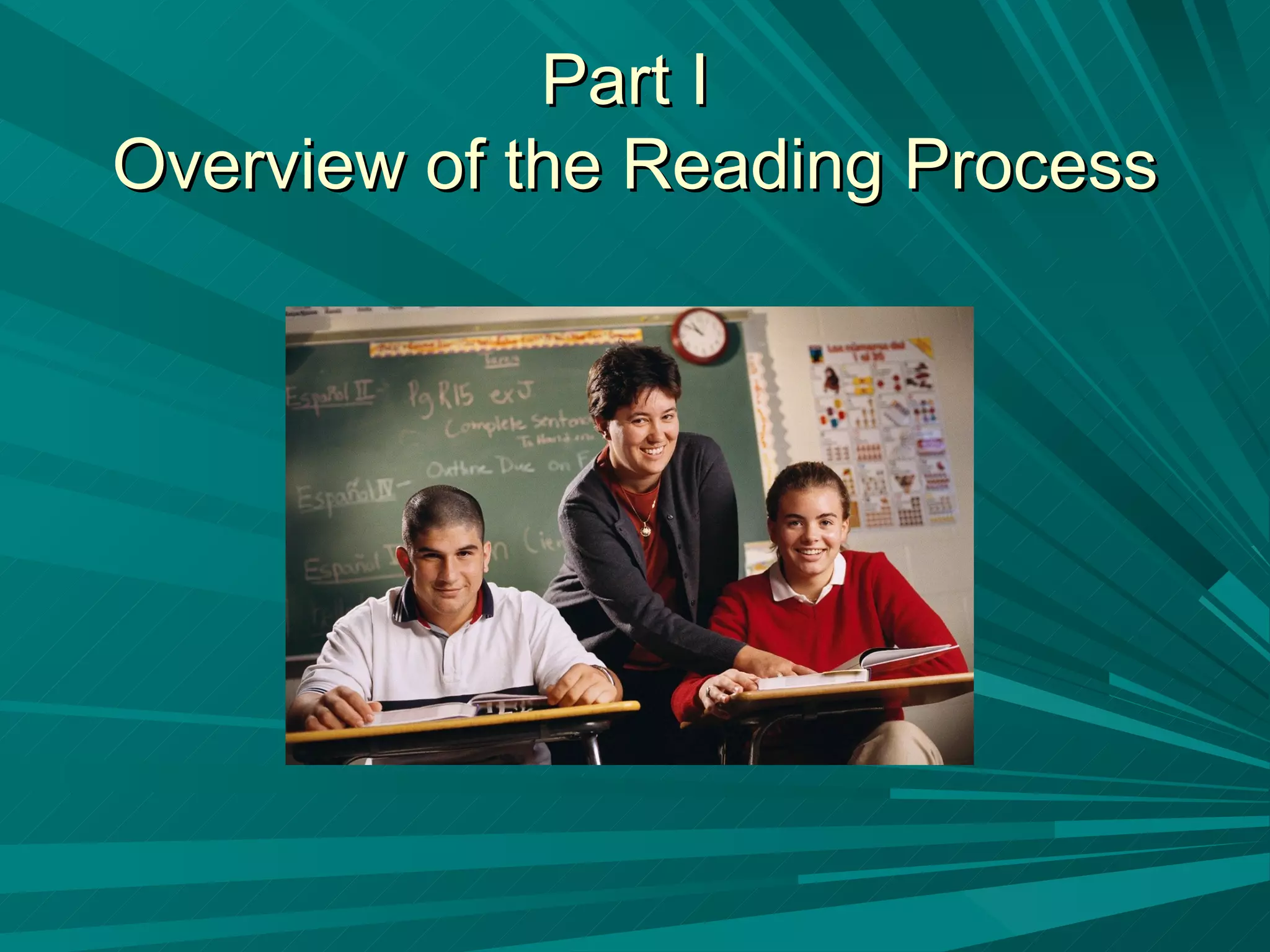
Part I  Overview of the Reading Process
Students read and comprehend better when they use  READING STRATEGIES The use of reading strategies helps students who struggle with reading to become more proficient readers The use of strategies makes reading more engaging and fun for the students Why use reading strategies in CTE courses?
Overview of the Reading Process Reading is an active, meaning seeking process Reading is an interactive process between a reader and a text that occurs in a particular climate or context Readers rely upon prior knowledge and experiences as well as language skills to anticipate and understand what they read [as they read] Reading becomes comprehensible and meaningful because readers bring meaning  to  a text and take meaning  from  a text
Content Area Reading Goals When students read for information, we want them to be able to: Predict outcomes in a reading passage prior to reading Summarize material they have read in their own words  Question the material being read  Identify important ideas in a text while reading
Content Area Reading Goals cont’d. Monitor their reading  Search for clues in texts as they read Reread to confirm their understanding of unfamiliar words or difficult passages in a text Read ahead or back for clues  Self-correct as they read
Part II   Experiencing the Reading Process
Reading Strategies Pre-Reading Strategies Active Reading Strategies Post Reading Strategies
Pre-Reading Strategies Anticipation   and   Prediction
Purpose of Pre-Reading Strategies Activate students’ prior knowledge on the topic about which they are going to read  Have students preview the passage to look for key vocabulary in the text  Have students analyze text structure and features Encourage students to make predictions about the passage prior to reading  Help students determine the purpose of the passage they are about to read Have students generate questions about the passage before they read
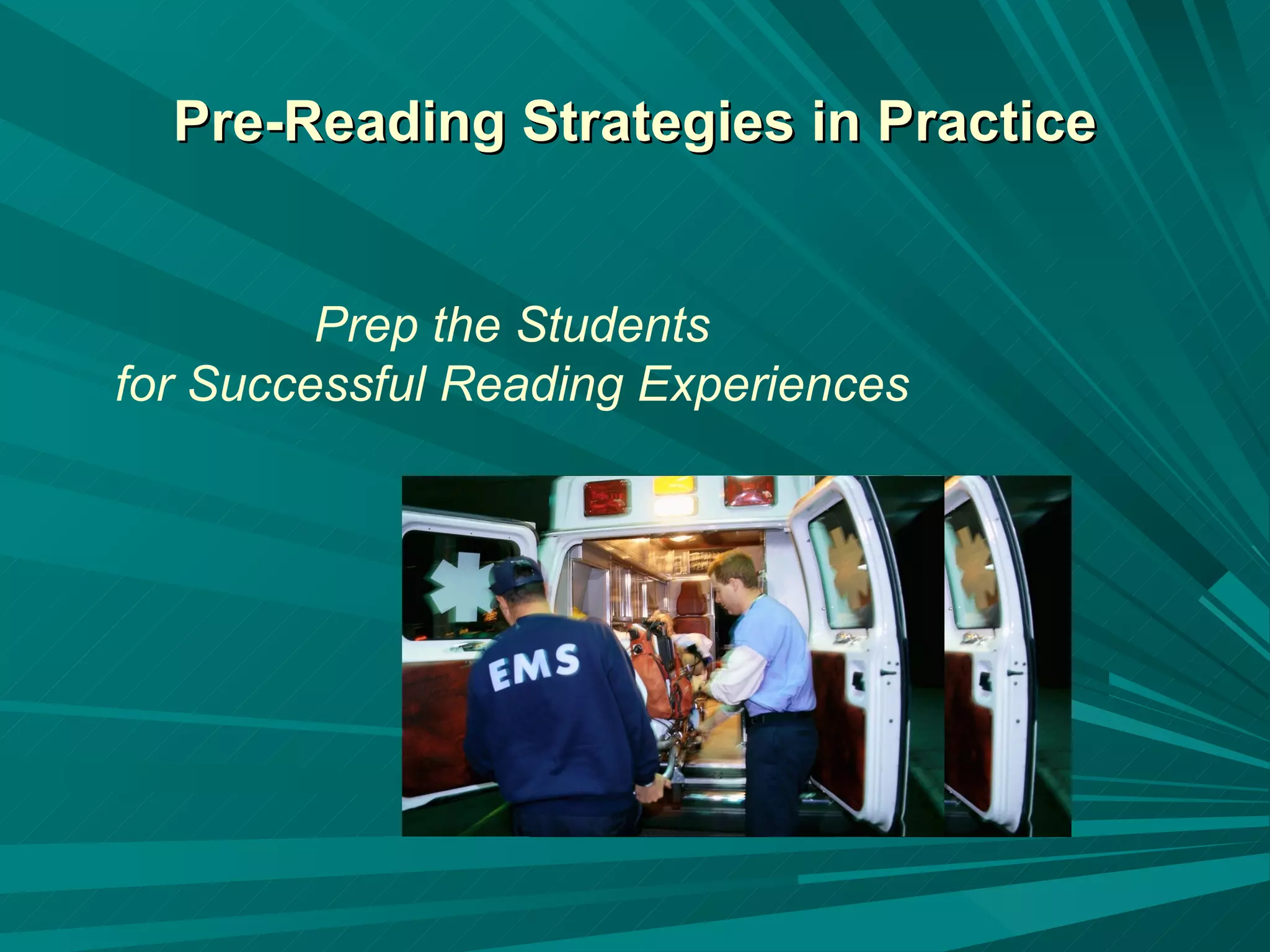
Pre-Reading Strategies in Practice Prep the Students  for Successful Reading Experiences
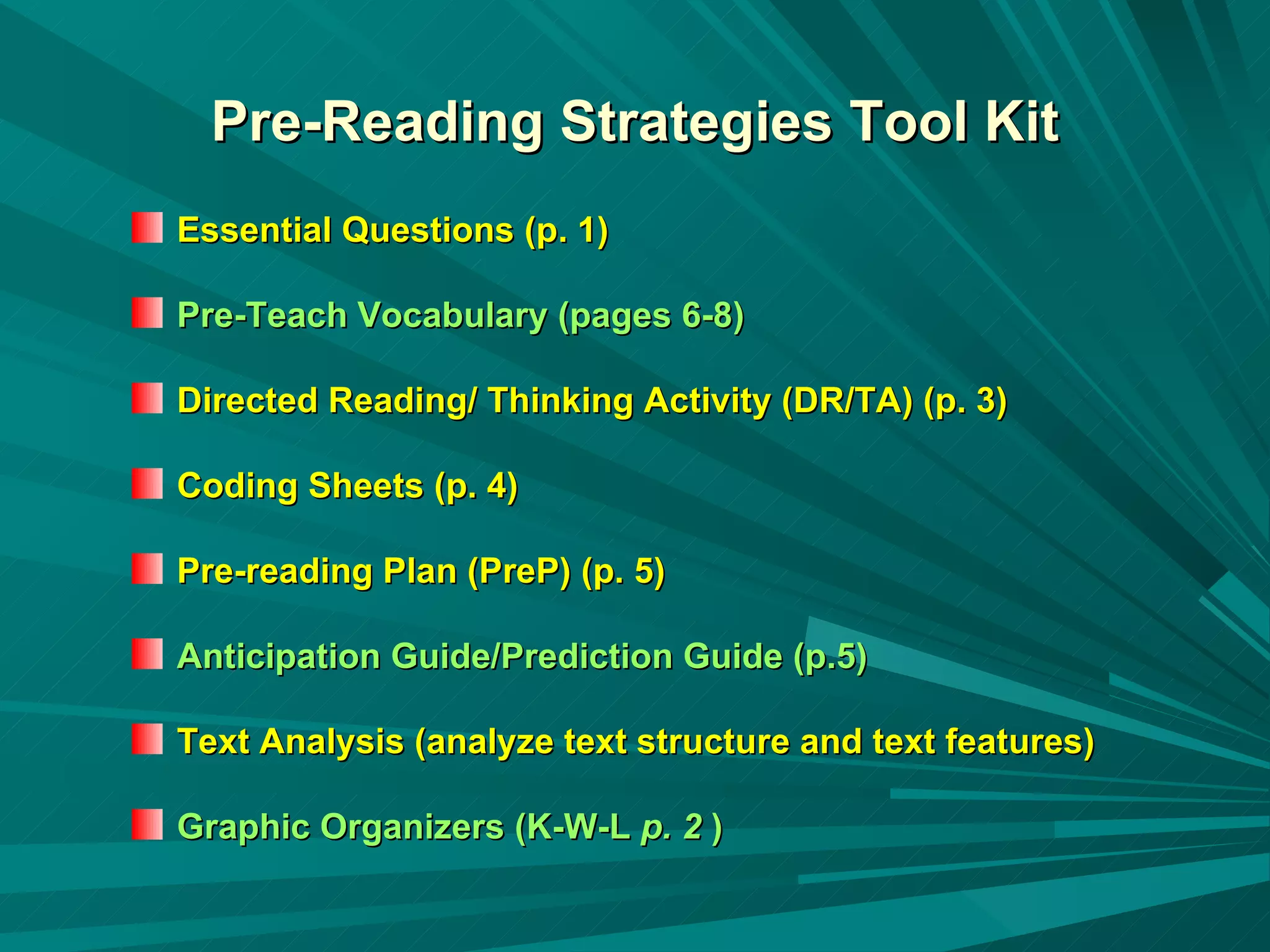
Pre-Reading Strategies Tool Kit Essential Questions (p. 1)  Pre-Teach Vocabulary (pages 6-8) Directed Reading/ Thinking Activity (DR/TA) (p. 3) Coding Sheets (p. 4) Pre-reading Plan (PreP) (p. 5)   Anticipation Guide/Prediction Guide (p.5) Text Analysis (analyze text structure and text features) Graphic Organizers (K-W-L  p. 2  )
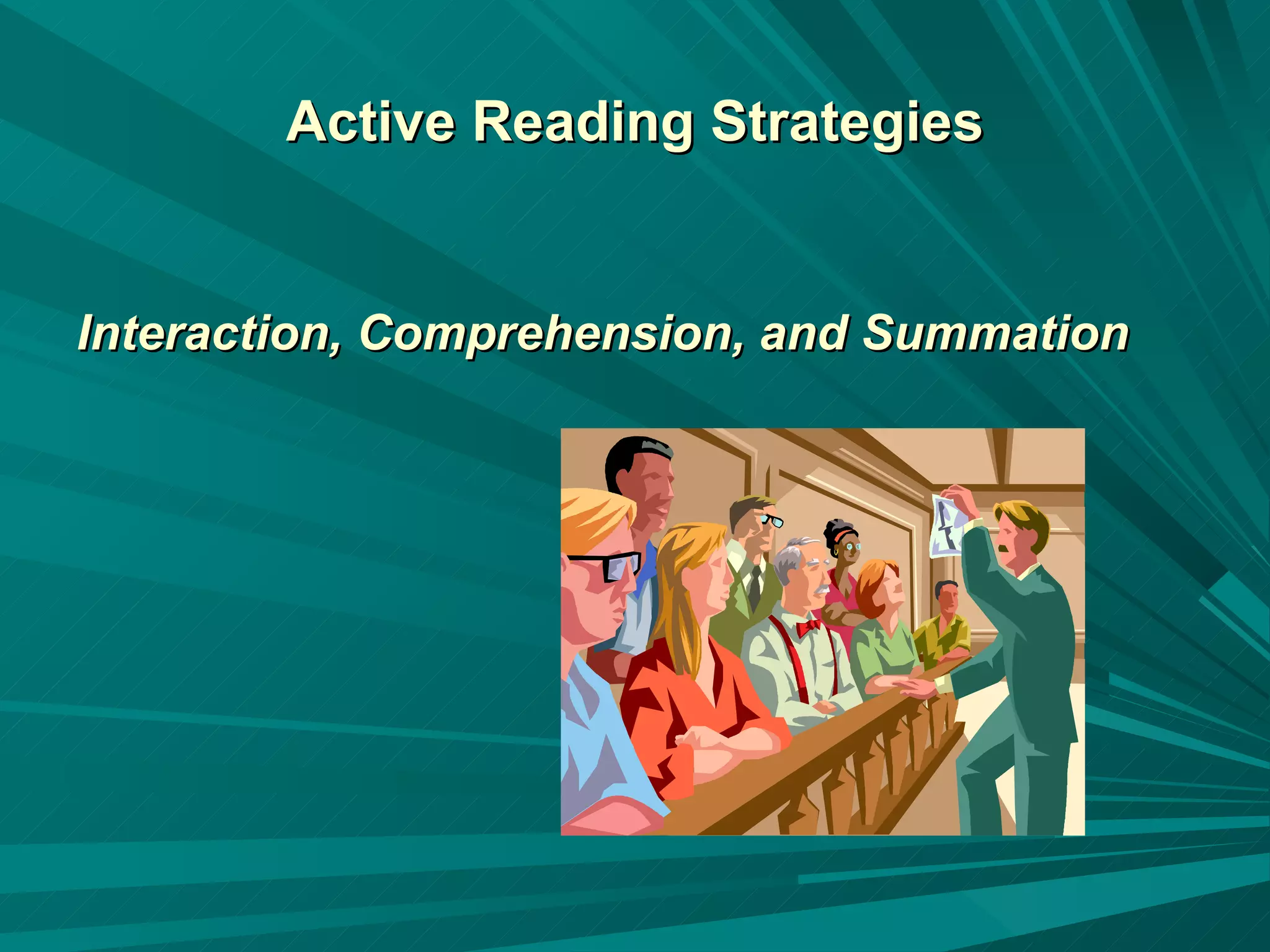
Active Reading Strategies Interaction, Comprehension, and Summation
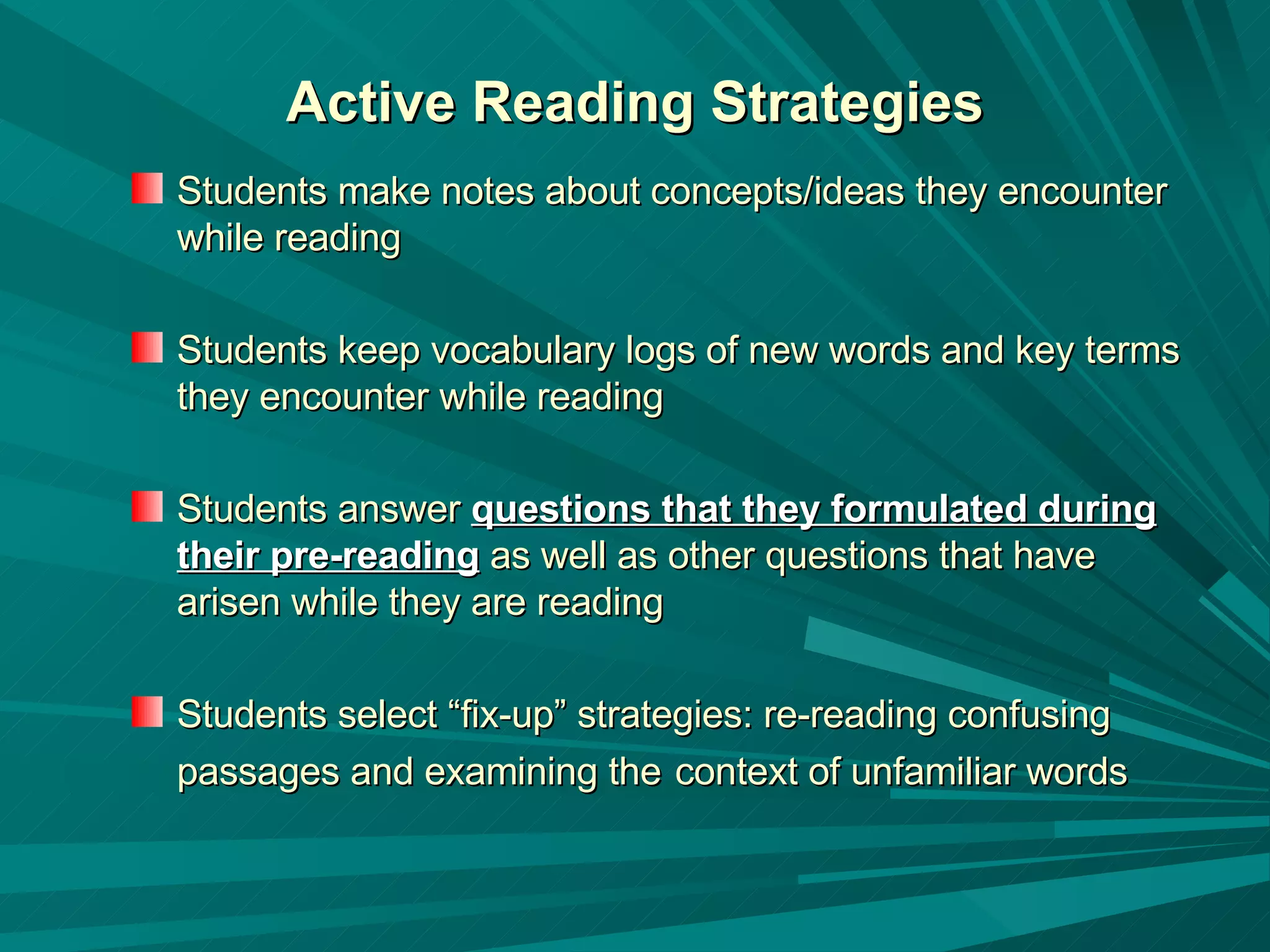
Active Reading Strategies Students make notes about concepts/ideas they encounter while reading Students keep vocabulary logs of new words and key terms they encounter while reading Students answer  questions that they formulated during their pre-reading  as well as other questions that have arisen while they are reading Students select “fix-up” strategies: re-reading confusing passages and examining the   context of unfamiliar words
Active Reading Strategies in Practice
Active Reading Strategies Tool Kit Vocabulary Log (pp. 6-8) Comprehension Constructors (p. 9) Directed Reading/ Thinking Activity (DR/TA) (p. 3) Coding Sheets (p. 4) Pairs Read (p. 10) Structured Note-taking (p. 10)
Post Reading Strategies Reflection, Analysis, and Application
Post Reading Strategies Encourage students to reflect upon what they have read through a variety of activities Allow students to use or apply the information they have read about  Application activities can involve answering questions, summarizing main ideas, drawing conclusions, or applying the information to a new situation or task
Post Reading Strategies in Practice
Post Reading Strategies Toolkit Coding Sheets (p. 4) Directed Reading/ Thinking Activity (DR/TA) (p. 3) Semantic Maps (p. 11-12) Reflective Writing (pp. 13-14) Reading Logs (p. 15) Step-by-Step Chart (p. 16) Flow Chart (p. 17) Time Line (p. 18) Venn Diagram (p. 19) Debate
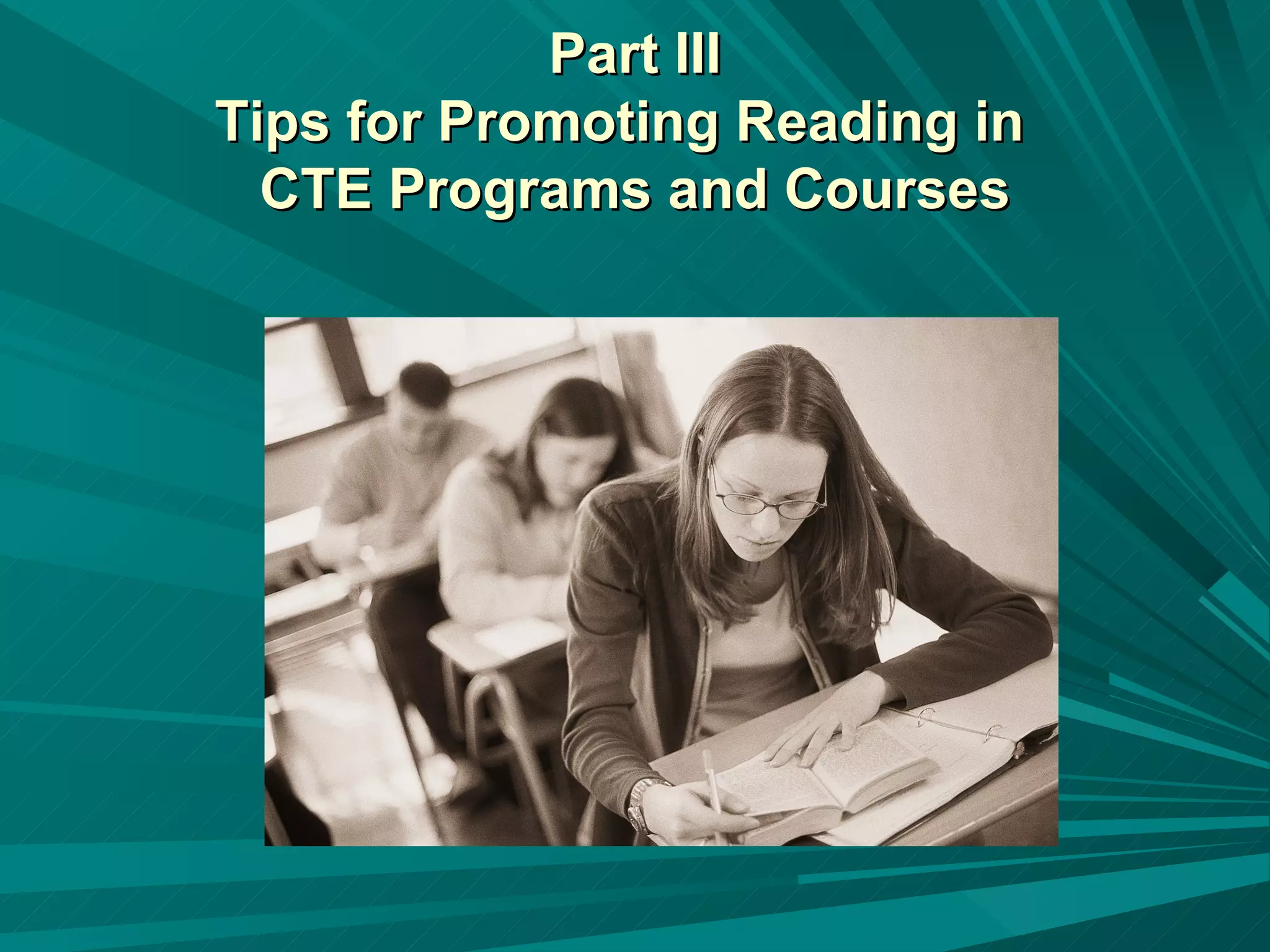
Part III Tips for Promoting Reading in  CTE Programs and Courses
Suggestions for Promoting Reading in the CTE Classroom Classroom-based Independent Reading Centers –Industry related journals, industry related publications, newspaper articles, etc.  CTE Related Book Clubs – small peer-led discussion groups whose members have chosen to read and discuss the same text Reading Workshops  Reading Journals
Wrap Up and Reflection What are the three main phases of the reading process? What are some reading tools that you’ve learned about today that you will utilize in your own classroom? What are some ways that you will promote reading in your classroom?
Reading Across the Curriculum How to Promote and Improve  Reading Proficiency in the CTE Classroom Thank you for coming to our session! Jessie Hayden, jhayden5@gsu.edu Dr. Janet Burns, jburns@gsu.edu

Reading Across The Curriculum

  • 1.
    Reading Across theCurriculum How to Promote and Improve Reading Proficiency in the CTE Classroom Jessie Hayden, Georgia State University and Dr. Janet Burns, Georgia State University
  • 2.
    Objective Given: Your own CTE program What: apply new reading and writing strategies How well: that prop up your students’ reading and writing proficiency and vocabulary acquisition. (Set a goal for your program!)
  • 3.
    Warm-up Have youever thought about your own reading process?
  • 4.
    Part I Overview of the Reading Process
  • 5.
    Students read andcomprehend better when they use READING STRATEGIES The use of reading strategies helps students who struggle with reading to become more proficient readers The use of strategies makes reading more engaging and fun for the students Why use reading strategies in CTE courses?
  • 6.
    Overview of theReading Process Reading is an active, meaning seeking process Reading is an interactive process between a reader and a text that occurs in a particular climate or context Readers rely upon prior knowledge and experiences as well as language skills to anticipate and understand what they read [as they read] Reading becomes comprehensible and meaningful because readers bring meaning to a text and take meaning from a text
  • 7.
    Content Area ReadingGoals When students read for information, we want them to be able to: Predict outcomes in a reading passage prior to reading Summarize material they have read in their own words Question the material being read Identify important ideas in a text while reading
  • 8.
    Content Area ReadingGoals cont’d. Monitor their reading Search for clues in texts as they read Reread to confirm their understanding of unfamiliar words or difficult passages in a text Read ahead or back for clues Self-correct as they read
  • 9.
    Part II Experiencing the Reading Process
  • 10.
    Reading Strategies Pre-ReadingStrategies Active Reading Strategies Post Reading Strategies
  • 11.
  • 12.
    Purpose of Pre-ReadingStrategies Activate students’ prior knowledge on the topic about which they are going to read Have students preview the passage to look for key vocabulary in the text Have students analyze text structure and features Encourage students to make predictions about the passage prior to reading Help students determine the purpose of the passage they are about to read Have students generate questions about the passage before they read
  • 13.
    Pre-Reading Strategies inPractice Prep the Students for Successful Reading Experiences
  • 14.
    Pre-Reading Strategies ToolKit Essential Questions (p. 1) Pre-Teach Vocabulary (pages 6-8) Directed Reading/ Thinking Activity (DR/TA) (p. 3) Coding Sheets (p. 4) Pre-reading Plan (PreP) (p. 5) Anticipation Guide/Prediction Guide (p.5) Text Analysis (analyze text structure and text features) Graphic Organizers (K-W-L p. 2 )
  • 15.
    Active Reading StrategiesInteraction, Comprehension, and Summation
  • 16.
    Active Reading StrategiesStudents make notes about concepts/ideas they encounter while reading Students keep vocabulary logs of new words and key terms they encounter while reading Students answer questions that they formulated during their pre-reading as well as other questions that have arisen while they are reading Students select “fix-up” strategies: re-reading confusing passages and examining the context of unfamiliar words
  • 17.
  • 18.
    Active Reading StrategiesTool Kit Vocabulary Log (pp. 6-8) Comprehension Constructors (p. 9) Directed Reading/ Thinking Activity (DR/TA) (p. 3) Coding Sheets (p. 4) Pairs Read (p. 10) Structured Note-taking (p. 10)
  • 19.
    Post Reading StrategiesReflection, Analysis, and Application
  • 20.
    Post Reading StrategiesEncourage students to reflect upon what they have read through a variety of activities Allow students to use or apply the information they have read about Application activities can involve answering questions, summarizing main ideas, drawing conclusions, or applying the information to a new situation or task
  • 21.
  • 22.
    Post Reading StrategiesToolkit Coding Sheets (p. 4) Directed Reading/ Thinking Activity (DR/TA) (p. 3) Semantic Maps (p. 11-12) Reflective Writing (pp. 13-14) Reading Logs (p. 15) Step-by-Step Chart (p. 16) Flow Chart (p. 17) Time Line (p. 18) Venn Diagram (p. 19) Debate
  • 23.
    Part III Tipsfor Promoting Reading in CTE Programs and Courses
  • 24.
    Suggestions for PromotingReading in the CTE Classroom Classroom-based Independent Reading Centers –Industry related journals, industry related publications, newspaper articles, etc. CTE Related Book Clubs – small peer-led discussion groups whose members have chosen to read and discuss the same text Reading Workshops Reading Journals
  • 25.
    Wrap Up andReflection What are the three main phases of the reading process? What are some reading tools that you’ve learned about today that you will utilize in your own classroom? What are some ways that you will promote reading in your classroom?
  • 26.
    Reading Across theCurriculum How to Promote and Improve Reading Proficiency in the CTE Classroom Thank you for coming to our session! Jessie Hayden, jhayden5@gsu.edu Dr. Janet Burns, jburns@gsu.edu

Editor's Notes

  • #2 NTI 2008, Jessie Hayden and Dr. Janet Burns, Georgia State University