INTRODUCTION:
 It is an electric battery formed largely of paper(cellulose)
and carbon nano tubes.
 Cellulose is the primary cell wall of green plants out of
which paper is made.
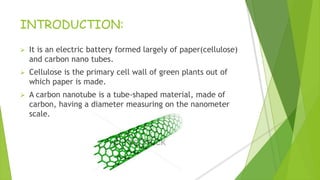
 A carbon nanotube is a tube-shaped material, made of
carbon, having a diameter measuring on the nanometer
scale.
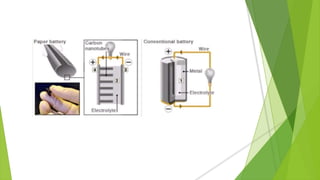
 The battery produces electricity in the same way as the
conventional lithium-ion batteries, but all the components
have been incorporated into a lightweight, flexible sheet
of paper.
 The devices are formed by combining cellulose with an
infusion of aligned carbon nanotubes.
 The electrolyte and the ions that carry the charge can be
varied depending the use of the battery.
 Generally ionic liquid is used as an electrolyte, essentially
a liquid salt. Natural electrolytes which we can use are
human blood, sweat and urine.
Construction:
 First take a rectangular shaped paper(cellulose).
 Now made a coating of ionic solution on this paper
surface.
 Then spread the specially prepared carbon nanotubes ink
over this ionic coated paper.
 The other side of the paper is laminated with a thin film
or layer of lithium.
 Aluminium rods are used to transfer current between the
2 electrodes.
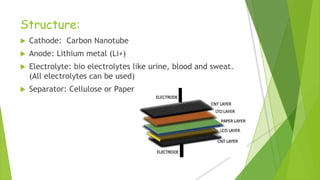
Structure:
 Cathode: Carbon Nanotube
 Anode: Lithium metal (Li+)
 Electrolyte: bio electrolytes like urine, blood and sweat.
(All electrolytes can be used)
 Separator: Cellulose or Paper
Working:
 The internal performance of paper batteries is identical to
that of a traditional battery by generating a voltage about
1.5V
 In Paper Batteries, the metal(Lithium) is used as the
anode and carbon nanotubes as cathode and also the
paper or cellulose is used as the separator.
 Due to the chemical reaction between the electrolyte
and carbon, electrons are generated, similarly due to the
chemical reaction between electrolyte and metal, ions
are generated.
 These generated electrons starts flow through the
external circuit from cathode to the anode.
Advantages:
 Paper battery can be used as both super capacitor and
battery.
 Paper batteries are very flexible, ultrathin, nontoxic and
biodegradable battery
 Long life.
 Provides a steady power.
 Can be available in different shapes and sizes.
 They offer high energy efficiency.
 Paper Batteries are low cost and can be easily disposed.
 They can be used to produce 1.5V energy and also paper
batteries are rechargeable.
Applications:
 Paper Battery can be now implemented in wearable
technology like Wearable Biosensors and Wearable
computer etc.
 Used in entertainment devices.
 Used in tags and smart cards.
 For medical applications like disposable medical
diagnostic devices and also can be used in pacemakers
due to the paper batteries nontoxic and biodegradable
nature.
 Ideal for aircraft, automobiles, remote controllers etc.
Future scope:
 A postage stamp sized paper battery can illuminate a
small bulb, but in future several reams of paper are
wished to produce large electricity.
 Paper battery was a glimpse into the future of power
storage.
 In future, they can be largely employed in the fields of
electronics, medical sciences,
automobiles and aircrafts.
Conclusion:
 By using paper battery, Indian crisis in the field of
electricity can be reduced to some extent.
 By adapting this technology, interruptions in power supply
can be minimized.
Paper battery
Paper battery
Paper battery

Paper battery

  • 2.
    INTRODUCTION:  It isan electric battery formed largely of paper(cellulose) and carbon nano tubes.  Cellulose is the primary cell wall of green plants out of which paper is made.  A carbon nanotube is a tube-shaped material, made of carbon, having a diameter measuring on the nanometer scale.
  • 3.
     The batteryproduces electricity in the same way as the conventional lithium-ion batteries, but all the components have been incorporated into a lightweight, flexible sheet of paper.  The devices are formed by combining cellulose with an infusion of aligned carbon nanotubes.  The electrolyte and the ions that carry the charge can be varied depending the use of the battery.  Generally ionic liquid is used as an electrolyte, essentially a liquid salt. Natural electrolytes which we can use are human blood, sweat and urine.
  • 4.
    Construction:  First takea rectangular shaped paper(cellulose).  Now made a coating of ionic solution on this paper surface.  Then spread the specially prepared carbon nanotubes ink over this ionic coated paper.  The other side of the paper is laminated with a thin film or layer of lithium.  Aluminium rods are used to transfer current between the 2 electrodes.
  • 9.
    Structure:  Cathode: CarbonNanotube  Anode: Lithium metal (Li+)  Electrolyte: bio electrolytes like urine, blood and sweat. (All electrolytes can be used)  Separator: Cellulose or Paper
  • 11.
    Working:  The internalperformance of paper batteries is identical to that of a traditional battery by generating a voltage about 1.5V  In Paper Batteries, the metal(Lithium) is used as the anode and carbon nanotubes as cathode and also the paper or cellulose is used as the separator.  Due to the chemical reaction between the electrolyte and carbon, electrons are generated, similarly due to the chemical reaction between electrolyte and metal, ions are generated.  These generated electrons starts flow through the external circuit from cathode to the anode.
  • 12.
    Advantages:  Paper batterycan be used as both super capacitor and battery.  Paper batteries are very flexible, ultrathin, nontoxic and biodegradable battery  Long life.  Provides a steady power.  Can be available in different shapes and sizes.  They offer high energy efficiency.  Paper Batteries are low cost and can be easily disposed.  They can be used to produce 1.5V energy and also paper batteries are rechargeable.
  • 13.
    Applications:  Paper Batterycan be now implemented in wearable technology like Wearable Biosensors and Wearable computer etc.  Used in entertainment devices.  Used in tags and smart cards.  For medical applications like disposable medical diagnostic devices and also can be used in pacemakers due to the paper batteries nontoxic and biodegradable nature.  Ideal for aircraft, automobiles, remote controllers etc.
  • 14.
    Future scope:  Apostage stamp sized paper battery can illuminate a small bulb, but in future several reams of paper are wished to produce large electricity.  Paper battery was a glimpse into the future of power storage.  In future, they can be largely employed in the fields of electronics, medical sciences, automobiles and aircrafts.
  • 15.
    Conclusion:  By usingpaper battery, Indian crisis in the field of electricity can be reduced to some extent.  By adapting this technology, interruptions in power supply can be minimized.