Radio Frequency, Band
and Spectrum
@3g4gUK
Before we begin
This video provides a very simplistic explanation for a very
complex topic.
©3G4G
Spectrum
©3G4G
• A Spectrum (plural ‘spectra’ or ‘spectrums’) is used to classify
something on a scale between two extreme points. For example:
• The ‘political’ spectrum consisting of extreme left and extreme right
and different ranges in between
• The ‘socio-economic’ spectrum comprising of working class, middle
class and upper class.
• In this video we will look at ‘Radio’ spectrum which is part of
‘Electromagnetic’ spectrum.
©3G4G
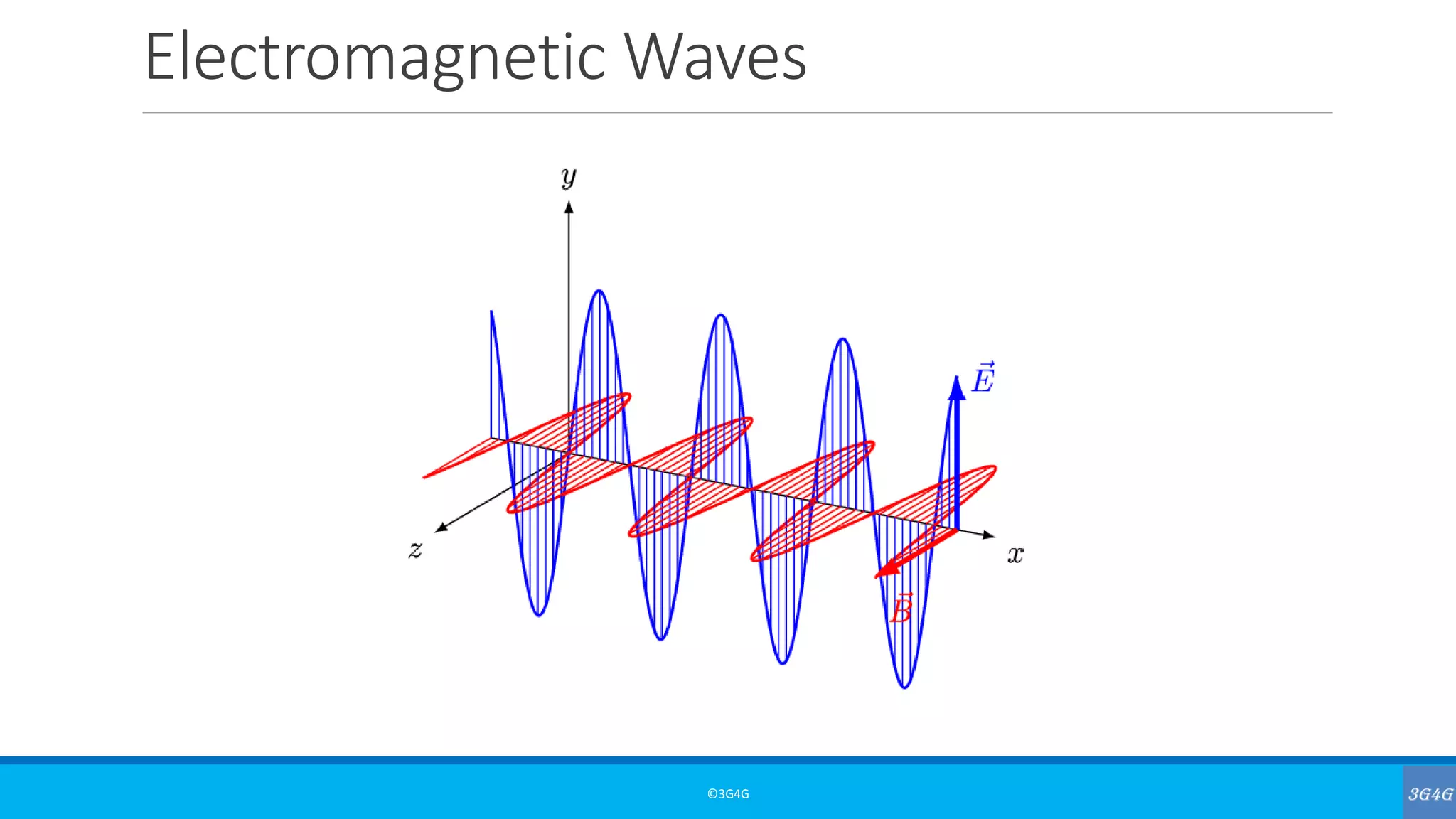
Electromagnetic Waves
©3G4G
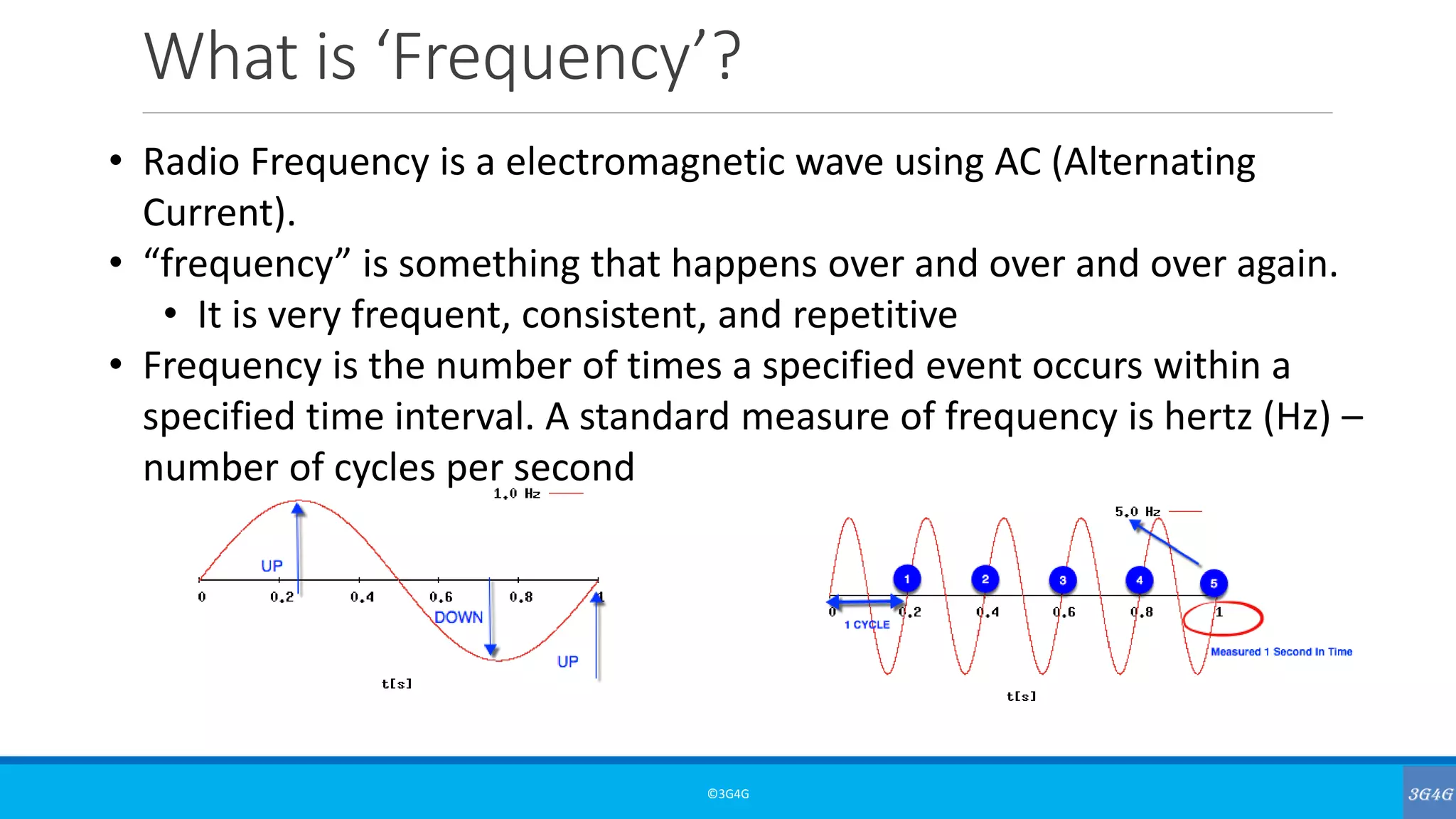
What is ‘Frequency’?
©3G4G
• Radio Frequency is a electromagnetic wave using AC (Alternating
Current).
• “frequency” is something that happens over and over and over again.
• It is very frequent, consistent, and repetitive
• Frequency is the number of times a specified event occurs within a
specified time interval. A standard measure of frequency is hertz (Hz) –
number of cycles per second
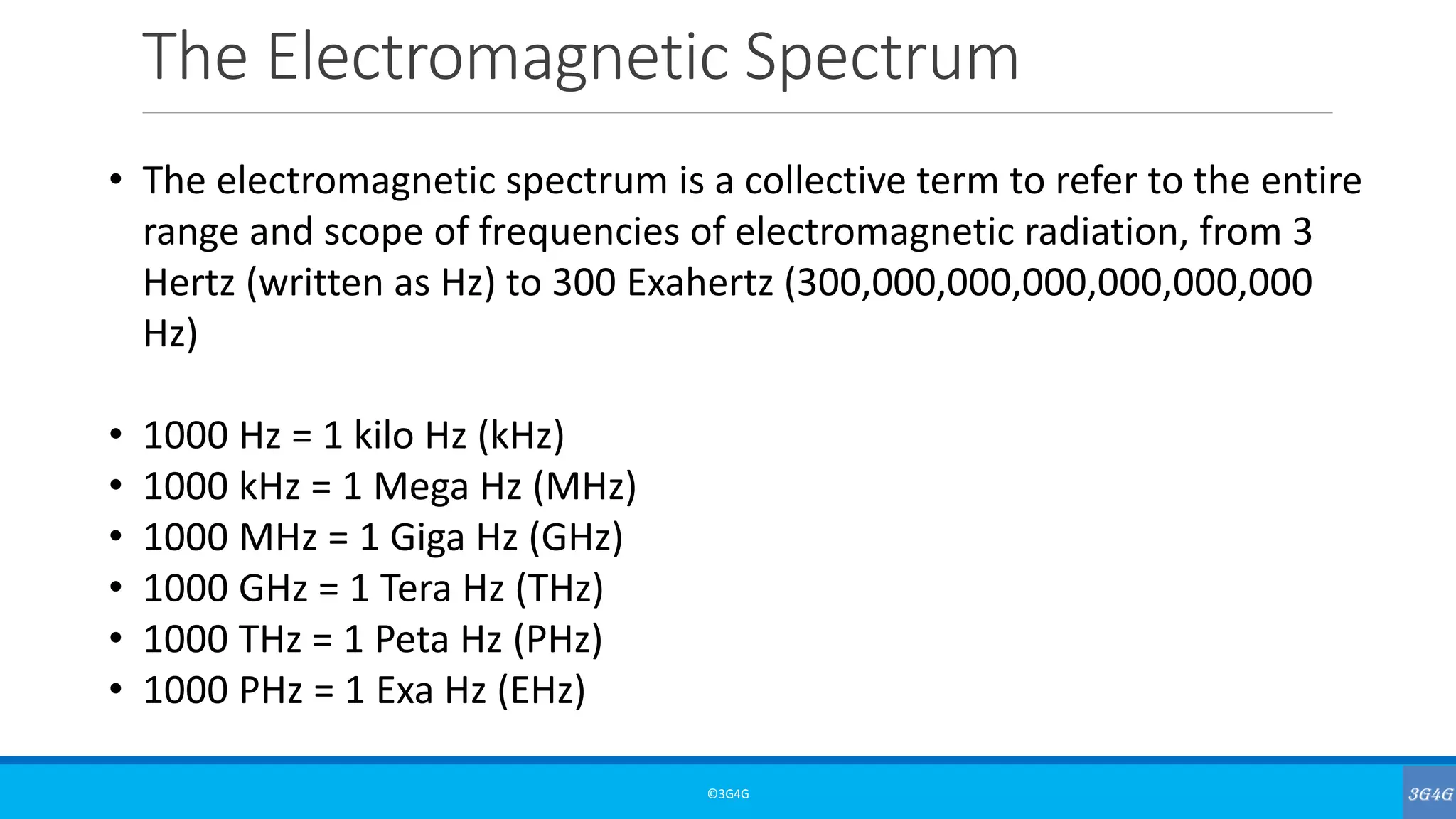
The Electromagnetic Spectrum
©3G4G
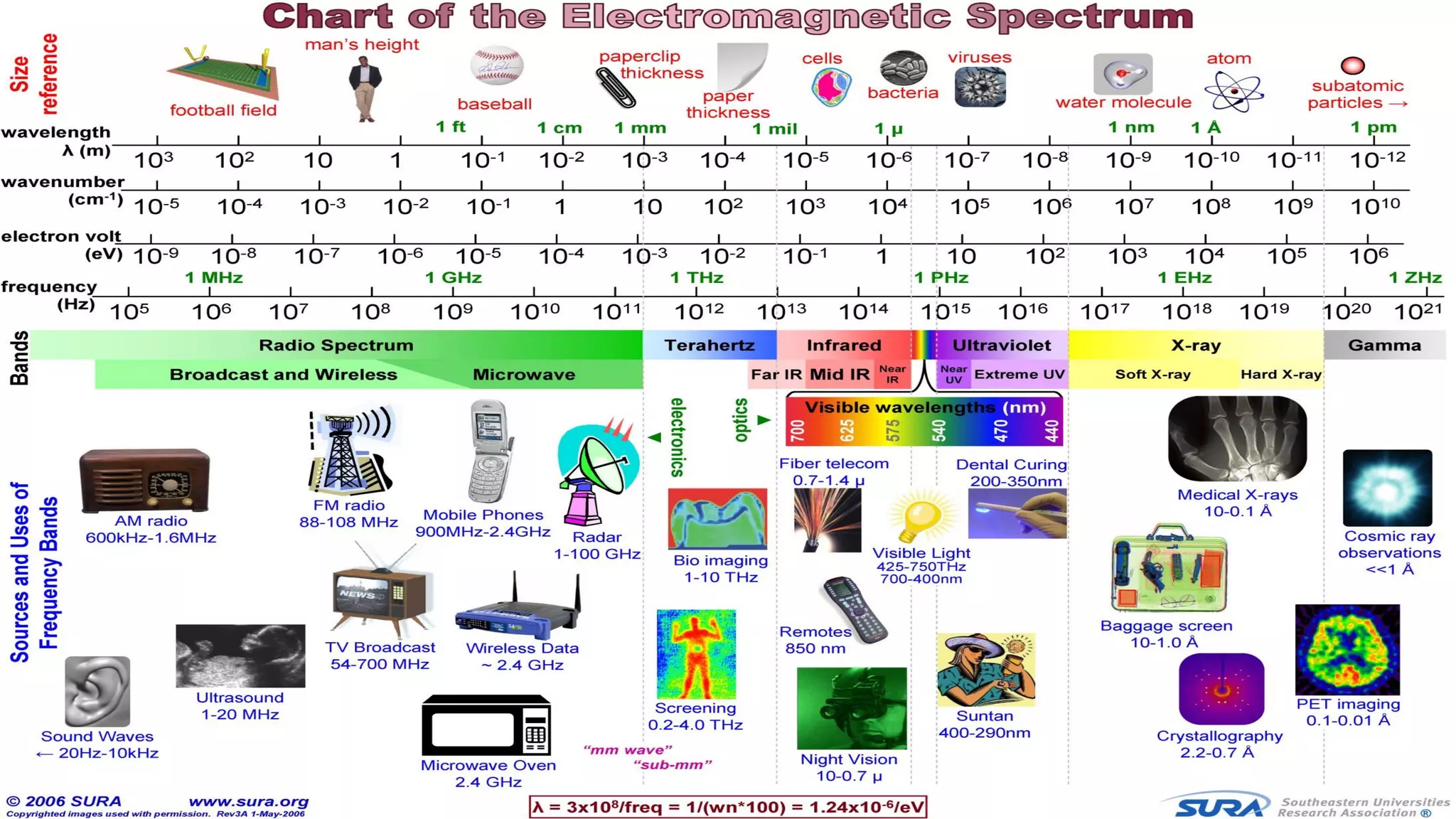
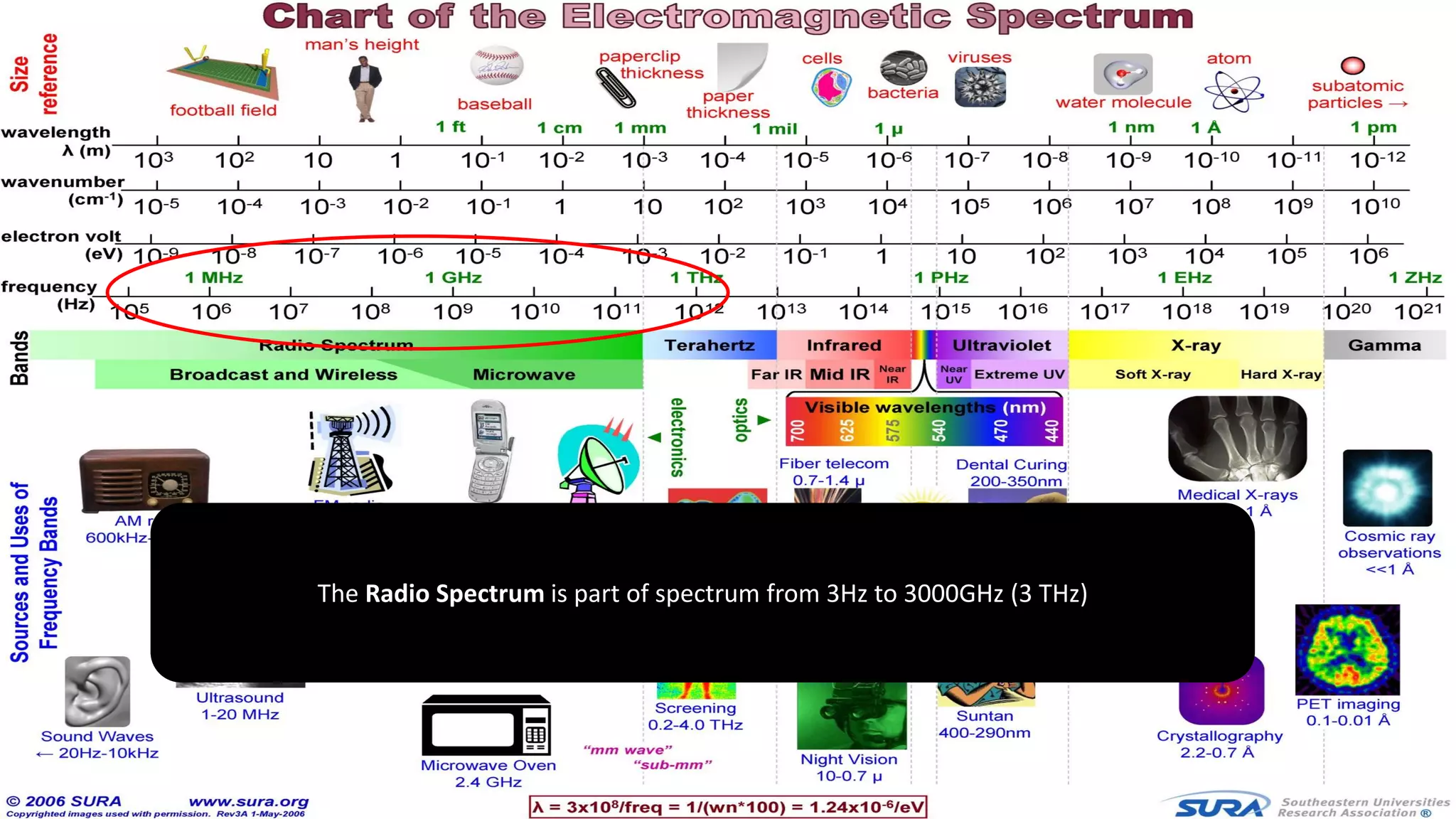
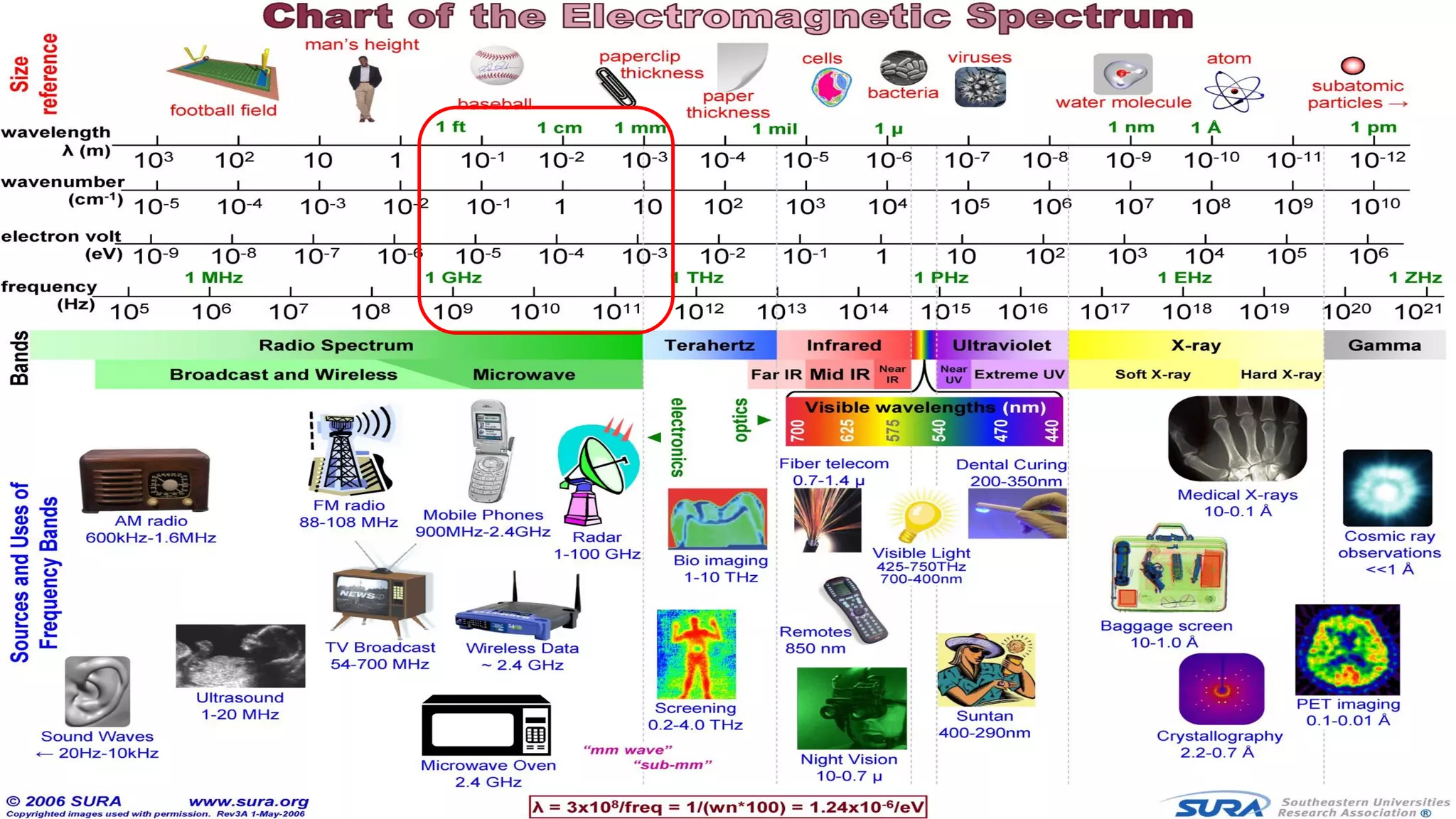
• The electromagnetic spectrum is a collective term to refer to the entire
range and scope of frequencies of electromagnetic radiation, from 3
Hertz (written as Hz) to 300 Exahertz (300,000,000,000,000,000,000
Hz)
• 1000 Hz = 1 kilo Hz (kHz)
• 1000 kHz = 1 Mega Hz (MHz)
• 1000 MHz = 1 Giga Hz (GHz)
• 1000 GHz = 1 Tera Hz (THz)
• 1000 THz = 1 Peta Hz (PHz)
• 1000 PHz = 1 Exa Hz (EHz)
©3G4G
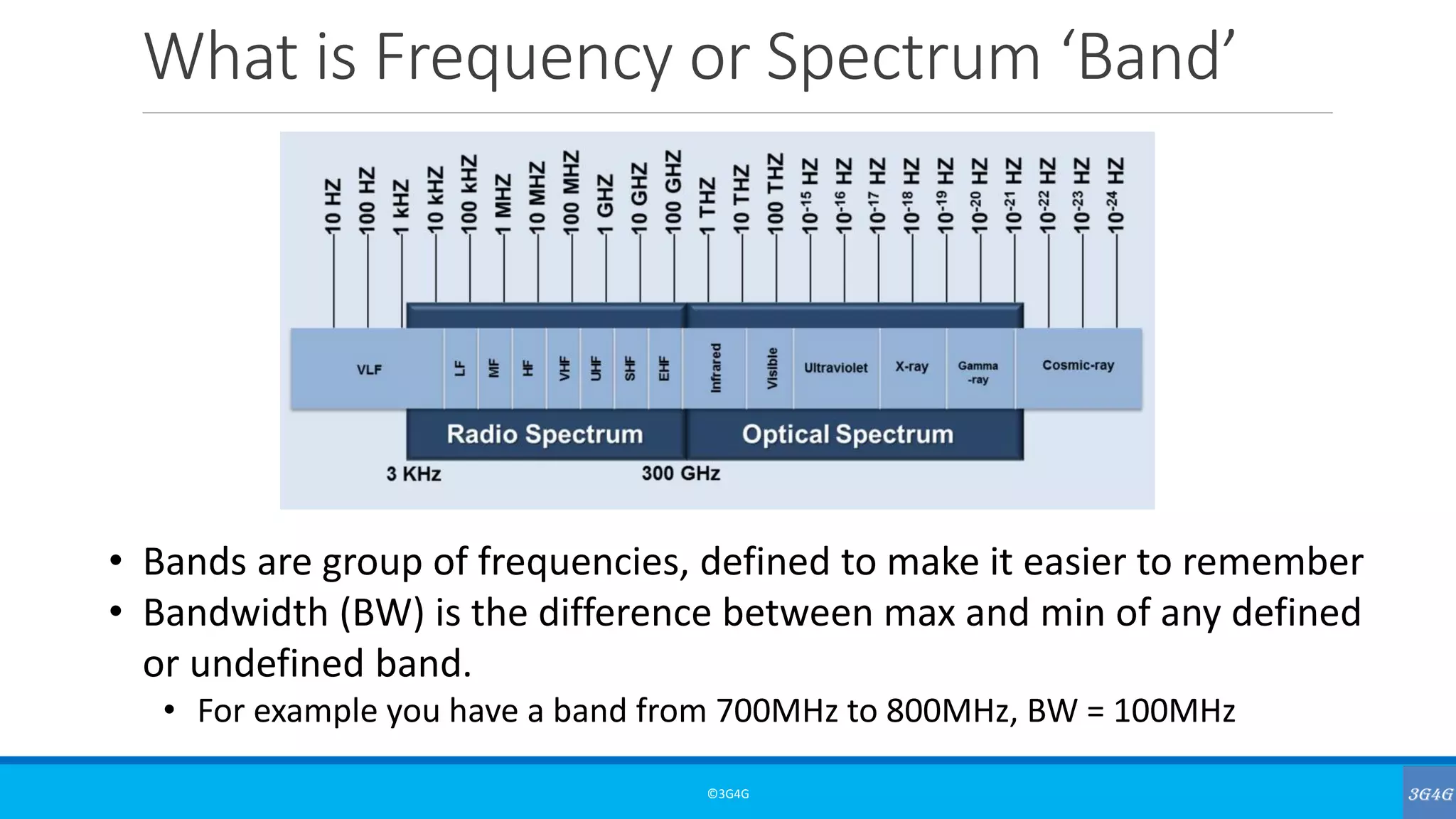
The Radio Spectrum is part of spectrum from 3Hz to 3000GHz (3 THz)
What is Frequency or Spectrum ‘Band’
©3G4G
• Bands are group of frequencies, defined to make it easier to remember
• Bandwidth (BW) is the difference between max and min of any defined
or undefined band.
• For example you have a band from 700MHz to 800MHz, BW = 100MHz
Larger Bandwidth means more data flow
©3G4G
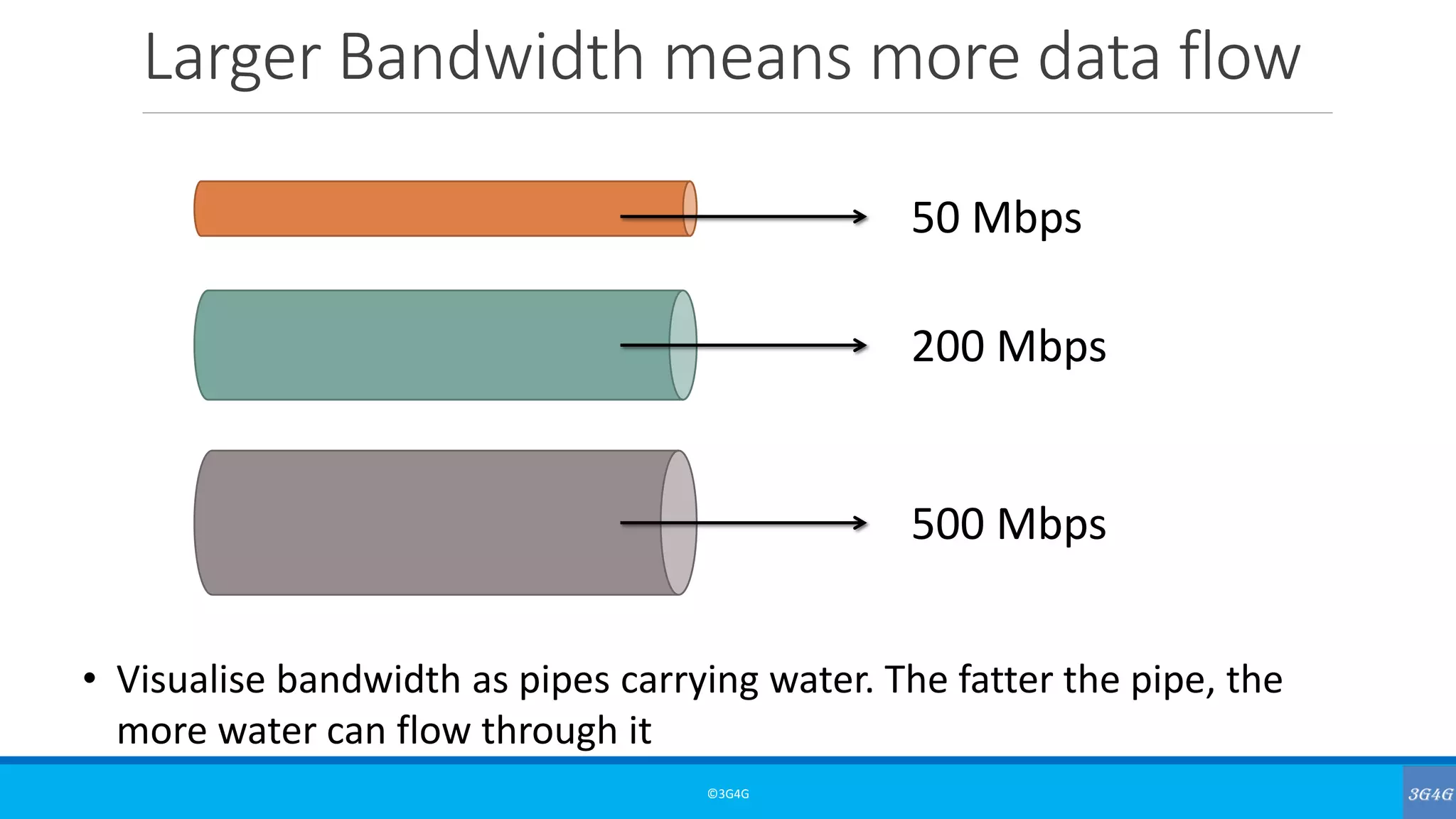
• Visualise bandwidth as pipes carrying water. The fatter the pipe, the
more water can flow through it
500 Mbps
200 Mbps
50 Mbps
Wavelength
©3G4G
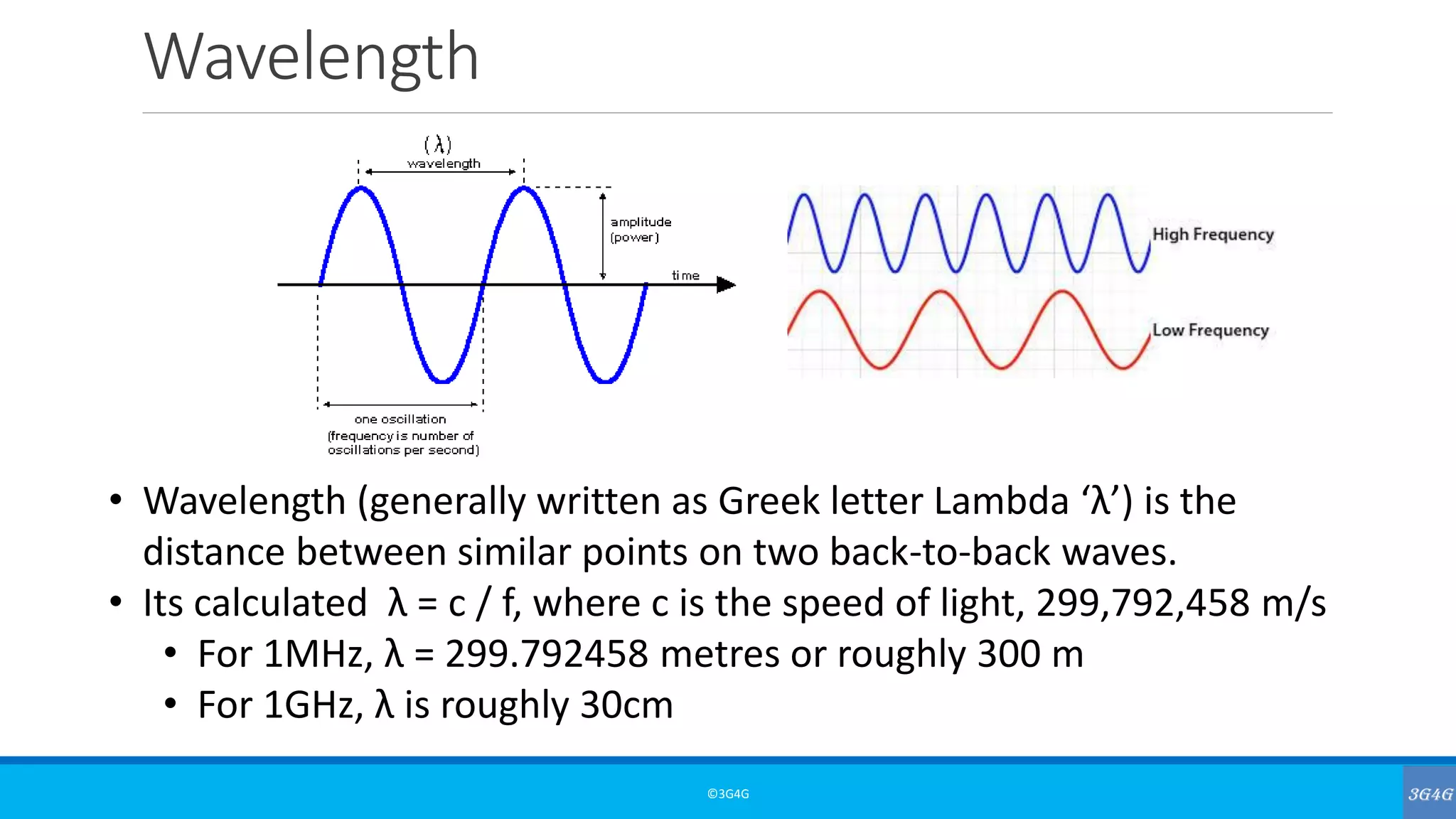
• Wavelength (generally written as Greek letter Lambda ‘λ’) is the
distance between similar points on two back-to-back waves.
• Its calculated λ = c / f, where c is the speed of light, 299,792,458 m/s
• For 1MHz, λ = 299.792458 metres or roughly 300 m
• For 1GHz, λ is roughly 30cm
©3G4G
Phase
©3G4G
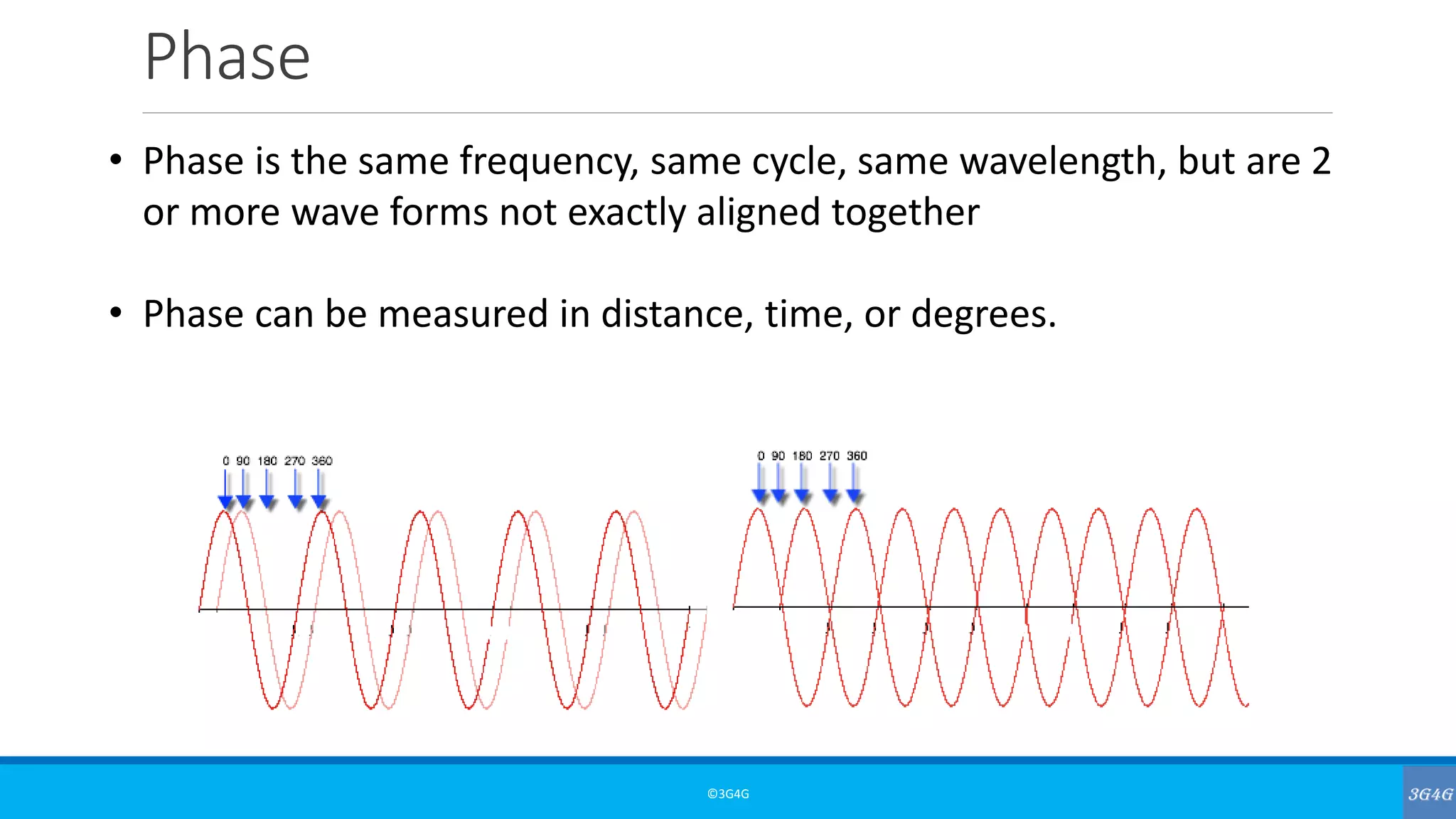
• Phase is the same frequency, same cycle, same wavelength, but are 2
or more wave forms not exactly aligned together
• Phase can be measured in distance, time, or degrees.
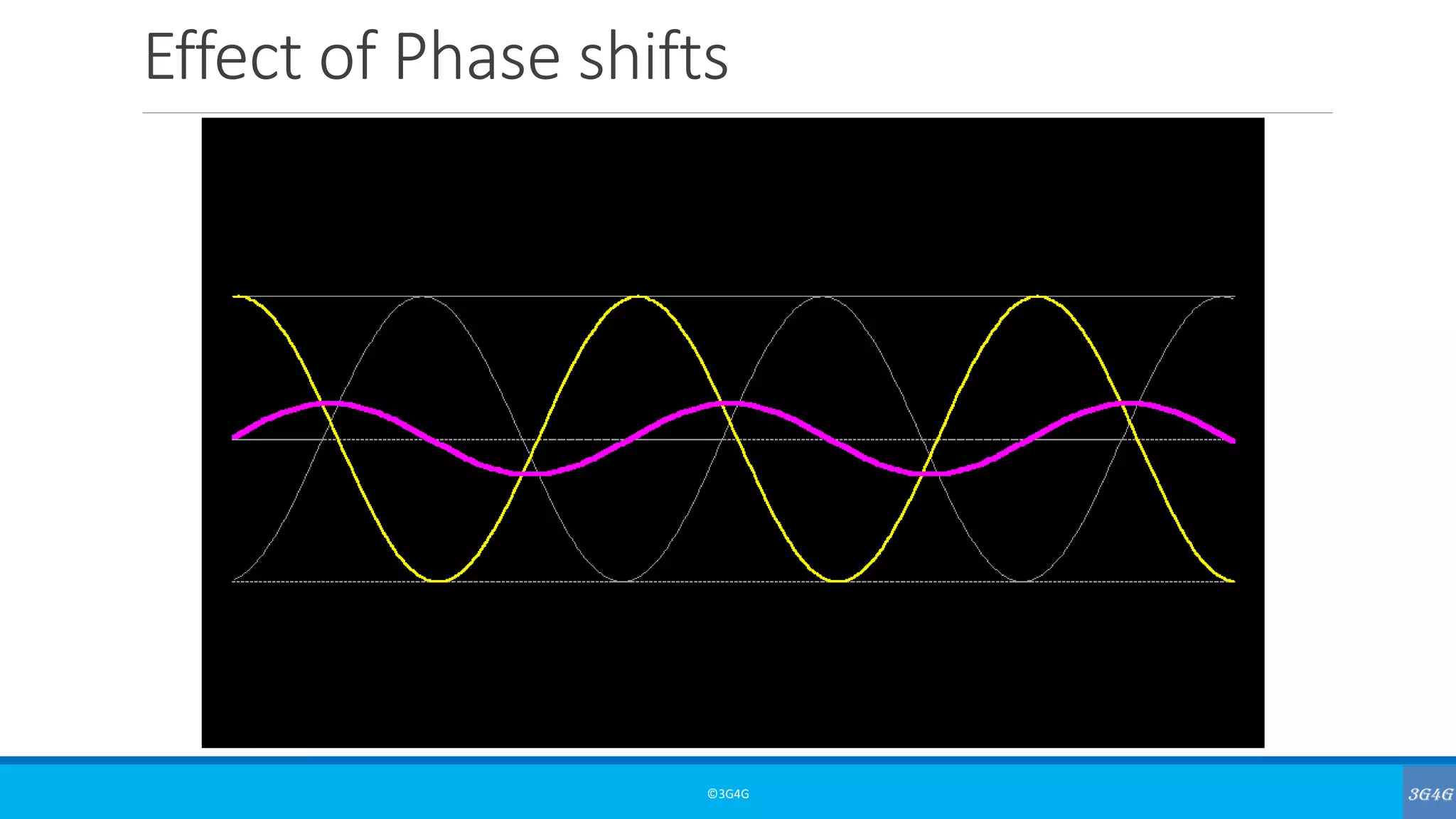
Effect of Phase shifts
©3G4G
Amplitude
©3G4G
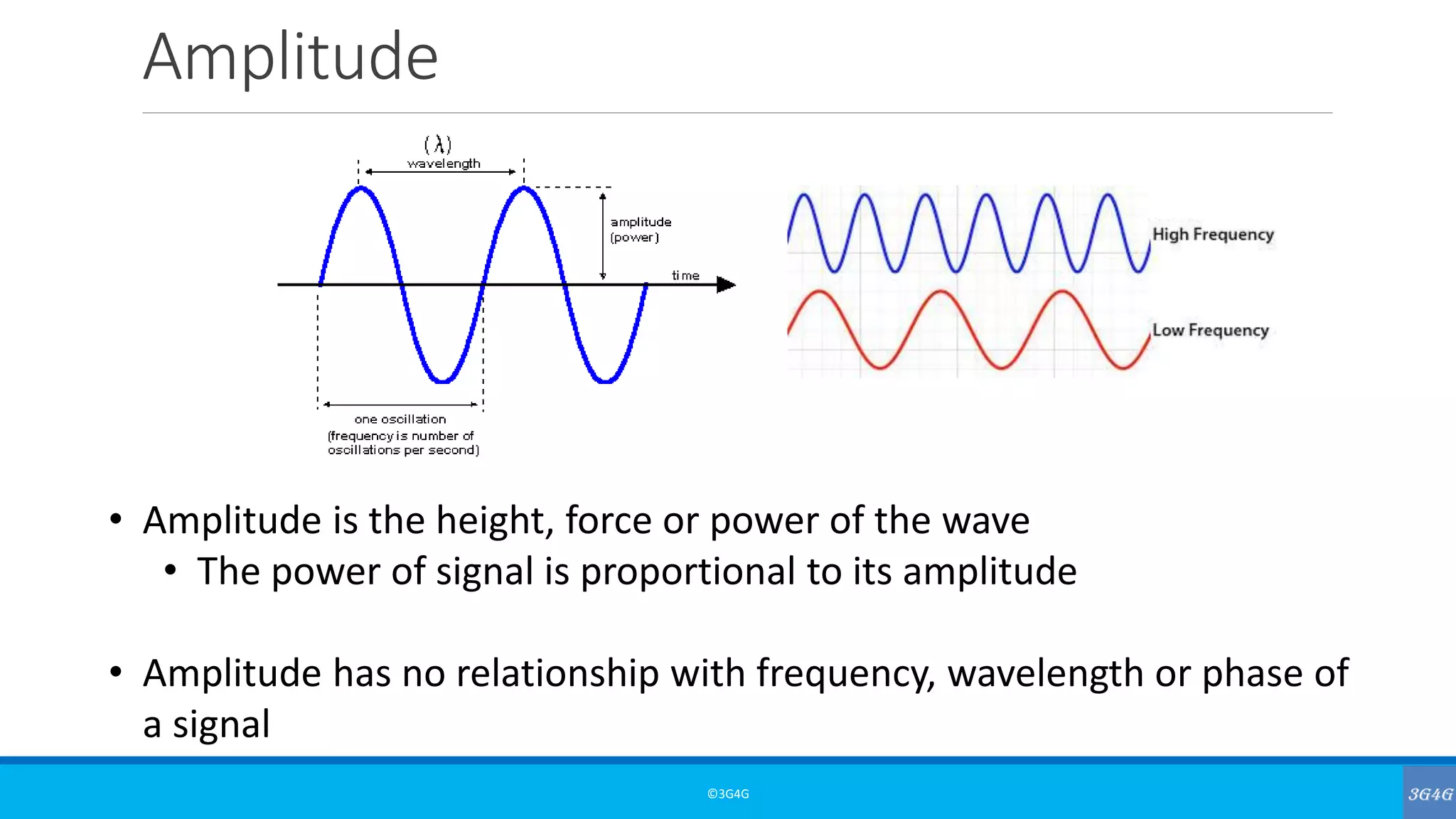
• Amplitude is the height, force or power of the wave
• The power of signal is proportional to its amplitude
• Amplitude has no relationship with frequency, wavelength or phase of
a signal
Antennas and wavelength
©3G4G
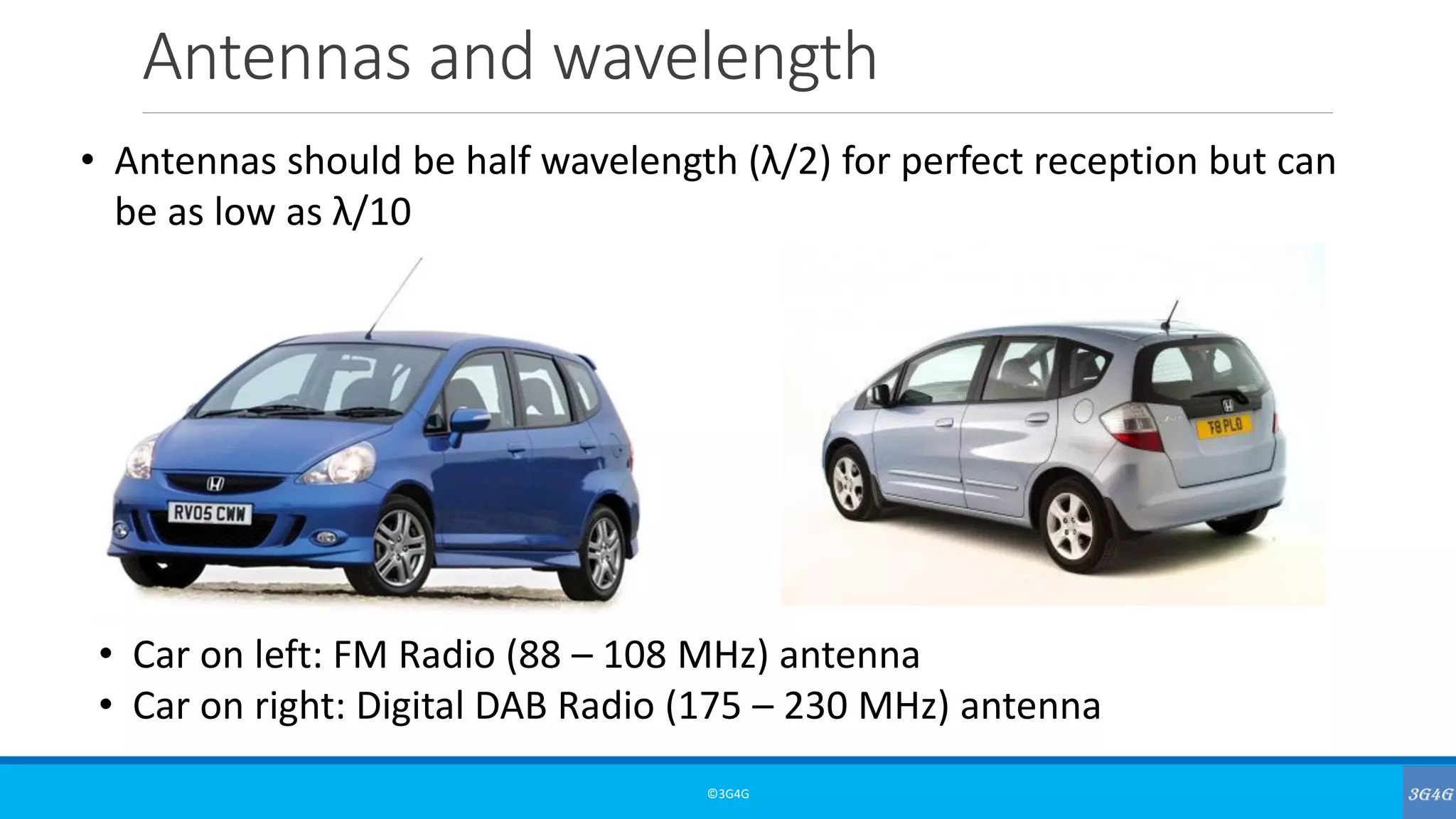
• Antennas should be half wavelength (λ/2) for perfect reception but can
be as low as λ/10
• Car on left: FM Radio (88 – 108 MHz) antenna
• Car on right: Digital DAB Radio (175 – 230 MHz) antenna
Antennas and wavelength
©3G4G
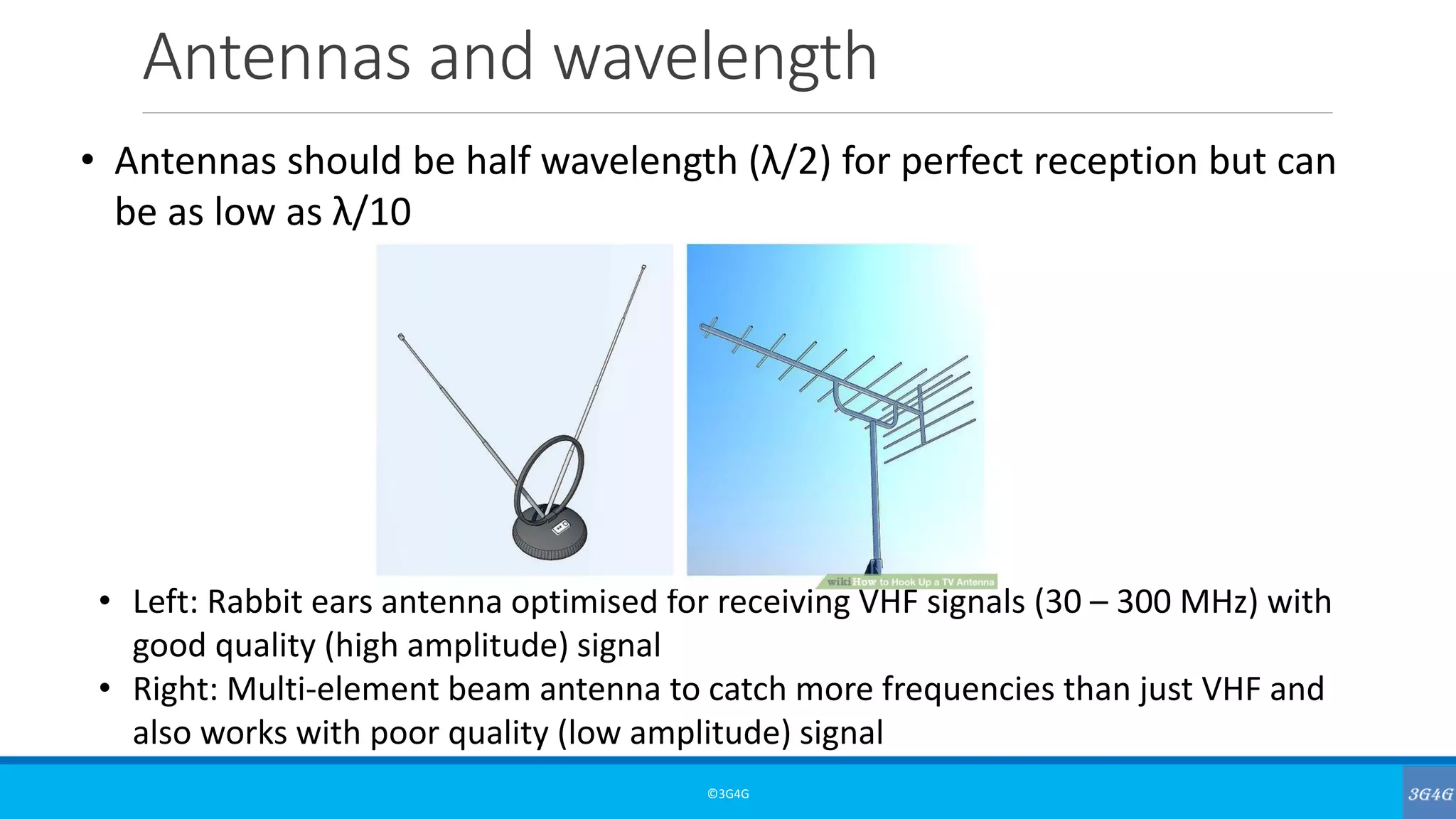
• Antennas should be half wavelength (λ/2) for perfect reception but can
be as low as λ/10
• Left: Rabbit ears antenna optimised for receiving VHF signals (30 – 300 MHz) with
good quality (high amplitude) signal
• Right: Multi-element beam antenna to catch more frequencies than just VHF and
also works with poor quality (low amplitude) signal
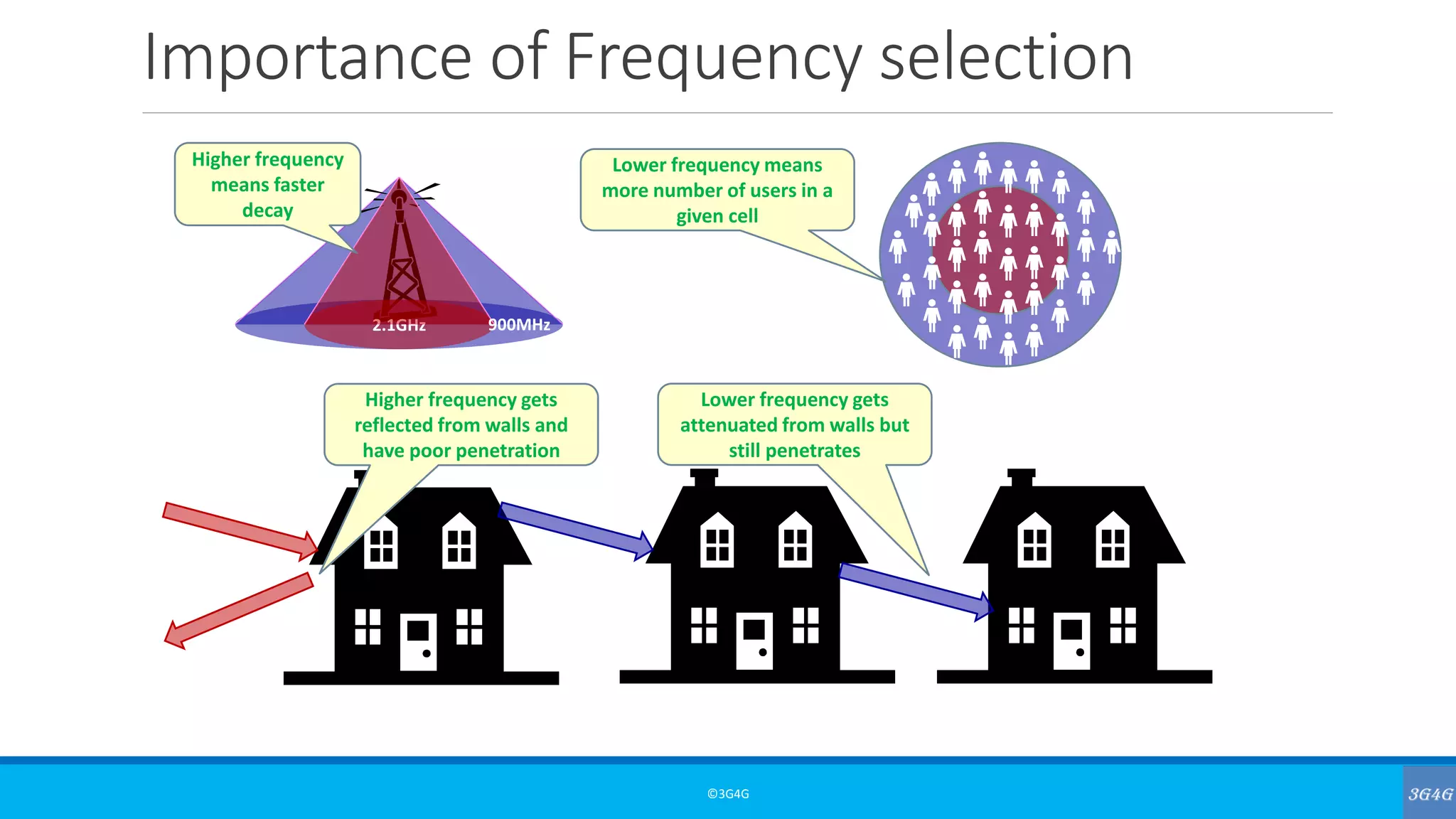
Importance of Frequency selection
©3G4G
2.1GHz 900MHz
Higher frequency
means faster
decay
Lower frequency means
more number of users in a
given cell
Higher frequency gets
reflected from walls and
have poor penetration
Lower frequency gets
attenuated from walls but
still penetrates
©3G4G
Antennas and wavelength
©3G4G
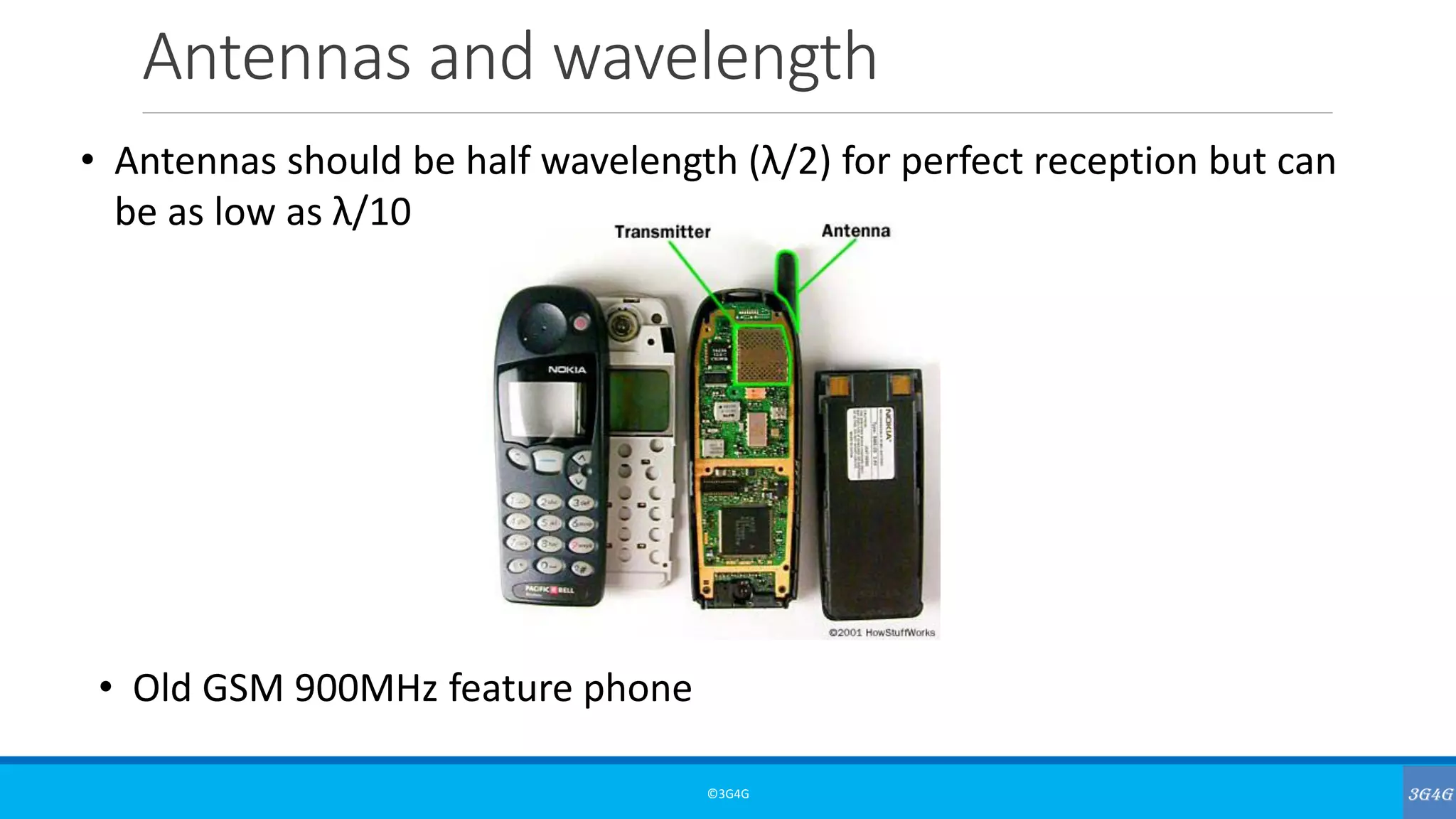
• Antennas should be half wavelength (λ/2) for perfect reception but can
be as low as λ/10
• Old GSM 900MHz feature phone
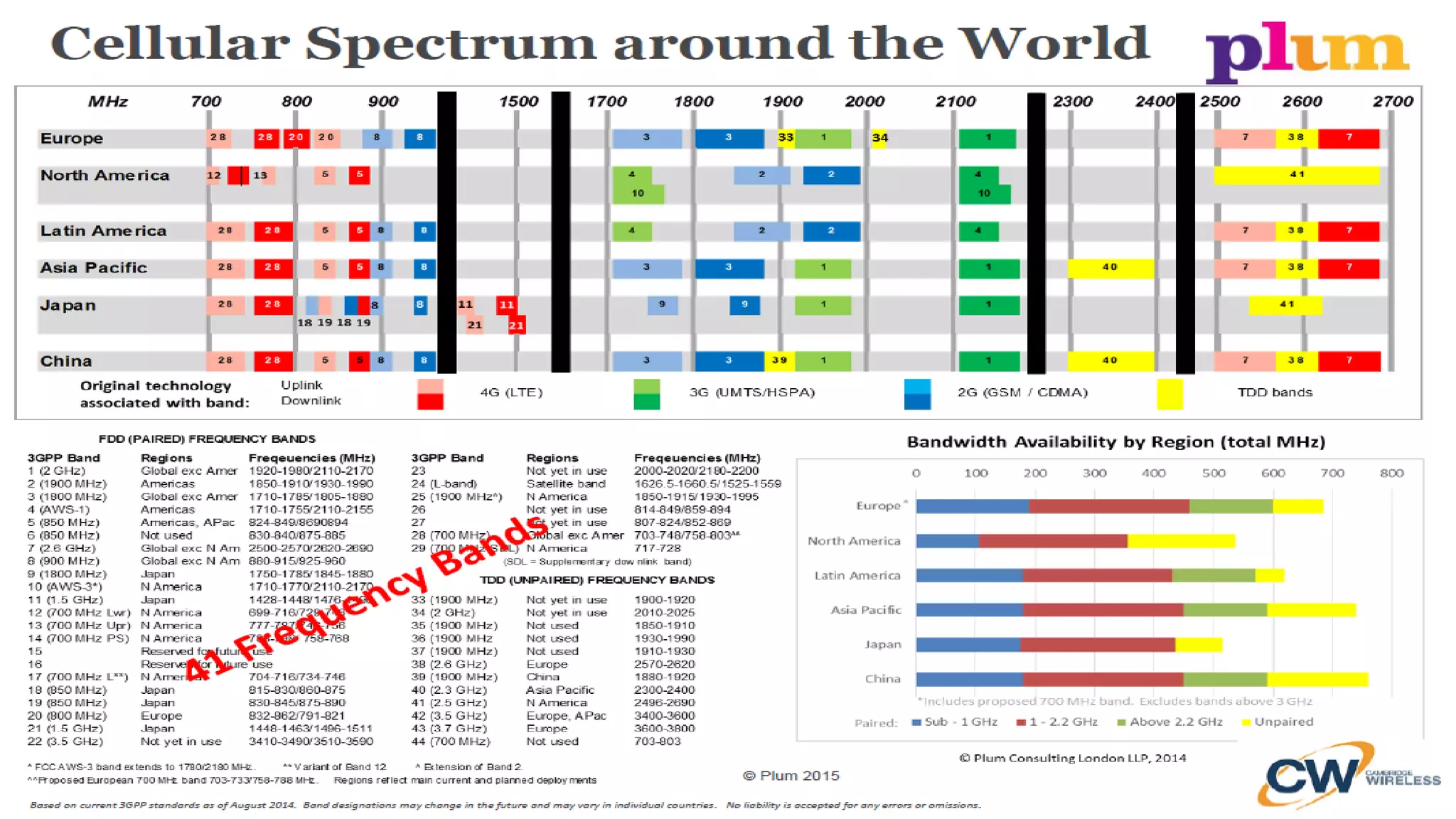
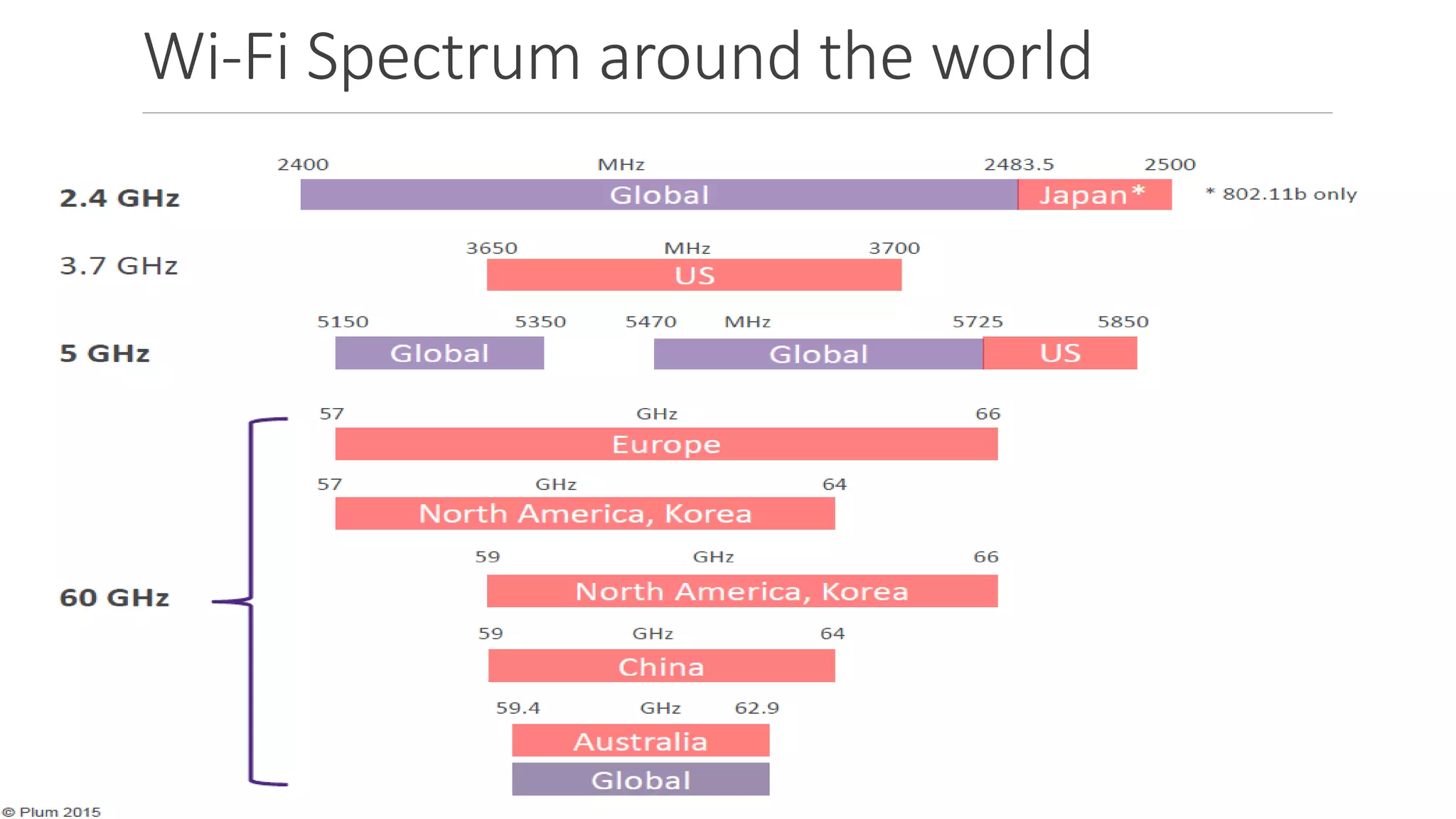
Wi-Fi Spectrum around the world
©3G4G
Antennas and wavelength
©3G4G
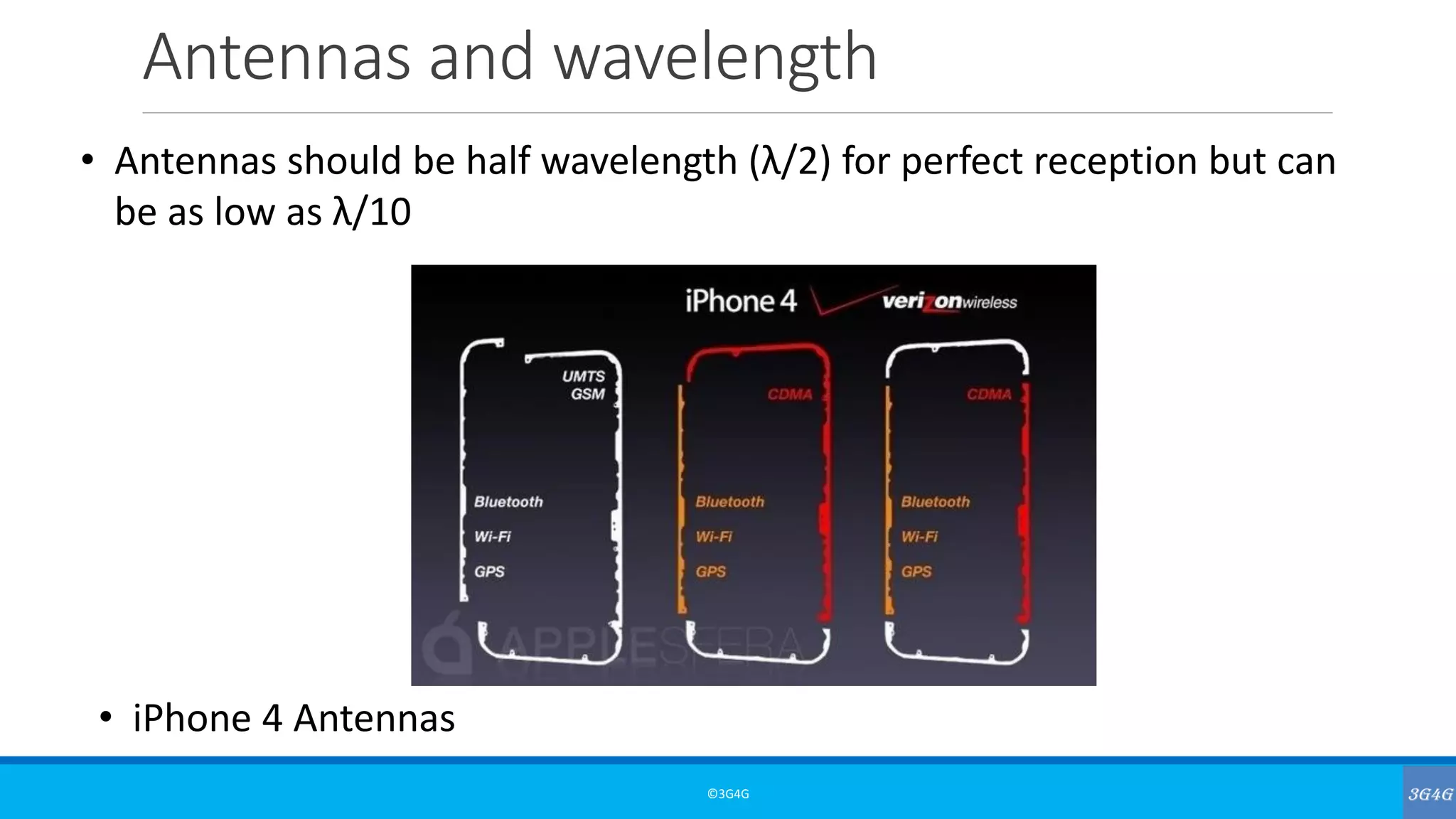
• Antennas should be half wavelength (λ/2) for perfect reception but can
be as low as λ/10
• iPhone 4 Antennas
Antennas and wavelength
©3G4G
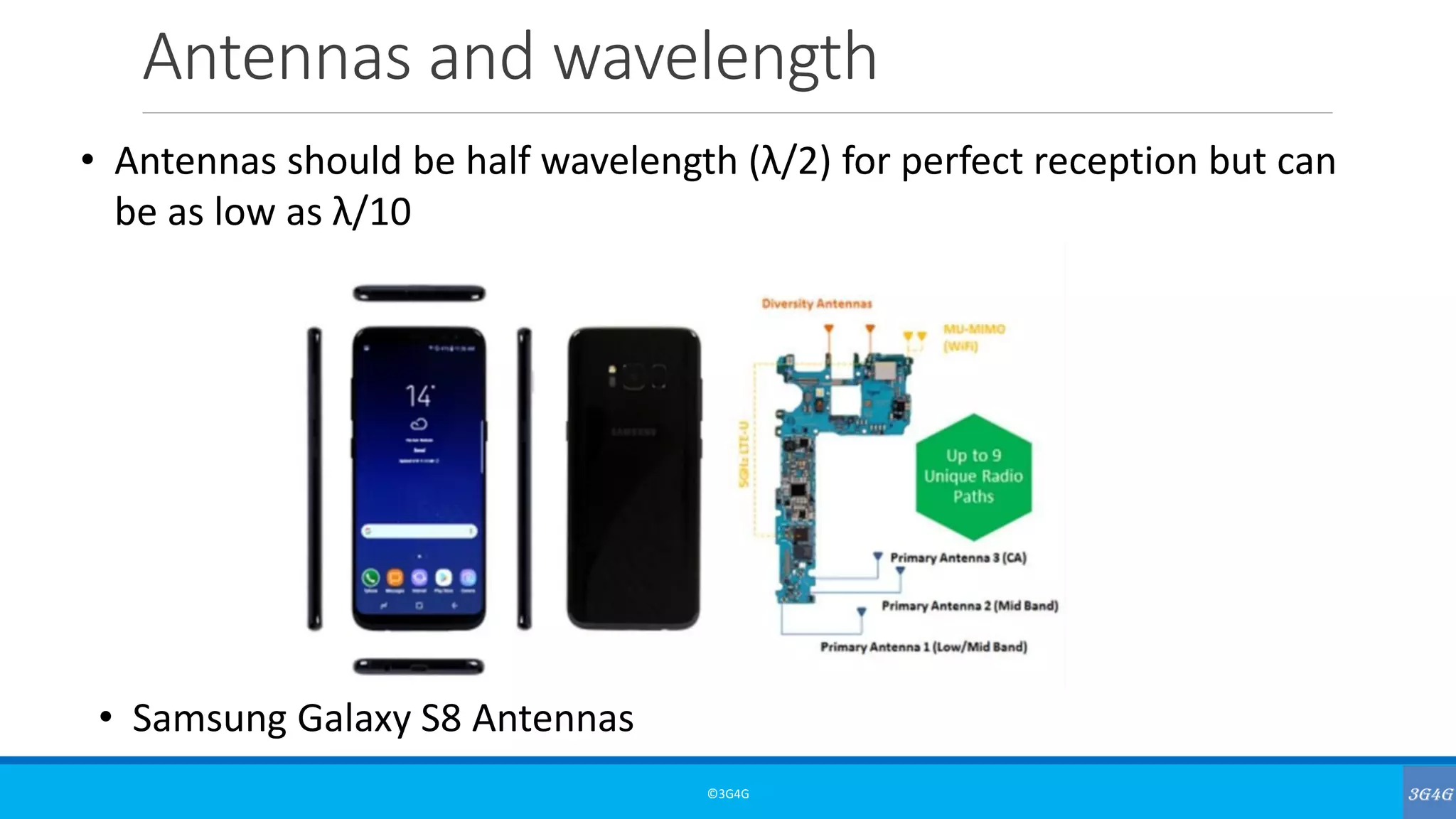
• Antennas should be half wavelength (λ/2) for perfect reception but can
be as low as λ/10
• Samsung Galaxy S8 Antennas
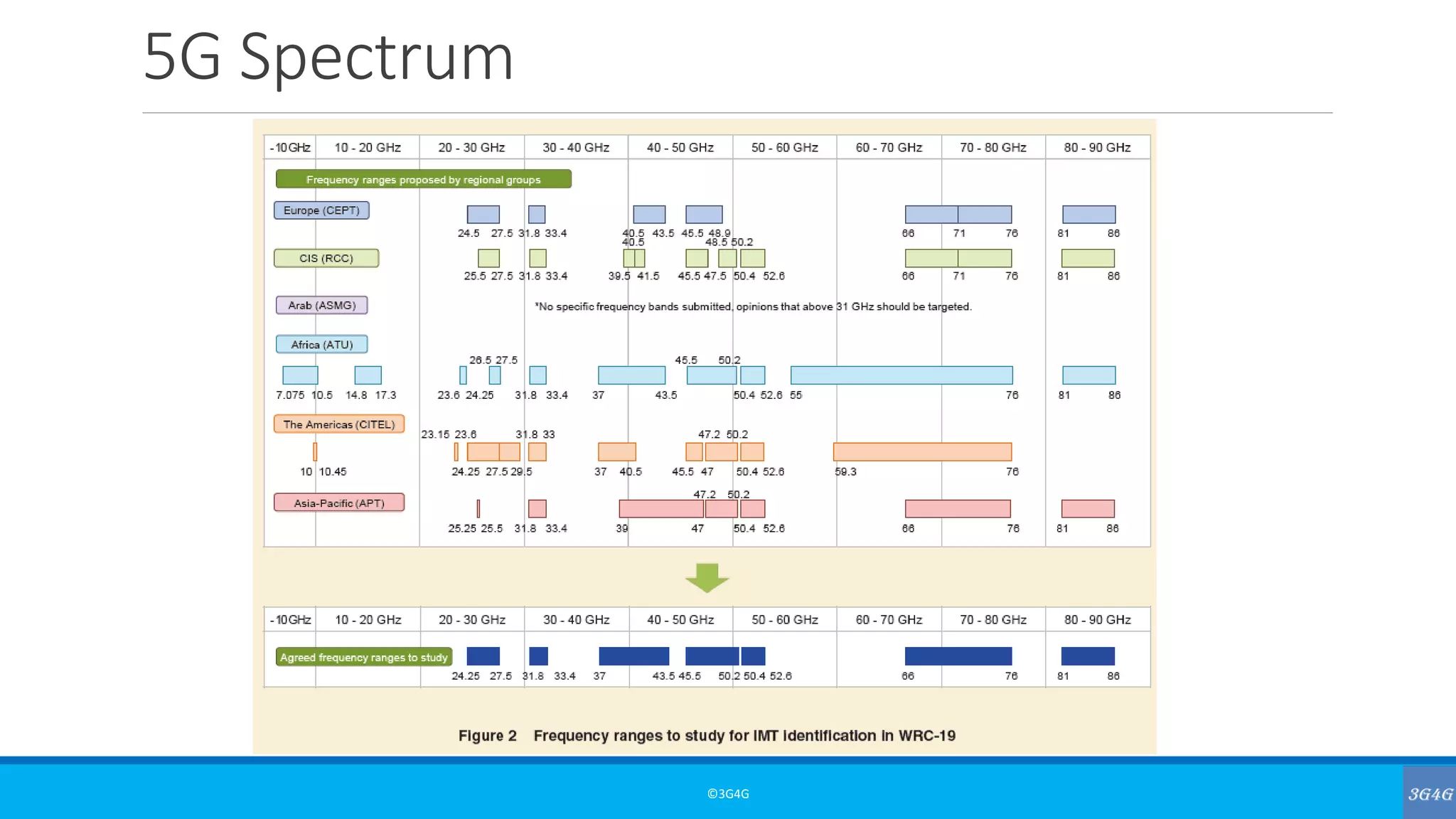
5G Spectrum
©3G4G
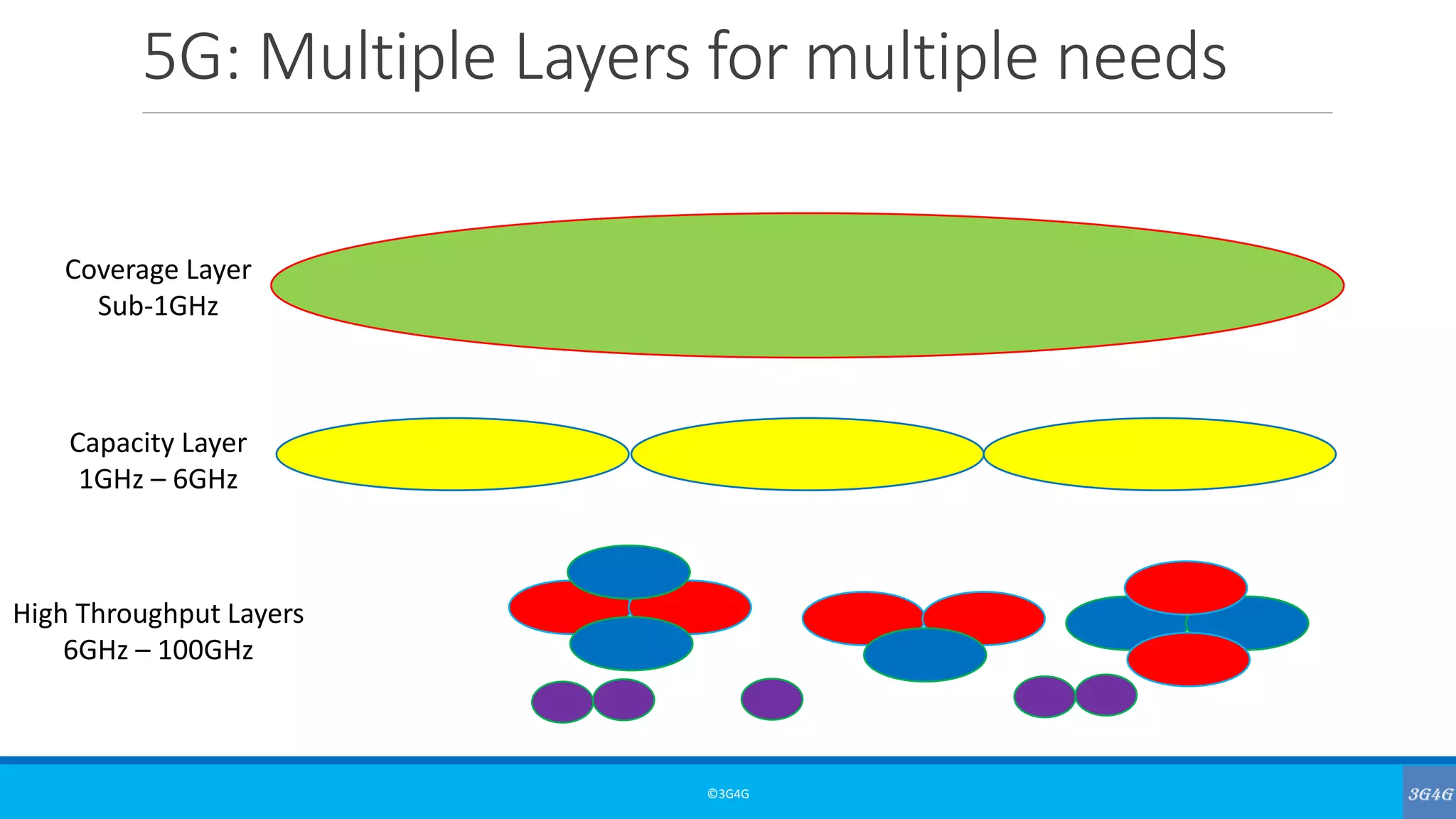
5G: Multiple Layers for multiple needs
©3G4G
Coverage Layer
Sub-1GHz
Capacity Layer
1GHz – 6GHz
High Throughput Layers
6GHz – 100GHz
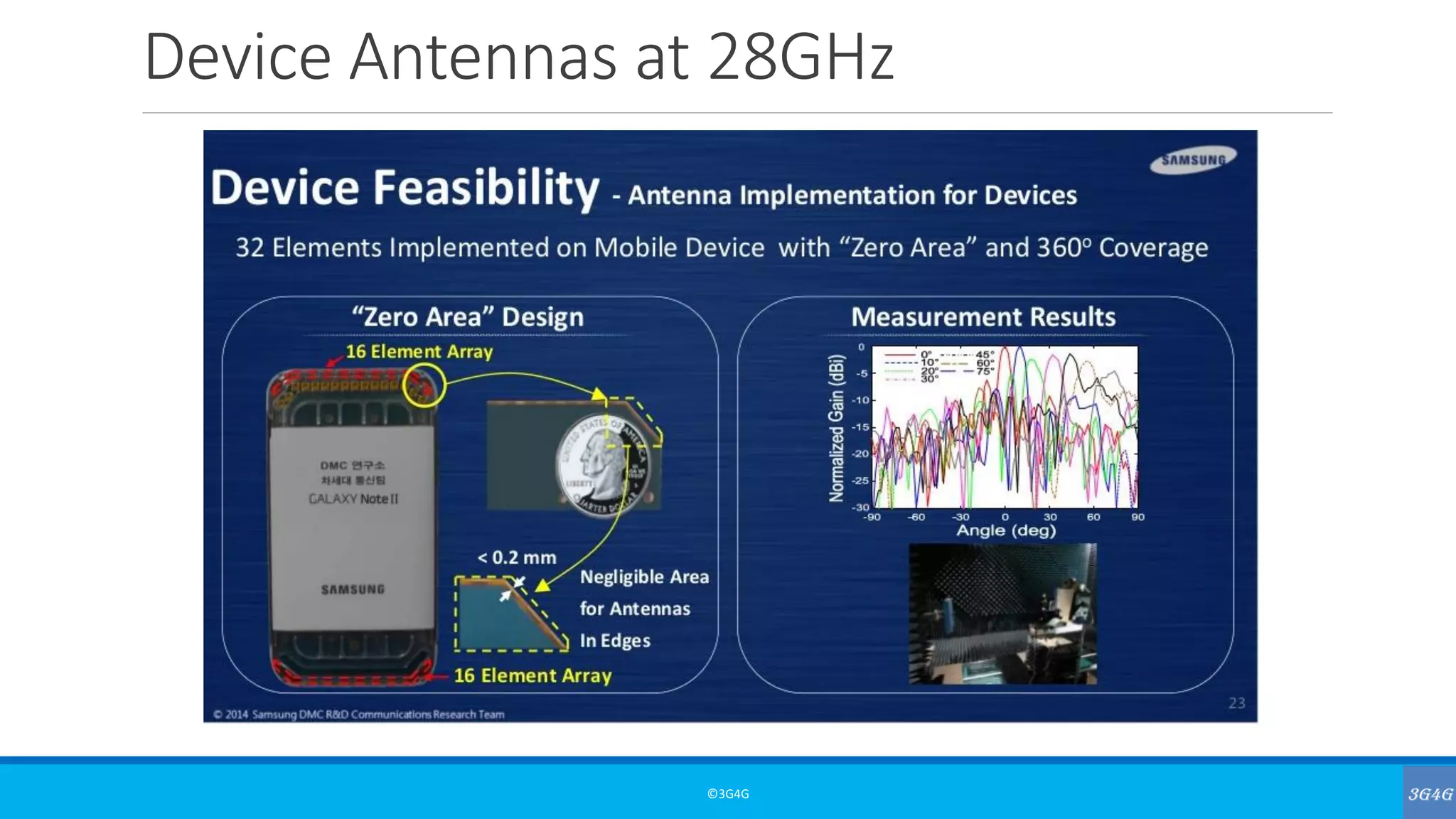
Device Antennas at 28GHz
©3G4G
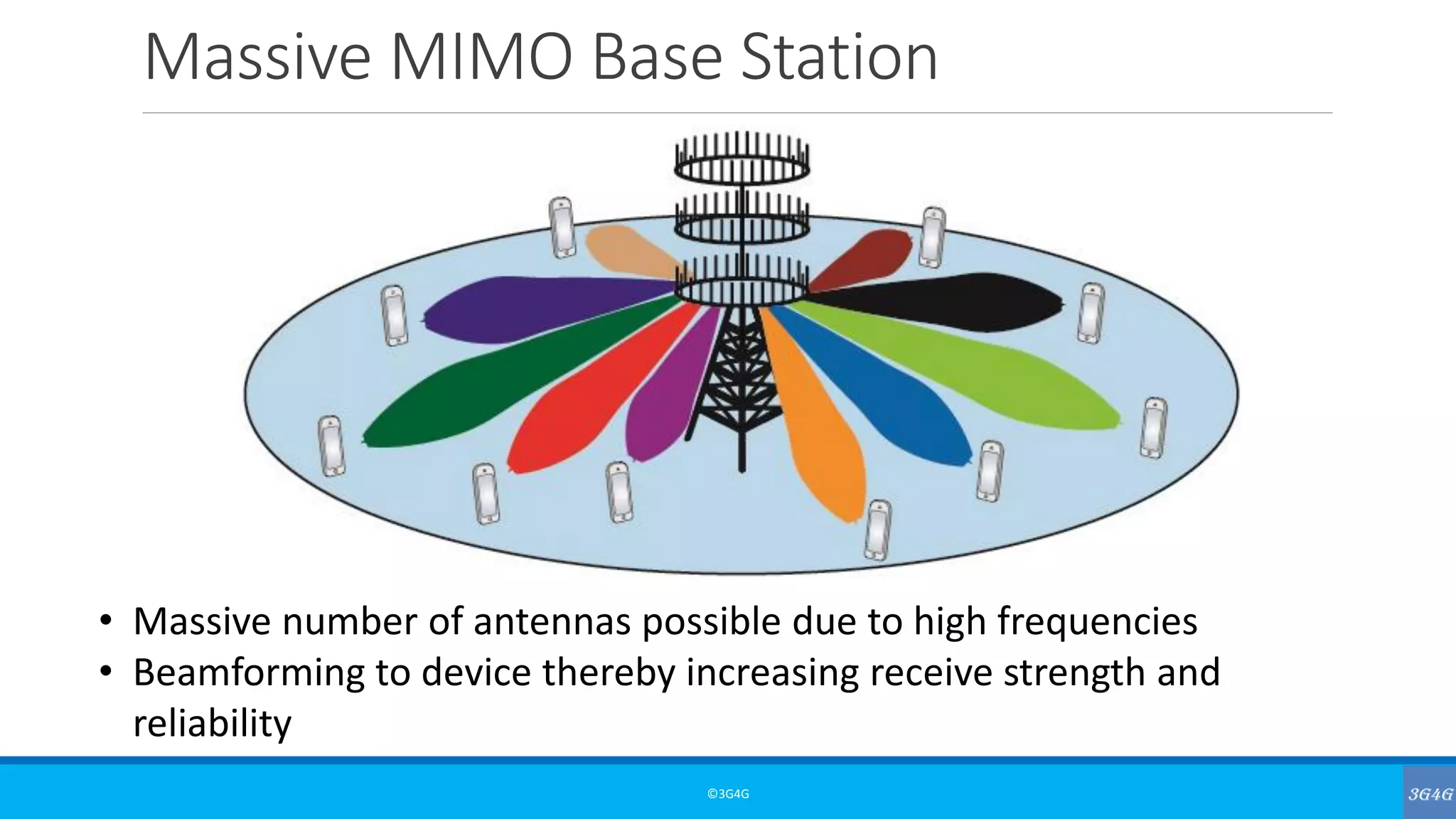
Massive MIMO Base Station
©3G4G
• Massive number of antennas possible due to high frequencies
• Beamforming to device thereby increasing receive strength and
reliability
Thank You
To learn more, visit:
3G4G Website – http://www.3g4g.co.uk/
3G4G Blog – http://blog.3g4g.co.uk/
3G4G Small Cells Blog – http://smallcells.3g4g.co.uk/
Follow us on Twitter: https://twitter.com/3g4gUK
Follow us on Linkedin: https://www.linkedin.com/company/3g4g
©3G4G

Radio Frequency, Band and Spectrum

  • 1.
    Radio Frequency, Band andSpectrum @3g4gUK
  • 2.
    Before we begin Thisvideo provides a very simplistic explanation for a very complex topic. ©3G4G
  • 3.
    Spectrum ©3G4G • A Spectrum(plural ‘spectra’ or ‘spectrums’) is used to classify something on a scale between two extreme points. For example: • The ‘political’ spectrum consisting of extreme left and extreme right and different ranges in between • The ‘socio-economic’ spectrum comprising of working class, middle class and upper class. • In this video we will look at ‘Radio’ spectrum which is part of ‘Electromagnetic’ spectrum.
  • 4.
  • 5.
  • 6.
    What is ‘Frequency’? ©3G4G •Radio Frequency is a electromagnetic wave using AC (Alternating Current). • “frequency” is something that happens over and over and over again. • It is very frequent, consistent, and repetitive • Frequency is the number of times a specified event occurs within a specified time interval. A standard measure of frequency is hertz (Hz) – number of cycles per second
  • 7.
    The Electromagnetic Spectrum ©3G4G •The electromagnetic spectrum is a collective term to refer to the entire range and scope of frequencies of electromagnetic radiation, from 3 Hertz (written as Hz) to 300 Exahertz (300,000,000,000,000,000,000 Hz) • 1000 Hz = 1 kilo Hz (kHz) • 1000 kHz = 1 Mega Hz (MHz) • 1000 MHz = 1 Giga Hz (GHz) • 1000 GHz = 1 Tera Hz (THz) • 1000 THz = 1 Peta Hz (PHz) • 1000 PHz = 1 Exa Hz (EHz)
  • 8.
    ©3G4G The Radio Spectrumis part of spectrum from 3Hz to 3000GHz (3 THz)
  • 9.
    What is Frequencyor Spectrum ‘Band’ ©3G4G • Bands are group of frequencies, defined to make it easier to remember • Bandwidth (BW) is the difference between max and min of any defined or undefined band. • For example you have a band from 700MHz to 800MHz, BW = 100MHz
  • 10.
    Larger Bandwidth meansmore data flow ©3G4G • Visualise bandwidth as pipes carrying water. The fatter the pipe, the more water can flow through it 500 Mbps 200 Mbps 50 Mbps
  • 11.
    Wavelength ©3G4G • Wavelength (generallywritten as Greek letter Lambda ‘λ’) is the distance between similar points on two back-to-back waves. • Its calculated λ = c / f, where c is the speed of light, 299,792,458 m/s • For 1MHz, λ = 299.792458 metres or roughly 300 m • For 1GHz, λ is roughly 30cm
  • 12.
  • 13.
    Phase ©3G4G • Phase isthe same frequency, same cycle, same wavelength, but are 2 or more wave forms not exactly aligned together • Phase can be measured in distance, time, or degrees.
  • 14.
    Effect of Phaseshifts ©3G4G
  • 15.
    Amplitude ©3G4G • Amplitude isthe height, force or power of the wave • The power of signal is proportional to its amplitude • Amplitude has no relationship with frequency, wavelength or phase of a signal
  • 16.
    Antennas and wavelength ©3G4G •Antennas should be half wavelength (λ/2) for perfect reception but can be as low as λ/10 • Car on left: FM Radio (88 – 108 MHz) antenna • Car on right: Digital DAB Radio (175 – 230 MHz) antenna
  • 17.
    Antennas and wavelength ©3G4G •Antennas should be half wavelength (λ/2) for perfect reception but can be as low as λ/10 • Left: Rabbit ears antenna optimised for receiving VHF signals (30 – 300 MHz) with good quality (high amplitude) signal • Right: Multi-element beam antenna to catch more frequencies than just VHF and also works with poor quality (low amplitude) signal
  • 18.
    Importance of Frequencyselection ©3G4G 2.1GHz 900MHz Higher frequency means faster decay Lower frequency means more number of users in a given cell Higher frequency gets reflected from walls and have poor penetration Lower frequency gets attenuated from walls but still penetrates
  • 19.
  • 20.
    Antennas and wavelength ©3G4G •Antennas should be half wavelength (λ/2) for perfect reception but can be as low as λ/10 • Old GSM 900MHz feature phone
  • 21.
    Wi-Fi Spectrum aroundthe world ©3G4G
  • 22.
    Antennas and wavelength ©3G4G •Antennas should be half wavelength (λ/2) for perfect reception but can be as low as λ/10 • iPhone 4 Antennas
  • 23.
    Antennas and wavelength ©3G4G •Antennas should be half wavelength (λ/2) for perfect reception but can be as low as λ/10 • Samsung Galaxy S8 Antennas
  • 24.
  • 25.
    5G: Multiple Layersfor multiple needs ©3G4G Coverage Layer Sub-1GHz Capacity Layer 1GHz – 6GHz High Throughput Layers 6GHz – 100GHz
  • 26.
    Device Antennas at28GHz ©3G4G
  • 27.
    Massive MIMO BaseStation ©3G4G • Massive number of antennas possible due to high frequencies • Beamforming to device thereby increasing receive strength and reliability
  • 28.
    Thank You To learnmore, visit: 3G4G Website – http://www.3g4g.co.uk/ 3G4G Blog – http://blog.3g4g.co.uk/ 3G4G Small Cells Blog – http://smallcells.3g4g.co.uk/ Follow us on Twitter: https://twitter.com/3g4gUK Follow us on Linkedin: https://www.linkedin.com/company/3g4g ©3G4G