5G Spectrum
Short Version
@3g4gUK
©3G4G
THIS IS SHORT VERSION – FOR LONG VERSION CLICK ON THE LINK ON TOP RIGHT
©3G4G
FOR NON-MMWAVE 5G CLICK ON THE LINK ON TOP RIGHT
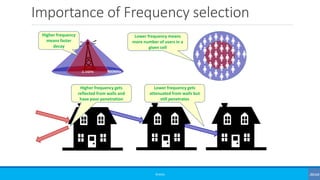
Importance of Frequency selection
©3G4G
2.1GHz 900MHz
Higher frequency
means faster
decay
Lower frequency means
more number of users in a
given cell
Higher frequency gets
reflected from walls and
have poor penetration
Lower frequency gets
attenuated from walls but
still penetrates
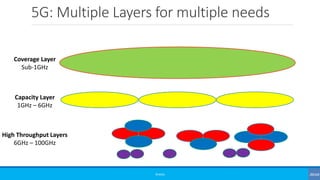
5G: Multiple Layers for multiple needs
©3G4G
Coverage Layer
Sub-1GHz
Capacity Layer
1GHz – 6GHz
High Throughput Layers
6GHz – 100GHz
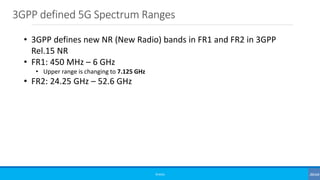
3GPP defined 5G Spectrum Ranges
©3G4G
3.3 3.8
4.2
4.4 5.0
24.25 27.5
29.5 37 40
26.5
n78 n79
n77
n258
n260
n261
28.35
n257
Bandwidth
900 MHz
500 MHz
600 MHz
3000 MHz (3 GHz)
3250 MHz (3.25 GHz)
3000 MHz (3 GHz)
850 MHz
• 3GPP defines new NR (New Radio) bands in FR1 and FR2 in 3GPP
Rel.15 NR
• FR1: 450 MHz – 6 GHz
• Upper range is changing to 7.125 GHz
• FR2: 24.25 GHz – 52.6 GHz
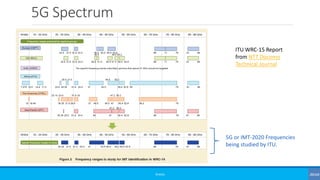
5G Spectrum
©3G4G
ITU WRC-15 Report
from NTT Docomo
Technical Journal
5G or IMT-2020 Frequencies
being studied by ITU.
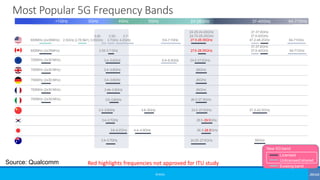
Most Popular 5G Frequency Bands
©3G4G
600MHz (2x35MHz)
24.25-24.45GHz
24.75-25.25GHz
27.5-28.35GHz
700MHz (2x30 MHz) 3.4–3.8GHz 24.5-27.5GHz
3.4–3.8GHz 26GHz
3.4–3.8GHz 26GHz
3.46–3.8GHz 26GHz
3.6–3.8GHz
3.3–3.6GHz 4.8–5GHz 24.5-27.5GHz 37.5-42.5GHz
3.4–3.7GHz 26.5-29.5GHz
4.4–4.9GHz 26.5-28.5GHz
3.4–3.7GHz 39GHz
3.6–4.2GHz
64-71GHz
37-37.6GHz
37.6-40GHz
47.2-48.2GHz
5.9–6.4GHz
5.9–7.1GHz
600MHz (2x35MHz) 27.5-28.35GHz 64-71GHz
37-37.6GHz
37.6-40GHz
24.25-27.5GHz
26.5-27.5GHz
3.55- 3.7-
3.7GHz 4.2GHz
3.55-3.7 GHz
700MHz (2x30 MHz)
700MHz (2x30 MHz)
700MHz (2x30 MHz)
700MHz (2x30 MHz)
5GHz4GHz3GHz<1GHz 24-28GHz 37-40GHz 64-71GHz
3.45-
2.5GHz (LTE B41) 3.55GHz
Source: Qualcomm
Licensed
Unlicensed/shared
Existing band
New 5G band
Red highlights frequencies not approved for ITU study
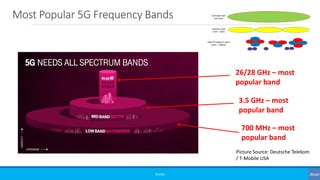
Most Popular 5G Frequency Bands
©3G4G
Picture Source: Deutsche Telekom
/ T-Mobile USA
700 MHz – most
popular band
3.5 GHz – most
popular band
26/28 GHz – most
popular band
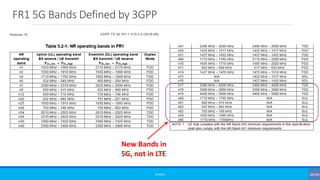
FR1 5G Bands Defined by 3GPP
©3G4G
New Bands in
5G, not in LTE
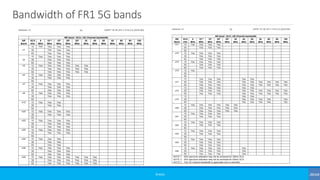
Bandwidth of FR1 5G bands
©3G4G
5G Deployment Options and Migration Strategy
©3G4G
EPC 5GC (NGCN)
SA
NSA
eNB EPC
Option 1: SA LTE connected to EPC Option 2: SA NR connected to 5GC
(Standalone)
(Non-Standalone)
[Dual Connectivity]
ng-eNBgNB 5GC
Option 5: SA LTE connected to 5GC
Option 3: NSA LTE assisted NR
connected to EPC
Option 4: NSA NR assisted LTE
connected to 5GC
Option 7: NSA LTE assisted NR
connected to 5GC
Migration
Strategy Option 1
↗ Option 2
↘ Option 3
Option 3
↗ Option 7
↘ Option 5
Option 3
↗ Option 3
↘ Option 2
Option 3
↗ Option 4
↘ Option 2
[EN-DC] [NE-DC] [NGEN-DC]
5GC
5GC
gNB
ng-eNB
5GC
gNB
ng-eNB
EPC
eNB
en-gNB
Non-Standalone 5G
Networks, Release-15, all 5G
networks today (SRIT)
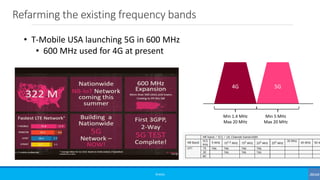
Refarming the existing frequency bands
©3G4G
• T-Mobile USA launching 5G in 600 MHz
• 600 MHz used for 4G at present
4G 5G
Min 1.4 MHz
Max 20 MHz
Min 5 MHz
Max 20 MHz
Refarming the existing frequency bands
©3G4G
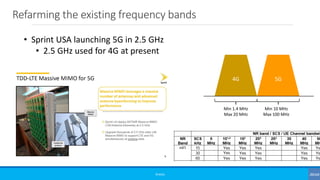
• Sprint USA launching 5G in 2.5 GHz
• 2.5 GHz used for 4G at present
4G 5G
Min 1.4 MHz
Max 20 MHz
Min 10 MHz
Max 100 MHz
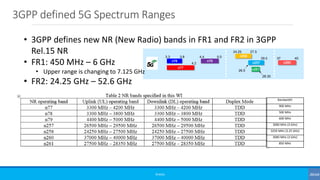
3GPP defined 5G Spectrum Ranges
©3G4G
3.3 3.8
4.2
4.4 5.0
24.25 27.5
29.5 37 40
26.5
n78 n79
n77
n258
n260
n261
28.35
n257
Bandwidth
900 MHz
500 MHz
600 MHz
3000 MHz (3 GHz)
3250 MHz (3.25 GHz)
3000 MHz (3 GHz)
850 MHz
• 3GPP defines new NR (New Radio) bands in FR1 and FR2 in 3GPP
Rel.15 NR
• FR1: 450 MHz – 6 GHz
• Upper range is changing to 7.125 GHz
• FR2: 24.25 GHz – 52.6 GHz
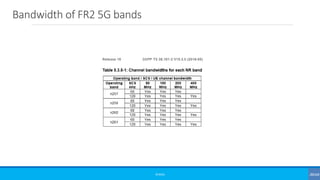
Bandwidth of FR2 5G bands
©3G4G
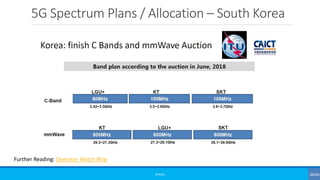
5G Spectrum Plans / Allocation – South Korea
©3G4G
Further Reading: Operator Watch Blog
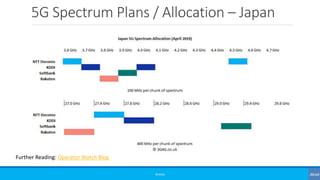
5G Spectrum Plans / Allocation – Japan
©3G4G
Further Reading: Operator Watch Blog
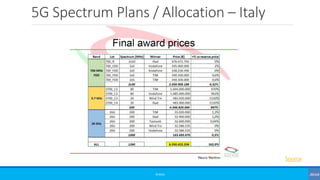
5G Spectrum Plans / Allocation – Italy
©3G4G
Source
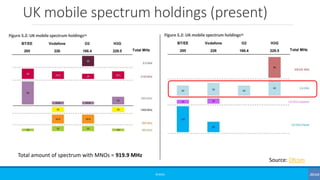
UK mobile spectrum holdings (present)
©3G4G
Source: Ofcom
Total amount of spectrum with MNOs = 919.9 MHz
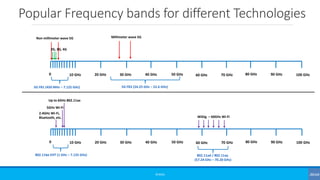
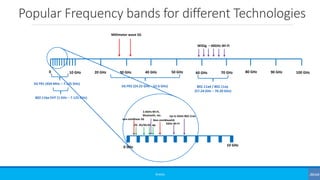
Popular Frequency bands for different Technologies
©3G4G
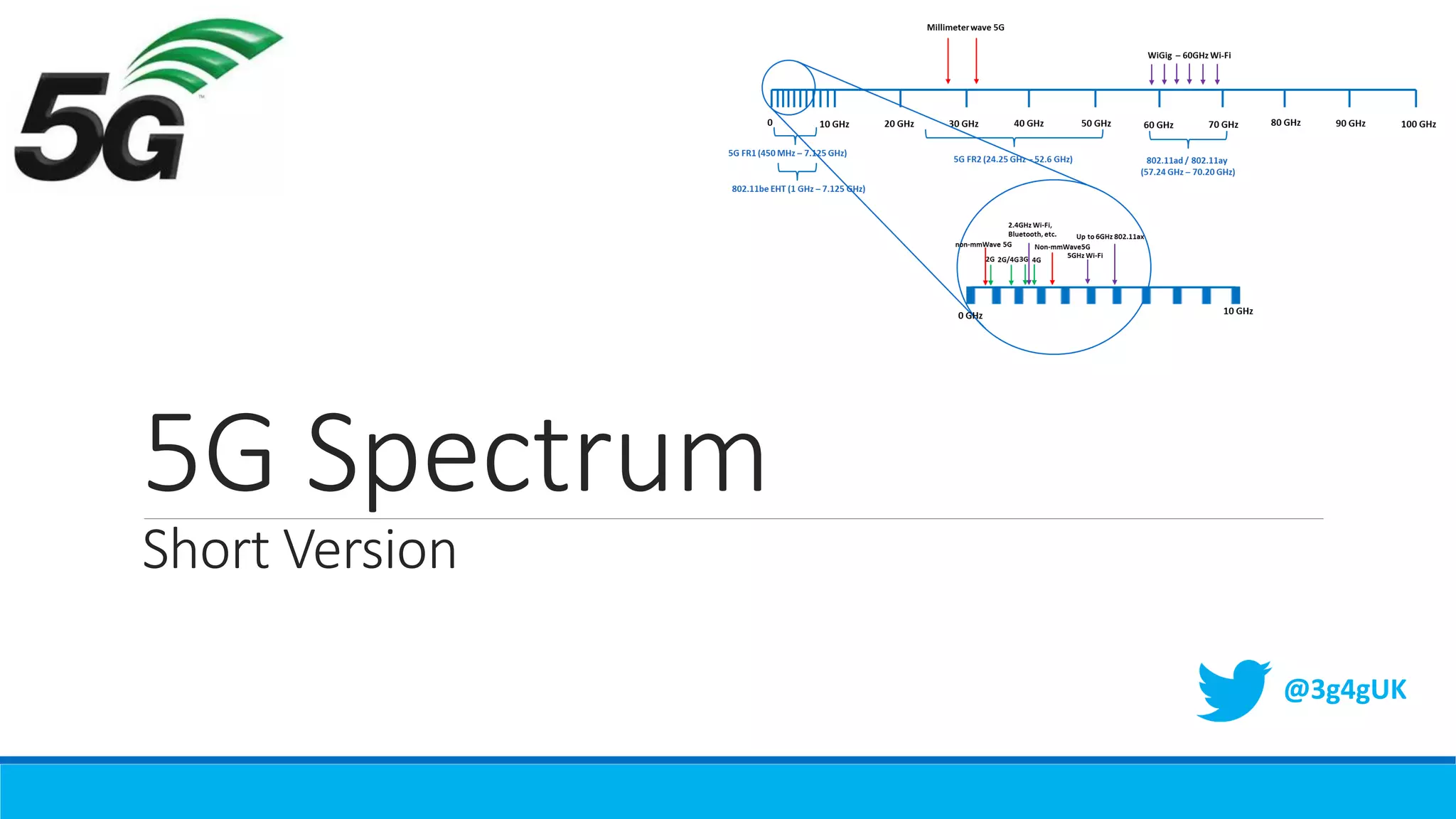
0 10 GHz 20 GHz 30 GHz 40 GHz 50 GHz 60 GHz 70 GHz 80 GHz 90 GHz 100 GHz
2G, 3G, 4G
Non millimeter wave 5G Millimeter wave 5G
0 10 GHz 20 GHz 30 GHz 40 GHz 50 GHz 60 GHz 70 GHz 80 GHz 90 GHz 100 GHz
2.4GHz Wi-Fi,
Bluetooth, etc.
5GHz Wi-Fi
WiGig – 60GHz Wi-Fi
Up to 6GHz 802.11ax
5G FR1 (450 MHz – 7.125 GHz) 5G FR2 (24.25 GHz – 52.6 GHz)
802.11be EHT (1 GHz – 7.125 GHz) 802.11ad / 802.11ay
(57.24 GHz – 70.20 GHz)
Popular Frequency bands for different Technologies
©3G4G
0 10 GHz 20 GHz 30 GHz 40 GHz 50 GHz 60 GHz 70 GHz 80 GHz 90 GHz 100 GHz
Millimeter wave 5G
2.4GHz Wi-Fi,
Bluetooth, etc.
5GHz Wi-Fi
WiGig – 60GHz Wi-Fi
Up to 6GHz 802.11ax
5G FR1 (450 MHz – 7.125 GHz)
5G FR2 (24.25 GHz – 52.6 GHz)
802.11be EHT (1 GHz – 7.125 GHz)
802.11ad / 802.11ay
(57.24 GHz – 70.20 GHz)
2G 2G/4G3G 4G
Non-mmWave5Gnon-mmWave 5G
10 GHz0 GHz
Thank You
To learn more, visit:
3G4G Website – http://www.3g4g.co.uk/
3G4G Blog – http://blog.3g4g.co.uk/
3G4G Small Cells Blog – http://smallcells.3g4g.co.uk/
Operator Watch - http://operatorwatch.3g4g.co.uk/
Follow us on Twitter: https://twitter.com/3g4gUK
Follow us on Facebook: https://www.facebook.com/3g4gUK/
Follow us on Linkedin: https://www.linkedin.com/company/3g4g
Follow us on Slideshare: https://www.slideshare.net/3G4GLtd
Follow us on Youtube: https://www.youtube.com/3G4G5G
©3G4G

Beginners: 5G Spectrum - Short Version

  • 1.
  • 2.
    ©3G4G THIS IS SHORTVERSION – FOR LONG VERSION CLICK ON THE LINK ON TOP RIGHT
  • 3.
    ©3G4G FOR NON-MMWAVE 5GCLICK ON THE LINK ON TOP RIGHT
  • 4.
    Importance of Frequencyselection ©3G4G 2.1GHz 900MHz Higher frequency means faster decay Lower frequency means more number of users in a given cell Higher frequency gets reflected from walls and have poor penetration Lower frequency gets attenuated from walls but still penetrates
  • 5.
    5G: Multiple Layersfor multiple needs ©3G4G Coverage Layer Sub-1GHz Capacity Layer 1GHz – 6GHz High Throughput Layers 6GHz – 100GHz
  • 6.
    3GPP defined 5GSpectrum Ranges ©3G4G 3.3 3.8 4.2 4.4 5.0 24.25 27.5 29.5 37 40 26.5 n78 n79 n77 n258 n260 n261 28.35 n257 Bandwidth 900 MHz 500 MHz 600 MHz 3000 MHz (3 GHz) 3250 MHz (3.25 GHz) 3000 MHz (3 GHz) 850 MHz • 3GPP defines new NR (New Radio) bands in FR1 and FR2 in 3GPP Rel.15 NR • FR1: 450 MHz – 6 GHz • Upper range is changing to 7.125 GHz • FR2: 24.25 GHz – 52.6 GHz
  • 7.
    5G Spectrum ©3G4G ITU WRC-15Report from NTT Docomo Technical Journal 5G or IMT-2020 Frequencies being studied by ITU.
  • 8.
    Most Popular 5GFrequency Bands ©3G4G 600MHz (2x35MHz) 24.25-24.45GHz 24.75-25.25GHz 27.5-28.35GHz 700MHz (2x30 MHz) 3.4–3.8GHz 24.5-27.5GHz 3.4–3.8GHz 26GHz 3.4–3.8GHz 26GHz 3.46–3.8GHz 26GHz 3.6–3.8GHz 3.3–3.6GHz 4.8–5GHz 24.5-27.5GHz 37.5-42.5GHz 3.4–3.7GHz 26.5-29.5GHz 4.4–4.9GHz 26.5-28.5GHz 3.4–3.7GHz 39GHz 3.6–4.2GHz 64-71GHz 37-37.6GHz 37.6-40GHz 47.2-48.2GHz 5.9–6.4GHz 5.9–7.1GHz 600MHz (2x35MHz) 27.5-28.35GHz 64-71GHz 37-37.6GHz 37.6-40GHz 24.25-27.5GHz 26.5-27.5GHz 3.55- 3.7- 3.7GHz 4.2GHz 3.55-3.7 GHz 700MHz (2x30 MHz) 700MHz (2x30 MHz) 700MHz (2x30 MHz) 700MHz (2x30 MHz) 5GHz4GHz3GHz<1GHz 24-28GHz 37-40GHz 64-71GHz 3.45- 2.5GHz (LTE B41) 3.55GHz Source: Qualcomm Licensed Unlicensed/shared Existing band New 5G band Red highlights frequencies not approved for ITU study
  • 9.
    Most Popular 5GFrequency Bands ©3G4G Picture Source: Deutsche Telekom / T-Mobile USA 700 MHz – most popular band 3.5 GHz – most popular band 26/28 GHz – most popular band
  • 10.
    FR1 5G BandsDefined by 3GPP ©3G4G New Bands in 5G, not in LTE
  • 11.
    Bandwidth of FR15G bands ©3G4G
  • 12.
    5G Deployment Optionsand Migration Strategy ©3G4G EPC 5GC (NGCN) SA NSA eNB EPC Option 1: SA LTE connected to EPC Option 2: SA NR connected to 5GC (Standalone) (Non-Standalone) [Dual Connectivity] ng-eNBgNB 5GC Option 5: SA LTE connected to 5GC Option 3: NSA LTE assisted NR connected to EPC Option 4: NSA NR assisted LTE connected to 5GC Option 7: NSA LTE assisted NR connected to 5GC Migration Strategy Option 1 ↗ Option 2 ↘ Option 3 Option 3 ↗ Option 7 ↘ Option 5 Option 3 ↗ Option 3 ↘ Option 2 Option 3 ↗ Option 4 ↘ Option 2 [EN-DC] [NE-DC] [NGEN-DC] 5GC 5GC gNB ng-eNB 5GC gNB ng-eNB EPC eNB en-gNB Non-Standalone 5G Networks, Release-15, all 5G networks today (SRIT)
  • 13.
    Refarming the existingfrequency bands ©3G4G • T-Mobile USA launching 5G in 600 MHz • 600 MHz used for 4G at present 4G 5G Min 1.4 MHz Max 20 MHz Min 5 MHz Max 20 MHz
  • 14.
    Refarming the existingfrequency bands ©3G4G • Sprint USA launching 5G in 2.5 GHz • 2.5 GHz used for 4G at present 4G 5G Min 1.4 MHz Max 20 MHz Min 10 MHz Max 100 MHz
  • 15.
    3GPP defined 5GSpectrum Ranges ©3G4G 3.3 3.8 4.2 4.4 5.0 24.25 27.5 29.5 37 40 26.5 n78 n79 n77 n258 n260 n261 28.35 n257 Bandwidth 900 MHz 500 MHz 600 MHz 3000 MHz (3 GHz) 3250 MHz (3.25 GHz) 3000 MHz (3 GHz) 850 MHz • 3GPP defines new NR (New Radio) bands in FR1 and FR2 in 3GPP Rel.15 NR • FR1: 450 MHz – 6 GHz • Upper range is changing to 7.125 GHz • FR2: 24.25 GHz – 52.6 GHz
  • 16.
    Bandwidth of FR25G bands ©3G4G
  • 17.
    5G Spectrum Plans/ Allocation – South Korea ©3G4G Further Reading: Operator Watch Blog
  • 18.
    5G Spectrum Plans/ Allocation – Japan ©3G4G Further Reading: Operator Watch Blog
  • 19.
    5G Spectrum Plans/ Allocation – Italy ©3G4G Source
  • 20.
    UK mobile spectrumholdings (present) ©3G4G Source: Ofcom Total amount of spectrum with MNOs = 919.9 MHz
  • 21.
    Popular Frequency bandsfor different Technologies ©3G4G 0 10 GHz 20 GHz 30 GHz 40 GHz 50 GHz 60 GHz 70 GHz 80 GHz 90 GHz 100 GHz 2G, 3G, 4G Non millimeter wave 5G Millimeter wave 5G 0 10 GHz 20 GHz 30 GHz 40 GHz 50 GHz 60 GHz 70 GHz 80 GHz 90 GHz 100 GHz 2.4GHz Wi-Fi, Bluetooth, etc. 5GHz Wi-Fi WiGig – 60GHz Wi-Fi Up to 6GHz 802.11ax 5G FR1 (450 MHz – 7.125 GHz) 5G FR2 (24.25 GHz – 52.6 GHz) 802.11be EHT (1 GHz – 7.125 GHz) 802.11ad / 802.11ay (57.24 GHz – 70.20 GHz)
  • 22.
    Popular Frequency bandsfor different Technologies ©3G4G 0 10 GHz 20 GHz 30 GHz 40 GHz 50 GHz 60 GHz 70 GHz 80 GHz 90 GHz 100 GHz Millimeter wave 5G 2.4GHz Wi-Fi, Bluetooth, etc. 5GHz Wi-Fi WiGig – 60GHz Wi-Fi Up to 6GHz 802.11ax 5G FR1 (450 MHz – 7.125 GHz) 5G FR2 (24.25 GHz – 52.6 GHz) 802.11be EHT (1 GHz – 7.125 GHz) 802.11ad / 802.11ay (57.24 GHz – 70.20 GHz) 2G 2G/4G3G 4G Non-mmWave5Gnon-mmWave 5G 10 GHz0 GHz
  • 23.
    Thank You To learnmore, visit: 3G4G Website – http://www.3g4g.co.uk/ 3G4G Blog – http://blog.3g4g.co.uk/ 3G4G Small Cells Blog – http://smallcells.3g4g.co.uk/ Operator Watch - http://operatorwatch.3g4g.co.uk/ Follow us on Twitter: https://twitter.com/3g4gUK Follow us on Facebook: https://www.facebook.com/3g4gUK/ Follow us on Linkedin: https://www.linkedin.com/company/3g4g Follow us on Slideshare: https://www.slideshare.net/3G4GLtd Follow us on Youtube: https://www.youtube.com/3G4G5G ©3G4G