The Electromagnetic Spectrum
By Kushal Jain, University of Pune
 The range of electromagnetic signals encompassing
all frequencies is referred to as the electromagnetic
spectrum.
The Electromagnetic Spectrum
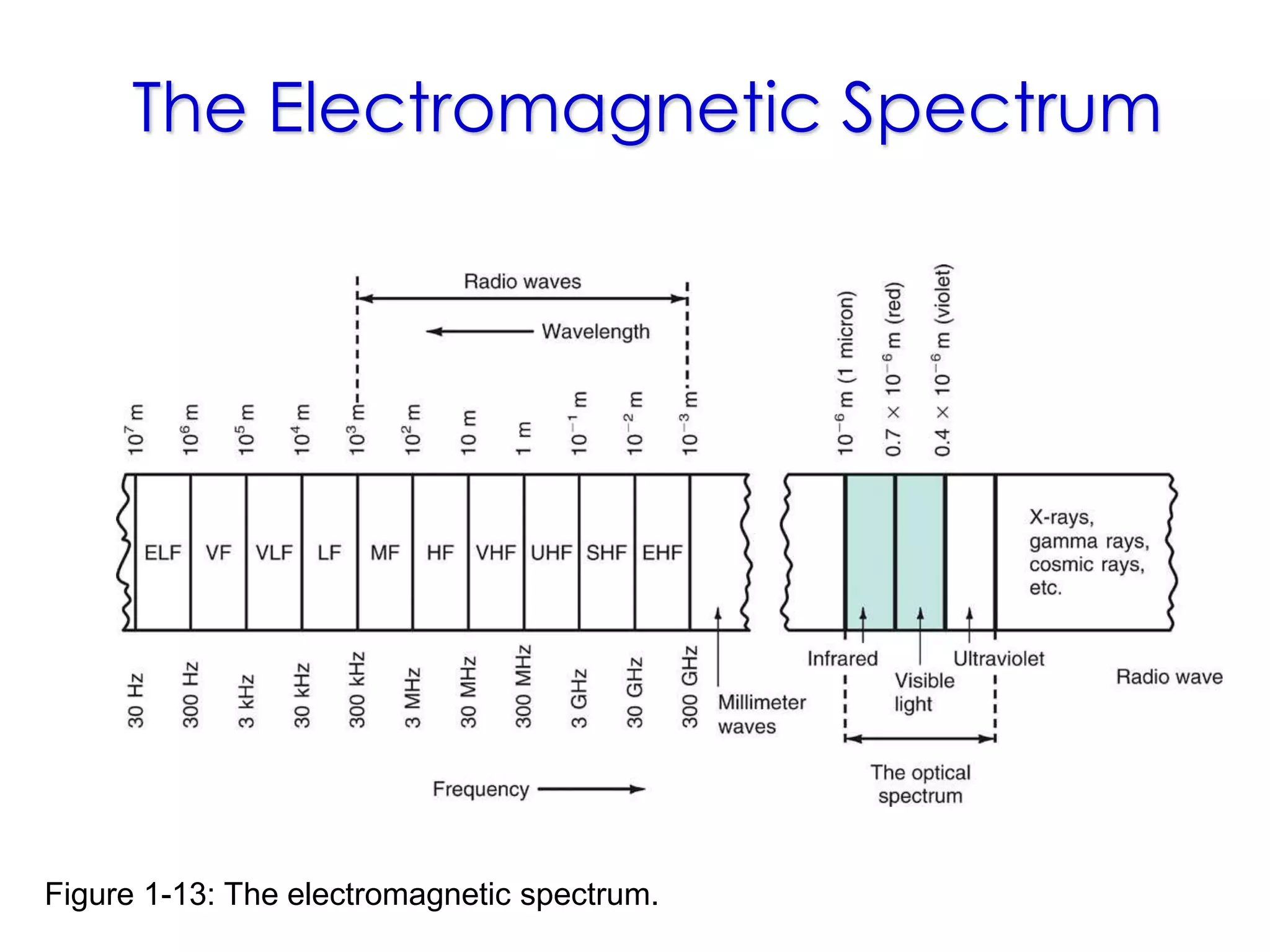
Figure 1-13: The electromagnetic spectrum.
The Electromagnetic Spectrum
Frequency and Wavelength: Frequency
 A signal is located on the frequency spectrum according
to its frequency and wavelength.
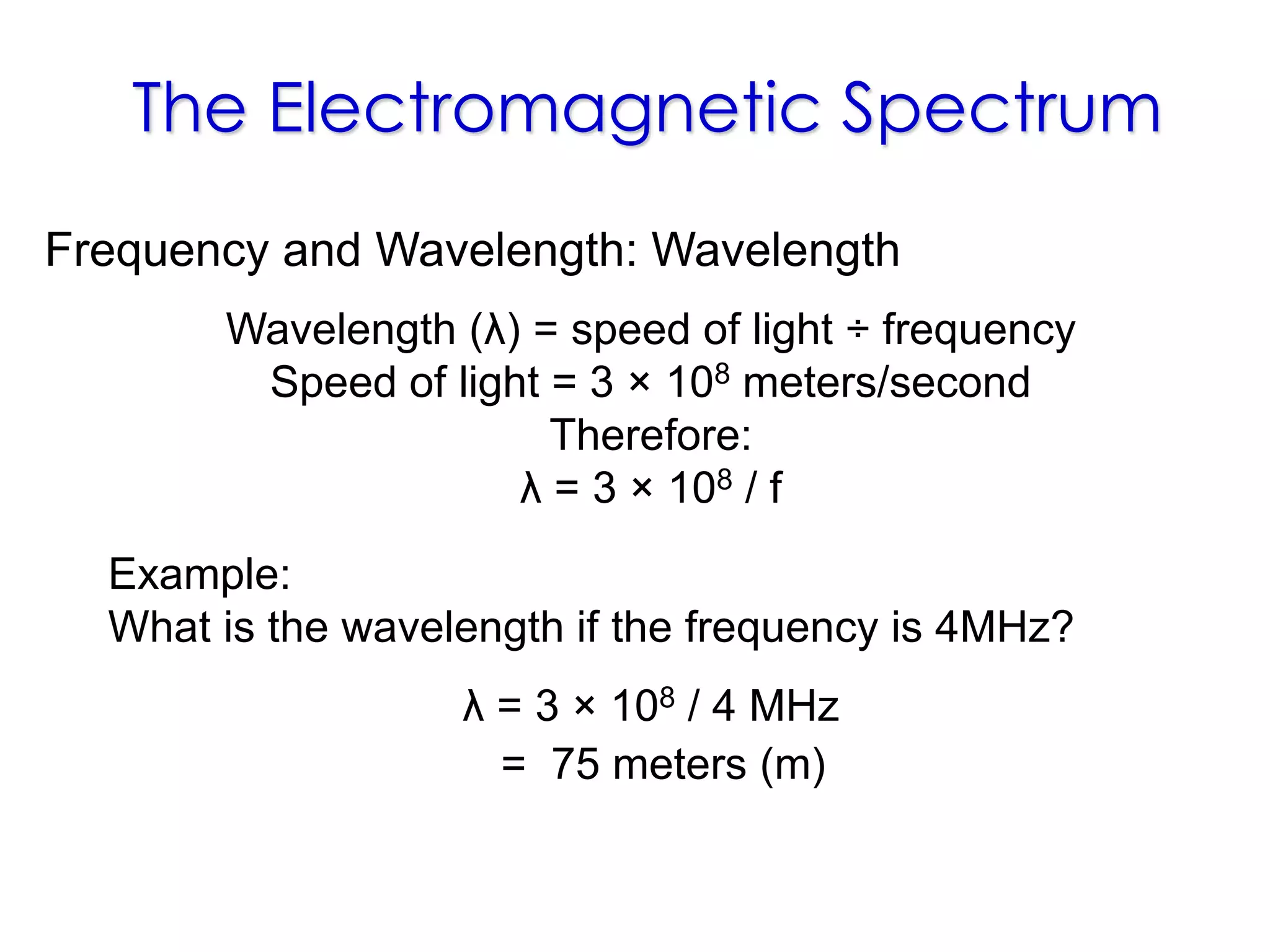
 Frequency is the number of cycles of a repetitive wave
that occur in a given period of time.
 A cycle consists of two voltage polarity reversals,
current reversals, or electromagnetic field oscillations.
 Frequency is measured in cycles per second (cps).
 The unit of frequency is the hertz (Hz).
The Electromagnetic Spectrum
Frequency and Wavelength: Wavelength
 Wavelength is the distance occupied by one cycle of a
wave and is usually expressed in meters.
 Wavelength is also the distance traveled by an
electromagnetic wave during the time of one cycle.
 The wavelength of a signal is represented by the Greek
letter lambda (λ).
The Electromagnetic Spectrum
Figure 1-15: Frequency and wavelength. (a) One cycle. (b) One wavelength.
The Electromagnetic Spectrum
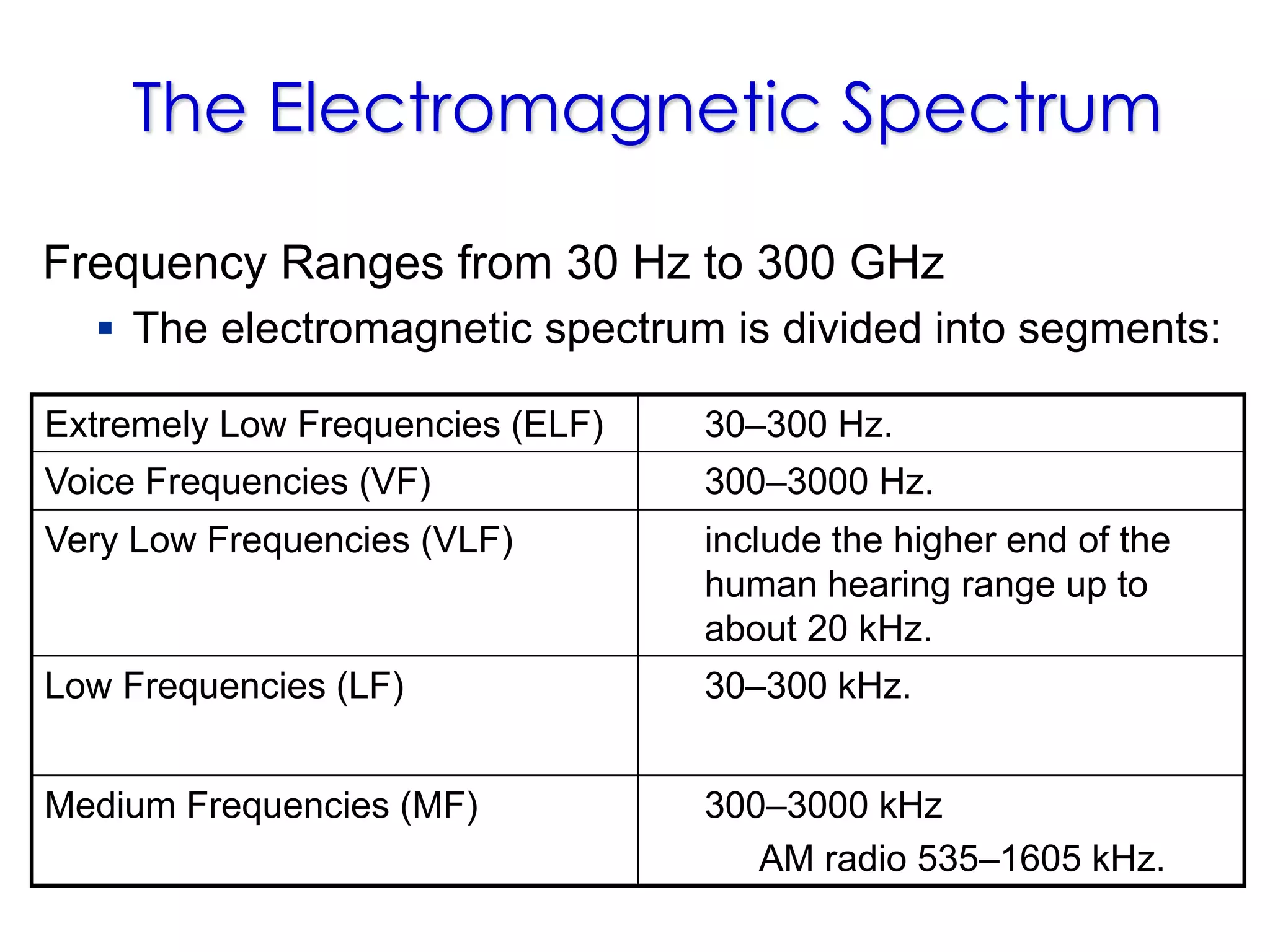
Example:
What is the wavelength if the frequency is 4MHz?
Frequency and Wavelength: Wavelength
Wavelength (λ) = speed of light ÷ frequency
Speed of light = 3 × 10⁸ meters/second
Therefore:
λ = 3 × 10⁸ / f
λ = 3 × 10⁸ / 4 MHz
= 75 meters (m)
The Electromagnetic Spectrum
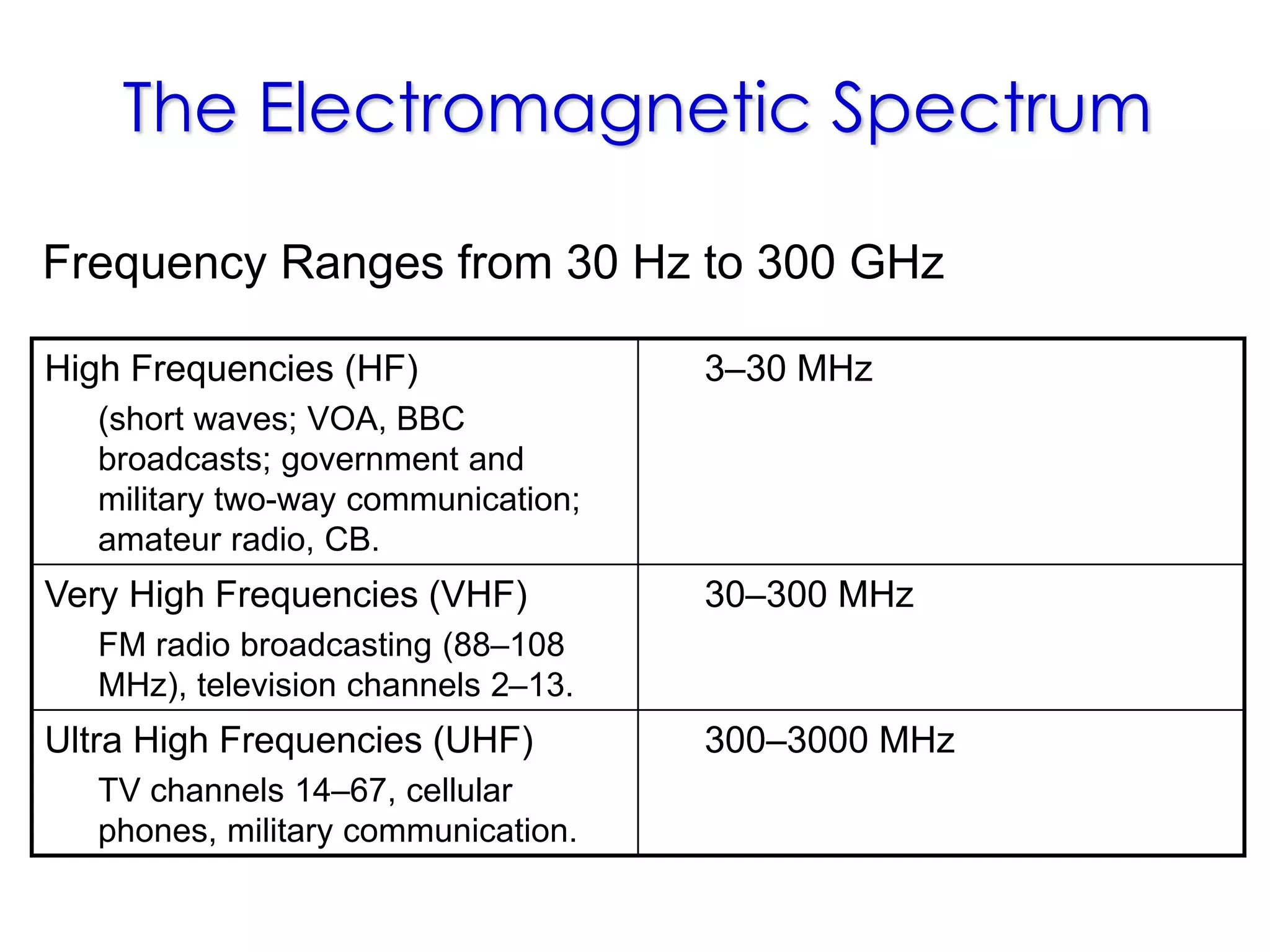
Frequency Ranges from 30 Hz to 300 GHz
 The electromagnetic spectrum is divided into segments:
Extremely Low Frequencies (ELF) 30–300 Hz.
Voice Frequencies (VF) 300–3000 Hz.
Very Low Frequencies (VLF) include the higher end of the
human hearing range up to
about 20 kHz.
Low Frequencies (LF) 30–300 kHz.
Medium Frequencies (MF) 300–3000 kHz
AM radio 535–1605 kHz.
The Electromagnetic Spectrum
Frequency Ranges from 30 Hz to 300 GHz
High Frequencies (HF)
(short waves; VOA, BBC
broadcasts; government and
military two-way communication;
amateur radio, CB.
3–30 MHz
Very High Frequencies (VHF)
FM radio broadcasting (88–108
MHz), television channels 2–13.
30–300 MHz
Ultra High Frequencies (UHF)
TV channels 14–67, cellular
phones, military communication.
300–3000 MHz
The Electromagnetic Spectrum
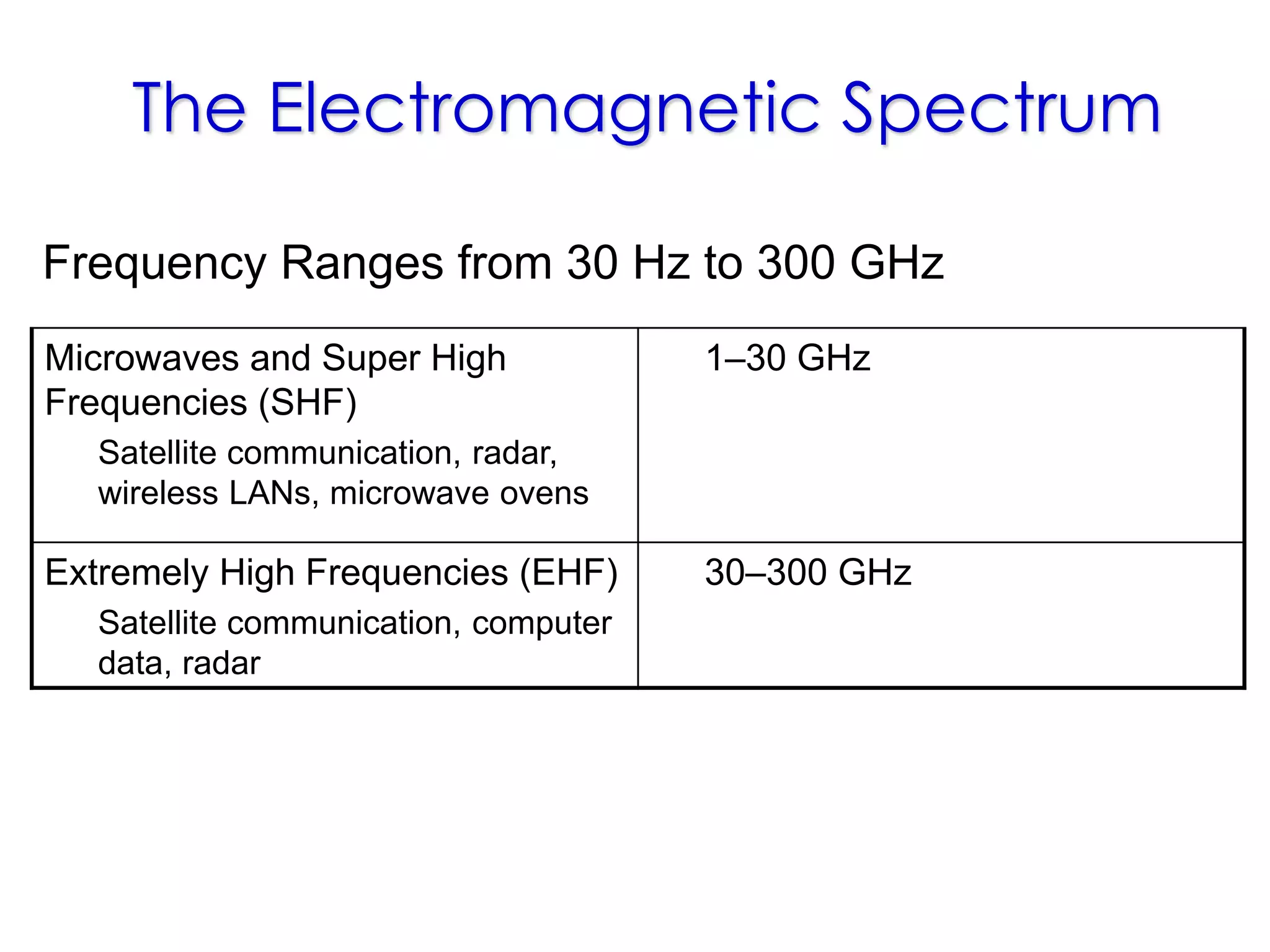
Frequency Ranges from 30 Hz to 300 GHz
Microwaves and Super High
Frequencies (SHF)
Satellite communication, radar,
wireless LANs, microwave ovens
1–30 GHz
Extremely High Frequencies (EHF)
Satellite communication, computer
data, radar
30–300 GHz
The Electromagnetic Spectrum
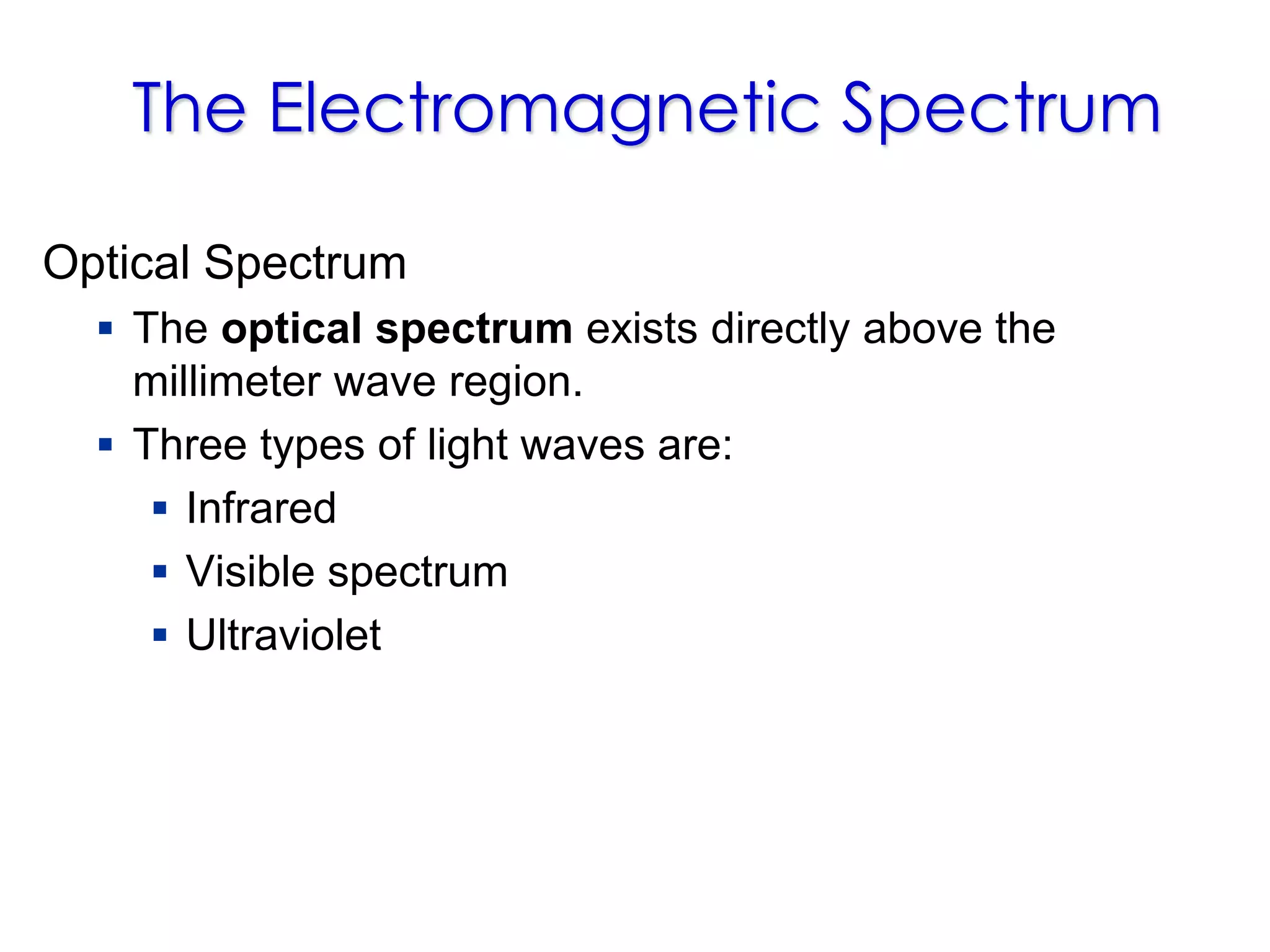
Optical Spectrum
 The optical spectrum exists directly above the
millimeter wave region.
 Three types of light waves are:
 Infrared
 Visible spectrum
 Ultraviolet
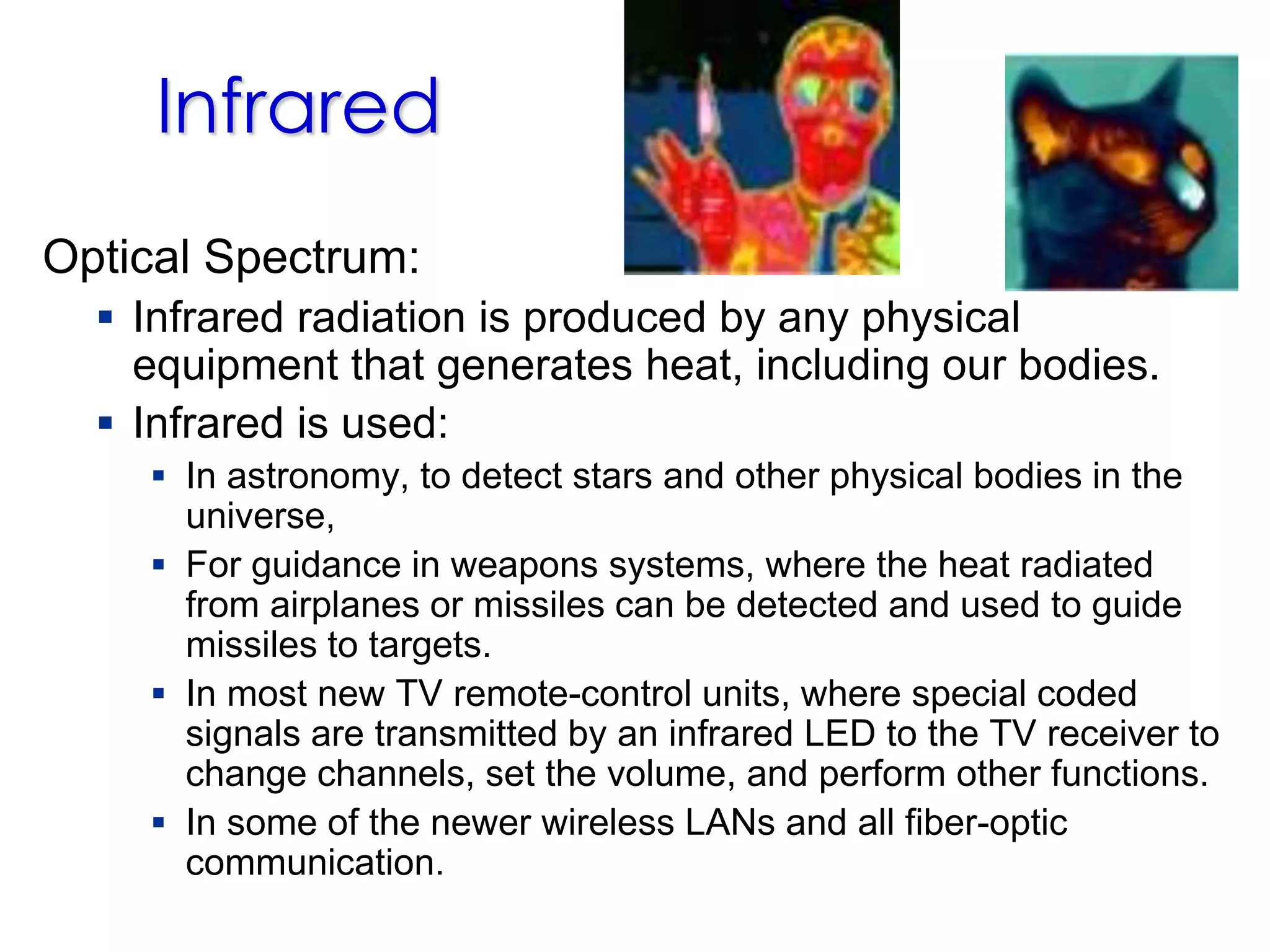
Optical Spectrum:
 Infrared radiation is produced by any physical
equipment that generates heat, including our bodies.
 Infrared is used:
 In astronomy, to detect stars and other physical bodies in the
universe,
 For guidance in weapons systems, where the heat radiated
from airplanes or missiles can be detected and used to guide
missiles to targets.
 In most new TV remote-control units, where special coded
signals are transmitted by an infrared LED to the TV receiver to
change channels, set the volume, and perform other functions.
 In some of the newer wireless LANs and all fiber-optic
communication.
Infrared
The Electromagnetic Spectrum
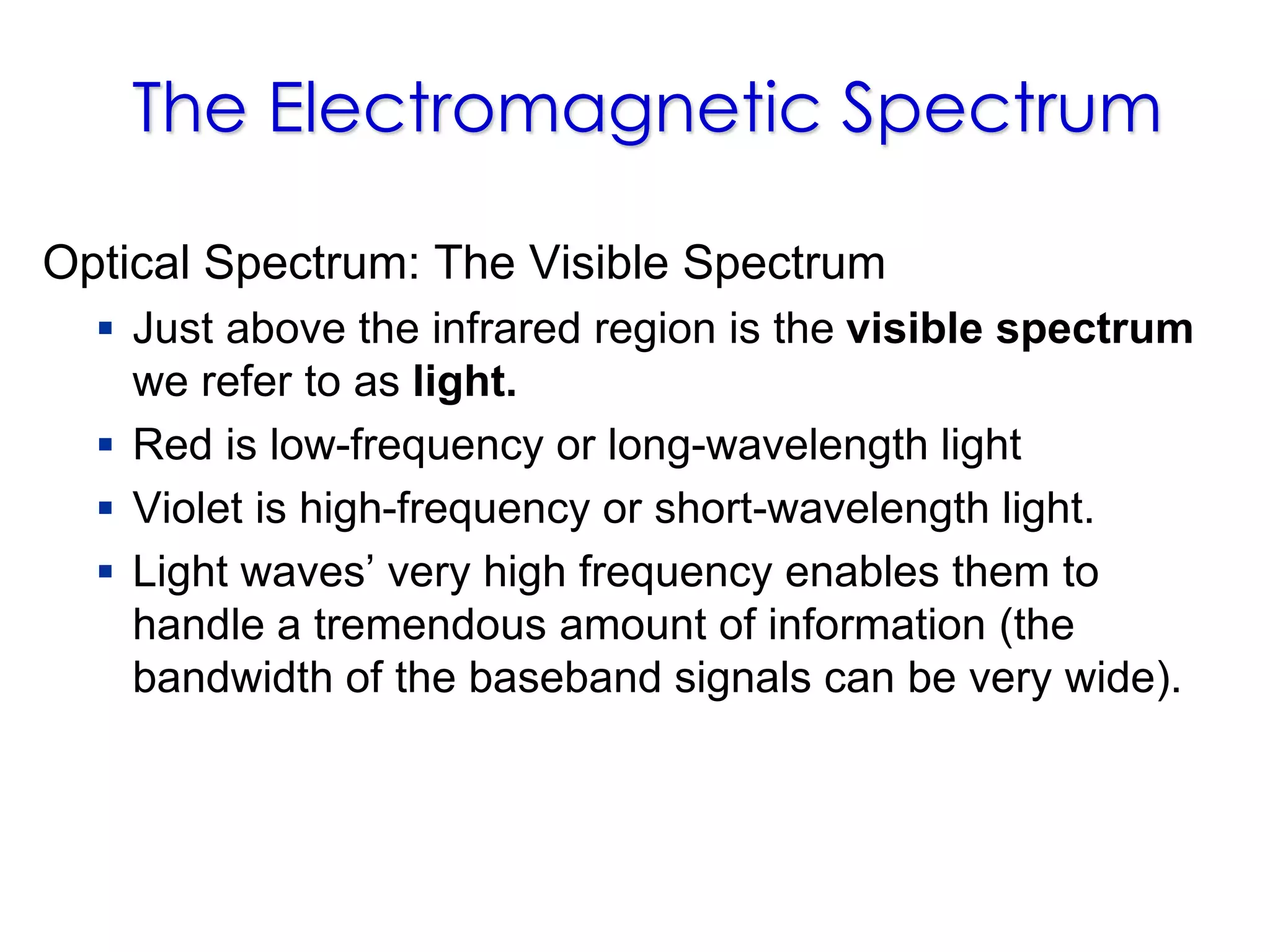
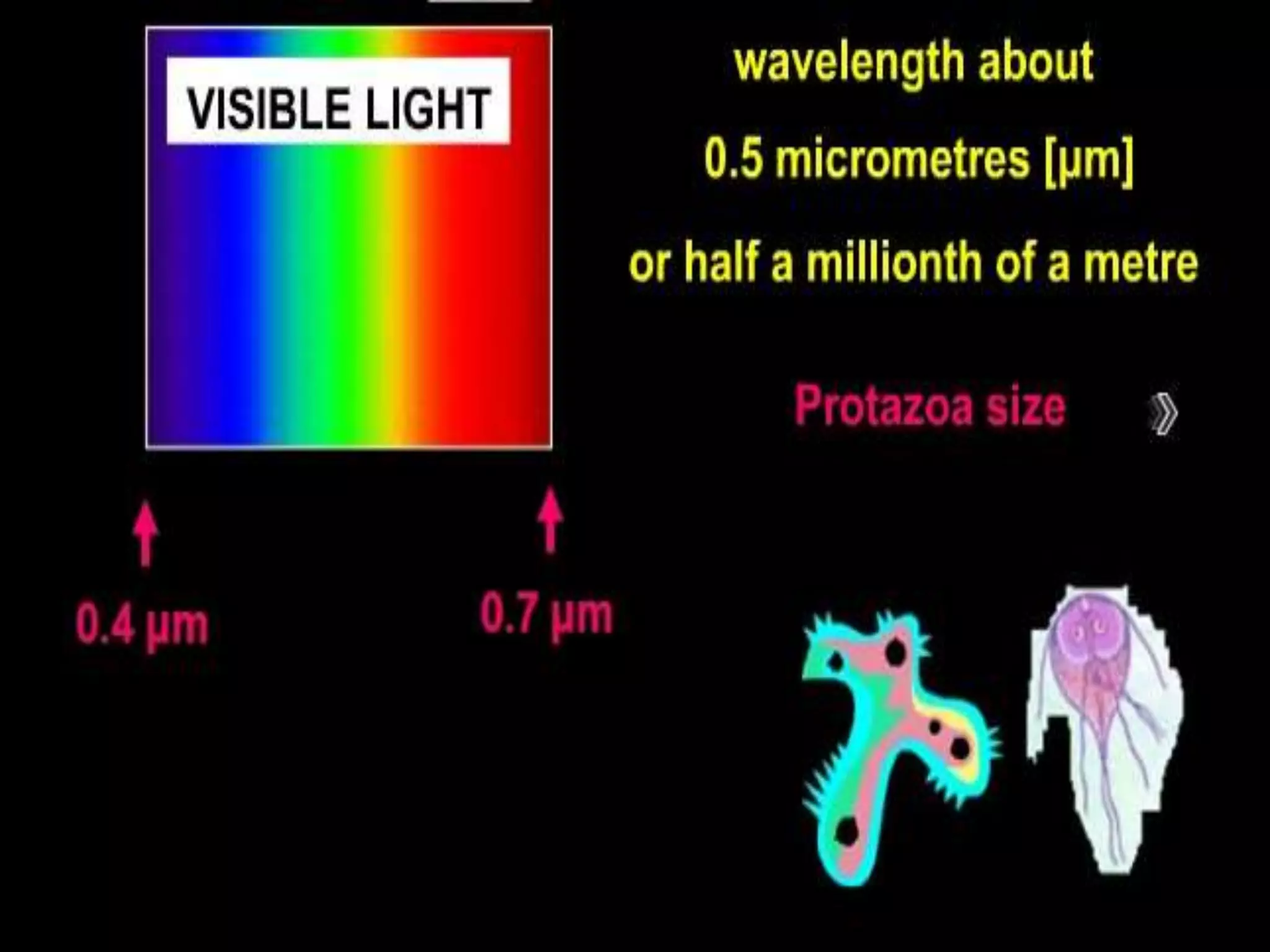
Optical Spectrum: The Visible Spectrum
 Just above the infrared region is the visible spectrum
we refer to as light.
 Red is low-frequency or long-wavelength light
 Violet is high-frequency or short-wavelength light.
 Light waves’ very high frequency enables them to
handle a tremendous amount of information (the
bandwidth of the baseband signals can be very wide).
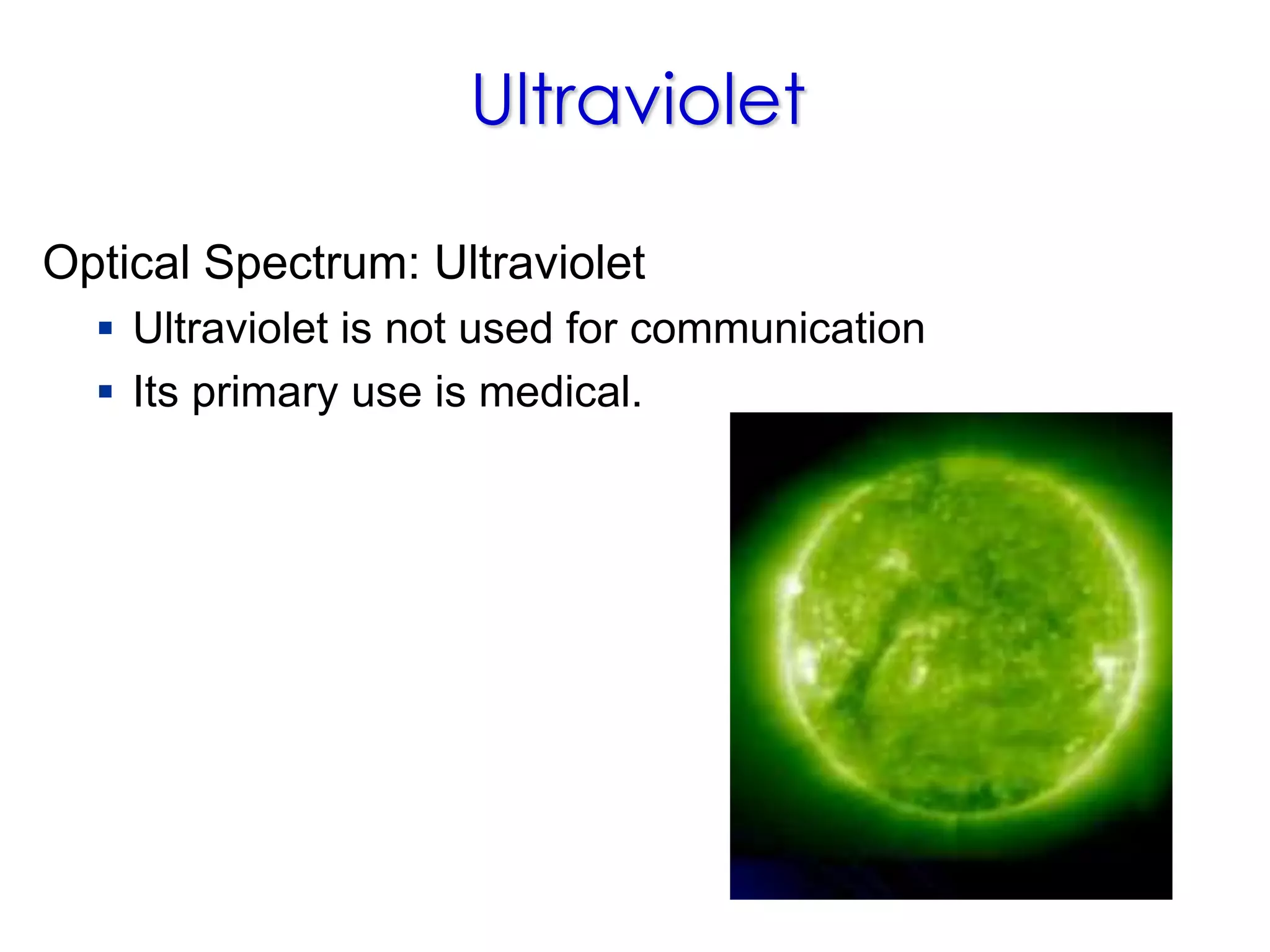
Ultraviolet
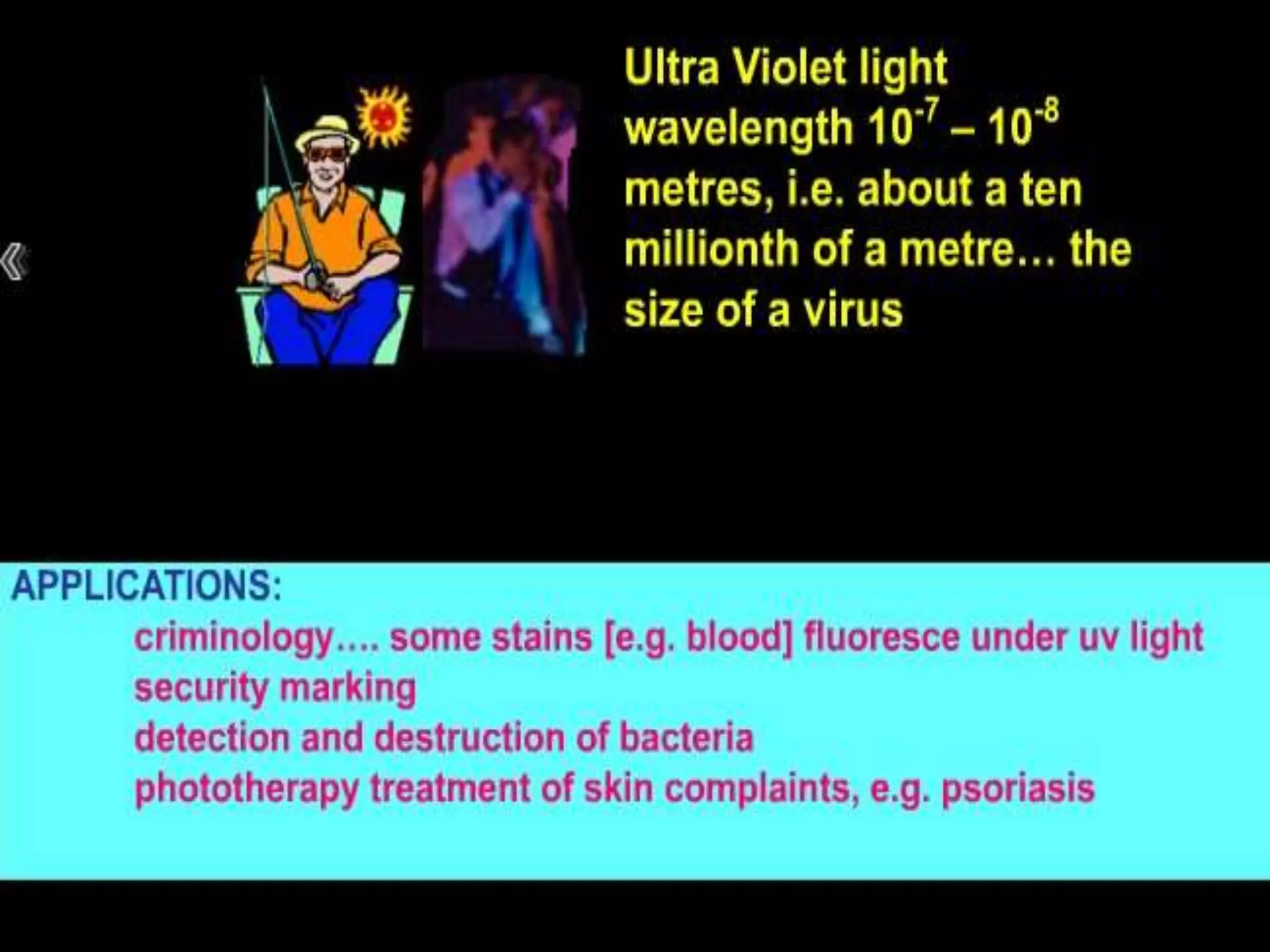
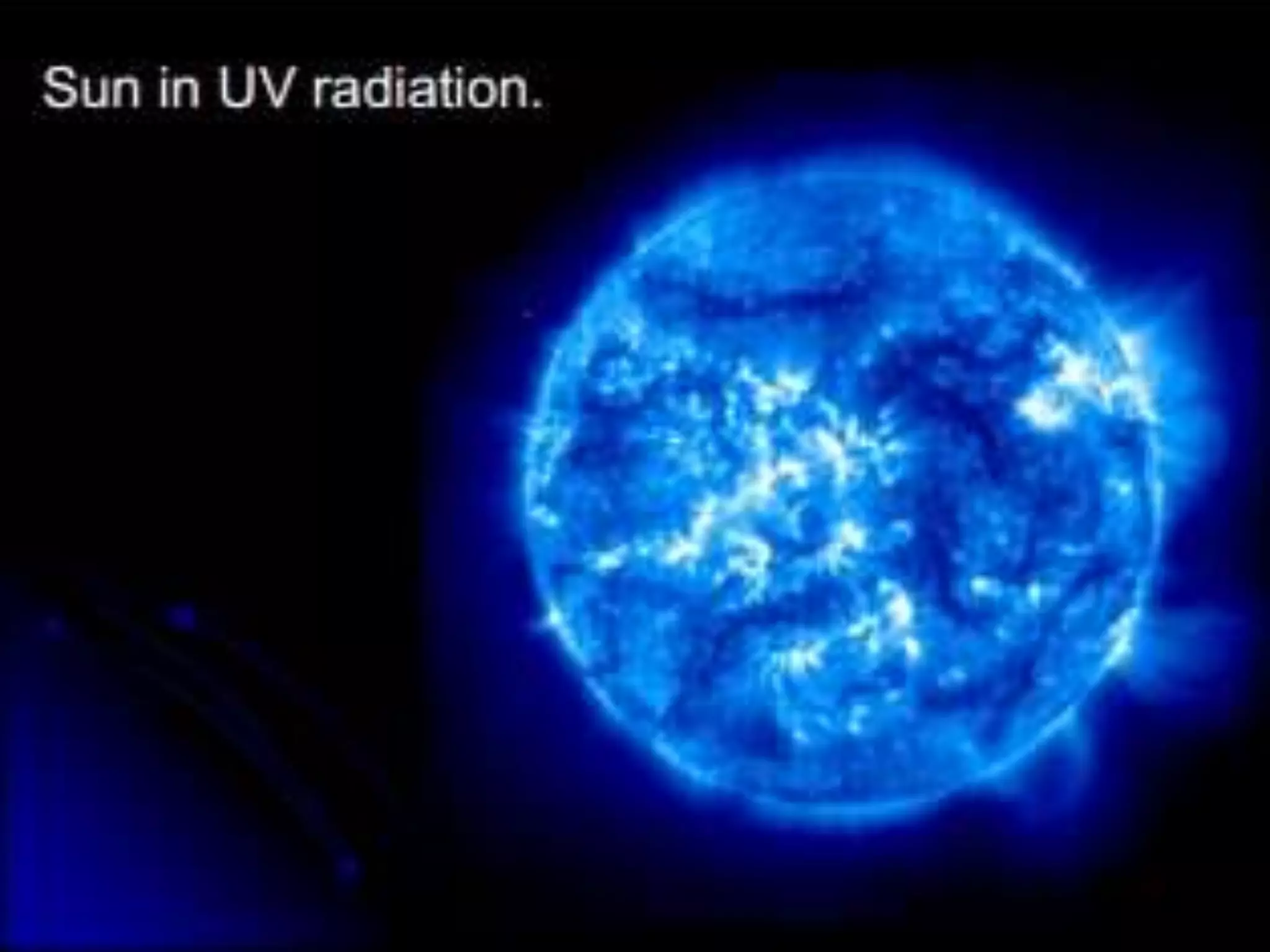
Optical Spectrum: Ultraviolet
 Ultraviolet is not used for communication
 Its primary use is medical.
Bandwidth
 Bandwidth (BW) is that portion of the electromagnetic
spectrum occupied by a signal.
 Channel bandwidth refers to the range of
frequencies required to transmit the desired
information.
Bandwidth
More Room at the Top
 Today, virtually the entire frequency spectrum between
approximately 30 kHz and 300 MHz has been spoken
for.
 There is tremendous competition for these frequencies,
between companies, individuals, and government
services in individual carriers and between the different
nations of the world.
 The electromagnetic spectrum is one of our most
precious natural resources.
Bandwidth
More Room at the Top
 Communication engineering is devoted to making the
best use of that finite spectrum.
 Great effort goes into developing communication
techniques that minimize the bandwidth required to
transmit given information and thus conserve spectrum
space.
 This provides more room for additional communication
channels and gives other services or users an
opportunity to take advantage of it.
Bandwidth
Spectrum Management and Standards
 Spectrum management is provided by agencies set up
by the United States and other countries to control
spectrum use.
 The Federal Communications Commission (FCC)
and the National Telecommunications and
Information Administration (NTIA) are two agencies
that deal in spectrum management.
 Standards are specifications and guidelines necessary
to ensure compatibility between transmitting and
receiving equipment.

BW and spectrum

  • 1.
    The Electromagnetic Spectrum ByKushal Jain, University of Pune  The range of electromagnetic signals encompassing all frequencies is referred to as the electromagnetic spectrum.
  • 2.
    The Electromagnetic Spectrum Figure1-13: The electromagnetic spectrum.
  • 3.
    The Electromagnetic Spectrum Frequencyand Wavelength: Frequency  A signal is located on the frequency spectrum according to its frequency and wavelength.  Frequency is the number of cycles of a repetitive wave that occur in a given period of time.  A cycle consists of two voltage polarity reversals, current reversals, or electromagnetic field oscillations.  Frequency is measured in cycles per second (cps).  The unit of frequency is the hertz (Hz).
  • 4.
    The Electromagnetic Spectrum Frequencyand Wavelength: Wavelength  Wavelength is the distance occupied by one cycle of a wave and is usually expressed in meters.  Wavelength is also the distance traveled by an electromagnetic wave during the time of one cycle.  The wavelength of a signal is represented by the Greek letter lambda (λ).
  • 5.
    The Electromagnetic Spectrum Figure1-15: Frequency and wavelength. (a) One cycle. (b) One wavelength.
  • 6.
    The Electromagnetic Spectrum Example: Whatis the wavelength if the frequency is 4MHz? Frequency and Wavelength: Wavelength Wavelength (λ) = speed of light ÷ frequency Speed of light = 3 × 10⁸ meters/second Therefore: λ = 3 × 10⁸ / f λ = 3 × 10⁸ / 4 MHz = 75 meters (m)
  • 7.
    The Electromagnetic Spectrum FrequencyRanges from 30 Hz to 300 GHz  The electromagnetic spectrum is divided into segments: Extremely Low Frequencies (ELF) 30–300 Hz. Voice Frequencies (VF) 300–3000 Hz. Very Low Frequencies (VLF) include the higher end of the human hearing range up to about 20 kHz. Low Frequencies (LF) 30–300 kHz. Medium Frequencies (MF) 300–3000 kHz AM radio 535–1605 kHz.
  • 8.
    The Electromagnetic Spectrum FrequencyRanges from 30 Hz to 300 GHz High Frequencies (HF) (short waves; VOA, BBC broadcasts; government and military two-way communication; amateur radio, CB. 3–30 MHz Very High Frequencies (VHF) FM radio broadcasting (88–108 MHz), television channels 2–13. 30–300 MHz Ultra High Frequencies (UHF) TV channels 14–67, cellular phones, military communication. 300–3000 MHz
  • 9.
    The Electromagnetic Spectrum FrequencyRanges from 30 Hz to 300 GHz Microwaves and Super High Frequencies (SHF) Satellite communication, radar, wireless LANs, microwave ovens 1–30 GHz Extremely High Frequencies (EHF) Satellite communication, computer data, radar 30–300 GHz
  • 10.
    The Electromagnetic Spectrum OpticalSpectrum  The optical spectrum exists directly above the millimeter wave region.  Three types of light waves are:  Infrared  Visible spectrum  Ultraviolet
  • 11.
    Optical Spectrum:  Infraredradiation is produced by any physical equipment that generates heat, including our bodies.  Infrared is used:  In astronomy, to detect stars and other physical bodies in the universe,  For guidance in weapons systems, where the heat radiated from airplanes or missiles can be detected and used to guide missiles to targets.  In most new TV remote-control units, where special coded signals are transmitted by an infrared LED to the TV receiver to change channels, set the volume, and perform other functions.  In some of the newer wireless LANs and all fiber-optic communication. Infrared
  • 12.
    The Electromagnetic Spectrum OpticalSpectrum: The Visible Spectrum  Just above the infrared region is the visible spectrum we refer to as light.  Red is low-frequency or long-wavelength light  Violet is high-frequency or short-wavelength light.  Light waves’ very high frequency enables them to handle a tremendous amount of information (the bandwidth of the baseband signals can be very wide).
  • 14.
    Ultraviolet Optical Spectrum: Ultraviolet Ultraviolet is not used for communication  Its primary use is medical.
  • 21.
    Bandwidth  Bandwidth (BW)is that portion of the electromagnetic spectrum occupied by a signal.  Channel bandwidth refers to the range of frequencies required to transmit the desired information.
  • 22.
    Bandwidth More Room atthe Top  Today, virtually the entire frequency spectrum between approximately 30 kHz and 300 MHz has been spoken for.  There is tremendous competition for these frequencies, between companies, individuals, and government services in individual carriers and between the different nations of the world.  The electromagnetic spectrum is one of our most precious natural resources.
  • 23.
    Bandwidth More Room atthe Top  Communication engineering is devoted to making the best use of that finite spectrum.  Great effort goes into developing communication techniques that minimize the bandwidth required to transmit given information and thus conserve spectrum space.  This provides more room for additional communication channels and gives other services or users an opportunity to take advantage of it.
  • 24.
    Bandwidth Spectrum Management andStandards  Spectrum management is provided by agencies set up by the United States and other countries to control spectrum use.  The Federal Communications Commission (FCC) and the National Telecommunications and Information Administration (NTIA) are two agencies that deal in spectrum management.  Standards are specifications and guidelines necessary to ensure compatibility between transmitting and receiving equipment.