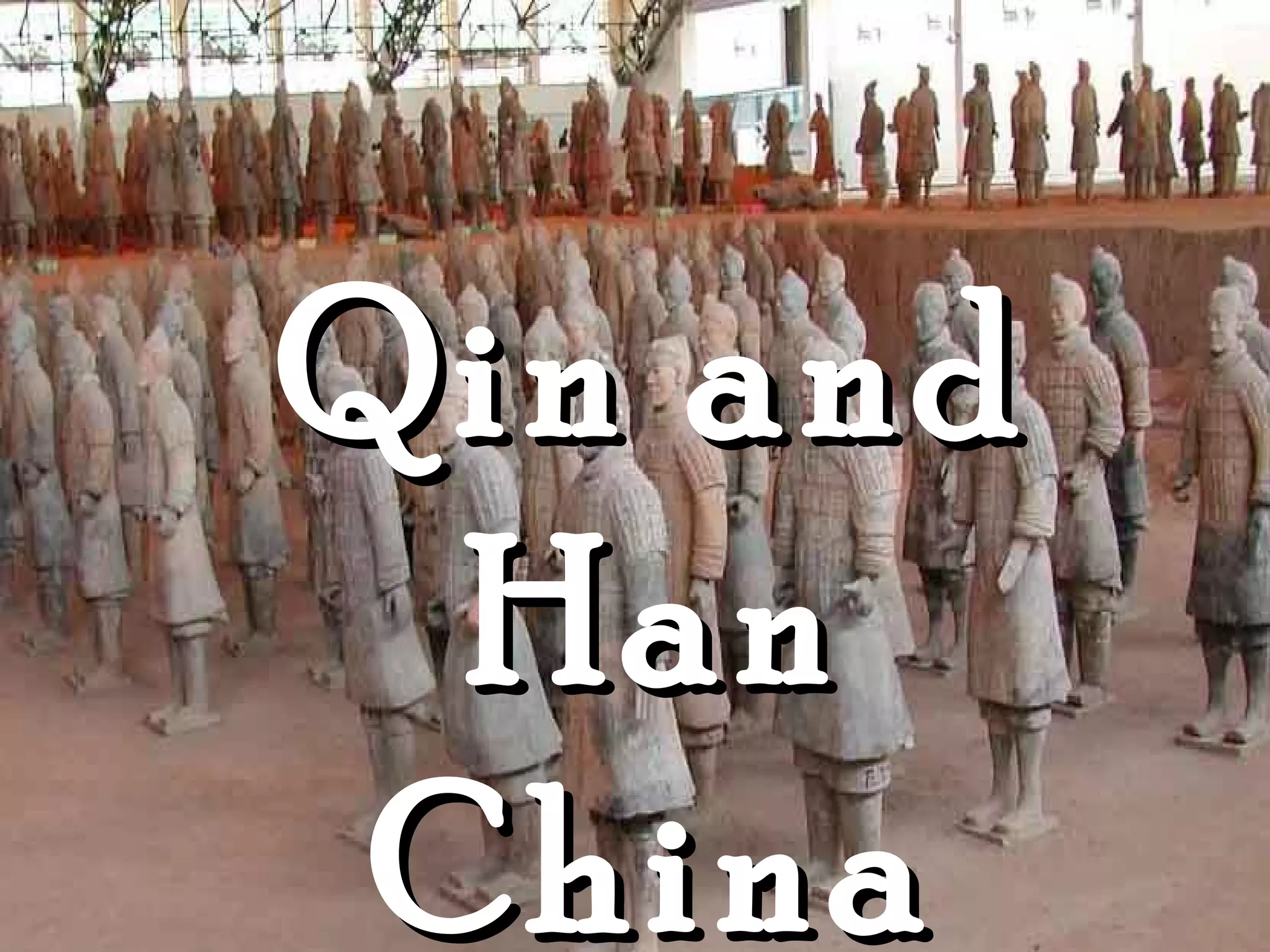
Qin and Han China
Qin Dynasty 221 B.C. - 206 B.C. First Emperor: Qin Shih Huangdi Dynasty: It was short-lived. Han Dynasty 206 B.C. – 220 A.D.   The Most Famous Ruler: Wu Ti Dynasty: It lasted over 400 years.
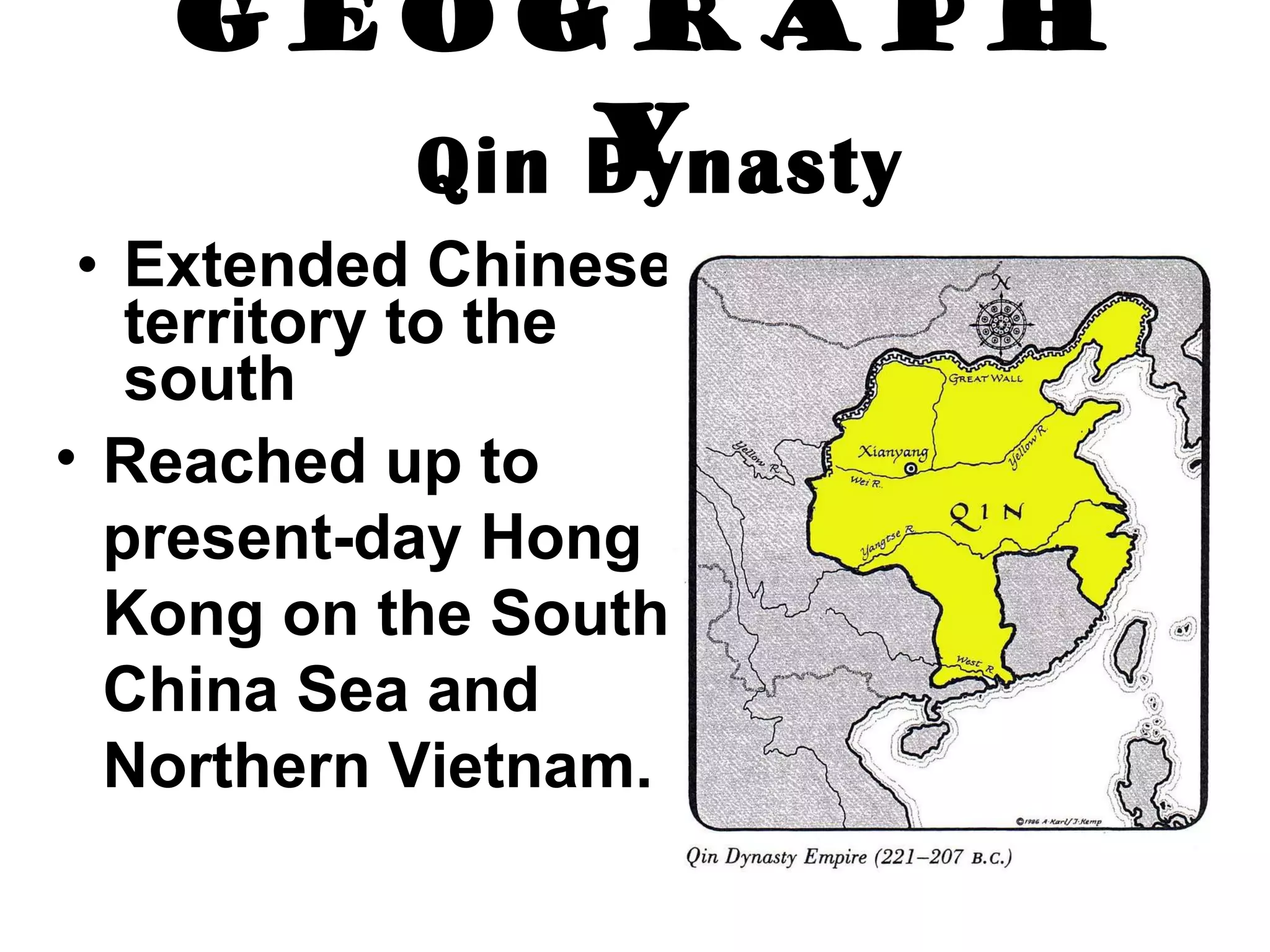
Geography Extended Chinese territory to the south   Reached up to present-day Hong Kong on the South China Sea and Northern Vietnam.   Qin Dynasty
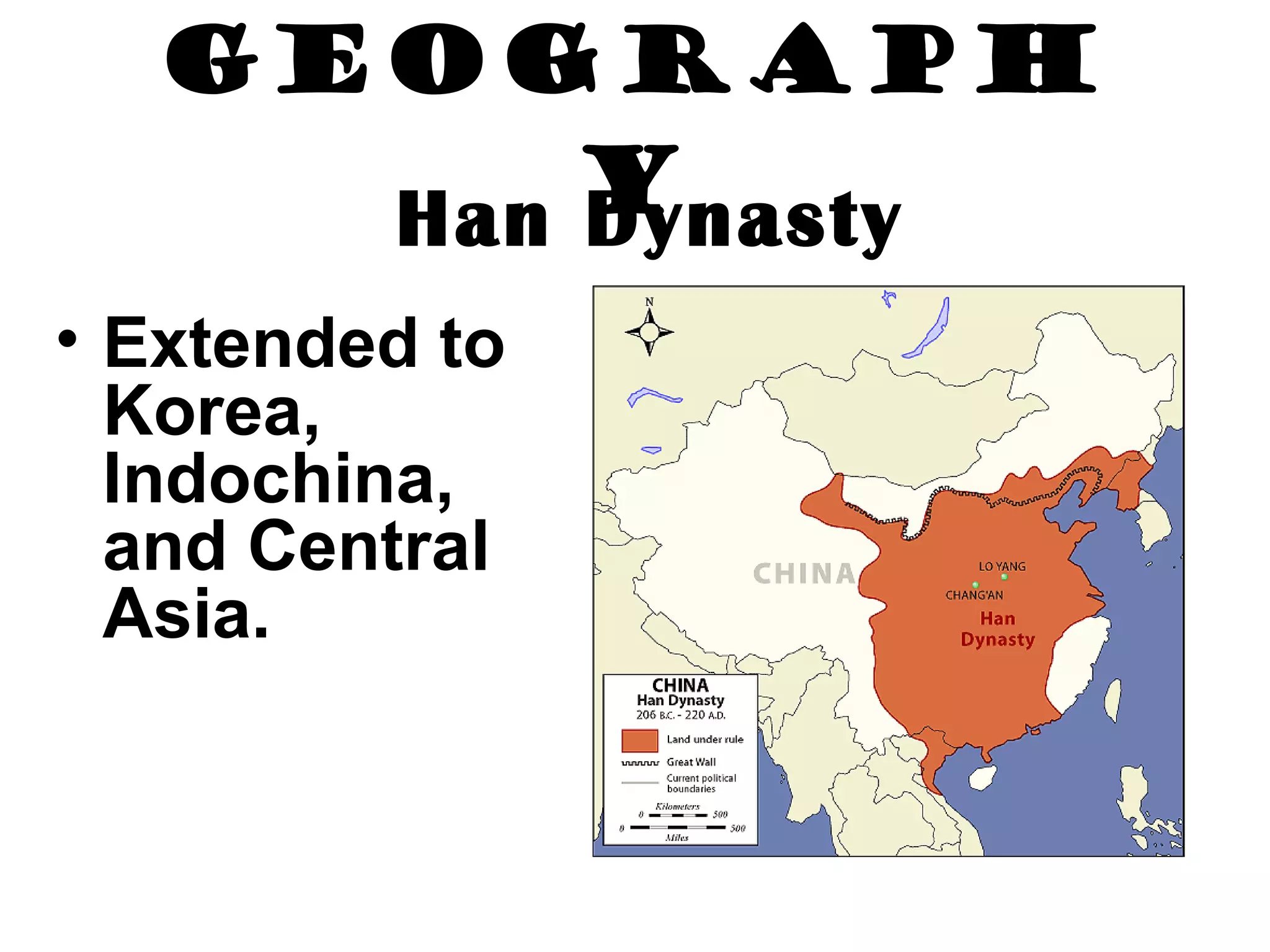
Geography Han Dynasty Extended to Korea, Indochina, and Central Asia.
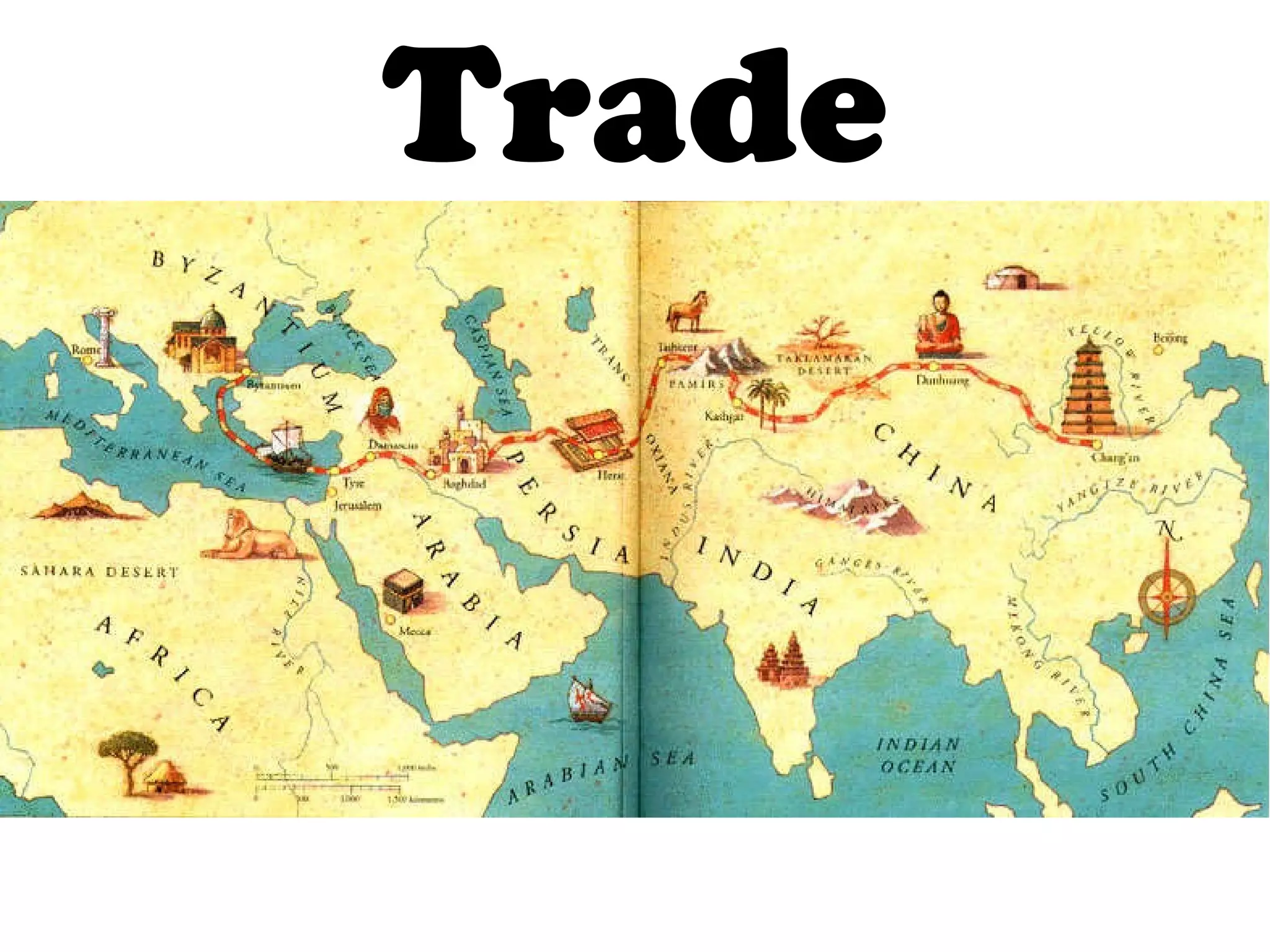
Trade
Maritime Silk Road- began in the Han dynasty The 7000 mile route spanned China, Central Asia, Northern India, and the Parthian and Roman Empires. The maritime routes opened by Emperor Han Wudi provided access to the Roman Empire via India.  Increased the number of foreign merchants present in China
The Arts Qin Dynasty The arts did not exist in the Qin Dynasty because Emperor Qin Shi huang ordered musical instruments and art forms to be burned. He considered them an unnecessary item in China because it taught people to have their own thoughts.
Han Dynasty Emperors and musicians during the Han Dynasty wished to bring back the arts.  They wanted to adapt to Confucian thought, which considered music as an intellectual pursuit.  Office of Music (Yuefu) was created to collect the folk music of China  During the Han Dynasty 829 people were employed in three orchestras.
Literature/Sacred Writings/Writing System Several writers elaborated Confucian philosophy during the Han dynasty. Learning and reciting poetry became significant part of Chinese education During the Qin Dynasty, the language was unified as one dialect.
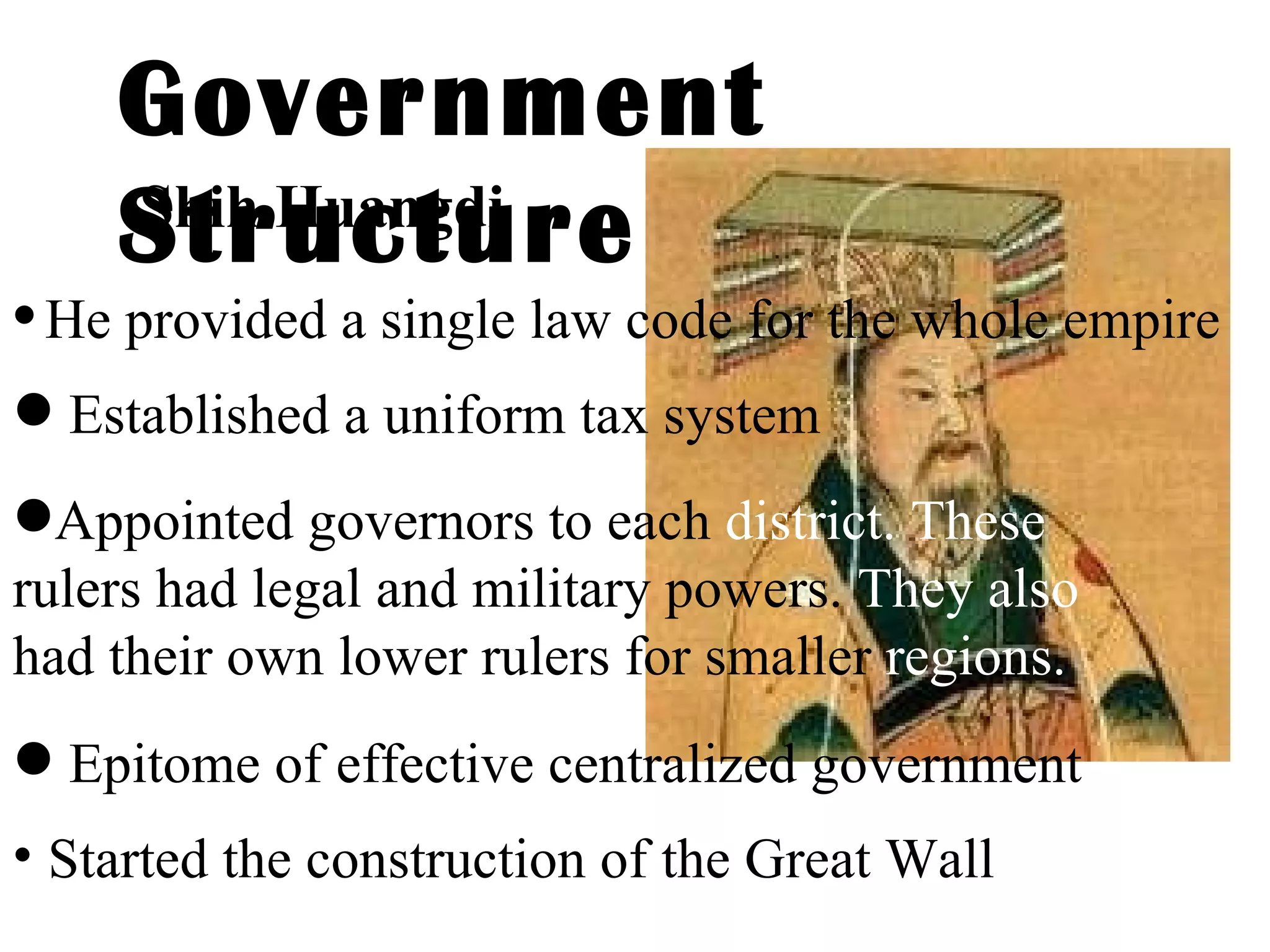
Government Structure Shih Huangdi He provided a single law code for the whole empire Established a uniform tax system Appointed governors to each  district. These  rulers had legal and military powers.  They also  had their own lower rulers for smaller  regions. Epitome of effective centralized government Started the construction of the Great Wall
Government Structure Established 130,000 bureaucrats. Had to take examinations. Han Dynasty Judicial matters were done by local governments . Military was not extremely strong. Sponsored public works (irrigation/canal systems)
Emphasized Confucian philosophy as an official Chinese values. Standardized currency to facilitate trade Regulated agricultural supplies
Religious Beliefs Taoism was popular during the reign of the Han Dynasty. Under the Qin Dynasty schools of Taoist philosophy began to emerge.  Buddhism began to spread during the Han Dynasty. Confucianism was popular during both dynasties.

Qin and han 2

  • 1.
  • 2.
    Qin Dynasty 221B.C. - 206 B.C. First Emperor: Qin Shih Huangdi Dynasty: It was short-lived. Han Dynasty 206 B.C. – 220 A.D. The Most Famous Ruler: Wu Ti Dynasty: It lasted over 400 years.
  • 3.
    Geography Extended Chineseterritory to the south Reached up to present-day Hong Kong on the South China Sea and Northern Vietnam. Qin Dynasty
  • 4.
    Geography Han DynastyExtended to Korea, Indochina, and Central Asia.
  • 5.
  • 6.
    Maritime Silk Road-began in the Han dynasty The 7000 mile route spanned China, Central Asia, Northern India, and the Parthian and Roman Empires. The maritime routes opened by Emperor Han Wudi provided access to the Roman Empire via India. Increased the number of foreign merchants present in China
  • 7.
    The Arts QinDynasty The arts did not exist in the Qin Dynasty because Emperor Qin Shi huang ordered musical instruments and art forms to be burned. He considered them an unnecessary item in China because it taught people to have their own thoughts.
  • 8.
    Han Dynasty Emperorsand musicians during the Han Dynasty wished to bring back the arts. They wanted to adapt to Confucian thought, which considered music as an intellectual pursuit. Office of Music (Yuefu) was created to collect the folk music of China During the Han Dynasty 829 people were employed in three orchestras.
  • 9.
    Literature/Sacred Writings/Writing SystemSeveral writers elaborated Confucian philosophy during the Han dynasty. Learning and reciting poetry became significant part of Chinese education During the Qin Dynasty, the language was unified as one dialect.
  • 10.
    Government Structure ShihHuangdi He provided a single law code for the whole empire Established a uniform tax system Appointed governors to each district. These rulers had legal and military powers. They also had their own lower rulers for smaller regions. Epitome of effective centralized government Started the construction of the Great Wall
  • 11.
    Government Structure Established130,000 bureaucrats. Had to take examinations. Han Dynasty Judicial matters were done by local governments . Military was not extremely strong. Sponsored public works (irrigation/canal systems)
  • 12.
    Emphasized Confucian philosophyas an official Chinese values. Standardized currency to facilitate trade Regulated agricultural supplies
  • 13.
    Religious Beliefs Taoismwas popular during the reign of the Han Dynasty. Under the Qin Dynasty schools of Taoist philosophy began to emerge. Buddhism began to spread during the Han Dynasty. Confucianism was popular during both dynasties.