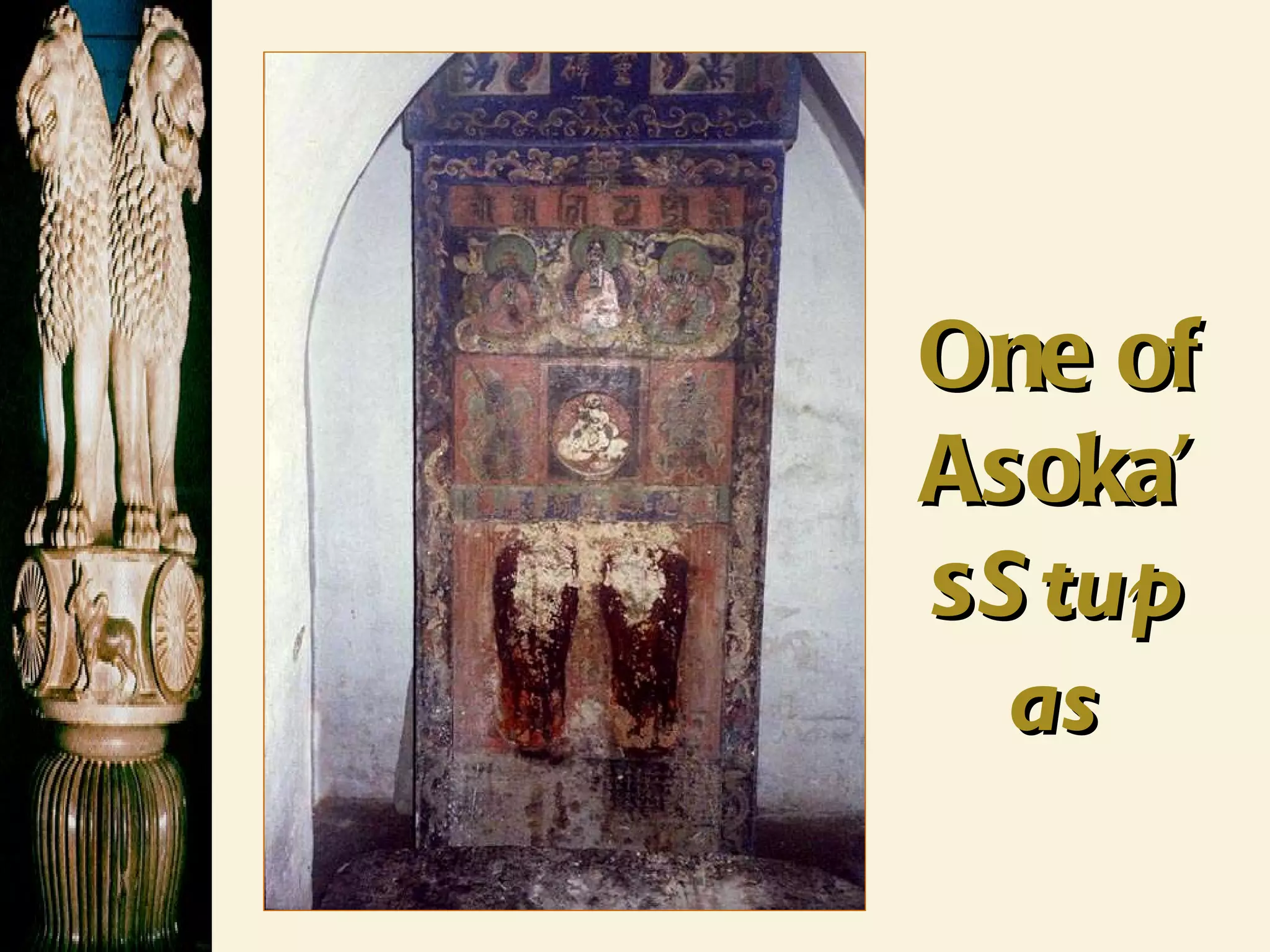
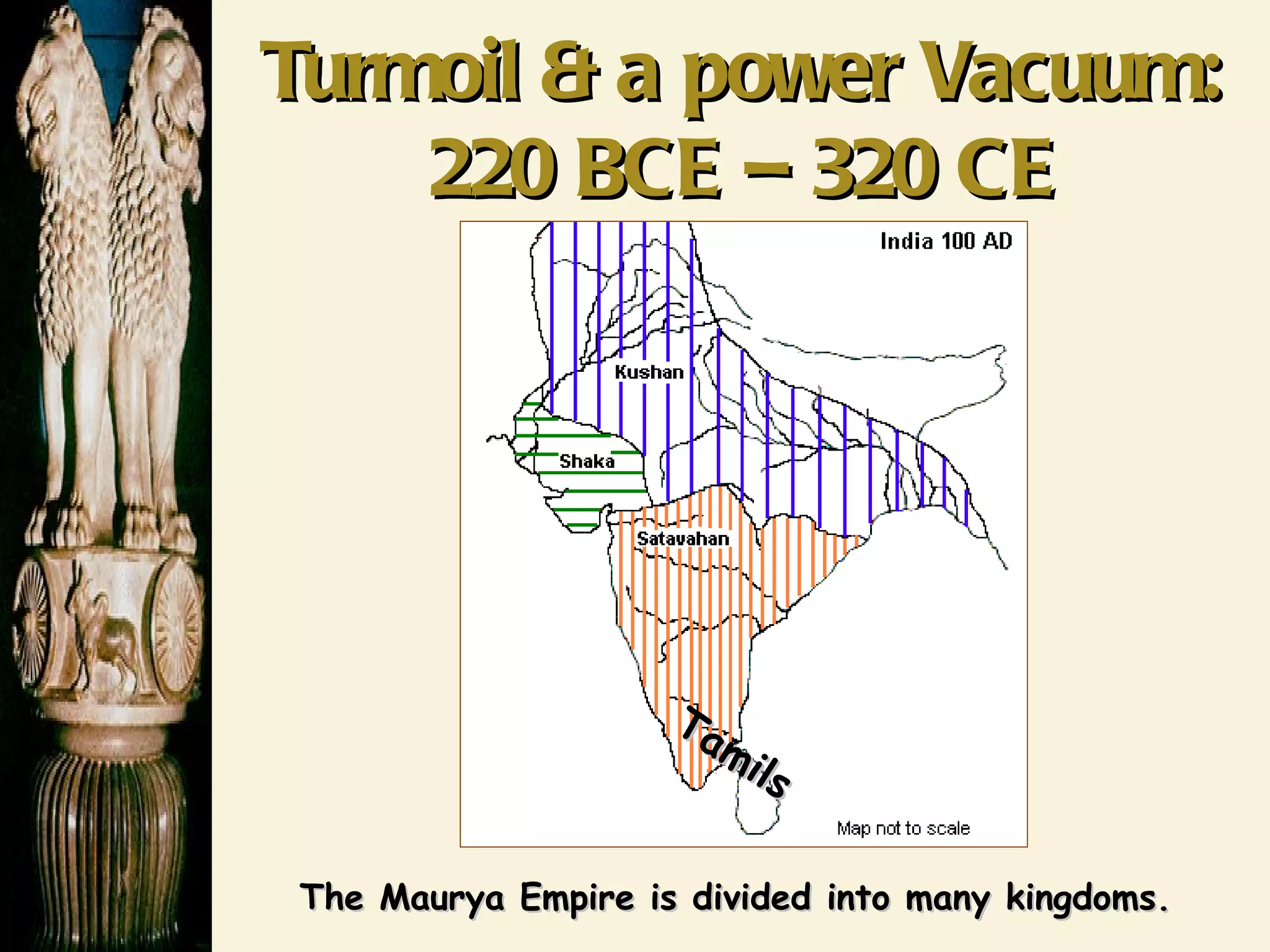
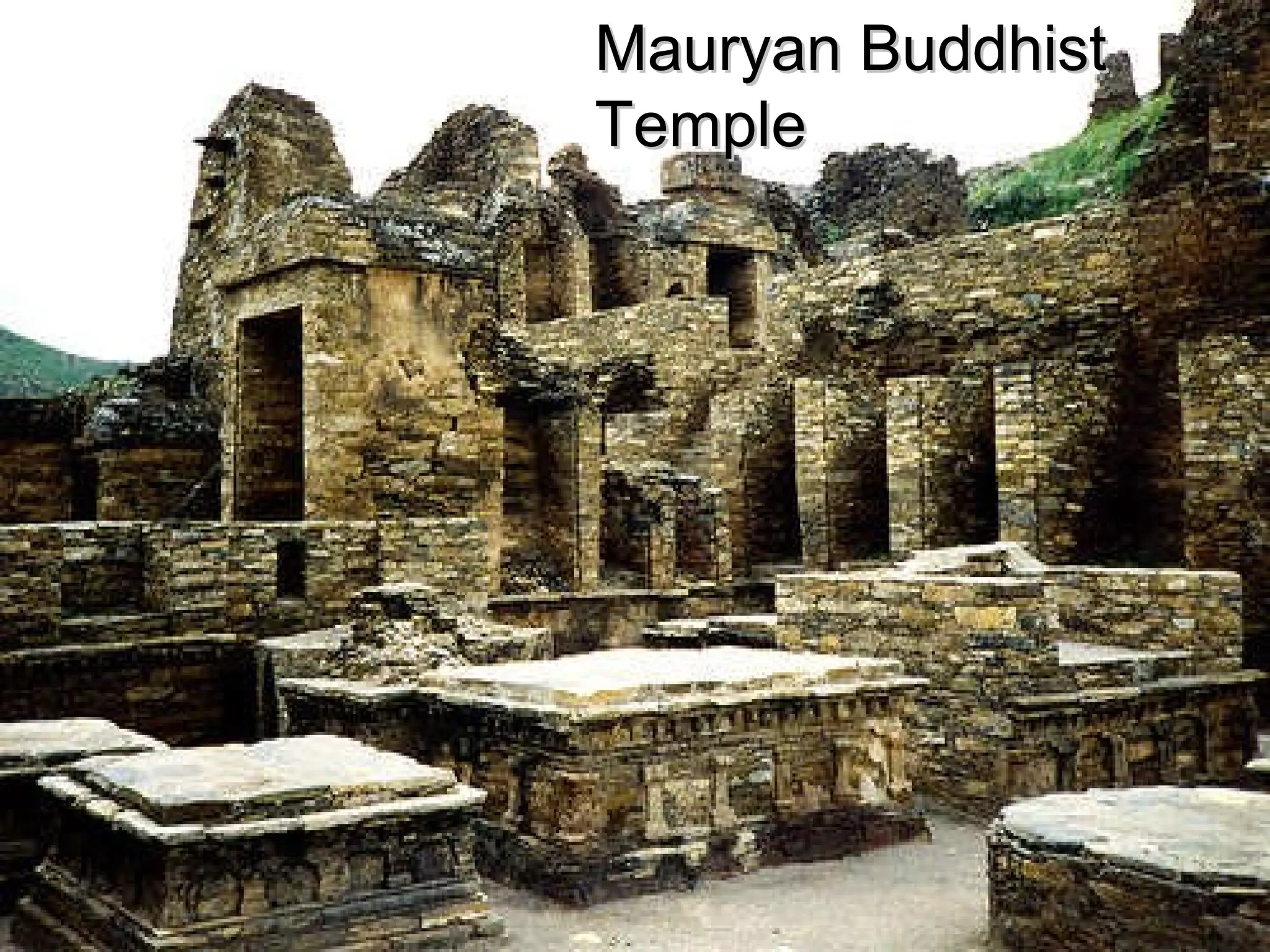
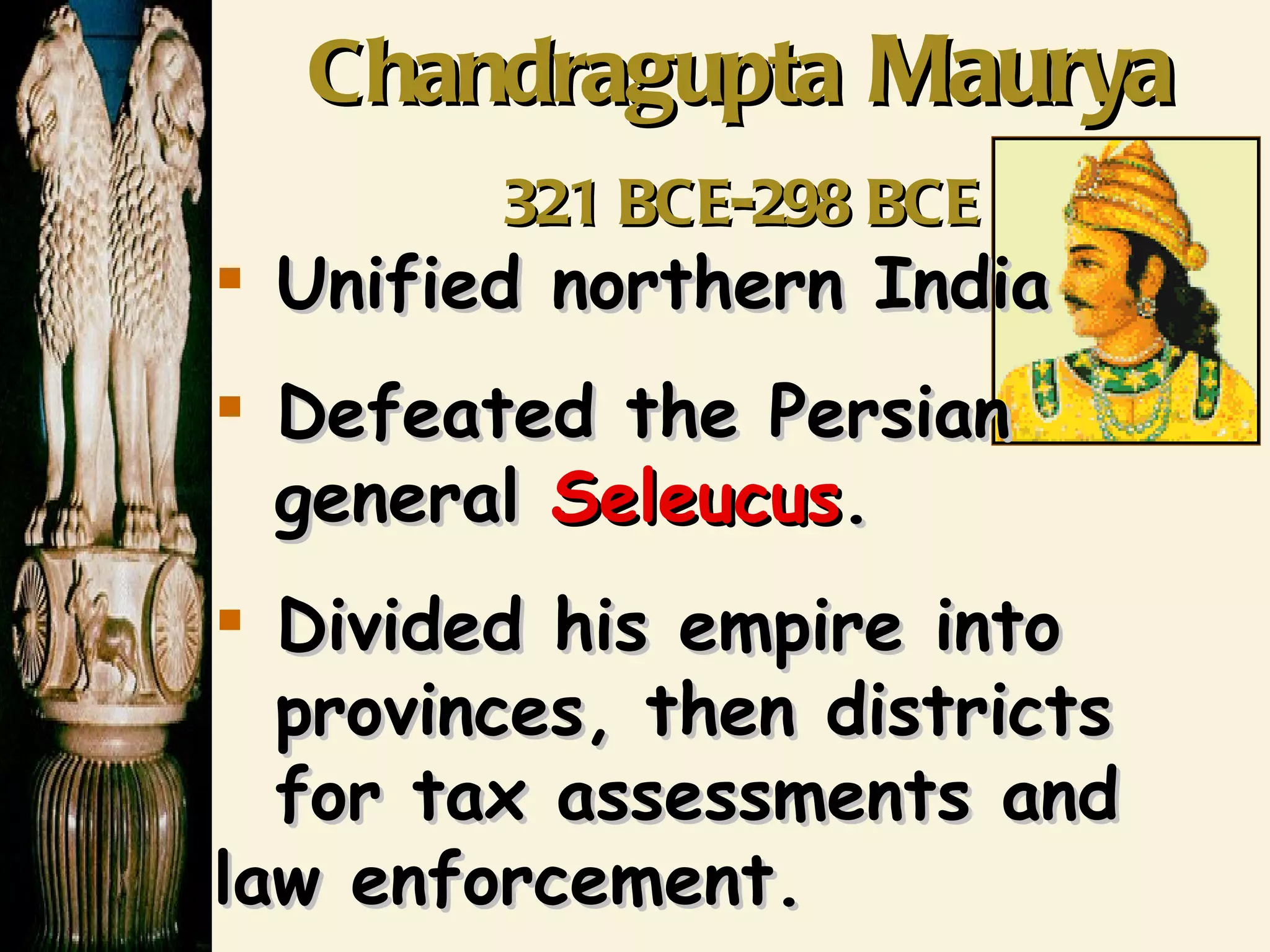
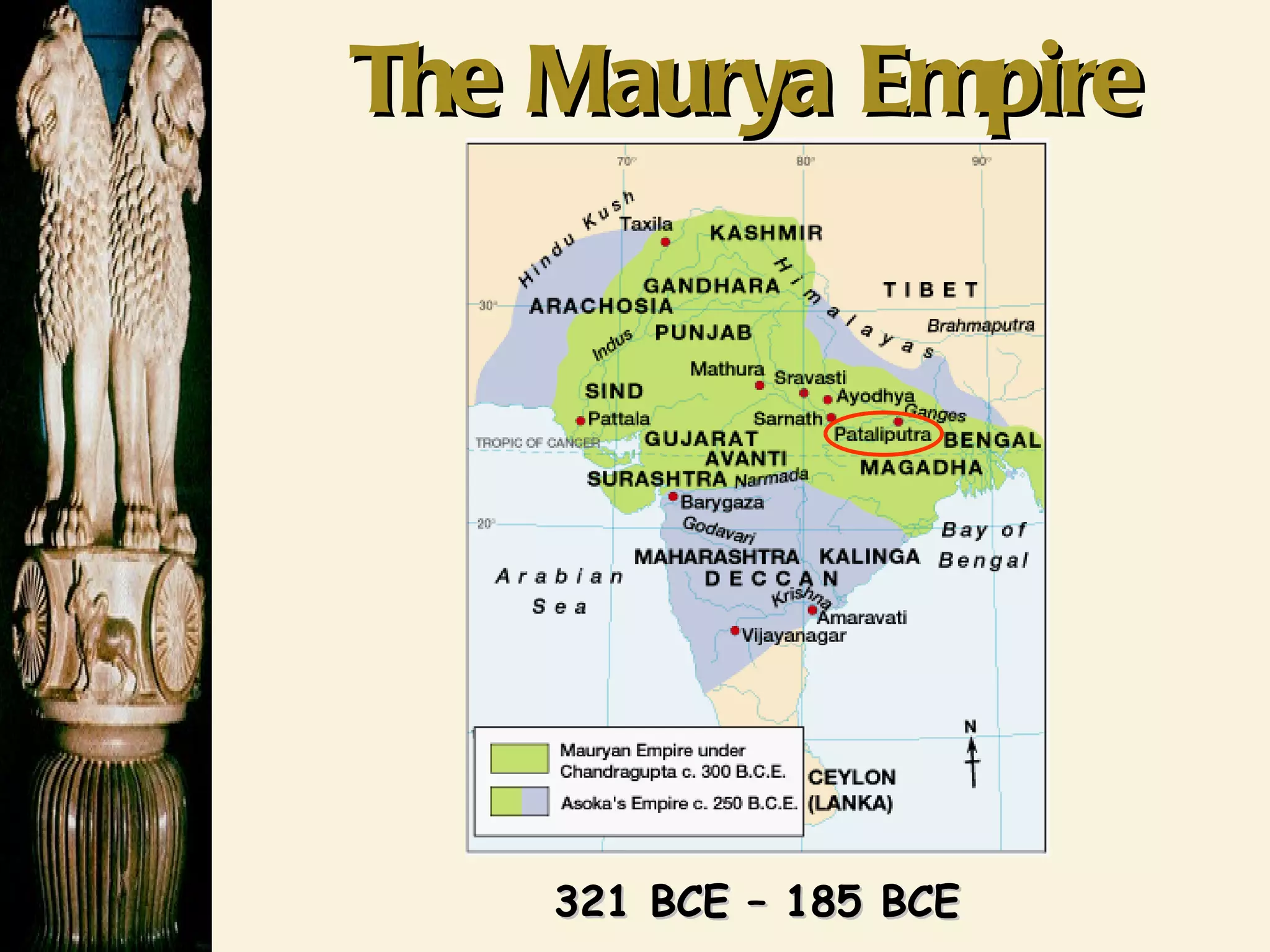
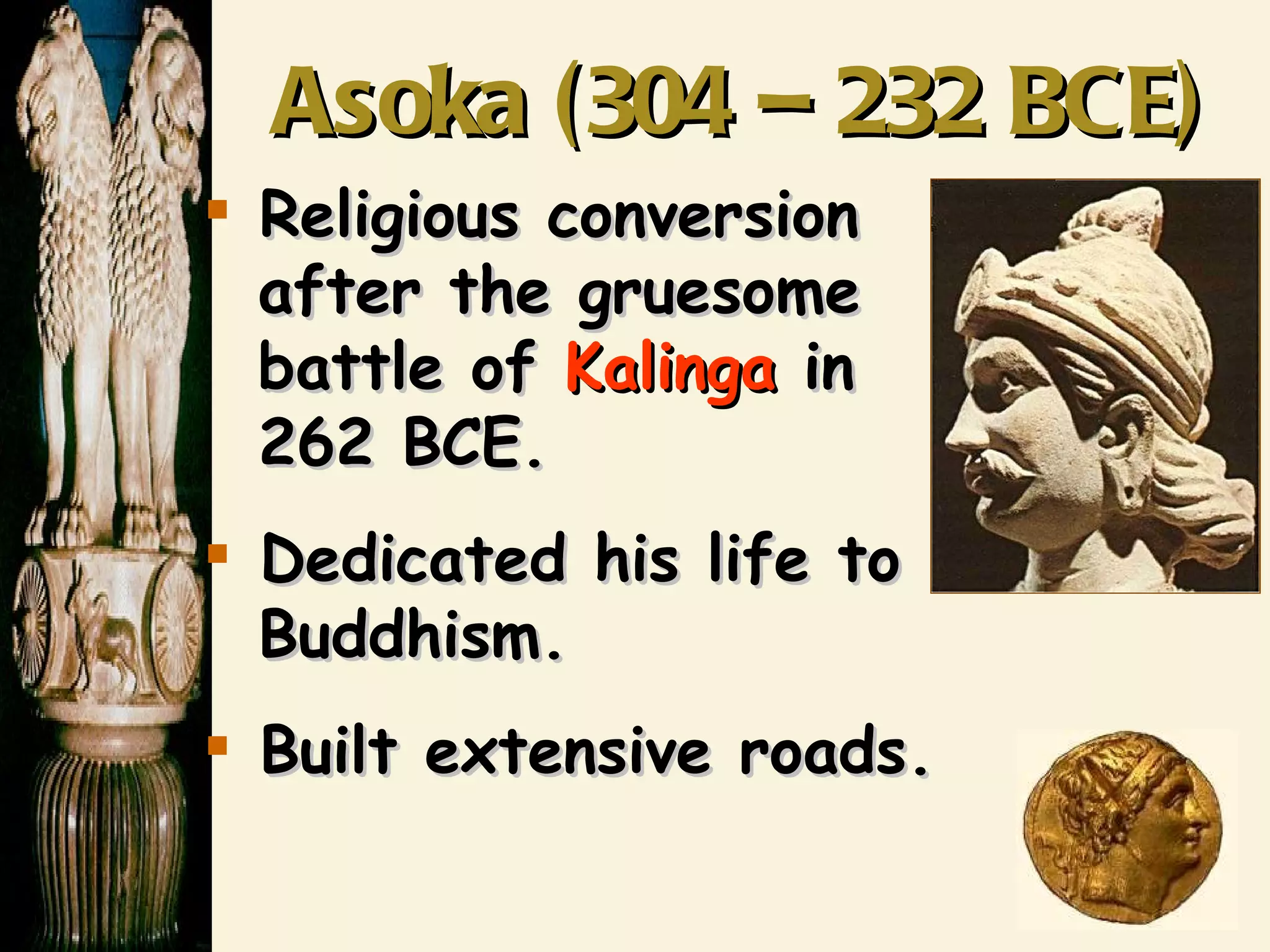
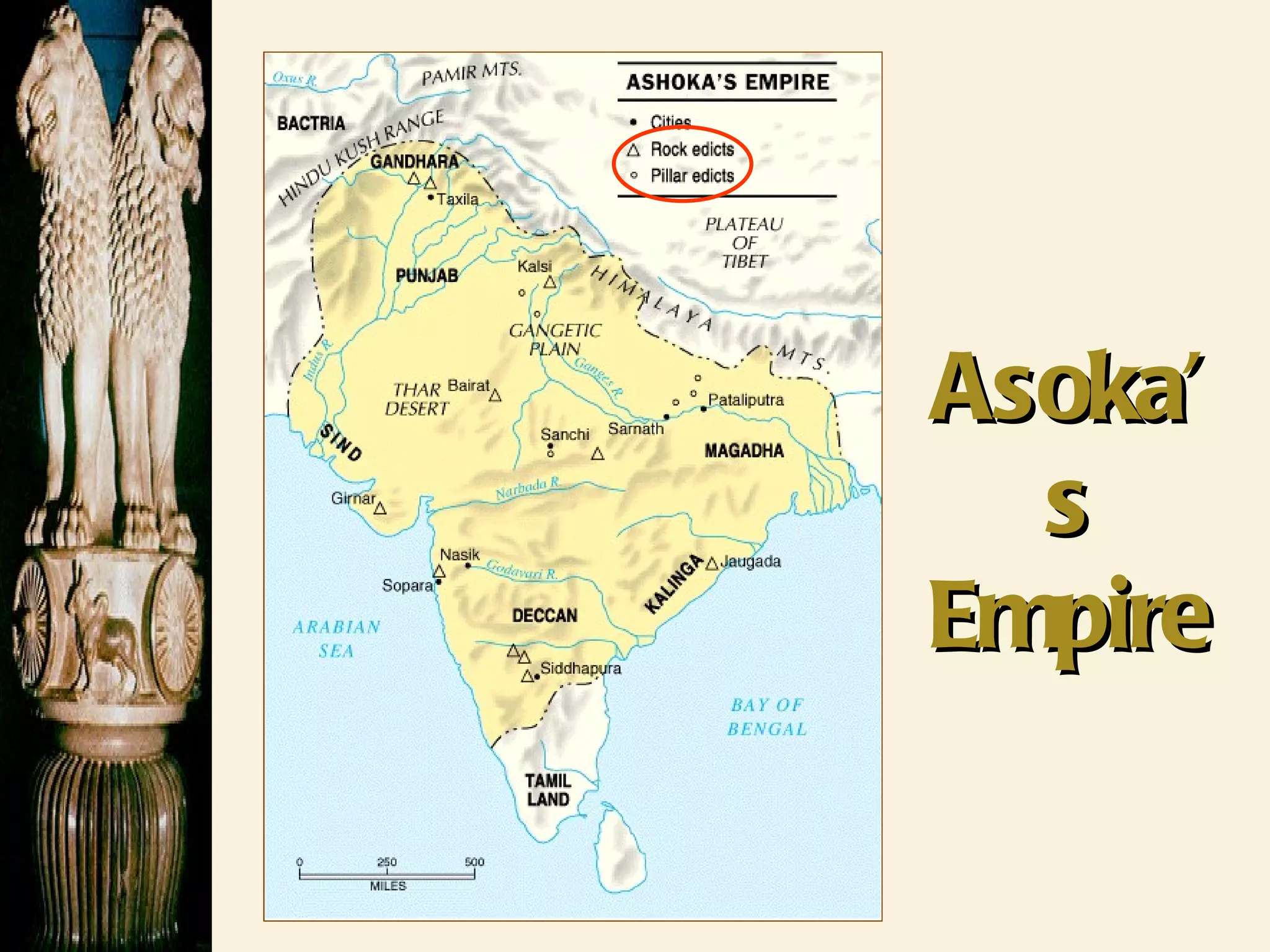
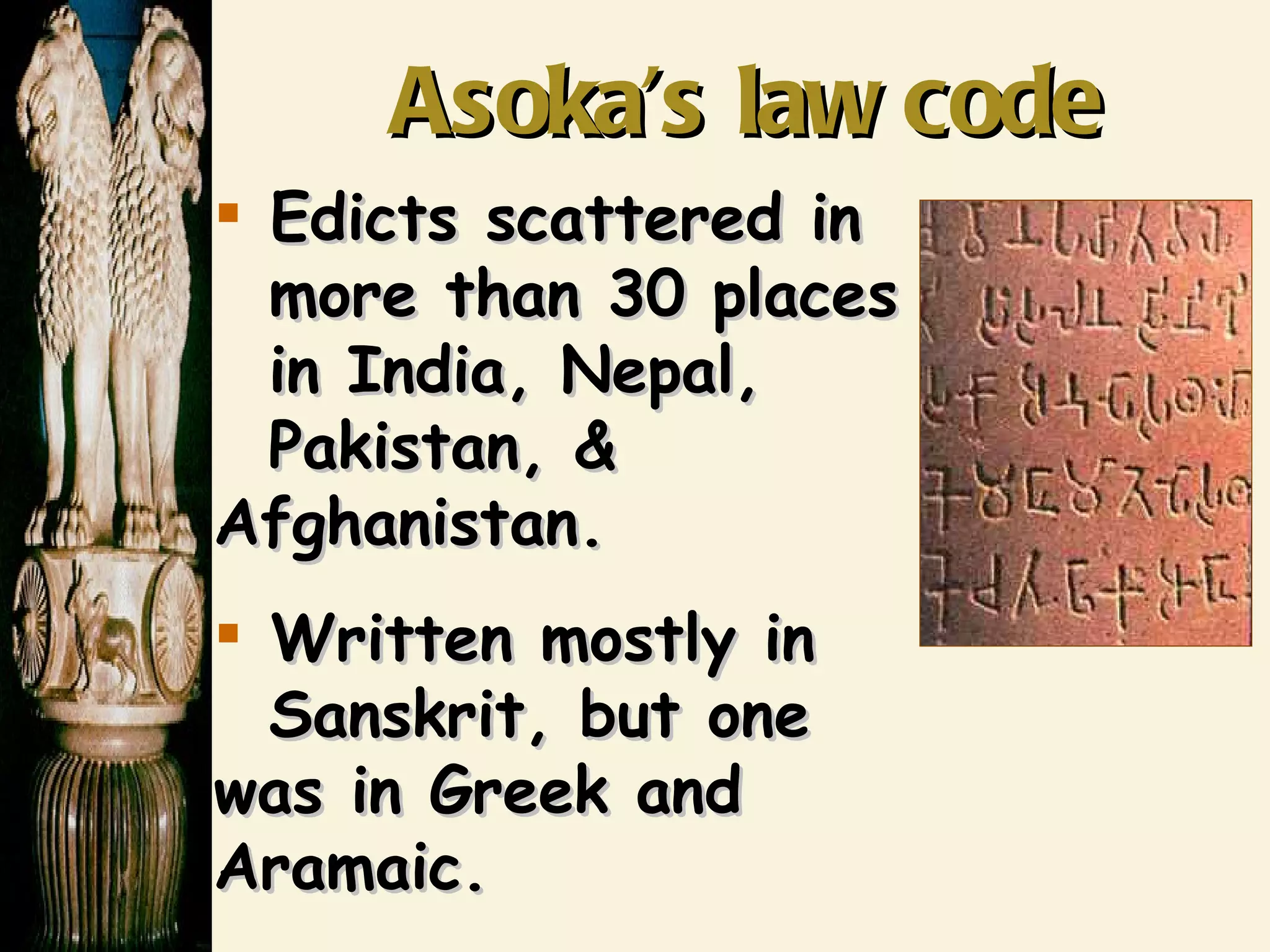
The Maurya Empire unified northern India under Chandragupta Maurya from 321-298 BCE. Chandragupta defeated the Persian general Seleucus and divided his empire into provinces and districts for administration and tax collection. He was paranoid of assassination attempts and took security precautions. In 301 BCE, he abdicated his throne to become a Jain. The empire continued under Asoka, who converted to Buddhism after a bloody battle in 262 BCE. Asoka built roads and promoted Buddhist principles through edicts carved on pillars across India, Pakistan, Nepal and Afghanistan. After Asoka, the Mauryan Empire fragmented and northern India came under foreign rule.

![10 rock edicts. Each pillar [ stupa ] is 40’-50’ high. Buddhist principles dominate his laws.](https://image.slidesharecdn.com/maurya-guptaempires-111012014056-phpapp01/75/Maurya-gupta-empires-9-2048.jpg)