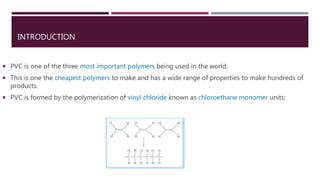
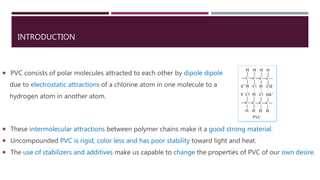
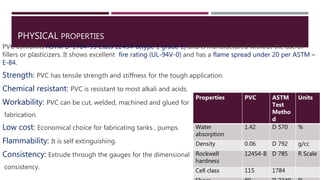
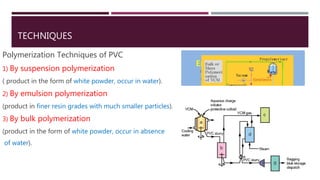
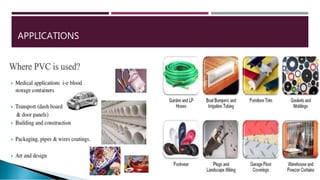
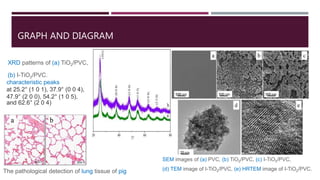
This document summarizes key information about polyvinyl chloride (PVC), including its introduction, physical properties, techniques for polymerization, applications, research, and conclusions. PVC is one of the most widely used polymers due to its low cost and variety of properties. It consists of polar molecules attracted by dipole-dipole interactions between chlorine and hydrogen atoms. PVC can be manufactured through suspension, emulsion, or bulk polymerization. It has good strength, chemical resistance, workability, and is self-extinguishing. Common applications include pipes, fittings, cables, flooring, and medical devices. Research indicates coating PVC with iodine-doped titanium dioxide reduces bacterial adhesion and biofilm formation.