Pulse Modulation
By-
herin gala
keval mamaniya
keval gada
dattaprasad shenoy
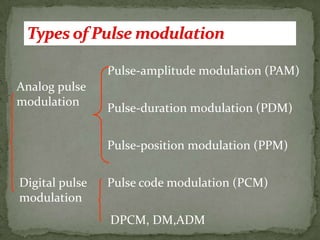
Pulse-amplitude modulation (PAM)
Pulse-duration modulation (PDM)
Pulse-position modulation (PPM)
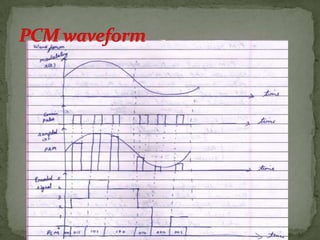
Pulse code modulation (PCM)
DPCM, DM,ADM
Analog pulse
modulation
Digital pulse
modulation
Lets start the
seminar from
analog pulse
modulation
 A modulation system in which amplitude of discrete
carrier signal changes in accordance with the
instantaneous amplitude of modulating
signal(message signal) keeping width and position of
carrier constant is called as PAM.
 There are 2 types of PAM :
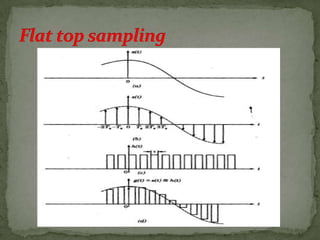
1. Natural sampling
2. Flat top sampling
 Generation and detection is easy.
Disadvantages of PAM
 Added noise cannot be removed easily as it has impact
on amplitude which carries information.
 Transmission bandwidth is too large.
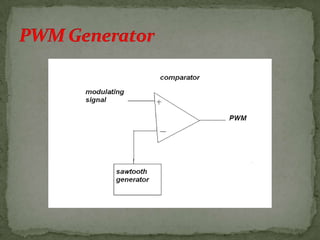
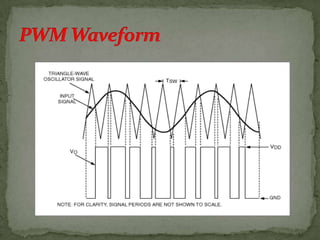
 The modulation system in which width of the discrete
carrier signal changes in accordance with the
instantaneous amplitude of modulating
signal(message signal) keeping amplitude and position
of carrier constant is called as PWM.
1. Very good noise immunity.
2. Its possible to separate out signal from noise.
Disadvantages of PWM
1. Bandwidth requirement is large as compared to
PAM.
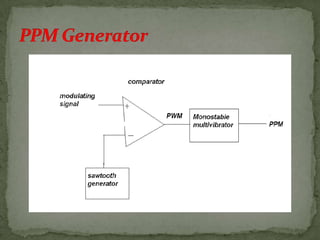
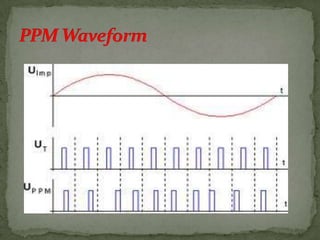
 The modulation system in which position of
the discrete carrier signal changes in
accordance with the instantaneous
amplitude of modulating signal(message
signal) keeping amplitude and Width of
carrier constant is called as PPM.
 High noise immunity.
Disadvantage of PPM
 Generation and detection is complex.
Now lets move on
to digital pulse
modulation.
 It is the type of pulse modulation in
which the group of pulses or codes are
transmitted which represent binary
numbers corresponding to modulating
signal voltage.
1. Secured.
2. Encoding is possible.
3. Very high noise immunity.
4. Convenient for long distance communication.
5. Good signal to noise ratio.
1. Complex circuitry.
2. Requires large bandwidth.
3. Synchronization is required between transmitter &
receiver.
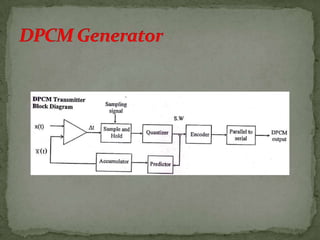
 In DPCM instead of transmitting digital equivalent of
each quantized sampled signal the difference between
the present sample value and previously sampled value
is transmitted.
1. Less signaling rate.
2. Less bandwidth.
Disadvantages of DPCM
1. High bit rate.
2. Needs the predictor circuit to be used which is
complex.
 In PCM system ‘N’ no of binary digit are transmitted
per quantized sample which demand high signaling
rate and transmission bandwidth.
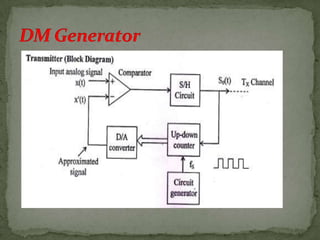
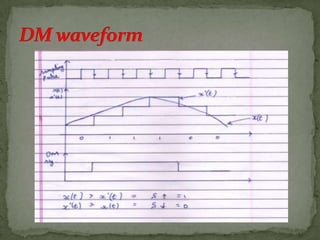
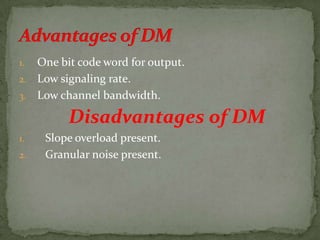
1. One bit code word for output.
2. Low signaling rate.
3. Low channel bandwidth.
Disadvantages of DM
1. Slope overload present.
2. Granular noise present.
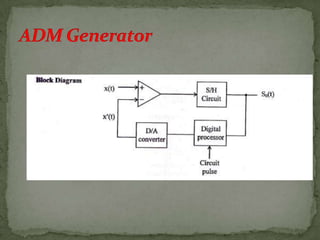
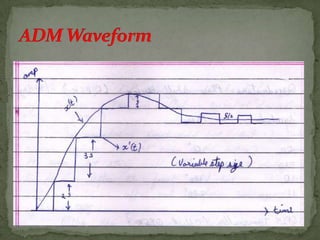
 This is the advanced version of DM.
 In this step size is kept variable to avoid
slope over load error and granular noise
problem.
1. Improved SNR.
2. Low signaling rate.
3. Reduction in slope overload and granular noise.
 In this presentation we came across various
different PULSE Modulation techniques
and saw how they are transmitted and we
also saw their waveforms.
 We also came across advantages and
disadvantages of these modulation
techniques.
pulse modulation

pulse modulation

  • 1.
    Pulse Modulation By- herin gala kevalmamaniya keval gada dattaprasad shenoy
  • 2.
    Pulse-amplitude modulation (PAM) Pulse-durationmodulation (PDM) Pulse-position modulation (PPM) Pulse code modulation (PCM) DPCM, DM,ADM Analog pulse modulation Digital pulse modulation
  • 3.
    Lets start the seminarfrom analog pulse modulation
  • 4.
     A modulationsystem in which amplitude of discrete carrier signal changes in accordance with the instantaneous amplitude of modulating signal(message signal) keeping width and position of carrier constant is called as PAM.
  • 6.
     There are2 types of PAM : 1. Natural sampling 2. Flat top sampling
  • 9.
     Generation anddetection is easy. Disadvantages of PAM  Added noise cannot be removed easily as it has impact on amplitude which carries information.  Transmission bandwidth is too large.
  • 10.
     The modulationsystem in which width of the discrete carrier signal changes in accordance with the instantaneous amplitude of modulating signal(message signal) keeping amplitude and position of carrier constant is called as PWM.
  • 13.
    1. Very goodnoise immunity. 2. Its possible to separate out signal from noise. Disadvantages of PWM 1. Bandwidth requirement is large as compared to PAM.
  • 14.
     The modulationsystem in which position of the discrete carrier signal changes in accordance with the instantaneous amplitude of modulating signal(message signal) keeping amplitude and Width of carrier constant is called as PPM.
  • 17.
     High noiseimmunity. Disadvantage of PPM  Generation and detection is complex.
  • 18.
    Now lets moveon to digital pulse modulation.
  • 19.
     It isthe type of pulse modulation in which the group of pulses or codes are transmitted which represent binary numbers corresponding to modulating signal voltage.
  • 22.
    1. Secured. 2. Encodingis possible. 3. Very high noise immunity. 4. Convenient for long distance communication. 5. Good signal to noise ratio.
  • 23.
    1. Complex circuitry. 2.Requires large bandwidth. 3. Synchronization is required between transmitter & receiver.
  • 24.
     In DPCMinstead of transmitting digital equivalent of each quantized sampled signal the difference between the present sample value and previously sampled value is transmitted.
  • 26.
    1. Less signalingrate. 2. Less bandwidth. Disadvantages of DPCM 1. High bit rate. 2. Needs the predictor circuit to be used which is complex.
  • 27.
     In PCMsystem ‘N’ no of binary digit are transmitted per quantized sample which demand high signaling rate and transmission bandwidth.
  • 30.
    1. One bitcode word for output. 2. Low signaling rate. 3. Low channel bandwidth. Disadvantages of DM 1. Slope overload present. 2. Granular noise present.
  • 31.
     This isthe advanced version of DM.  In this step size is kept variable to avoid slope over load error and granular noise problem.
  • 34.
    1. Improved SNR. 2.Low signaling rate. 3. Reduction in slope overload and granular noise.
  • 35.
     In thispresentation we came across various different PULSE Modulation techniques and saw how they are transmitted and we also saw their waveforms.  We also came across advantages and disadvantages of these modulation techniques.