Module 5
Selection tests
Characteristic of a good test
Types of tests
mmbagali/cms/ r and s course
Psychological Test @ Recruitment and Selection
What is Psychology !!!
The Scientific study of function of human mind
Covers area like: behavior; evolution; cognition; philosophy
Psychology
Social
Criminal
Applied…..OB
Animal
Abnormal / Psychiatric
General
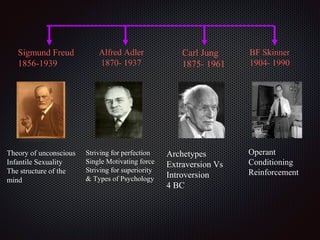
Theory of unconscious
Infantile Sexuality
The structure of the
mind
Striving for perfection
Single Motivating force
Striving for superiority
& Types of Psychology
Archetypes
Extraversion Vs
Introversion
4 BC
Operant
Conditioning
Reinforcement
Sigmund Freud
1856-1939
Alfred Adler
1870- 1937
BF Skinner
1904- 1990
Carl Jung
1875- 1961
Psychometric Assessment
Selection tests
Characteristic of a good test
Types of tests
Psyche + Metric + Assessment
Thus, measurement of talent; personality; intelligence;
maturity, traits, ability,
images and motives……..
Why to Assess ???
Apt
Fit
Performance
Competency
Behavior
Formal Appraisal
Why Assess -
How Assessment helps in the Workplace
Improving morale
Demonstrating commitment to people
Increasing retention
Reducing costs and saving time
Producing in-house benchmarks and norms for good performance
Objectively assessing people against known standards and tests
Demonstrating fairness to all
METRICIZATION- ESTABLISH FAIR
PSYCHOMETRIC ASSESSMENT
Reliable
Consistent
Accuracy
Valid
Appropriate
Standard
Fair
Legal Problem
Why Psychological tests
Explains
Predicts
Controls
Improves
Categories
ABC
Anticipate
Behavior
Consequences'
Categories of Tests
Tests for abilities and cognitive
Tests for motives and interests, values and subconscious stimuli
Tests for traits …… Behavior
Tests measuring Personality; Interest; Thinking; Learning;
Perception; Attitudes
Tests to measure Emotions
Tests measuring Thoughts; Feelings; Sensations; Memories;
Dreams…..
some known tests
Rorschach Test
Word Association Test
Bubble Drawing Test
Myers-Briggs Type Indicator: 126 items
Occupational Preference Questionnaire: 30 items
Perception and Preference Inventory: 90 items
16 Personality Factor: 16 items
Fundamental Interpersonal Relations Orientation-Behavior
Watson Glaser Critical Thinking Analysis
The Thomas profiling – Hiring Technique
Few others
TAT, Maturity, Emotional Intelligence, Education, Experience,
Excellence, Effectiveness, Communication, and Creativity.
Ability; Aptitude; Attitude’ reasoning;’ decisions making; Creativity;
Basic skills tests; Job skills tests; Psychological tests; Cognitive
(Mental) Abilities; Personality and Interests; Achievement
DEFENSE MECHANISM
RSI
Career drivers Test (Richmond Survey Indicators )
Motivational Analysis using Career anchors- The RSI test
UNDERSTANDING MOTIVATORS
Career drivers Test (Richmond Survey Indicators )
Aims: To effectively measure the various sources of motivation
and to identify what de motivates a person from working.
Applications: Leadership development and Career development
Format: Contains 36 dual statement questions and the candidate
has to divide a score of 3 points among the two statements based on
the relative importance of each statement.
Scoring: Identifies what motivates the candidate to work from
among the 9 career drivers namely Money, Power, Meaning,
Expertise, Innovation, Social affiliation, Autonomy, Security, Status.
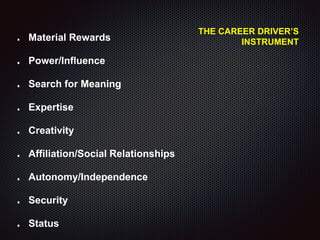
THE CAREER DRIVER’S
INSTRUMENTMaterial Rewards
Power/Influence
Search for Meaning
Expertise
Creativity
Affiliation/Social Relationships
Autonomy/Independence
Security
Status
The Employment test @ some company
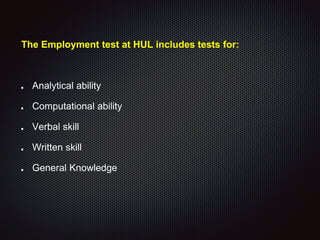
The Employment test at HUL includes tests for:
Analytical ability
Computational ability
Verbal skill
Written skill
General Knowledge
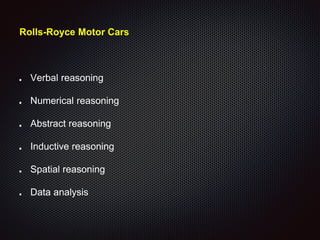
Rolls-Royce Motor Cars
Verbal reasoning
Numerical reasoning
Abstract reasoning
Inductive reasoning
Spatial reasoning
Data analysis
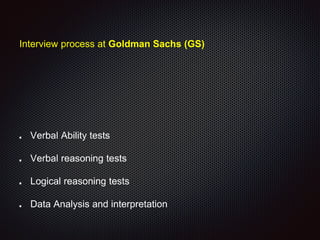
Interview process at Goldman Sachs (GS)
Verbal Ability tests
Verbal reasoning tests
Logical reasoning tests
Data Analysis and interpretation
TAT
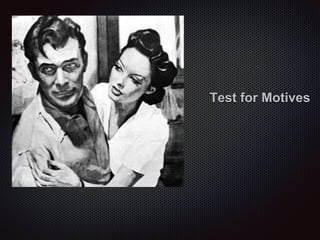
Test for Motives
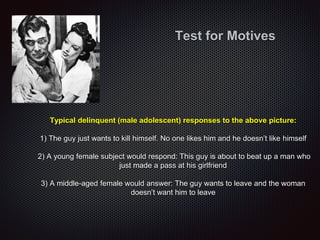
Test for Motives
Typical delinquent (male adolescent) responses to the above picture:
1) The guy just wants to kill himself. No one likes him and he doesn’t like himself
2) A young female subject would respond: This guy is about to beat up a man who
just made a pass at his girlfriend
3) A middle-aged female would answer: The guy wants to leave and the woman
doesn’t want him to leave
Test for Motives
DIFFERENT PERSONALITY TYPES
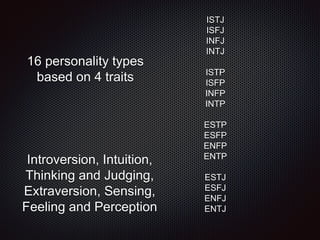
ISTJ
ISFJ
INFJ
INTJ
ISTP
ISFP
INFP
INTP
ESTP
ESFP
ENFP
ENTP
ESTJ
ESFJ
ENFJ
ENTJ
16 personality types
based on 4 traits
Introversion, Intuition,
Thinking and Judging,
Extraversion, Sensing,
Feeling and Perception
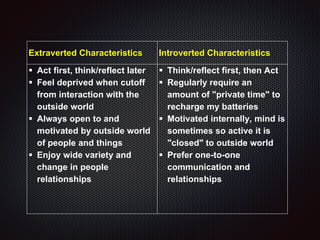
Extraverted Characteristics Introverted Characteristics
 Act first, think/reflect later
 Feel deprived when cutoff
from interaction with the
outside world
 Always open to and
motivated by outside world
of people and things
 Enjoy wide variety and
change in people
relationships
 Think/reflect first, then Act
 Regularly require an
amount of "private time" to
recharge my batteries
 Motivated internally, mind is
sometimes so active it is
"closed" to outside world
 Prefer one-to-one
communication and
relationships
Extraverted Characteristics
Introverted Characteristics
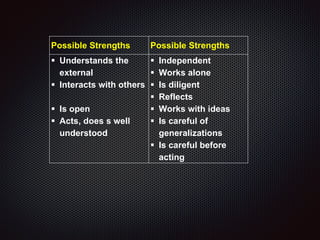
Possible Strengths Possible Strengths
 Understands the
external
 Interacts with others
 Is open
 Acts, does s well
understood
 Independent
 Works alone
 Is diligent
 Reflects
 Works with ideas
 Is careful of
generalizations
 Is careful before
acting
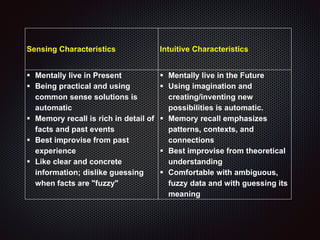
Sensing Characteristics Intuitive Characteristics
 Mentally live in Present
 Being practical and using
common sense solutions is
automatic
 Memory recall is rich in detail of
facts and past events
 Best improvise from past
experience
 Like clear and concrete
information; dislike guessing
when facts are "fuzzy"
 Mentally live in the Future
 Using imagination and
creating/inventing new
possibilities is automatic.
 Memory recall emphasizes
patterns, contexts, and
connections
 Best improvise from theoretical
understanding
 Comfortable with ambiguous,
fuzzy data and with guessing its
meaning
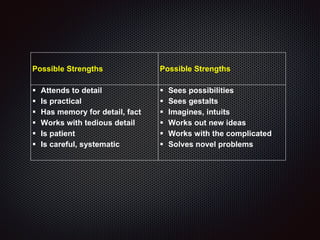
Possible Strengths Possible Strengths
 Attends to detail
 Is practical
 Has memory for detail, fact
 Works with tedious detail
 Is patient
 Is careful, systematic
 Sees possibilities
 Sees gestalts
 Imagines, intuits
 Works out new ideas
 Works with the complicated
 Solves novel problems
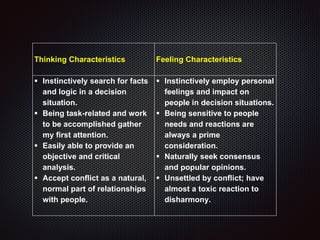
Thinking Characteristics Feeling Characteristics
 Instinctively search for facts
and logic in a decision
situation.
 Being task-related and work
to be accomplished gather
my first attention.
 Easily able to provide an
objective and critical
analysis.
 Accept conflict as a natural,
normal part of relationships
with people.
 Instinctively employ personal
feelings and impact on
people in decision situations.
 Being sensitive to people
needs and reactions are
always a prime
consideration.
 Naturally seek consensus
and popular opinions.
 Unsettled by conflict; have
almost a toxic reaction to
disharmony.
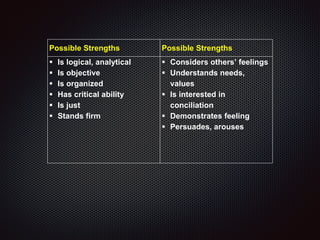
Possible Strengths Possible Strengths
 Is logical, analytical
 Is objective
 Is organized
 Has critical ability
 Is just
 Stands firm
 Considers others’ feelings
 Understands needs,
values
 Is interested in
conciliation
 Demonstrates feeling
 Persuades, arouses
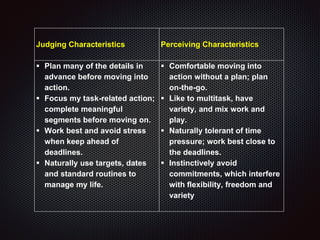
Judging Characteristics Perceiving Characteristics
 Plan many of the details in
advance before moving into
action.
 Focus my task-related action;
complete meaningful
segments before moving on.
 Work best and avoid stress
when keep ahead of
deadlines.
 Naturally use targets, dates
and standard routines to
manage my life.
 Comfortable moving into
action without a plan; plan
on-the-go.
 Like to multitask, have
variety, and mix work and
play.
 Naturally tolerant of time
pressure; work best close to
the deadlines.
 Instinctively avoid
commitments, which interfere
with flexibility, freedom and
variety
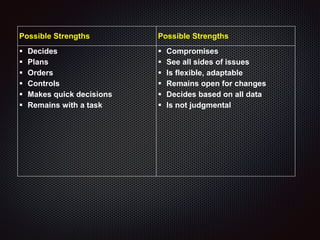
Possible Strengths Possible Strengths
 Decides
 Plans
 Orders
 Controls
 Makes quick decisions
 Remains with a task
 Compromises
 See all sides of issues
 Is flexible, adaptable
 Remains open for changes
 Decides based on all data
 Is not judgmental
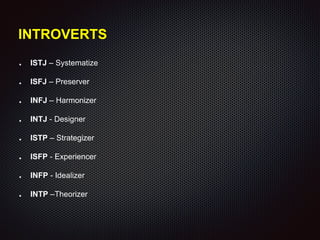
ISTJ – Systematize
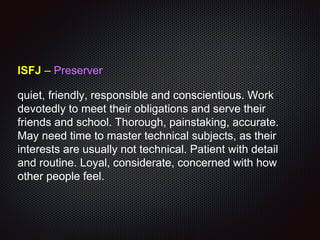
ISFJ – Preserver
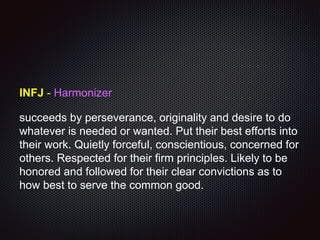
INFJ – Harmonizer
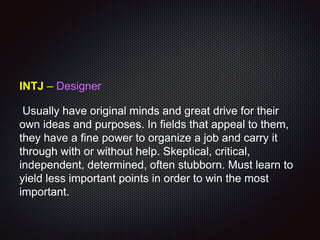
INTJ - Designer
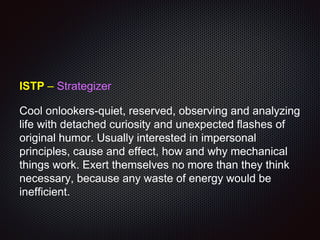
ISTP – Strategizer
ISFP - Experiencer
INFP - Idealizer
INTP –Theorizer
INTROVERTS
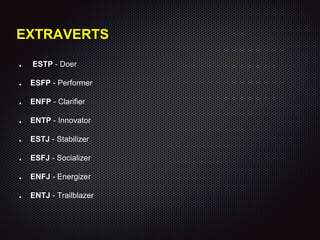
ESTP - Doer
ESFP - Performer
ENFP - Clarifier
ENTP - Innovator
ESTJ - Stabilizer
ESFJ - Socializer
ENFJ - Energizer
ENTJ - Trailblazer
EXTRAVERTS
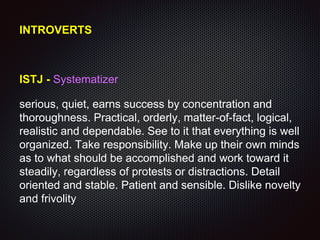
INTROVERTS
INTROVERTS
ISTJ - Systematizer
serious, quiet, earns success by concentration and
thoroughness. Practical, orderly, matter-of-fact, logical,
realistic and dependable. See to it that everything is well
organized. Take responsibility. Make up their own minds
as to what should be accomplished and work toward it
steadily, regardless of protests or distractions. Detail
oriented and stable. Patient and sensible. Dislike novelty
and frivolity
ISFJ – Preserver
quiet, friendly, responsible and conscientious. Work
devotedly to meet their obligations and serve their
friends and school. Thorough, painstaking, accurate.
May need time to master technical subjects, as their
interests are usually not technical. Patient with detail
and routine. Loyal, considerate, concerned with how
other people feel.
INFJ - Harmonizer
succeeds by perseverance, originality and desire to do
whatever is needed or wanted. Put their best efforts into
their work. Quietly forceful, conscientious, concerned for
others. Respected for their firm principles. Likely to be
honored and followed for their clear convictions as to
how best to serve the common good.
INTJ – Designer
Usually have original minds and great drive for their
own ideas and purposes. In fields that appeal to them,
they have a fine power to organize a job and carry it
through with or without help. Skeptical, critical,
independent, determined, often stubborn. Must learn to
yield less important points in order to win the most
important.
ISTP – Strategizer
Cool onlookers-quiet, reserved, observing and analyzing
life with detached curiosity and unexpected flashes of
original humor. Usually interested in impersonal
principles, cause and effect, how and why mechanical
things work. Exert themselves no more than they think
necessary, because any waste of energy would be
inefficient.
ISFP - Experiencer
Retiring, quietly friendly, sensitive, kind, and modest
about their abilities. Shun disagreements; do not force
their opinions or values on others. Usually do not care to
lead but are often loyal followers. Often relaxed about
getting things done, because they enjoy the present
moment and do not want to spoil it by undue haste or
exertion.
INFP - Idealizer
Full of enthusiasms and loyalties, but seldom talk of
these until they know you well. Care about learning,
ideas, language, and independent projects of their own.
Tend to undertake too much, and then somehow get it
done. Friendly, but often too absorbed in what they are
doing to be sociable. Little concerned with possessions
or physical surroundings.
INTP –Theorizer
Quiet, reserved, brilliant in exams, especially in
theoretical or scientific subjects. Logical to the point of
hair-splitting. Usually interested mainly in ideas, with
little liking for parties or small talk. Tend to have sharply
defined interests. Need to choose careers where some
strong interest can be used and useful.
EXTRAVERTS
ESTP - Doer
Matter-of-fact, do not worry or hurry, enjoy whatever
comes along. Tend to like mechanical things and sports,
with friends on the side. May be a bit blunt or
insensitive. Can do math or science when they see the
need. Dislike long explanations. Are best with real things
that can be worked, handled, taken apart or put
together.
ESFP - Performer
Outgoing, easygoing, accepting, friendly, enjoy
everything and make things more fun for others by their
enjoyment. Like sports and making things. Know what’s
going on and join in eagerly. Find remembering facts
easier than mastering theories. Are best in situations
that need sound common sense and practical ability
with people as well as with things.
ENFP - Clarifier
Warmly enthusiastic, high-spirited, ingenious,
imaginative. Able to do almost anything that interests
them. Quick with a solution for any difficulty and ready to
help anyone with a problem. Often rely on their ability to
improvise instead of preparing in advance. Can usually
find compelling reasons for whatever they want.
ENTP - Innovator
Quick, ingenious, good at many things. Stimulating
company, alert and outspoken. May argue for fun on
either side of a question. Resourceful in solving new and
challenging problems, but may neglect routine
assignments. Apt to turn to one new interest after
another. Skillful in finding logical reasons for what they
want
ESTJ - Stabilizer
Practical, realistic, matter-of-fact, with a natural head for
business or mechanics. Not interested in subjects they
see no use for, but can apply themselves when
necessary. Like to organize and run activities. May
make good administrators, especially if they remember
to consider others’ feelings and points of view.
ESFJ - Socializer
Warm-hearted, talkative, popular, conscientious, born
cooperators, active committee members. Need harmony
and may be good at creating it. Always doing something
nice for someone. Work best with encouragement and
praise. Little interest in abstract thinking or technical
subjects. Main interest is in things that directly and
visibly affect people’s lives.
ENFJ - Energizer
Open hearted, active in administration work, Willing to
help others by going out of the way. Creative at heart
and has a keen desire to innovate new things. Mainly
interested in things that can keep the relations in a
positive way.
ENTJ - Trailblazer
Hearty, frank, able in studies, leaders in activities.
Usually good in anything that requires reasoning and
intelligent talk, such as public speaking Are usually well
informed and enjoy adding to their fund of knowledge.
May sometimes be more positive and confident than
their experience in an area warrants.
Remember……
Once you know the objective and have taken test, next
time it will be false scores
all the best……
completely my pleasure to teach all !!!
http://in.linkedin.com/in/mmbagali

Psychological test.... 2016

  • 1.
    Module 5 Selection tests Characteristicof a good test Types of tests mmbagali/cms/ r and s course
  • 2.
    Psychological Test @Recruitment and Selection
  • 3.
  • 4.
    The Scientific studyof function of human mind Covers area like: behavior; evolution; cognition; philosophy
  • 5.
  • 6.
    Theory of unconscious InfantileSexuality The structure of the mind Striving for perfection Single Motivating force Striving for superiority & Types of Psychology Archetypes Extraversion Vs Introversion 4 BC Operant Conditioning Reinforcement Sigmund Freud 1856-1939 Alfred Adler 1870- 1937 BF Skinner 1904- 1990 Carl Jung 1875- 1961
  • 7.
  • 8.
    Psyche + Metric+ Assessment Thus, measurement of talent; personality; intelligence; maturity, traits, ability, images and motives……..
  • 9.
  • 10.
  • 11.
    Why Assess - HowAssessment helps in the Workplace Improving morale Demonstrating commitment to people Increasing retention Reducing costs and saving time Producing in-house benchmarks and norms for good performance Objectively assessing people against known standards and tests Demonstrating fairness to all
  • 12.
    METRICIZATION- ESTABLISH FAIR PSYCHOMETRICASSESSMENT Reliable Consistent Accuracy Valid Appropriate Standard Fair Legal Problem
  • 13.
  • 14.
    Categories of Tests Testsfor abilities and cognitive Tests for motives and interests, values and subconscious stimuli Tests for traits …… Behavior Tests measuring Personality; Interest; Thinking; Learning; Perception; Attitudes Tests to measure Emotions Tests measuring Thoughts; Feelings; Sensations; Memories; Dreams…..
  • 15.
    some known tests RorschachTest Word Association Test Bubble Drawing Test Myers-Briggs Type Indicator: 126 items Occupational Preference Questionnaire: 30 items Perception and Preference Inventory: 90 items 16 Personality Factor: 16 items Fundamental Interpersonal Relations Orientation-Behavior Watson Glaser Critical Thinking Analysis The Thomas profiling – Hiring Technique
  • 16.
    Few others TAT, Maturity,Emotional Intelligence, Education, Experience, Excellence, Effectiveness, Communication, and Creativity. Ability; Aptitude; Attitude’ reasoning;’ decisions making; Creativity; Basic skills tests; Job skills tests; Psychological tests; Cognitive (Mental) Abilities; Personality and Interests; Achievement DEFENSE MECHANISM
  • 17.
    RSI Career drivers Test(Richmond Survey Indicators ) Motivational Analysis using Career anchors- The RSI test UNDERSTANDING MOTIVATORS
  • 18.
    Career drivers Test(Richmond Survey Indicators ) Aims: To effectively measure the various sources of motivation and to identify what de motivates a person from working. Applications: Leadership development and Career development Format: Contains 36 dual statement questions and the candidate has to divide a score of 3 points among the two statements based on the relative importance of each statement. Scoring: Identifies what motivates the candidate to work from among the 9 career drivers namely Money, Power, Meaning, Expertise, Innovation, Social affiliation, Autonomy, Security, Status.
  • 19.
    THE CAREER DRIVER’S INSTRUMENTMaterialRewards Power/Influence Search for Meaning Expertise Creativity Affiliation/Social Relationships Autonomy/Independence Security Status
  • 20.
    The Employment test@ some company
  • 21.
    The Employment testat HUL includes tests for: Analytical ability Computational ability Verbal skill Written skill General Knowledge
  • 22.
    Rolls-Royce Motor Cars Verbalreasoning Numerical reasoning Abstract reasoning Inductive reasoning Spatial reasoning Data analysis
  • 23.
    Interview process atGoldman Sachs (GS) Verbal Ability tests Verbal reasoning tests Logical reasoning tests Data Analysis and interpretation
  • 24.
  • 25.
  • 26.
    Typical delinquent (maleadolescent) responses to the above picture: 1) The guy just wants to kill himself. No one likes him and he doesn’t like himself 2) A young female subject would respond: This guy is about to beat up a man who just made a pass at his girlfriend 3) A middle-aged female would answer: The guy wants to leave and the woman doesn’t want him to leave Test for Motives
  • 27.
  • 28.
    ISTJ ISFJ INFJ INTJ ISTP ISFP INFP INTP ESTP ESFP ENFP ENTP ESTJ ESFJ ENFJ ENTJ 16 personality types basedon 4 traits Introversion, Intuition, Thinking and Judging, Extraversion, Sensing, Feeling and Perception
  • 29.
    Extraverted Characteristics IntrovertedCharacteristics  Act first, think/reflect later  Feel deprived when cutoff from interaction with the outside world  Always open to and motivated by outside world of people and things  Enjoy wide variety and change in people relationships  Think/reflect first, then Act  Regularly require an amount of "private time" to recharge my batteries  Motivated internally, mind is sometimes so active it is "closed" to outside world  Prefer one-to-one communication and relationships
  • 30.
  • 31.
    Possible Strengths PossibleStrengths  Understands the external  Interacts with others  Is open  Acts, does s well understood  Independent  Works alone  Is diligent  Reflects  Works with ideas  Is careful of generalizations  Is careful before acting
  • 32.
    Sensing Characteristics IntuitiveCharacteristics  Mentally live in Present  Being practical and using common sense solutions is automatic  Memory recall is rich in detail of facts and past events  Best improvise from past experience  Like clear and concrete information; dislike guessing when facts are "fuzzy"  Mentally live in the Future  Using imagination and creating/inventing new possibilities is automatic.  Memory recall emphasizes patterns, contexts, and connections  Best improvise from theoretical understanding  Comfortable with ambiguous, fuzzy data and with guessing its meaning
  • 33.
    Possible Strengths PossibleStrengths  Attends to detail  Is practical  Has memory for detail, fact  Works with tedious detail  Is patient  Is careful, systematic  Sees possibilities  Sees gestalts  Imagines, intuits  Works out new ideas  Works with the complicated  Solves novel problems
  • 34.
    Thinking Characteristics FeelingCharacteristics  Instinctively search for facts and logic in a decision situation.  Being task-related and work to be accomplished gather my first attention.  Easily able to provide an objective and critical analysis.  Accept conflict as a natural, normal part of relationships with people.  Instinctively employ personal feelings and impact on people in decision situations.  Being sensitive to people needs and reactions are always a prime consideration.  Naturally seek consensus and popular opinions.  Unsettled by conflict; have almost a toxic reaction to disharmony.
  • 35.
    Possible Strengths PossibleStrengths  Is logical, analytical  Is objective  Is organized  Has critical ability  Is just  Stands firm  Considers others’ feelings  Understands needs, values  Is interested in conciliation  Demonstrates feeling  Persuades, arouses
  • 36.
    Judging Characteristics PerceivingCharacteristics  Plan many of the details in advance before moving into action.  Focus my task-related action; complete meaningful segments before moving on.  Work best and avoid stress when keep ahead of deadlines.  Naturally use targets, dates and standard routines to manage my life.  Comfortable moving into action without a plan; plan on-the-go.  Like to multitask, have variety, and mix work and play.  Naturally tolerant of time pressure; work best close to the deadlines.  Instinctively avoid commitments, which interfere with flexibility, freedom and variety
  • 37.
    Possible Strengths PossibleStrengths  Decides  Plans  Orders  Controls  Makes quick decisions  Remains with a task  Compromises  See all sides of issues  Is flexible, adaptable  Remains open for changes  Decides based on all data  Is not judgmental
  • 38.
    ISTJ – Systematize ISFJ– Preserver INFJ – Harmonizer INTJ - Designer ISTP – Strategizer ISFP - Experiencer INFP - Idealizer INTP –Theorizer INTROVERTS
  • 39.
    ESTP - Doer ESFP- Performer ENFP - Clarifier ENTP - Innovator ESTJ - Stabilizer ESFJ - Socializer ENFJ - Energizer ENTJ - Trailblazer EXTRAVERTS
  • 40.
  • 41.
    INTROVERTS ISTJ - Systematizer serious,quiet, earns success by concentration and thoroughness. Practical, orderly, matter-of-fact, logical, realistic and dependable. See to it that everything is well organized. Take responsibility. Make up their own minds as to what should be accomplished and work toward it steadily, regardless of protests or distractions. Detail oriented and stable. Patient and sensible. Dislike novelty and frivolity
  • 42.
    ISFJ – Preserver quiet,friendly, responsible and conscientious. Work devotedly to meet their obligations and serve their friends and school. Thorough, painstaking, accurate. May need time to master technical subjects, as their interests are usually not technical. Patient with detail and routine. Loyal, considerate, concerned with how other people feel.
  • 43.
    INFJ - Harmonizer succeedsby perseverance, originality and desire to do whatever is needed or wanted. Put their best efforts into their work. Quietly forceful, conscientious, concerned for others. Respected for their firm principles. Likely to be honored and followed for their clear convictions as to how best to serve the common good.
  • 44.
    INTJ – Designer Usuallyhave original minds and great drive for their own ideas and purposes. In fields that appeal to them, they have a fine power to organize a job and carry it through with or without help. Skeptical, critical, independent, determined, often stubborn. Must learn to yield less important points in order to win the most important.
  • 45.
    ISTP – Strategizer Coolonlookers-quiet, reserved, observing and analyzing life with detached curiosity and unexpected flashes of original humor. Usually interested in impersonal principles, cause and effect, how and why mechanical things work. Exert themselves no more than they think necessary, because any waste of energy would be inefficient.
  • 46.
    ISFP - Experiencer Retiring,quietly friendly, sensitive, kind, and modest about their abilities. Shun disagreements; do not force their opinions or values on others. Usually do not care to lead but are often loyal followers. Often relaxed about getting things done, because they enjoy the present moment and do not want to spoil it by undue haste or exertion.
  • 47.
    INFP - Idealizer Fullof enthusiasms and loyalties, but seldom talk of these until they know you well. Care about learning, ideas, language, and independent projects of their own. Tend to undertake too much, and then somehow get it done. Friendly, but often too absorbed in what they are doing to be sociable. Little concerned with possessions or physical surroundings.
  • 48.
    INTP –Theorizer Quiet, reserved,brilliant in exams, especially in theoretical or scientific subjects. Logical to the point of hair-splitting. Usually interested mainly in ideas, with little liking for parties or small talk. Tend to have sharply defined interests. Need to choose careers where some strong interest can be used and useful.
  • 49.
  • 50.
    ESTP - Doer Matter-of-fact,do not worry or hurry, enjoy whatever comes along. Tend to like mechanical things and sports, with friends on the side. May be a bit blunt or insensitive. Can do math or science when they see the need. Dislike long explanations. Are best with real things that can be worked, handled, taken apart or put together.
  • 51.
    ESFP - Performer Outgoing,easygoing, accepting, friendly, enjoy everything and make things more fun for others by their enjoyment. Like sports and making things. Know what’s going on and join in eagerly. Find remembering facts easier than mastering theories. Are best in situations that need sound common sense and practical ability with people as well as with things.
  • 52.
    ENFP - Clarifier Warmlyenthusiastic, high-spirited, ingenious, imaginative. Able to do almost anything that interests them. Quick with a solution for any difficulty and ready to help anyone with a problem. Often rely on their ability to improvise instead of preparing in advance. Can usually find compelling reasons for whatever they want.
  • 53.
    ENTP - Innovator Quick,ingenious, good at many things. Stimulating company, alert and outspoken. May argue for fun on either side of a question. Resourceful in solving new and challenging problems, but may neglect routine assignments. Apt to turn to one new interest after another. Skillful in finding logical reasons for what they want
  • 54.
    ESTJ - Stabilizer Practical,realistic, matter-of-fact, with a natural head for business or mechanics. Not interested in subjects they see no use for, but can apply themselves when necessary. Like to organize and run activities. May make good administrators, especially if they remember to consider others’ feelings and points of view.
  • 55.
    ESFJ - Socializer Warm-hearted,talkative, popular, conscientious, born cooperators, active committee members. Need harmony and may be good at creating it. Always doing something nice for someone. Work best with encouragement and praise. Little interest in abstract thinking or technical subjects. Main interest is in things that directly and visibly affect people’s lives.
  • 56.
    ENFJ - Energizer Openhearted, active in administration work, Willing to help others by going out of the way. Creative at heart and has a keen desire to innovate new things. Mainly interested in things that can keep the relations in a positive way.
  • 57.
    ENTJ - Trailblazer Hearty,frank, able in studies, leaders in activities. Usually good in anything that requires reasoning and intelligent talk, such as public speaking Are usually well informed and enjoy adding to their fund of knowledge. May sometimes be more positive and confident than their experience in an area warrants.
  • 58.
    Remember…… Once you knowthe objective and have taken test, next time it will be false scores
  • 59.
    all the best…… completelymy pleasure to teach all !!! http://in.linkedin.com/in/mmbagali