Josh Altman
Gambling Statistics

 2009: Legal Gambling market alone
  generated approximately $335 Billion globally

 It has been estimated that approximately
  85% of Americans have gambled at least one
  time during their life

 Between ~65-80% reported having gambled
  in the past year
When Gambling Becomes a
Problem
 What are some of the beliefs and concepts that
  lead to a gambling problem?
    -Gambler’s Fallacy


    -Idea that continuing to play is the only way to win
    back money lost
    -Variable reinforcement schedule
Gambling Addiction

 Problem Gambling = “an urge to continuously
  gamble despite harmful negative
  consequences”

 The most severe form can be clinically
  diagnosed as Pathological Gambling
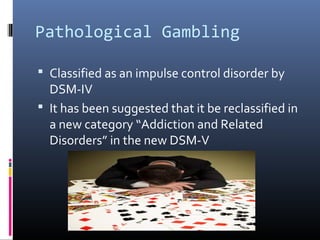
Pathological Gambling

 Classified as an impulse control disorder by
  DSM-IV
 It has been suggested that it be reclassified in
  a new category “Addiction and Related
  Disorders” in the new DSM-V
DSM-IV Diagnostic Criteria
Five or more of the following:
 preoccupied with gambling
 Needs to gamble with increasing amounts of money in order to achieve the
    desired excitement
 Has repeated unsuccessful efforts to control, cut back, or stop gambling
 Restless or irritable when attempting to cut down or stop gambling
 Gambles as a way of escaping from problems
 After losing money gambling, often returns another day to get even
 Lies about the extent of involvement with gambling
 Has committed illegal acts such as forgery, fraud, theft, or embezzlement
    to finance gambling
 Has jeopardized or lost a significant relationship, job, or educational or
    career opportunity because of gambling
 Relies on others to provide money to relieve a desperate financial situation
    caused by gambling
Biology behind Pathological
Gambling
 Brain Regions implicated:
   Nucleus Accumbens and Ventral Tegmental Area
    (Reward and Pleasure areas)


   Orbitofronal Cortex (decision making)
Brain regions cont.

  Hippocampus and Amygdala (Limbic System –
  Memory, learning, and emotions)
Neurotransmitters

 Hypothesis: Chemical Imbalances of
   Noradrinergic
   Serotonergic
   Dopaminergic
  -Arousal, reward, and mood regulation
  -Chemical imbalances of these systems may lead to
    problems with impulsivity, difficulty with control,
    and mood disorders
Genetic Factors

 Studies have shown a likely genetic link to
  pathological gambling

 Twin study (2012): Differences in number of
  times gambling could be accounted for both
  by familial environment (42%) and genetic
  differences (32%)
   Disordered gambling differences resulted
    primarily from genetic factors
Specific Genes

 Dopamine Receptor Gene: D2A1 allele
   May result in deficits in dopamine reward
    pathways
   Hypothesis: Leads to increased pursuing of
    pleasure generating activities
Specific Genes: Cont.

 Serotonin Receptor Polymorphisms
   Study found that a certain genotype of the
    serotonin receptor 2A (“C/C Genotype”) was
    significantly associated with pathological
    gambling
Co-Morbid Conditions
 ~64% of Pathological Gamblers have had some form of co-
  morbid psychiatric disorder

 Substance Use Disorders
 Personality disorders (antisocial, borderline, narcissistic
  most commonly)
 Depression
 Bipolar Disorder
 Suicide Risk

 Pathological gamblers with co-occuring mental illness were
  significantly more severe with their gambling problems
Treatments

 12-step based programs – GA


   CBT and Counseling
   Online Peer Support Groups
   Medication
   Self-Help
Medication Research
 No drug currently approved specifically for
  use for pathological gambling
 SSRI Paroxetine: studies have shown it is
  efficient in treating people with pathological
  gambling

 Nalmefene: Opiate Antagonist – Also shown
  effective in reducing problematic gambling
Thank You!
 Questions?

Pathological Gambling

  • 1.
  • 4.
    Gambling Statistics  2009:Legal Gambling market alone generated approximately $335 Billion globally  It has been estimated that approximately 85% of Americans have gambled at least one time during their life  Between ~65-80% reported having gambled in the past year
  • 5.
    When Gambling Becomesa Problem  What are some of the beliefs and concepts that lead to a gambling problem? -Gambler’s Fallacy -Idea that continuing to play is the only way to win back money lost -Variable reinforcement schedule
  • 6.
    Gambling Addiction  ProblemGambling = “an urge to continuously gamble despite harmful negative consequences”  The most severe form can be clinically diagnosed as Pathological Gambling
  • 7.
    Pathological Gambling  Classifiedas an impulse control disorder by DSM-IV  It has been suggested that it be reclassified in a new category “Addiction and Related Disorders” in the new DSM-V
  • 8.
    DSM-IV Diagnostic Criteria Fiveor more of the following:  preoccupied with gambling  Needs to gamble with increasing amounts of money in order to achieve the desired excitement  Has repeated unsuccessful efforts to control, cut back, or stop gambling  Restless or irritable when attempting to cut down or stop gambling  Gambles as a way of escaping from problems  After losing money gambling, often returns another day to get even  Lies about the extent of involvement with gambling  Has committed illegal acts such as forgery, fraud, theft, or embezzlement to finance gambling  Has jeopardized or lost a significant relationship, job, or educational or career opportunity because of gambling  Relies on others to provide money to relieve a desperate financial situation caused by gambling
  • 9.
    Biology behind Pathological Gambling Brain Regions implicated:  Nucleus Accumbens and Ventral Tegmental Area (Reward and Pleasure areas)  Orbitofronal Cortex (decision making)
  • 10.
    Brain regions cont.  Hippocampus and Amygdala (Limbic System – Memory, learning, and emotions)
  • 11.
    Neurotransmitters  Hypothesis: ChemicalImbalances of  Noradrinergic  Serotonergic  Dopaminergic -Arousal, reward, and mood regulation -Chemical imbalances of these systems may lead to problems with impulsivity, difficulty with control, and mood disorders
  • 12.
    Genetic Factors  Studieshave shown a likely genetic link to pathological gambling  Twin study (2012): Differences in number of times gambling could be accounted for both by familial environment (42%) and genetic differences (32%)  Disordered gambling differences resulted primarily from genetic factors
  • 13.
    Specific Genes  DopamineReceptor Gene: D2A1 allele  May result in deficits in dopamine reward pathways  Hypothesis: Leads to increased pursuing of pleasure generating activities
  • 14.
    Specific Genes: Cont. Serotonin Receptor Polymorphisms  Study found that a certain genotype of the serotonin receptor 2A (“C/C Genotype”) was significantly associated with pathological gambling
  • 15.
    Co-Morbid Conditions  ~64%of Pathological Gamblers have had some form of co- morbid psychiatric disorder  Substance Use Disorders  Personality disorders (antisocial, borderline, narcissistic most commonly)  Depression  Bipolar Disorder  Suicide Risk  Pathological gamblers with co-occuring mental illness were significantly more severe with their gambling problems
  • 16.
    Treatments  12-step basedprograms – GA  CBT and Counseling  Online Peer Support Groups  Medication  Self-Help
  • 17.
    Medication Research  Nodrug currently approved specifically for use for pathological gambling  SSRI Paroxetine: studies have shown it is efficient in treating people with pathological gambling  Nalmefene: Opiate Antagonist – Also shown effective in reducing problematic gambling
  • 18.

Editor's Notes

  • #8 -New category would include both substance and behavioral addictions
  • #9 -These characteristics cannot be otherwise explained by a manic episode
  • #10 Many studies have showed that gambling effects the same areas of the brain as those effected by substance abuse
  • #12 Talk about the fMRI study where anticipation of money activates the same regions of the brain as a cocaine user anticipating cocaine
  • #16 -Becomes important with treatment – need to address the co-occuring mental illness with the addiction itself