PROXY SERVERS AND
APPLICATION LEVEL FIREWALLS
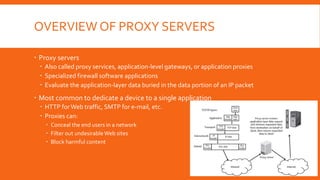
OVERVIEW OF PROXY SERVERS
 Proxy servers
 Also called proxy services, application-level gateways, or application proxies
 Specialized firewall software applications
 Evaluate the application-layer data buried in the data portion of an IP packet
 Most common to dedicate a device to a single application
 HTTP forWeb traffic, SMTP for e-mail, etc.
 Proxies can:
 Conceal the end users in a network
 Filter out undesirableWeb sites
 Block harmful content
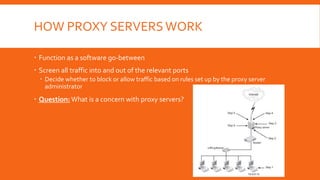
HOW PROXY SERVERSWORK
 Function as a software go-between
 Screen all traffic into and out of the relevant ports
 Decide whether to block or allow traffic based on rules set up by the proxy server
administrator
 Question: What is a concern with proxy servers?
HOW PROXY SERVERS DIFFER FROM
PACKET FILTERS
 Create much more detailed log file listings than packet filters
 Rebuild the packet with new source IP information
 Shields internal users from those on the outside
 Attacks that can start with mangled packet data never reach the internal host
 Far more critical to network communications than packet filters
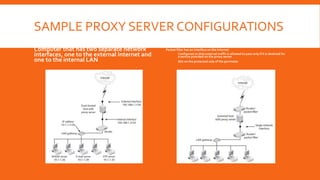
SAMPLE PROXY SERVER CONFIGURATIONS
Computer that has two separate network
interfaces, one to the external Internet and
one to the internal LAN
Packet filter has an interface on the Internet
Configured so that external traffic is allowed to pass only if it is destined for
a service provided on the proxy server
Sits on the protected side of the perimeter
BENEFITS OF PROXY SERVERS
 Conceal internal clients from external clients
 External clients see a single machine
 Commonly used to share Internet connections
 Block URL’s
 Block users from accessing certain URLs
 Configure either IP addresses or DNS names
 Security policy
 More effective method of preventing employees from visiting certain Web sites
 URLs can easily be changed
 Block and Filter Content
 Configure to scan packets for questionable content
 Java applets or ActiveX controls
 Executable files attached to e-mail messages
 Parameters: time, IP address, and port number
 All proxy server products scan the payload of a packet
 Provide some sort of content-filtering system
 Proxy servers provide very complete log files
 Most proxy server products can prompt users who connect to the server for a username and password
CONFIGURING PROXY SERVERS
 Make sure proxy server has enough capacity
 If it gets overloaded, client performance will suffer
 Must configure the environment properly
 Configuration of the proxy server itself
 May need to configure each piece of client software that uses the proxy server
 Potential security vulnerabilities
 Present a single point of failure for the network
 Susceptible to various forms of attack
CONFIGURING CLIENTS
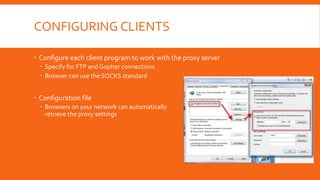
 Configure each client program to work with the proxy server
 Specify for FTP and Gopher connections
 Browser can use the SOCKS standard
 Configuration file
 Browsers on your network can automatically
retrieve the proxy settings
TYPES OF PROXIES
Transparent Proxy
 Totally invisible to end users
 Sits between two networks like a
router
 Firewall intercepts outgoing
traffic
 Directs it to a specific computer,
such as a proxy server
Nontransparent Proxy
 Also called explicit proxies
 Require that the client software
be configured
 All target traffic is forwarded to
the proxy at a single target port
 Typically by means of the SOCKS
protocol
 Require more labor to configure
than transparent proxies
 Each client program must be set
up to route all requests to a single
port
 Provide greater security than
transparent proxies
SOCKS Proxy
 Totally invisible to end users
 Sits between two networks like a
router
 Firewall intercepts outgoing
traffic
 Directs it to a specific computer,
such as a proxy server
REVERSE PROXIES
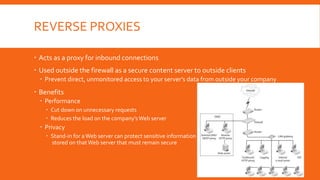
 Acts as a proxy for inbound connections
 Used outside the firewall as a secure content server to outside clients
 Prevent direct, unmonitored access to your server’s data from outside your company
 Benefits
 Performance
 Cut down on unnecessary requests
 Reduces the load on the company’sWeb server
 Privacy
 Stand-in for aWeb server can protect sensitive information
stored on that Web server that must remain secure
WHEN A PROXY SERVER ISN’TTHE
CORRECT CHOICE
 Some organizations find that a proxy server slows down traffic excessively
 Might use ISP proxy server
 But better off installing and configuring own proxy server even for small home or
business network

Proxy Presentation

  • 1.
  • 2.
    OVERVIEW OF PROXYSERVERS  Proxy servers  Also called proxy services, application-level gateways, or application proxies  Specialized firewall software applications  Evaluate the application-layer data buried in the data portion of an IP packet  Most common to dedicate a device to a single application  HTTP forWeb traffic, SMTP for e-mail, etc.  Proxies can:  Conceal the end users in a network  Filter out undesirableWeb sites  Block harmful content
  • 3.
    HOW PROXY SERVERSWORK Function as a software go-between  Screen all traffic into and out of the relevant ports  Decide whether to block or allow traffic based on rules set up by the proxy server administrator  Question: What is a concern with proxy servers?
  • 4.
    HOW PROXY SERVERSDIFFER FROM PACKET FILTERS  Create much more detailed log file listings than packet filters  Rebuild the packet with new source IP information  Shields internal users from those on the outside  Attacks that can start with mangled packet data never reach the internal host  Far more critical to network communications than packet filters
  • 5.
    SAMPLE PROXY SERVERCONFIGURATIONS Computer that has two separate network interfaces, one to the external Internet and one to the internal LAN Packet filter has an interface on the Internet Configured so that external traffic is allowed to pass only if it is destined for a service provided on the proxy server Sits on the protected side of the perimeter
  • 6.
    BENEFITS OF PROXYSERVERS  Conceal internal clients from external clients  External clients see a single machine  Commonly used to share Internet connections  Block URL’s  Block users from accessing certain URLs  Configure either IP addresses or DNS names  Security policy  More effective method of preventing employees from visiting certain Web sites  URLs can easily be changed  Block and Filter Content  Configure to scan packets for questionable content  Java applets or ActiveX controls  Executable files attached to e-mail messages  Parameters: time, IP address, and port number  All proxy server products scan the payload of a packet  Provide some sort of content-filtering system  Proxy servers provide very complete log files  Most proxy server products can prompt users who connect to the server for a username and password
  • 7.
    CONFIGURING PROXY SERVERS Make sure proxy server has enough capacity  If it gets overloaded, client performance will suffer  Must configure the environment properly  Configuration of the proxy server itself  May need to configure each piece of client software that uses the proxy server  Potential security vulnerabilities  Present a single point of failure for the network  Susceptible to various forms of attack
  • 8.
    CONFIGURING CLIENTS  Configureeach client program to work with the proxy server  Specify for FTP and Gopher connections  Browser can use the SOCKS standard  Configuration file  Browsers on your network can automatically retrieve the proxy settings
  • 9.
    TYPES OF PROXIES TransparentProxy  Totally invisible to end users  Sits between two networks like a router  Firewall intercepts outgoing traffic  Directs it to a specific computer, such as a proxy server Nontransparent Proxy  Also called explicit proxies  Require that the client software be configured  All target traffic is forwarded to the proxy at a single target port  Typically by means of the SOCKS protocol  Require more labor to configure than transparent proxies  Each client program must be set up to route all requests to a single port  Provide greater security than transparent proxies SOCKS Proxy  Totally invisible to end users  Sits between two networks like a router  Firewall intercepts outgoing traffic  Directs it to a specific computer, such as a proxy server
  • 10.
    REVERSE PROXIES  Actsas a proxy for inbound connections  Used outside the firewall as a secure content server to outside clients  Prevent direct, unmonitored access to your server’s data from outside your company  Benefits  Performance  Cut down on unnecessary requests  Reduces the load on the company’sWeb server  Privacy  Stand-in for aWeb server can protect sensitive information stored on that Web server that must remain secure
  • 11.
    WHEN A PROXYSERVER ISN’TTHE CORRECT CHOICE  Some organizations find that a proxy server slows down traffic excessively  Might use ISP proxy server  But better off installing and configuring own proxy server even for small home or business network