FFiirreewwaallll wwiitthh PPrrooxxyy sseerrvveerr
What actually is Proxy server?
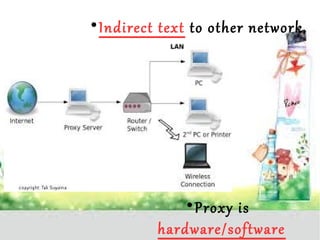
Indirect text to other network. 
Proxy is 
hardware/software
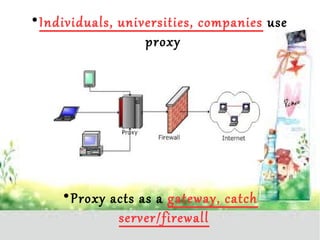
Individuals, universities, companies use 
proxy 
Proxy acts as a gateway, catch 
server/firewall
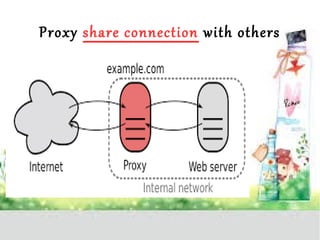
Proxy share connection with others
Purpose of using proxies:- 
 It improves performance:- 
(a) It act as a cache server 
(b) It controls bandwidth 
 It helps in surfing anonymously:- 
(a) It helps in browsing WWW without 
any identification 
 It helps in filtering request:- 
(a) It prevent access to some sites and 
protocol. 
(b) It helps in time division.
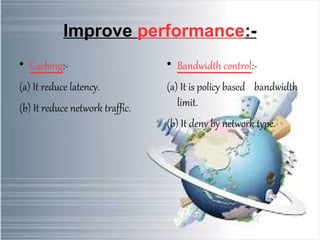
Improve performance:- 
 Caching:- 
(a) It reduce latency. 
(b) It reduce network traffic. 
 Bandwidth control:- 
(a) It is policy based bandwidth 
limit. 
(b) It deny by network type.
Caching helps in speeding up internet access.
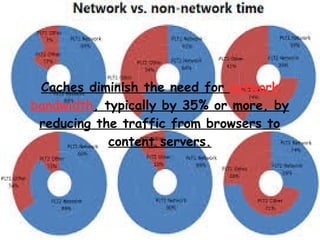
Caches diminish the need for network 
bandwidth, typically by 35% or more, by 
reducing the traffic from browsers to 
content servers.
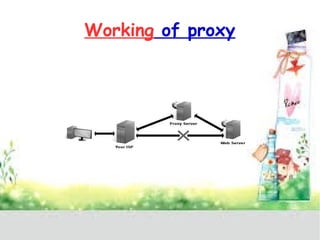
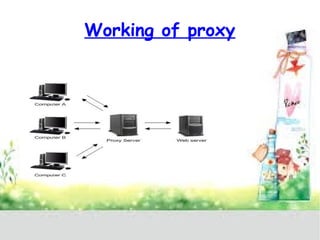
Working of proxy
Working of proxy
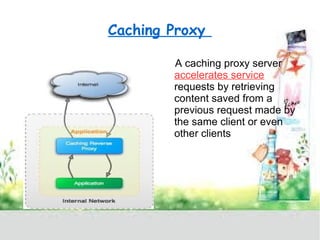
Caching Proxy 
A caching proxy server 
accelerates service 
requests by retrieving 
content saved from a 
previous request made by 
the same client or even 
other clients
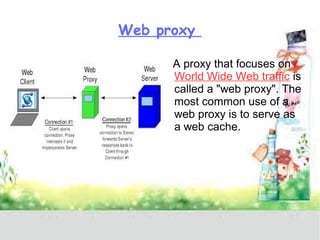
Web proxy 
A proxy that focuses on 
World Wide Web traffic is 
called a "web proxy". The 
most common use of a 
web proxy is to serve as 
a web cache.
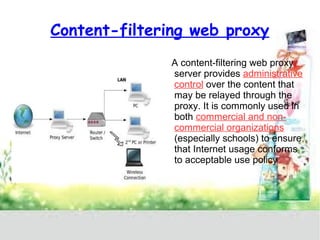
Content-filtering web proxy 
A content-filtering web proxy 
server provides administrative 
control over the content that 
may be relayed through the 
proxy. It is commonly used in 
both commercial and non-commercial 
organizations 
(especially schools) to ensure 
that Internet usage conforms 
to acceptable use policy
Anonymizing proxy 
An anonymous proxy server 
(sometimes called a web 
proxy) generally attempts to 
anonymize web surfing.
Intercepting proxy 
An intercepting proxy 
combines a proxy server 
with a gateway or router. 
Connections made by client 
browsers through the 
gateway are diverted to the 
proxy without client-side 
configuration.
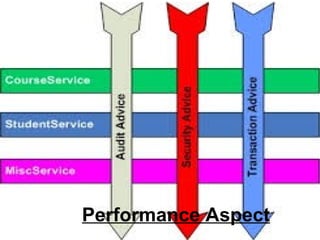
Performance Aspect
Caching 
 By keeping local copies of 
frequently accessed file the 
proxy can serve those files 
back to a requesting browser 
without going to the external 
site each time, this 
dramatically improves the 
performance seen by the end 
user
 Only makes sense to 
implement this at the ISP 
rather than the small 
business level because of 
the number of pages 
available 
 Because of dynamic 
content many pages are 
invalidated in the cache right 
away
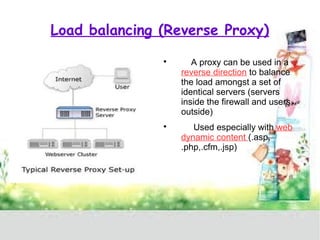
Load balancing (Reverse Proxy) 
 A proxy can be used in a 
reverse direction to balance 
the load amongst a set of 
identical servers (servers 
inside the firewall and users 
outside) 
 Used especially with web 
dynamic content (.asp, 
.php,.cfm,.jsp)
Security benefits 
 Hide internal clients from external network 
 Blocking of dangerous URLs 
 Filter dangerous content 
 Eliminate need for transport layer routing between networks 
 Single point of access, control and logging
Thanking you!!! 
For more info log on 
too.. 
Stableproxies

Firewall with proxy server.

  • 1.
  • 2.
    What actually isProxy server?
  • 3.
    Indirect text toother network. Proxy is hardware/software
  • 4.
    Individuals, universities, companiesuse proxy Proxy acts as a gateway, catch server/firewall
  • 5.
  • 6.
    Purpose of usingproxies:-  It improves performance:- (a) It act as a cache server (b) It controls bandwidth  It helps in surfing anonymously:- (a) It helps in browsing WWW without any identification  It helps in filtering request:- (a) It prevent access to some sites and protocol. (b) It helps in time division.
  • 7.
    Improve performance:- Caching:- (a) It reduce latency. (b) It reduce network traffic.  Bandwidth control:- (a) It is policy based bandwidth limit. (b) It deny by network type.
  • 8.
    Caching helps inspeeding up internet access.
  • 9.
    Caches diminish theneed for network bandwidth, typically by 35% or more, by reducing the traffic from browsers to content servers.
  • 10.
  • 11.
  • 12.
    Caching Proxy Acaching proxy server accelerates service requests by retrieving content saved from a previous request made by the same client or even other clients
  • 13.
    Web proxy Aproxy that focuses on World Wide Web traffic is called a "web proxy". The most common use of a web proxy is to serve as a web cache.
  • 14.
    Content-filtering web proxy A content-filtering web proxy server provides administrative control over the content that may be relayed through the proxy. It is commonly used in both commercial and non-commercial organizations (especially schools) to ensure that Internet usage conforms to acceptable use policy
  • 15.
    Anonymizing proxy Ananonymous proxy server (sometimes called a web proxy) generally attempts to anonymize web surfing.
  • 16.
    Intercepting proxy Anintercepting proxy combines a proxy server with a gateway or router. Connections made by client browsers through the gateway are diverted to the proxy without client-side configuration.
  • 17.
  • 18.
    Caching  Bykeeping local copies of frequently accessed file the proxy can serve those files back to a requesting browser without going to the external site each time, this dramatically improves the performance seen by the end user
  • 19.
     Only makessense to implement this at the ISP rather than the small business level because of the number of pages available  Because of dynamic content many pages are invalidated in the cache right away
  • 20.
    Load balancing (ReverseProxy)  A proxy can be used in a reverse direction to balance the load amongst a set of identical servers (servers inside the firewall and users outside)  Used especially with web dynamic content (.asp, .php,.cfm,.jsp)
  • 21.
    Security benefits Hide internal clients from external network  Blocking of dangerous URLs  Filter dangerous content  Eliminate need for transport layer routing between networks  Single point of access, control and logging
  • 22.
    Thanking you!!! Formore info log on too.. Stableproxies